The lethal drug administered in Tennessee’s failed attempt to execute Christa Pike has been used in multiple states that carry out the death penalty and by the U.S. government after President Donald Trump resumed federal executions during his first term.
Pike, 50, remained alive after two doses of pentobarbital were administered Wednesday, according to her attorneys and media witnesses.
Tennessee officials haven’t explained yet what went wrong, and it wasn’t clear if Pike was still alive on Thursday.
Republican Gov. Bill Lee ordered a third-party review to determine what happened and said another scheduled execution in Tennessee will not take place this year.
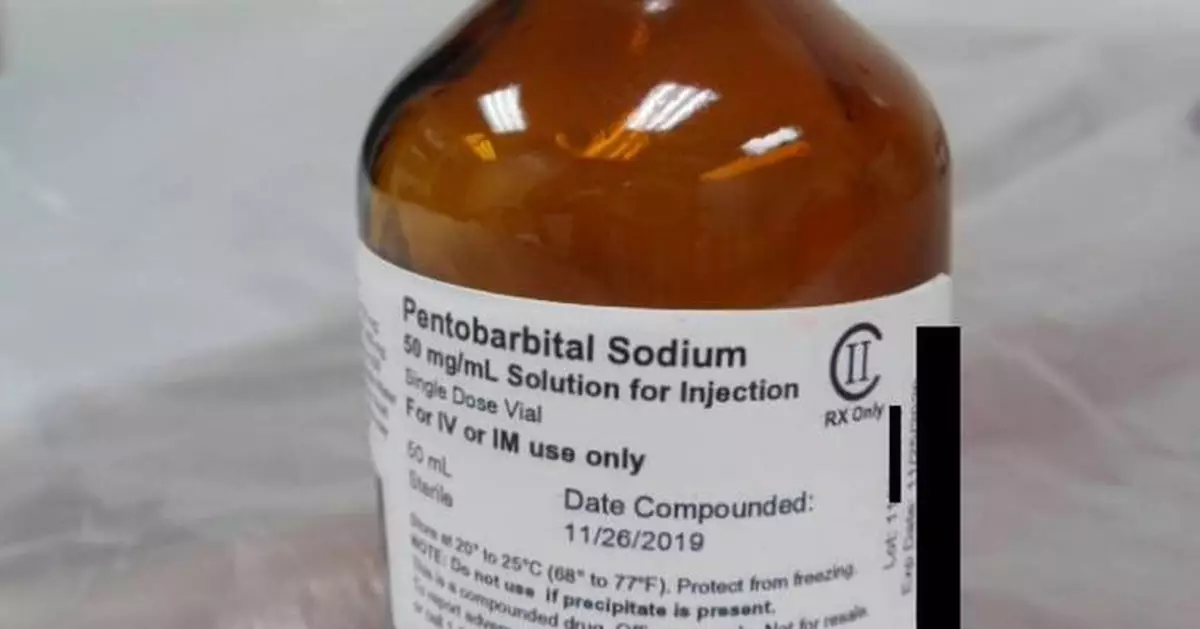
Pentobarbital is a barbiturate, a class of drugs that depresses the central nervous system.
Approved medical uses include sedation, short-term treatment of insomnia, preparation for anesthesia and emergency control of certain severe seizures. It is also used in veterinary euthanasia.
In an overdose, it can produce coma, suppress breathing and cause circulatory collapse and death.
For years, lethal injections commonly used three drugs: an anesthetic, a paralytic that stopped breathing and potassium chloride to stop the heart.
That method drew criticism because if the anesthetic failed, the paralytic could prevent a prisoner from communicating pain. It also became difficult to maintain after drugmakers restricted distribution for executions.
The pentobarbital protocol was adopted at the federal level during Trump’s first term to replace a three-drug mix used in the 2000s.
As with Tennessee's guidelines, the federal death penalty protocol calls for administering a 5 gram dose of pentobarbital; in medical settings, patients typically receive a fraction of a gram.
Trump resumed the federal death penalty after an informal moratorium during previous administrations. The federal government used pentobarbital in 13 executions between 2020 and 2021, contributing to making Trump the most prolific execution president in over 130 years.
During the Biden administration, the Justice Department stopped executions with pentobarbital after a government review raised concerns about the potential for “unnecessary pain and suffering.”
After Trump came back to power, the Justice Department in 2026 reauthorized the use of lethal injections with pentobarbital.
Georgia and Texas use a similar protocol to Tennessee, administering a second dose only if the first is unsuccessful. South Carolina, which turned to pentobarbital in 2024, automatically gives inmates two 5-gram doses spaced about 10 minutes apart.
Lawyers for people on death row have argued that giving such a large dose twice was proof the condemned were dying a lingering death, still conscious and feeling like they were drowning when fluid rushed into their lungs.
But a South Carolina Department of Corrections attorney said inmates are unconscious in well under a minute and can't feel anything. The heart may show an occasional flicker on a monitor, but that's because it is the last organ to use the body's stored oxygen and has residual electrical impulses.
When past lethal injection executions have gone wrong, it is usually because an IV line can't be properly inserted and the execution is stopped before the drugs are given. There have also been cases of violent reactions or prolonged time passing before death when a new combination of drugs are used.
Wednesday's failed pentobarbital execution appeared to be the first time problems happened with that drug. Witnesses frequently report that inmates stop breathing and become still less than a minute after getting the drug.
Experts quoted in the 2025 federal review argue pentobarbital can cause pulmonary edema, a buildup of fluid in the lungs that may create a sensation of suffocating.
The review concluded that “there remains significant uncertainty about whether the use of pentobarbital as a single drug lethal injection causes unnecessary pain and suffering” and advised that the government should “err on the side of humane treatment.”
Other specialists quoted in a report released by the second Trump administration said a lethal dose causes unconsciousness before that occurs.

FILE - This photo provided by the U.S. Department of Justice shows a vial of pentobarbital used in the executions of two inmates in July 2020, according to court filings. The photo was filed in U.S. District Court in Washington on Aug. 13, 2020, as part of litigation over the use of pentobarbital in executions. (Department of Justice via AP, File)
MINNEAPOLIS (AP) — Renee Good’s family sued the U.S. government and several immigration officials Thursday, alleging wrongful death, conspiracy and other violations in the 37-year-old woman’s killing by an immigration officer during a federal crackdown in Minneapolis.
The two lawsuits were filed by Good’s partner, Becca Good, and Renee's brother Brent Ganger.
“She was pure love. She was funny. She was smart,” Becca Good said during a news conference to announce the lawsuits. “She was the center of my universe.”
The Justice Department didn’t immediately respond to an email seeking comment.
Renee Good was fatally shot Jan. 7 as protests against immigration raids flared across the city. According to Becca Good, her partner stopped their car in a street to support neighbors during an immigration operation.
Bystander video shows Renee Good in the driver’s seat of a red SUV blocking part of the road and repeatedly honking her horn.
Two immigration officers get out of a truck, their faces covered, and one orders Good to get out of the car. She reverses briefly, then turns the steering wheel as the officer says again, “get out of the car.”
Almost simultaneously, Becca Good, standing in the street, shouts: “Drive, baby, drive!”
One officer standing in front of the vehicle pulls his weapon and fires into the windshield. He lurches back as the car turns away from him. The officer, who is now very close to the open window on the driver’s side, fires two more times, fatally shooting Renee Good, according to an analysis of the videos by The Associated Press and others.
Federal officials at the time said the officer acted in self-defense and that Good had engaged in “an act of domestic terrorism.”
The lawsuit against the United States of America seeks damages for Good's wrongful death and “the immense suffering Renee endured in the final moments of her life and for the profound and permanent losses that her death has inflicted upon her family,” according to a news release by lawyers for Ganger and Good.
The lawsuit, which seeks a bench trial, also alleges “intentional infliction of emotional distress and negligent infliction of emotional distress” on Becca Good.
Becca and Renee Good, the mother of three children, were not legally married, according to a family lawyer, but referred to one another as wives. They had only recently relocated to Minneapolis from Kansas City, Missouri.
The other lawsuit alleges a conspiracy to interfere with civil rights and seeks a jury trial. It says the federal government moved to hide the evidence of what actually happened on Jan. 7.
The lawsuit says the shots fired by Jonathan Ross, the immigration officer who killed Good, “were the predictable and intended product of the operation.”
It describes a “carefully planned, coordinated effort between senior federal officials and private actors to make two ethnic communities — Minnesotans of Somali and Hispanic descent and origin — the object of aggression and abduction, and to silence by intimidation, arrest and violence the neighbors and allies of those targeted communities who observed, documented and warned of that campaign.”
The lawsuit names Ross as a defendant, as well as: White House Deputy Chief of Staff Stephen Miller; former Homeland Security head Kristi Noem; Corey Lewandowski, a campaign manager for President Donald Trump who also served as one of Noem's advisers; White House border czar Tom Homan; former acting director of U.S. Immigrations and Customs Enforcement Todd Lyons; former U.S. Border Patrol commander Gregory Bovino; and 10 unnamed federal agents.
The killing of Good and another U.S. citizen, Alex Pretti, in Minneapolis just weeks later sparked outrage across the country and calls to rein in immigration enforcement. At least 10 people have died in encounters with immigration officers during President Donald Trump’s second term.
In social media accounts, Renee Good described herself as a “poet and writer and wife and mom.” On Pinterest, a profile picture shows her smiling and holding a young child, alongside posts about tattoos, hairstyles and home decorating.
In an interview shortly after her death, Renee Good’s mother, Donna Ganger, told The Associated Press: “She had this way of making you feel special and loved that I didn’t even understand that until we lost her.”
Good's partner noted the broader loss to communities nationwide.
“As we have tried to navigate our own massive loss, I am also devastated by how many other lives have been destroyed in this darkest of times,” Becca Good said in the news release Thursday. “So many other families are dealing with the loss of their loved ones; to everyone who has had to witness it — the pain of this moment extends far beyond our family. What happened to us should never happen to any family.”
McCormack reported from Concord, New Hampshire.
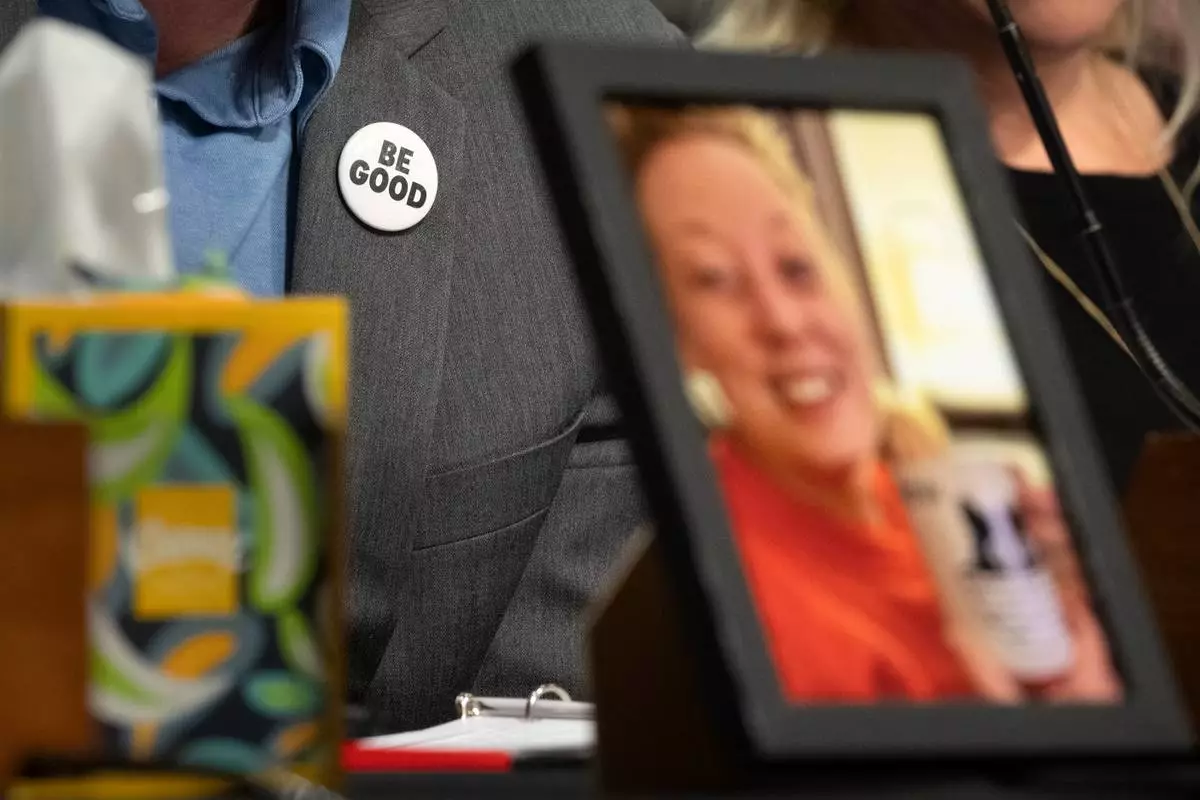
Brent Ganger, the brother of Renee Good, who was killed by federal agents in Minneapolis in January, wears a button reading "Be Good" as he speaks during a Congressional spotlight hearing on Capitol Hill, Tuesday, Sept. 22, 2026, in Washington. (AP Photo/Mark Schiefelbein)
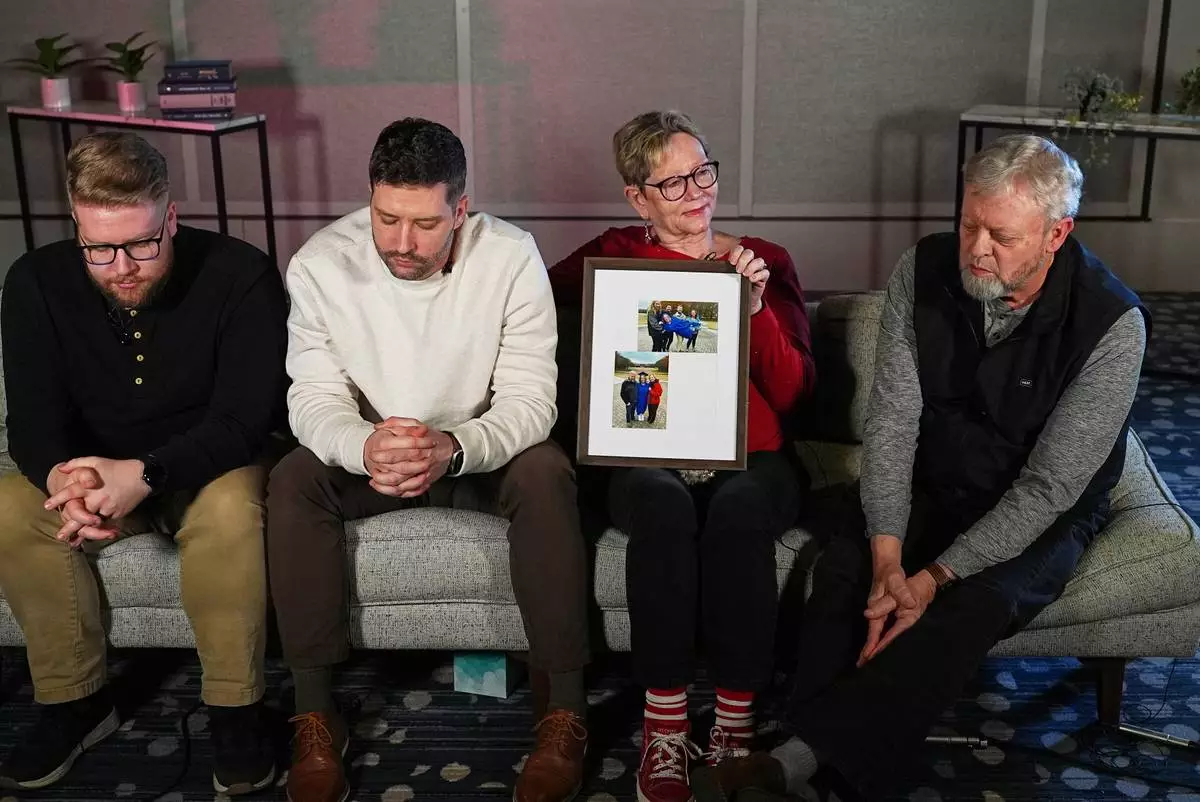
FILE - Brent and Luke Ganger, brothers of Renee Good, from left, and their parents, Donna and Tim Ganger, are pictured during an interview, while holding up a frame with photographs of Good when she graduated from Old Dominion University, in Denver, Friday, Feb. 27, 2026. (AP Photo/David Zalubowski, File)
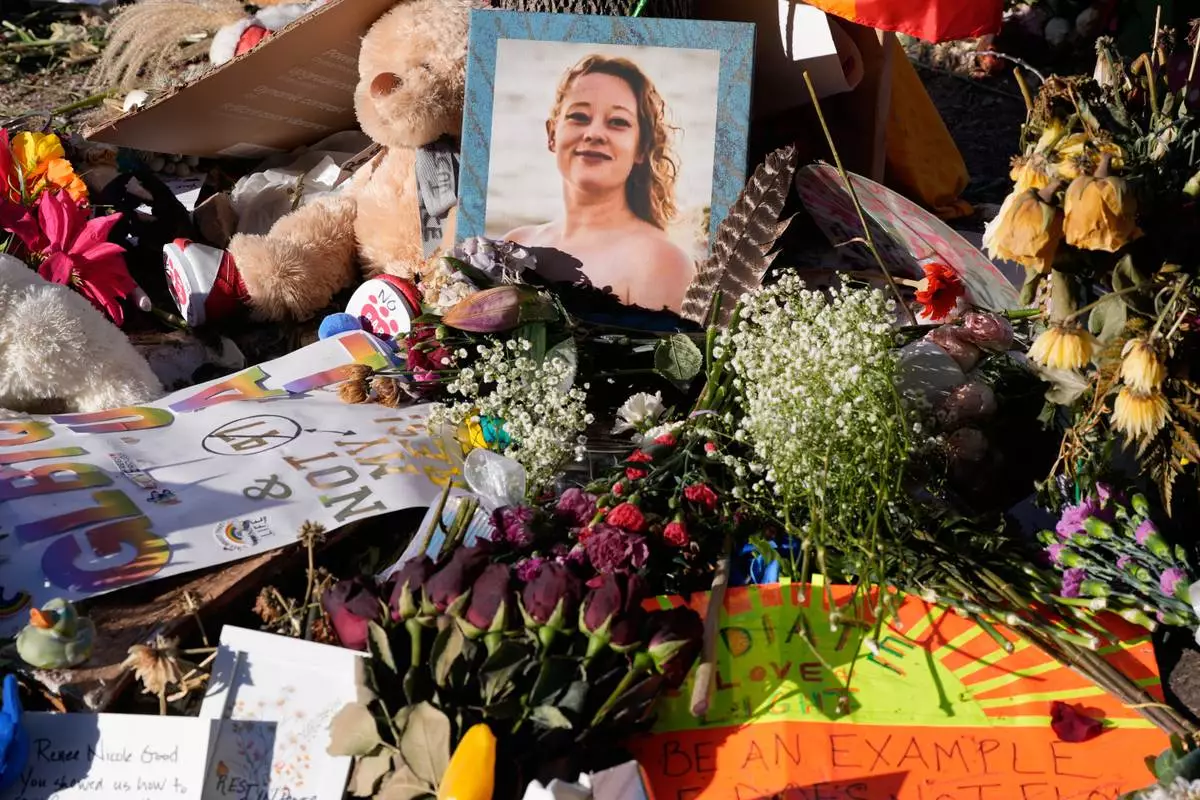
FILE - Flowers and photos are left at a memorial site for Renee Good on Saturday, Jan. 31, 2026, in Minneapolis. (AP Photo/Alex Brandon, File)