This is a timeline of the four hours FlyDubai flight 1073 was in the air as a wounded captain fought off his copilot, the aircraft went into a dive and when passengers saved the day by regaining control and landing safely.
For 200 seconds, the aircraft zigzagged as if on a terrifying roller coaster ride after a precipitous loss of altitude.
The plane then climbed before dropping once more.
Ultimately, the Boeing 737 Max 8 made an emergency landing at a Saudi airport.
The motive and circumstances remain unclear and are under investigation by several of the countries involved: Israel, the UAE and Saudi Arabia.
The captain, an Indian national, was seriously injured and is recovering in a hospital. The copilot, suspected of starting the clash and believed to be Omani, is also injured and remains under questioning.
Here is a look at a minute-by-minute account of the harrowing flight from takeoff to landing based on records from flight data tracking sites, Flightradar24 and AirNav Radar (all times are GMT):
03:05 - Takeoff from Dubai airport. Flight had 182 people on board, most of them Israelis, heading to Tel Aviv.
05:21:09 - The first sign of descent from 34,000 feet.
05:22:40 - The aircraft drops by more than half its height, down to 16,600 feet, the sharpest drop in altitude recorded by data tracking platforms. Three seconds later, it ascends to 21,725 feet.
05:24:29 - Another significant drop to 15,000 feet, the lowest point of the aircraft's journey, which it maintains until it safely lands more than an hour later.
05:28 - First distress signal, Squawk 7700, a code for general emergency, while flying along the Saudi-Jordanian border.
05:35 - Changes distress signal to 7500 for “unlawful interference,” indicating something more serious like a hijacking attempt or an attack. It lasts for nearly an hour.
05:42 - Aircraft turns west, briefly entering Jordanian airspace. It is then flying at 15,000 feet.
05:46 - Aircraft makes a 180-degree turn and heads southwest to Tabuk, Saudi Arabia.
06:28 - Squawk code 7700 for general emergency is sent again, ending the “unlawful interference” alert code.
06:58 - Aircraft approaches and lands in Tabuk airport.
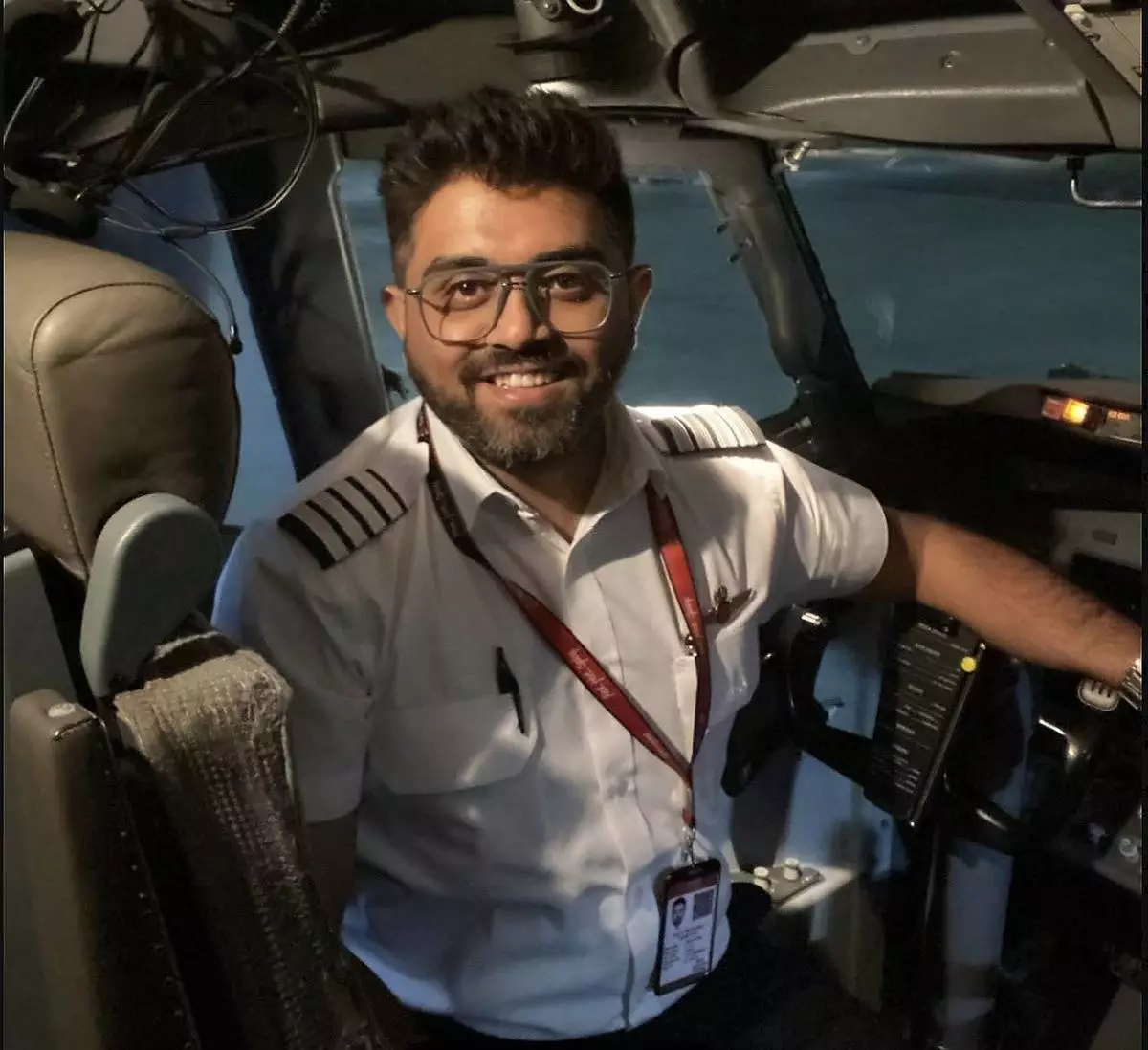
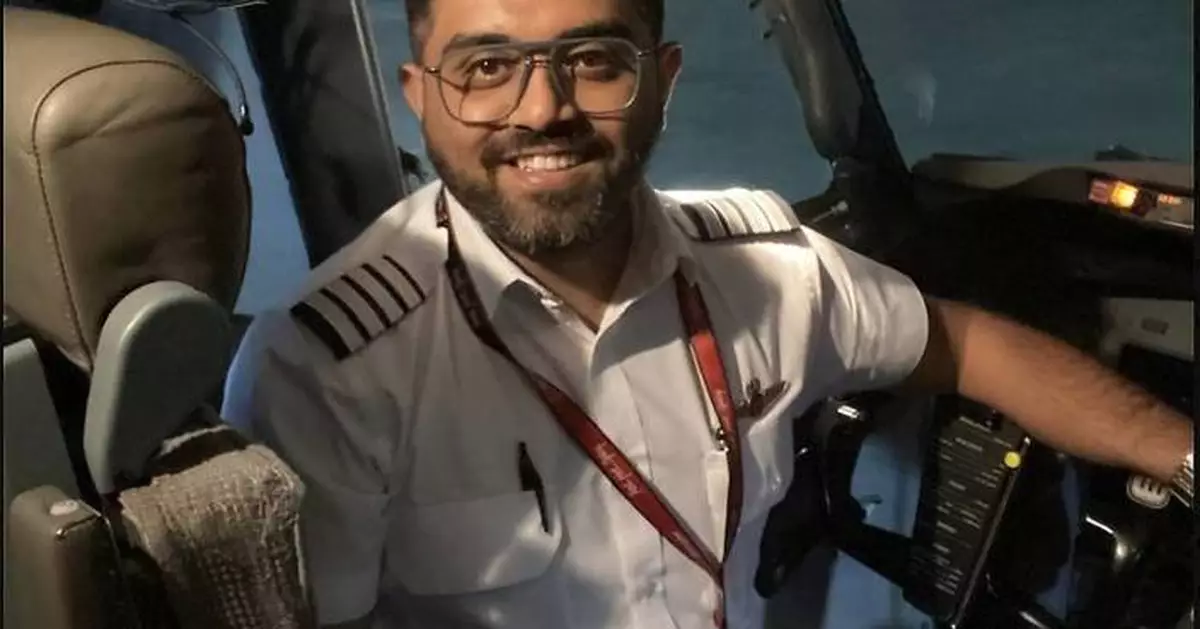
This undated photo released on Israel's Foreign Ministry social media shows Indian Capt. Smit Machchhar in the cockpit of a plane in an unknown location. Machchhar was at the controls of a FlyDubai flight that was diverted to Tabuk in northwestern Saudi Arabia for an emergency landing on Wednesday, Sept. 30, 2026. (Israel's Foreign Ministry via AP)
CAPE CANAVERAL, Fla. (AP) — Four astronauts rocketed into orbit Thursday on a space station mission that will stretch until spring, among them a Canadian whose wife will give birth while he’s away.
SpaceX launched commander Jessica Watkins and her crew for NASA after a three-week delay to fix their Dragon capsule’s leaking fuel system. Thick clouds threatened all morning to halt the countdown but in the end, the skies cleared enough to allow for a safe liftoff.
Although their stay at the International Space Station will last a long six months, the flight there promised to be the quickest yet for Elon Musk’s company: a mere eight-hour transit with an arrival well before bedtime.
With the late morning liftoff from Cape Canaveral Space Force Station, Watkins became the first Black woman to lead a crew to orbit. A geologist who worked with NASA’s Mars rover Curiosity a decade ago, Watkins is making her second trip to the space station following a lengthy stay in 2022.
“Thanks for an amazing ride,” Watkins radioed after reaching orbit.
The others are newcomers to space: NASA’s Luke Delaney, a retired Marine; Canada’s Joshua Kutryk, a colonel in the Royal Canadian Air Force; and Russia’s Sergey Teteryatnikov, a former submariner. They will replace four astronauts who have been living at the orbiting laboratory since February.
This was the 13th crew launched by SpaceX for NASA, not counting 2020's test flight. All four embrace their Crew-13 designation that pays homage in their mission patch to Apollo 13. The harrowing 1970 moonshot ended with the astronauts’ safe return.
References to the number 13 abounded Thursday. Watkins and her crew rode to the launch pad in black Teslas bearing plates that read “Lucky 13.” What's more, they carried up a small crocheted golden dragon named Lucky with a four-leaf clover around its neck.
“We figured it wouldn't hurt to bring a little of our own luck just in case, but clearly we don't need it,” Watkins said from orbit, noting they were “four of the luckiest humans on or off planet Earth.”
Kutryk will become the fourth man to become a father while orbiting Earth. Wife Heather is due to give birth to their third child in late November. The Canadian Space Agency promises plenty of support for the entire family when the big day comes.
“A lot of life-changing things can happen over six months,” NASA manager Dana Weigel said on the eve of liftoff, noting that the space agency will do its best to keep Kutryk looped in to his family.
In 2004, NASA provided a radio link between space station astronaut Mike Fincke and his wife’s delivery room during the birth of their daughter. Five years later, Randy Bresnik, commander of next year’s Artemis III mission, dialed in to his wife’s hospital from orbit.
The happy news traveled more slowly for Austrian astronaut Franz Viehbock. His daughter was born a few hours after he launched to the Soviet Union’s Mir space station in 1991. He was not informed until the next day.
SpaceX, meanwhile, is on a roll. Three hours after Crew-13 blasted off, SpaceX launched a Falcon rocket from California with more than 100 mini satellites. Another Falcon was set to soar late Thursday night from Florida, with a classified satellite for the National Reconnaissance Office. All this comes the same week that the company's massive Starship reached orbit for the first time.
The Associated Press’ health and science coverage receives financial support from the AP Fund for Journalism and private foundations. AP is solely responsible for all content. Find AP’s standards for working with philanthropies, a list of supporters and funded coverage areas at AP.org
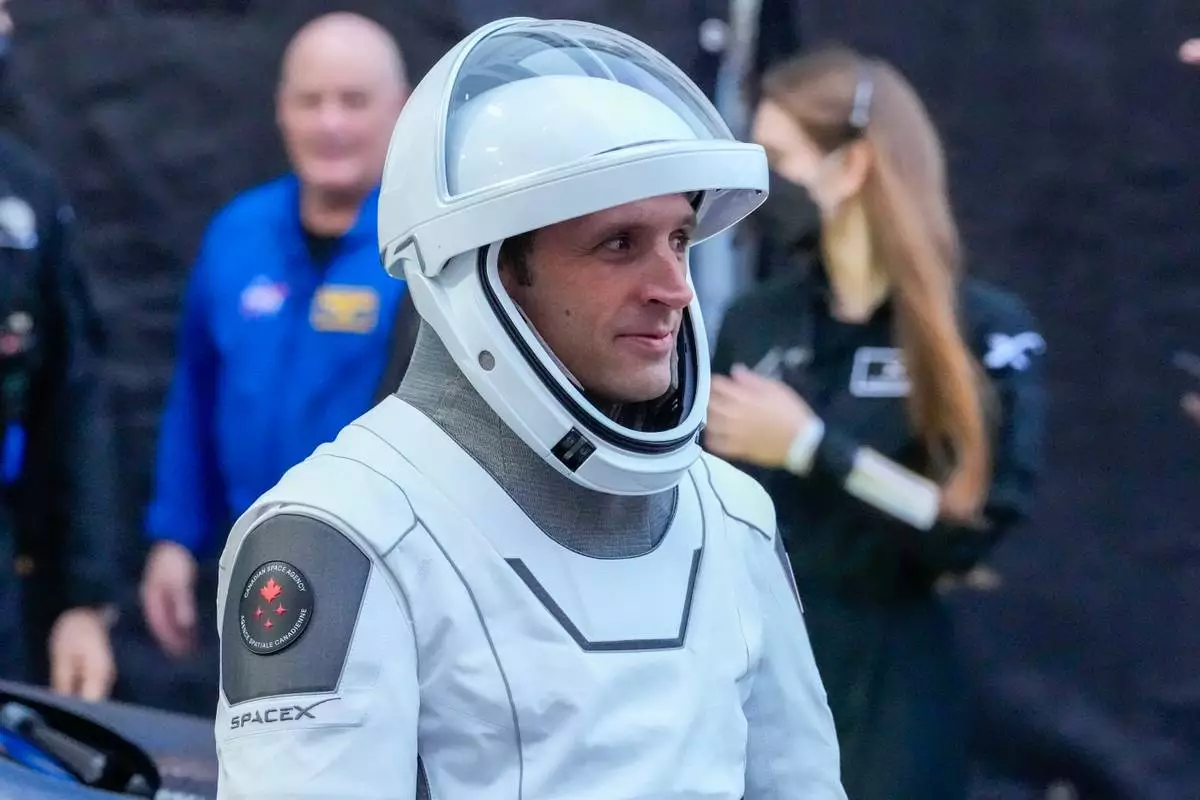
Astronaut Joshua Kutryk, of Canada, leaves the Operations and Checkout Building at the Kennedy Space Center in Cape Canaveral, Fla., Thursday, Oct. 1, 2026. (AP Photo/John Raoux)
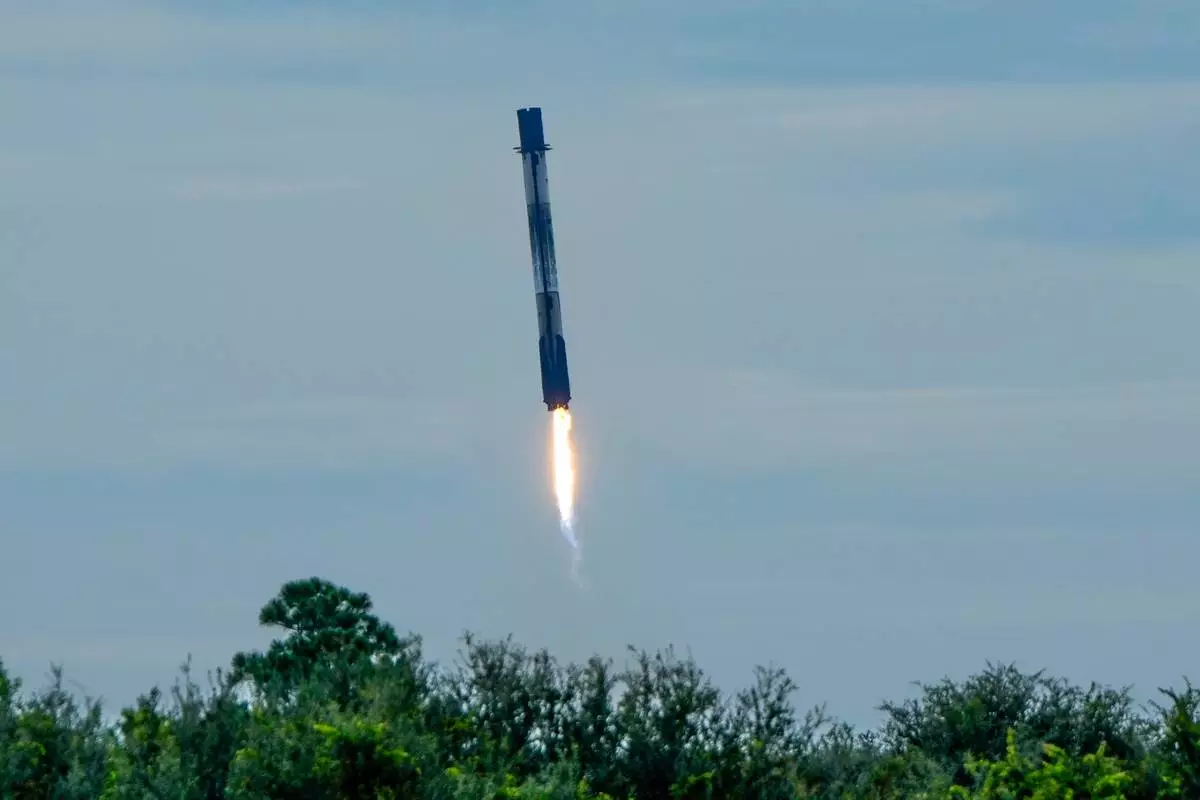
The booster from a SpaceX Falcon 9 rocket returns to pad 40 after launching the crew capsule at the Cape Canaveral Space Force Station in Cape Canaveral, Fla., Thursday, Oct. 1, 2026. (AP Photo/John Raoux)
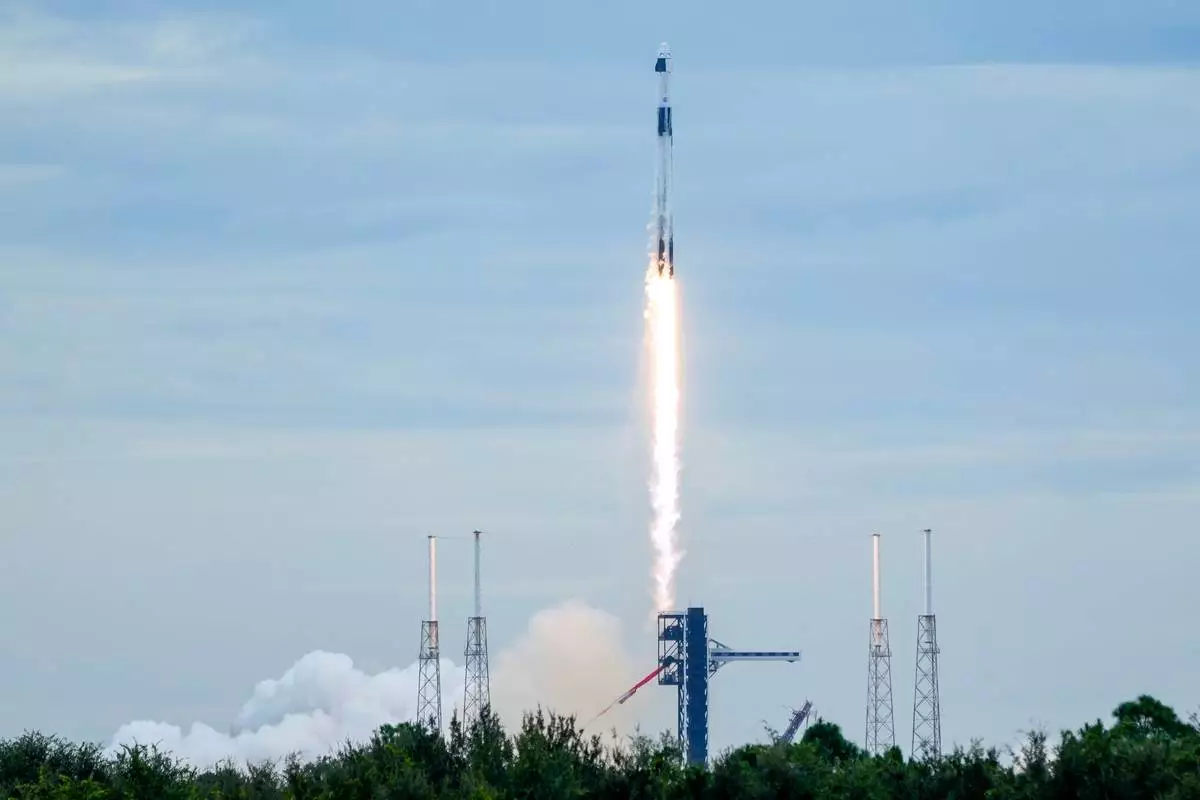
A SpaceX Falcon 9 with a crew of four launches from pad 40 at the Cape Canaveral Space Force Station in Cape Canaveral, Fla., Thursday, Oct. 1, 2026. (AP Photo/John Raoux)
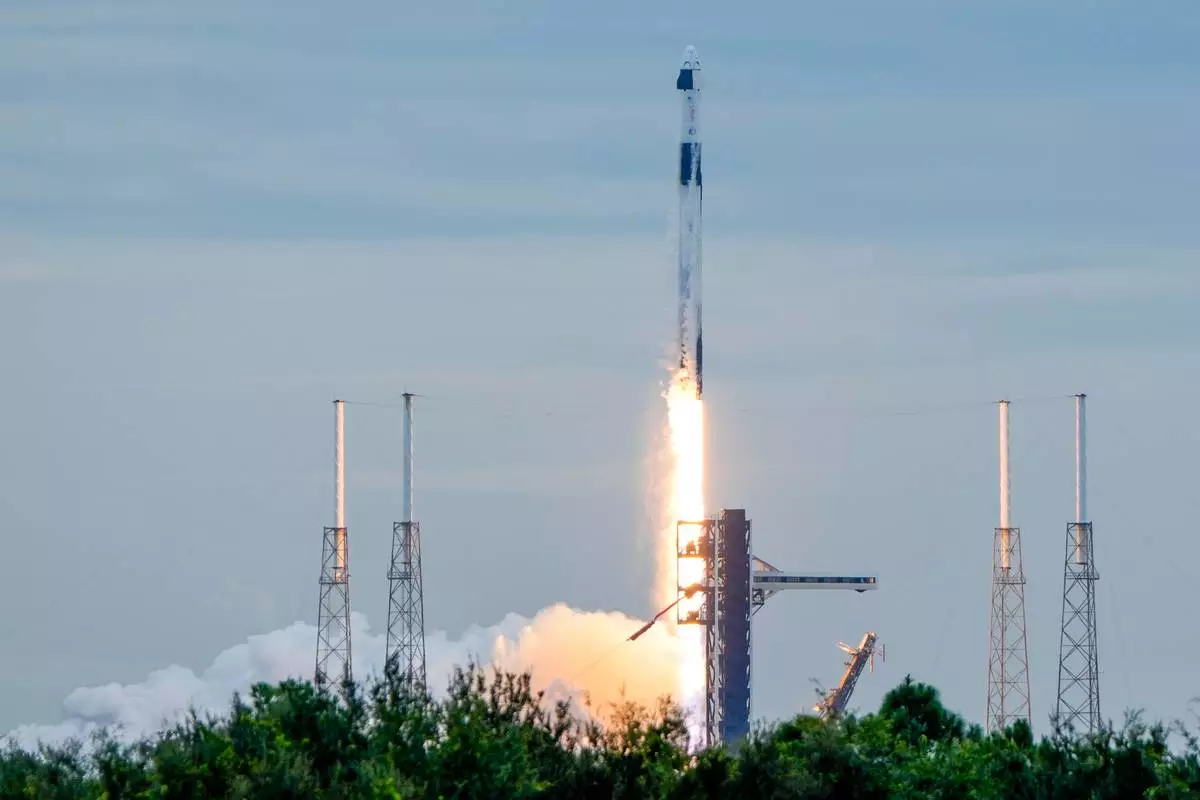
A SpaceX Falcon 9 rocket with a crew of four launches from pad 40 at the Cape Canaveral Space Force Station in Cape Canaveral, Fla., Thursday, Oct. 1, 2026. (AP Photo/John Raoux)
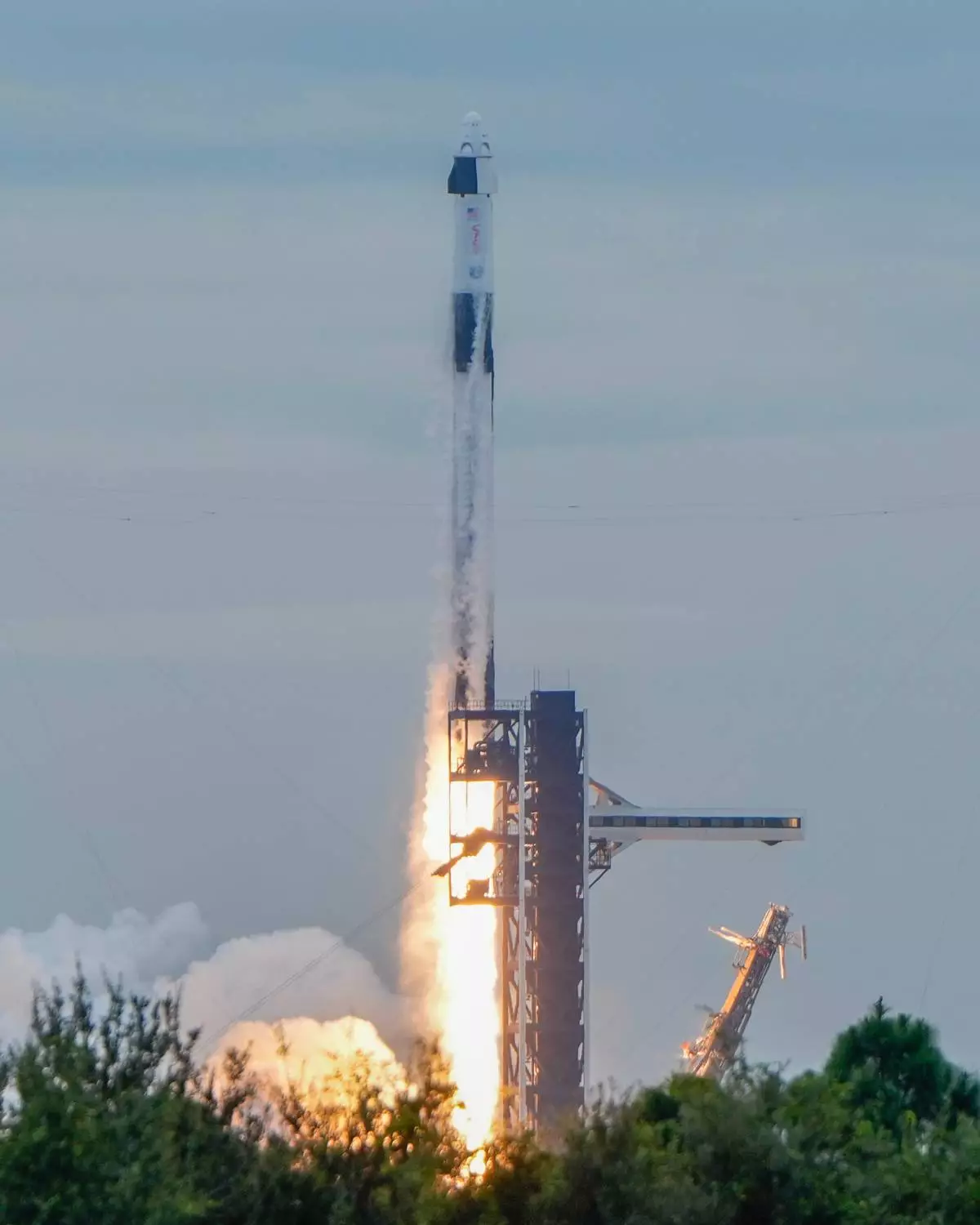
A SpaceX Falcon 9 rocket with a crew of four launches from pad 40 at the Cape Canaveral Space Force Station in Cape Canaveral, Fla., Thursday, Oct. 1, 2026. (AP Photo/John Raoux)
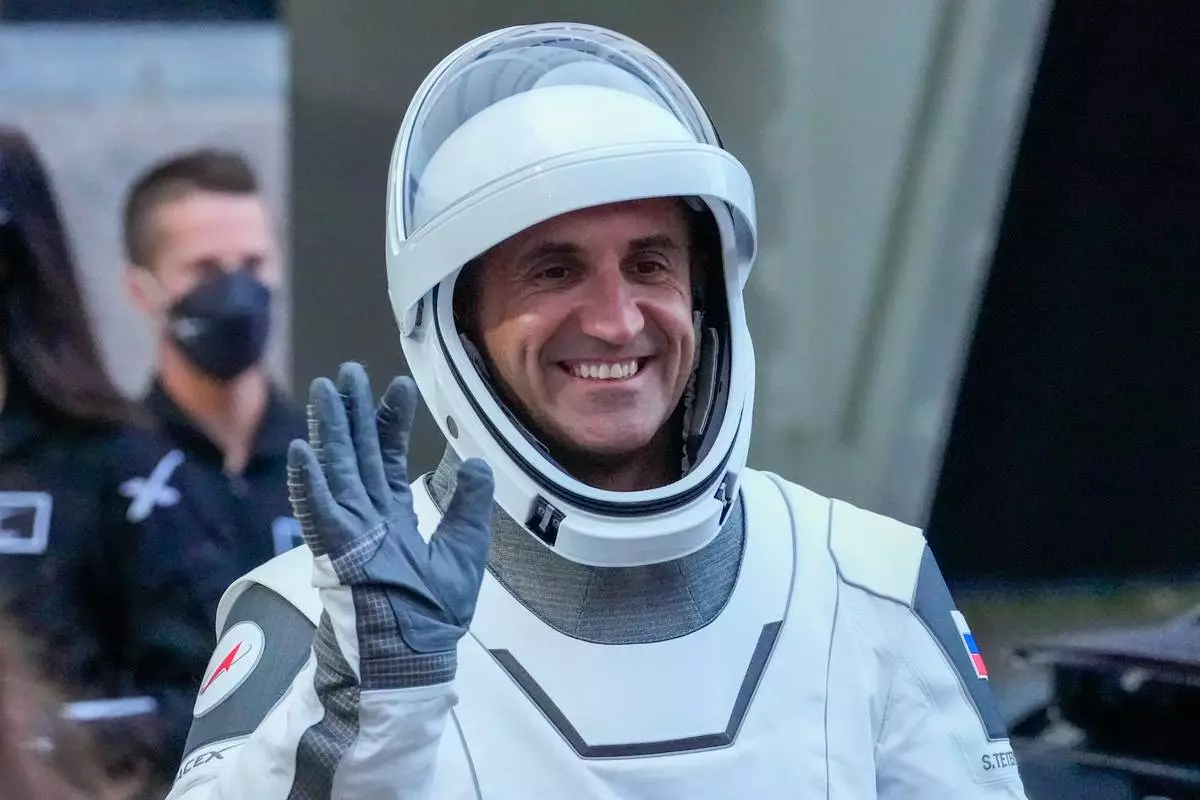
Cosmonaut Sergey Teteryatnikov, of Russia, greets family and friends as he leaves the Operations and Checkout Building at the Kennedy Space Center in Cape Canaveral, Fla., Thursday, Oct. 1, 2026. (AP Photo/John Raoux)
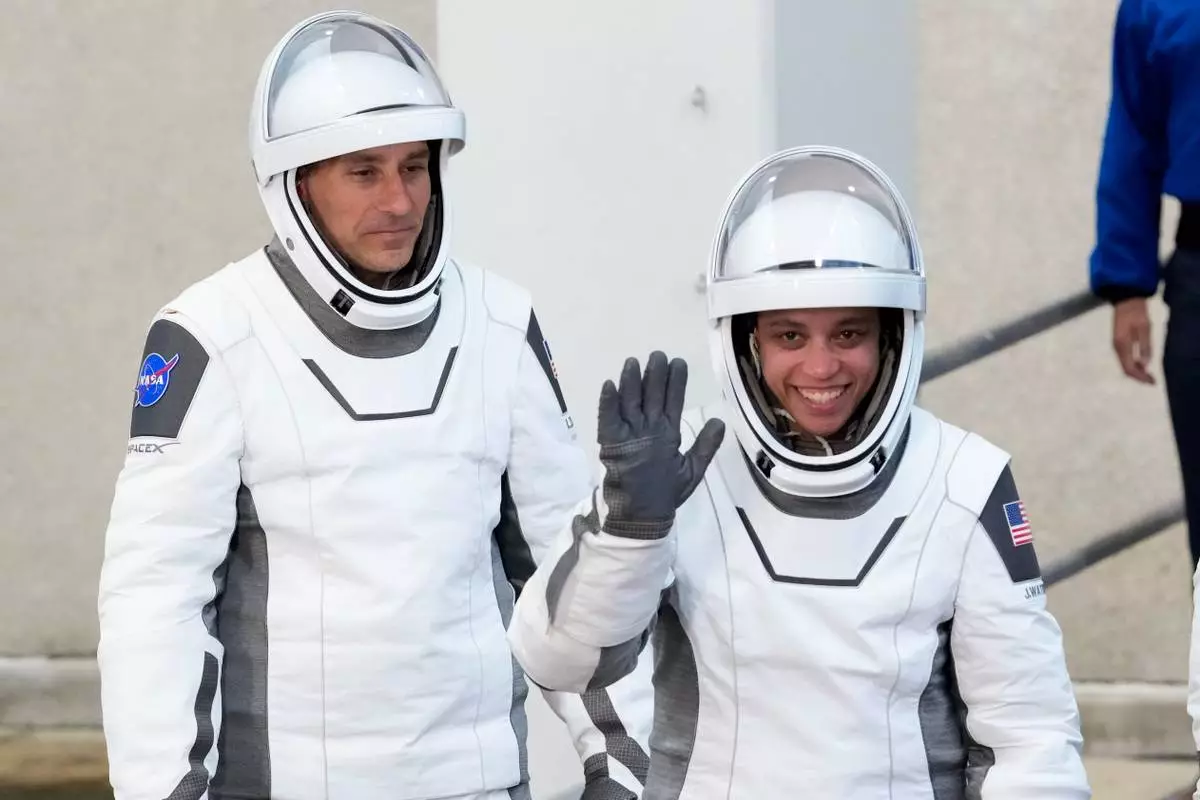
Pilot Luke Delaney, left, and commander Jessica Watkins leave the Operations and Checkout Building at the Kennedy Space Center in Cape Canaveral, Fla., Thursday, Oct. 1, 2026. (AP Photo/John Raoux)
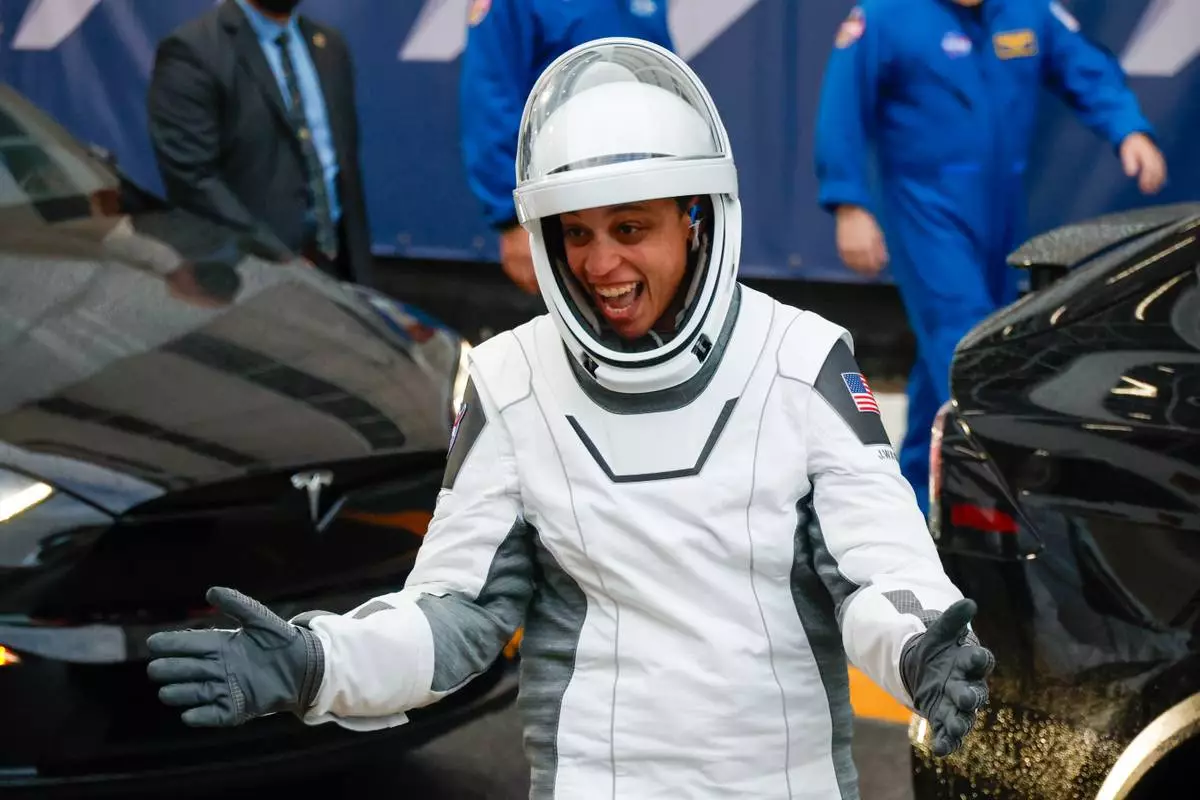
Commander Jessica Watkins greets family and friends as she leaves the Operations and Checkout Building at the Kennedy Space Center in Cape Canaveral, Fla., Thursday, Oct. 1, 2026. (AP Photo/Terry Renna)
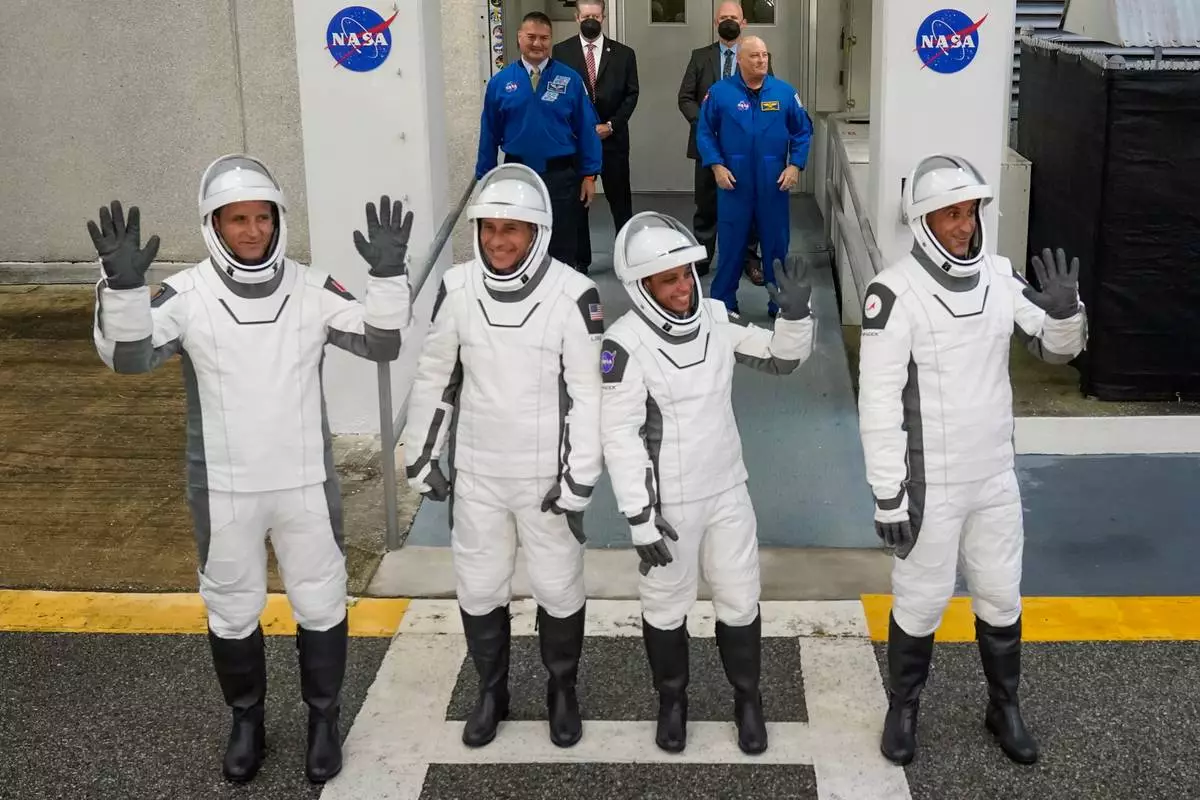
Astronauts, from left, Joshua Kutryk, of Canada, pilot Luke Delaney, commander Jessica Watkins and Cosmonaut Sergey Teteryatnikov, of Russia leave the Operations and Checkout Building at the Kennedy Space Center in Cape Canaveral, Fla., Thursday, Oct. 1, 2026. (AP Photo/John Raoux)
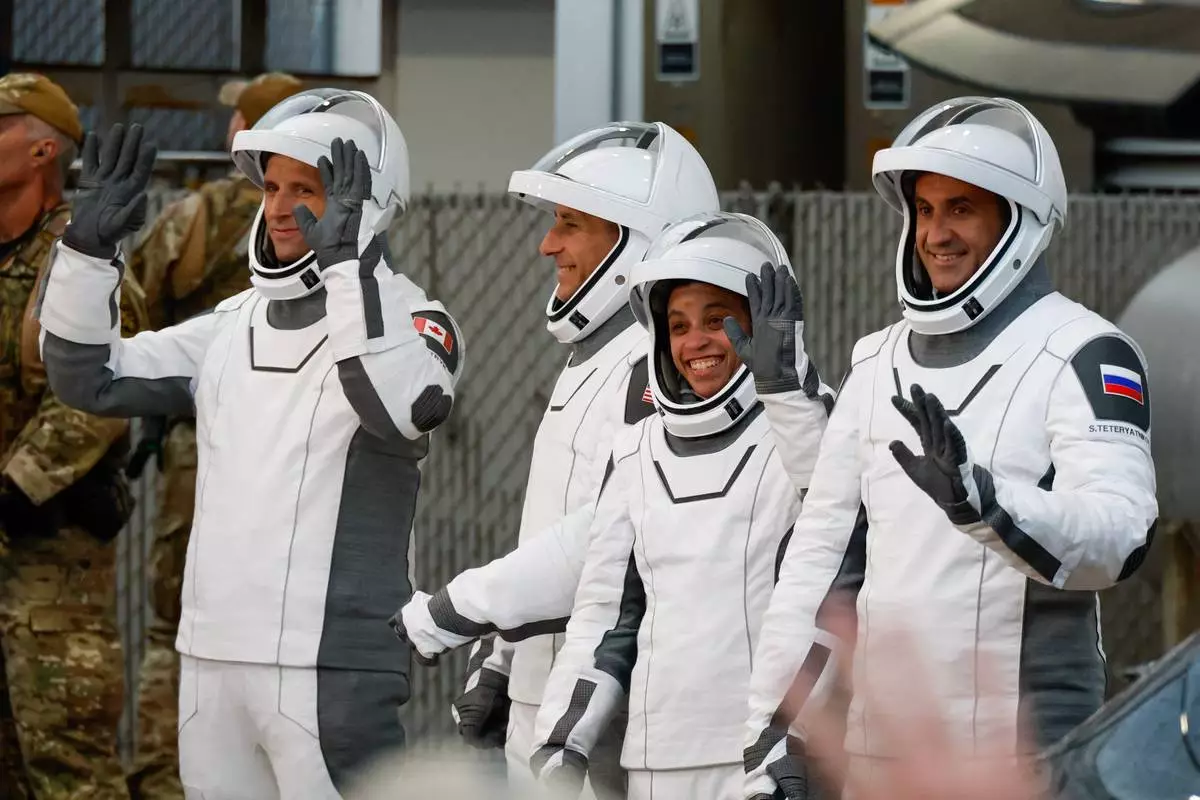
Astronauts, from left, Joshua Kutryk, of Canada, pilot Luke Delaney, commander Jessica Watkins and Cosmonaut Sergey Teteryatnikov, of Russia leave the Operations and Checkout Building at the Kennedy Space Center in Cape Canaveral, Fla., Thursday, Oct. 1, 2026. (AP Photo/Terry Renna)
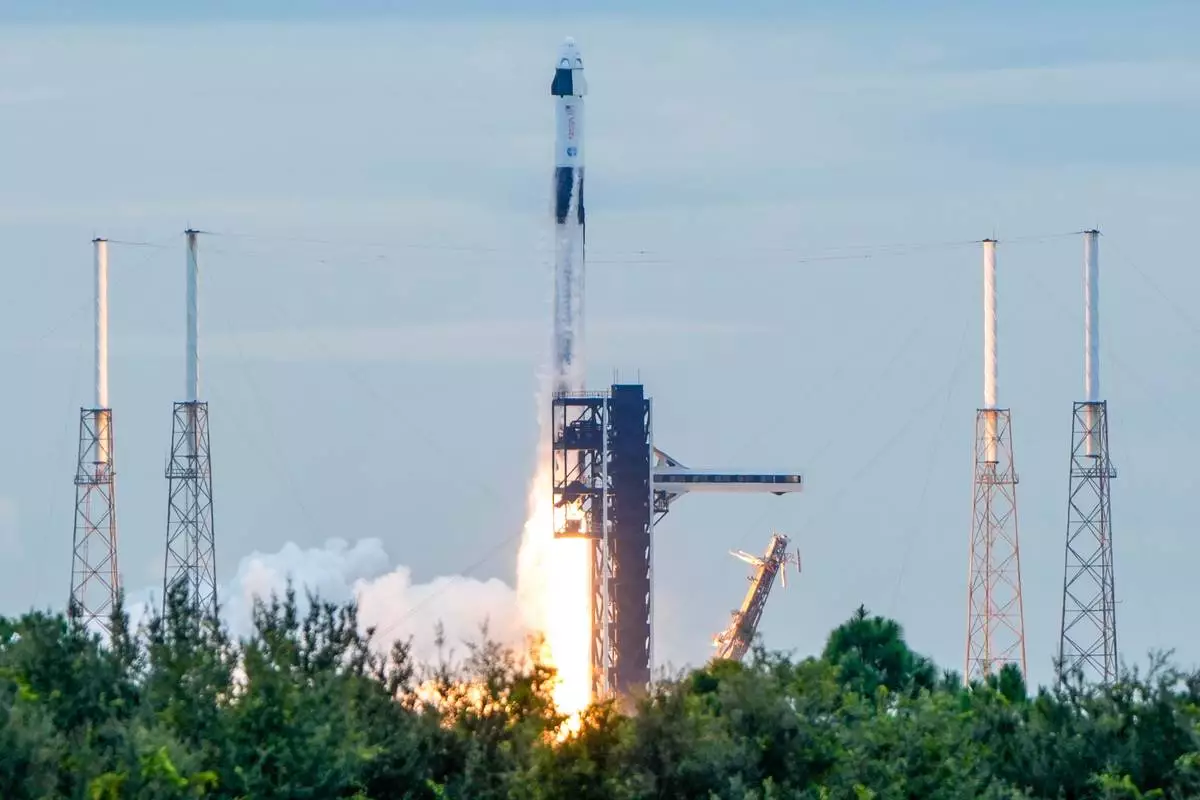
A SpaceX Falcon 9 rocket with a crew of four launches from pad 40 at the Cape Canaveral Space Force Station in Cape Canaveral, Fla., Thursday, Oct. 1, 2026. (AP Photo/John Raoux)