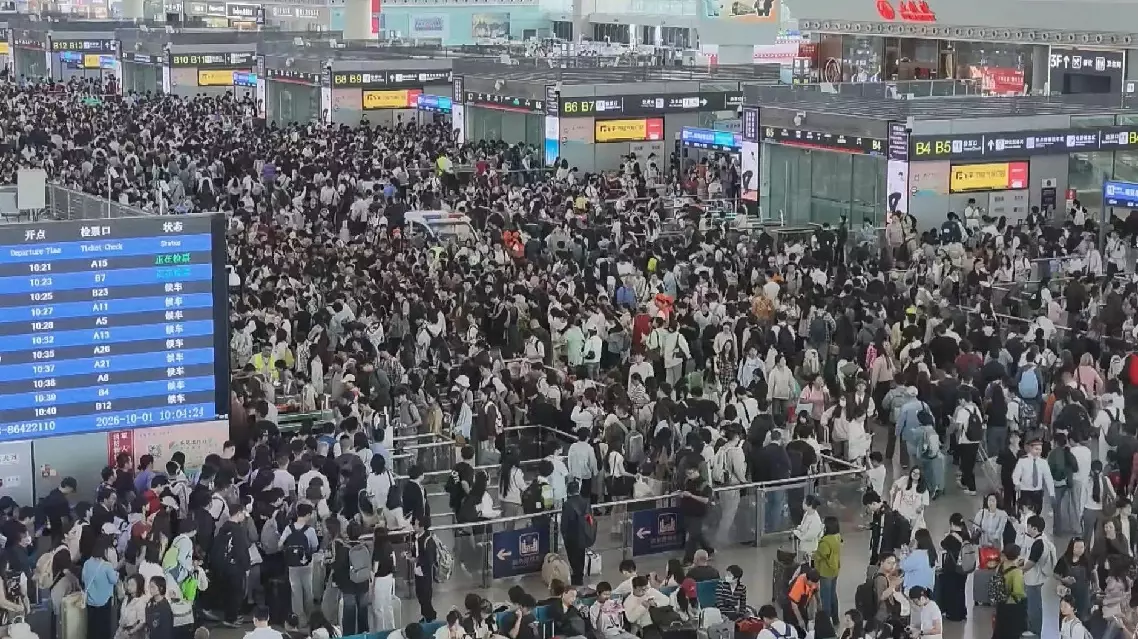
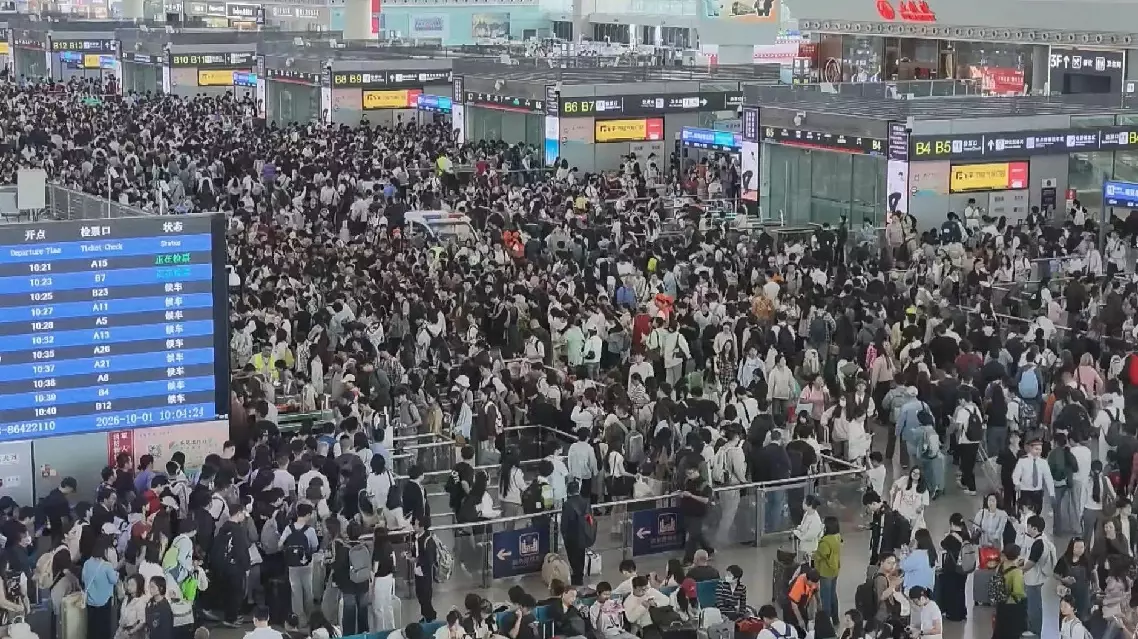
China reported 334 million inter-regional passenger trips on Thursday, the first day of this year's seven-day National Day holiday from Oct 1 to 7, according to transport authorities on Friday.
Specifically, railway passenger trips reached 25.20 million, setting a new record for the figure in a single day.
Click to Gallery
China sees 334 million inter-regional trips on 1st day of National Day holiday
China sees 334 million inter-regional trips on 1st day of National Day holiday
China sees 334 million inter-regional trips on 1st day of National Day holiday
China sees 334 million inter-regional trips on 1st day of National Day holiday
China sees 334 million inter-regional trips on 1st day of National Day holiday
China sees 334 million inter-regional trips on 1st day of National Day holiday
A total of 300 million road trips were expected on the day.
The waterways are expecting 1.34 million trips, increasing by 63 percent compared with the day before the holiday.
The civil aviation expected 2.51 million trips with 19,982 flights across the country.
The top 10 airports in terms of domestic passenger throughput on the day were Guangzhou Baiyun Airport, Shenzhen Bao'an Airport, Shanghai Pudong Airport, Beijing Capital Airport, Beijing Daxing Airport, Chongqing Jiangbei Airport, Chengdu Tianfu Airport, Hangzhou Xiaoshan Airport, Xi'an Xianyang Airport and Shanghai Hongqiao Airport.
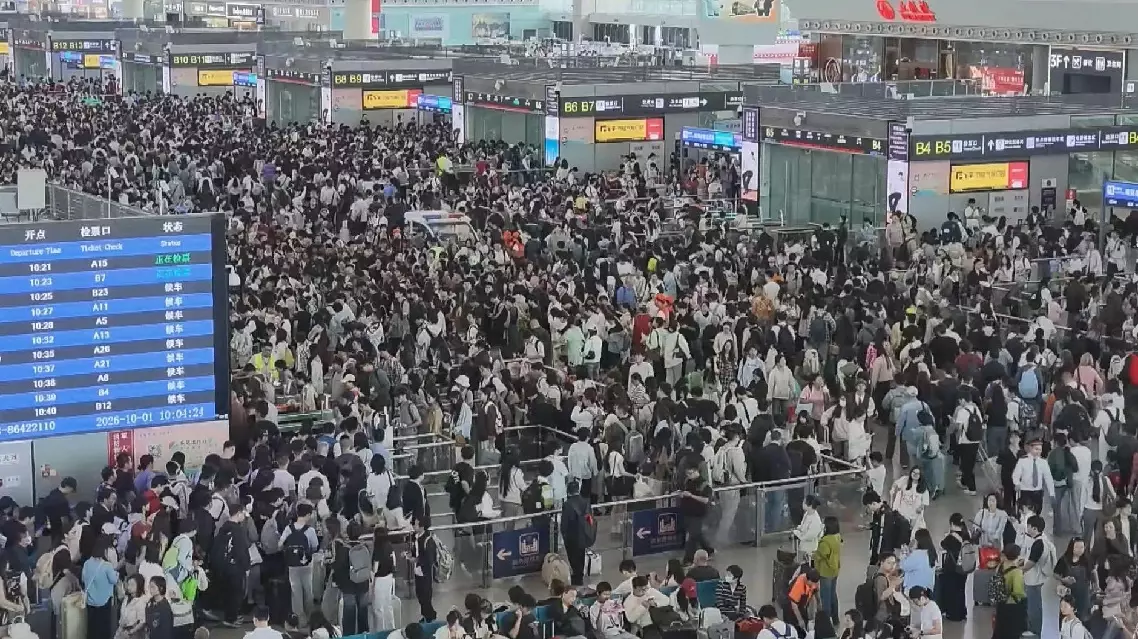
China sees 334 million inter-regional trips on 1st day of National Day holiday
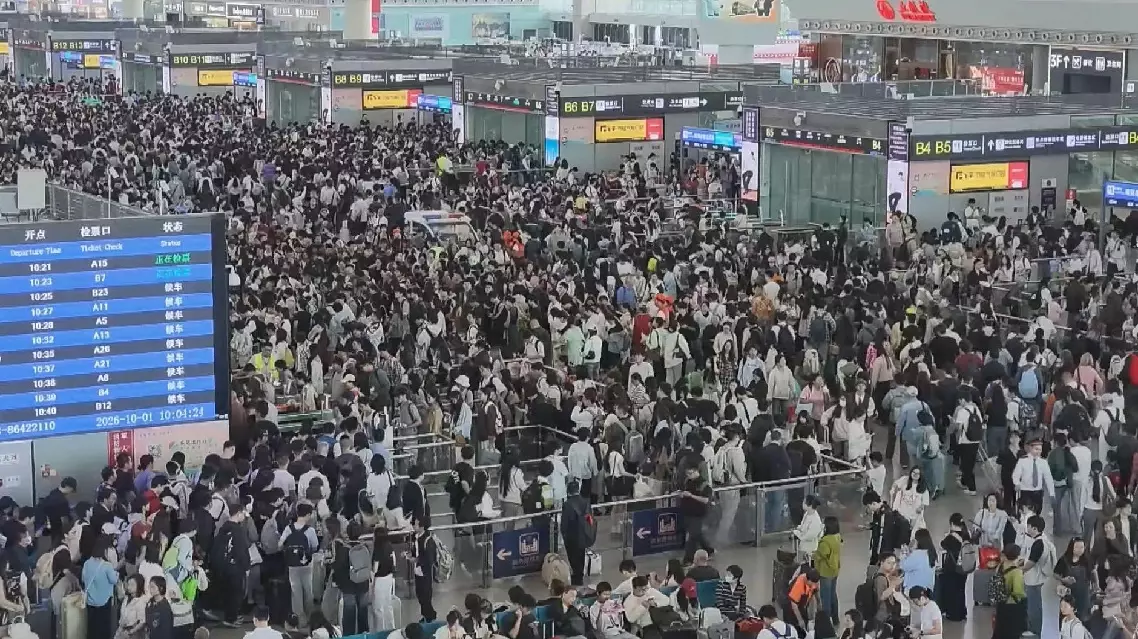
China sees 334 million inter-regional trips on 1st day of National Day holiday
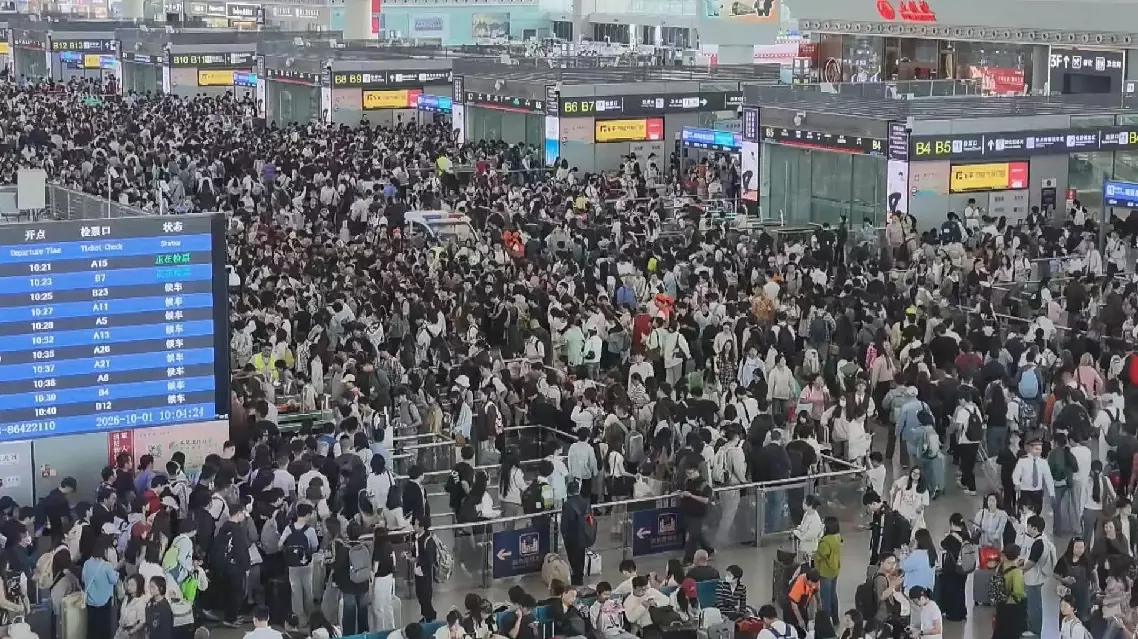
China sees 334 million inter-regional trips on 1st day of National Day holiday
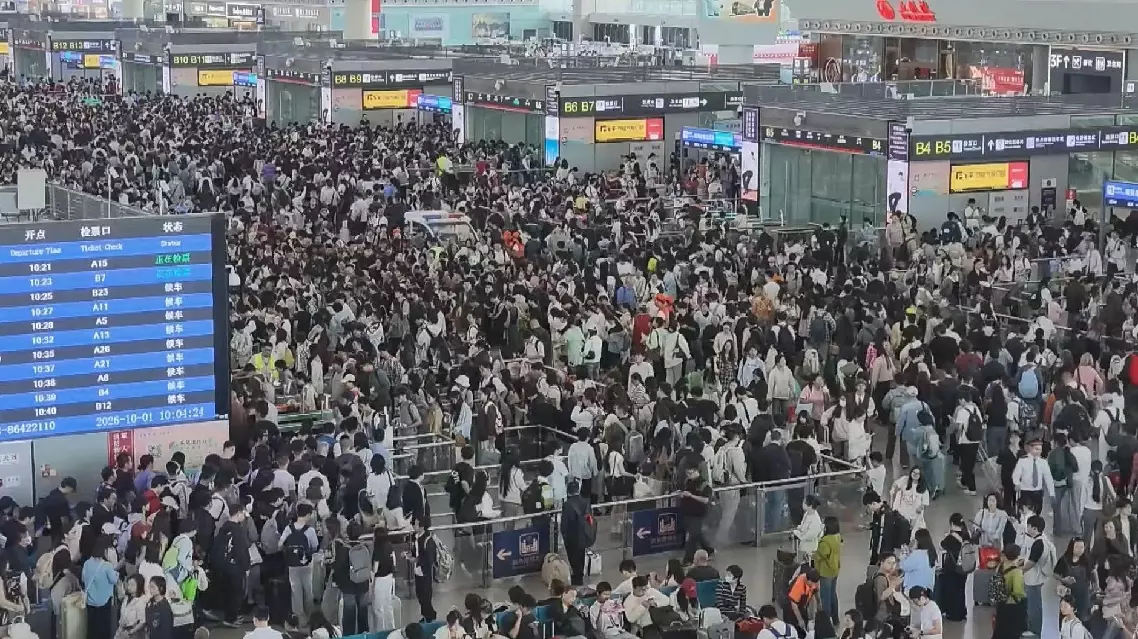
China sees 334 million inter-regional trips on 1st day of National Day holiday
China sees 334 million inter-regional trips on 1st day of National Day holiday
China sees 334 million inter-regional trips on 1st day of National Day holiday
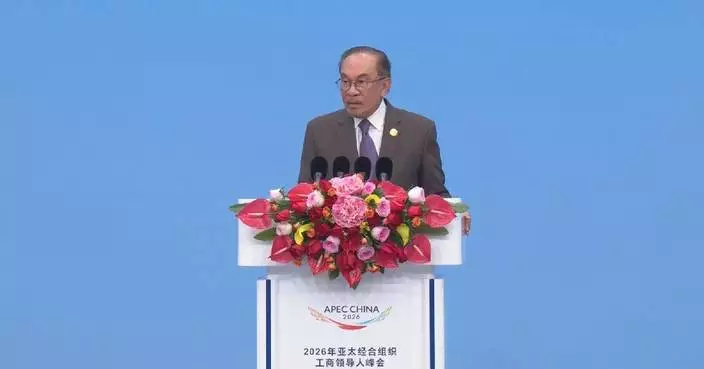
Experts from around the world have said the keynote speech delivered by Chinese President Xi Jinping at the opening of the Asia-Pacific Economic Cooperation (APEC) CEO Summit 2026 in Shenzhen on Wednesday has built consensus and pooled strength to forge a brighter future for the Asia-Pacific.
From scholars to representatives of international institutions, many experts noted that the address, grounded in the grand vision of building an Asia-Pacific community, not only answered the question of the times about the direction of regional cooperation under the new circumstances, but also offered a Chinese proposal for broadening and deepening Asia-Pacific cooperation. It turned the ideals of openness, innovation and partnership into tangible, inclusive and shareable development opportunities.
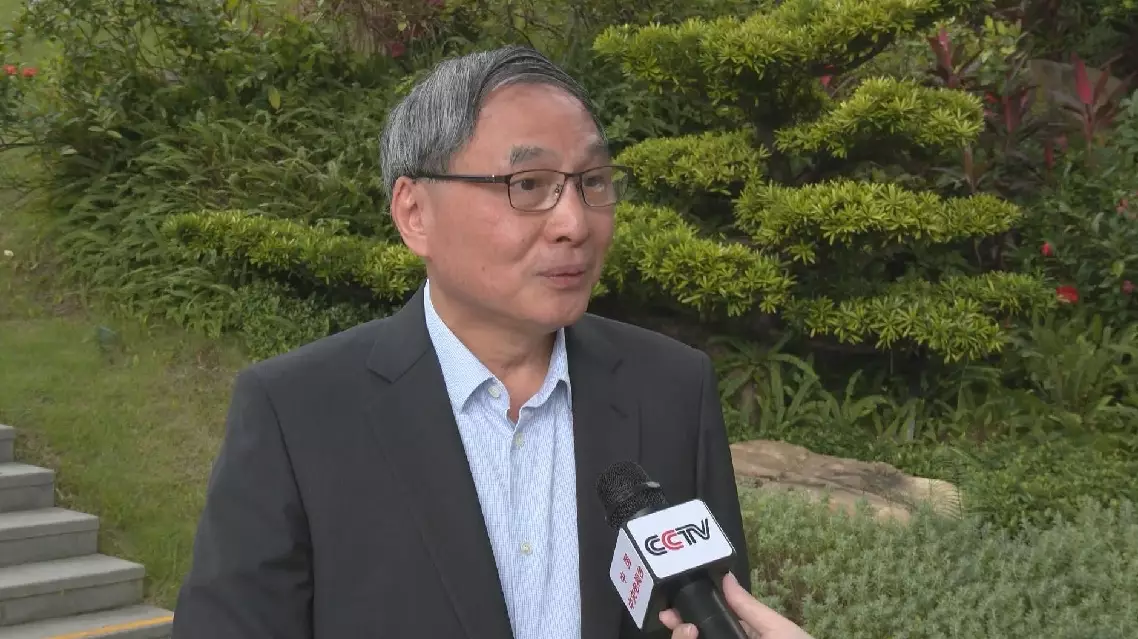
"In a sense, all 21 APEC economies are bay area economies, and they are all coastal. Therefore, the General Secretary's proposal that China supports the establishment of a world association for bay areas economic cooperation is of great importance. The Guangdong-Hong Kong-Macao Greater Bay Area has achieved remarkable development in recent years, offering many inspirations to the world. It not only realizes our own sustainable development, but also serves as a huge driving force for advancing global progress in the next stage," said Zheng Yongnian, dean of the School of Public Policy at the Chinese University of Hong Kong, Shenzhen. "The speech delivered by General Secretary Xi at the APEC CEO Summit was visionary and far-sighted, grounded in the grand vision of building an Asia-Pacific community. It not only answered the question of the times regarding the direction of Asia-Pacific cooperation under the new circumstances, but also put forward a Chinese proposal for expanding and deepening Asia-Pacific cooperation, demonstrating China's sense of responsibility in safeguarding stability and prosperity in the Asia-Pacific amid evolving global changes. The speech reaffirmed China's clear stance of continuously advancing high-level opening-up, extending an invitation for cooperation to the global business community. This will further unleash the dividends of China's super-sized market, making China's economic growth an opportunity for the Asia-Pacific and the world," said Liu Chenyang, director of the APEC Study Center at Nankai University.
While Chinese scholars analyzed the speech's strategic vision, international business representatives responded from a practical, operational angle, showing a strong alignment between the address and the expectations of global investors.
For them, the emphasis on lowering tariffs, inviting foreign investment and advancing the Global Governance Initiative confirmed a policy direction they already recognized -- one that translates diplomatic commitments into concrete market opportunities.
"What impressed me most about President Xi's keynote speech was the clear emphasis on openness, including support for the multilateral trading system, progress in building the Free Trade Area of the Asia-Pacific, and China's willingness to open its vast market to foreign enterprises," said Alexander Stuglev, chairman of the board and CEO of Russia's Roscongress Foundation.
"I think that a lot of it is in line with what I expected. China's Global Governance Initiative and the way in which China thinks that it as a country and the world should move forward. In terms of opening up and free trade, he would have spoken about lowering tariffs to invite more investments into China and businesses that are interested in coming here to explore the market," said Alicia Boucher, journalist at CCN TV6 a major television network in Trinidad and Tobago.
Experts say Xi's speech at APEC CEO Summit helps strengthen Asia-Pacific cooperation