The 2026 Global South Modernization Forum was held in Cairo on Wednesday, with participants calling for the effective use of artificial intelligence (AI).
More than 100 experts and scholars from nearly 30 countries and regions attended the forum, a joint initiative between Chinese and Egyptian institutions.
Under the theme "The Rise of Artificial Intelligence: Opportunities and Challenges for Modernization in the Global South," the forum featured seminars and roundtable discussions exploring how Global South nations can become producers and innovators in AI.
Participants said innovation in AI technology presents enormous opportunities while also posing governance challenges.
"AI is a double-edged sword. For developing countries, it is an unprecedented development opportunity, but also an unprecedented challenge. In particular, AI not only improves labor productivity and the production of all elements, but also helps to solve many problems in development and the troubles of growth," said Cai Feng, a member of the academic committee of the Chinese Academy of Social Sciences.
The theme of the forum is inspired by Chinese President Xi Jinping's calls for AI to be for all, not controlled by some.
"If the capabilities of advanced artificial intelligence are concentrated in a limited number of countries and companies, technology may turn from a tool for development to a new source of hegemony over others. In this context, I would like to express my deep gratitude to China, which offers a lot to the countries of the South, of which it is a part, through its financial, geo-economic, technical, commercial and institutional tools," said Ezzat Saad, chairman of the Egyptian Council for Foreign Affairs.
Participants commended China's efforts to expand AI cooperation by opening centers in several countries in the South and providing developing countries with 5,000 opportunities for AI training and seminars over the next five years.
"China has been very instrumental in really providing those sorts of opportunities and resources. A lot of brilliant people and scholars on the continent are unable to access certain opportunities because perhaps they don't have the finances to do so. When you have platforms such as this that can identify and train, then you have that ripple effect whereby you train one generation, and then they begin to spread that knowledge to help others," said Oyebanke Abejirin, economic affairs officer of the United Nations Economic Commission for Africa.
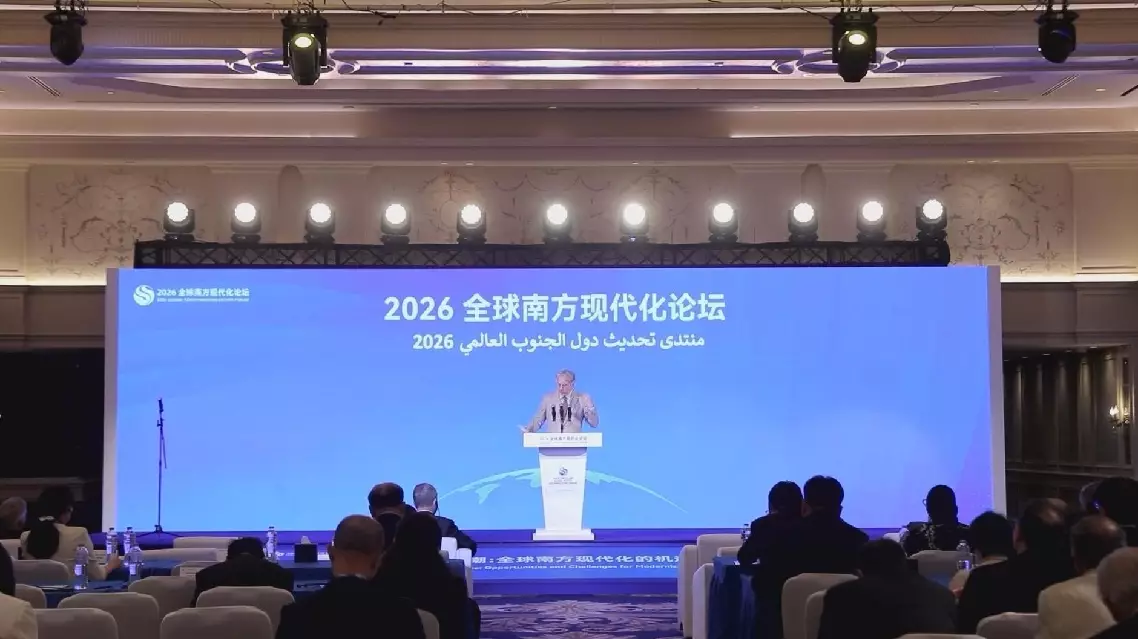
2026 Global South Modernization Forum calls for effective use of AI
An inspiring story involving an act of kindness shown by a group of female Red Army soldiers towards a poor rural family facing extreme hardships during the Long March over nine decades ago continues to leave a legacy to this day, inspiring generations of local people in the Shazhou Village of central China's Hunan Province to strive for the village's revival.
The Long March, a historic military trek from 1934 to 1936, saw Red Army troops led by the Communist Party of China (CPC) brave raging rivers, snow-covered mountains and treacherous grasslands, marching as far as 12,500 kilometers. The arduous journey laid the foundation for the eventual victory of the Chinese revolution, which this year marks the 90th anniversary.
The poignant story in question took place in November 1934. As the Red Army passed through the Shazhou Village in Hunan's Rucheng County, a countrywoman named Xu Jiexiu welcomed three female soldiers who were seeking shelter into her home.
But the impoverished family had no proper blanket to protect them from the cold. That night, Xu, her young child and the three soldiers shared a bed huddled under the soldiers’ own quilt.
When the soldiers left the next morning, they decided to cut their quilt in two, leaving half behind with Xu, a move which symbolized the sense of duty and the strong care for the people the Red Army believed they were fighting for.
The warmth of this tale has lived on for generations, and still has a deep meaning and a direct connection to many people in the village.
Zhu Xiangqun, Xu's great-grandson, has served as a village official since 2014. He says his approach to the job was shaped by the legacy of the famous 'Half a Quilt' story.
"My great-grandmother used to tell us that if our country ever needed us, we should be ready to serve it," he said.
As the Party Secretary of Shazhou Village, Zhu has been looking for ways to help local farmers reach more markets and increase their family incomes.
As part of China's intensified poverty alleviation campaign, Zhu and other grassroots officials worked to improve infrastructure and develop specialty industries. The village has now built a large agricultural demonstration base, using modern farming techniques to grow high-quality crops.
"After bringing the villagers' land together through land transfers, we leased it to companies operating here and set up farmers' cooperatives. The villagers can earn income from their land and can also work here to earn more," said Zhu.
The village's development now goes far beyond agriculture. Its 'half a quilt' legacy has also become a draw for visitors.
Zhu Xiaohong, the grandson of Xu Jiexiu, runs a family restaurant. He has seen first-hand how tourism has changed his family's life.
"In 2015, our family of four had a total income of just over 5,000 yuan (about 750 U.S. dollars). By 2019, it had reached 100,000. Back then, the Red Army gave my grandmother half a quilt. Now, the Communist Party of China (CPC) has brought us a good life," he said.
Rapid development in the village has also given more young people a reason to stay. After working in different cities, Zhu Xiaomei returned seven years ago and opened up a restaurant of her own. Embracing modern technology in this rural setting, she now also uses livestreaming to sell local farm products to customers far and wide.
"Over the past few years, I've had children while running my restaurant here. I can take care of my family and children and still earn an income. That's exactly what I was hoping for," she said.
Reflecting on the lasting impact of this story involving his great-grandmother, Zhu Xiangqun said he is proud to continue passing on the legacy of such acts of selflessness and see this local community go from strength to strength.
"Shazhou Village has developed, and the villages around us have grown with it. Seeing people live happier, better lives, that's the best 'Long March' we could undertake as village officials," he said.
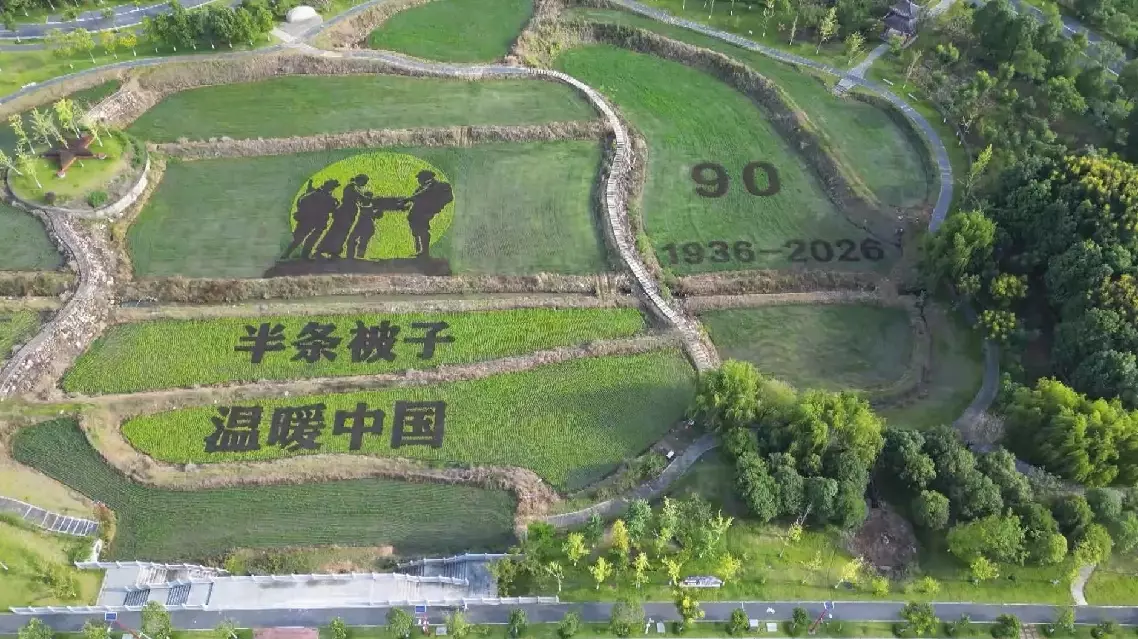
Legacy of 'Half a Quilt' tale from Long March continues to inspire villagers nine decades on