WASHINGTON (AP) — The Group of Seven industrial nations said Friday that they plan to release 100 million barrels of oil and fuel products in the coming weeks, starting with “substantial” amounts of diesel after the fuel recently hit record high prices in the United States.
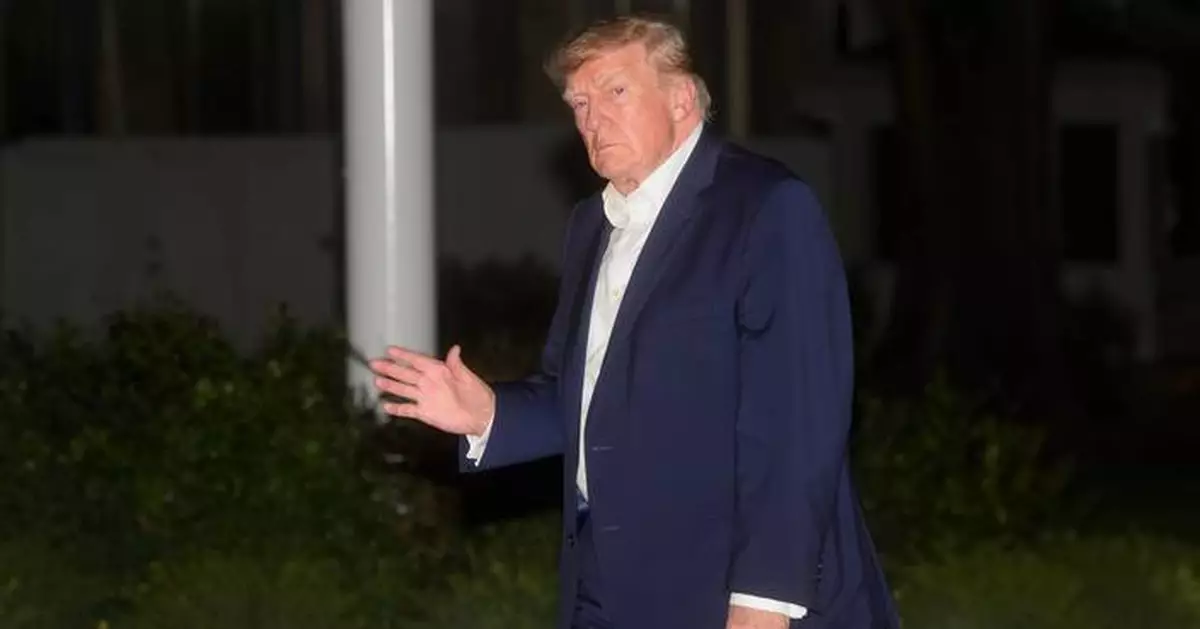
President Donald Trump said the diesel release would happen “immediately," while a G7 statement promised a “frontloaded substantial release” of diesel within the next 20 days.
Trump and his Republican Party face pressure to address surging prices ahead of the Nov. 3 midterm elections, and Trump announced the action Friday on social media. The president's approval ratings on the economy hit a new low, according to an AP-NORC poll, as the Iran war and his trade battles have increased U.S. prices for oil and other goods.
Gas prices in the U.S. and abroad have soared during the eight-month-long war, a cost Trump has repeatedly said is worth it for making sure Iran does not obtain nuclear weapons. The national average for a gallon of diesel in the U.S. was $6.37 on Friday, according to AAA, after hitting a record $6.52 on Sept. 22.
France holds the rotating presidency of the G7 group and made the announcement in a statement released after videoconference talks that Macron presided over. The International Energy Agency will coordinate the effort to combat soaring fuel prices.
“We will implement our commitments with a coordinated release through the IEA of 100 million barrels (MB) to begin immediately over 4 months, including a front-loaded substantial diesel release within the first 20 days by G7 members and partners,” the statement said.
Some Republicans in the U.S. had called for Trump to ban U.S. exports of diesel to try to bring domestic prices down. But the G7 statement said the group, which includes the United States, also agreed not to limit energy exports to each other.
“We reaffirm our commitment to refrain from export restrictions on energy and energy products between G7 countries and call on all producers to refrain from imposing bans that could exacerbate market tensions,” it said.
Trump had a conversation overnight with French President Emmanuel Macron, the chair of the G7, about the need to address rising fuel prices and the availability of petroleum products, according to the French Embassy in the U.S. Macron on Friday then chaired the videoconference of G7 leaders to discuss the issue.
Besides his call with Macron, Trump on Friday called in to the meeting with the G7 leaders to negotiate the release of the European diesel stockpiles, according to a White House official who was not authorized to speak publicly and spoke on the condition of anonymity.
Trump on Thursday embarked on what he said would be a 32-day marathon of rallies to try to bolster his party's chances for keeping control of the U.S. House and Senate in the November elections. The president has grown increasingly frustrated with what he sees as a disconnect between his achievements and the public’s view of his work. This week he gave himself an A-plus for his work on the economy but said “we’re doing an extremely poor job of promotion.”
Leicester reported from Paris. AP writer Michelle L. Price contributed to this report.
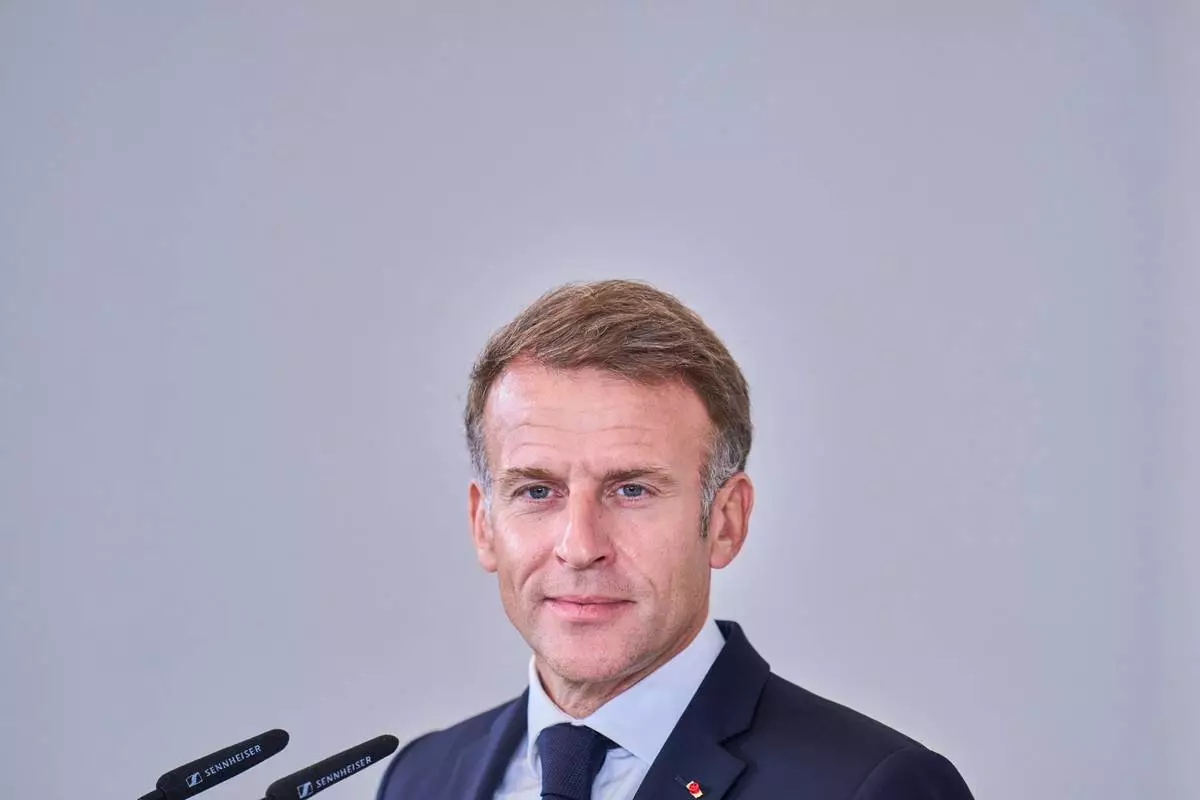
France President Emmanuel Macron attends a news conference with Spain's Prime Minister Pedro Sanchez in Madrid, Spain, Wednesday, Sept. 30, 2026. (AP Photo/Manu Fernandez)
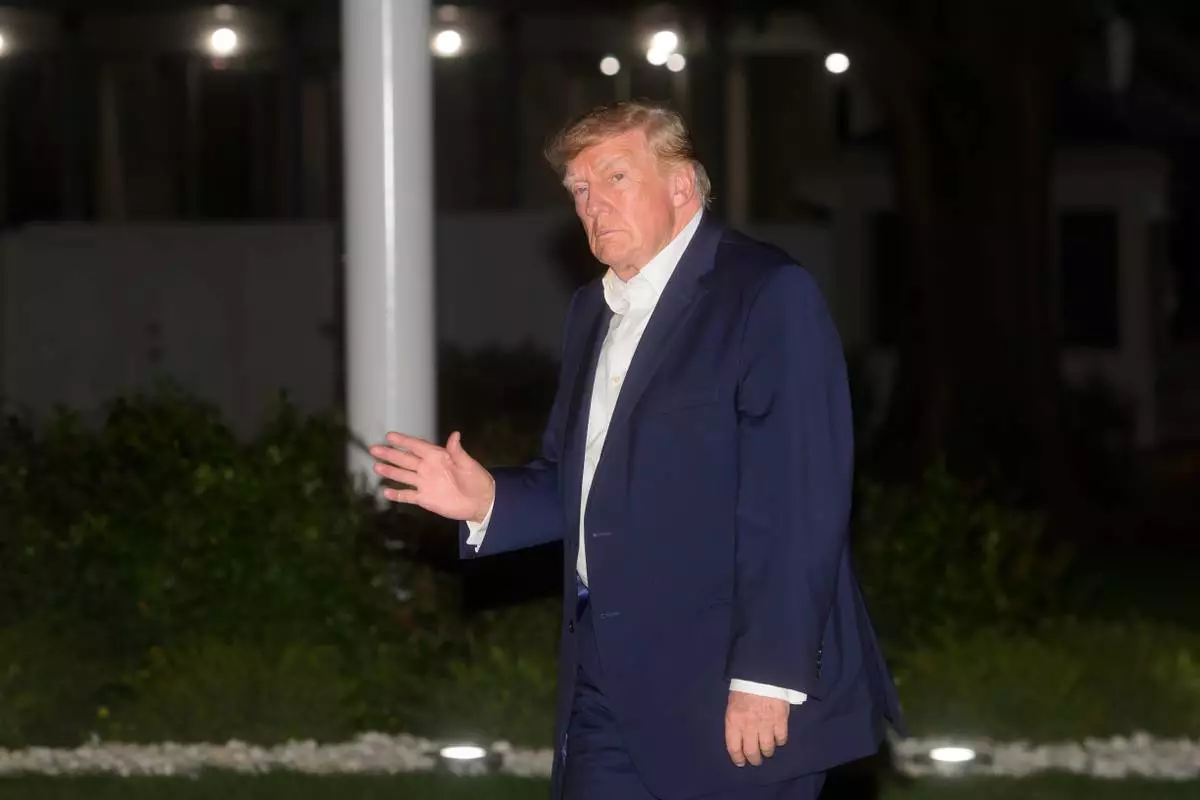
President Donald Trump arrives on Marine One on the South Lawn of the White House, Friday, Oct. 2, 2026, in Washington. (AP Photo/Rod Lamkey, Jr.)
PARIS (AP) — Saint Laurent sent out a river of gold, as giant chandeliers bathed a glossy black outdoor runway with golden light and the Eiffel Tower shimmered in the background.
The extravagant show was attended by Catherine Deneuve, Kate Moss, Hailey Bieber and Rami Malek, while elsewhere at Paris Fashion Week Jennifer Lopez took her seat at Stella McCartney’s rain-soaked gardens. Rihanna turned out for the upstarts at the conceptual fashion house Matières Fécales, which translates as “fecal matter.”
Whatever its financial troubles — and there are many — Paris retained its ability to assemble stellar front rows and impressive staging this season.
Midway through spring-summer 2027, shows crystallized into three stories: glamour on a grand scale; a great undressing; and an industry working couture technique into T-shirts and jeans while asking itself, nervously, who all of this is for.
Last month, cosmetics giant L’Oréal overtook LVMH as France’s most valuable listed company. It's the first time since 2017 that a non-luxury company has topped the Paris bourse.
Saint Laurent’s parent Kering has returned to growth after a bruising downturn, but Balenciaga remains under pressure and Gucci is still struggling to reverse years of falling sales behind the runway gloss.
At Saint Laurent on Tuesday night, gold was almost the whole story.
Gold looked brittle, fluid, translucent or densely worked. Safari jackets and trenches came in crinkled metallic cottons. Cocktail dresses featured glinting lace, cropped jackets in brocade. Stilettos stood on serpent-shaped heels.
Then came the black finale, led by Polish supermodel Anja Rubik — a reversal of Yves Saint Laurent’s all-gold closing sequence in 1991.
Charlotte Gainsbourg stepped onto the runway to sing, adding an intimate finish to the monumental setting.
Marking a decade at the house, designer Anthony Vaccarello dispensed with his customary interviews and let the collection carry the occasion.
Its retrospective mood invited speculation about a farewell, but the show contained no announcement of a departure.
Two days later, Chloé approached excess through texture.
Chemena Kamali piled broderie anglaise with lace, pearls and tassels, and sent out rainwear and long-brimmed fishermen’s hats in vivid colours. Ruffled sleeves showed an emphatic argument for volume.
The bright outerwear interrupted the sweetness.
The question was how much decoration Chloé‘s promise of easy dressing could comfortably carry.
McCartney’s show, meanwhile, rewarded its damp audience with easy tailoring, coral-like knitted forms and airbrushed dolphins on denim.
Sculptural hems and peplums gave the clothes an underwater buoyancy, while naturalist David Attenborough’s voice supplied the ocean-conservation message.
The peplum, in fact, was one of the week’s quiet constants, turning up sculpted here and stitched into shirting at Balenciaga.
The strongest pieces connected that theme to McCartney’s familiar sporting ease: loose tailoring, drawstring details and clothes with room to move.
Across the runways, underwear was doing an increasing share of the dressing.
At Tom Ford, Haider Ackermann staged a particularly playful display: sharp tailoring accompanied by bare chests, fishnet, severely reduced swimwear and silk robes. Black swimsuits were more geometry than garment.
A male model in a sweater and pale pink thong carried a vicuña coat draped over a weekend bag.
Ackermann extended the house’s familiar sexual confidence across men’s and women’s clothes, keeping the tailoring precise enough to give all that exposure some structure.
At Balmain, Antonin Tron built a stronger second outing around midcentury backstage photographs and their air of glamorous half-dress: corset bodices, garters swinging from miniskirts, bras under shrunken satin bombers, eel skin and animal-patterned jacquards.
His references ranged from Jim Morrison to Michel Foucault’s experiments with LSD in California.
Simulated rain lashed the covered windows of Karl Lagerfeld’s former mansion.
Printing, embroidery and sequins gave the surfaces depth, though their richness sometimes competed with the sensual draping that is one of Tron’s strengths.
Even Rick Owens went boudoir, on his own terms: on a ramp across the Palais de Tokyo’s reflecting pool, he sent out stone-colored column gowns, spiked tulle, crystal-laden footwear and full-body constructions of tulle and elastic.
The question beneath it all was harder to stage: in a downturn, how does luxury justify itself?
Pierpaolo Piccioli’s answer at Balenciaga was technique.
Dense rows of stitching shaped a white shirt into a fitted waist and flaring peplum.
A T-shirt received a similar treatment. Jeans were cut on the bias — diagonally across the fabric — to change their fall.
Shown in daylight at the Tennis Club de Paris, the collection made a persuasive case for putting couture knowledge to everyday use.
Designers Hannah Rose Dalton and Steven Raj Bhaskaran took over Place de la République for a show titled “The 99 Percent.”
The collection brought together sari-inspired draping, shredded denim and figures styled to evoke masked demonstrators.
The finale sent out a woman in a gold lamé gown carrying two slumped dummies of white men in suits.
Public access was part of the proposition.
The irony was hard to miss: 99% of the world cannot afford Matières Fécales’ clothes.
Paris had demonstrated how to make people look, but it's the clothes, the industry hopes, that will persuade them to spend.
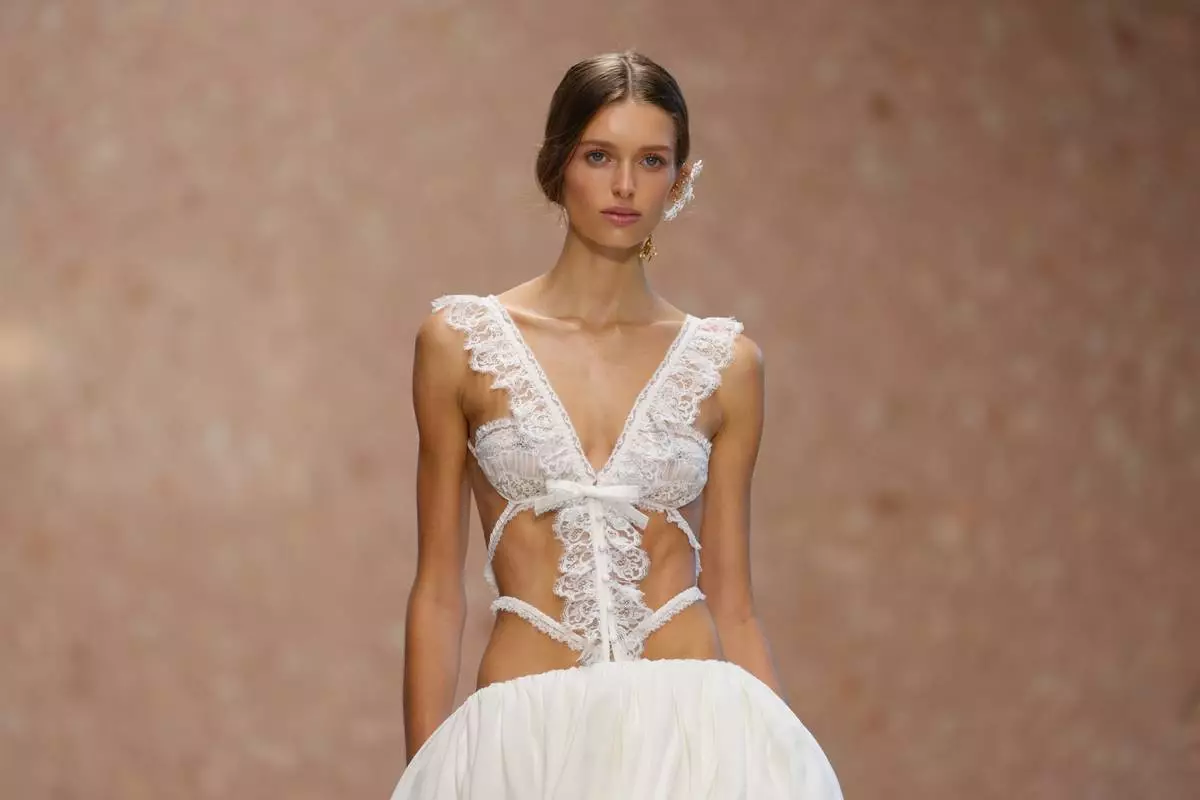
A model wears a creation as part of the Chloe Womenswear Spring Summer 2027 collection presented in Paris, France, Thursday, Oct. 1, 2026. (AP Photo/Aurelien Morissard)
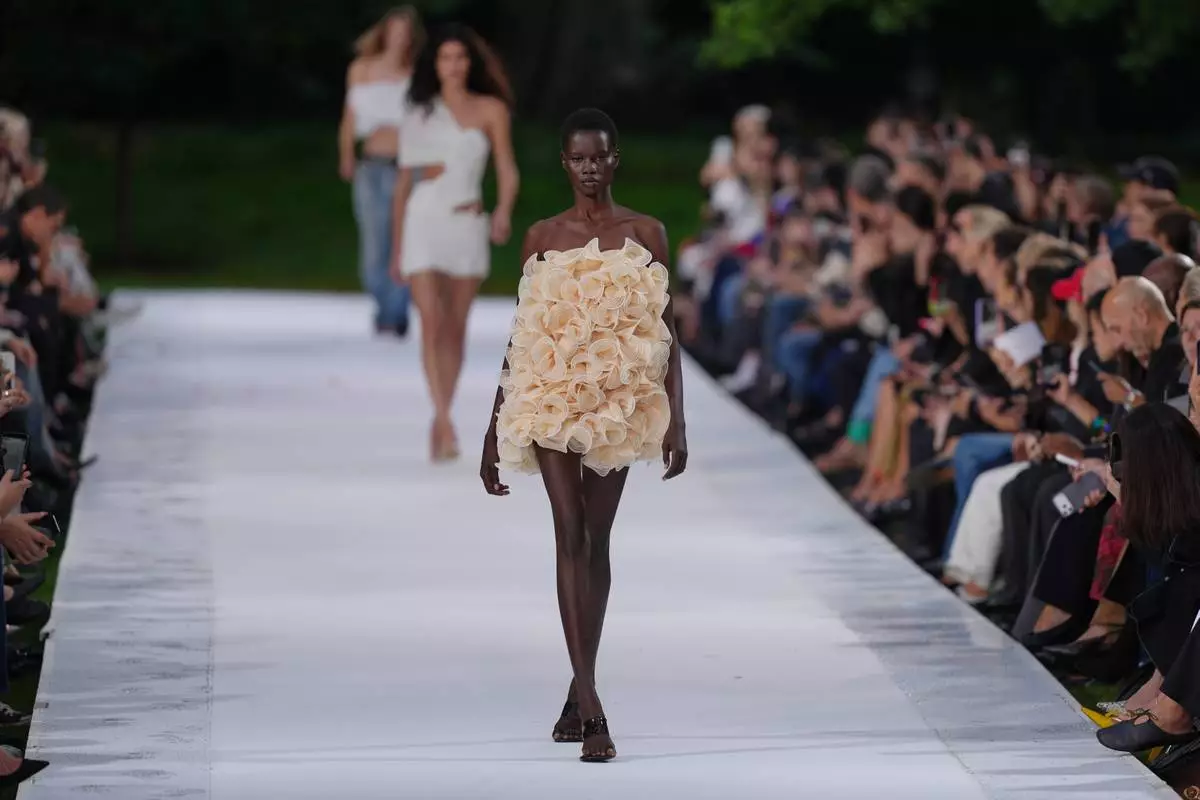
A model wears a creation as part of the Stella McCartney Womenswear Spring Summer 2027 collection presented in Paris, France, Wednesday, Sept. 30, 2026. (AP Photo/Aurelien Morissard)
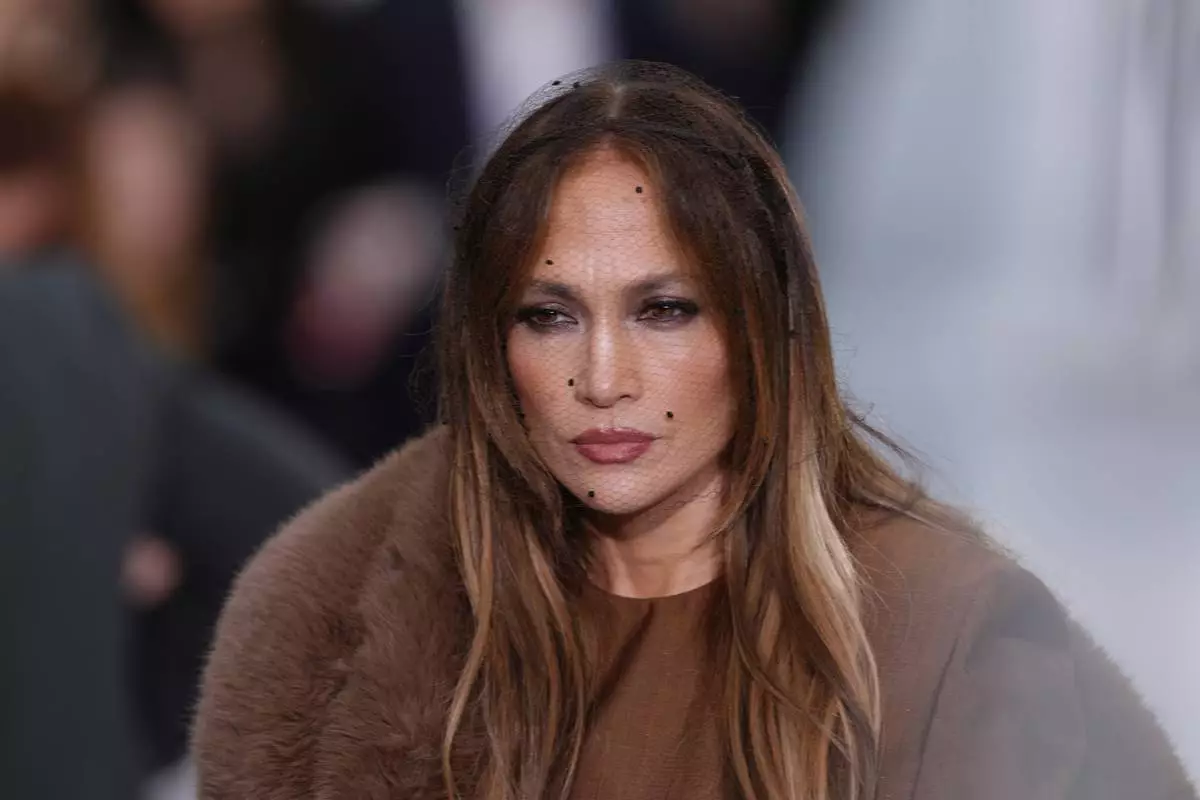
Jennifer Lopez arrives for the Stella McCartney Womenswear Spring Summer 2027 collection presented in Paris, France, Wednesday, Sept. 30, 2026. (AP Photo/Aurelien Morissard)
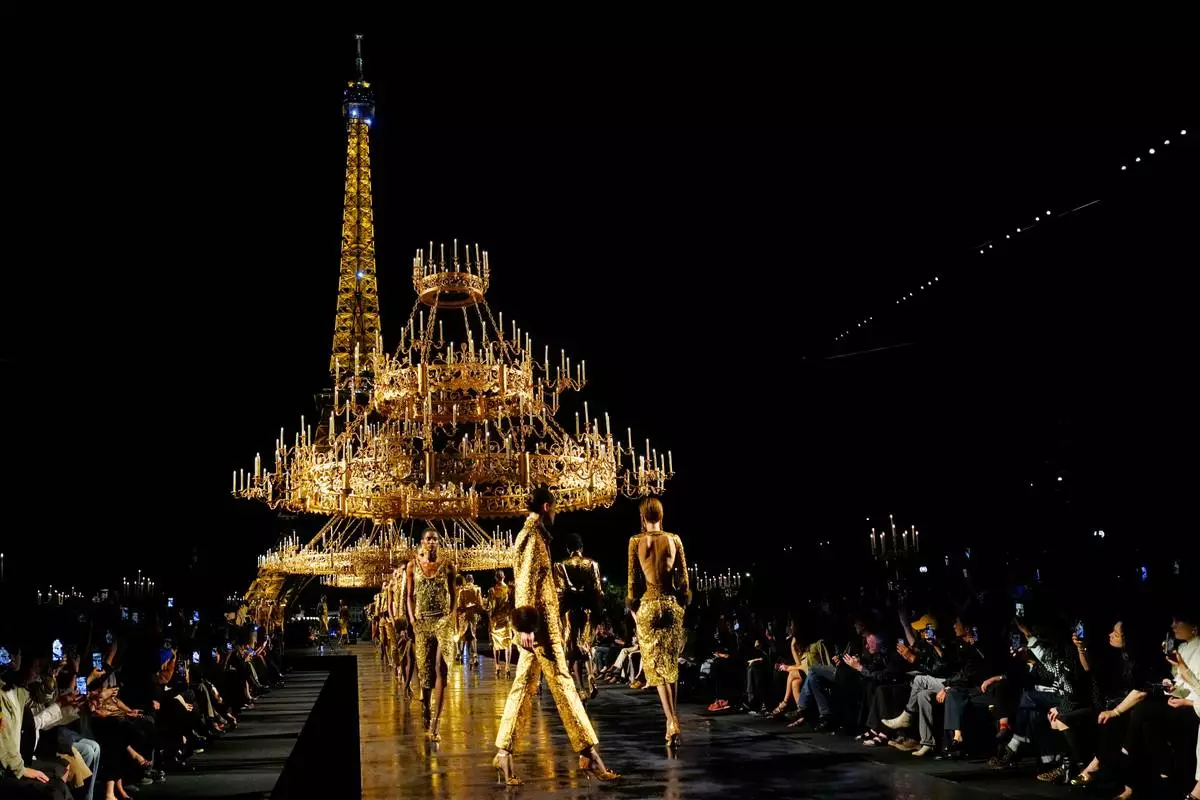
Models wear creations as part of the Saint Laurent Womenswear Spring Summer 2027 collection presented in Paris, France, Tuesday, Sept. 29, 2026. (AP Photo/Teresa Suarez)
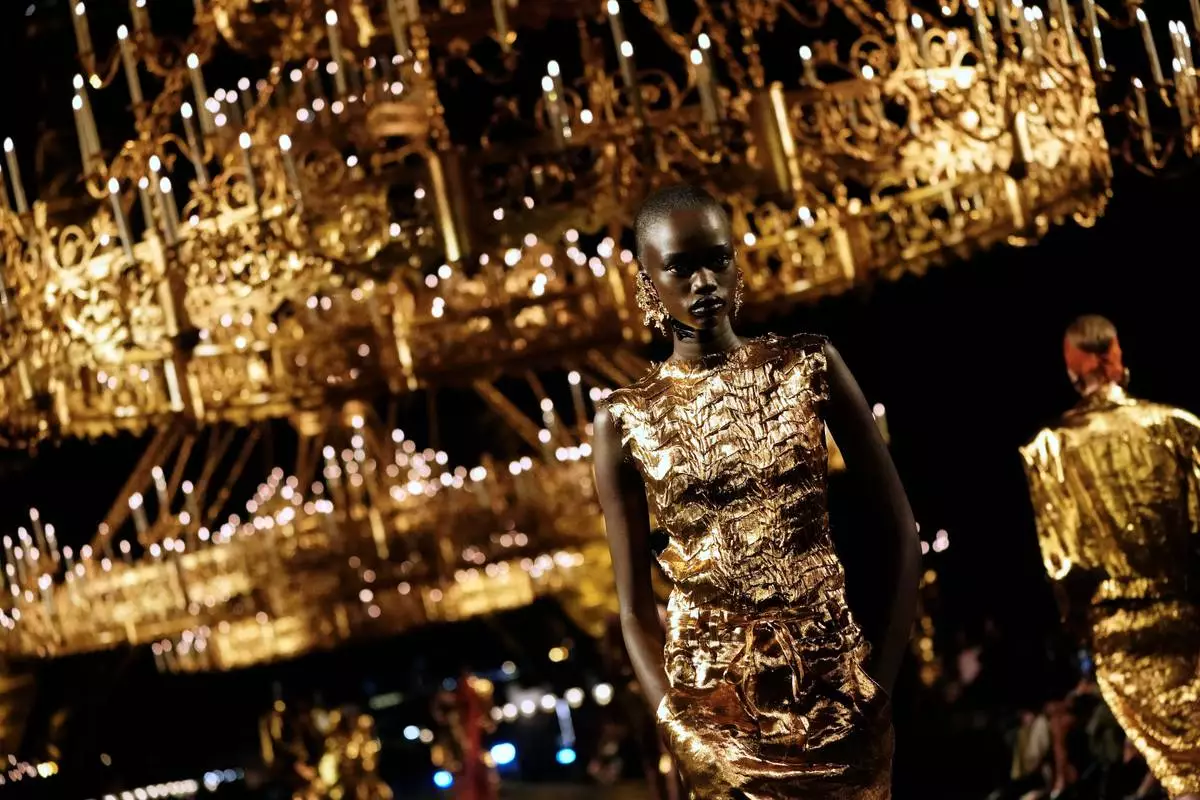
A model wears a creation as part of the Saint Laurent Womenswear Spring Summer 2027 collection presented in Paris, France, Tuesday, Sept. 29, 2026. (AP Photo/Teresa Suarez)