PORTLAND, Maine (AP) — John Evich, a commercial fisherman in Washington and Alaska, has voted for President Donald Trump three times, viewing him as someone who would fight for his industry.
But these days, Evich is weary of the high cost of doing business at sea, with fuel prices rising and trade hostilities with Canada jeopardizing markets for the crabs that he pulls off the ocean floor.
Click to Gallery
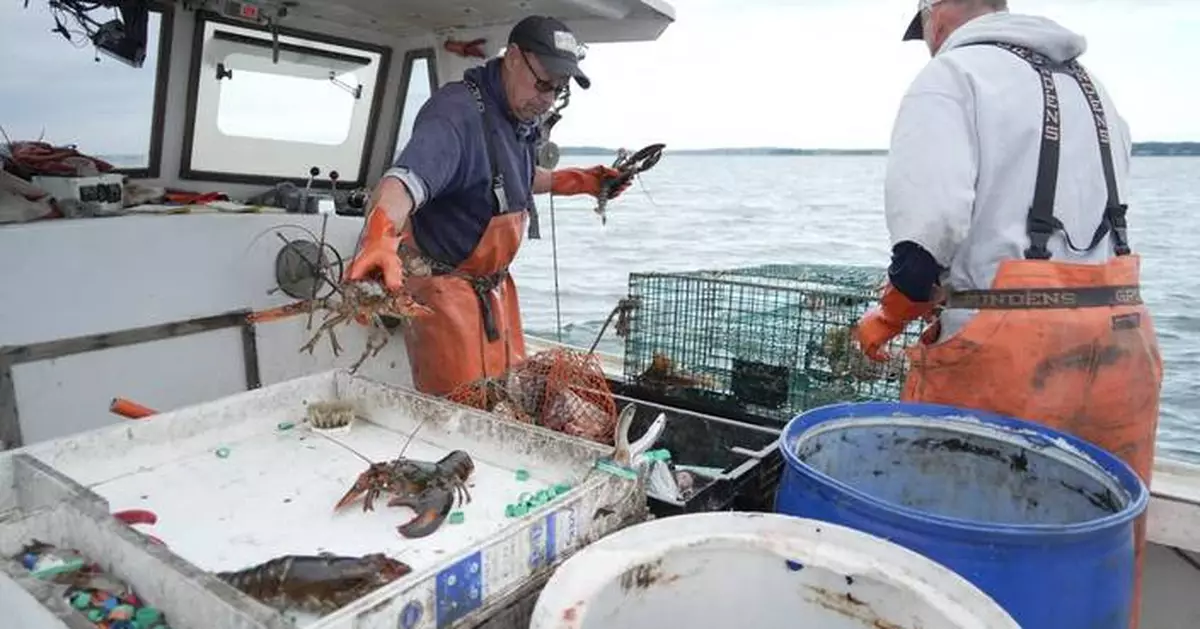
Lobsterman Dan Train showing some of the largest lobsters recovered from a lobster trap while out fishing with his brother in Casco Bay, Maine, on Wednesday, Sept. 16, 2026. (AP Photo/Rodrique Ngowi)
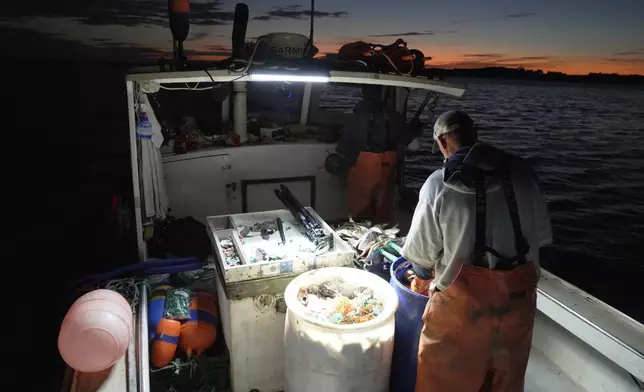
Lobsterman Steve Train at the helm of the fishing boat while his brother, Dan Train, prepares bait as they head out before dawn to check on their traps in Casco Bay, Maine, on Wednesday, Sept. 16, 2026. (AP Photo/Rodrique Ngowi.)
A lobster sits among rubber bands on a fishing boat shortly after it was recovered by lobsterman Steve Train and his brother, Dan Train, in Casco Bay, Maine, on Wednesday, Sept. 16, 2026. (AP Photo/Rodrique Ngowi.)
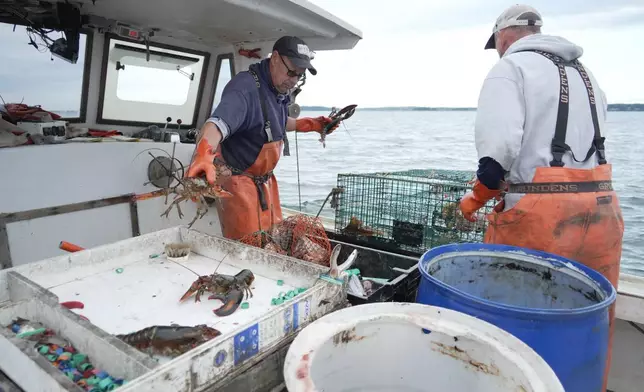
Lobsterman Steve Train, left, puts a lobster recovered from a trap on a table on the fishing boat while his brother, Dan Train, moves to help in Casco Bay, Maine, on Wednesday, Sept. 16, 2026. (AP Photo/Rodrique Ngowi.)
“If somebody came along that was going to do a better job, I would vote for them in a heartbeat,” he said.
Evich's sentiment, echoed throughout the U.S. seafood industry, is another piece of a political puzzle that is working against Trump in the midterm elections. Dissatisfaction among commercial fishermen could cause collateral damage for Republicans in competitive races in Washington, Alaska and Maine.
“Having those costs be so much higher this year has really undermined the viability of some of our fisheries,” Alaska fisherman Linda Behnken said.
Trump sought to make an ally out of fishermen during his first term with expanded fishing territory, aggressive trade moves and cutting down regulations on the water. He did so again after his second election.
But one of Trump's government cutback efforts, cuts to the National Oceanic and Atmospheric Administration, which regulates fisheries, has left the agency slower to respond to the industry's needs, fishermen said. Staff cutbacks also resulted in the agency reducing weather balloons used to gather data fishermen rely on.
Fuel costs have also crept up during the war with Iran, pushing diesel fuel into the $6-per-gallon range when it was less than $4 per gallon a year ago — a major burden for a diesel-dependent industry. And the trade war with Canada has complicated the American seafood industry's relationship with a country it has long been interconnected with, fishermen said.
The Trump administration has continued trying to win the hearts of fishermen with industry-friendly moves, including an early September promise to reduce more regulatory burdens in response to a 2025 executive order. And some of the industry’s key states, such as Alaska, Washington and Maine, are important to Trump politically this year because of competitive House and Senate races. But support on the water could be waning.
“I'm for whatever has to happen for the greater good in the long run for my family and my country,” Evich said.
Trump has positioned himself as a pro-fishing president since his first term, when one of his major moves to impact the fishing industry was the rollback of Obama-era fishing restrictions for Northeast Canyons and Seamounts National Monument off the New England coast. Biden later restored the protections, and then Trump removed them again.
The fishing industry is potentially a natural ally for Trump. A 2026 NOAA survey of commercial fishing crews found that 70% thought fishing rules were too restrictive, and Trump has fashioned himself as an enemy of bureaucracy and red tape.
But in recent months, Trump has brought disruption to the fishing industry in a time when it can ill afford it, said John Sackton, founder of SeafoodNews.com and a longtime industry analyst. He said he sees an industry that is eager to “turn the page” on the Trump administration.
“Now what's happened is that there has been this unbelievable wave of disruption from everything — targeting NOAA and fisheries, science and even weather reporting that people rely on,” said Sackton, who also cited tariffs and the rising cost of doing business as problems Trump brought to the industry.
The high price of fuel is “one of the most immediate pressures on us as commercial fishermen,” said Bonnie Brady, executive director of the Long Island Commercial Fishing Association in New York.
Nearly all of the U.S.'s commercial fishing fleet uses marine diesel fuel, which makes soaring fuel costs a burden they can't avoid. Sometimes fuel prices are so high right now that fishermen can't afford to leave the dock at all, she said.
“Actual dockside marine-fuel prices vary, but the magnitude of the increase is undeniable. It determines whether a trip is economically viable, what the crew earns and whether necessary vessel maintenance can be performed,” Brady said.
In Rhode Island, fisherman Chris Brown, who targets species such as fluke and squid out of Point Judith, puts it more bluntly.
“It's huge. It's crazy. Thank you, Donald Trump,” he said sarcastically.
Trump's trade war with Canada is a more complicated matter because Canada exempted U.S. fish and seafood products from its counter-tariffs that followed the U.S. placing tariffs on Canadian goods. Prior to the exemption, Patrice McCarron, executive director of the Maine Lobstermen's Association, said U.S. lobstermen risked becoming “collateral damage in a broader trade dispute.”
But unease among fishermen remains, in part because Canada is the U.S.'s largest seafood trading partner. The U.S. also relies on Canada for seafood processing and manufacturing of fishing gear. For some species, such as lobster and salmon, American and Canadian fishermen fish very close to each other or even in the same waters.
A trade war with such a key partner could have negative consequences for the fishing industry, said Steve Train, a lobster fisherman from Long Island, Maine, who described himself as a “right-leaning centrist” who has voted Republican more than Democrat.
“I get the standing up to a bully concept, but too many people will be caught in the middle of this,” Train said. “Both sides need to reconsider these tariffs, and they need to reconsider soon.”
NOAA Fisheries, the arm of NOAA tasked with overseeing commercial fishing, is facing a budget cut of more than 40% in the fiscal 2027 budget proposal. That would result in cuts to science programs, fisheries management and data collection.
Those cutbacks trickle down to the fishermen and result in a lack of fishing opportunities, Sackton said. Some in the fishery also have the impression NOAA is too understaffed to regulate fisheries in a timely fashion, he said.
In Sitka, Alaska, Behnken said the Trump administration's cutbacks at NOAA have made it more difficult for her and others who rely on the agency. She said she has a lot of empathy for the workers left at the agency, who she said are “doing the work of three people, particularly at the weather service,” but it is still frustrating for fishermen.
“It's hard to retain good people when their future at the organization is that uncertain,” said Behnken, who is executive director of the Alaska Longline Fishermen's Association.
The Associated Press receives financial support from multiple private foundations. AP is solely responsible for all content. Find AP’s standards for working with philanthropies, a list of supporters and funded coverage areas at AP.org.

Lobsterman Dan Train showing some of the largest lobsters recovered from a lobster trap while out fishing with his brother in Casco Bay, Maine, on Wednesday, Sept. 16, 2026. (AP Photo/Rodrique Ngowi)
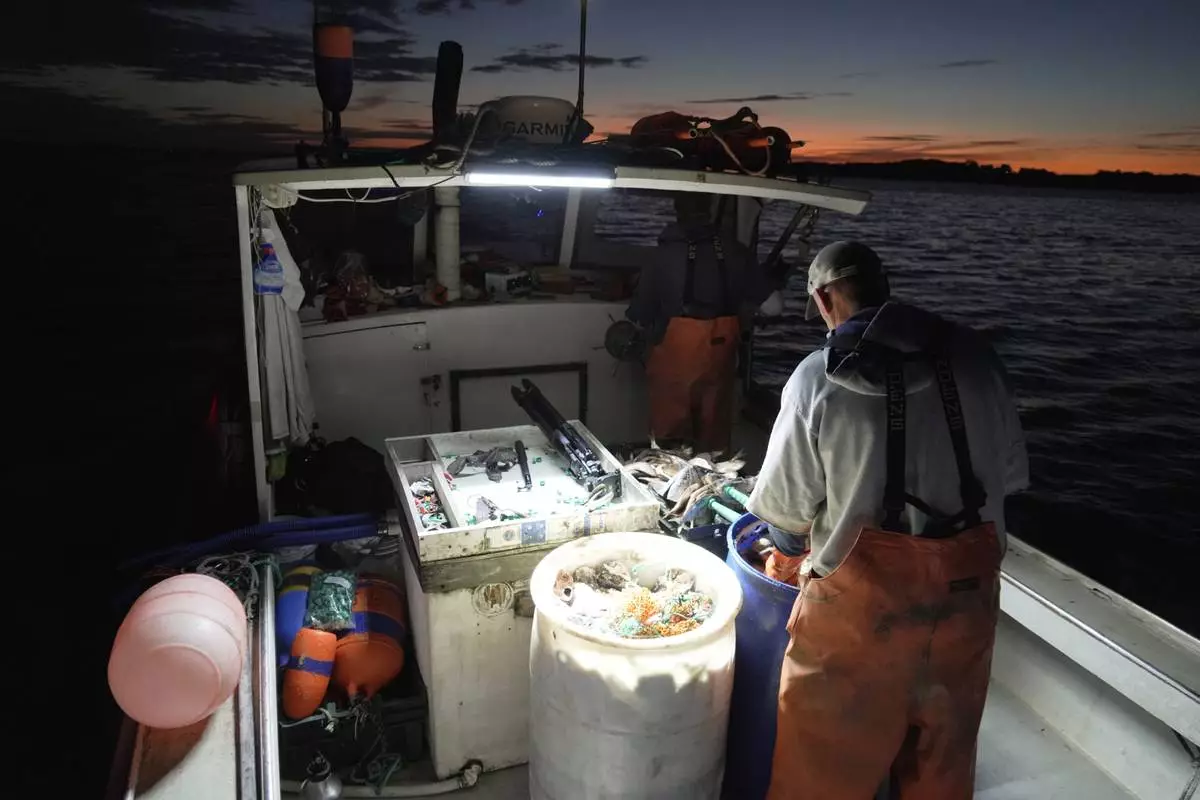
Lobsterman Steve Train at the helm of the fishing boat while his brother, Dan Train, prepares bait as they head out before dawn to check on their traps in Casco Bay, Maine, on Wednesday, Sept. 16, 2026. (AP Photo/Rodrique Ngowi.)

A lobster sits among rubber bands on a fishing boat shortly after it was recovered by lobsterman Steve Train and his brother, Dan Train, in Casco Bay, Maine, on Wednesday, Sept. 16, 2026. (AP Photo/Rodrique Ngowi.)
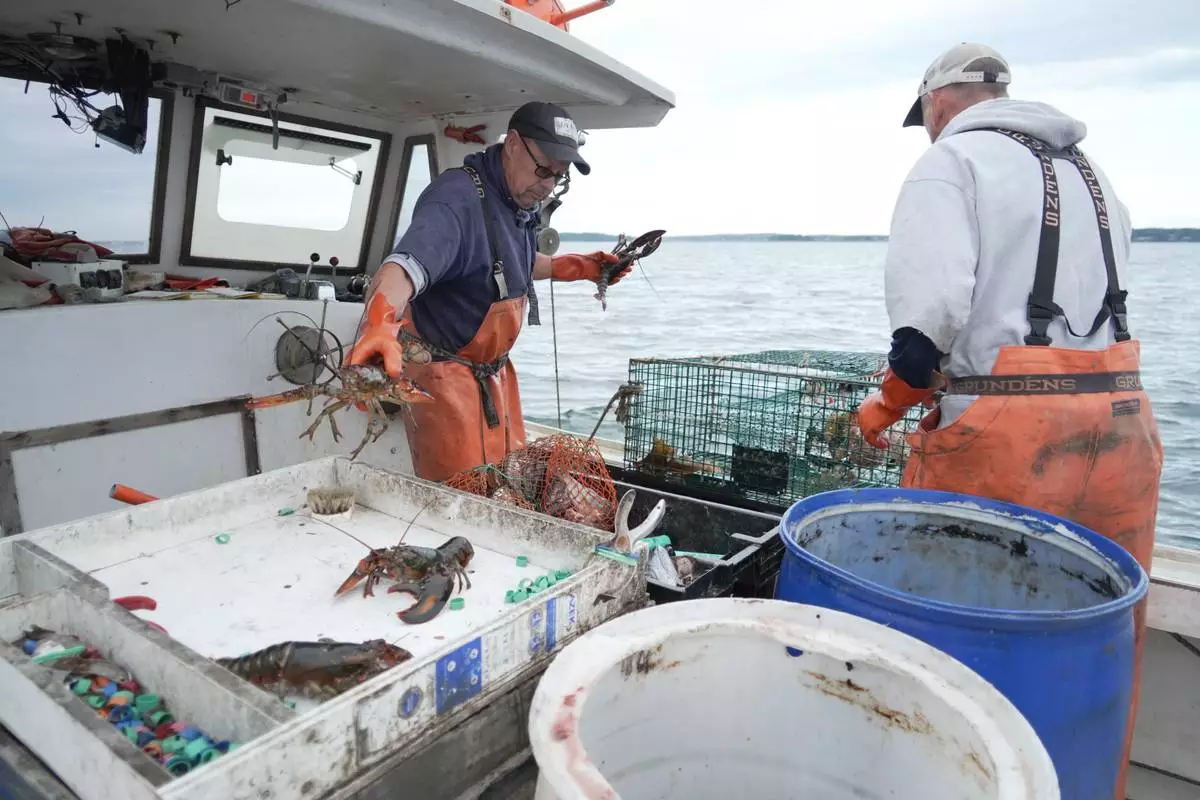
Lobsterman Steve Train, left, puts a lobster recovered from a trap on a table on the fishing boat while his brother, Dan Train, moves to help in Casco Bay, Maine, on Wednesday, Sept. 16, 2026. (AP Photo/Rodrique Ngowi.)
WASHINGTON (AP) — EDITORS/NEWS DIRECTORS:
The Trump administration has proposed a sweeping overhaul of the six-decade-old federal Head Start program that would eliminate or replace many of its longstanding standards. Head Start is an early childhood program that provides education, health, social and family support services to more than 700,000 low-income children nationwide.
The administration says the changes — to rules about staffing, family engagement, discipline, instructional language and more — would give local programs more flexibility, reduce administrative costs and allow Head Start to serve more children. Many of the current rules are unnecessary, officials say, because state regulations and the federal Head Start Act already address many of those areas. The administration proposes deleting a majority of the rules entirely.
But advocates warn state regulations are often less stringent than Head Start's current standards. They say making key protections and services optional could lead to sharply different experiences for children and families, depending on where they live.
The proposal was published Aug. 7. The public comment period ends Oct. 6, after which the administration can revise and publish a final rule. The timing of a final rule is unclear, but it often takes at least a couple months. Legal challenges could delay the process.
In the meantime, reporters can leverage existing data sources to better understand the families and staff who make up Head Start in their communities — and what could change if the proposed regulations take effect.
In a series of stories published with The 74, an education-focused nonprofit news outlet, AP examined several of the proposal's most significant changes, including those affecting family services, supports for students learning English, and classroom discipline practices.
Below, we outline ways reporters can use available data sources to cover those issues locally.
READ AP’S REPORTING
This Head Start center teaches in two languages. A Trump overhaul would require one: English
Head Start preschools serve parents, too. Under Trump, advocates fear that will change
Trump administration moves forward with Head Start overhaul, proposing to eliminate regulations
WHERE TO FIND DATA ON YOUR LOCAL HEAD START CENTERS
Location data:
— Find Head Start providers in your community: Head Start’s service location datasets, based on self-reported information, include center addresses, coordinates, phone numbers, grant numbers, program types and funded slots. You can download CSV files with the data for your city or state.
IMPORTANT: Funded slots are not necessarily the same as the number of children currently enrolled or attending — you should confirm current enrollment through the other data sources detailed below and by talking to providers.
Public Information Report (PIR) data:
— Every year, providers submit what’s known as a “ Program Information Report,” or PIR, with reams of information ranging from family demographics, parents' employment circumstances and children's immunization status to staff qualifications, disability services and home visitor numbers. PIR data are generally collected at the grant or program level, but users can generate statewide, regional and national reports. Here is the 2025 national summary report as an example of the kinds of data points you can gather from the PIRs. (Note: Programs often include multiple Head Start centers.)
For access to the full PIR datasets, email help@hsesinfo.org. Reporters will receive instructions for creating a Head Start Enterprise System account, where data can be viewed and downloaded as CSV files. Here is a user guide with more details on how to navigate the database once you’ve created an account.
You can also retrieve program snapshots without creating a Head Start Enterprise System account. Enter your city or state on this page, and you'll see a list of grantees in your area. Click “View grantee profile." On the next page, which will show all the centers operated by that grantee, click “Retrieve reports” at the bottom. The program snapshots will show up there.
Detailed guidance on using the PIR data to cover several specific angles can be found below.
USING PIR DATA TO COVER FAMILY ENGAGEMENT
Trump’s proposal would make many existing family-engagement policies optional. Those include working with families to set and pursue goals, giving hiring preferences to current and former Head Start parents, prioritizing parent committees and regularly providing classroom access, home visits and parent-teacher conferences. Programs would no longer be required to help families navigate Medicaid, and there wouldn't be caseload limits for family support specialists.
PIR data can help illustrate how families currently interact with your local programs. Most data is contained in the Summary reports, but the Family Information reports may also be helpful. The reports include counts of families receiving services such as housing assistance, job training, substance-use treatment and nutrition education. They also contain information about fathers and other male caregivers, including participation in family goal-setting. There is data on the number of staff members who are current or former Head Start parents and on the number of children and pregnant mothers enrolled in Medicaid.
The reports don’t contain some key data points, such as how many families overall participate in goal-setting and information on parent committees. Reporters can interview local providers about those practices to supplement the data.
USING PIR DATA TO COVER LANGUAGES SPOKEN AT HEAD START
One of the most significant changes would be a requirement that Head Start centers conduct all instruction in English. Current standards encourage programs to promote English acquisition while supporting children’s development in their home languages. The administration would also remove the requirement that classes in which most children speak the same non-English language have at least one staff member who speaks that language.
Tribal programs would be exempt if they teach in non-English languages to promote Tribal heritage, and other programs could apply for waivers from the English-only requirement. Parent interactions and non-instructional conversations could still be conducted in home languages, according to a Health and Human Services spokesperson. Still, the administration estimates affected programs could spend nearly $47 million to purchase English-only curricula, books and other classroom materials — on top of costs associated with training or hiring staff.
The PIR summary reports are the best place to gather state- or program-specific data on Head Start families’ current language needs and staff’s language skills. They include information on the number of children who speak a language other than English at home, broken down by language group; the total number of dual-language learners; and the number of staff proficient in a non-English language, also broken down by language group.
USING CIVIL RIGHTS DATA TO COVER DISCIPLINE
Current Head Start rules prohibit expulsion and permit temporary suspension only in extraordinary circumstances and as a last resort. Before suspending a child, programs must try interventions such as collaborating with the family, consulting mental-health professionals and connecting the child with special-education services. The Trump administration’s proposal would eliminate those federal protections, allowing programs to determine their own discipline policies in accordance with state and local rules for early childhood education providers.
The implications could vary significantly by state: Only 14 states and Washington, D.C., have laws or policies that align with Head Start’s rules around exclusionary discipline. This spreadsheet, from the Children’s Equity Project at Arizona State University, shows how each state’s exclusionary discipline policies compare with current Head Start standards.
To build the spreadsheet, CEP researchers analyzed state legislation, plus plans states submitted to the federal government as part of the Child Care and Development Fund, the primary childcare funding source for low-income, working families. The spreadsheet details which states prohibit expulsion, discourage suspensions and require a process before a suspension. It also outlines which laws govern these policies and what age group and type of school the laws apply to.
The federal Civil Rights Data Collection can provide context about how exclusionary discipline is used in other early-childhood settings — specifically, public preschool programs. The CRDC, which is released roughly every two years by the U.S. Department of Education’s Office for Civil Rights, contains data collected from all public schools and districts across the country. The data includes figures on suspensions, expulsions and corporal punishment, with many measures broken down by race, sex, disability and English-learner status.
FIND YOUR STATE: AP ANALYSIS ON PRESCHOOL SUSPENSIONS AND EXPULSIONS AP analyzed the 2023-24 CRDC data on preschool suspensions and expulsions state by state. Here is our spreadsheet, which outlines the number of expelled students, the number of students suspended once, the number of students suspended multiple times, total suspended students, total suspension instances, total preschool enrollment and percentage of students suspended.
AP and The 74’s analysis of the 2023–24 data found sharp differences between states: South Carolina suspended 604 public preschoolers a total of 1,181 times, Florida reported 466 preschool expulsions and Minnesota reported no preschool suspensions.
Note: The CRDC covers preschoolers enrolled in public school districts, most of whom are not in Head Start. However, some districts operate both Head Start and other prekindergarten programs, and there's no way to filter out the Head Start participants. Private childcare providers are also excluded from the CRDC.
OTHER DATA SOURCES
Head Start currently mandates certain ratios depending on the age — one adult for no more than four infants or toddlers, for example, and one adult for no more than 10 4-to-5-year-olds. These ratios are designed to ensure children are safe and receive an enriching education while in care — the younger the children, the more one-on-one attention, supervision and interactions they need. The new regulations would defer to state thresholds. Most states — 70% — align with Head Start’s current ratios for infants, but a minority do on ratios for older kids. See the Children’s Equity Project’s recent report for an overview of how states stack up on this topic.
The Children’s Equity Project has also compiled a spreadsheet that allows reporters to compare their state’s staff-to-child ratio requirements with Head Start’s standards. The spreadsheet includes enrollment data so reporters can estimate how many children could be affected if the changes are adopted. The researchers relied primarily on states’ 2025–2027 Child Care and Development Fund plans. Those plans generally reflect state policies in effect at the start of the current three-year funding cycle, but some states may have changed their licensing rules since then. Reporters should verify any state-specific findings against current state regulations.
That CEP spreadsheet also contains a couple of additional tabs, including a state-level look at lead testing requirements for childcare centers.
FINDING SOURCES
— Reach out to local Head Start grantees and state Head Start associations to connect with administrators, educators, home visitors and families.
— Ask local providers to connect you with parent committee and policy council members who can discuss the role of those bodies and other family-engagement initiatives.
— Find early-childhood mental health experts and behavior specialists working with Head Start programs and ask them about the importance of those services. You can also reach out to disability rights, special education and English learner advocates in the K-12 space about the impact of Head Start’s language-access and discipline-protection policies on student outcomes.
— You can also search for the name of your state or locale in the public comments to see if anyone in your community has provided feedback. Many people submitted comments anonymously, but many did not.
REPORTING THREADS
— Use PIR data to identify the supports local families use most. How could changes in staffing or caseloads affect access to family engagement services?
— How many dual-language learners are currently enrolled in local Head Start programs? How many local staff are proficient in the languages students speak at home? How would an English-only rule affect their experiences?
— How much money do local providers expect they’d have to spend on new learning materials and staff should the English-only requirement be adopted?
— Use our Civil Rights Data Collection discipline rate analysis and the Children’s Equity Project’s state-by-state discipline policy comparison to examine preschool discipline trends locally and the potential implications of removing Head Start’s current protections.
— Discipline should also be examined against the backdrop of policies that help prevent challenging behavior from escalating. Specifically, the Trump administration's proposed standards would remove or weaken requirements involving staff-to-child ratios, mental-health consultations, developmental screenings and staff breaks. Ask providers whether these changes would affect discipline practices if Head Start’s protections were to be removed in favor of local or state policies.
— Review staffing data in your program- or state-level PIR reports and look out for existing challenges like vacancies and teacher turnover. How could the proposed rules exacerbate these challenges?
— Would larger classes or fewer employees actually produce more seats for kids in your local centers? Ask providers what they think about how the new regulations would affect access, educational quality and parent outcomes.
The Associated Press’ education coverage receives financial support from multiple private foundations. AP is solely responsible for all content. Find AP’s standards for working with philanthropies, a list of supporters and funded coverage areas at AP.org.
Localize It is a resource produced regularly by The Associated Press for its customers’ use. Questions can be directed to the Local News Success team at localizeit@ap.org. View guides published in the last 30 days here.

A poster shows common shapes labeled in both English and Spanish inside a classroom at a Head Start preschool in Immokalee, Fla., Thursday, Sept. 10, 2026. (AP Photo/Rebecca Blackwell)