JERUSALEM (AP) — The leaders of Britain and the United States have suggested, without giving evidence, that Iran played a role in two major security incidents this week, the arrests near a U.S.-run military base in England used in the war against Tehran and the attack in the cockpit of an Israel-bound plane.
As of Friday, no confirmed connection to the Islamic Republic had emerged. Britain has not made public any evidence linking Iran to the air-base arrests on terrorism-related charges. And an official who was not authorized to speak to the media said there is currently no evidence of a link between Iran and the cockpit attack.
The investigations are in the early stages. If an Iranian link to the Britain arrests is confirmed, it would underline a strategy that Iran’s government has promoted for decades, using smaller, relatively low-cost attacks to needle and disrupt more powerful adversaries and their economies while causing friction among allies. That strategy is currently on display in the Strait of Hormuz.
If it is confirmed that Iran played a role in targeting the FlyDubai flight, that would represent a dangerous new level in that approach.
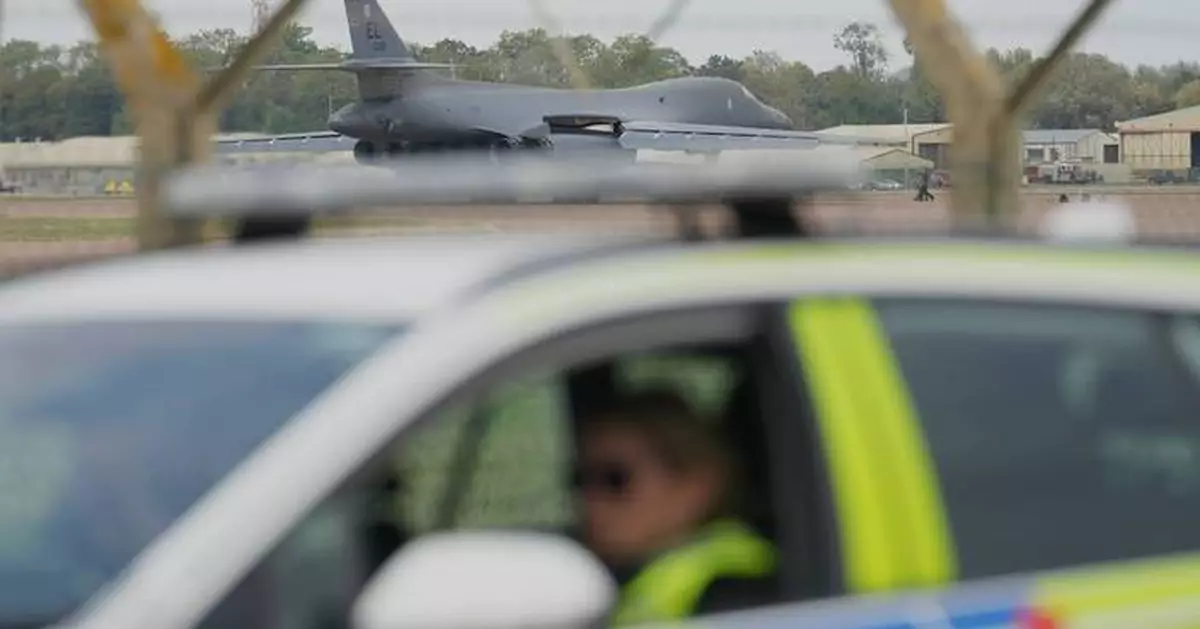
Iran has denied involvement in Sunday’s arrests close to the RAF Fairford air base, which has been used by U.S. bombers to strike Iran. Iranian leaders summoned Britain's ambassador and called on the British government to provide an official explanation.
Police on Thursday arrested a 25-year-old dual U.K.-Iranian citizen on suspicion of plotting a terror attack, while five other suspects were released on bail. Detectives said they found a quantity of an accelerant — gasoline — in vans near the air base, but no explosives.
Prime Minister Andy Burnham has said the U.K. sees “strong indications” that Iran played a part in the incident but did not provide details.
In the FlyDubai attack, Iran has not commented on U.S. President Donald Trump's suggestion that the co-pilot might have links to Iran. Asked whether he had been briefed about any links, Trump said, “I would say the answer, based on what I’m hearing, is yes, but we’re working on it right now." He did not elaborate.
But even Israeli Prime Minister Benjamin Netanyahu, one of the world's most vocal critics of Iran, has said it's too soon to say.
With governments not sharing key details — such as suspects’ identities or possible motives, which are not made public during active police investigations in Britain — speculation risks filling the void.
“When you have this kind of gray area where evidence is lacking, there’s a tendency, especially (by) politicians, the media, etc., to attribute everything to Iran," said Antonio Giustozzi, senior research fellow at the Royal United Services Institute, a London-based defense think tank. "And much of it is true, but not necessarily all of it is true.”
He said the Iranians do not deny that they have cells abroad.
Incidents such as the one at RAF Fairford appear to fit a pattern of attacks designed to apply pressure and signal to U.S. allies that “in this case we did not do anything too terrible, but it wouldn’t be difficult to do something terrible,” Giustozzi said.
He doubted, however, that Iran was involved in the FlyDubai incident: “In terms of strategy, dragging Israel in now brings zero benefit to Iran and only complicates the situation."
As recently as the past week, Iranian officials have openly promoted asymmetric warfare as a central strategy.
“Asymmetric warfare means confronting the enemy’s expensive heavy weapons with lower costs and simpler, but more effective and practical defense equipment, and still achieving victory,” a senior Iranian military spokesperson, Brig. Gen. Abolfazl Shekarchi, said in comments reported by Iran’s state-run IRNA news agency.
Such tactics are based on “self-sacrifice, faith and spirituality,” he said, and called conventional warfare vulnerable to this approach.
Tehran turned to that approach after the Islamic Revolution there in 1979 cut off military and other support from previous allies, including the United States. Iran embraced asymmetric efforts, notably the use of drones, during the Iran-Iraq war in the 1980s and again during the current war that began with U.S. and Israeli attacks on Feb. 28.
Iran's tactics have included a barrage of drone attacks against regional neighbors that host U.S. bases and assaults on ships trying to transit the Strait of Hormuz. Small attack boats and mines have also menaced the strait. Armed proxies of Iran have launched attacks in southern Lebanon, Yemen, Gaza and Iraq.
“Tehran understands that it cannot defeat Israel or the United States in a conventional, high-intensity war. Instead, the regime seems to be deploying an asymmetric and attritional response designed not for decisive battlefield victory, but rather endurance and survival,” the Soufan Center think tank wrote earlier this year.
Iran has acknowledged some direct military or paramilitary attacks during the war, including against U.S. warships. But the kind of involvement authorities have suggested about the FlyDubai and England incidents is more indirect, making it difficult to confirm and easier to deny.
The allegations echo concerns about the acts of sabotage in Europe that Russia has been widely accused of backing since its full-scale invasion of Ukraine in February 2022. Moscow has denied them.
Tehran has faced similar allegations in the past. In an effort to "mitigate the risk of retaliatory attacks against Iran, Iranian agents have taken to hiring criminal proxies to carry out attacks at Tehran’s behest,” Matthew Levitt with the Washington Institute for Near East Policy, who maintains a database of incidents, wrote last year.
In one high-profile case, the U.S. Justice Department in November 2024 disclosed an Iranian murder-for-hire plot to kill Trump, charging a man who said he had been tasked by a government official before that month's election. Iran's government rejected the report and called it a plot to complicate relations.
More recently, U.K. officials say proxies linked to Iran have been behind a string of arson and other attacks in Britain and other European countries, many of them targeting the Jewish community or opponents of Iran’s Islamic theocracy. In October 2025, the head of the MI5 domestic intelligence service said his agency had tracked more than 20 “potentially lethal” Iran-backed plots in the past year.
Several suspects as young as their teens have been charged in the U.K. over arson attacks targeting synagogues and Jewish ambulances. Officials say the crimes are often carried out for small sums of money, and that those arrested may have little or no knowledge of the link to Iran. That, too, has echoed alleged Russia-backed attacks in Europe.
In July, Britain banned the Islamic Movement of the Companions of the Right, or IMCR, which it said is an Iran proxy group behind the attacks. The IMCR sprang up online earlier this year and has claimed responsibility for synagogue attacks in Belgium and the Netherlands.
Lawless reported from London. Associated Press writer Sam Mednick in Tel Aviv, Israel, contributed.
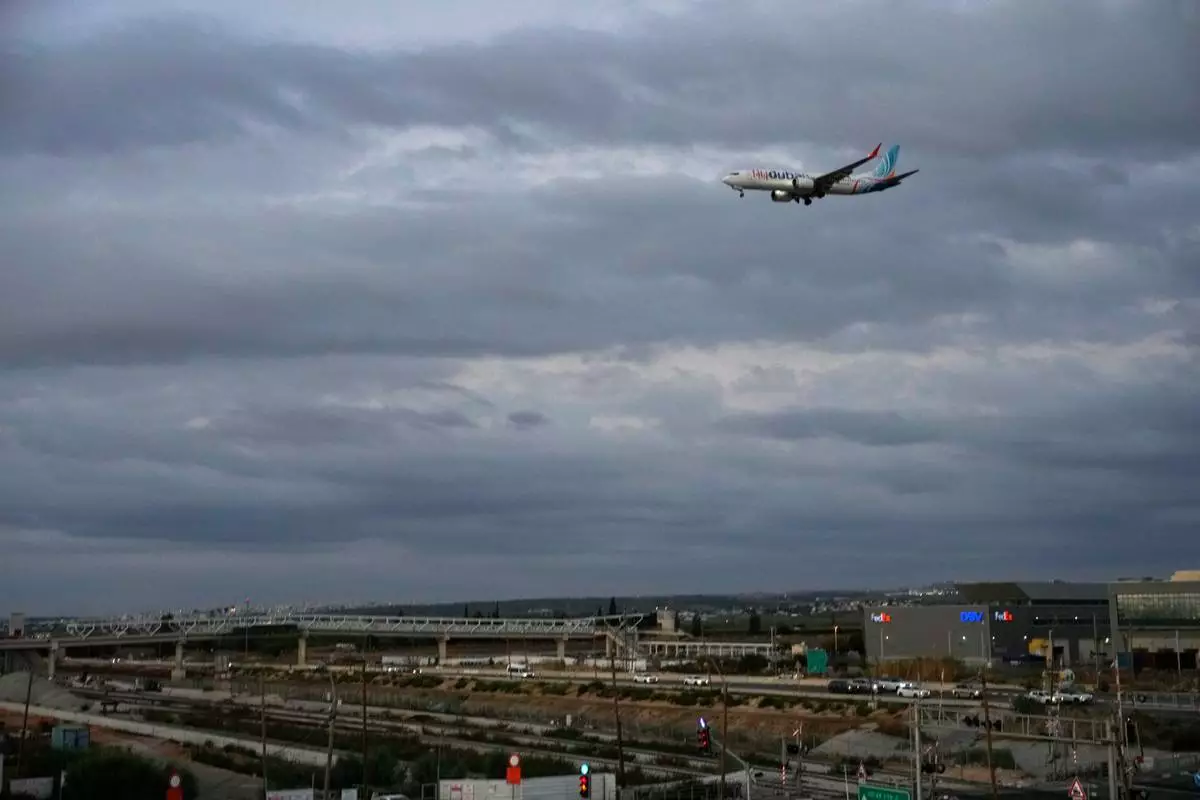
An FlyDubai plane carrying Israeli passengers who had earlier been aboard another FlyDubai aircraft that made an emergency landing in Saudi Arabia approaches Ben Gurion International Airport near Tel Aviv, Israel, Wednesday, Sept. 30, 2026. (AP Photo/Ohad Zwigenberg)
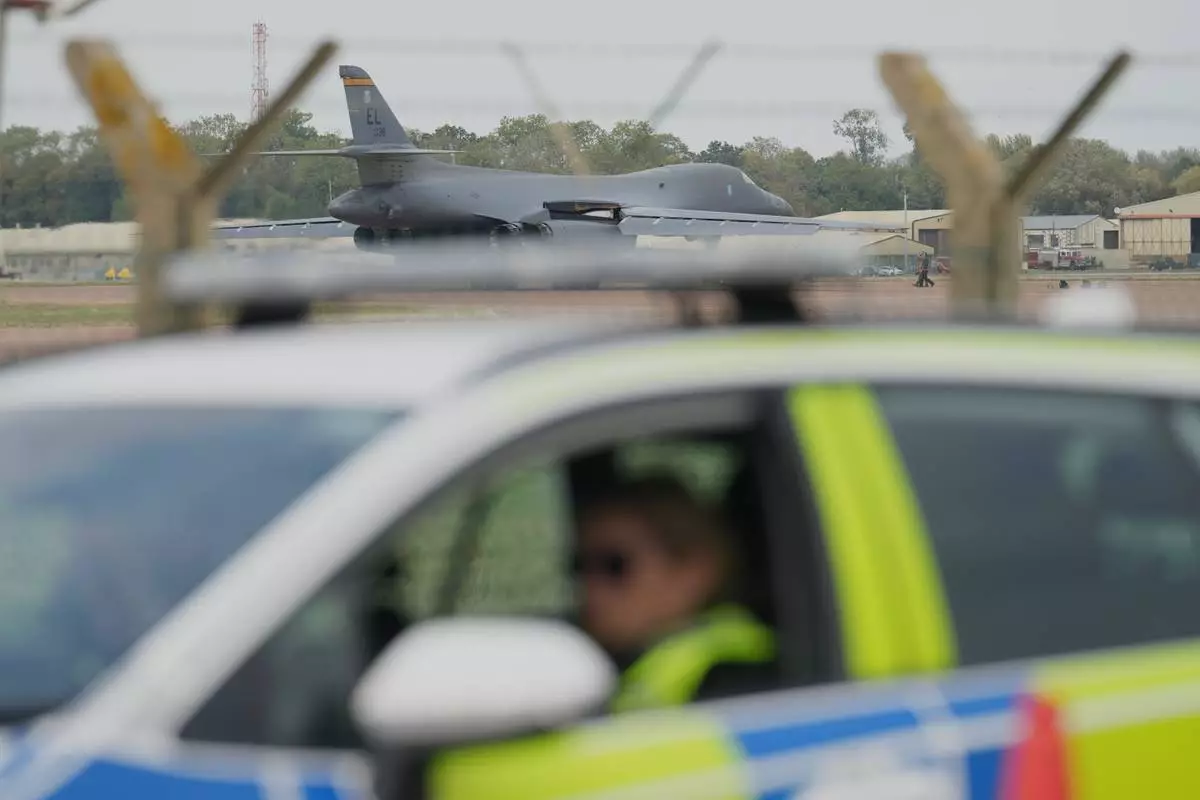
A B1 bomber prepares to take off as police officers man a checkpoint near RAF Fairford air base, in Fairford, England Tuesday, Sept. 29, 2026. (AP Photo/Alastair Grant)