The Shanghai Yangshan Deep Water Port, a key hub in the global shipping market, is keeping up its round-the-clock operations during the National Day holiday, and is expected to handle over 200,000 twenty-foot equivalent units (TEUs) during the week-long break.
Thursday marked China's National Day, launching the annual "Golden Week" holiday through Oct. 7, as the nation celebrates the 77th anniversary of the founding of the People's Republic of China.
On Friday, the second day of the holiday, four large container ships were working simultaneously at the port, with vessels berthing, cranes lifting and trucks running across the port area.
"A total of 40 quay cranes are on duty today, along with 101 tire-mounted gantry cranes in the yard to match the overall production pace. On October 1, the port planned to handle 31,500 TEUs and actually handled 32,500 TEUs. If we go by this pace, we expect to handle over 200,000 TEUs during the holiday," said Hu Rongrong, deputy manager of the operations department at Shanghai Shengdong International Container Terminal Co., which manages and operates major container terminal areas at the Yangshan Port.
Shanghai Port is the world's largest container port by throughput, a position it has held for multiple consecutive years. In the first eight months of this year, the Port of Shanghai handled more than 37 million TEUs, setting a new record. Of this total, the Yangshan Port, the core area of Shanghai Port, accounted for more than half of the throughput.
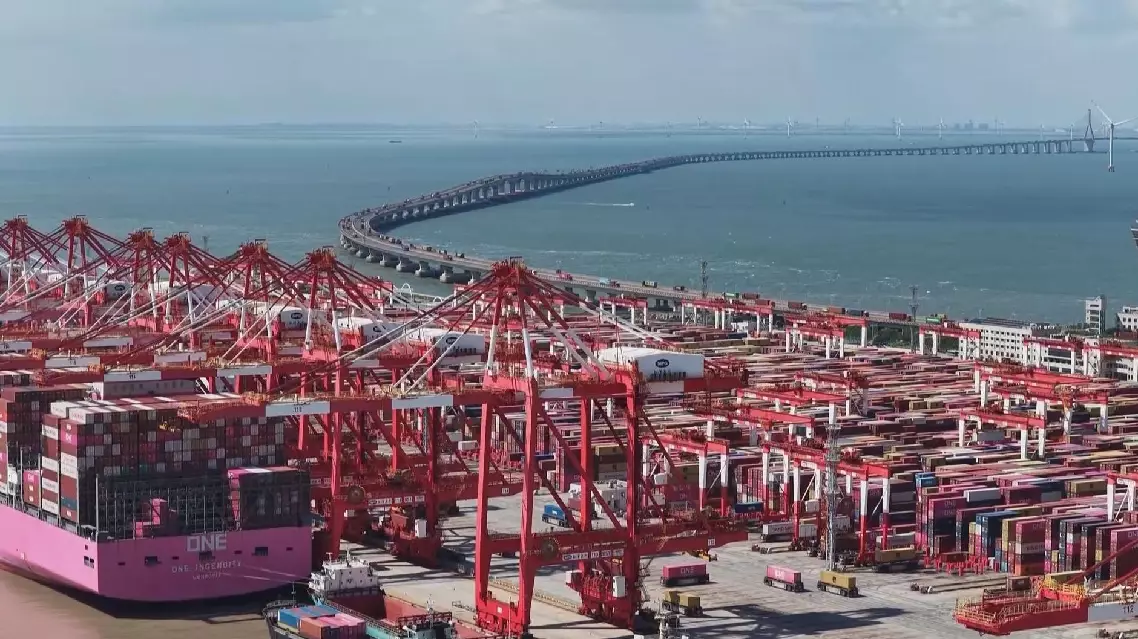
Shanghai Yangshan Port set to handle over 200,000 TEUs during National Day holiday
China has actively promoted inclusive sharing of the benefits of scientific and technological development with other countries.
Singapore's Sea-Lion model, an open-source large language model, was trained partially on Chinese foundation models, so the local team did not have to start from scratch and could instead direct its limited resources toward regional languages and real-world scenarios.
In Thailand, China's "YuKon" parallel mining operating system is running in mining areas, boosting overall efficiency by 16 percent and cutting electricity consumption by 20 percent.
"Chinese large language models have activated innovation ecosystems through an open-source strategy. With outstanding advantages such as superior performance, controllable costs, and ease of local deployment, they have significantly lowered the threshold for applying AI technology and been well received by developers worldwide," said Li Wei, deputy director of the Cloud Computing and Big Data Research Institute under the China Academy of Information and Communication Technology (CAICT).
Beyond AI, there is also an increasing emphasis on inclusive sharing in green transition.
In Zhangzhou City of east China's Fujian Province, a green hydrogen pilot base has just opened to domestic and foreign companies, allowing them to verify their technologies amid real operating conditions.
"China's vast market and rich application scenarios have given new technologies the space to be deployed and grow. We are willing to open our open testing and verification platform and application scenarios to more Asia-Pacific partners, deepen cooperation in areas such as green fuels and hydrogen energy equipment, and work together to turn innovation advantages into shared growth momentum," said Liu Lixing, deputy general manager of Fujian Hydrogen Energy Industry Development Co., Ltd. which operates the green hydrogen pilot base.
At present, China has established scientific and technological cooperation relations with more than 160 countries and regions and signed 120 bilateral and multilateral intergovernmental agreements on scientific and technological cooperation.
At the same time, through livelihood-oriented technologies such as hybrid rice, Juncao, and aquaculture, China has been assisting other developing countries in shaking off poverty.
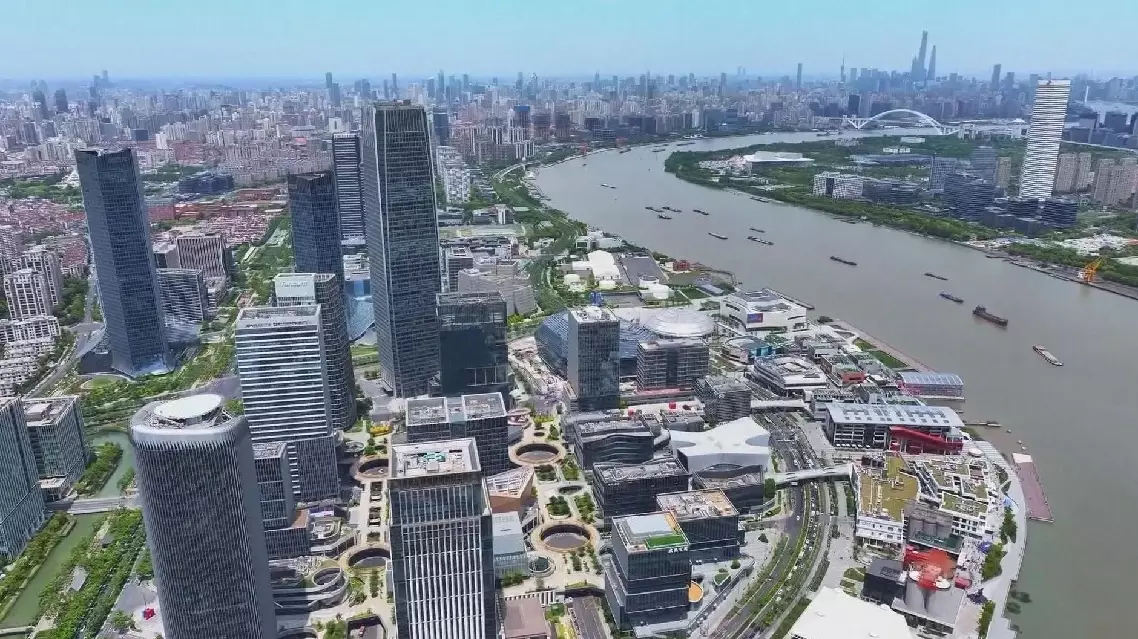
China promotes sharing of sci-tech development benefits