Shanghai has launched more than 2,800 culture and tourism activities for the seven-day National Day holiday, which started on Thursday, with theme parks emerging as a major draw for family spending.
At Shanghai Haichang Ocean Park, visitors could enjoy an underwater performance during the National Day holiday where two professional divers hold Chinese national flags alongside an AI-enabled robotic whale shark equipped with advanced sensors and biomimetic technology. The robot blends homegrown sci-tech elements with the ocean ecology.
"I also saw the bionic whale shark enhanced by AI underwater. It made me realize that technology can combine with the ocean, and it really impressed me how advanced our technology has become," said a tourist surnamed Yang.
The park said it has scheduled more than 150 performances and interactive sessions throughout the day during the holiday period, and reported a noticeable increase in long-distance visitors from cities such as Beijing, Chengdu, Guangzhou and Kunming, with October 2, or Friday, tourist numbers.
Other family-oriented destinations reported similar surges in the number of tourists, including the Shanghai Happy Valley in the Sheshan National Tourist Resort, which expects to host over 100,000 visitors during the holiday period.
To attract more child visitors, the Happy Valley has introduced space-themed intellectual property attractions that drew droves of tourists from across the Yangtze River Delta.
In addition, animal-focused attractions have also attracted a large number of families with children. At Shanghai Wild Animal Park, a two-month-old orangutan has been making occasional appearances for visitors.
Meanwhile, Shanghai's traditional tourist hotspots saw surging crowds in the first two days of the holiday, including the Bund and the Nanjing Road Pedestrian Street.
The Bund's waterfront area recorded more than 500,000 visits on each of the first two days, while the pedestrian street logged 284,000 visits, up 14.7 percent year on year.
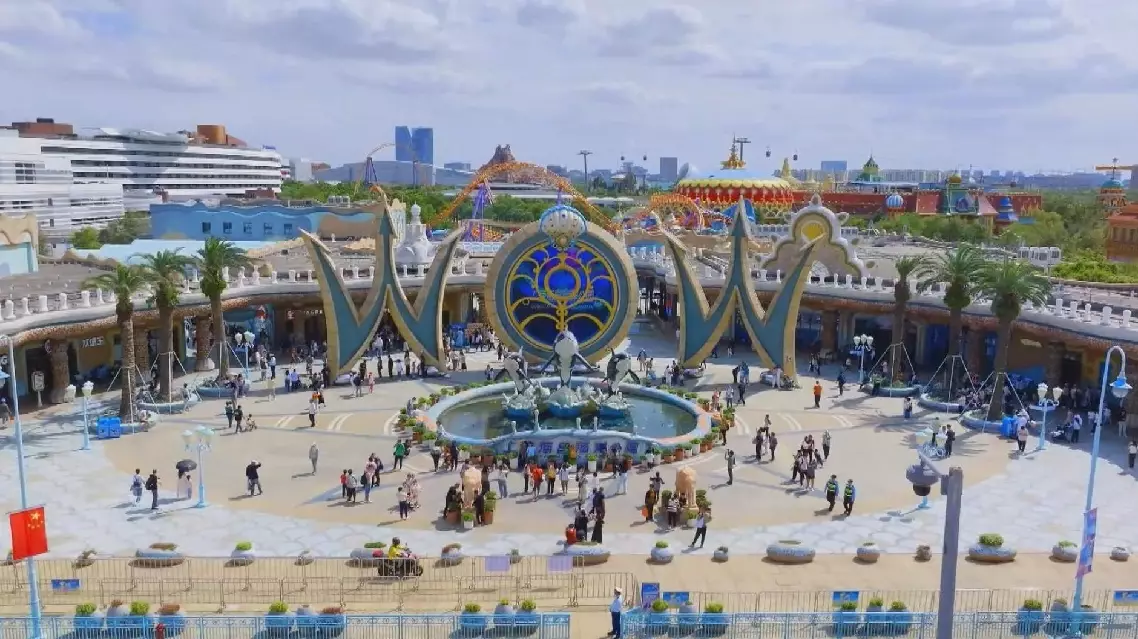
Shanghai theme parks drive tourism boom during National Day holiday
Russian President Vladimir Putin said on Wednesday that developing economies in Asia have gradually emerged as leaders of global development and drivers of innovation, with a profound impact on the global economy and world order.
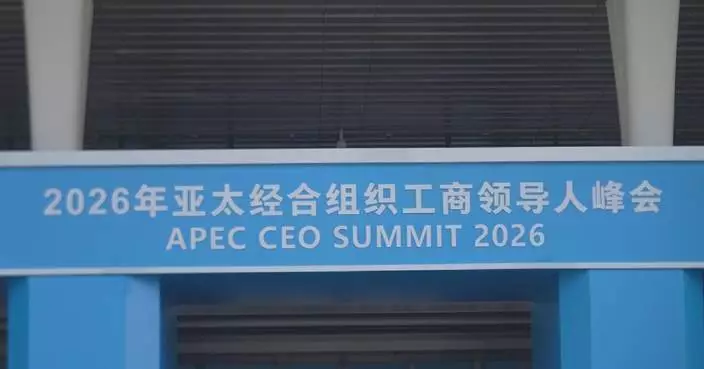
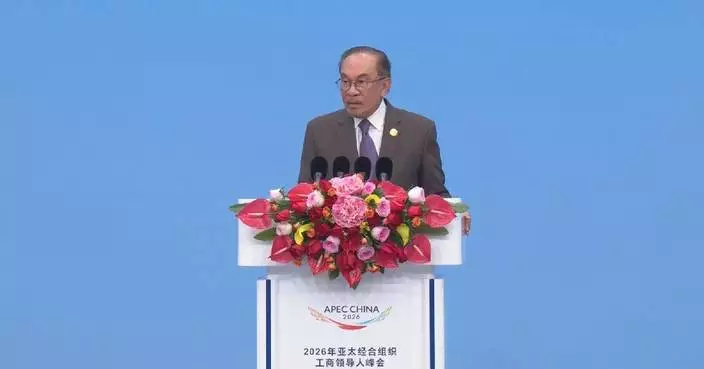
Putin made the remarks at the Asia-Pacific Economic Cooperation (APEC) CEO Summit 2026 in Shenzhen, south China's Guangdong Province.
Under the theme "To Prosper and Win the Future Together," the two-day summit, which opened on Tuesday, brought together business and political leaders from across the Asia-Pacific and beyond to discuss regional economic cooperation and future development.
In his address at the summit, Putin called Shenzhen "impressive," hailing it as one of the world's most advanced and dynamic metropolises.
"I would like to say that Shenzhen, the city hosting this APEC summit, is truly impressive. It is one of the most advanced and dynamic metropolises, organically combining a high level of urbanization, a livable environment, and an innovative industrial base," said Putin.
Putin said that the Asia-Pacific has become the center of the global economy and the leading hub for industry and technology worldwide, home to high-capacity markets, headquarters of leading global enterprises, as well as advanced research and educational institutions.
He attributed these changes largely to the region's developing economies, which have moved from the periphery of the global economic activity to the forefront of global development.
"For more than 35 years, the role of developing countries and emerging economies has increased almost twofold, [with their combined GDP rising] from 35 percent [of the global total] in 1990 to 61 percent in 2026. It was here, in the Asia-Pacific region, that the fundamental changes now now spreading across the world like ripples began. The regional model clearly illustrates how a fairer, more democratic and more equitable world order is taking shape. We have seen the previous centralized hierarchy replaced with new branching horizontal links," said Putin.
Noting that the Asia-Pacific is an important trade and economic partner for Russia, Putin said Russia will continue to foster mutually beneficial ties with other APEC members, calling for stronger cooperation within the APEC framework in areas such as infrastructure connectivity to better adapt to the evolving global economy.
"For Russia, the Asia-Pacific region is an important trade and economic partner. Back in 2014, the share of this region in our foreign trade was over 25 percent, and our objective was to increase it up to 40 percent in the future. Today, this figure has increased to the currently 53 percent, which means that we are moving at full speed ahead, even faster than we had predicted. We are ready to continue moving forward in the development of mutually beneficial cooperation with the Asia-Pacific region, based on our traditions of friendship and the experience of comprehensive and fruitful cooperation," he said.
At the same time, amid global uncertainties, Russia increasingly values APEC as a platform for constructive dialog among major economies, he said.
"In today's turbulent world, amid global economic fragmentation and rising military and political risks, we see a higher demand for unity rather than division, equality rather than domination, partnership rather than isolation, and dialog rather than ultimatums. In this sense, the APEC platform offers vast opportunities for constructive exchanges at all levels, especially among the leaders of major economies. I expect the upcoming trilateral meeting of the leaders of Russia, China, and the United States could yield enormous potential benefits," said Putin.
Running from Tuesday to Wednesday at the Qianhai International Convention Center, this year's APEC CEO Summit has drawn more than 2,000 political and business representatives from 21 APEC member economies and 13 non-APEC economies including Britain, France, Germany and Switzerland.
As an important event in the APEC calendar, the APEC CEO Summit has been held annually since 1996, serving as the highest-level platform for APEC economy leaders and business representatives to discuss open cooperation and advance regional economic development.
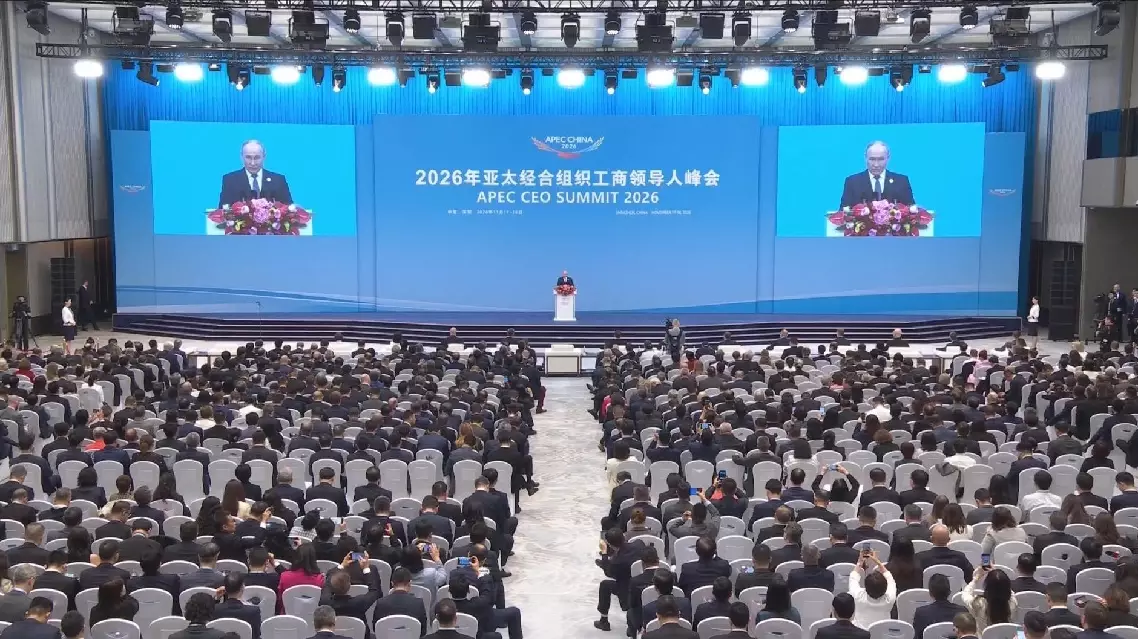
Putin says Asia-Pacific is 'vivid example' profoundly shaping global order