TOKYO (AP) — Japanese police arrested a U.S. Marine in the alleged robbery and murder of a woman on Okinawa, officials said Sunday, the latest criminal case on the southern island where the heavy American troop presence has remained a sensitive issue.
The Okinawa prefectural police said they arrested a 20-year-old Marine stationed at the Futenma Air Station on suspicion of killing a 39-year-old local woman at a hotel in Naha, Okinawa's capital city, and taking her wallet and backpack in the early hours of Saturday.
Kyodo News agency, citing the police, reported the woman's body was found in her hotel room and she appeared to have been strangled to death.
Police said security camera footage showed the man believed to be the suspect entering the hotel with the victim and coming out alone. An officer arrested the suspect after spotting him walking alone on a street in Naha’s entertainment district late Saturday, Kyodo said.
“The case deals a major shock and adds fear to the Okinawans who have already been forced to live next to U.S. bases,” newly elected Okinawa Gov. Genta Koja told reporters. “It is absolutely unforgivable and we are outraged.”
“I must say, discipline and troop education are not working at all,” said Koja, referring to the U.S. military’s measures taken in response to past criminal cases.
Some 50,000 U.S. troops are deployed in Japan under a bilateral security pact, about half of them on Okinawa, whose strategic role is seen as increasingly important for the Japan-U.S. military alliance amid growing tensions with China. Japan's southwestern shift in its military focus centers heavily on Okinawa and its nearby islands.
Okinawans have long complained about noise, pollution and crime related to U.S. bases, with crimes involving U.S. service members on Okinawa complicating ties between Japan’s central government and the Okinawa administration. The latest case comes as Prime Minister Sanae Takaichi’s cabinet pushes to further fortify its Japanese military presence on Okinawa and work more closely with the U.S. military.
“The occurrence of the heinous crime is extremely regrettable,” Takaichi said in her message on X. She said her government has strongly protested to the U.S. side and demanded maximum cooperation with the Japanese authorities in the investigation, as well as tougher discipline for U.S. service members and preventive measures.
Foreign Minister Toshimitsu Motegi summoned U.S. Ambassador to Japan George Glass to his office and conveyed “outrage," the ministry said in a statement.
Glass, on X, expressed condolences to the victim's family, adding that the United States is cooperating with the Japanese national and local governments.
The U.S. Marine Corps said in a statement the suspect is assigned to the III Marine Expeditionary Force on Okinawa and that it is fully cooperating with Japanese authorities. “The Marine Corps takes these allegations very seriously and expects every Marine to adhere to the highest standards of behavior."
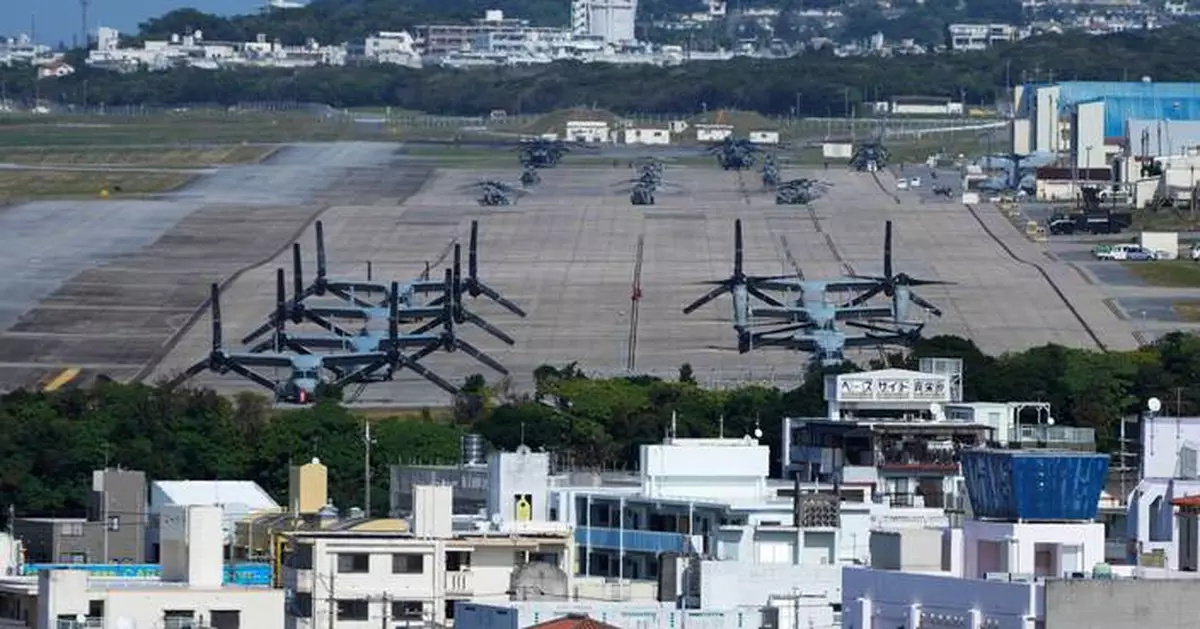
Futenma base, located in a densely populated area in central Okinawa, has been a sore spot for many Okinawans for decades, who demanded its relocation. Despite protests, the central government greenlit construction to relocate the base to Henoko on Okinawa’s eastern coast, though the project has faced massive delays.
A high-profile 1995 rape of a 12-year-old girl by three U.S. service members sparked massive protests against the heavy U.S. troop presence on Okinawa. The number of arrests related to U.S. service members and their families exceeded 100 last year, according to prefectural police. Repeated occurrence of sexual crimes and some of their delayed disclosures have also sparked outrage on Okinawa in recent years.
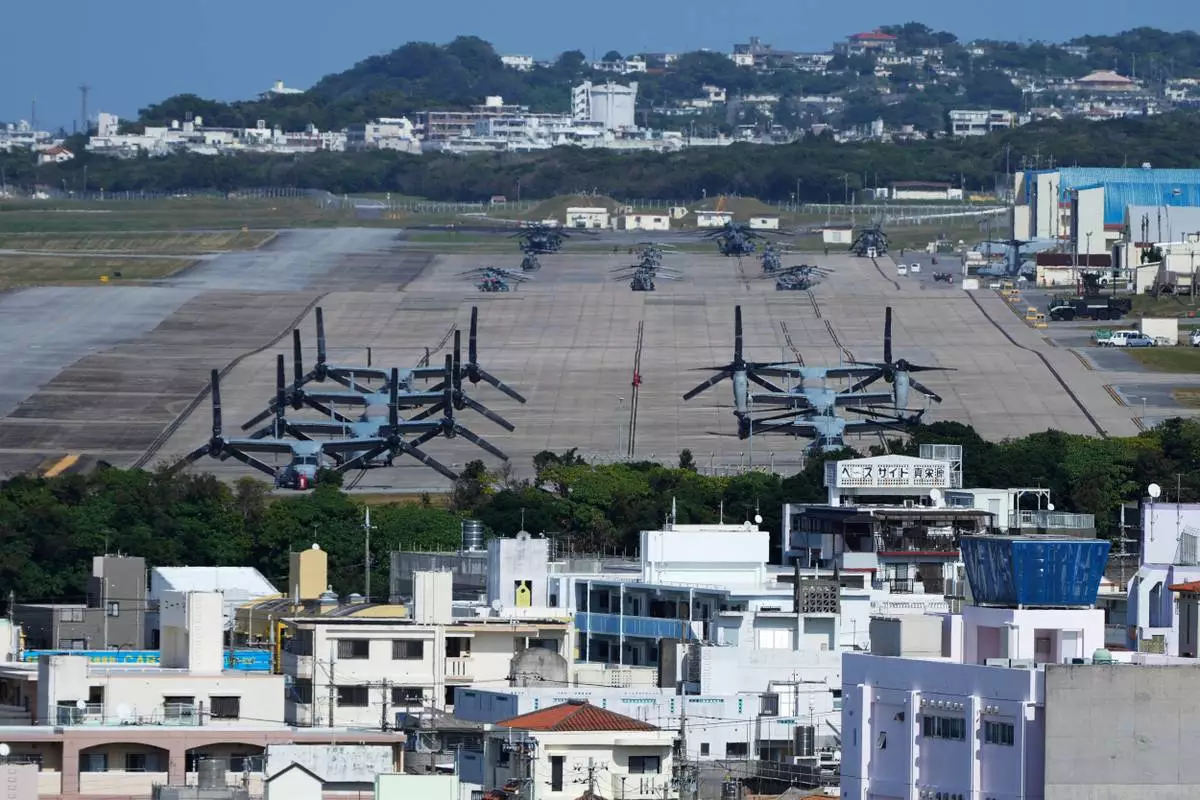
FILE - U.S. MV-22 Osprey transport aircraft are parked at the U.S. Marine Corps Air Station Futenma in Ginowan, on the main island of the Okinawa archipelago, southern Japan, Tuesday, Feb. 18, 2025. (AP Photo/Hiro Komae, File)
Brazilians are voting Sunday in a pivotal presidential election dominated by incumbent Luiz Inácio Lula da Silva and his ideological opposite, Sen. Flávio Bolsonaro.
Preelection polls suggested both have a chance of winning outright, but if neither gets a majority of the vote, a runoff will be held on Oct. 25.
Nearly 159 million Brazilians are eligible to vote in Latin America’s largest economy. Bolsonaro is an ally of U.S. President Donald Trump and the son of ex-leader Jair Bolsonaro, whom Lula defeated four years ago.
Here's the latest:
Brazilians lined up to vote in Portugal’s capital like those living outside Brazil around the globe.
Some of those waiting to vote in Lisbon showed their Brazilian pride — one wearing a yellow and green Brazil soccer jersey, another a T-shirt with incumbent President Lula’s face emblazoned on the front.
“I will have dual nationality, but I’m still patriotic,” said Michele Sacramento, who’s lived in Portugal for seven years. “I love my country and I hope I can return one day and be able to walk in the street like I walk here, without any fear, any worry.”
Many are casting their ballots under the shadow of rising crime. Fears are most acute in Bahia, the country’s most violent state, a stronghold for President Luiz Inácio Lula da Silva.
They are also high in Rio de Janeiro, Flávio Bolsonaro’s home state, where entrenched criminal factions and urban warfare have plagued communities for decades. Voters head to the polls demanding decisive federal action in the near future.
Brazil’s incumbent president, Luiz Inácio Lula da Silva, voted after 9 a.m. in a school in Sao Bernardo do Campo, outside Sao Paulo.
The 80-year-old Lula said that he was confident that he could get his first outright victory in seven runs for the presidency. He also urged Brazilians above age 70, who aren’t legally required to vote, to show up and cast their ballots.
Wearing a hat to protect his head after a skin cancer diagnosis, Lula told journalists that he needs “to do double what we have done” if reelected and also said that “Brazil will not go forward by making arms sales easier,” in reference to a long-standing pledge of his main opponent, Flávio Bolsonaro.
Rosane Wink, 67, a retired engineer with German origins who voted in the same school as Flávio Bolsonaro, is a lifelong conservative voter who supports the former president’s son and his promise to classify criminal groups as terrorist organizations.
“It’s a kind of terrorism that they’re doing with us,” said Wink, who was wearing a T-shirt with Brazil’s national colors.
Last month, a robber held a gun to her stomach and then bit her hand and removed her wedding ring, she said.
“We’re not going to succeed in putting an end to crime, but we have to find a way to diminish it.”
Brazil's patron saint is Our Lady of Aparecida.
A comment on Jesus by Sen. Flávio Bolsonaro recently went viral, triggering fears among many Catholics that he might intend to remove the patron saint status of Our Lady of Aparecida — a claim Bolsonaro has denied.
In an Aug. 23 video, Bolsonaro said that he would “declare that Brazil belongs to the Lord Jesus Christ.” Some Catholics interpreted that as meaning that the presidential candidate would remove Our Lady of Aparecida as Brazil’s patron saint.
Our Lady of Aparecida is a much-beloved figure among Brazilians. The accusation tapped into Catholics’ fears over losing ground to Evangelicals and could weaken the presidential bid of Bolsonaro, who is Evangelical.
Bolsonaro has no authority to name or remove patron saints. That’s entirely up to the Vatican.
Brazilian presidential candidate Flávio Bolsonaro has voted in his home state of Rio de Janeiro.
“Brazil needs change, Brazil can’t stand so much suffering,” said Bolsonaro, who arrived at around 8:10 a.m. local time to vote in a school.
He was dressed in a light yellow shirt featuring a “22” sticker, corresponding to the number that Brazilians must punch in to electronic voting machines if voting for him.
“I am more than prepared to preside this country to give back to Brazilians the right to dream,” he told journalists.
President Luiz Inácio Lula da Silva's government sees a series of recent U.S. measures — including tariffs and the decision to classify Brazil’s biggest drug-trafficking groups as foreign terrorist organizations — as attempts to tip the scale in Sen. Flávio Bolsonaro’s favor, an accusation that the Trump administration has denied.
A victory by Bolsonaro would mean Brazil would join Argentina, Chile, Colombia, Costa Rica and Peru in electing Trump-friendly governments in recent years.
Lula has made Brazil’s sovereignty a major campaign issue. In the days before the election, his team launched a Portuguese version of the Bad Bunny song, “Lo que le paso a Hawaii,” that uses the U.S. colonization of Hawaii as a cautionary tale.
Brazilian voters prepare number-heavy lists to remember their candidates’ numbers and at the ballot box, punch in the corresponding digits. Brazilian authorities adopted electronic voting machines in the 1990s to tackle longstanding fraud.
In earlier elections, ballot boxes were stuffed or stolen, and individual votes were routinely falsified, according to Brazil’s electoral authority. Now, results are reported mere hours after polls close.
In the lead-up to the 2022 vote, Jair Bolsonaro repeatedly cast unfounded doubts on Brazil’s electronic voting system. No significant fraud has ever been detected.
Alongside regional heavyweights like U.S. President Donald Trump and Nicaraguan President Daniel Ortega, 80-year-old Luiz Inácio Lula da Silva stands among the oldest leaders in the Americas.
If Lula achieves an outright victory against 45-year-old Flávio Bolsonaro, he will cement a historic milestone, becoming the oldest man ever elected to lead the South American nation.
He says he wants to live to be 120. He tried to ease concerns by posting workout videos to attempt to convince voters that age is just a number.
Voting has started in Brazil's high-stakes presidential election, pitting the two main candidates, incumbent Luiz Inácio Lula da Silva and his ideological opposite, Sen. Flávio Bolsonaro, against each other.
Almost 159 million Brazilians are eligible to vote in this tense political showdown.
Brazilians will also elect 27 state governors, members of state legislatures, all 513 federal members of the lower house of congress and 54 of the country’s 81 senators in Sunday’s vote.
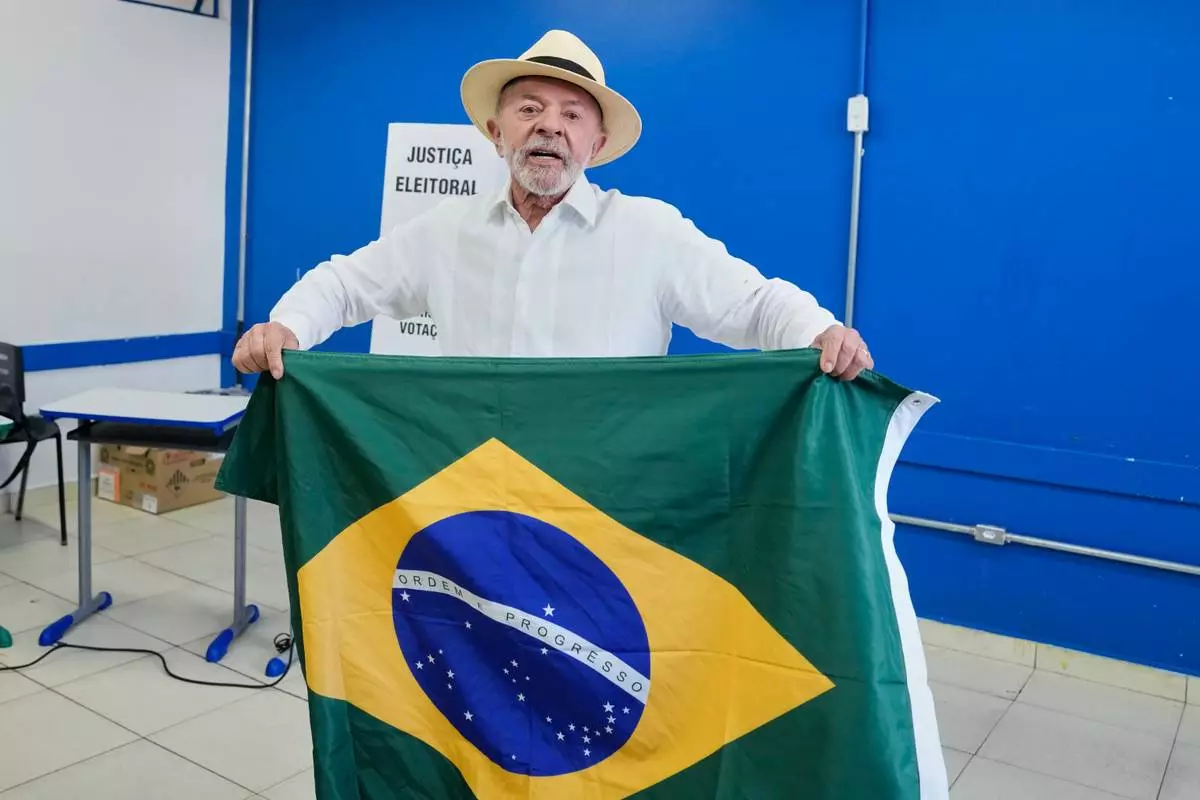
President Luiz Inacio Lula da Silva, who is running for reelection, displays a Brazilian flag after voting in Sao Bernardo do Campo, Brazil, Sunday, Oct. 4, 2026. (AP Photo/Andre Penner)
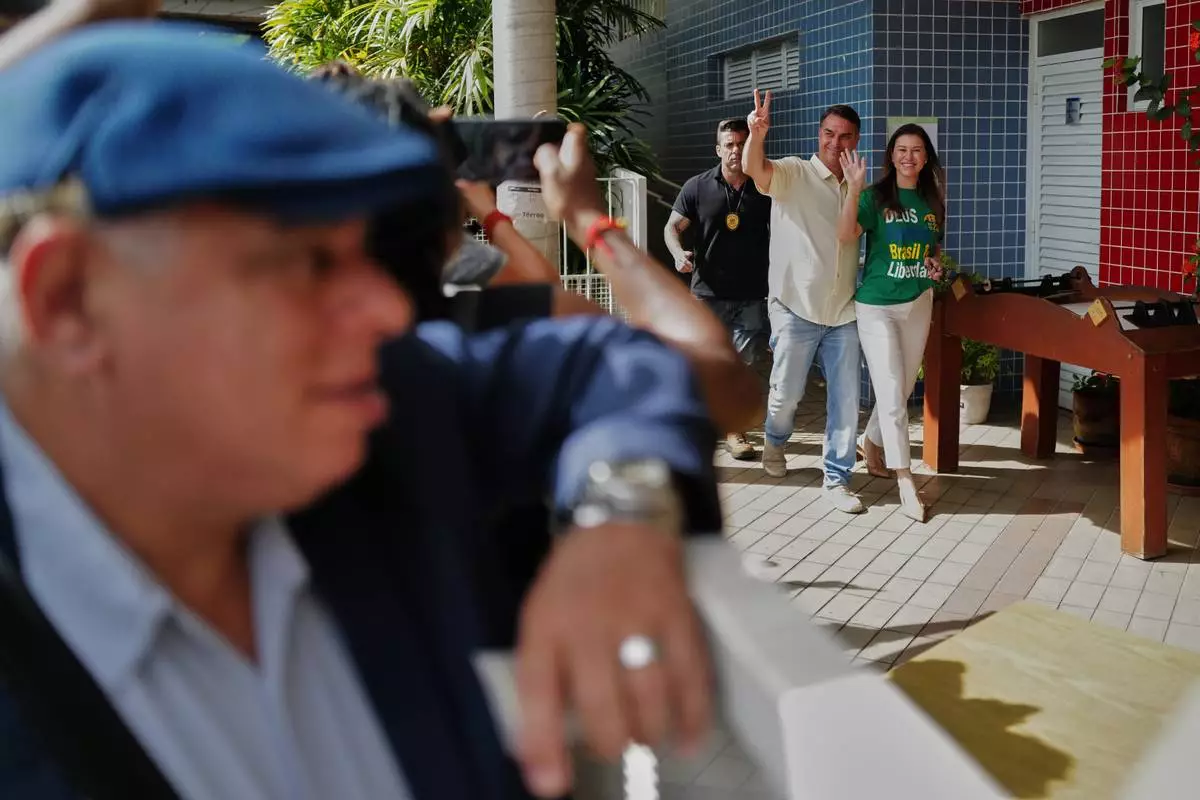
Opposition presidential candidate Sen. Flavio Bolsonaro accompanies his wife Fernanda Bolsonaro to vote during general elections in Rio de Janeiro, Sunday, Oct. 4, 2026.(AP Photo/Lucas Landau)
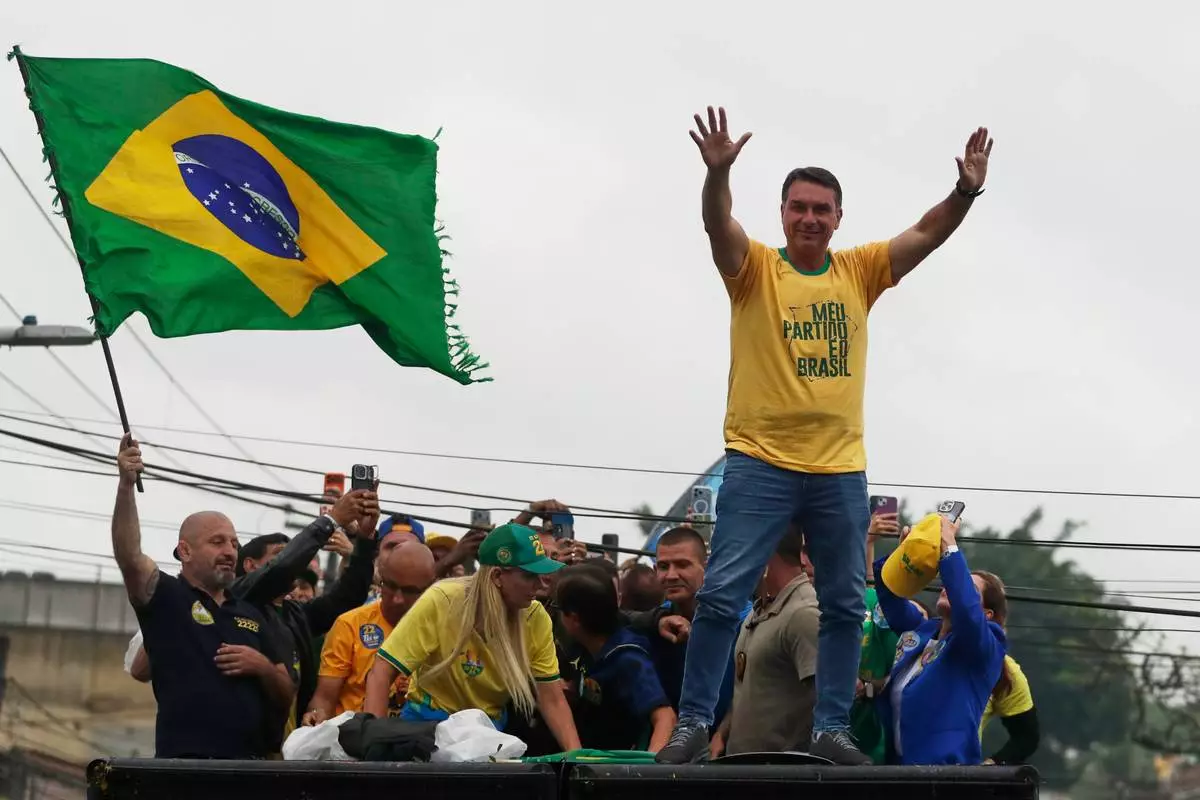
Opposition presidential candidate Flavio Bolsonaro waves to supporters during a campaign rally a day ahead of the country's general election, in Campo Grande, Rio de Janeiro state, Saturday, Oct. 3, 2026. (AP Photo/Bruna Prado)
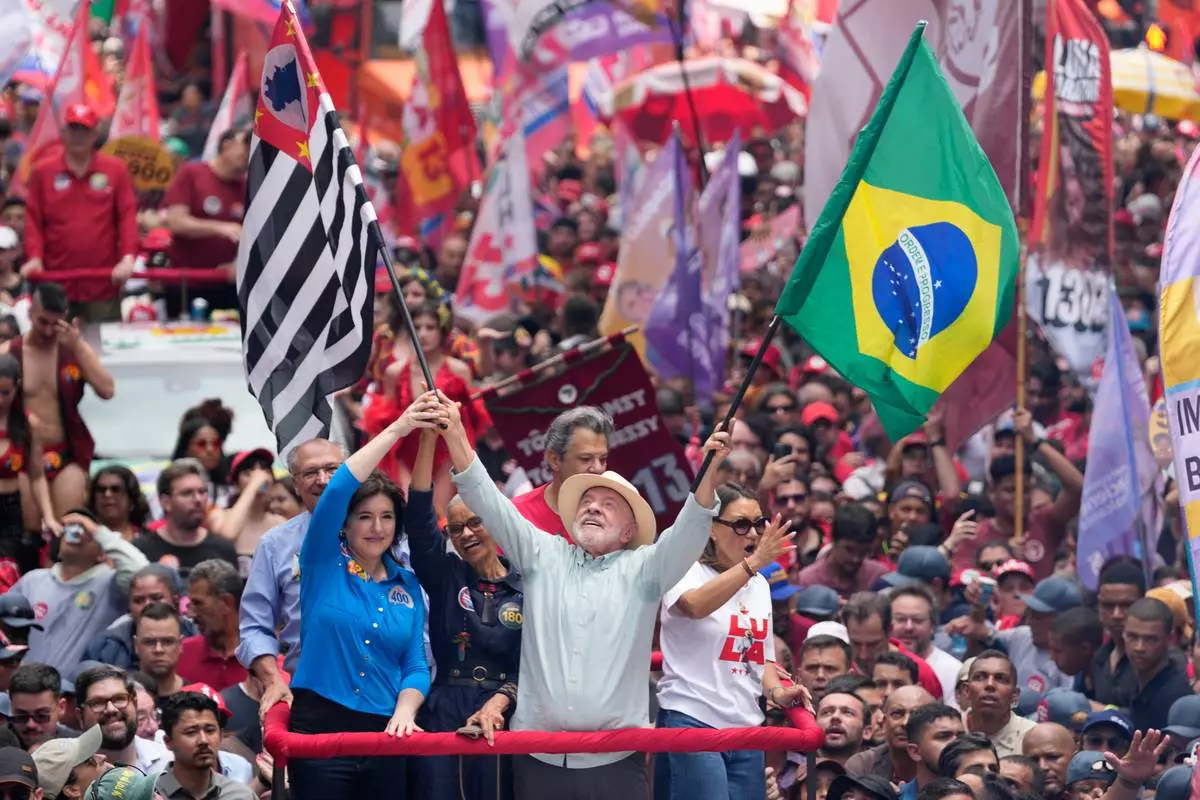
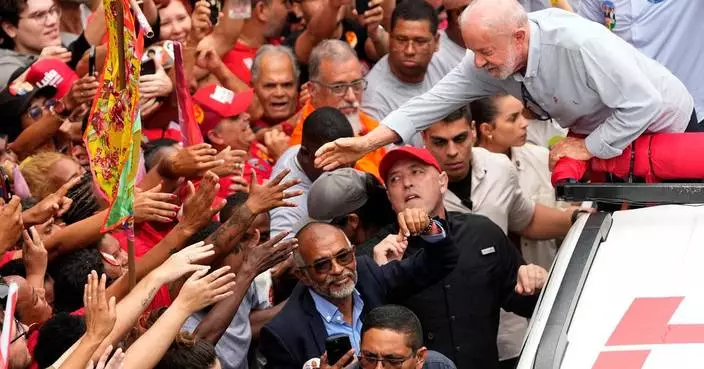
President Luiz Inacio Lula da Silva, who is running for reelection, waves a Brazilian and Sao Paulo state flags during a campaign rally a day ahead of the country's general election in Sao Paulo, Saturday, Oct. 3, 2026. (AP Photo/Andre Penner)
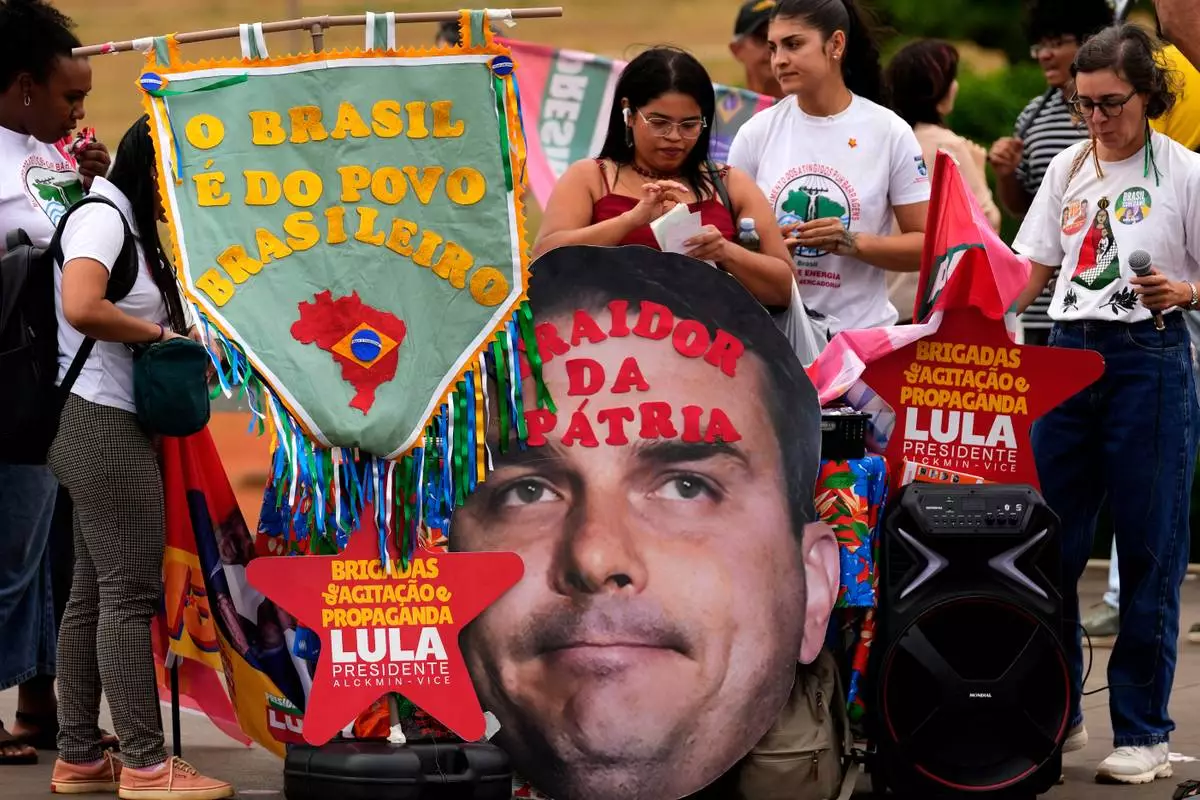
Supporters of Brazilian President Luiz Inacio Lula da Silva, who is running for reelection, display a large-headed effigy of presidential candidate Flavio Bolsonaro with a message in Portuguese that reads "Traitor of Brazil," during a campaign event at central bus station in Brasilia, Brazil, Friday, Oct. 2, 2026. (AP Photo/Eraldo Peres)
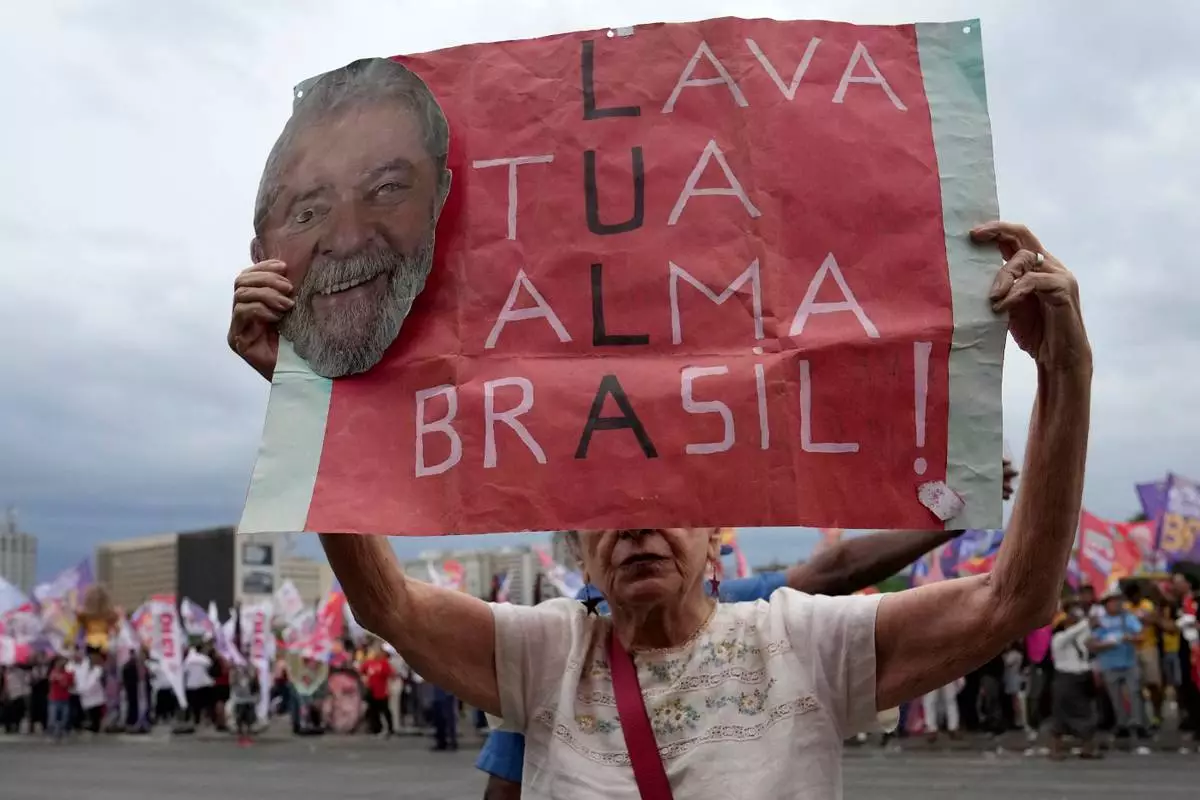
A supporter of Brazilian President Luiz Inacio Lula da Silva, who is running for reelection, holds a sign that reads "Lula, cleanse your soul, Brazil" during a campaign event at central bus station in Brasilia, Brazil, Friday, Oct. 2, 2026. (AP Photo/Eraldo Peres)