
Skip to Content Facebook Feature Image

A new Supreme Court term begins with cases on climate change, immigration and gun rights

News

A new Supreme Court term begins with cases on climate change, immigration and gun rights
News

News

A new Supreme Court term begins with cases on climate change, immigration and gun rights

2026-10-05 12:10 Last Updated At:12:40

WASHINGTON (AP) — The Supreme Court's new term begins Monday with cases on climate change, religious rights and President Donald Trump’s crackdown on immigration high on the agenda.

Here’s a look at what's in store:

The high court is starting its term with a major climate change case. The justices will hear an appeal from energy companies trying to block dozens of lawsuits seeking to hold them liable in court for damage related to climate change.

Billions of dollars are potentially at stake in a case out of Boulder, Colorado, where local officials say the industry should help shoulder the escalating costs of disasters linked to climate change.

The companies, Suncor and ExxonMobil, say lawsuits aren't the way to deal with the global issue. They have the backing of the Trump administration, which argues the litigation is a power grab intended to impose regulations on emissions.

About a dozen states have banned semiautomatic rifles like AR-15s, which are often called assault weapons. They say the guns are disproportionately used in mass shootings, and banning them helps reduce gun violence.

Challengers say those laws violate the Second Amendment. They argue that AR-15s and other similar weapons are among the most popular and commonly owned guns in the country.

The conservative-majority court has expanded gun rights in recent years, and four justices had signaled that it was only a matter of time before the court took up the issue. The case will be considered in December.

The court will hear two significant immigration cases with potentially big implications for Trump's wide-reaching crackdown.

One is about deportations of migrants who can't be quickly sent back to their home countries. The Trump administration has been sending thousands to other countries where they have no ties, under a series of often-secret agreements.

The Supreme Court will consider overturning lower court orders allowing them a chance to object. The justices have allowed the flights to continue in the meantime.

The other case is over the administration's mandatory detention policy for immigrants who have been living in the U.S. illegally, even if they've been in the country for years.

The administration argues it can hold people without a bond hearing, but most appeals courts that have considered the issue disagree.

A Republican push to enforce strict Arizona voting laws will also come before the justices this term.

One measure requires people to show proof of citizenship when registering to vote using a state form, and another calls for regular purges of the voter rolls to remove people if their citizenship could not be confirmed.

It comes as Trump has failed to get legislation requiring documentary proof of citizenship for registering to vote through Congress. Arguments are set for December.

Catholic preschools that can't take part in a taxpayer-funded program in Colorado will come before the court in November. It's the justices' latest case involving religious rights.

St. Mary Catholic Parish says it's been left out of the state's universal preschool program over its faith-based admissions policies, which exclude kids from LGBTQ+ families.

Colorado says religious schools are welcome to participate but have to follow nondiscrimination laws. The program was created by a 2020 ballot measure and provides public funding for preschool at schools selected by parents.
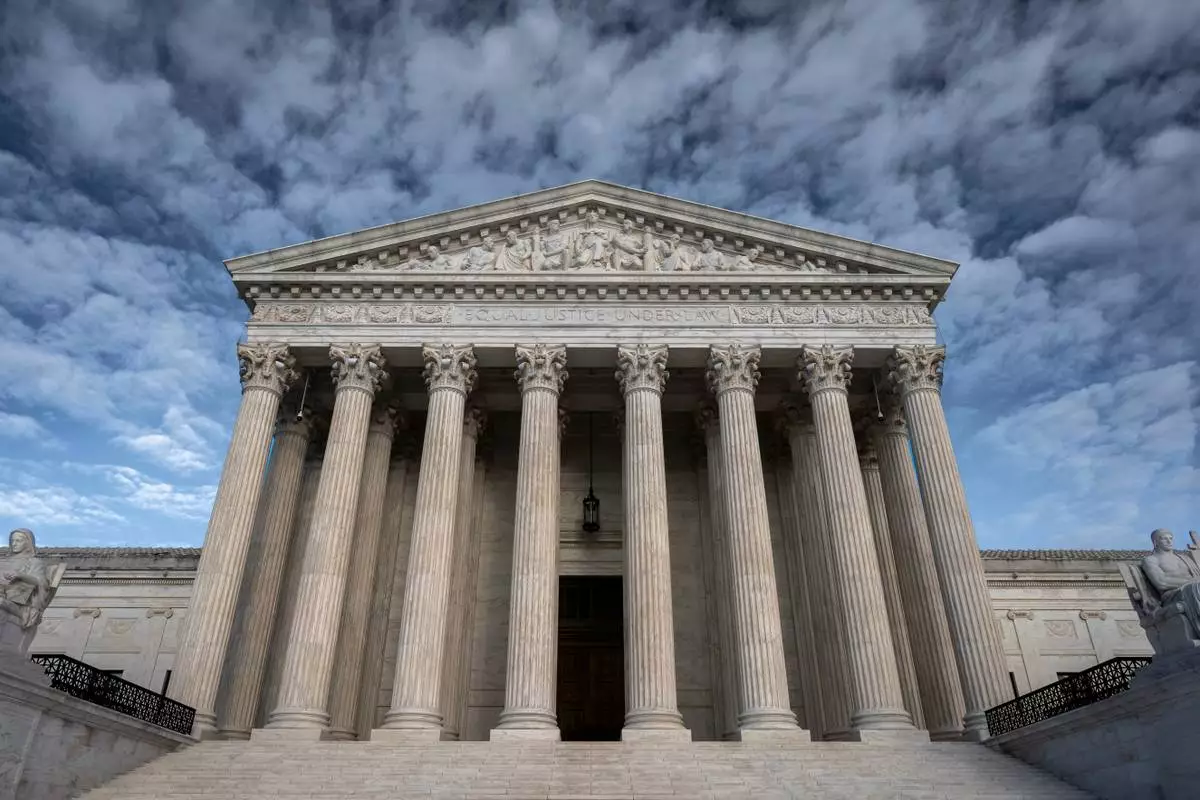
The Supreme Court is seen in Washington, Sept. 29, 2026. (AP Photo/J. Scott Applewhite)

The Supreme Court is seen in Washington, Sept. 29, 2026. (AP Photo/J. Scott Applewhite)

Russian authorities have quarantined a hospital and are monitoring contacts of an employee at a plague research institute in Siberia who contracted pneumonia of an “unknown” cause. Local state TV said the woman died last week.

Russian authorities said they found no evidence that her illness was caused by any of the pathogens she worked with. But the case has raised alarm in Russia after unconfirmed media reports suggested she might have died of pneumonic plague — a less common but severe form of plague that can spread from person to person.

The woman worked at the Irkutsk Anti-Plague Research Institute of Siberia and the Far East in Irkutsk, southeastern Siberia. A state TV station in Irkutsk reported Monday that she died last week in a hospital in Shelekhov, a town just outside Irkutsk.

The hospital has been placed under quarantine, Mayor Maxim Modin said Friday, no longer admitting or discharging patients, and its laboratory halted carrying out routine tests. The hospital's outpatient clinic kept operating as usual, he said.

Anna Popova, head of Russia’s public health watchdog, Rospotrebnadzor, flew to Irkutsk and met with Gov. Igor Kobzev and other officials on Friday.

Kobzev said everyone who came into contact with the woman is under medical supervision. He didn’t identify the infection and called it a suspected case of “a particularly dangerous infection.”

Rospotrebnadzor was implementing “a full range of anti-epidemic measures,” he added.

Rospotrebnadzor said Sunday the woman was diagnosed with “pneumonia of unknown etiology,” or origin, and said “extensive” testing found “no microorganisms associated with the patient’s professional activities.”

The agency also said it didn't uncover any incidents at the institute “involving pathogenic microorganisms."

Two people who were in contact with the woman tested positive for a virus that causes a common cold and two others for COVID-19, the agency said, adding that others who were tested were all negative.

U.S. Secretary of State Marco Rubio said Monday he doesn’t think there is cause for alarm, but the U.S. is watching the case closely, aware that “it could spread quickly” despite the quarantine and other public health protocols.

Independent local news outlet Lyudi Baikala quoted sources it did not identify as saying the woman died from pneumonic plague and that several Irkutsk hospitals were placed under quarantine.

Asked Monday to comment on the case, Kremlin spokesman Dmitry Peskov said the public and media should follow official statements from Rospotrebnadzor, rather than "rumors or speculation.”

The Irkutsk Aluminum Plant in Shelekhov required staff to wear masks as a precaution, its director Artyom Fominykh said Saturday on Telegram, calling for calm and adding: "Better be safe than sorry.”

The World Health Organization describes pneumonic plague as a less common but severe form of plague — a disease caused by Yersinia pestis, a bacterium usually found in small mammals and their fleas.

——

AP reporter Matthew Lee in Washington contributed.

This undated photo released by the Irkutsk Anti-Plague Research Institute of Siberia and Far East, shows the institute workers in a lab. (The Irkutsk Anti-Plague Research Institute of Siberia and Far East via AP)

This undated photo released by the Irkutsk Anti-Plague Research Institute of Siberia and Far East, shows the institute workers in a lab. (The Irkutsk Anti-Plague Research Institute of Siberia and Far East via AP)

Recommended Articles