The deputy head of Russia's Security Council, Dmitry Medvedev, on Sunday warned the United States against attempting to block the Russian low-Earth orbit satellite network Rassvet.
Posting the warning on his personal social media account, Medvedev said that blocking Russia's Rassvet satellite constellation would lead to a full-scale space war and the downing of the U.S. low-Earth orbit satellite network Starlink.
The post came after Ukrainian President Volodymyr Zelensky told The Financial Times on Saturday that he had asked U.S. President Donald Trump to block the Russian version of Starlink and impose sanctions on firms involved in developing the satellite network.
The use of SpaceX's Starlink is officially banned inside Russia, but Russian President Vladimir Putin said in June that the country had begun to deploy its own low-Earth orbit satellite constellation.
According to U.S. media reports released on July 31, Zelensky asked Trump and other American officials to persuade SpaceX founder Elon Musk to allow Ukrainian forces to use SpaceX's Starlink satellite system to strike ballistic missile launchers within Russian territory during his visit to the U.S.
Musk rejected this request, according to U.S. media reports released in August.

Blocking Russia's satellite network risks space war: Russian official
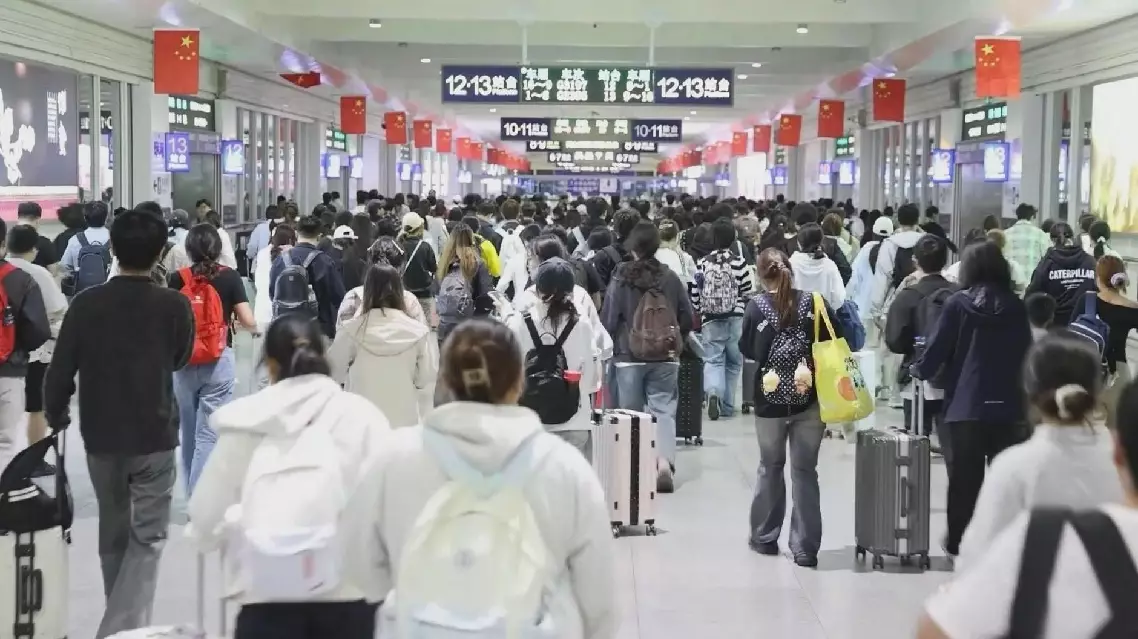
As the week-long National Day holiday enters its fifth day on Monday, many travelers across China are heading home, prompting transport authorities to ramp up services for a safe and orderly return.
Rail networks are projected to handle 21.05 million passenger trips on Monday alone, with over 1,400 additional trains scheduled to keep pace with demand. To manage heavy passenger influxes and overlapping arrivals, stations in multiple cities have opened extra exit gates, established close coordination mechanisms with local transport departments, increased bus scheduling frequencies and extended operating hours into the night. Several hubs have rolled out integrated travel services, linking high-speed rail, buses, and tourist attractions to facilitate transfers. Highways are also beginning to see increasing return traffic, with heavy congestion concentrated on routes into major cities and key inter-provincial corridors. According to the Ministry of Transport, more than 30 expressway sections nationwide are expected to see significant jams on Monday. In response, local traffic authorities have stepped up monitoring of road networks, issued timely congestion alerts and alternative route guidance, and encouraged travelers to stagger their departures.
Waterways are expected to handle 1.48 million passenger trips on Monday, up 14.8 percent year on year. To ease long queues and ticket difficulties for island trips, the Ningbo Terminal in east China's Zhejiang Province is offering online reservations for private cars heading to destinations in Zhoushan across the sea. Travelers can book a sailing half a day in advance, with separate passenger and vehicle channels and free shuttle buses in place to ensure a smoother experience.
The National Day holiday, widely known as the Golden Week, runs from October 1 to 7 this year. It is one of China's busiest travel and tourism seasons, typically triggering massive nationwide movements as hundreds of millions of people travel for family reunions or leisure.
China braces for return travel peak as National Day holiday nears end