The ancient City of Kashi in northwest China's Xinjiang Uygur Autonomous Region was bustling with tourists this National Day holiday, recording more than 160,000 tourist visits on Friday, the second day of the week-long holiday.
The day typically begins at the East Gate, where a traditional gate-opening ceremony is held every morning, featuring local Muqam music and the Hu Xuan dance.
"We're really glad to be here during the National Day holiday. We just watched the city-opening ceremony and could truly feel the warmth and hospitality of Xinjiang," said Luo Shuangzong, a tourist from northeast China's Liaoning Province.
The crowds then spilled into the ancient city’s winding streets, lined with food stalls, handicraft shops, cafes and photo studios.
Tourists enjoyed tea and musical performances in the courtyards and joined local residents in traditional gatherings.
"We watched all the performances. There were songs and dances from different ethnic groups, and I think they are really rhythmic and passionate, full of energy. I'm very very happy," said Zhang Fan, a tourist from Beijing.
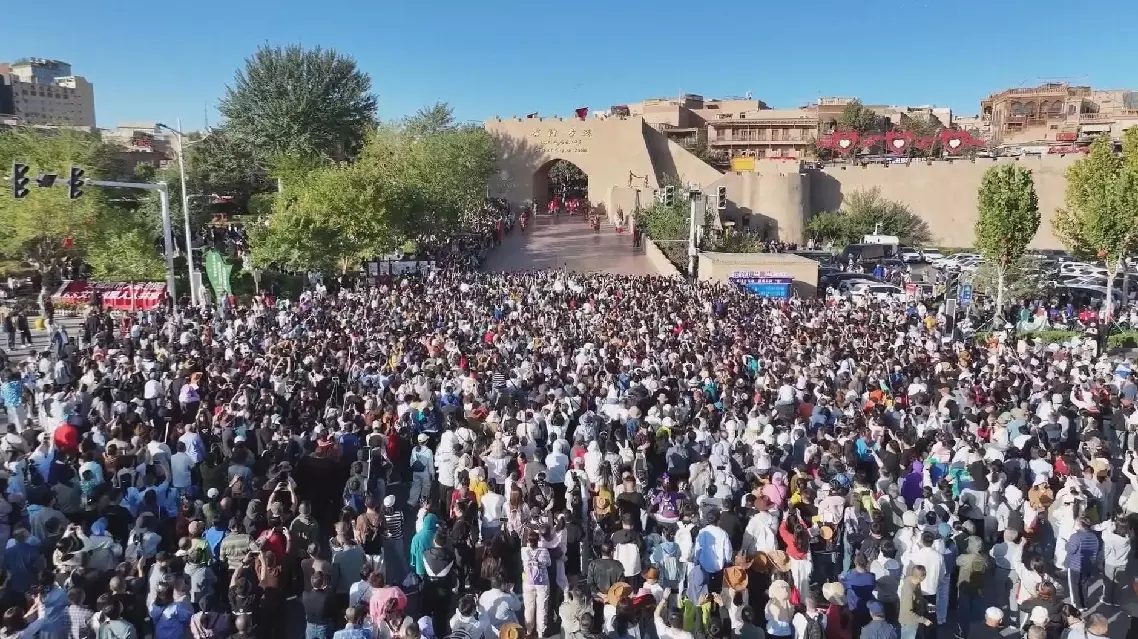
Tourists enjoy hospitality in Xinjiang's Kashi ancient city during National Day holiday
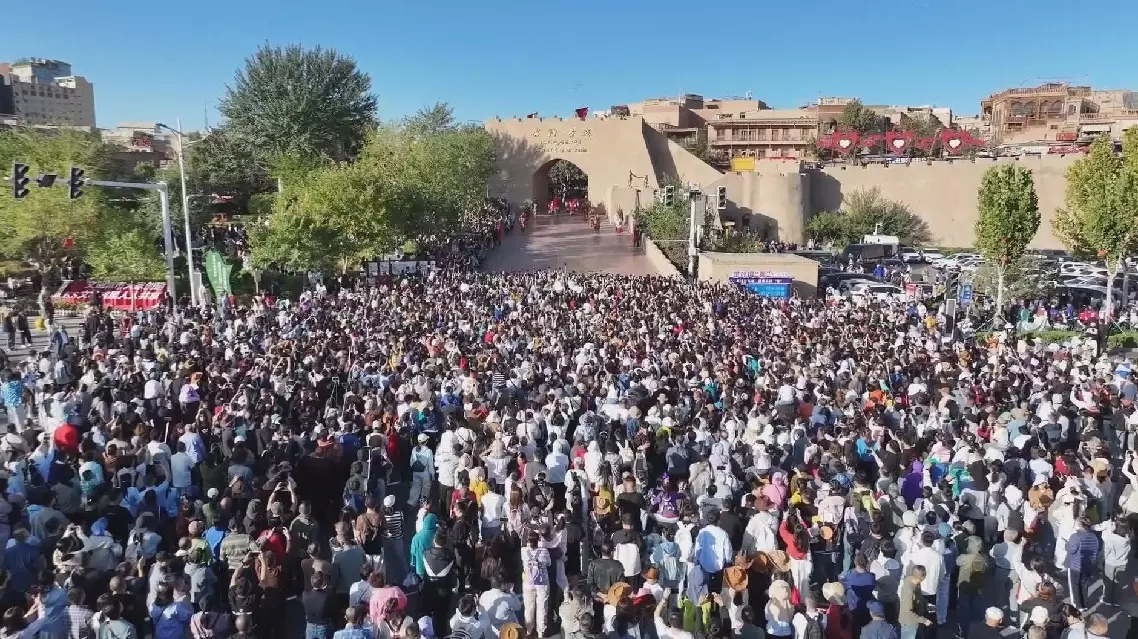
Tourists enjoy hospitality in Xinjiang's Kashi ancient city during National Day holiday
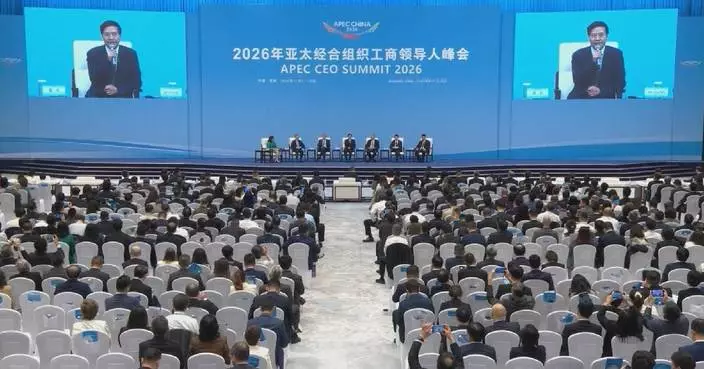
From government service counters to street corners, Shenzhen is combing through its foreign-language public signs as the city hosts this week's Asia-Pacific Economic Cooperation (APEC) China 2026 meetings, as part of a wider effort to elevate the city's international service environment.
The city is hosting the 33rd APEC Economic Leaders' Meeting on Wednesday and Thursday, China's first time hosting the annual gathering in 12 years since Beijing in 2014. With the theme "Building an Asia-Pacific Community to Prosper Together" setting the tone, Shenzhen wants its welcome to be felt in every corner, right down to the wording on its signs.
Change in this city does not always come with fanfare, and sometimes it is nothing more than a small sign being redone with care. At the Shenzhen Government Service Center, an old Chinese-English bilingual sign has made way for a new one, its translation placing greater emphasis on the proactive nature of government services.
Foreign visitors say the updated wording helps them actually understand what the counter is for.
"The new one, I feel like it's really thoughtful," said foreign visitor Tymur Dehtiarenko, commenting on a sign at a public service office with its English translation changed from "Feedback Window for Unfinished Work" to "Counter for Handling Unsolved Matters".
"If you say 'counter', I feel like this is the place where actual things get done," said another foreign visitor, Liv Ilasz.
The refresh does not stop at the service hall doors, because street-level signage across the city is being updated just as thoroughly. Since the start of this year, more than 100,000 foreign-language public signs have been corrected citywide, according to Zhao Qian, a staff member with the internationalization promotion division under the Foreign Affairs Office of the Shenzhen Municipal People's Government.
The bigger challenge, however, lies in the language itself. China's fast-emerging new business forms and new concepts often have no ready-made equivalent in other languages, and finding the right words for them is where the real work begins.
The translation team keeps studying and testing its work, moving beyond fixing inaccurate expressions to coining original terms for the city's own innovations.
That search for the right words falls partly to local scholars such as Zhang Shuyin, an assistant professor at the School of Humanities and Social Science at the Chinese University of Hong Kong, Shenzhen (CUHK-Shenzhen).
"Shenzhen is such a trend-setting city. Many concepts didn't exist yesterday and suddenly appear today. So, we developed a handbook of public signage and messaging tailored specifically to the unique character of Shenzhen," said Zhang.
Consistency is the other half of the job, according to Zhuang Yingyi, an assistant professor at the same school.
"We've inspected the redeveloped Huanggang Port many times. For example, 'elevator,' Hong Kong usually uses 'lift,' so we try to stay consistent with that usage," said Zhuang.
Manual research alone, however, cannot keep pace with the constant stream of new concepts, so Shenzhen has enlisted artificial intelligence for the citywide checkup to improve both efficiency and precision.
"The vehicle is equipped with five cameras in total. After each collection run, the back-end system uses an AI large model to extract Chinese and English entries from the images, then the model generates reference translations," said a technician.
From a small sign at a service counter to bilingual notices on street corners, the city is polishing the fine-grained details of how it hosts the world, and the same attention has gone into a guidebook for newcomers.
"Besides the printed booklet in four languages, we also have a digital service guide for foreigners in nine languages -- an interface connecting Shenzhen with the world," said Zhao.
"Shenzhen is like a second home for me. For now, I really love the city, I feel so welcome here. I feel like everything works well and is well-managed. It's very clean and it's not loud," said Dehtiarenko.
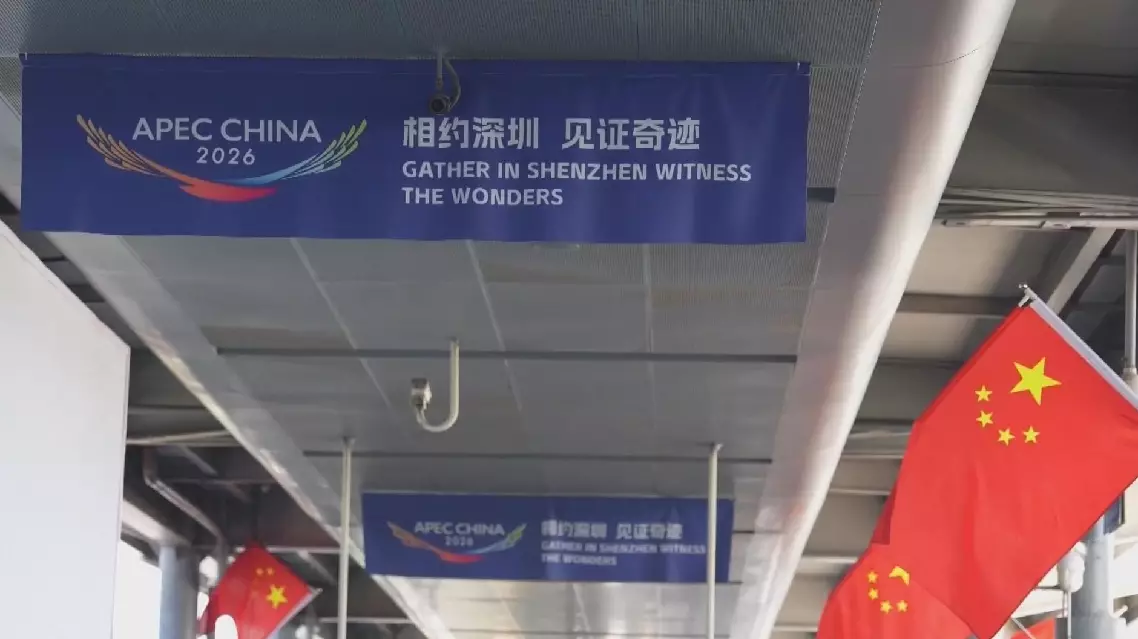
Shenzhen actively improves precise public sign translations for APEC