NEW YORK (AP) — Long before Tony Gilroy wrote “The Bourne Identity," made “Michael Clayton” or created “Andor,” he wanted to be a musician.
After playing guitar in a string of bands, Gilroy came to Los Angeles hoping to become a studio musician. A session with some real players quickly disabused him of that notion. But once Gilroy entered filmmaking, his fascination with the scoring process, and the orchestras that record them, kept growing. By the time Gilroy was overseeing the scoring of “Rogue One: A Star Wars Story” at the famed Gary Martin Soundstage on the Sony Pictures lot, something started percolating.
“Those scoring sessions were incredibly intense,” said Gilroy. “The time pressure was great. A huge orchestra. I just sat there going: There has to be a movie here.”
Now there is. Gilroy's “Behemoth!” premiered last weekend at the centerpiece of the New York Film Festival. Gilroy's first film since the Star Wars series “Andor” concluded its acclaimed two-season run, “Behemoth!” was one of the festival's most keenly awaited movies. In the film, which Searchlight Pictures will release Dec. 4, Pedro Pascal stars as a perpetually on-the-run cellist and former prodigy who returns to Los Angeles to score films. His life is as messy as his playing is flawless.
“Behemoth!” is a rigorously scripted, time-shifting character study in the mold of Gilroy’s 2007 masterpiece, “Michael Clayton,” and a resonant ode to the art of movie scoring. In an experimental gambit, Gilroy cast nine composers — dubbed the Behemoth! Collective — to fill the movie with music.
“I kinda had a vague idea of how I could gather enough musicians quickly before the authorities got involved,” a chuckling Gilroy said during an interview at Lincoln Center. “We just said, ‘OK, everybody’s going to get exactly the same amount of money. ... We made a basic, early manifesto for what the rules would be. And it’s this utopian thing.”
The alchemy of image and music remains a mysterious part of moviegoing to Gilroy, the oldest son in a filmmaking family. He points to the simplicity and luck that went into the score for the noir classic “The Third Man,” where director Carol Reed stumbled upon a zither player at a wine tavern. “Michael Clayton,” Gilroy said, initially rejected any music at all. He screened it half a dozen times naked, without a score, before something clicked.
“You pick the lock, you pick the frequency of what it is,” Gilroy said. “When we started on ‘Andor,’ I really felt like I knew a lot about it. And we got in there and got our butts kicked. That was a tutorial. Then it happened again in the second season. You just can’t stop learning this stuff. I’m not sure I’ll ever be done learning about it.”
Gilroy said he considers his six years working “Andor" to be “the most life-changing creative intensity you could ever have.” While it initially seemed an unlikely combination — one of film's top writer-directors and one of Hollywood's most tightly controlled franchises — Gilroy, a student of history, turned the “Rogue One” spinoff into a timely exploration of fascism and revolution.
“Behemoth!” was a new tune.
“We were so swamped with politics and anger and dread of picking up the newspaper every day,” said Gilroy. “I really craved a sanctuary from that. I gave myself permission to hide in this movie for a year. I felt like I did enough, I said enough, I was angry enough. People who got the show really got it. I didn’t want to fight anymore. It was super pleasurable to not come home and put the news on, but put music on.”
But did those years on “Andor” give Gilroy any insight into our current politics? He immediately answered “yes” and then hesitated. “Man, do I really want to get into it?"
“I think a lack of alternative, charismatic, communicative leadership,” he said. “There’s been absolutely no one who has risen who’s given voice to what the majority of people want. Someone to stand up and charismatically message the (expletive) out of this, the way it should be.”
“All of the varieties of the woke conversation — I’m not sure I even understand all the distinctions or where I fit on that spectrum,” Gilroy said. “But what I know for sure is that there was a de-muscularization of progressives. It doesn’t have to be masculine. But somebody stand up and frickin’ fight.”
The idea for “Behemoth!” stemmed from something more sublime. In countless trips to the Sony soundstage, he watched its effect. The same room is where MGM musicals like “The Wizard of Oz” were recorded. Many scenes in “Behemoth!” were shot there.
“People go in and they cry. The air that’s moving, the sweat. The combination of legacy and work and the dead skin cells of all the people that have been in there forever,” said Gilroy. “When we were doing ‘Clayton,’ Tilda Swinton came in and she had never been to a scoring session before. She went and laid down.”
For Gilroy, the behind-the-scenes interest mirrors how “Michael Clayton,” which starred George Clooney as the fixer of a law firm, came about.
“We were doing location scouting for ‘Devil’s Advocate,’ and I kept going to all of these law firms and wandering off. The back of those law firms are huge,” Gilroy said, referring to the 1997 film he co-wrote. “I said, ‘Why doesn’t anyone do a movie about the back of the house? The whole front is like a stage.’”
Gilroy, 70, didn't make his directorial debut, “Michael Clayton,” until he was 50, after years as an in-demand screenwriter. That “Behemoth!” is only his fourth feature as director is hard not to read as a sign of Hollywood foolishness. He turned to “Andor” after three films he was trying to get off the ground never materialized. But he's not complaining.
“It sounds odd to say, but over the last 10 years, I’ve been gambling with Disney on the three most eccentric projects I’ve ever been involved in,” Gilroy said. “They’ve never done anything but let our freak flag fly.”
Searchlight Pictures, the specialty division of Disney, stepped in to make the $36 million “Behemoth!”
“They stepped up because I delivered on ‘Rogue,’ I delivered on ‘Andor,'” Gilroy said. “My attitude was: I’ll cover. Let me do this to cover and keep me around. They were Medici for me. But Hollywood’s not working that way."
When Gilroy spoke to The Associated Press, his mind was on the acquisition of Warner Bros. Discovery by Paramount Skydance, a merger that many in the industry opposed. The day before, the impending exits of Warner Bros. Motion Picture Group chairs Michael De Luca and Pam Abdy were reported.
“They’re just real film people. And these studios are real studios. There’s no reason for them to be merged or pulled apart,” Gilroy said. "This is a healthy business that we know how to do. And to take it apart?"
But back to the music. The unlimited possibilities of a score — and the pros who realize them — remain intoxicating to Gilroy. So much is possible, even with just a zither.
“Only once,” he corrected, referring to “The Third Man.” “It’d take a lot of balls to do a zither score again.”

Director Tony Gilroy poses for a portrait to promote "Behemoth!" on Friday, Oct. 2, 2026, in New York. (Photo by Andy Kropa/Invision/AP)
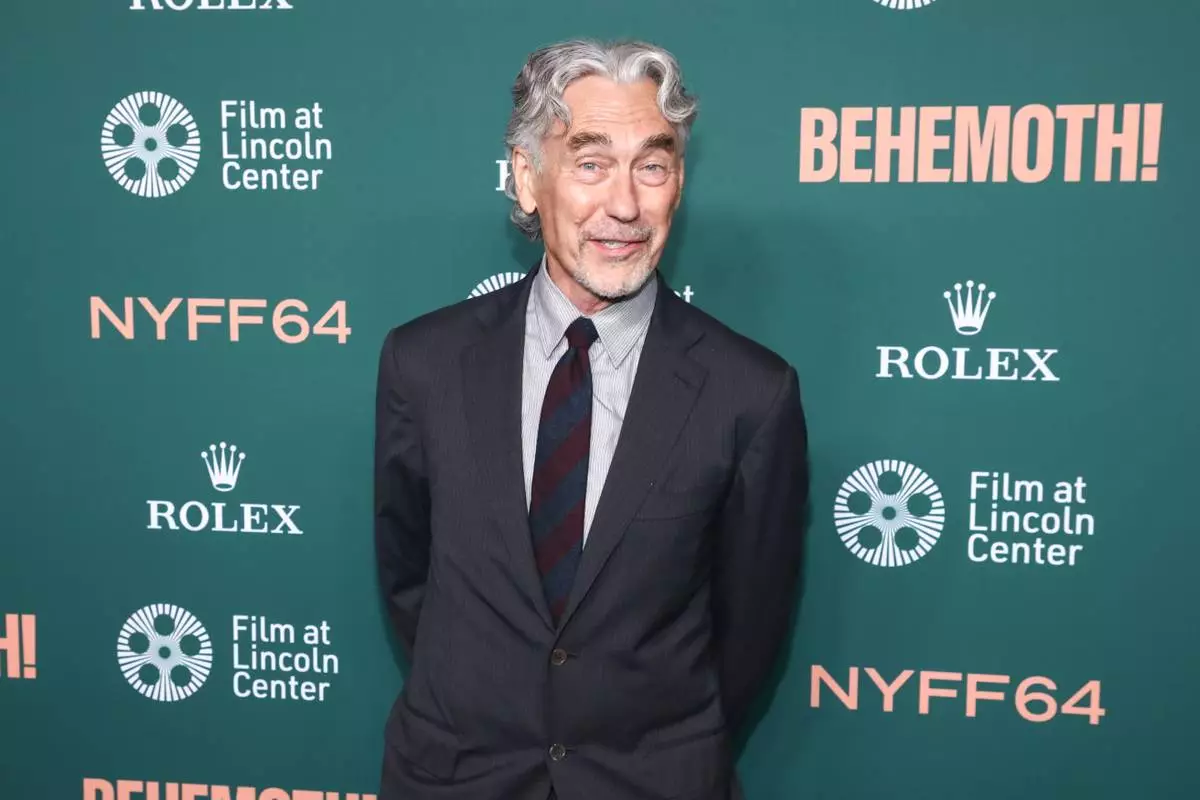
Director Tony Gilroy attends the "Behemoth!" premiere at Alice Tully Hall during the 64th New York Film Festival on Friday, Oct. 2, 2026, in New York. (Photo by Andy Kropa/Invision/AP)
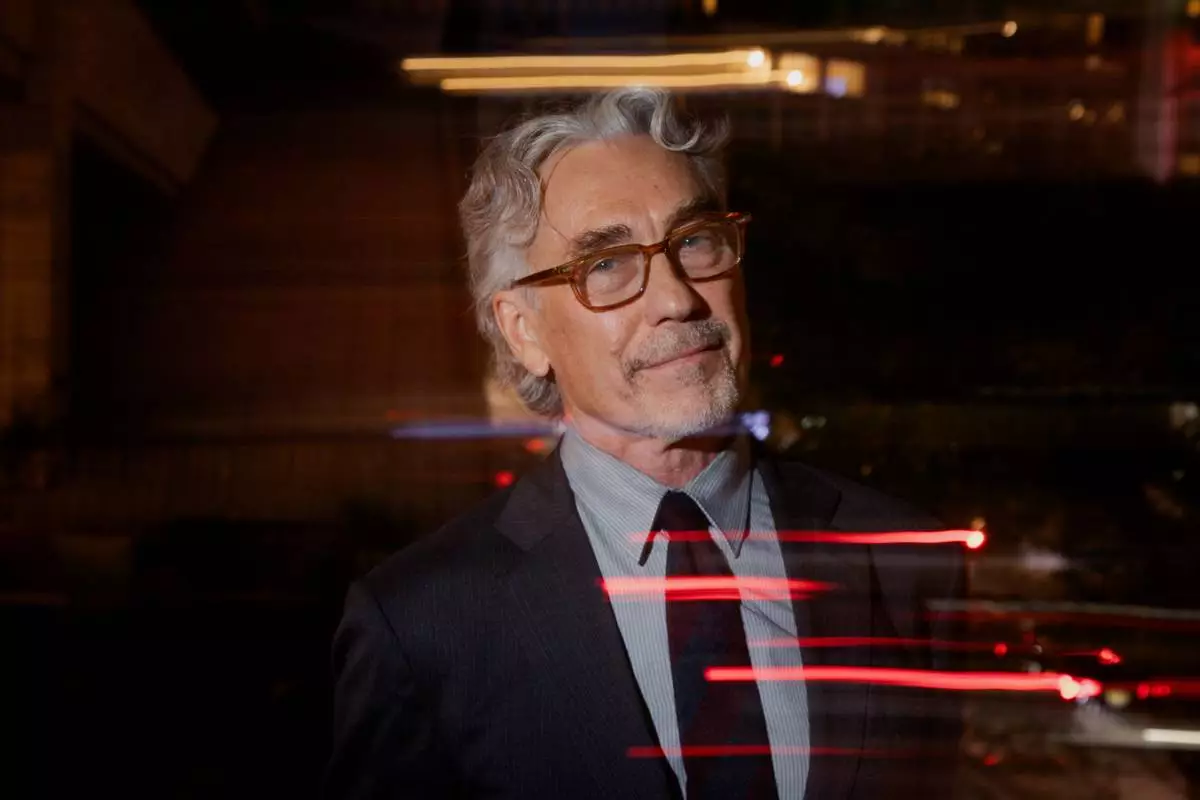
Director Tony Gilroy poses for a portrait to promote "Behemoth!" on Friday, Oct. 2, 2026, in New York. (Photo by Andy Kropa/Invision/AP)