Skip to Content Facebook Feature Image

Indigenous, environmental groups warn far-right gains in Brazil’s Congress threaten protections

News

Indigenous, environmental groups warn far-right gains in Brazil’s Congress threaten protections
News

News

Indigenous, environmental groups warn far-right gains in Brazil’s Congress threaten protections

2026-10-06 06:04 Last Updated At:06:11

SAO PAULO (AP) — Indigenous and environmental organizations in Brazil expressed concern Monday about the weekend’s election results, warning that far-right gains in Congress could threaten Indigenous peoples who play a key role in protecting the Amazon and other Brazilian ecosystems.

Brazil, the world’s fourth-largest democracy and home to about 60% of the Amazon rainforest, voted Sunday for president, Congress and governors. The presidential race remains undecided, with Sen. Flávio Bolsonaro, son of former far-right President Jair Bolsonaro, set to face President Luiz Inácio Lula da Silva in an Oct. 25 runoff.

More Images
President Luiz Inacio Lula da Silva, who is running for reelection, speaks to supporters after advancing to a presidential runoff following the first round in Sao Paulo, Brazil, Sunday, Oct. 4, 2026. (AP Photo/Andre Penner)
President Luiz Inacio Lula da Silva, who is running for reelection, speaks to supporters after advancing to a presidential runoff following the first round in Sao Paulo, Brazil, Sunday, Oct. 4, 2026. (AP Photo/Andre Penner)

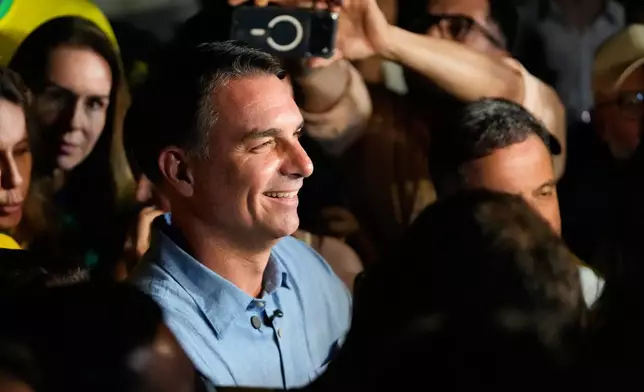
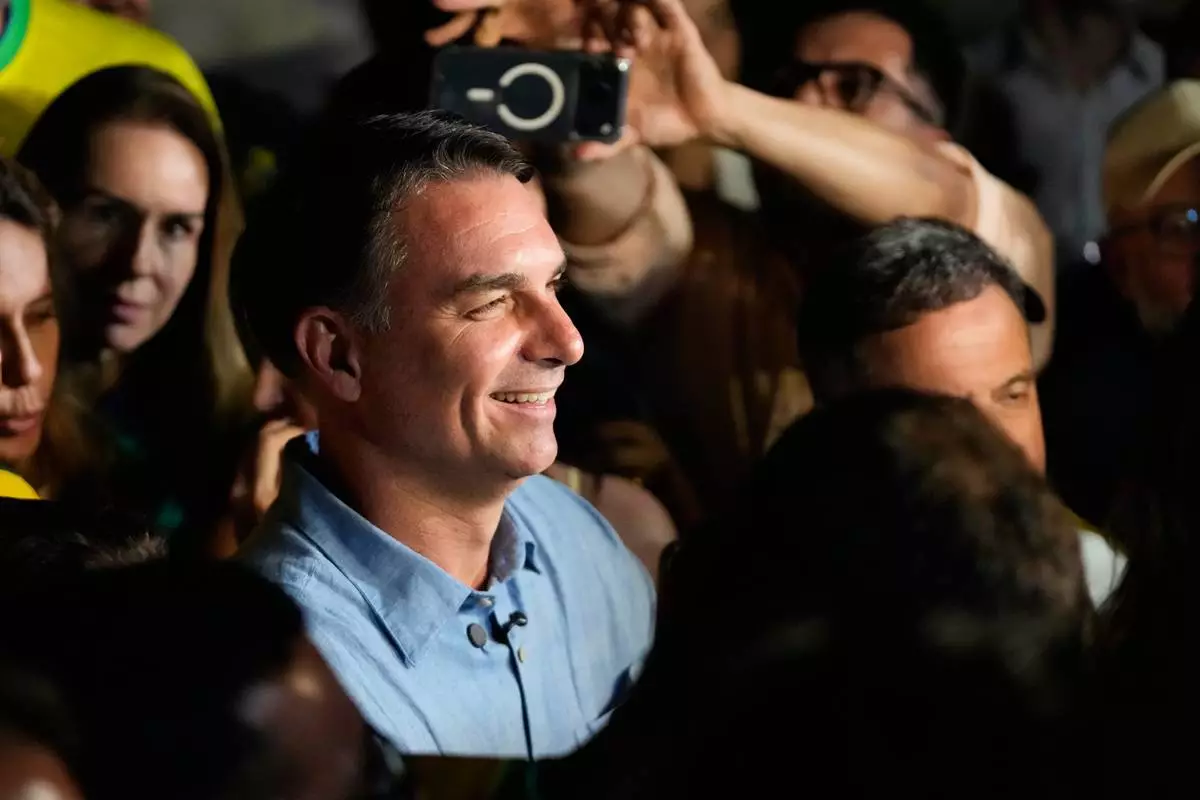
Opposition presidential candidate Sen. Flavio Bolsonaro speaks after advancing to a runoff election following the first round of the presidential election in Brasilia, Brazil, Sunday, Oct. 4, 2026. (AP Photo/Eraldo Peres)
Opposition presidential candidate Sen. Flavio Bolsonaro speaks after advancing to a runoff election following the first round of the presidential election in Brasilia, Brazil, Sunday, Oct. 4, 2026. (AP Photo/Eraldo Peres)

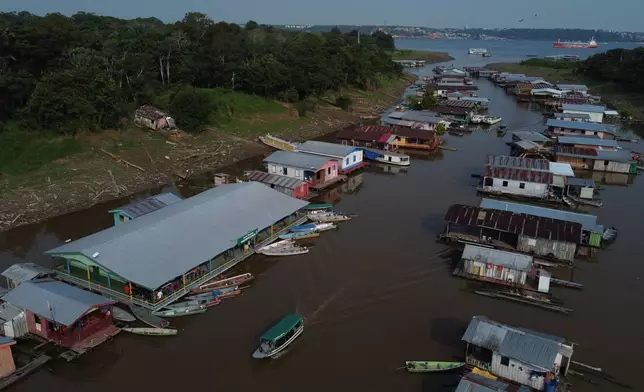
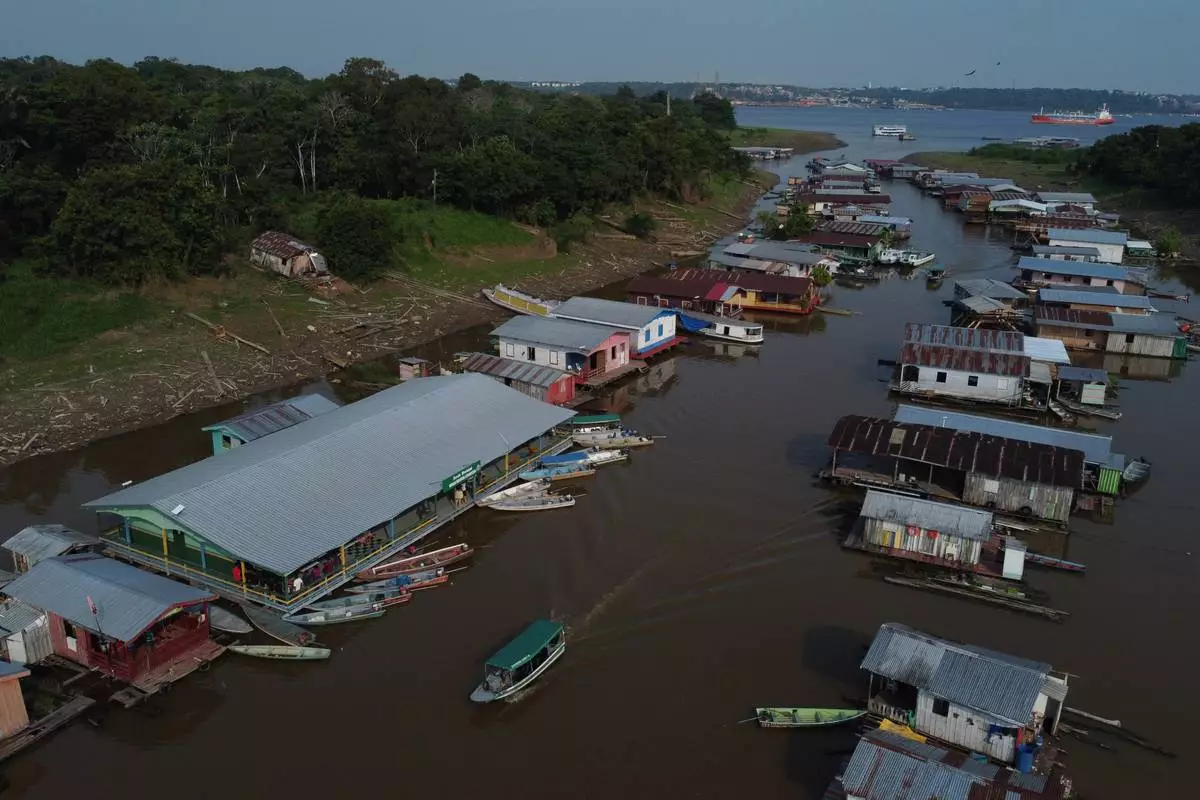
Boats are moored to a school serving as a polling station during general elections in Iranduba, Brazil, Sunday, Oct. 4, 2026. (AP Photo/Edmar Barros)
Boats are moored to a school serving as a polling station during general elections in Iranduba, Brazil, Sunday, Oct. 4, 2026. (AP Photo/Edmar Barros)

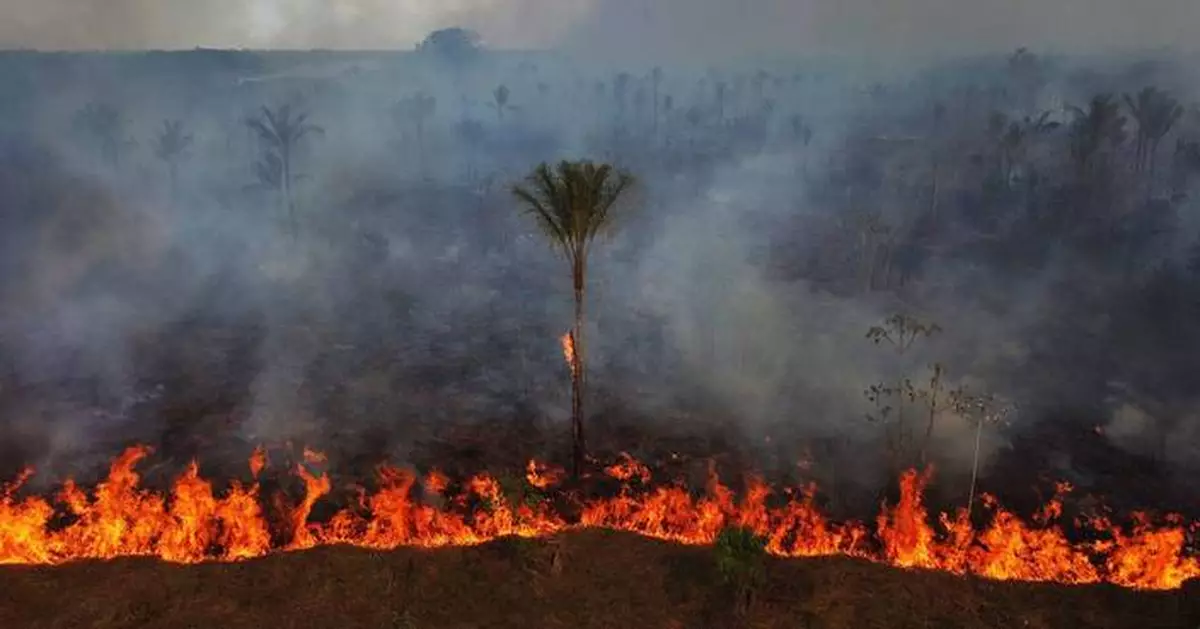
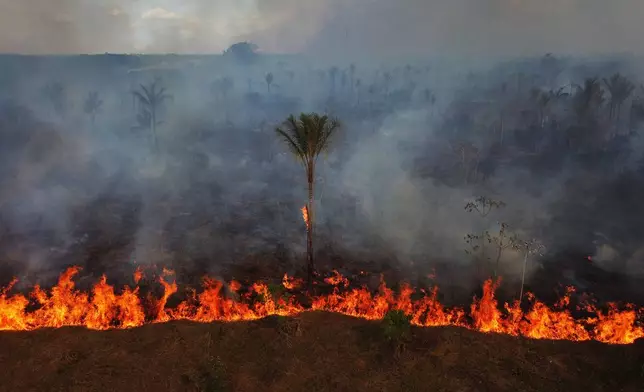
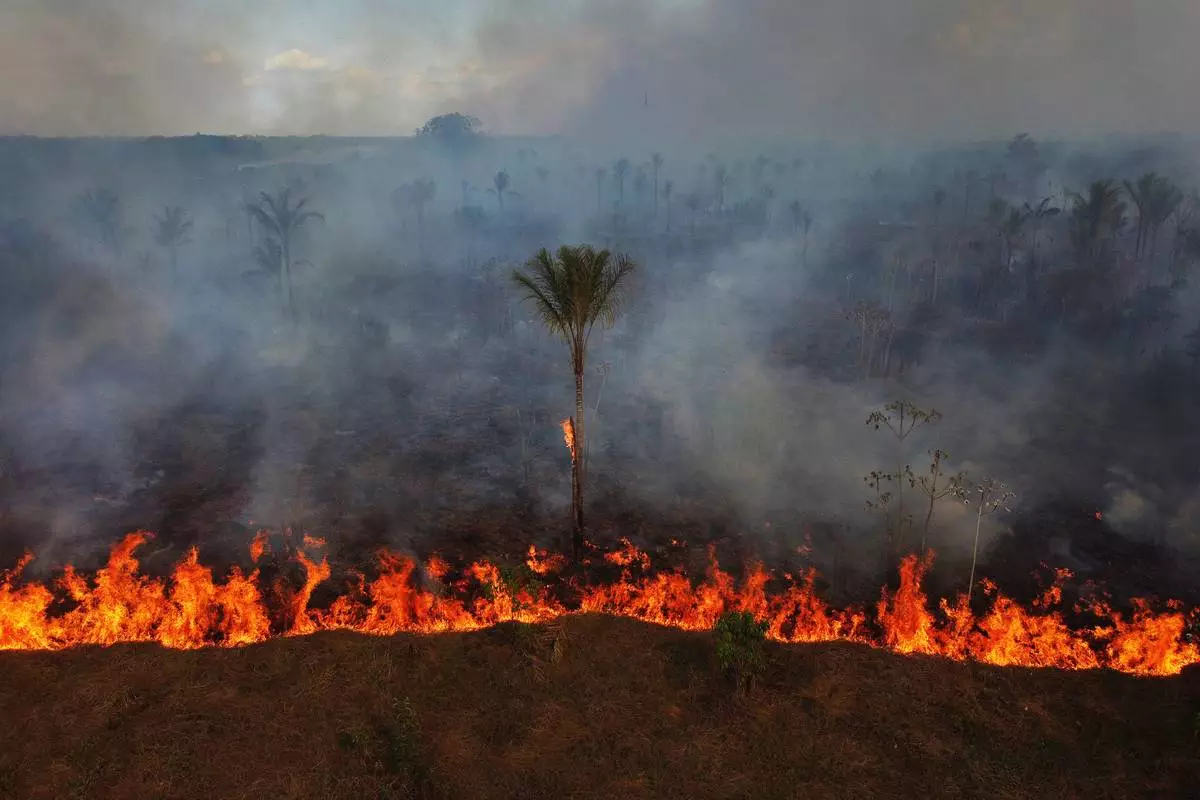
Wildfires spread near the municipality of Iranduba, Amazonas state, Brazil, Friday, Oct. 2, 2026. (AP Photo/Edmar Barros)

Wildfires spread near the municipality of Iranduba, Amazonas state, Brazil, Friday, Oct. 2, 2026. (AP Photo/Edmar Barros)

Bolsonaro’s Liberal Party won about a third of Senate seats and nearly a quarter of seats in the Chamber of Deputies, making it the largest party in both houses.

“The elections have already produced a significant shift in Congress,” Amazon Watch, a nonprofit focused on environmental protection and Indigenous rights, said in a statement. “The new balance of power strengthens groups that support mining on Indigenous lands and changes to territorial and environmental protections, regardless of who wins the runoff.”

Several lawmakers elected in Amazon states have backed mining, including on Indigenous lands, or weaker environmental protections. Fernando Máximo, a Liberal Party senator-elect from Rondonia, has dismissed as “falsehoods” scientific findings of mercury contamination from illegal gold mining.

Such positions extend beyond Bolsonaro’s party. Sen. Plínio Valério of the center-right Brazilian Social Democracy Party, reelected in Amazonas, has called for legalizing mining and criticized enforcement operations.

“Brazil emerges from these elections with a Congress that is even more aggressive toward Indigenous rights,” said the Articulation of Indigenous Peoples of Brazil, the country’s leading Indigenous organization, known by its Portuguese acronym, Apib.

Protecting Indigenous territories is widely seen as an effective way to curb deforestation in the Amazon, the world’s largest rainforest and a key regulator of the global climate. A 2022 MapBiomas analysis found that Indigenous territories in Brazil lost just 1% of their native vegetation over three decades, compared with 20% on private land nationwide.

Under Brazilian law, any mineral research or mining activity on Indigenous territories requires Congress’ approval, in addition to consulting local communities. The next Congress that will be sworn in on Feb. 1, 2027, will inevitably rule on mining on Indigenous land, since in February, Brazilian Supreme Court Justice Flávio Dino ordered lawmakers to pass legislation regulating the issue.

“The debate about mining on Indigenous lands is expected to move forward regardless of the election outcome. And the election results pose greater risks that the regulations will pay little attention to Indigenous rights,” said Márcio Santilli, a founding member of Brazil's nonprofit Socioenvironmental Institute and a former president of Brazil’s Indigenous affairs agency.

Marcos Sabaru, an Indigenous political strategist with Apib, said Bolsonaro’s pledge to allow Indigenous people to mine on their lands would face significant legal hurdles, as Indigenous lands and their mineral resources technically belong to the federal government.

“If they open up Indigenous land and it no longer belongs to the federal government, then who does it belong to? Ranchers and mining companies? Indigenous people?” Sabaru said. “We would be setting a precedent with no way of knowing where it would lead.”

Record-breaking gold prices, driven largely by investor demand for safe assets amid rising global risks, have driven a renewed mining rush in the Amazon, spiking deforestation and mercury contamination of riverine and Indigenous communities. A recent analysis by the nonprofit Amazon Environmental Research Institute found that gold mining expanded nearly sevenfold in these lands between 2016 and 2024.

Bolsonaro’s Liberal Party did not respond to a request for comment from The Associated Press.

During his campaign, Flávio Bolsonaro said that he would open Indigenous lands to economic activities without clarifying whether he would establish deforestation rules for Indigenous lands.

“If they want to farm or lease their territory, they will be free to do so. If they want to authorize mining on their lands, they will be able to do that as well,” Bolsonaro told the Market Makers podcast. “All of this will be done responsibly and with environmental safeguards, while respecting their wishes.”

Since 2023, Lula’s government has reversed a surge in Amazon deforestation under Jair Bolsonaro, stepped up efforts against illegal gold mining, created a Ministry of Indigenous Peoples and rebuilt the Indigenous affairs agency. But it has fallen short on some promises, including the demarcation of Indigenous lands, Sabaru said. Still, Apib supports Lula’s reelection.

“It’s difficult for us to defend the Lula government. It really is,” Sabaru said. “But we are doing it because the other side is not an option.”

The Associated Press’ climate and environmental coverage receives financial support from multiple private foundations. AP is solely responsible for all content. Find AP’s standards for working with philanthropies, a list of supporters and funded coverage areas at AP.org.

President Luiz Inacio Lula da Silva, who is running for reelection, speaks to supporters after advancing to a presidential runoff following the first round in Sao Paulo, Brazil, Sunday, Oct. 4, 2026. (AP Photo/Andre Penner)
President Luiz Inacio Lula da Silva, who is running for reelection, speaks to supporters after advancing to a presidential runoff following the first round in Sao Paulo, Brazil, Sunday, Oct. 4, 2026. (AP Photo/Andre Penner)

Opposition presidential candidate Sen. Flavio Bolsonaro speaks after advancing to a runoff election following the first round of the presidential election in Brasilia, Brazil, Sunday, Oct. 4, 2026. (AP Photo/Eraldo Peres)
Opposition presidential candidate Sen. Flavio Bolsonaro speaks after advancing to a runoff election following the first round of the presidential election in Brasilia, Brazil, Sunday, Oct. 4, 2026. (AP Photo/Eraldo Peres)

Boats are moored to a school serving as a polling station during general elections in Iranduba, Brazil, Sunday, Oct. 4, 2026. (AP Photo/Edmar Barros)
Boats are moored to a school serving as a polling station during general elections in Iranduba, Brazil, Sunday, Oct. 4, 2026. (AP Photo/Edmar Barros)

Wildfires spread near the municipality of Iranduba, Amazonas state, Brazil, Friday, Oct. 2, 2026. (AP Photo/Edmar Barros)

Wildfires spread near the municipality of Iranduba, Amazonas state, Brazil, Friday, Oct. 2, 2026. (AP Photo/Edmar Barros)
ITHACA, New York (AP) — Cornell students thronged a campus plaza to protest the university's response to allegations of sexual assault at a fraternity house, and the school's main administration building was splashed with graffiti and damaged overnight.

At a demonstration that overflowed the large space in front of the school's student center, students, faculty members and others wore purple ribbons and held signs with such messages as “support survivors, expel rapists” and “Justice 4 every Jane Doe" — the name by which the woman who reported the assault is known in court papers. Others watched from pathways, windows, and a nearby hill.

“Too often, we are met with silence, we are met with statements, we are met with procedures, but not enough support,” student Athena Holloway told the crowd. “How much does it take for our university to stand with survivors?”

Hispanic studies professor Julia Chang added to applause: “Rape should not be inevitable.”

Speakers faulted fraternities, the university trustees and Cornell President Michael Kotlikoff, saying he and his administration have prioritized protecting the university's reputation over students' safety.

“Kotlikoff, resign!” demonstrators chanted, among other slogans, as they marched to the damaged administration building to present a list of demands. They included changes to how the student code of conduct defines sexual consent, an overhaul of the student discipline system and expulsions or degree revocations for all students involved in the alleged 2024 assault of the woman known as Jane Doe, among other things.

Standing in front of the administration hall, students held a banner reading “Burn Down the Patriarchy.”

The Ivy League school has been trying to quell a firestorm — on campus and beyond — over its handling of the alleged 2024 gang rape. Early Monday, the university found signs of the anger on the very walls of its administrative headquarters.

Holes were knocked into one of the building's glass doors, and the walls beside them were marked with red-painted messages condemning patriarchy and the Ivy League school’s handling of sexual assaults, news media photos showed. Later Monday, the graffiti was removed and the door was boarded up.

Cornell spokesperson Kyle Kimball said in a statement that the university was investigating and that “damaging property is not the answer” to Cornellians' “frustration and strong emotions.” Campus police referred questions to his office, which declined to provide more detail on the incident.

The woman known as Jane Doe alleges that she was sexually assaulted by multiple Chi Phi fraternity members in October 2024 after being pressured into drinking and taking drugs. She was a Cornell student at the time.

The woman recently sued the university, seven former students, the fraternity and others. Her lawsuit said that she became fully incapacitated as fraternity members assaulted her, and that one man sent others a message inviting them to participate.

“I felt like bait. I felt like lions around me. It just was a totally debilitating place to be in,” she told Cornell investigators last year, according to records reviewed by The Associated Press.

Lawyers for two of the former students denied they participated in a sexual assault. Attempts by The Associated Press to reach the other men or their representatives have been unsuccessful. Court records show that some of the accused students, when interviewed by Cornell investigators, described the sexual activity as consensual.

Shortly before she went to Cornell police in November 2024, Jane Doe recorded a phone call with one of the men she says raped her, ABC News reported Monday, saying it had obtained the recording. The network played portions, containing only what it said was his voice, and recounted other parts of the conversation in writing.

According to ABC, the man told her that after dancing with her for five minutes or less, he suggested a three-person encounter. He maintained that she agreed to it, and that he then fetched the second Chi Phi member from the dance floor.

Her lawsuit says she was too intoxicated to give consent.

On the call, she tried to pinpoint who else later came into the room, ABC said. The man suggested both he and she might be misremembering something that's “not true,” but she countered that she recalled looking up and seeing “too many people” there.

“What y’all did would be classified as gang rape,” she told him at one point, according to the network, which said she had provided the recording to the university.

The suit has drawn national attention to what Cornell, its police force and the local district attorney did after she told the campus police in November 2024 she “can say with 100% confidence I was raped.”

No criminal charges have been filed. The Chi Phi chapter at Cornell was shut down, and the Ivy League university has said it expelled some students and suspended others. In a statement last week, the administration bristled about the “false narrative that there were minimal consequences in this case.”

Students, however, have demanded more accountability and transparency, and New York Gov. Kathy Hochul has said Jane Doe was “failed by people and institutions" including the Cornell police and local District Attorney Matthew Van Houten.

Hochul appointed the state attorney general last week to take over a criminal investigation that Van Houten had reopened days earlier, and the governor called for an independent review of Cornell’s handling of the matter.

After the week's developments, Kotlikoff released an apologetic video Saturday, saying that Jane Doe's account “raises heartbreaking and troubling issues about sexual assault, dehumanization and aspects of party culture, alcohol and drug use.”

Kotlikoff reaffirmed his support for an independent review of the university's actions and vowed more transparency and a commitment to "finding the answers our community deserves.”

Associated Press writer Jennifer Peltz contributed from New York.

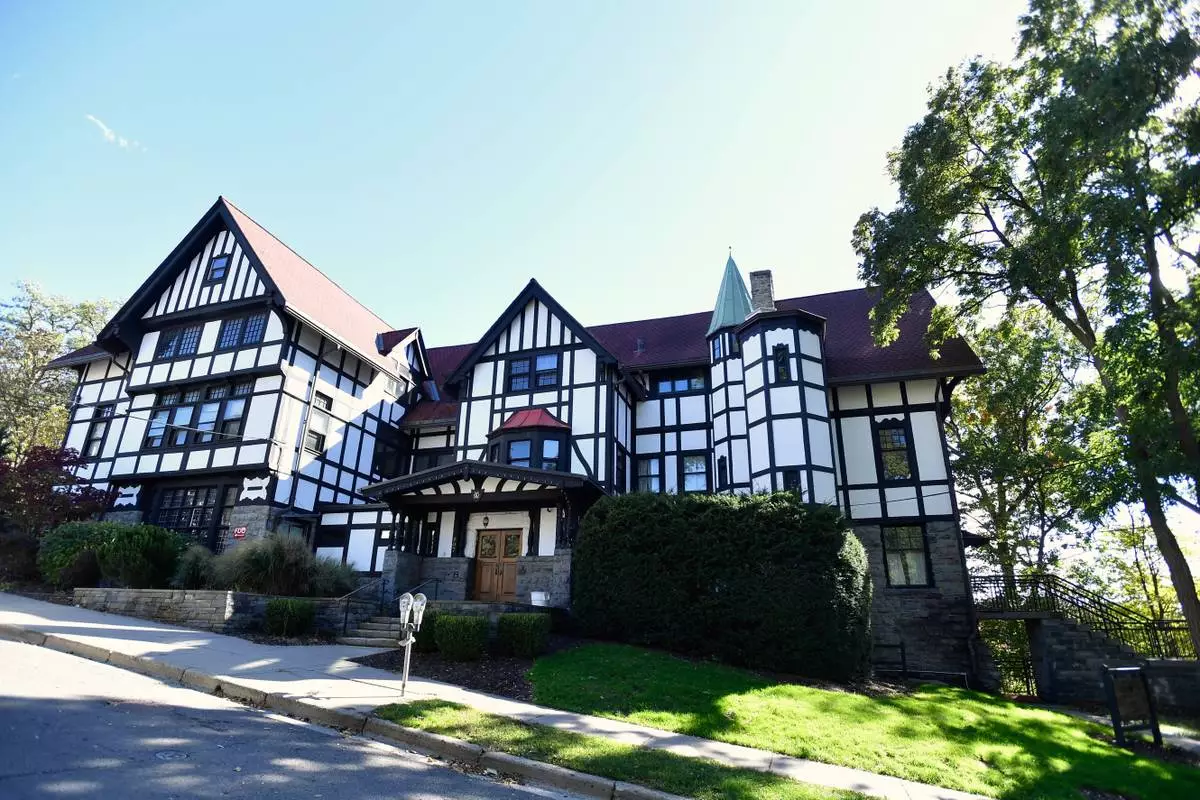
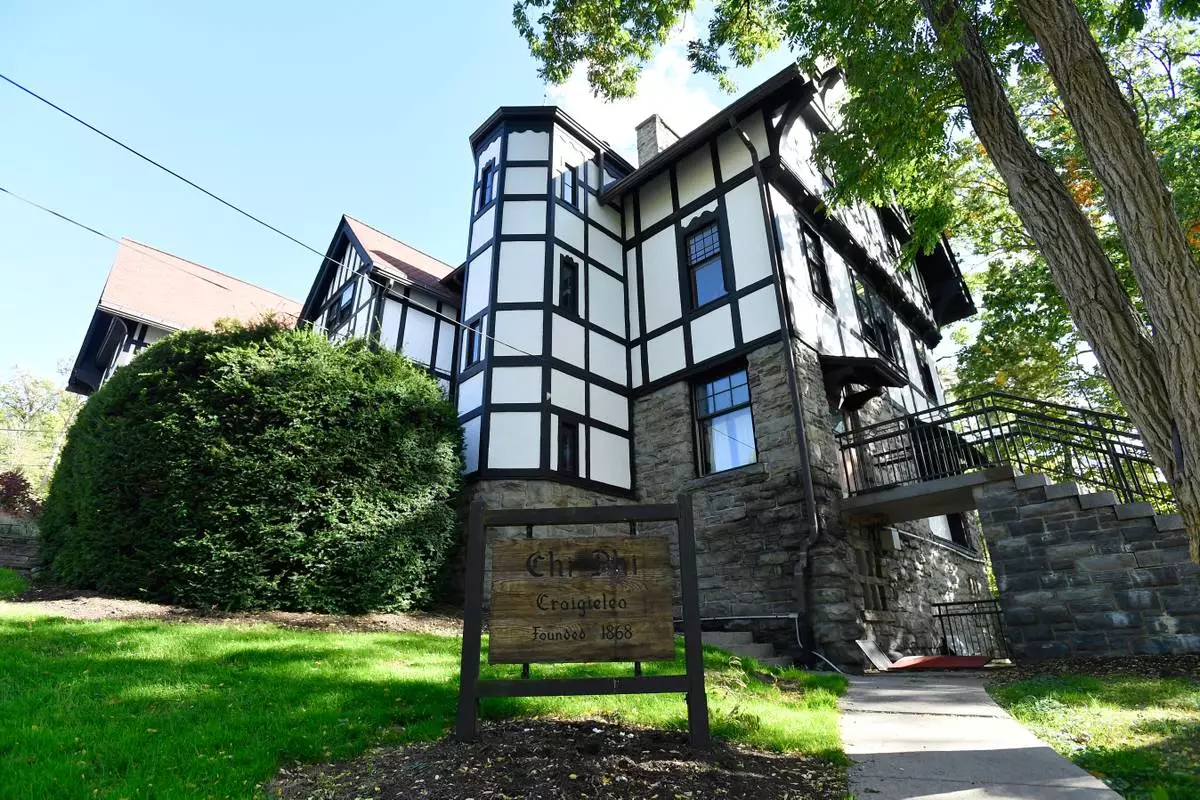
The Chi Phi fraternity house is seen at Cornell University, Monday, Oct. 5, 2026, in Ithaca, N.Y. (AP Photo/Adrian Kraus)

The Chi Phi fraternity house is seen at Cornell University, Monday, Oct. 5, 2026, in Ithaca, N.Y. (AP Photo/Adrian Kraus)

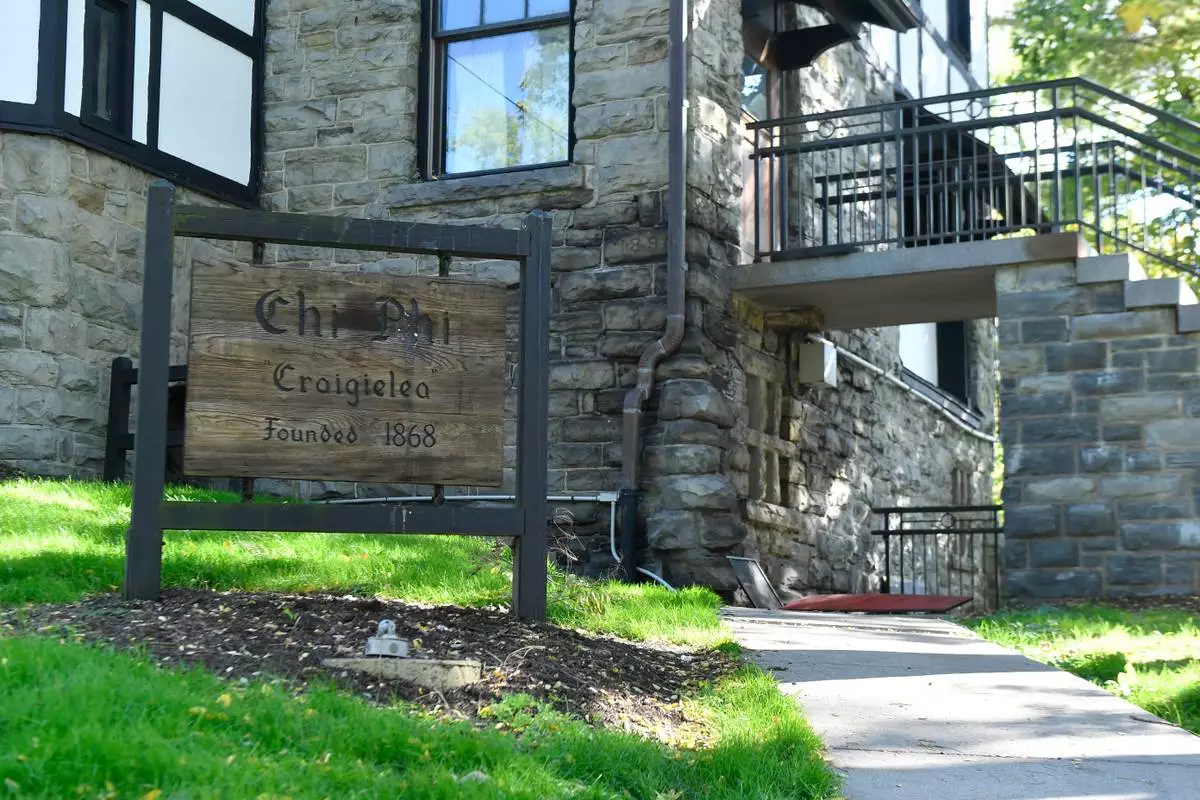
A sign stands outside the Chi Phi fraternity house at Cornell University, Monday, Oct. 5, 2026, in Ithaca, N.Y. (AP Photo/Adrian Kraus)

A sign stands outside the Chi Phi fraternity house at Cornell University, Monday, Oct. 5, 2026, in Ithaca, N.Y. (AP Photo/Adrian Kraus)

The Chi Phi fraternity house is seen at Cornell University, Monday, Oct. 5, 2026, in Ithaca, N.Y. (AP Photo/Adrian Kraus)

The Chi Phi fraternity house is seen at Cornell University, Monday, Oct. 5, 2026, in Ithaca, N.Y. (AP Photo/Adrian Kraus)

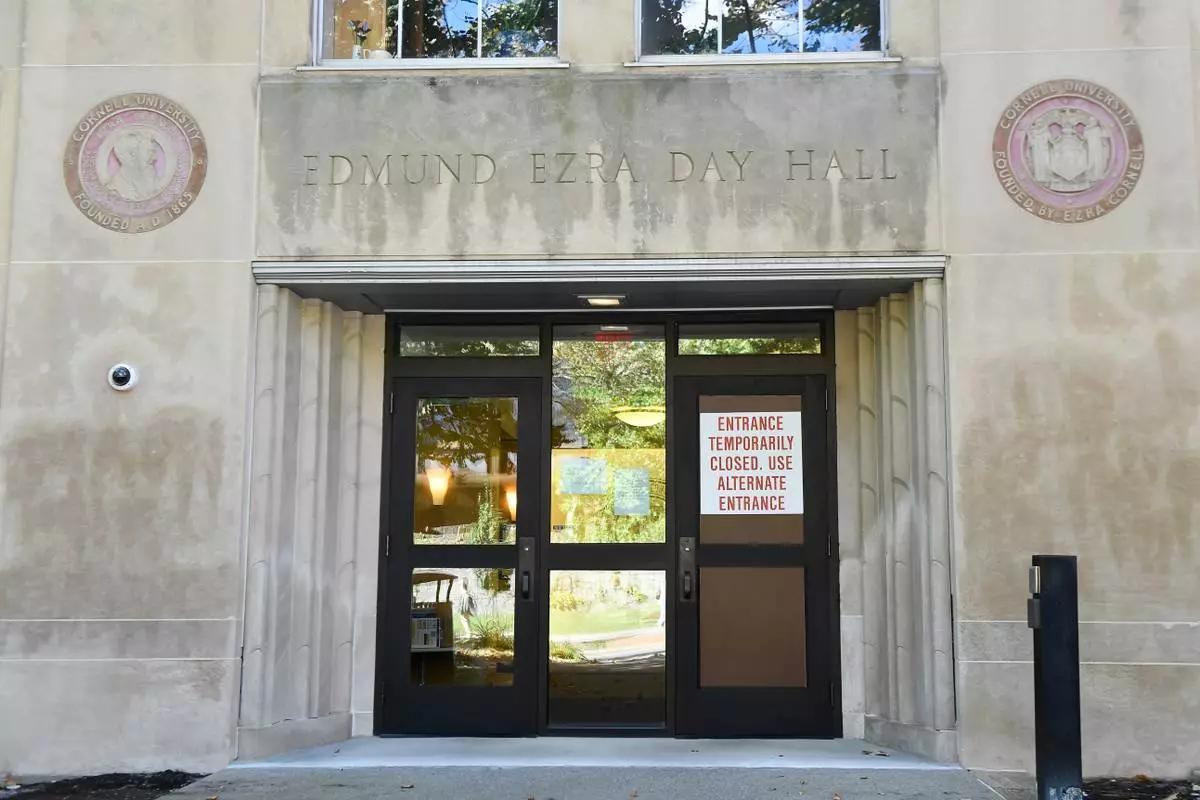
A sign is displayed on a door at Day Hall after damage and graffiti overnight was cleaned up at Cornell University, Monday, Oct. 5, 2026, in Ithaca, N.Y. (AP Photo/Adrian Kraus)

A sign is displayed on a door at Day Hall after damage and graffiti overnight was cleaned up at Cornell University, Monday, Oct. 5, 2026, in Ithaca, N.Y. (AP Photo/Adrian Kraus)

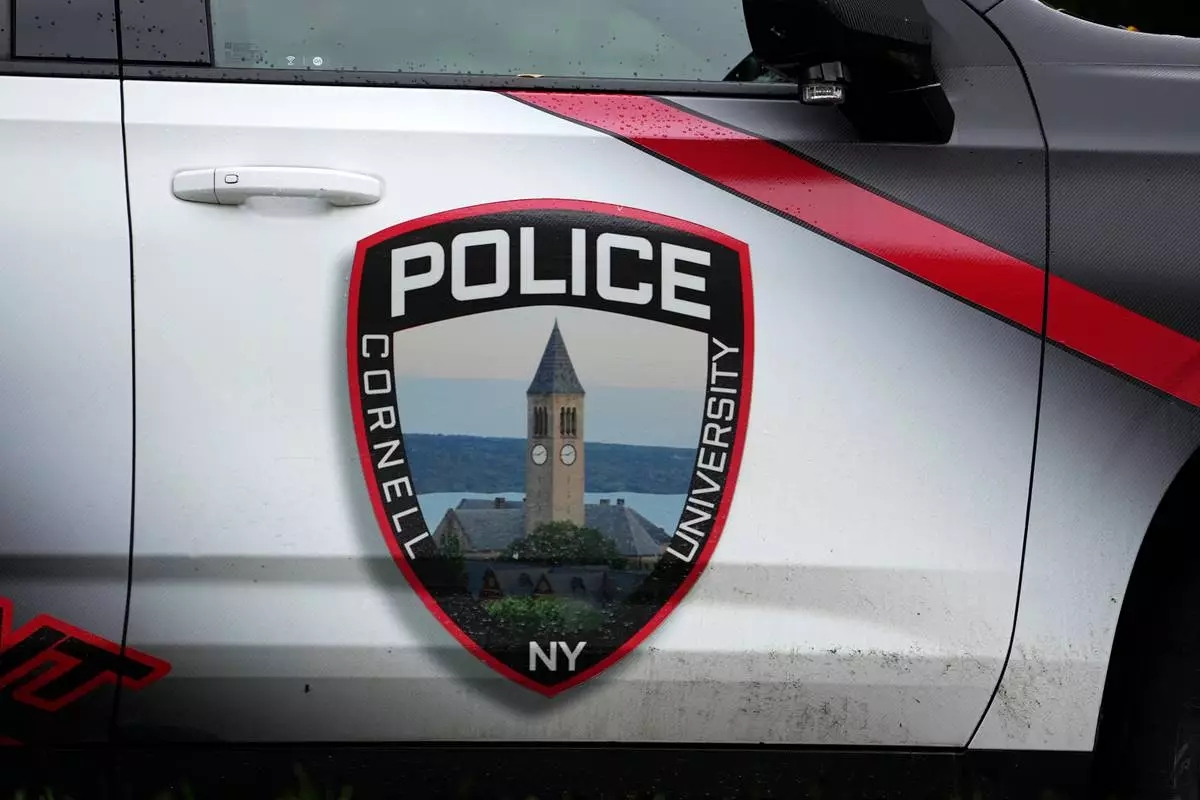
A Cornell University police car is seen parked on campus at Cornell University in Ithaca, N.Y., Thursday, Oct. 1, 2026. (AP Photo/Matt Rourke)

A Cornell University police car is seen parked on campus at Cornell University in Ithaca, N.Y., Thursday, Oct. 1, 2026. (AP Photo/Matt Rourke)

Recommended Articles