Skip to Content Facebook Feature Image

Yemeni gov't forces claim recapture of Bab al-Mandab Strait, Mocha, push toward Houthi-held capital

HotTV

HotTV

HotTV

Yemeni gov't forces claim recapture of Bab al-Mandab Strait, Mocha, push toward Houthi-held capital

2026-10-06 09:23 Last Updated At:18:43

Yemeni government forces said Monday they had seized the critical Bab al-Mandab Strait and Red Sea port of Mocha from the Houthis, while launching a "strategic offensive" toward Sanaa, the capital the group has held for over a decade.

The government said the advance was part of its "Dawn of Yemen" operation, a broader offensive begun earlier that day aimed at retaking Houthi-held territory, with Saudi Arabia providing extensive air support.

More Images
Yemeni gov't forces claim recapture of Bab al-Mandab Strait, Mocha, push toward Houthi-held capital

Yemeni gov't forces claim recapture of Bab al-Mandab Strait, Mocha, push toward Houthi-held capital

Yemeni gov't forces claim recapture of Bab al-Mandab Strait, Mocha, push toward Houthi-held capital
Yemeni gov't forces claim recapture of Bab al-Mandab Strait, Mocha, push toward Houthi-held capital

Yemeni gov't forces claim recapture of Bab al-Mandab Strait, Mocha, push toward Houthi-held capital

Yemeni gov't forces claim recapture of Bab al-Mandab Strait, Mocha, push toward Houthi-held capital

Yemeni gov't forces claim recapture of Bab al-Mandab Strait, Mocha, push toward Houthi-held capital

Yemeni gov't forces claim recapture of Bab al-Mandab Strait, Mocha, push toward Houthi-held capital

A military source was quoted by the state-run Saba news agency as saying that the Nation's Shield forces, the pro-government Giants Brigades and the Tihama Resistance, backed by airstrikes, entered Mocha of southwestern Taiz province after fierce fighting on the city's outskirts.

The source said an unspecified number of Houthi fighters were killed, wounded or captured in the fighting, while others fled. The Houthis have not yet responded.

Mocha is about 80 kilometers from the Bab al-Mandab Strait, a vital shipping lane and trade gateway between the Red Sea and the Gulf of Aden.

Earlier Monday, Majid al-Nuzaili, spokesman for the Yemeni Armed Forces, said government troops had also captured Dhubab airport, where some Houthi fighters, after being besieged, were fleeing by boat while hundreds remained trapped.

However, Houthi-run Al-Masirah TV, citing a military source within the group, denied the reported government advances toward Dhubab on Monday, dismissing them as "completely false" and accusing Saudi media of seeking to cover up battlefield setbacks. The Houthis stressed that fighting for control of the Bab al-Mandab Strait was still continuing.

Also on Monday, Yemeni government forces announced that they had begun a "strategic offensive" on another front toward Sanaa City, which has been controlled by the Houthis since 2014. According to a media website under the Yemeni Defense Ministry, government forces launched a "large-scale offensive" against Houthi positions on multiple front lines in Marib, about 170 kilometers east of Sanaa, and made progress. The military operation inflicted heavy losses on the Houthis.

Al-Masirah TV reported the same day that Saudi airstrikes targeting Sanaa region had killed one person and wounded two others.

Meanwhile, the Saudi-led coalition said around 100 fighter jets were supporting the "Dawn of Yemen" operation and had destroyed 324 Houthi targets. Coalition spokesman Turki Al-Maliki said they were providing round-the-clock aerial support to Yemeni government forces on the ground and air cover for the Bab al-Mandab Strait.

Yemen's conflict broke out in late 2014, when the Houthis seized Sanaa and much of the country's north, forcing the internationally recognized government out of the capital. A Saudi-led coalition intervened in 2015 in support of the government. The recent clashes marked the sharpest escalation since a UN-brokered truce in 2022 largely halted major hostilities in the war-torn country.

Yemeni gov't forces claim recapture of Bab al-Mandab Strait, Mocha, push toward Houthi-held capital

Yemeni gov't forces claim recapture of Bab al-Mandab Strait, Mocha, push toward Houthi-held capital

Yemeni gov't forces claim recapture of Bab al-Mandab Strait, Mocha, push toward Houthi-held capital

Yemeni gov't forces claim recapture of Bab al-Mandab Strait, Mocha, push toward Houthi-held capital

Yemeni gov't forces claim recapture of Bab al-Mandab Strait, Mocha, push toward Houthi-held capital

Yemeni gov't forces claim recapture of Bab al-Mandab Strait, Mocha, push toward Houthi-held capital

Yemeni gov't forces claim recapture of Bab al-Mandab Strait, Mocha, push toward Houthi-held capital

Yemeni gov't forces claim recapture of Bab al-Mandab Strait, Mocha, push toward Houthi-held capital

The southern Chinese city of Shenzhen is best known for its skyscrapers and technological innovation. But the city, home to more than 17 million people, has also made room for nature, with mangrove forests thriving alongside its bustling urban center.

For decades, Shenzhen, the 2026 APEC host city, has pursued hands-on wetland conservation, demonstrating a sustained commitment to protecting its natural environment.

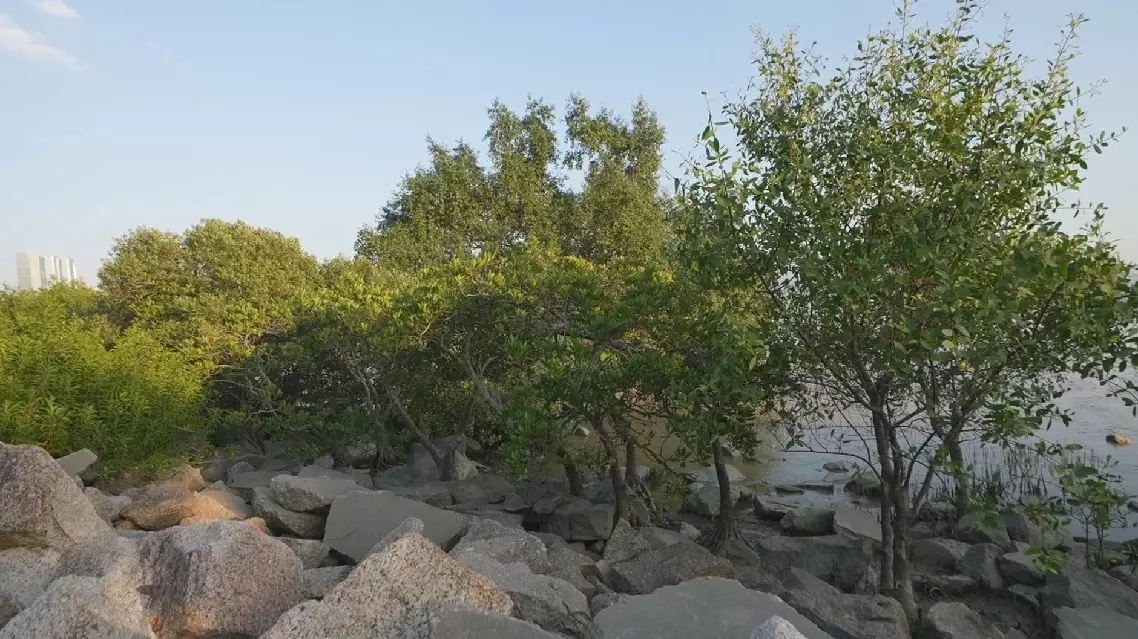
Millions of mangrove seedlings blanket the city's coastline, forming a natural barrier against climate-related disasters and helping shield the urban area from extreme weather.

Mangroves are among the planet's most valuable ecosystems. Their dense root systems help prevent coastal erosion and reduce the impact of waves and storm surges. They also provide vital nursery habitats for fish, crabs and other marine life.

But researcher Julio Salas Raza says their greatest asset may be their extraordinary ability to store carbon in the soil for up to a century.

"They can store more carbon like even almost five times more carbon than terrestrial forests. So that's why mangroves are really our best allies against climate change,” said the postdoctoral researcher at Shenzhen University.

Yet mangroves are under threat worldwide.

According to the Yale Center Beijing, up to 50 percent of the world's original mangrove forests have been lost to urban expansion, land reclamation, water pollution and rising sea levels.

Shenzhen, however, has been at the forefront of mangrove restoration.

Through strategic urban planning, strict biodiversity protection laws and market-based initiatives, the city has expanded its mangrove coverage to nearly 300 hectares.

These protected wetlands have also become an important stopover and wintering habitat for migratory birds, with nearly 100,000 arriving each year.

China is also sharing its conservation experience with the rest of the world.

Tahiry Rakotomamonjy works at the International Mangrove Center, an intergovernmental organization initiated by China to promote global mangrove conservation.

The center now has more than 20 signatory countries across Asia, Africa and the Americas. It shares restoration expertise and techniques, including the use of high-resolution satellite imagery, to help member countries identify priority areas and make better use of their resources.

"I think China is at the forefront of new technology, new methodology of carbon accounting, they use a very new technology for counting mangrove so they can transfer this technology to other member states," said Rakotomamonjy, program officer at the International Mangrove Center.

But conservation efforts don't always rely on high technology.

In Shenzhen, public parks have been integrated into the mangrove wetlands, creating spaces where people can experience nature and observe wildlife up close.

"As people walk around the park, take in the scenery and even photograph the birds, they begin to appreciate how wonderful nature is and how relaxing it can be. At the same time, these experiences help people realize that we need to protect this mangrove forest and preserve this wintering habitat for migratory birds,” said Yang Qiong, head of the scientific research office at the Guangdong Neilingding-Futian National Nature Reserve.

Shenzhen offers a compelling example of how urban development and nature conservation can go hand in hand, safeguarding coastal ecosystems and preserving their benefits for generations to come.

Shenzhen strikes balance between urban growth and mangrove conservation

Shenzhen strikes balance between urban growth and mangrove conservation

Recommended Articles