Skip to Content Facebook Feature Image

Far-right election win leaves migrants questioning their future in eastern Germany

News

Far-right election win leaves migrants questioning their future in eastern Germany
News

News

Far-right election win leaves migrants questioning their future in eastern Germany

2026-10-06 12:05 Last Updated At:12:21

BERLIN (AP) — Ever since the far-right, anti-immigrant Alternative for Germany party won a regional election last month, not a day goes by without Ola Akhras and her husband discussing whether they should go back to Syria.

The couple live with their two young daughters in Magdeburg, where Saxony-Anhalt's newly elected state legislature is meeting Tuesday for the first time since the Alternative for Germany, or AfD, surged to its best result yet — putting it in a strong position to form Germany's first far-right regional government since World War II.

More Images
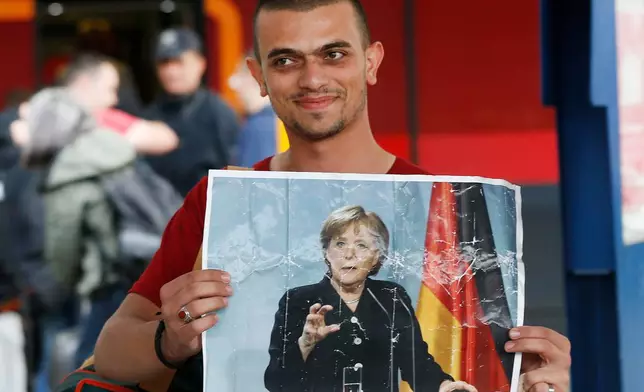
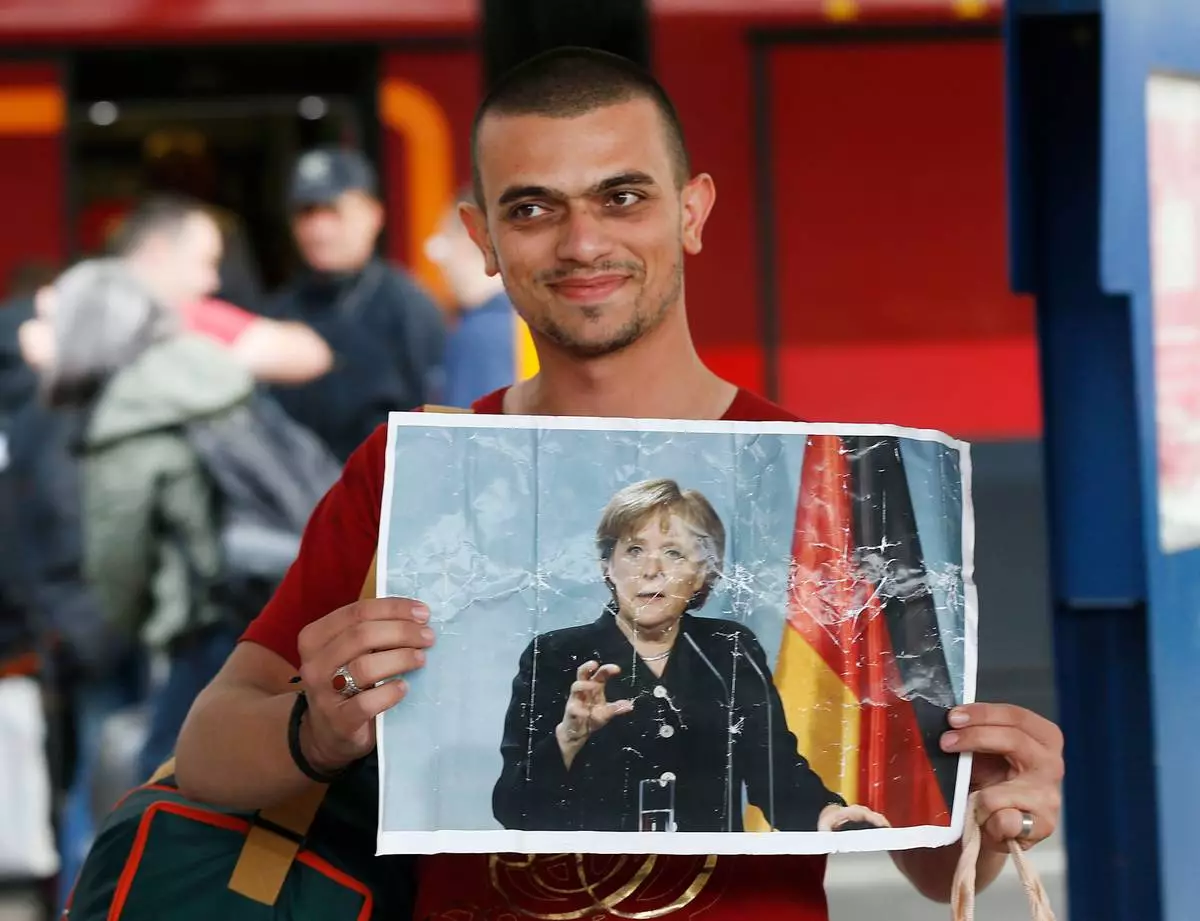
FILE - In this Sept. 5, 2015 file photo a migrant carries a picture of German Chancellor Angela Merkel as he arrives at the main train station in Munich, Germany. (AP Photo/Michael Probst, file)
FILE - In this Sept. 5, 2015 file photo a migrant carries a picture of German Chancellor Angela Merkel as he arrives at the main train station in Munich, Germany. (AP Photo/Michael Probst, file)

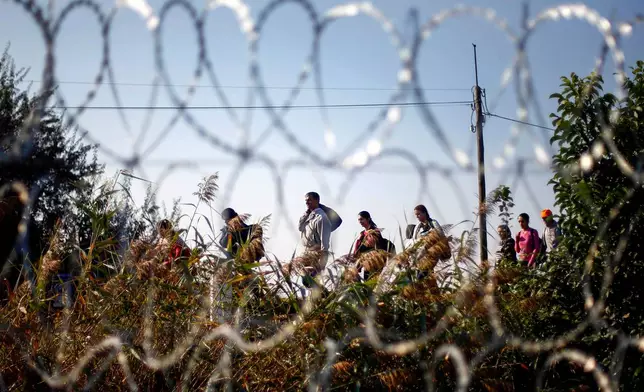
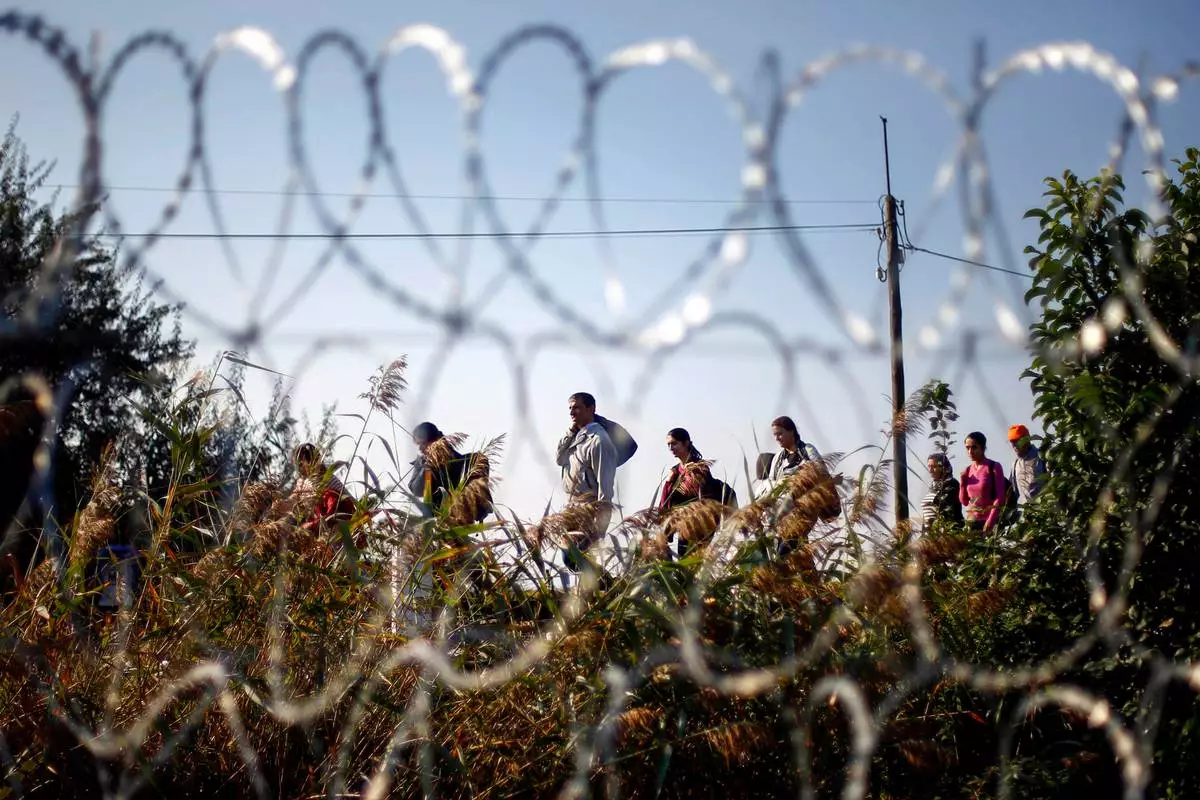
FILE - Migrants arrive at the Hungarian border fence between Serbia and Hungary near Roszke, southern Hungary, on Sept. 13, 2015. (AP Photo/Matthias Schrader, File)
FILE - Migrants arrive at the Hungarian border fence between Serbia and Hungary near Roszke, southern Hungary, on Sept. 13, 2015. (AP Photo/Matthias Schrader, File)

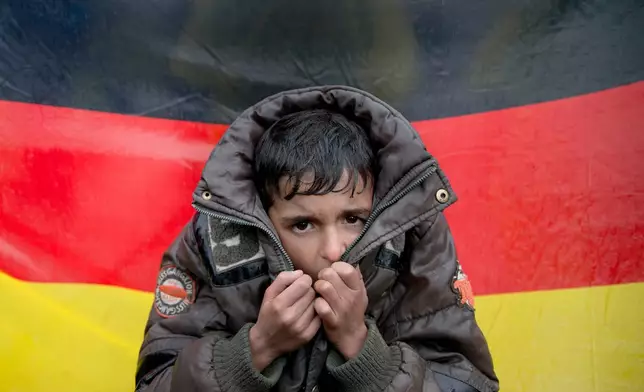
FILE - In this Wednesday, March 9, 2016 file photo a child tries to warm his hands, backdropped by Germany's flag as protesting migrants stage a sit in protest on the railway tracks at northern Greek border station of Idomeni. (AP Photo/Vadim Ghirda, File)

FILE - In this Wednesday, March 9, 2016 file photo a child tries to warm his hands, backdropped by Germany's flag as protesting migrants stage a sit in protest on the railway tracks at northern Greek border station of Idomeni. (AP Photo/Vadim Ghirda, File)

FILE - Top candidate Ulrich Siegmund speaks at an election party of the "Alternative for Germany" (AfD) after the Saxony-Anhalt state elections in Magdeburg, eastern Germany, Sept. 6, 2026. (AP Photo/Matthias Schrader, File)
FILE - Top candidate Ulrich Siegmund speaks at an election party of the "Alternative for Germany" (AfD) after the Saxony-Anhalt state elections in Magdeburg, eastern Germany, Sept. 6, 2026. (AP Photo/Matthias Schrader, File)

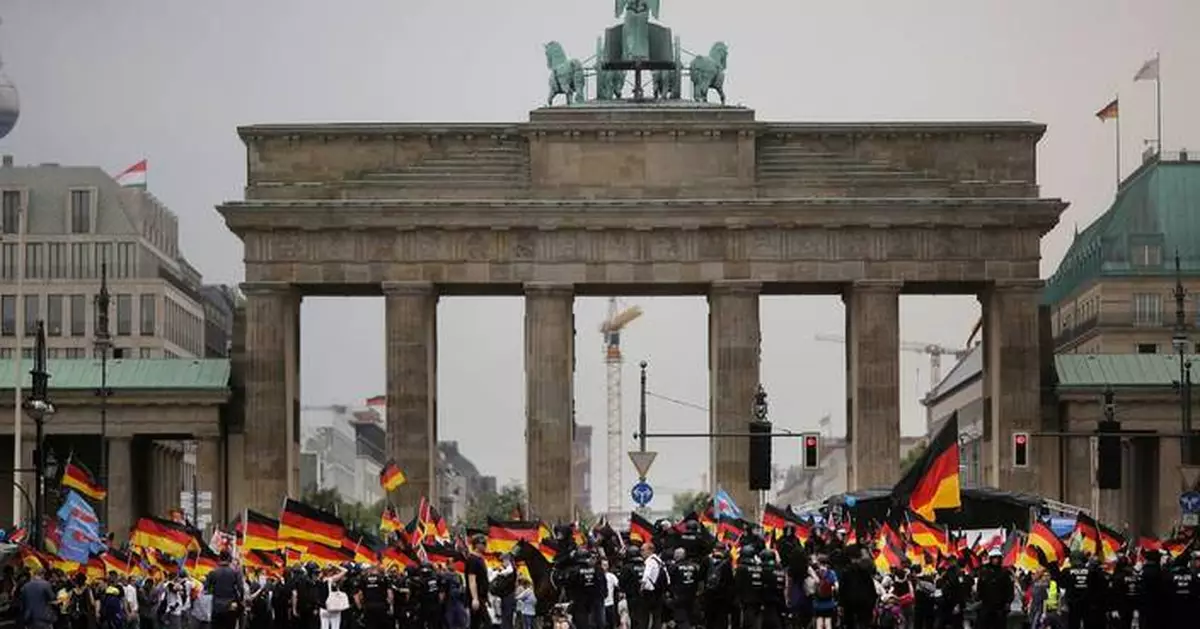
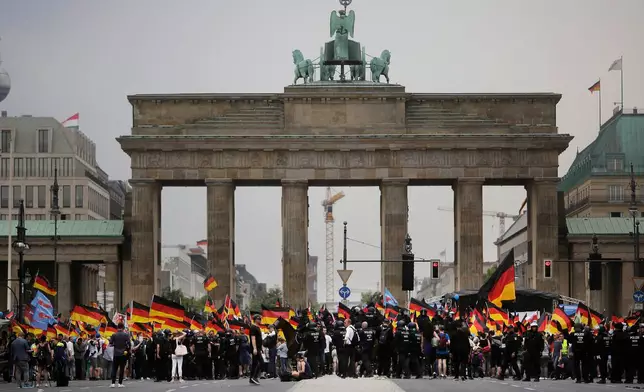
FILE - AfD supporters wave AfD flags and German national flags during a demonstration in front of the Brandenburg Gate in Berlin, Germany, May 27, 2018. (AP Photo/Markus Schreiber, File)

FILE - AfD supporters wave AfD flags and German national flags during a demonstration in front of the Brandenburg Gate in Berlin, Germany, May 27, 2018. (AP Photo/Markus Schreiber, File)

During its first sitting, the 83-seat legislature will elect its speaker — a job that traditionally goes to the largest party — and the AfD hopes for an initial symbolic victory. The state's next governor is unlikely to be chosen before December.

“It’s bad — we’ve built our lives here, we really loved being here, but now we don’t feel welcome anymore,” said Akhras, who fled Homs for Germany in 2018. She speaks fluent German and works as a doctor at the local hospital, where she is completing her specialist training in internal medicine.

Akhras, who wears a hijab, says she feels appreciated at work, but has lately encountered hostility while shopping and no longer feels safe leaving home in the evening. Her sense of not belonging has become overwhelming since the election.

“Our children will never be recognized as Germans here,” she said.

The mood in society is very different from a decade ago, when Germans welcomed more than a million migrants from war-torn countries such as Syria, Iraq and Afghanistan under Chancellor Angela Merkel. Many built new lives, learned the language and found work.

However, as Germany’s economic problems — slow growth, high inflation, rising energy prices — have worsened, public sentiment toward the newcomers has deteriorated. The AfD and other critics of immigration have blamed migrants for the country's problems.

The 13-year-old party has gained support particularly rapidly in Germany’s formerly communist and economically weaker eastern states, including Saxony-Anhalt. However, it also continues to gain on the national level. It is the strongest opposition party in parliament and leads recent polls.

The AfD's victory in Saxony-Anhalt last month underlined the party's skill in capitalizing on discontent with issues well beyond its core theme of curbing immigration as Chancellor Friedrich Merz's unpopular national government struggles to turn around Germany's stubbornly sluggish economy.

The party's strong showing has unsettled migrants and those Germans who thought the nation was immune to nationalism after the horrors of the Nazi past.

It remains uncertain that AfD will form the next government in Saxony-Anhalt — it fell three seats short of a majority in the Sept. 6 election. But many immigrants and refugees fear that if the far-right party succeeds in heading the state government it could try to implement its campaign promises, which include more and faster deportations as well as restrictions on the admission of asylum seekers.

There are no figures yet showing whether racist incidents have increased since the election, but “counseling centers are extremely busy, the phones are ringing off the hook, counseling appointments are fully booked, and people are in great need of counseling and support,” said Undra Dressler, the executive director of the Saxony-Anhalt State Network of Migrant Organizations.

“We know of people who have left, people who are considering it, and people who have made a conscious decision against it and say: ‘I’m staying. I won’t accept these conditions. Now more than ever, I’m going to get involved,’” Dressler said.

One of those determined to stay is Mohamad Aldabagh, a pharmacist from Homs who fled to Germany in 2015 at the height of Syria's civil war. That year, hundreds of thousands crossed the Mediterranean on flimsy rubber boats in hopes of finding a safer future in Europe.

“It’s been a very good experience living in Germany over the past 10 years,” said Aldabagh, a 34-year-old father of two young children who works at a pharmacy in Magdeburg. “I’ve rebuilt my life here, and I won’t let anyone take that away from me.”

While he says he has experienced racism as well, he believes that skilled workers like himself or the many foreign doctors working in Germany are needed and that society can't afford to treat them badly.

While the AfD program for Saxony-Anhalt does not reject labor migration altogether, it takes a highly selective approach to recruiting foreign workers.

The party explicitly proposes refraining from recruiting workers it describes as “culturally foreign” and ending a state program designed to support the integration of foreign skilled workers, says Rahim Hajji, a professor of social and health services at Magdeburg-Stendal University of Applied Sciences.

“This raises a fundamental question,” Hajji said. “How is a state with an ageing population and growing labor shortages supposed to meet its demand for skilled workers if it substantially restricts the pool of international workers it is willing to recruit?”

As of this August, more than one in four doctors, or 27.1%, in Saxony-Anhalt’s hospitals did not have German citizenship, according to a survey by Mediendienst Integration group, which researches migration in Germany.

“We want to contribute to the well-being of society here,” said Aldabagh. “We are needed. We are not the black sheep in this country.”

He then paused and added: “But if we don’t get respect anymore, then we’ll move to another state where AfD isn’t as strong.”
FILE - In this Sept. 5, 2015 file photo a migrant carries a picture of German Chancellor Angela Merkel as he arrives at the main train station in Munich, Germany. (AP Photo/Michael Probst, file)
FILE - In this Sept. 5, 2015 file photo a migrant carries a picture of German Chancellor Angela Merkel as he arrives at the main train station in Munich, Germany. (AP Photo/Michael Probst, file)

FILE - Migrants arrive at the Hungarian border fence between Serbia and Hungary near Roszke, southern Hungary, on Sept. 13, 2015. (AP Photo/Matthias Schrader, File)
FILE - Migrants arrive at the Hungarian border fence between Serbia and Hungary near Roszke, southern Hungary, on Sept. 13, 2015. (AP Photo/Matthias Schrader, File)

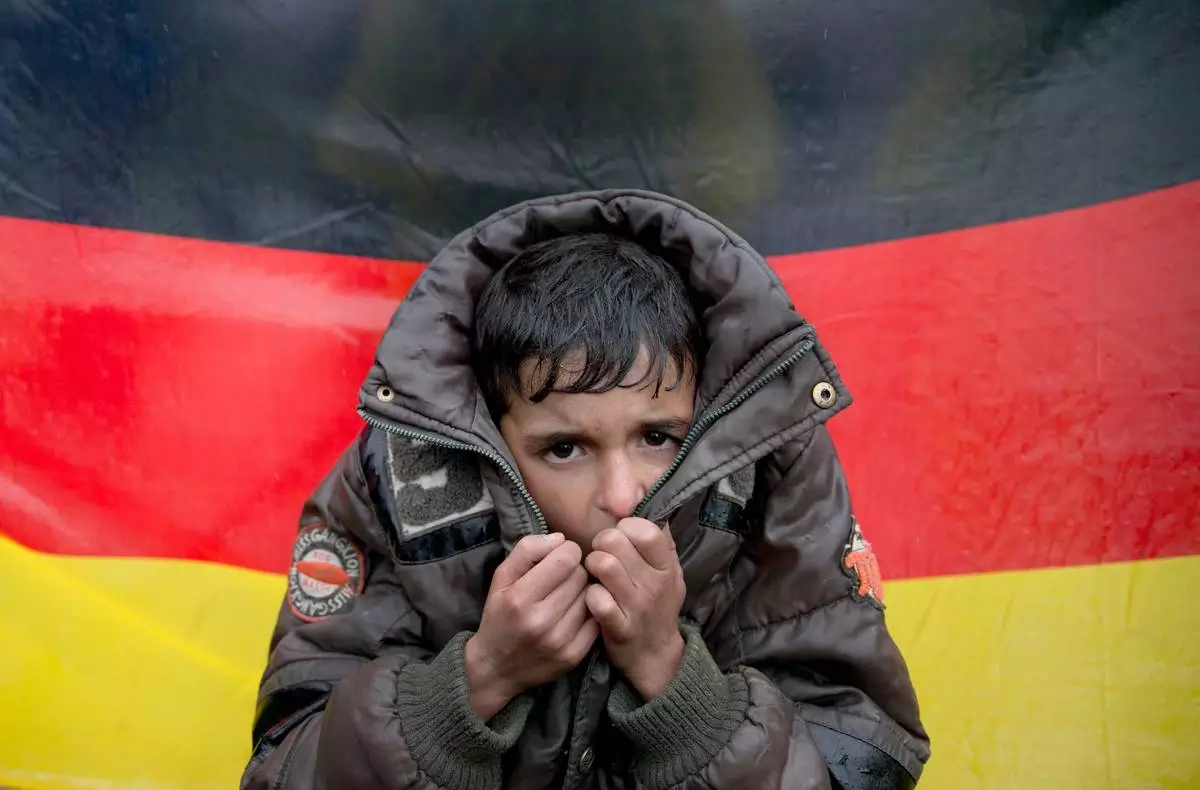
FILE - In this Wednesday, March 9, 2016 file photo a child tries to warm his hands, backdropped by Germany's flag as protesting migrants stage a sit in protest on the railway tracks at northern Greek border station of Idomeni. (AP Photo/Vadim Ghirda, File)

FILE - In this Wednesday, March 9, 2016 file photo a child tries to warm his hands, backdropped by Germany's flag as protesting migrants stage a sit in protest on the railway tracks at northern Greek border station of Idomeni. (AP Photo/Vadim Ghirda, File)

FILE - Top candidate Ulrich Siegmund speaks at an election party of the "Alternative for Germany" (AfD) after the Saxony-Anhalt state elections in Magdeburg, eastern Germany, Sept. 6, 2026. (AP Photo/Matthias Schrader, File)
FILE - Top candidate Ulrich Siegmund speaks at an election party of the "Alternative for Germany" (AfD) after the Saxony-Anhalt state elections in Magdeburg, eastern Germany, Sept. 6, 2026. (AP Photo/Matthias Schrader, File)

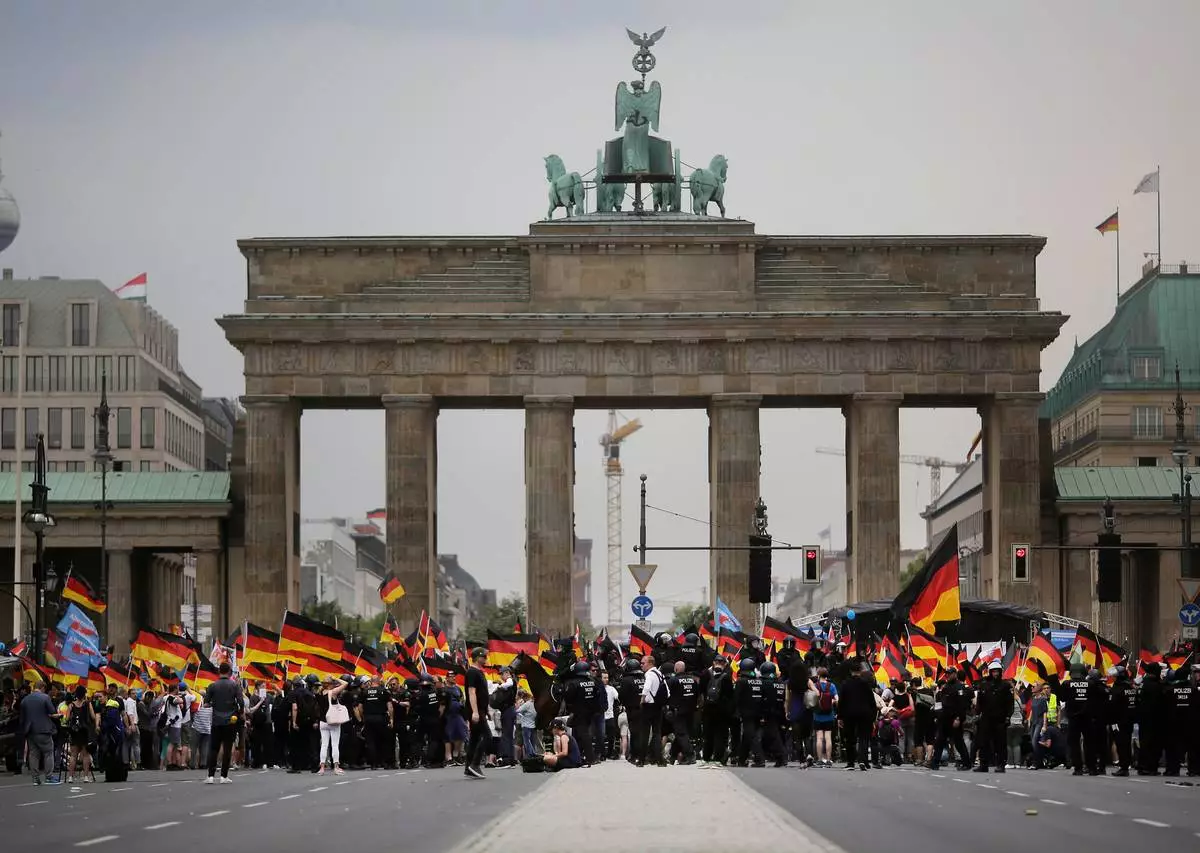
FILE - AfD supporters wave AfD flags and German national flags during a demonstration in front of the Brandenburg Gate in Berlin, Germany, May 27, 2018. (AP Photo/Markus Schreiber, File)


FILE - AfD supporters wave AfD flags and German national flags during a demonstration in front of the Brandenburg Gate in Berlin, Germany, May 27, 2018. (AP Photo/Markus Schreiber, File)

TORONTO (AP) — The separatist Parti Québécois won Quebec’s provincial election Monday but fell short of enough seats to govern alone, returning to power with a promise to hold another referendum on independence from Canada.

The result returns Paul St-Pierre Plamondon’s party to power for the first time in more than a decade but denies it the majority it sought, forcing the separatists to rely on opposition parties even as they try to revive Quebec’s independence debate.

The party was on track to win nearly 60 seats as the final votes were counted, falling short of the 64 needed for a majority in Quebec’s 127-member National Assembly, the provincial legislature. A minority government means PQ will need support from opposition lawmakers to pass key legislation and survive confidence votes.

St-Pierre Plamondon acknowledged that voters had denied his party a majority. “Quebecers elected the Parti Québécois asking it to work with the other parties, and I heard that message,” he said.

He has pledged to hold another referendum on independence, though he has said he would wait until U.S. President Donald Trump is no longer in office.

St-Pierre Plamondon framed independence as essential to preserving Quebec’s French-speaking identity, saying it was a “question of survival” for a French-speaking population that represents only a small fraction of North America. He said Quebec “just wants to exist on its own like other countries of the world” and that a referendum would allow Quebecers to decide their own future.

“I continue to dream and visualize that country,” St-Pierre Plamondon said in his victory speech. “That dream will be realized one day.”

He also sought to reassure Canadians outside Quebec. “The project for independence is not about excluding you,” he said. “Quebec will never change its geographical position, so we have an interest in working together.”

Coalition Avenir Québec leader Christine Fréchette conceded defeat, saying voters had made their choice and that she took full responsibility for the “difficult result.” The CAQ, which entered the election with 79 seats, was shut out of the legislature, and Fréchette lost her own seat in Trois-Rivières.

But the PQ's victory does not mean most Quebecers support leaving Canada.

“This was not an election about independence, which is not popular in Quebec right now, but about getting rid of the CAQ, the party in power since 2018,” said Daniel Béland, a political science professor at McGill University in Montreal.

Support for independence remains at about 30%, low by historical standards, he said. Béland said the minority result is likely welcome news for Prime Minister Mark Carney’s government because it could make it harder for the PQ to prepare for and eventually call an independence referendum.

The PQ would face opposition from both the Liberals and Conservatives, whose leaders have said they would fight efforts to hold a sovereignty referendum. Québec solidaire, another pro-independence party, could hold the balance of power and potentially support the PQ on a referendum.

Carney congratulated St-Pierre Plamondon and signaled that Ottawa would work with the incoming separatist government. “Building a stronger Québec is core to our mission of building a stronger Canada,” Carney said. He said the two governments would work together to support businesses and workers affected by U.S. tariffs, create jobs and build housing.

Still, Béland said a separatist government in Quebec poses a new national-unity challenge for Carney, particularly with another independence-related vote approaching elsewhere in Canada.

The Quebec result comes two weeks before Albertans vote Oct. 19 on whether to hold a referendum on separation from Canada.

“Seeing that a pro-independence party won in Quebec barely two weeks before an independence-related referendum takes place in Alberta might suggest to the Trump administration that national unity remains a major issue in Canada despite the popularity of Mark Carney,” Béland said.

Quebec voters have twice rejected sovereignty, most recently by a razor-thin margin in a 1995 referendum.

Quebec, which is about 80% French-speaking, already has significant autonomy. The province of 9.1 million collects its own income tax, has immigration policies favoring French speakers and has laws giving the French language priority over English.

Even with the PQ victory, Trump’s tariffs and 51st-state rhetoric have complicated the separatist argument by stirring Canadian nationalism and giving some French-speaking Quebecers another reason to value remaining part of Canada.

Trump’s tariffs and repeated threats against Canada became a defining issue in the 2025 federal election, helping lift Carney’s Liberals to victory after the party had trailed badly before Trump returned to office.

Parti Quebecois Leader Paul St-Pierre Plamondon, center, waves to supporters after winning the provincial election in Montreal, Quebec on Monday, Oct. 5, 2026. (Graham Hughes/The Canadian Press via AP)

Parti Quebecois Leader Paul St-Pierre Plamondon, center, waves to supporters after winning the provincial election in Montreal, Quebec on Monday, Oct. 5, 2026. (Graham Hughes/The Canadian Press via AP)

Parti Quebecois Leader Paul St-Pierre Plamondon, center, speaks to supporters after winning the provincial election in Montreal, Quebec on Monday, Oct. 5, 2026. (Graham Hughes/The Canadian Press via AP)

Parti Quebecois Leader Paul St-Pierre Plamondon, center, speaks to supporters after winning the provincial election in Montreal, Quebec on Monday, Oct. 5, 2026. (Graham Hughes/The Canadian Press via AP)

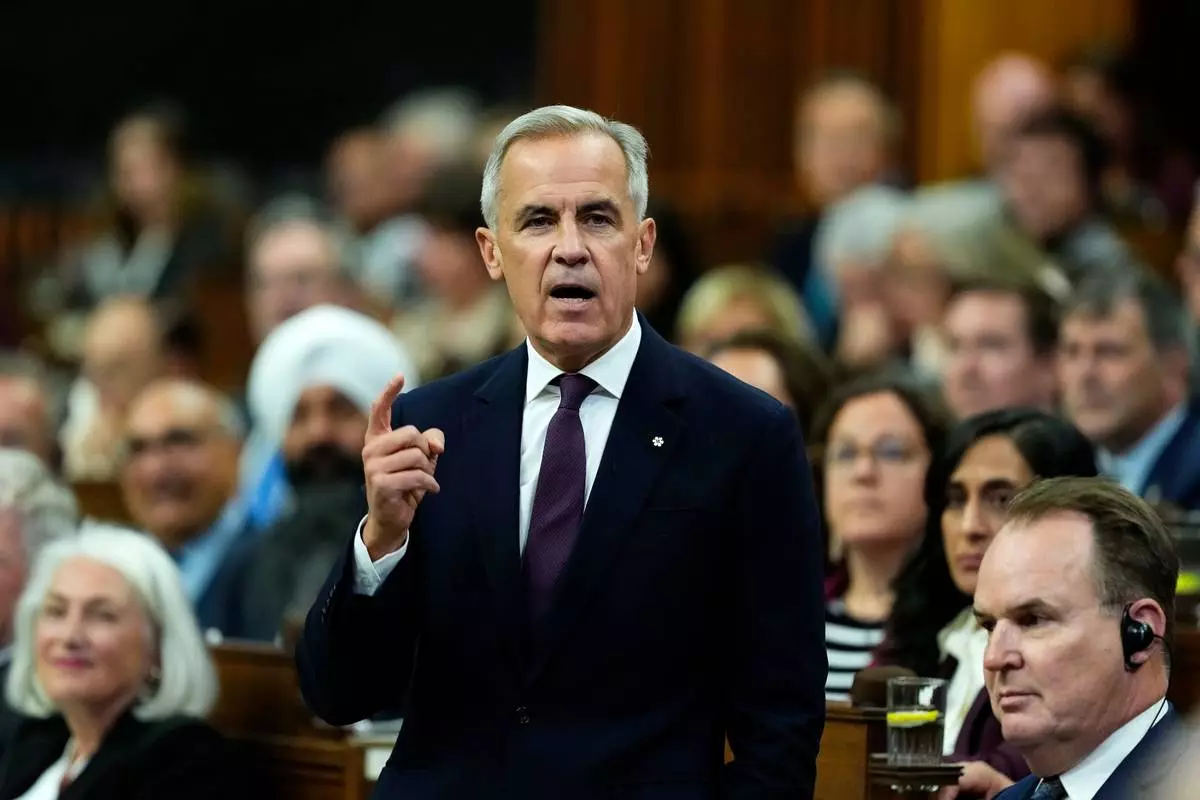
Canada Prime Minister Mark Carney rises during Question Period in the House of Commons on Parliament Hill in Ottawa on Monday, Oct. 5, 2026. (Justin Tang/The Canadian Press via AP)

Canada Prime Minister Mark Carney rises during Question Period in the House of Commons on Parliament Hill in Ottawa on Monday, Oct. 5, 2026. (Justin Tang/The Canadian Press via AP)

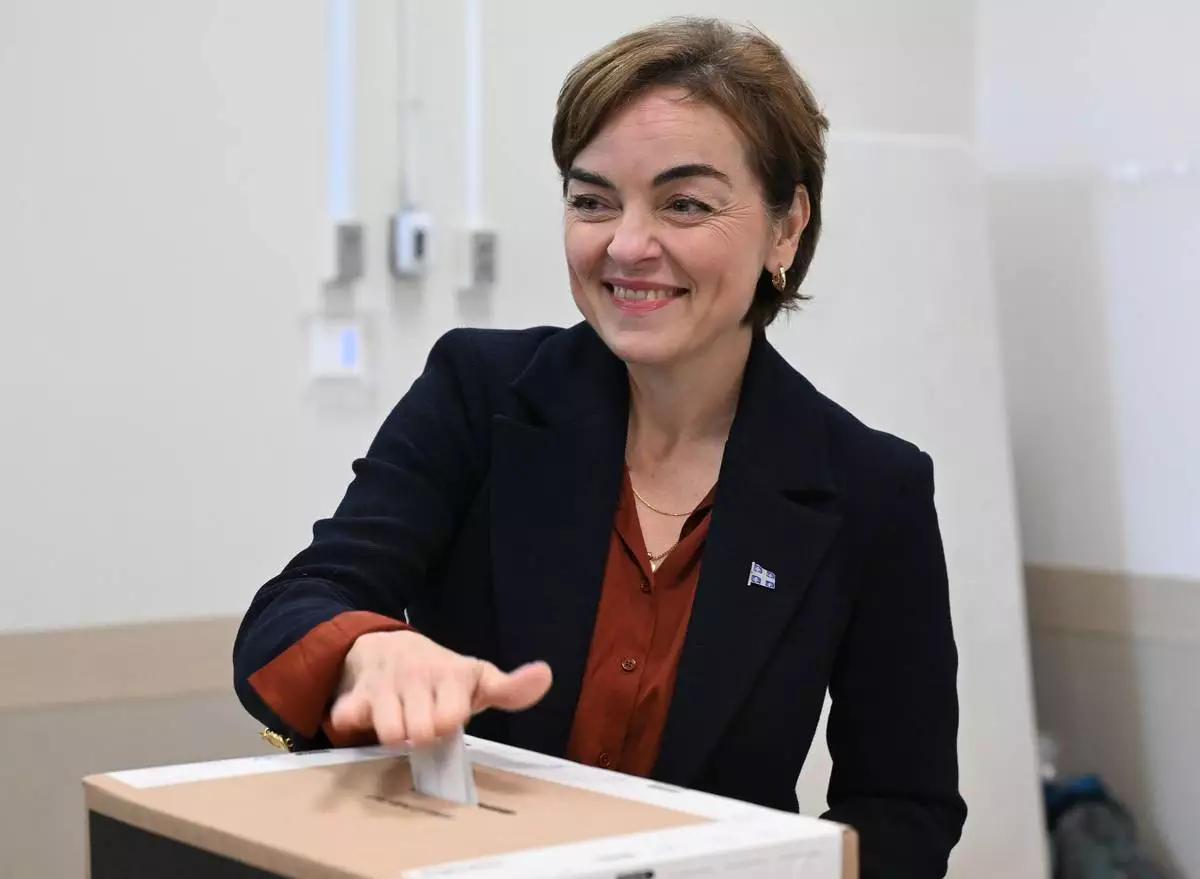
Coalition Avenir Quebec Leader Christine Frechette casts her ballot at the polling office in Trois-Rivieres, Quebec, Monday, Oct. 5, 2026. (Jacques Boissinot/The Canadian Press via AP)

Coalition Avenir Quebec Leader Christine Frechette casts her ballot at the polling office in Trois-Rivieres, Quebec, Monday, Oct. 5, 2026. (Jacques Boissinot/The Canadian Press via AP)

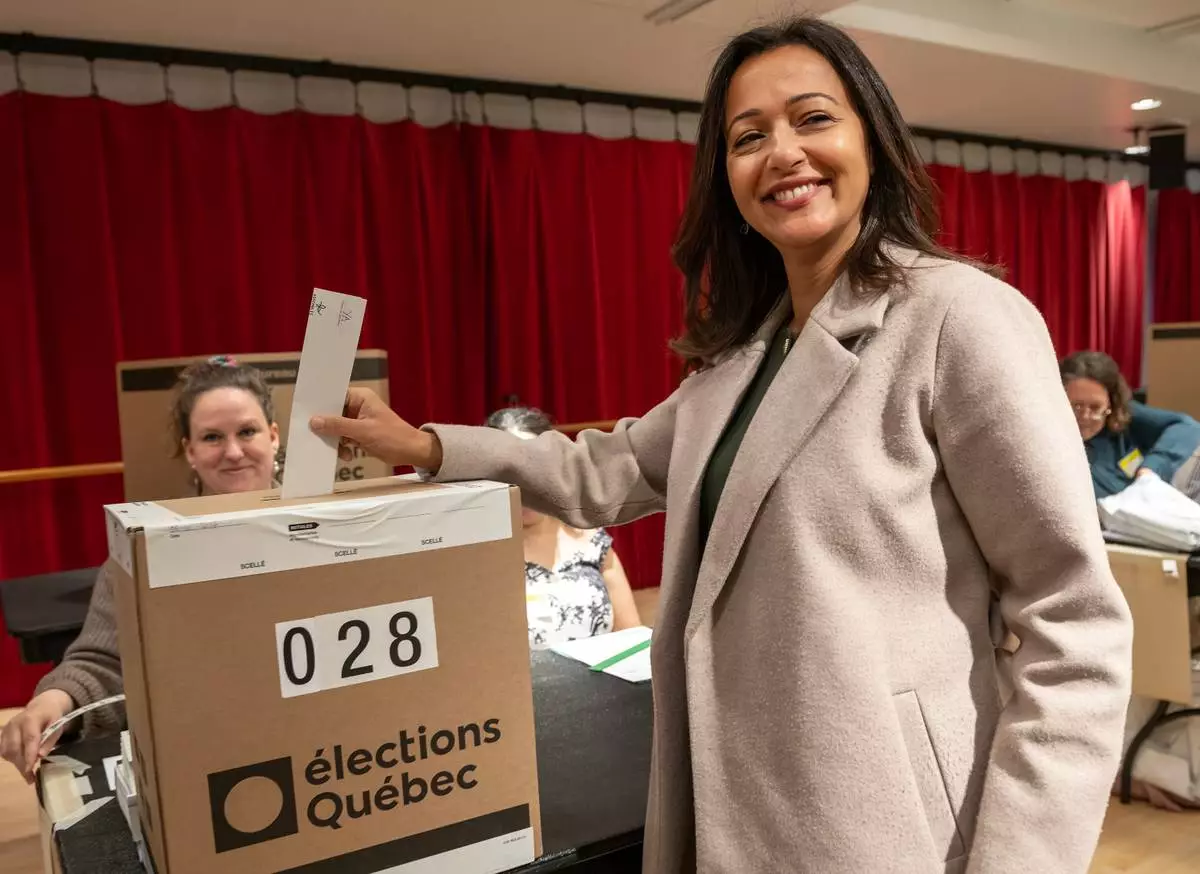
Québec Solidaire co-spokesperson Ruba Ghazal votes in her Montreal riding of Mercier, in the Quebec provincial general election on Monday Oct. 5, 2026. (Peter McCabe/The Canadian Press via AP)

Québec Solidaire co-spokesperson Ruba Ghazal votes in her Montreal riding of Mercier, in the Quebec provincial general election on Monday Oct. 5, 2026. (Peter McCabe/The Canadian Press via AP)

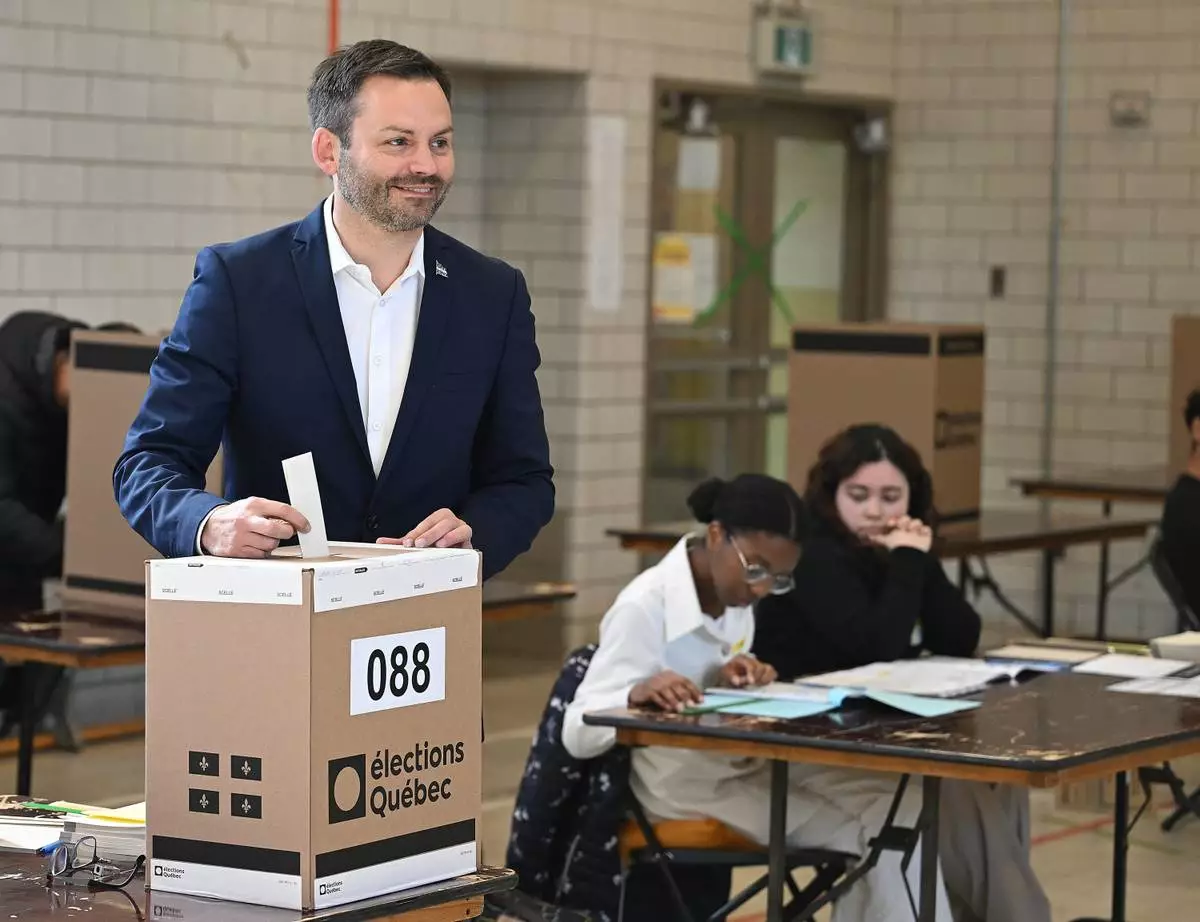
Parti Quebecois Leader Paul St-Pierre Plamondon casts his ballot on election day in Montreal, Quebec, Monday, Oct. 5, 2026. (Graham Hughes/The Canadian Press via AP)

Parti Quebecois Leader Paul St-Pierre Plamondon casts his ballot on election day in Montreal, Quebec, Monday, Oct. 5, 2026. (Graham Hughes/The Canadian Press via AP)

Recommended Articles