Skip to Content Facebook Feature Image

Three years on, Israel is asphyxiating Gaza and dismantling the means of survival

News

Three years on, Israel is asphyxiating Gaza and dismantling the means of survival
News

News

Three years on, Israel is asphyxiating Gaza and dismantling the means of survival

2026-10-07 14:18 Last Updated At:14:28

Médecins Sans Frontières (MSF) warns that Israel is progressively asphyxiating Gaza and continuing its actions: the space in which people can live is vanishing, while the conditions people need to survive are being systematically destroyed through continued violence, the deliberate blockade of essential supplies, and the destruction of healthcare and vital infrastructure.

A line that keeps moving

More Images
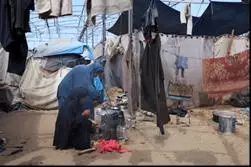
A displaced mother and daughter prepare a meal over an open fire inside their makeshift tent in Khan Younis.
A displaced mother and daughter prepare a meal over an open fire inside their makeshift tent in Khan Younis.

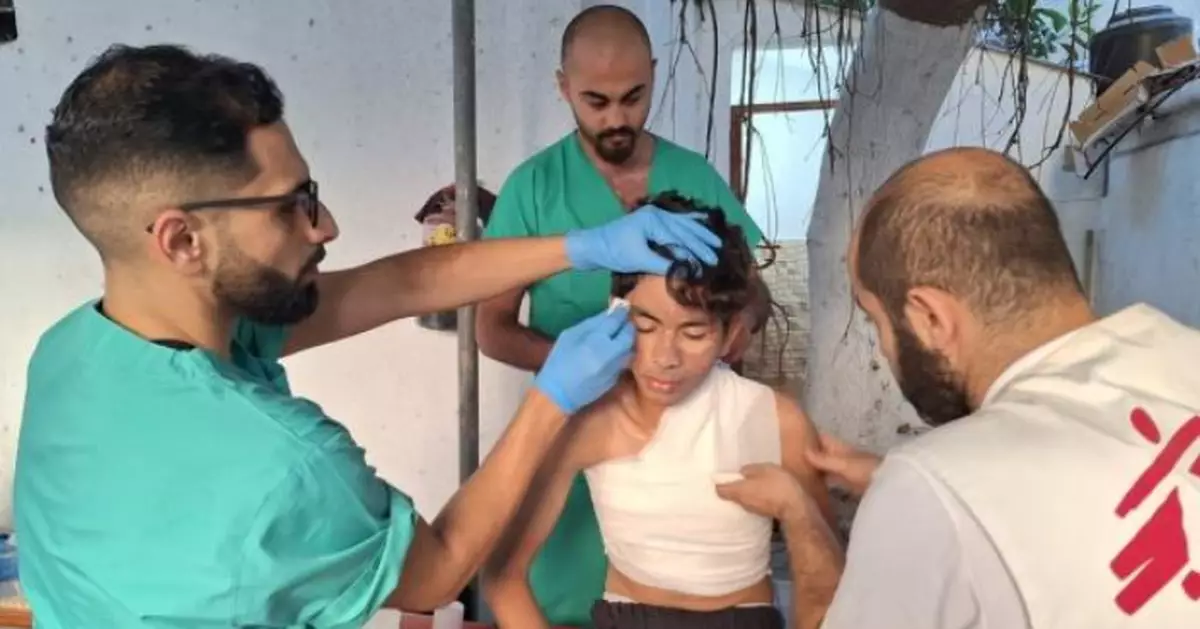
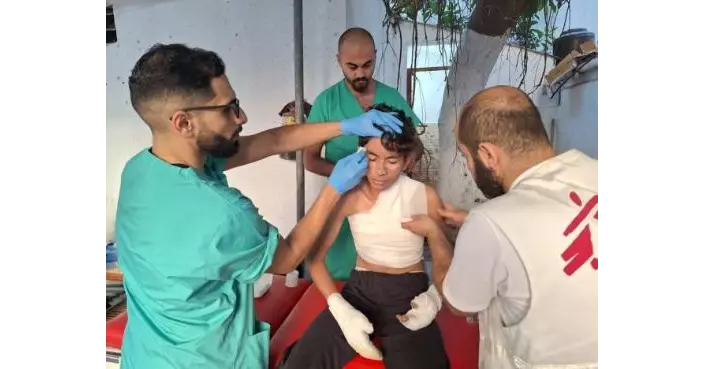
An MSF nurse applied a dressing to a young boy at the MSF Burns Clinic after he suffered burns from an airstrike.
An MSF nurse applied a dressing to a young boy at the MSF Burns Clinic after he suffered burns from an airstrike.

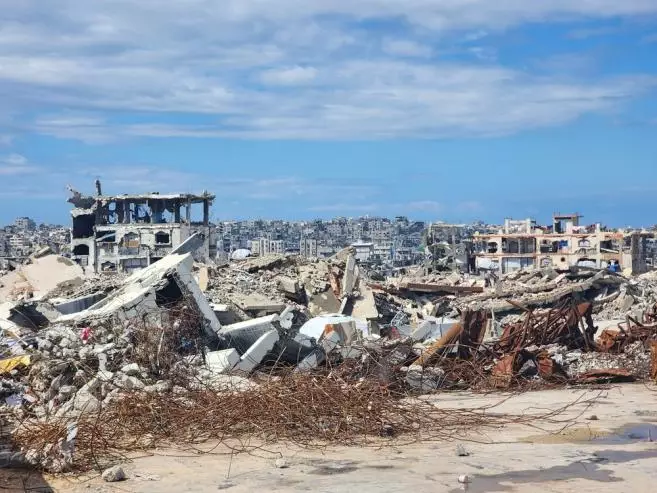
Looking through the rubble from what was the pre-war Primary Healthcare Centre in Jabalia.
Looking through the rubble from what was the pre-war Primary Healthcare Centre in Jabalia.

An MSF physiotherapist fits a 3D-printed mask on a four-year-old burn patient.
An MSF physiotherapist fits a 3D-printed mask on a four-year-old burn patient.

In the past year, the physical trapping of people in Gaza has been made increasingly definitive by the establishment of Israel’s Yellow Line. Originally presented as a temporary, first-phase military withdrawal position and a key part of maintaining the so-called ceasefire, the line is now reinforced by military positions, berms and ongoing demolitions and has continued to move west, squeezing people into a smaller and smaller area. Israeli forces now occupy approximately 65 per cent of Gaza, using the line to draw a clear border around this area.

As the Yellow Line moves, the threat to people living nearby becomes increasingly immediate, compounded by the uncertainty of approaching a line that is not clearly or consistently demarcated. People risk being shot by Israeli forces when they approach it, and MSF teams continue to treat people with gunshot wounds sustained nearby. Its encroachment is also disrupting the delivery of essential assistance: MSF water trucking has had to stop when shooting occurs near communities living close to the Yellow Line.

“The Yellow Line cannot be treated simply as a line on a map,” says Amande Bazerolle, MSF head of emergency response in Gaza, Palestine. “It has become a mechanism of encirclement, while cutting communities off from the infrastructure, healthcare, water and other essentials they need to survive.”

Violence beyond the Yellow Line

Nor is violence confined to the areas around the Yellow Line. In June and July alone, despite a so-called ceasefire, MSF teams treated more than 1,200* cases of violent trauma across Gaza, including blast injuries, burns, gunshot wounds and injuries resulting from physical assault. Over the past three years, our teams have treated more than 200,000 trauma cases*, including injuries resulting from intentional physical violence, while Israel’s military offensive has killed more than 74,000 people, including more than 20,000 children.

Overcrowding and disease

As Israel confines Palestinians to increasingly limited areas, families are being pushed into overcrowded and unlivable conditions, without sufficient access to clean water, sanitation, shelter or healthcare. These conditions are contributing to the spread of disease. MSF teams have treated more than 11,000 cases of skin diseases such as scabies this year alone, while seeing more than 1,500 cases of chickenpox in June and July. MSF distributed around 2.1 million litres of drinking water per day in August, yet the scale of need remains far beyond what can be met under these restrictions.

“Most people have less than six litres of domestic-use water per day and limited access to basic hygiene items such as soap and detergent,” says Dr Murad Asaliyya, medical activities manager in Gaza. “We are treating gastroenteritis, acute respiratory infections, a lot of skin conditions, hepatitis, bacterial skin infections, scabies and lice. At the same time, we are facing severe shortages in terms of medical supplies. Even the cream we need to treat scabies has been restricted by the Israeli authorities.”

A health system dismantled

Over the past three years, access to healthcare has deteriorated dramatically, with hospitals increasingly running out of basic supplies and patients unable to access essential medicines and treatment. Restrictions on essential supplies such as engine oil and spare parts are also crippling the infrastructure needed to keep hospitals, ambulances and water systems running, with generators already breaking down and water-trucking operations reduced.

The destruction of Gaza’s healthcare system, damage to more than 80 per cent of all structures in Gaza, alongside the lifelong physical and mental health impacts of repeated violence and displacement, will extend far beyond the present and prevent any meaningful recovery for years to come.

The West Bank and East Jerusalem

Nor is this crisis limited to Gaza. Since 2023, violent settler attacks, military operations and raids on homes, displacement camps and agricultural land, settlement expansion, displacement, home demolitions and movement restrictions have rapidly escalated across the West Bank and East Jerusalem, particularly this year. Patients at MSF clinics tell teams about homes being demolished by Israeli forces, attacks by settlers and livestock being stolen. The policies of violence, harassment and forced displacement affecting Palestinians extend beyond Gaza, causing further fragmentation of the occupied Palestinian territory.

Governments must act now

“It will take generations to recover from the harm that has already been done over the past three years, and in the preceding decades, while the excruciating consequences are still being felt every day,” says Bazerolle. “Destruction, displacement and deprivation have become normalised - practices Israel is carrying out with impunity. Governments must act now to ensure Israel stops the destruction and killing, and stops denying Palestinians the means of survival.”

* This refers to cases not patients, including new or follow-up consultations.

A displaced mother and daughter prepare a meal over an open fire inside their makeshift tent in Khan Younis.

A displaced mother and daughter prepare a meal over an open fire inside their makeshift tent in Khan Younis.

An MSF nurse applied a dressing to a young boy at the MSF Burns Clinic after he suffered burns from an airstrike.

An MSF nurse applied a dressing to a young boy at the MSF Burns Clinic after he suffered burns from an airstrike.

Looking through the rubble from what was the pre-war Primary Healthcare Centre in Jabalia.

Looking through the rubble from what was the pre-war Primary Healthcare Centre in Jabalia.

An MSF physiotherapist fits a 3D-printed mask on a four-year-old burn patient.
An MSF physiotherapist fits a 3D-printed mask on a four-year-old burn patient.
NETANYA, Israel (AP) — Israelis gathered Wednesday to commemorate the Oct. 7, 2023, attack that killed 1,200 people, saw 251 taken hostage, and sparked a devastating war in Gaza that has devastated the territory and left its 2 million people living in dire conditions.

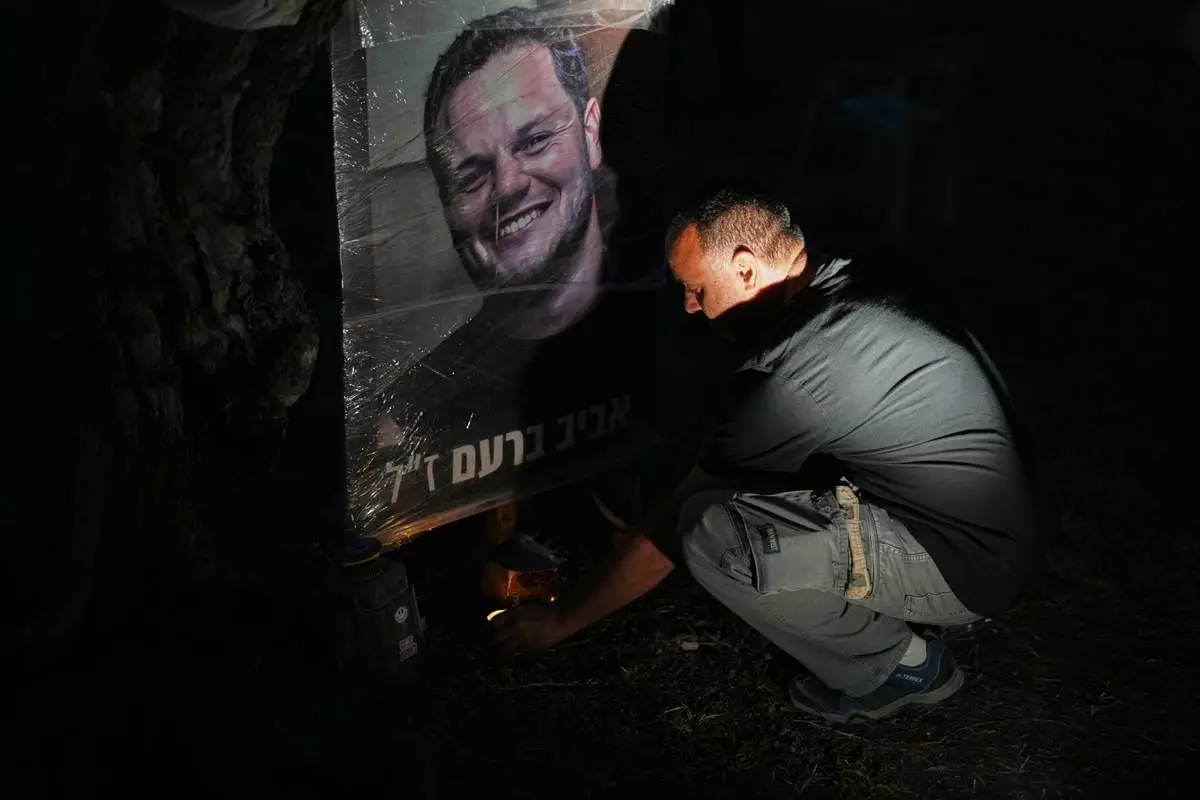
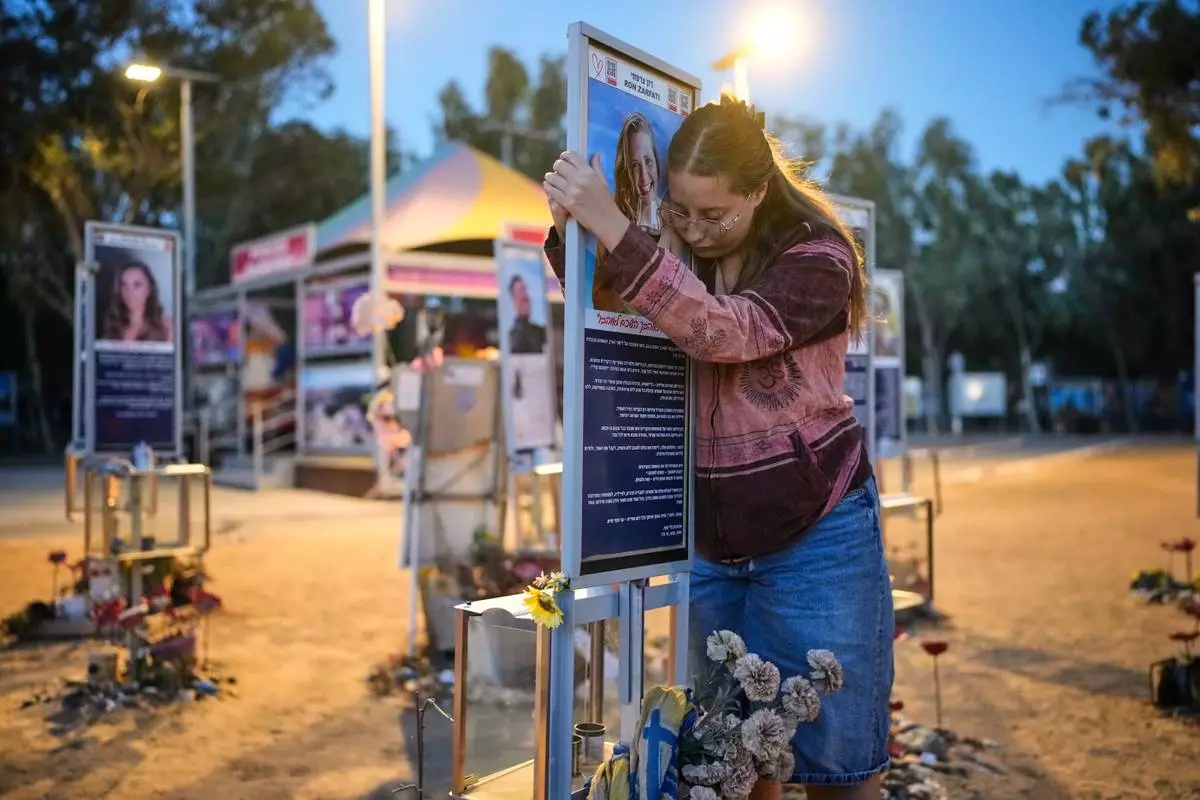
In southern Israel, families mourned at intersections, bomb shelters, and the site of a music festival that Hamas-led militants overran three years ago in the deadliest attack against Israel. It is the first anniversary that all the hostages are home, marking a new stage of grief.

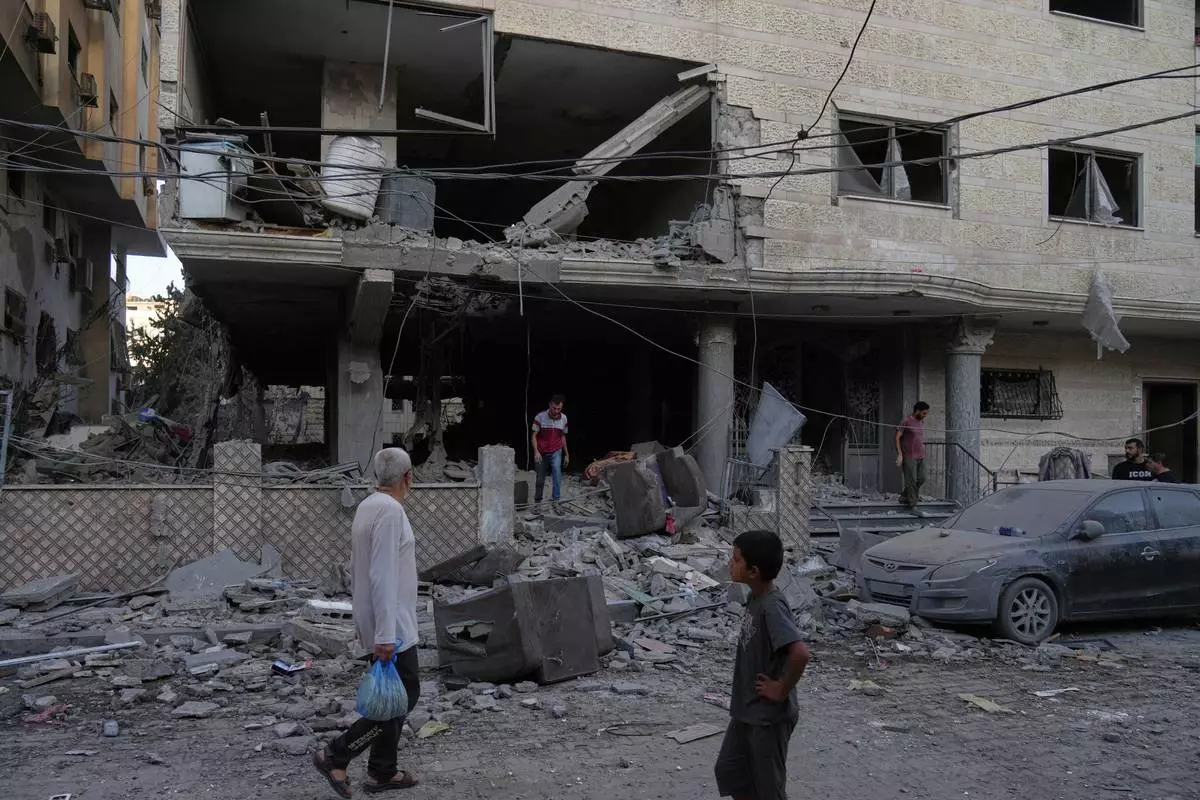
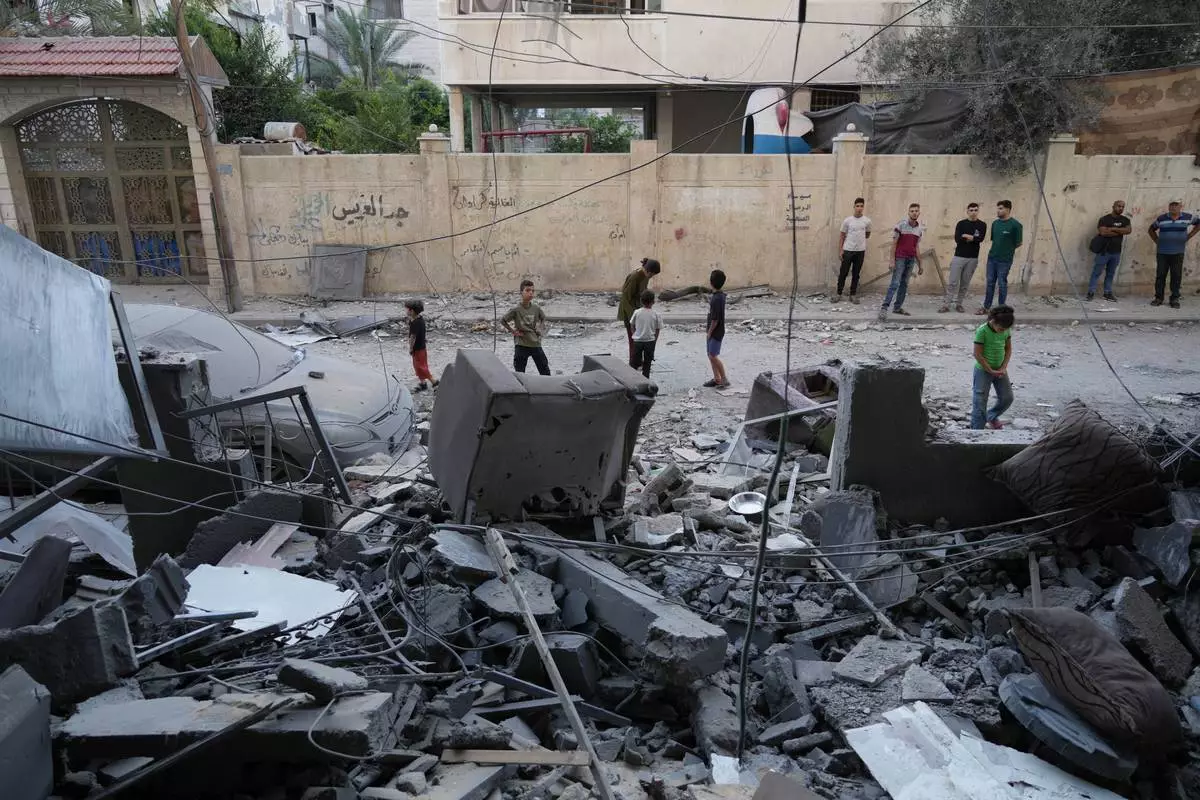
For Palestinians, the anniversary brings another day of life of misery and difficulties after an Israeli retaliatory campaign in Gaza that has killed tens of thousands of people. Most of the population of about 2 million people live in vast, squalid tent camps, with large parts of the strip’s cities reduced to rubble. More than half the territory remains in the hands of the Israeli military, and despite a ceasefire deal reached nearly a year ago, Israeli strikes continue almost daily.

For the region, the day highlights a startling transformation over the past three years. Israeli troops occupy a large chunk of southern Lebanon in their conflict with Hezbollah, which began firing on Israel in 2023 in support of Hamas. Iran and the United States are locked in a confrontation that has seen attacks across Arab Gulf countries and has shaken the global economy — a conflict that Israel helped launch and that the Gaza war paved the way for even if they weren’t directly connected.

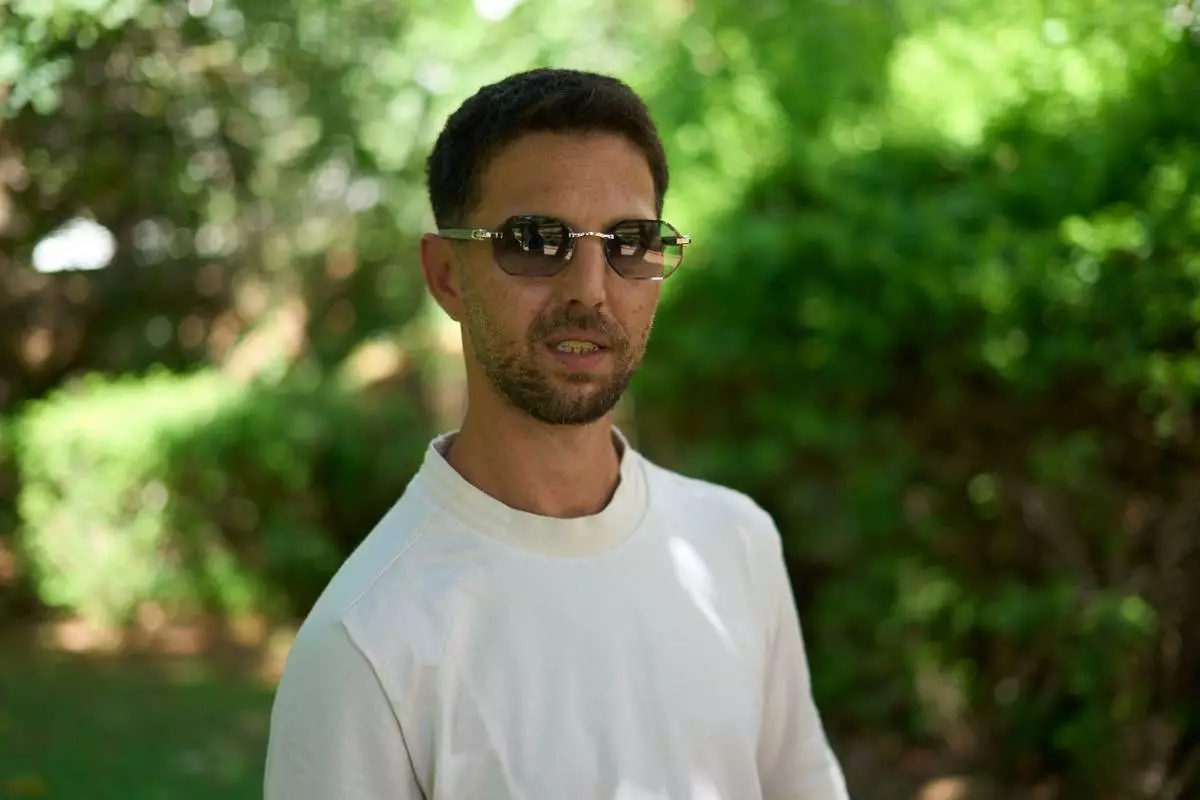
Elkana Bohbot, 37, is marking the anniversary in Israel for the first time, after being released from 738 days of captivity last year. For most of that time, he said, he was held 50 meters (165 feet) underground in a dark, damp tunnel.

Bohbot, who was abducted from the Nova music festival, was kept in a small cell with other hostages, given very little food, and allowed to bathe only every few weeks, he said. His captors forced him to take part in several propaganda videos, including one where he acts out a fake call to his family.

In the 11 months since his release, Bohbot has undergone physical and emotional rehabilitation, written a book, begun a speaking career, traveled with his family, and celebrated all the holidays and birthdays he missed.

In August, his wife, Rivka, gave birth to a daughter, fulfilling a fierce promise that Bohbot made to himself in the tunnels to give his 5-year-old son, Reem, a sibling.

The newborn Michele is “not a symbol for my people, she is more of a symbol for the enemy,” Bohbot told The Associated Press. “So this child is the message for you that we were here, and we will always be here forever.”

No events are expected on Wednesday in Gaza, where Israel’s offensive has devastated the narrow strip and displaced around 90% of its population, often multiple times. Restrictions on the entry of goods and aid have contributed to a severe hunger crisis.

More than 74,000 Palestinians have been killed in Gaza, according to the territory's Health Ministry, which does not distinguish between civilians and militants in its figures but says around half were women and children. The numbers from the ministry, part of the Hamas-run government, are seen as generally reliable by U.N. agencies and independent experts.

While a ceasefire that took effect on Oct. 10 has halted the heaviest fighting, Israeli strikes have continued, targeting what Israel says are Hamas militants. Since the ceasefire, 1,145 Palestinians have been killed in Gaza, according to the ministry. Seven Israeli soldiers have been killed in that period.

Hamas portrayed the Oct. 7 attack as a response to decades of Israeli military occupation, land seizures and settlement construction. But the Palestinians’ dream of an independent state appears even more distant.

A contentious election in Israel at the end of the month hangs over this year's anniversary. The government’s official memorial services took place on Oct. 5, closer to the Hebrew-calendar anniversary of the attack. The separate commemorations are indicative of the deep divisions over Prime Minister Benjamin Netanyahu’s handling of the war and his reluctance to launch an official inquiry into failings of the day.

The attack set in motion a cascade of events that led to wars across the Middle East as Israel confronted Hamas, Hezbollah and their backer Iran. Israel has seized swaths of territory in Syria and Lebanon, where more than 300,000 Lebanese remain displaced. The United States joined Israel in attacking Iran’s military and nuclear program in two rounds, battering Iran and upending global markets far from the battlefield.

Violence has also risen across the Israeli-occupied West Bank, where Israel’s far-right government has emboldened extremist settlers who have attacked Palestinians and destroyed their property.

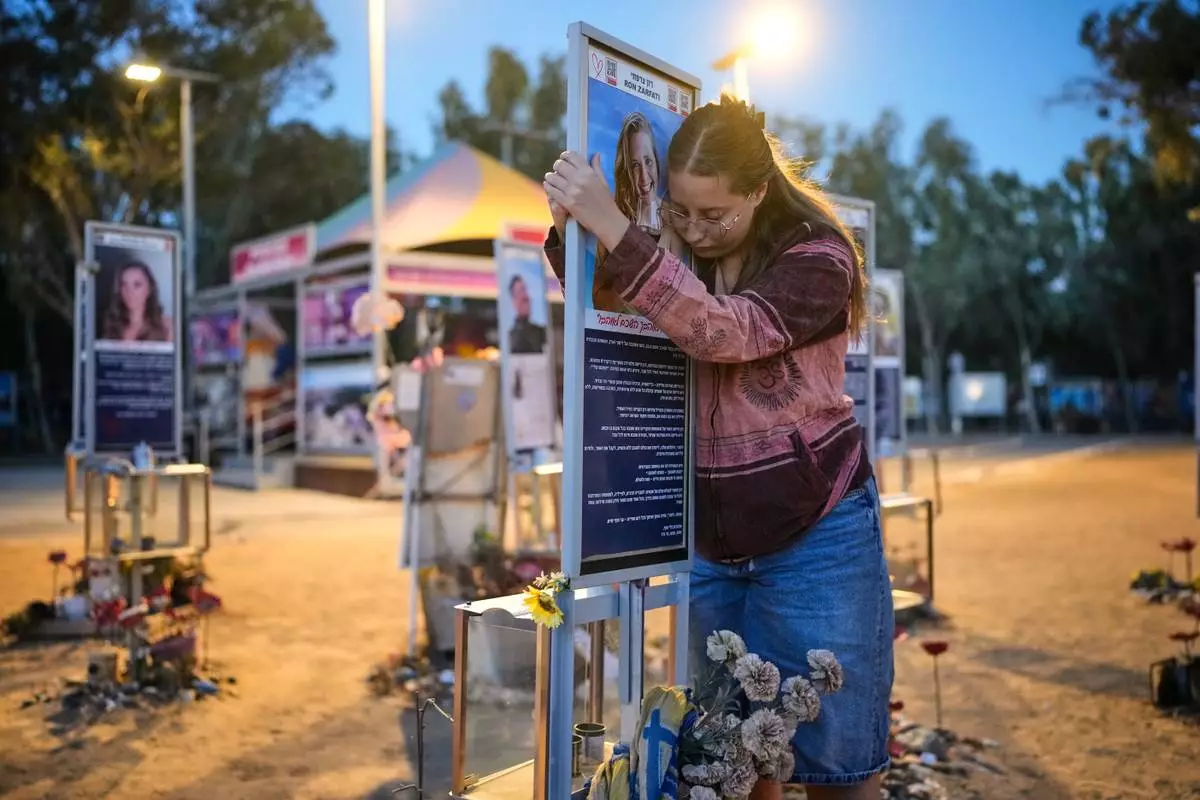
Raz Zarfati, sister of Ron Zarfati who was killed in the Oct. 7, 2023, Hamas attack on Israel, attend a memorial marking the third anniversary of the attack at the Nova music festival site near Kibbutz Reim, southern Israel, Wednesday, Oct. 7, 2026. (AP Photo/Ohad Zwigenberg)

Raz Zarfati, sister of Ron Zarfati who was killed in the Oct. 7, 2023, Hamas attack on Israel, attend a memorial marking the third anniversary of the attack at the Nova music festival site near Kibbutz Reim, southern Israel, Wednesday, Oct. 7, 2026. (AP Photo/Ohad Zwigenberg)

Palestinians inspect the site of an early morning Israeli airstrike in Gaza city, Saturday, Oct. 3, 2026. (AP Photo/Jehad Alshrafi)

Palestinians inspect the site of an early morning Israeli airstrike in Gaza city, Saturday, Oct. 3, 2026. (AP Photo/Jehad Alshrafi)

Palestinians inspect the site of an early morning Israeli airstrike in Gaza city, Saturday, Oct. 3, 2026. (AP Photo/Jehad Alshrafi)

Palestinians inspect the site of an early morning Israeli airstrike in Gaza city, Saturday, Oct. 3, 2026. (AP Photo/Jehad Alshrafi)

Released hostage Elkana Bohbot poses in Kadima Zoran, Israel, Sunday, Sept. 27, 2026, before marking the Oct. 7 anniversary in Israel for the first time following his release from 738 days in captivity in the Gaza Strip. (AP Photo/Ariel Schalit)

Released hostage Elkana Bohbot poses in Kadima Zoran, Israel, Sunday, Sept. 27, 2026, before marking the Oct. 7 anniversary in Israel for the first time following his release from 738 days in captivity in the Gaza Strip. (AP Photo/Ariel Schalit)

People attend a memorial service marking the third anniversary of the Oct. 7, 2023, Hamas cross-border attack on Israel, in Kibbutz Kfar Aza, southern Israel, where many community members were killed and abducted, Wednesday, Oct. 7, 2026. (AP Photo/Ariel Schalit)

People attend a memorial service marking the third anniversary of the Oct. 7, 2023, Hamas cross-border attack on Israel, in Kibbutz Kfar Aza, southern Israel, where many community members were killed and abducted, Wednesday, Oct. 7, 2026. (AP Photo/Ariel Schalit)

Raz Zarfati, sister of Ron Zarfati who was killed in the Oct. 7, 2023, Hamas attack on Israel, attend a memorial marking the third anniversary of the attack at the Nova music festival site near Kibbutz Reim, southern Israel, Wednesday, Oct. 7, 2026. (AP Photo/Ohad Zwigenberg)

Raz Zarfati, sister of Ron Zarfati who was killed in the Oct. 7, 2023, Hamas attack on Israel, attend a memorial marking the third anniversary of the attack at the Nova music festival site near Kibbutz Reim, southern Israel, Wednesday, Oct. 7, 2026. (AP Photo/Ohad Zwigenberg)

Recommended Articles