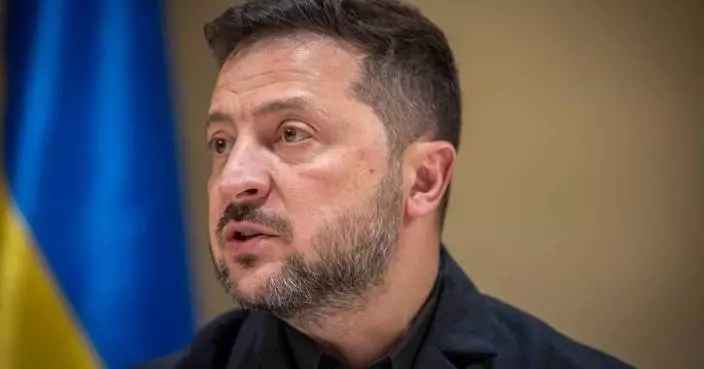
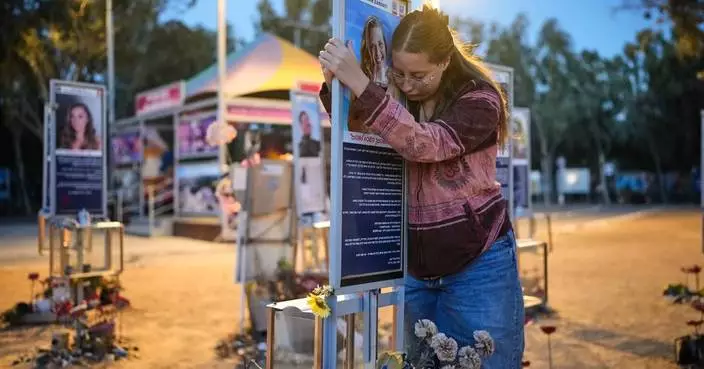
PERTH, Australia (AP) — A former Australian Catholic bishop was sentenced Wednesday to six years and six months in prison for sexually abusing two young Indigenous men.
A District Court of Western Australia state jury convicted Christopher Saunders, 76, in August of 13 out of 19 charges of sexual abuse that occurred between 2008 and 2019 in his sprawling Broome Diocese on the country’s tropical northwest coast.
Saunders will become eligible for parole in February 2031.
Saunders was acquitted of six charges involving a third accuser. He was accused of indecent dealing with a child over the age of 16. The age of consent in Western Australia is 16, but the law raises it to 18 if the older person is in a position of trust, power or responsibility.
Four charges involving a child younger than 13 were dropped on the first day of Saunders’ three-week trial.
Saunders is one of the most senior Australian Catholics to be convicted in a global clergy abuse scandal that has faced the Vatican for years.
Cardinal George Pell was convicted of abusing choirboys, and Archbishop Philip Wilson was convicted of covering up child sex abuse by a priest. But both clerics successfully appealed their convictions.
Prosecutors alleged Saunders lured young Indigenous men to his church-owned house with alcohol and cigarettes paid for with church funds.
Saunders led the remote Broome Diocese from 1996 until he resigned in 2021. The Outback diocese covers an area larger than France with only 50,000 people. Most of the region’s Catholics are Indigenous.
Archbishop Timothy Costelloe, president of the Australian Catholic Bishops Conference, said the sentence recognized the gravity and serious nature of Saunders’ offenses.
The sentence also recognized the profound impact on the victims and survivors of Saunders’ crimes, Costelloe said.
“To each victim and survivor who courageously revealed what they had endured, we want to say this: We are sorry for the pain and suffering that was inflicted on you. We are sorry that your trust was so directly and profoundly betrayed by a leader of the Church,” Costelloe said in a statement.
The Vatican began investigating Saunders in 2022, then handed the Western Australia Police Force a report on its findings the following year. Police charged Saunders in 2024.
While the report was never officially made public, the findings were leaked to Australia’s Seven Network television news, which reported Saunders likely sexually assaulted four Indigenous youths and potentially groomed another 67 Indigenous youths and men.

Former Bishop of Broome Christopher Alan Saunders arrives at the West Australian District Court in Perth, Australia, on Aug. 11, 2026. (Aaron Bunch/AAP Image via AP)
DEIR AL-BALAH, Gaza Strip (AP) — It’s perhaps the most dramatic wound inflicted on the Gaza Strip by Israel’s military campaign over the past three years: The city of Rafah, once home to a quarter million people, has been erased.
Satellite imagery shows the Israeli military has systematically razed the southern city and other towns and districts to the ground and in some places plowed away the rubble. Demolition, using bulldozers and explosives, has continued unabated since the Israel-Hamas ceasefire deal reached a year ago, as the military solidifies its hold over the around 60% of the territory that it still controls.
Gaza’s mangled landscape is just one of the wounds on top of wounds that the enclave's 2 million Palestinians have endured since Israel launched its campaign to destroy Hamas after the militants’ Oct. 7, 2023, attack on southern Israel.
More than one out of every 10 people from Gaza’s prewar population has been killed or wounded by Israeli fire. While nearly every family mourns dead or cares for wounded, most also had to move multiple times to escape fighting and Israeli evacuation orders. With almost the entire population homeless, the coastal territory is now effectively one of the world's most populated tent cities. Ramshackle canvas and nylon shelters blanket beaches and former agricultural lands and fill empty lots.
Little is likely to change for the foreseeable future. While the ceasefire deal stopped the offensives and heaviest bombardment, Israel hits tents, cars and buildings almost daily in strikes that it says target Hamas members — but that regularly kill women, children and other family members.
People no longer have to flee from place to place, but few can rebuild homes because Israel bars most construction material from entering Gaza. The ceasefire agreement’s plan for the large-scale reconstruction of Gaza has never gotten off the ground because Israel and Hamas have failed to reach a deal on disarming the militant group.
Najwa Abu Eita lost her 7-year-old daughter when Israeli forces struck her home in the central refugee camp of Nuseirat in September 2024, and her three other children were injured in the attack. Abu Eita lost an eye, her face remains heavily damaged and scarred, and she has trouble breathing.
A hairdresser before the war, she now has no work, living in a tent by the ruins of her home. Worst of all, she says, her children are frightened by her face and avoid looking at her.
“My 4-year-old son tells me, ‘Momma, I’ll give you one of my eyes.’ And inside, I’m weeping,” she said.
Gaza’s population is squeezed into about 40% of the tiny territory, and Israel’s military controls the rest. Satellite imagery by Planet Labs PBC shows that the vast majority of buildings in the Israel-held part have been bulldozed or exploded down to piles of rubble, much of it after major fighting ended a year ago.
The Israeli military says it demolishes buildings to prevent their use by Hamas militants or to destroy the group’s tunnel networks.
But a U.N.-appointed expert said in a February report that the scale of destruction of civilian housing and infrastructure in Gaza “is unprecedented even by the terrible standards of modern warfare since the 20th century.”
The report warned that it could constitute a crime against humanity or reach the level of genocide, which under international law includes “deliberately inflicting conditions of life calculated to bring about physical destruction.”
Israel rejects accusations of genocide, saying it targets Hamas militants and their infrastructure that are interwoven with civilian areas.
The Planet Labs imagery shows at least 50 Israeli military outposts built throughout the Israeli-held part of Gaza, at least 18 of them constructed since the ceasefire began. Many have been put on top of former neighborhoods where the rubble of demolished buildings nearby has been cleared away.
Most of Rafah was razed before the ceasefire, but images show that troops continue to demolish the few remaining buildings. Several abandoned U.N. buildings have been spared, as well as a municipal sports field that now appears to contain a military base.
A new base also stands on what was once the main intersection of the southern town of Beni Suhaila. Leveled over the past year, the town is now a wasteland intersected by a spiderweb of dirt paths that were once streets.
In Jabaliya in the north, most of the al-Awda Hospital Complex was reduced to rubble in recent months, as were a number of U.N.-run school buildings, satellite images show. Jabaliya was once home to the Gaza Strip’s biggest refugee camp, home to some 120,000 refugees and tens of thousands of other residents in a densely built urban district.
Now one of the few buildings still standing is the octagonal-shaped Indonesian Hospital, empty since troops shut it down in June 2025. The Israeli military built a new base nearby.
Similarly, most of Beit Hanoun, once a town of some 70,000 people in Gaza's far northeast corner, and Shijaiya, a Gaza City neighborhood founded 800 years ago, are now block after block of leveled houses and apartment towers.
An increased flow of aid and commercial products brought Gaza back from famine that arose in some areas last year under a monthslong Israeli ban on food and other goods. But most of the population remains dependent on international relief. Jobs are few, mostly connected to selling in the market.
Shadi Barawi lost his father early in the war. Soon after that, Barawi was hit by shrapnel from a strike near his home in Gaza City, and his leg was amputated — one of some 6,000 amputees left by the war.
After losing his leg, “I lost all hope in life,” the 35-year-old said. But he was the sole support, he said, for his own family of six and his five sisters, he said.
A barber before the war, he returned to giving haircuts to earn some money. With no prosthetic limb, he balances on his crutches as he works in the same tent where he lives.
“I’m working in tough circumstances,” he said. “I’m on one leg. I might do cuts for three customers, then I get tired and stop and rest, but then I keep going,” he said.
Thousands of bodies remain buried under buildings smashed by Israeli strikes. Since the ceasefire, Gaza authorities have slowly been going from site to site to try to find them.
Last week, a search team finally came to the Gaza City home of Haneen al-Khodari. When her building was hit in December 2023, al-Khodari was thrown into a nearby tree, and after weeks in the hospital, she was told her parents, siblings and many of her cousins were killed, she said. The bodies of 17 of them remained trapped under wreckage ever since.
But after eight hours digging through the ruins, the team only recovered the remains of a small child and two bones. The search for the rest was called off.
Al-Khodari sat on the pavement, her hopes dashed. “We had been waiting for this moment for three years,” she said.
A plastic sheet on the ground in front of her contained what they’d found, labeled with the words, “Mixed bones.”
Keath reported from Cairo.
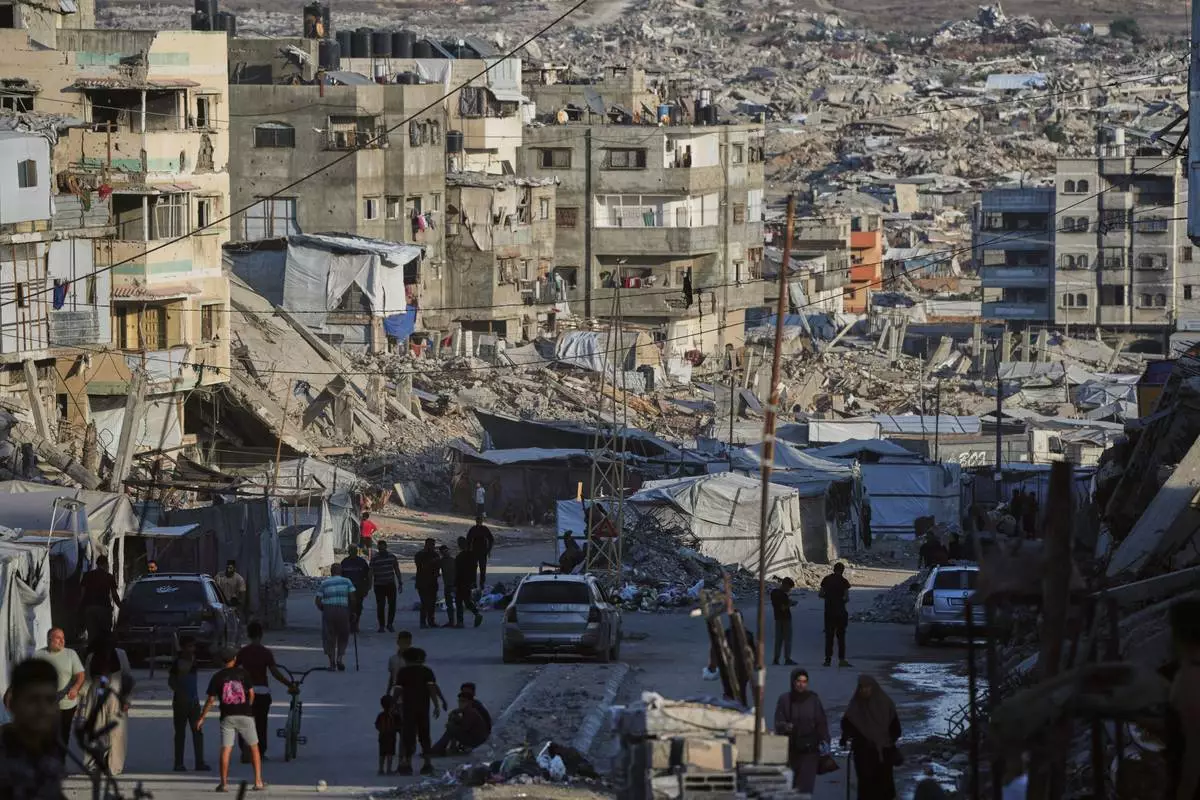
Palestinians walk along a street surrounded by buildings destroyed in Israeli military strikes during the Israel-Hamas war in Gaza City, Tuesday, Oct. 6, 2026. (AP Photo/Jehad Alshrafi)
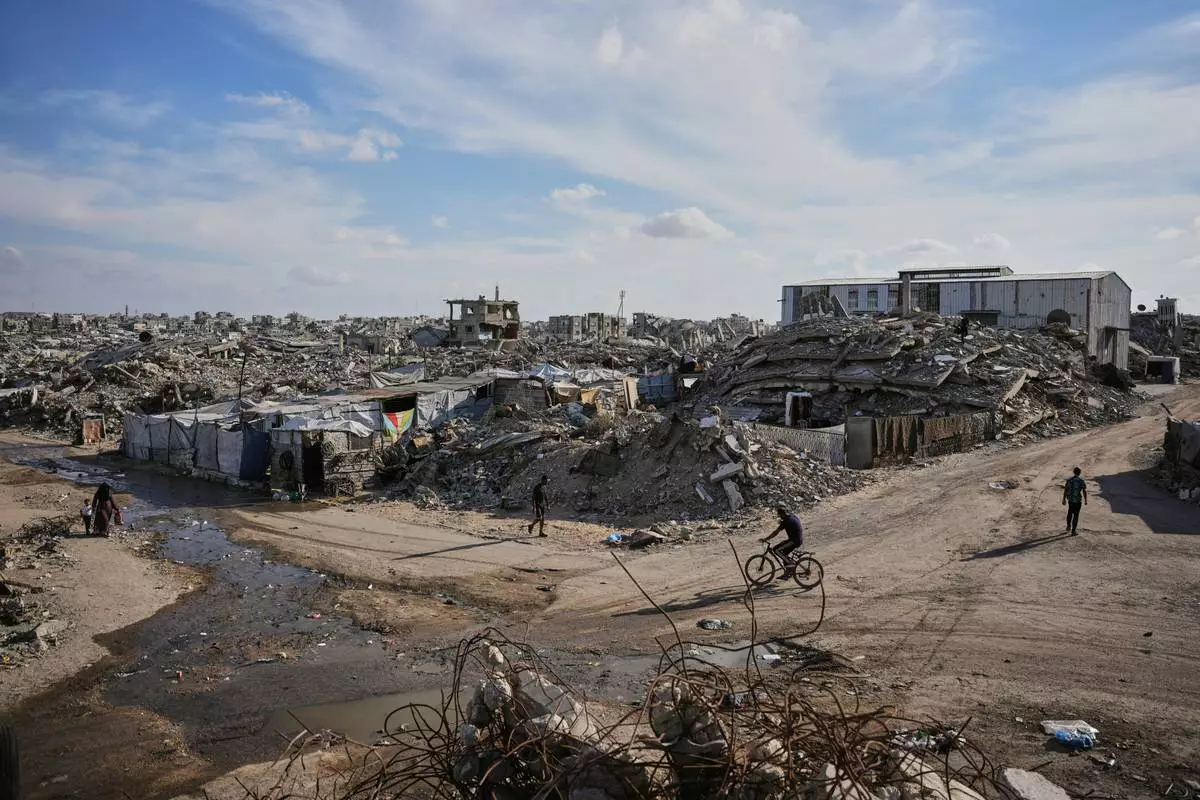
Palestinians walk along a street surrounded by buildings destroyed in Israeli military strikes during the Israel-Hamas war in Gaza City, Tuesday, Oct. 6, 2026. (AP Photo/Abdel Kareem Hana)
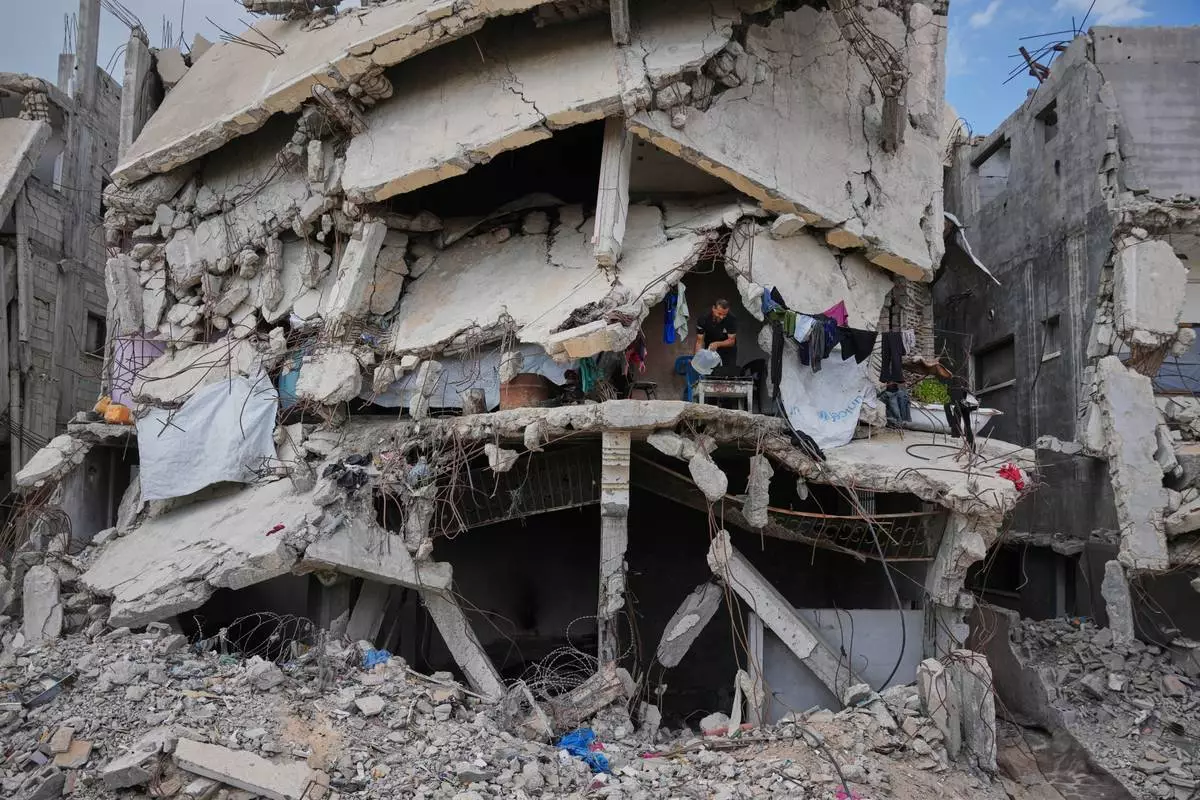
Murid Akhziq, 43, lights a fire for cooking inside his home, which was destroyed during the Israel-Hamas war, in Gaza City, Tuesday, Oct. 6, 2026. (AP Photo/Abdel Kareem Hana)
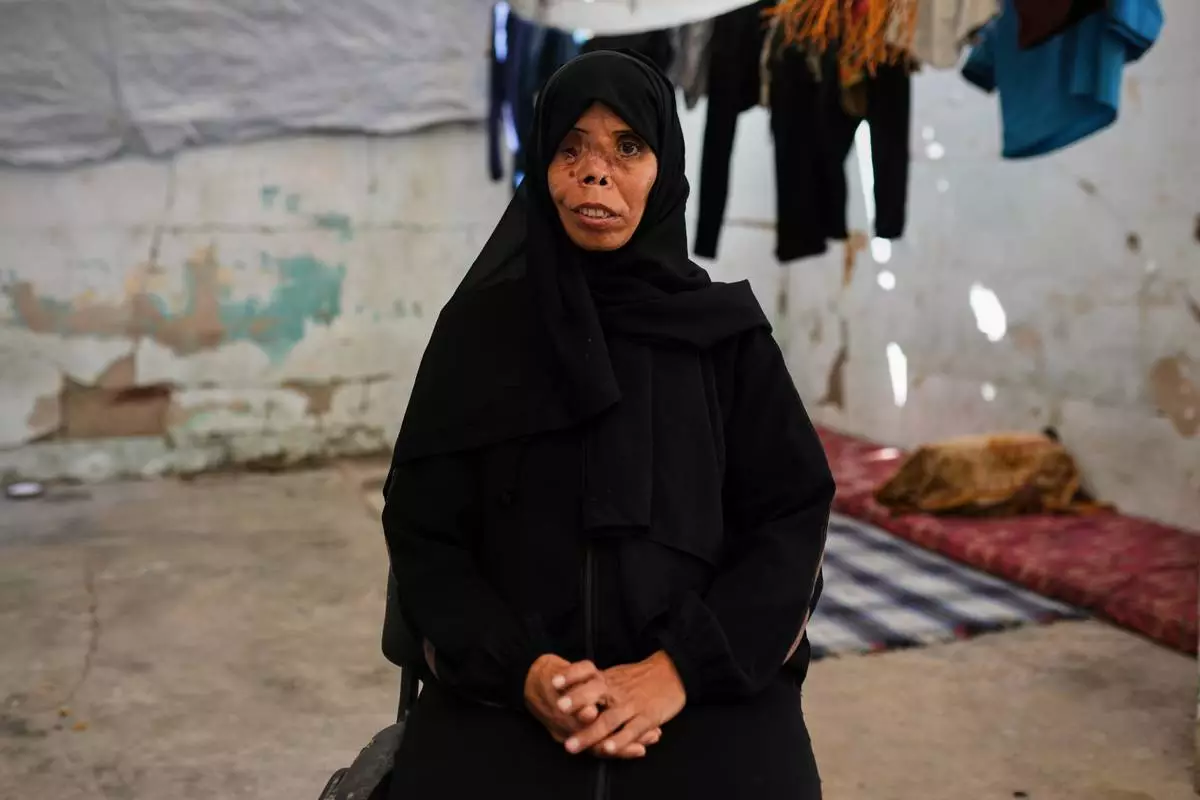
Najwa Abu Eita, who was injured in an Israeli army bombardment during the Israel-Hamas war and lost her 7-year-old daughter in 2024, poses for a photo in her tent in Nuseirat, central Gaza, Tuesday, Oct. 6, 2026. (AP Photo/Jehad Alshrafi)
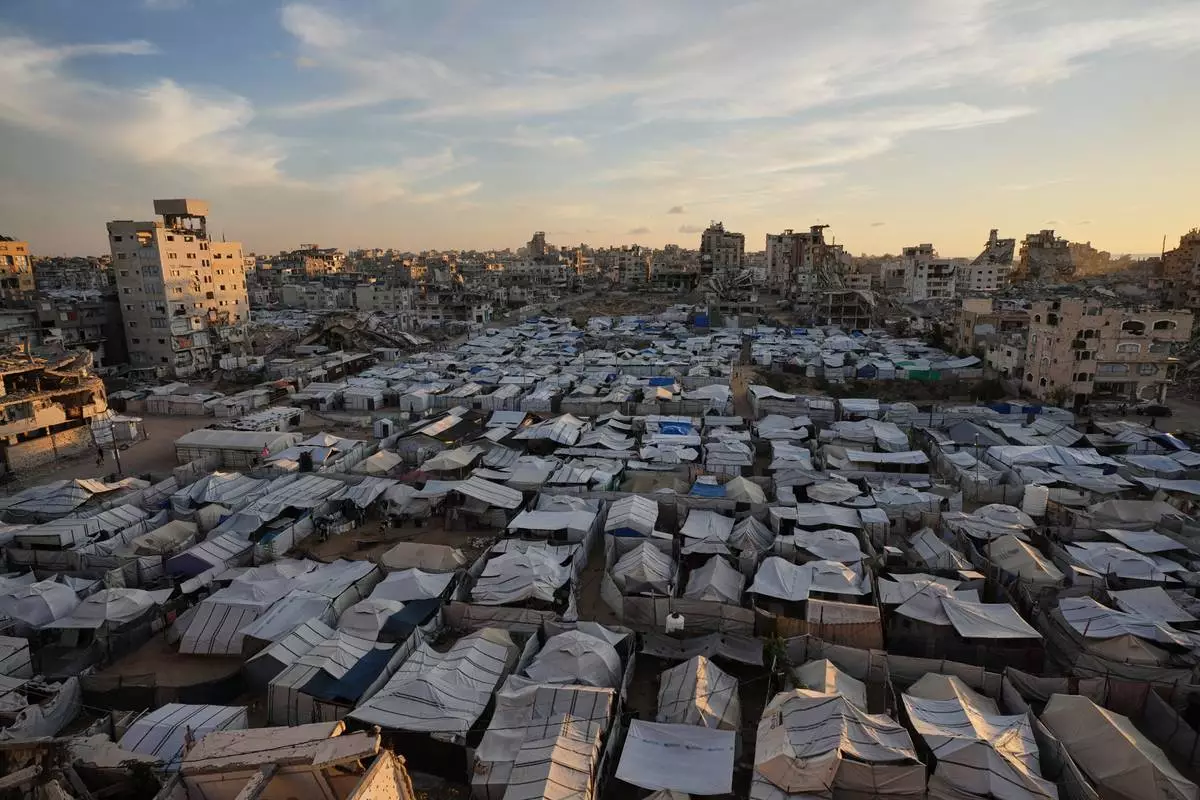
A makeshift tent camp for displaced Palestinians who lost their homes during the Israel-Hamas war stretches across Gaza City, Tuesday, Oct. 6, 2026. (AP Photo/Jehad Alshrafi)