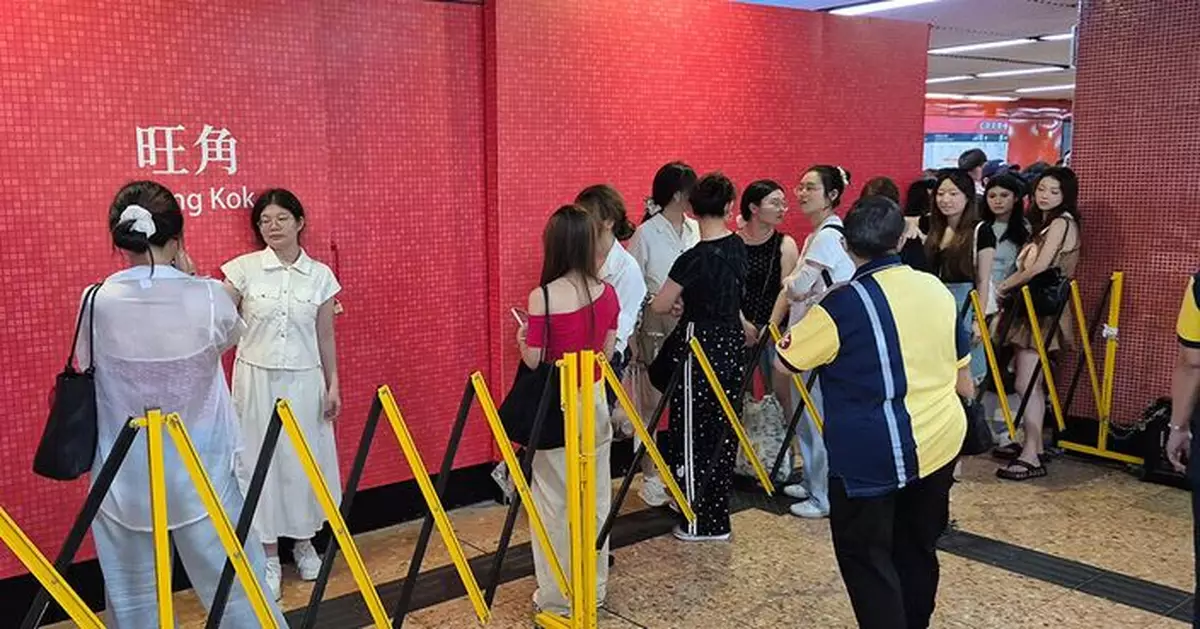
The mosaic tile walls and station name designs at MTR stations have become a popular photo-taking attraction for tourists visiting Hong Kong in recent years. The customer service centre at Mong Kok Station is currently undergoing renovation works, and the MTR has affixed a paper-card mosaic tile wall pattern to the construction hoarding, printed with the station name "Mong Kok." The design is so realistic that it has likewise attracted crowds of tourists queuing to take photos, and station staff have had to set up barriers to manage the queue.
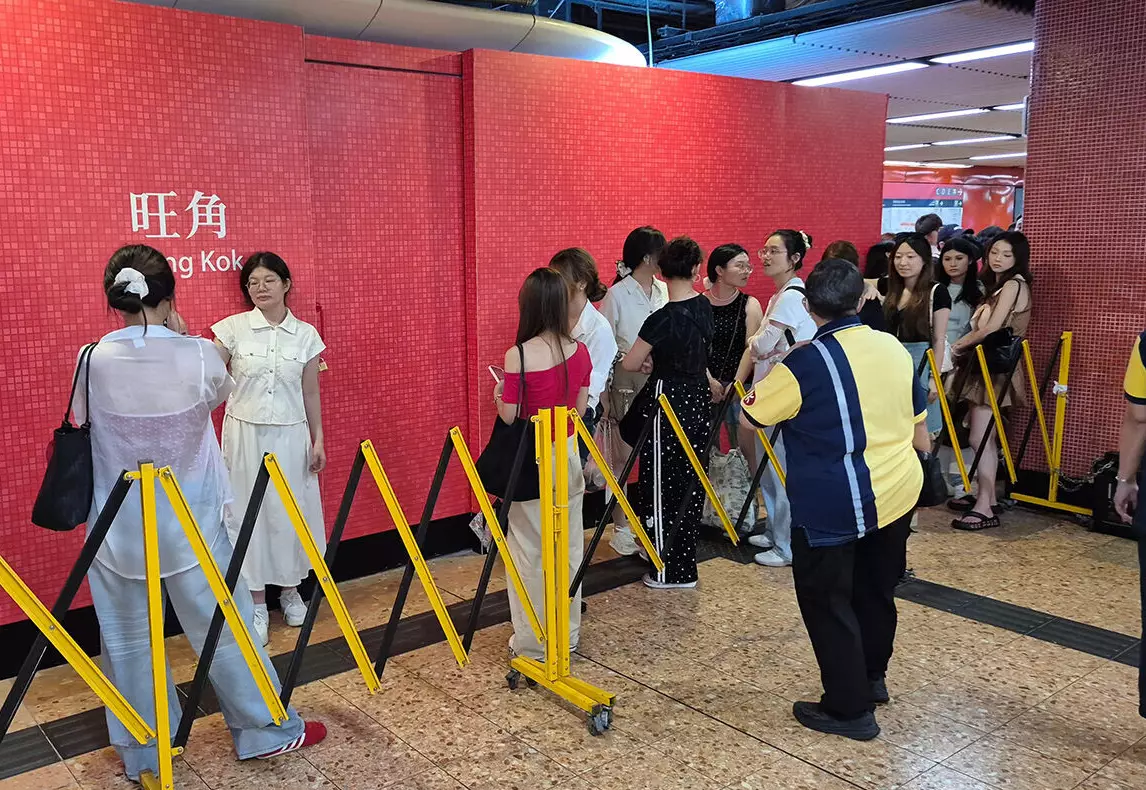
Photo source: online image
Some passengers uploaded photos of the scene to social media, and many netizens praised the hoarding for serving a dual purpose—being aesthetically pleasing without obstructing passengers. "It looks good, and people can take photos too," one commented. Others mistakenly believed that the MTR had specially installed a "photo-taking wall" for tourists, and considered it a good way to prevent crowds from congesting the platforms. "Well done, at least it doesn’t block people," and "Great that it doesn’t clog up the platform," some said.
Click to Gallery
Photo source: online image
Photo source: online image
Photo source: online image
Photo source: online image
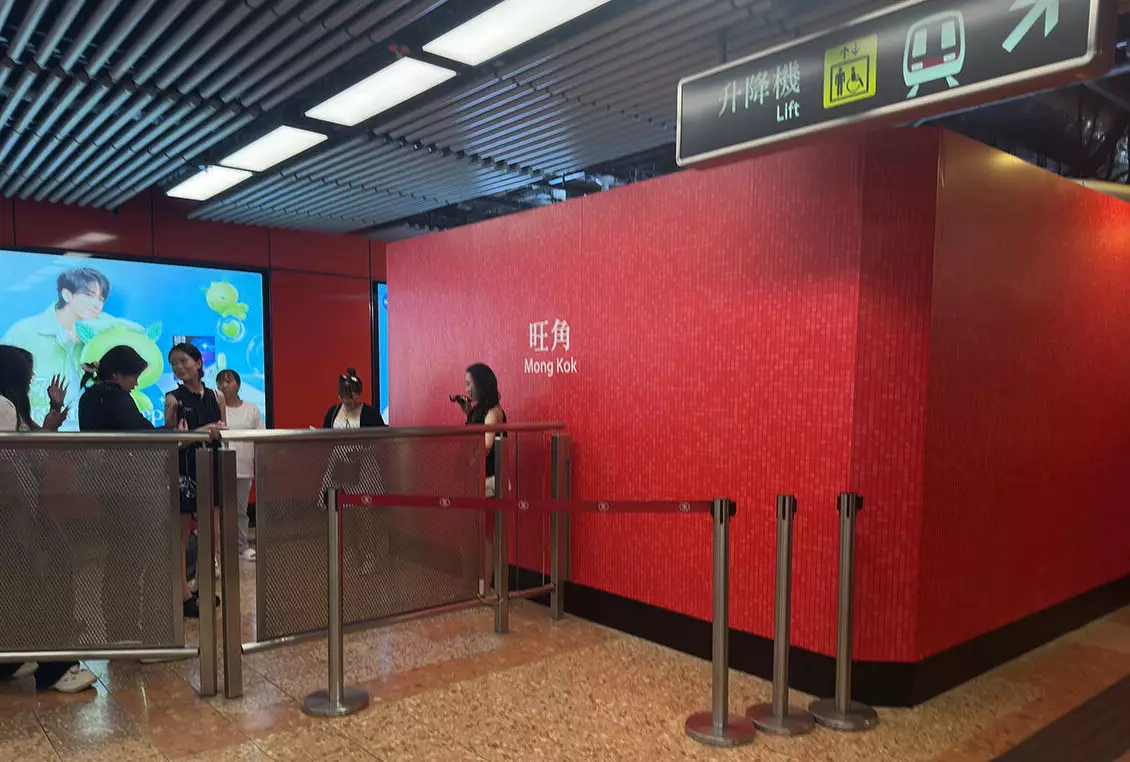
Photo source: online image
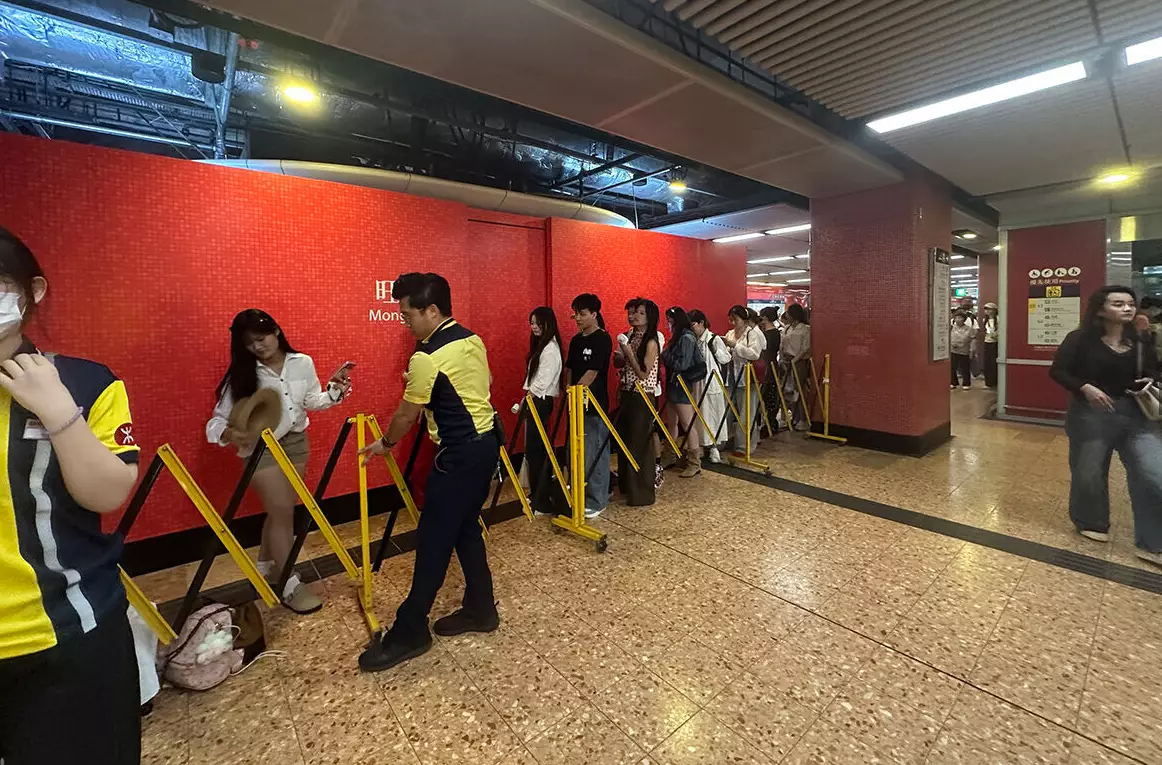
Photo source: online image
However, some netizens questioned whether tourists were simply photographing a replica hoarding rather than the genuine platform mosaic wall, suggesting that people could create a similar scene themselves or use photo editing instead. Others joked that the hoarding had actually been there for a long time, and that no one had expected visitors to queue up specifically to take photos of it. "It was a nice-looking hoarding, and visitors got the wrong idea thinking it was specially made for photo-taking," one netizen remarked.
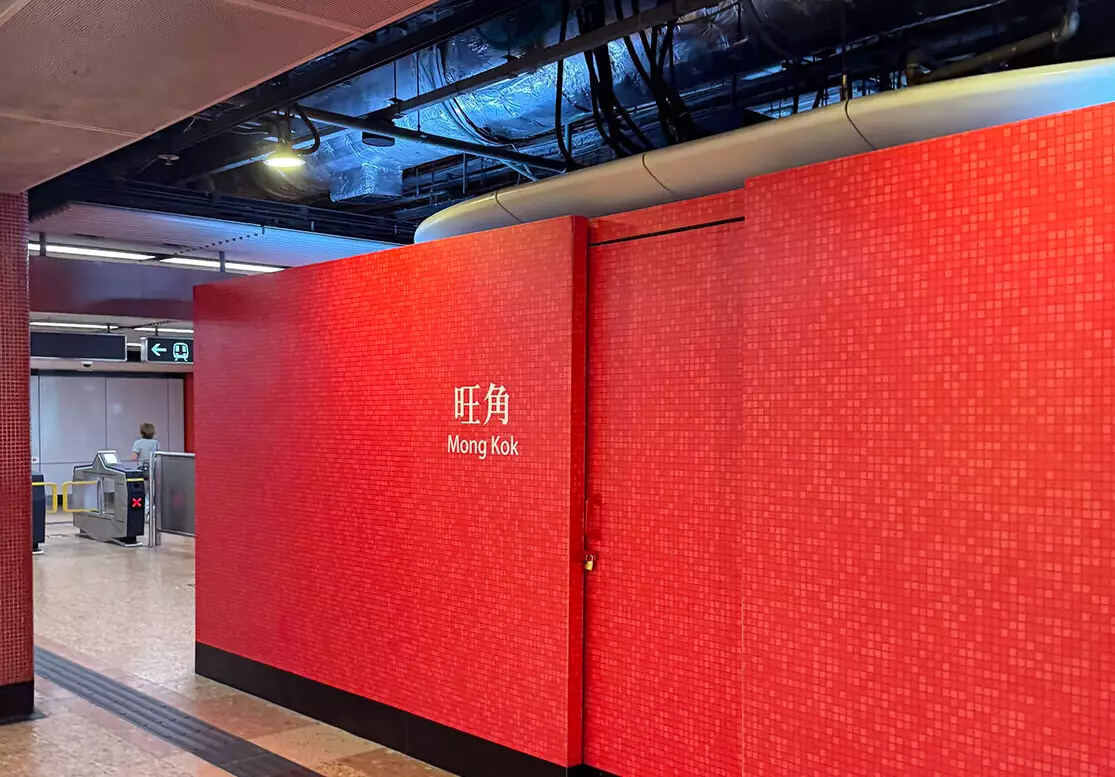
Photo source: online image
Traffic and transport arrangements for redeveloped Huanggang Port
The Transport Department (TD) said today (October 7) that, to facilitate the redeveloped Huanggang Port coming into operation to provide 24-hour services, traffic and public transport arrangements will be implemented accordingly to provide members of the public and visitors with a convenient and smooth travel experience. The public should use other land and rail boundary control points (BCPs) based on their needs and not rush to the new port for crossing the boundary.
Franchised buses, green minibuses and cross-boundary coaches
The Huanggang Port will be served by seven franchised bus routes (including one overnight route), six green minibus (GMB) routes (including three overnight routes), and five short-haul cross-boundary coach (CBC) routes operating round the clock, carrying passengers directly to various districts across the city. Among them, the franchised bus routes will pass through nine MTR stations and four bus-bus interchanges, providing convenient interchanges with railways or buses to different districts. Cross-boundary travellers should plan their journeys early, pay attention to the daytime and overnight service hours of various routes, and choose suitable ones for travelling to and from the new port.
Route
Destination
Service areas
Franchised bus daytime routes
KMB B10
Kwai Tsui Estate Public Transport Interchange
Tai Lam Tunnel Bus-Bus Interchange, Tsing Yi, Kwai Fong
KMB B11
Tin Fu Bus Terminus
San Tin Public Transport Interchange, Yuen Long Town Centre, Tin Shui Wai
NLB B12
Wu Kai Sha Station Public Transport Interchange
San Tin Public Transport Interchange, Tai Po (Kwong Fuk Bus-Bus Interchange), Science Park, Ma On Shan
Citybus B13
Siu Sai Wan (Island Resort)
San Tin Public Transport Interchange, Tai Lam Tunnel Bus-Bus Interchange, Western Harbour Crossing Bus-Bus Interchange, Sheung Wan, Central, North Point, Sai Wan Ho, Chai Wan
Citybus B14
Kai Tak (Olympic Avenue)
Tai Lam Tunnel Bus-Bus Interchange, Kai Tak Sports Park
*Provides daily service during morning and evening peaks at initial launch
Citybus B15
Castle Peak Bay
Hung Shui Kiu, Tuen Mun Town Centre, Tuen Mun Station, Tuen Mun South
*Provides daytime service on Saturdays, Sundays and public holidays
Franchised bus overnight route
KMB NB73
Sha Tin Town Centre
San Tin Public Transport Interchange, Sheung Shui Station, Tai Po (Kwong Fuk Bus-Bus Interchange), Sha Tin Town Centre
GMB daytime routes
44B
Tuen Mun Station
Leung King Estate, Tuen Mun Hospital
44B1
Tuen Mun Ferry Pier
Tuen Mun Town Centre, Hung Kiu
78
Pat Heung Road (near Tai Lam Tunnel Bus-Bus Interchange)
Tai Lam Tunnel Bus-Bus Interchange, Kam Sheung Road Station
GMB overnight routes
79S
Tin Shui Wai (Grandeur Terrace)
Long Ping Station, Yuen Long Town Centre
N44B
Tuen Mun Ferry Pier
Tuen Mun Town Centre, Leung King Estate, Tuen Mun Hospital, Tuen Mun Station
616S
Mong Kok (Sai Yeung Choi Street South)
Mong Kok, Kowloon Tong
Short-haul CBC routes (24-hour operation)
*Some stopping points will only be in use during specific hours
Mong Kok
Arran Street (outside Golden Plaza)
Cheung Sha Wan, Lai Chi Kok
Yau Tsim
Austin Road Cross Boundary Coach Terminus
Tsim Sha Tsui (China Hong Kong City), Jordan
Kwun Tong
Lam Tin Station Public Transport Interchange
Kwun Tong (Millennium City), Kowloon Bay Station, Diamond Hill Station
Wan Chai
Exhibition Centre Station Public Transport Interchange
Wan Chai (near Southorn Centre), Sheung Wan
Tsuen Wan
Tsuen Wan Discovery Park Public Transport Interchange/Tsuen Wan Station Public Transport Interchange (overnight service)
Tsuen Wan Town Centre, Tsuen Wan West Station
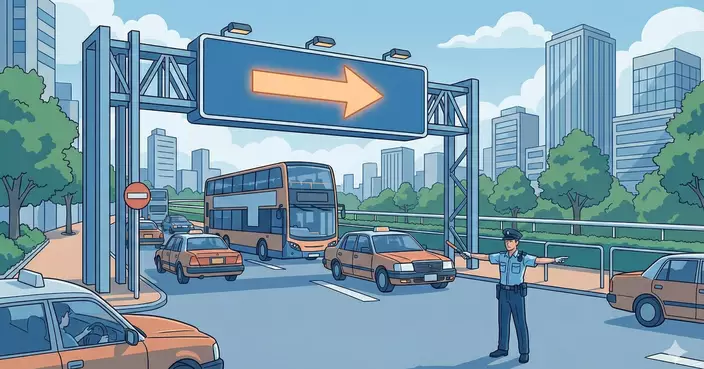
The TD has arranged dedicated public transport lanes leading directly to San Sham Road from Fanling Highway and San Tin Highway for use by franchised buses, GMBs and CBCs to the new port, bypassing San Tin Interchange and thereby enhancing the efficiency of travelling to and from the port. A public transport buffer area has also been set up near the port building. Public transport operators (PTOs) will arrange backup vehicles in the buffer area, which can proceed to the port to pick up passengers within a short time to strengthen service frequencies when necessary, aiming to expedite the dispersal of passenger flows during peak periods.
Taxis
To ensure smooth overall traffic at the port, drivers of vacant urban and New Territories taxis as well as pre-booked fleet taxis must first obtain a queue ticket at the public transport buffer area, and then proceed to respective taxi stands or the designated taxi fleet pick-up area at the port's public transport interchange (PTI) to pick up passengers in order.
As for fleet taxis, a pre-booked fleet taxi waiting area set up inside the port building features a service station and a display panel for fleet taxi arrival information. Passengers who have pre-booked a fleet taxi should first register at the service station by showing the vehicle registration mark to the fleet taxi ambassadors. The ambassadors will dynamically deploy taxis waiting at the public transport buffer area to the dedicated pick-up area to ensure passengers can board quickly and smoothly.
The Huanggang Port PTI also provides convenient facilities for passenger queueing and boarding. Service ambassadors and PTO personnel will assist passengers at major locations in choosing suitable services and boarding in an orderly manner. Additional traffic signs and road markings have been installed at the PTI and on major connecting roads such as the Lok Ma Chau Bridge.
A spokesman for the TD said, "We will closely monitor passenger demand jointly with PTOs and step up or adjust services as necessary. Passengers should refer to PTOs' notices, websites, mobile apps or heed onboard broadcasts to understand route details, stop locations and service hours.
"During the initial stage of commissioning of the Huanggang Port, traffic in the vicinity may be relatively busy. Members of the public are urged to use other land and rail BCPs based on their needs for travelling between Shenzhen and Hong Kong, and not to rush to the new port for crossing the boundary. Cross-boundary travellers who need to use the Huanggang Port should plan their journeys in advance and allow sufficient time to adapt to the new arrangements. The TD's Emergency Transport Co-ordination Centre will closely monitor traffic and public transport conditions of the new port," the spokesman added.
The TD has briefed the Traffic and Transport Committees under relevant District Councils as well as the local and cross-boundary transport trades on the traffic and transport arrangements. Members of the public and visitors may visit the TD's designated webpage "Access to Huanggang Port" for details, or heed the latest traffic news via the TD's website (www.td.gov.hk), the HKeMobility mobile app as well as radio and television broadcasts.

The Transport Department (TD) said today (October 7) that, to facilitate the redeveloped Huanggang Port coming into operation to provide 24-hour services, traffic and public transport arrangements will be implemented accordingly to provide members of the public and visitors with a convenient and smooth travel experience. The public should use other land and rail boundary control points based on their needs and not rush to the new port for crossing the boundary. Photo shows the Deputy Commissioner for Transport/Transport Services and Management, Ms Candy Kwok (second left); the Assistant Commissioner for Transport/New Territories, Miss Amy Tse (second right); the Principal Transport Officer/New Territories of the TD, Ms Vivian Kwan (first right); and the Chief Traffic Engineer/New Territories West of the TD, Ms Vilian Sum (first left). Source: HKSAR Government Press Releases