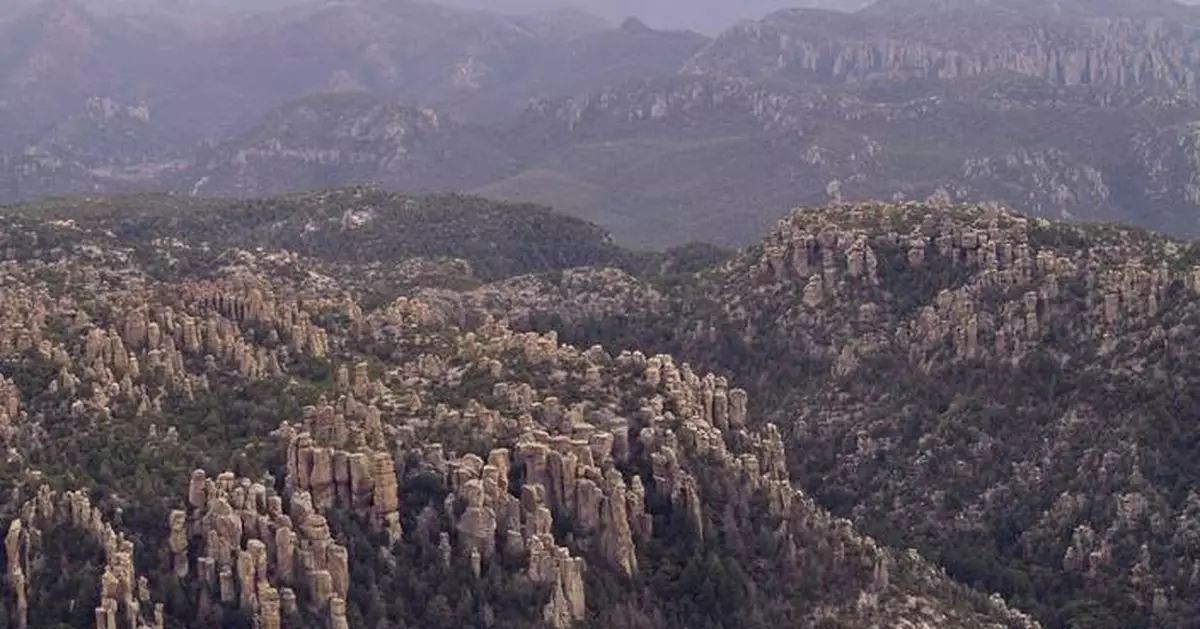
An area of towering rock spires in southeastern Arizona known among Native Americans as the Land of Standing-Up Rocks is poised to become the nation's newest national park.
Legislation to create Chiricahua National Park is expected to be sent to the White House in coming days for President Donald Trump’s signature. It passed Congress with bipartisan backing and would be the 64th U.S. national park.
The 19-square-mile (49-square kilometer) site is within the historical territory of the Chiricahua Apache tribes. It was designated a national monument in the 1920s to preserve hundreds of pinnacle-shaped rocks formed from an ancient volcanic eruption.
“We’re the Grand Canyon state, so we know about this kind of landscape,” Arizona Rep. Juan Ciscomani, the Republican sponsor of the Chiricahua National Park Act, said Wednesday. “It's hard to compare anything to the Grand Canyon, but Chiricahua holds its own. This is something that really hasn’t been discovered.”
National Park Service officials declined to say if additional staff would be hired to address an expected increase in visitors as the new designation elevates the site's profile.
The park service has undergone deep cuts to its workforce under Trump. Maintenance projects at many sites — including Chiricahua — were ranked “low priority” by officials who have instead focused on projects wanted by the White House, including repairs to the Lincoln Memorial Reflecting Pool.
For centuries the site of the proposed park was home to the Apache, nomadic tribes who often resisted European newcomers to North America. They clashed with settlers until surrendering to U.S. troops in 1886 and being forcibly removed to the San Carlos Apache reservation.
The bill creating Chiricahua National Park preserves tribal access for traditional ceremonies. It allows temporary public closures within the park to protect those cultural uses, although Ciscomani said specifics have not been decided.
San Carlos Apache tribal leaders did not take a formal position on the national park designation, a spokesperson said Wednesday. In response to questions from The Associated Press, the tribe provided its 2024 testimony before Congress, where San Carlos Apache Deputy Attorney General Justine Jimmie asked for uninterrupted access to the site.
“National parks have become so packed with tourists,” Jimmie said. “In contrast, we go to our cultural areas in what are now parks to seek sanctuary, pray, and perform ceremonies.”
Early settlers called the site Wonderland of Rocks. The name Chiricahua comes from the surrounding mountains.
The area has evidence of thousands of years of human use, according to the park service. That spans from prehistoric people to Buffalo Soldiers — U.S. troops who were Black and stationed at the monument site after the Civil War, during a government campaign against Apache leaders Geronimo and Cochise.
President Calvin Coolidge named the site a national monument in 1924 under the federal Antiquities Act. President Franklin D. Roosevelt expanded it in 1938.
It gets roughly 60,000 visitors annually.
National monuments are designed to protect specific locations and objects, such as archaeological or historical sites, whereas national parks have a broader purpose including recreation and the preservation of vast expanses of wilderness. Parks and monuments alike are managed by the park service.
Chiricahua would be the first new national park since New River Gorge National Park and Preserve in West Virginia in 2021.
The mayor of nearby Willcox, Arizona, Greg Hancock, said the change could bring more customers to its hotels, restaurants and small businesses.
The monument has a visitor center, campground and hiking trails. Park service officials declined to say if any immediate changes were planned.
The Congressional Budget Office said it would cost less than $500,000 to establish the park, but did not specify how that might be spent.
House lawmakers approved the park's creation in a voice vote in March. The Senate passed it Sept. 30 by unanimous consent.
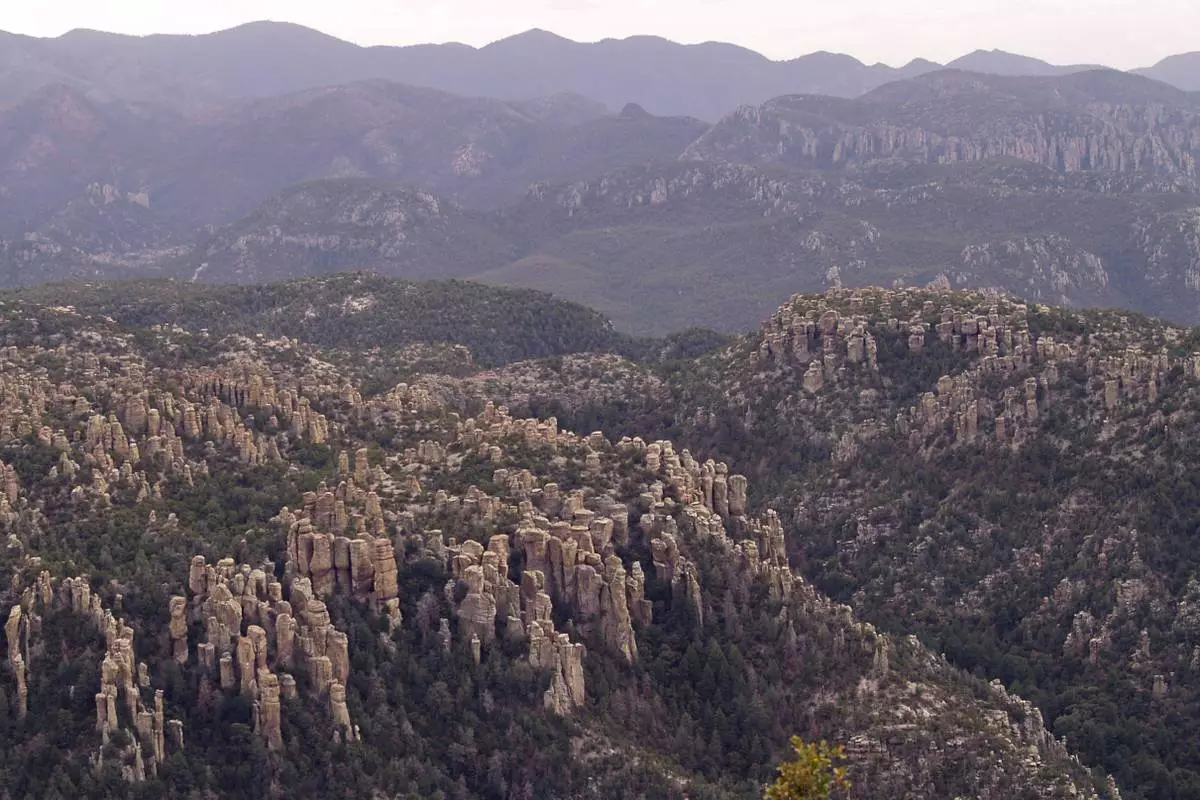
This photo provided by the National Parks Service shows Chiricahua National Park in Arizona on April 5, 2006. (Ron Kerbo/National Parks Service via AP)
NAIROBI, Kenya (AP) — Kenya’s first Ebola case, a patient who travelled for weeks by road and air through three countries without being detected until he arrived in Nairobi, has raised questions about border control and how to trace the virus across countries.
The patient, a Kenyan man, had been living in Congo for seven years and started feeling ill a month ago. He had traveled by road to Uganda, before boarding a flight to the Kenyan capital on Saturday. There, he tested positive for the Ebola virus in a hospital and died Monday.
The Africa CDC Director-General, Jean Kaseya, told The Associated Press in an interview on Tuesday that all stakeholders need to ask themselves how one case could have driven and flown to so many places without anyone noticing.
“We need to ensure that at point of entry, we have a strong surveillance system in place,” he said.
Ebola is highly contagious and spreads in the human population through contact with bodily fluids such as vomit, blood or semen, and with contaminated surfaces and materials such as bedding and clothing.
The Kenyan man drove for hours by road within Congo and across the border into Uganda. He boarded a local flight while in Congo, and it is unclear if he used any other forms of public transport.
Authorities have looked at the flight manifest of the other flight he took from Kampala, Uganda, to Nairobi, and passengers and crew onboard have been added to the contact list.
They're also looking to trace workers who cleaned the plane after it landed, as well as passengers who traveled on the same plane subsequently.
Health Minister Aden Duale told journalists on Wednesday that contact tracing was ongoing and that the number of contacts had risen to 57, with 10 already quarantined.
“Even the people who cleaned that aircraft after it landed on Saturday, they are part of the people we are tracing. The immigration and the customs officials who served that patient will also be part of the contact tracing,” he said.
Africa CDC’s Kaseya acknowledged it is a challenge. He said that the Kenyan man had not come up in existing contact lists in Congo.
“Before saying that the outbreak is under control, you need to ensure that you have a contact list where all cases are coming from,” he said.
It's also unclear how the patient was able to cross into Uganda, which has closed its border with Congo because of the Ebola outbreak.
Alan Kasujja, executive director of the Ugandan government's media center, dismissed the question, saying only that journalists should instead ask Kenya how the man was able to bypass surveillance at its airport.
“Leave Uganda out of this conversation. We don’t have Ebola here,” he wrote on X.
Two of the man's journeys were by air, while the rest were by road, covering long distances and passing through various towns and cities. On arrival in Nairobi, the patient underwent port health screening but his symptoms were not detected. He then boarded a private vehicle to Nairobi Hospital, where he was isolated and later tested positive for Ebola.
When asked how the patient was able to travel through three countries undetected, Kenya’s Director-General for Health, Patrick Amoth, said on Wednesday that a meeting was scheduled with officials from Congo and Uganda and the Africa CDC to investigate what transpired during the patient’s journey.
Kenya’s Health Ministry has heightened surveillance at border entry points and created an Ebola hotline for citizens to report symptoms related to Ebola.
The country has also designated five health facilities with a total of 241 isolation beds to manage patients, and is working to increase this capacity.
The ministry said the country has enough supplies, including personal protective equipment, and has mobilized resources since the outbreak started in May in Congo.
The ministry added that it had designated a specific gate at the country’s main airport for passengers travelling from 10 countries located within the outbreak’s epicenter.
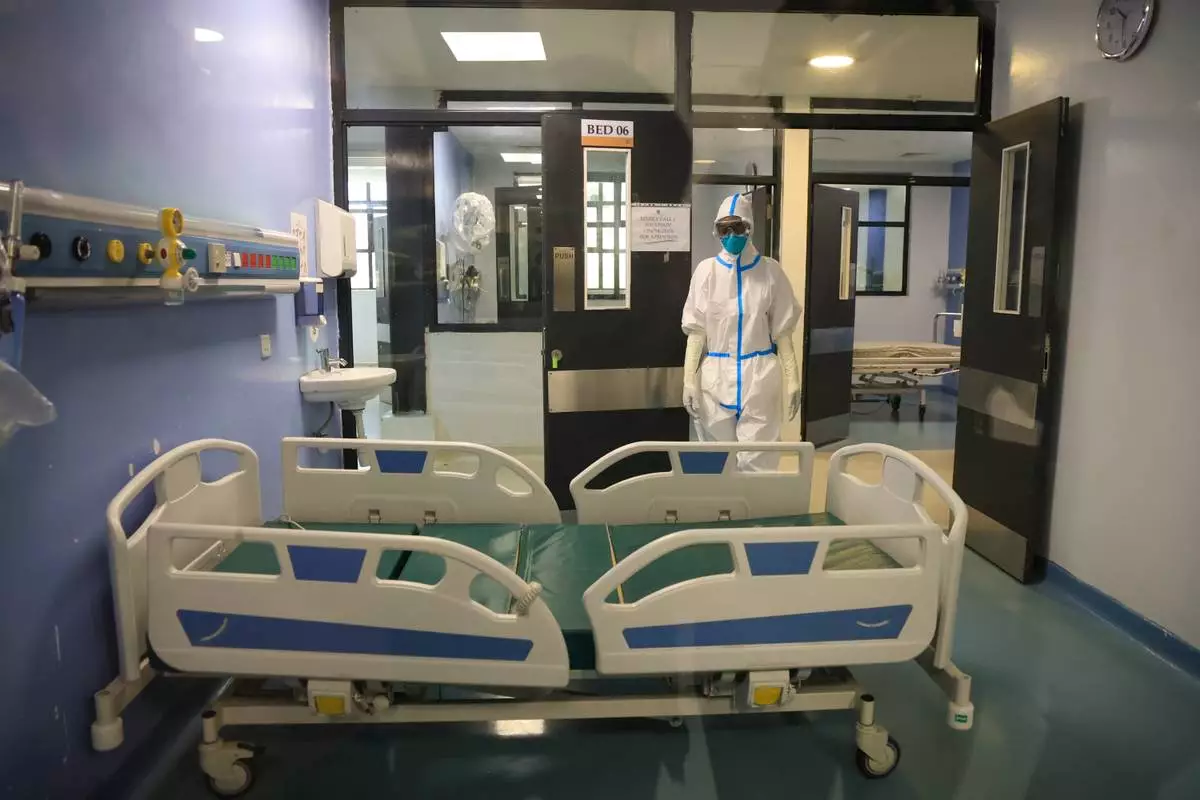
A health worker dressed in Personal Protective Equipment (PPE) stands in a room at an Ebola isolation facility at The Nairobi Hospital, Kenya, Wednesday, Oct. 7, 2026. (AP Photo/Andrew Kasuku)
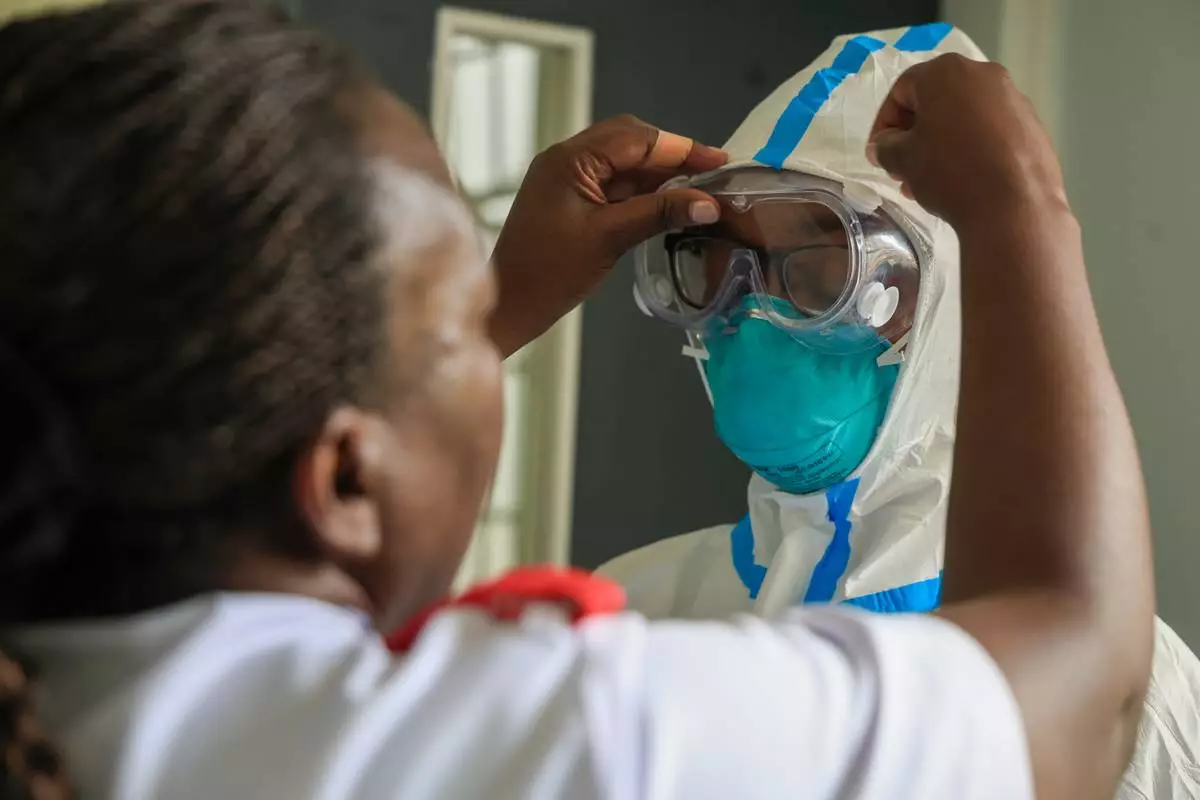
A health worker helps a colleague to put on a Personal Protective Equipment (PPE) in a room at an Ebola isolation facility at The Nairobi Hospital, Kenya, Wednesday, Oct. 7, 2026. (AP Photo/Andrew Kasuku)
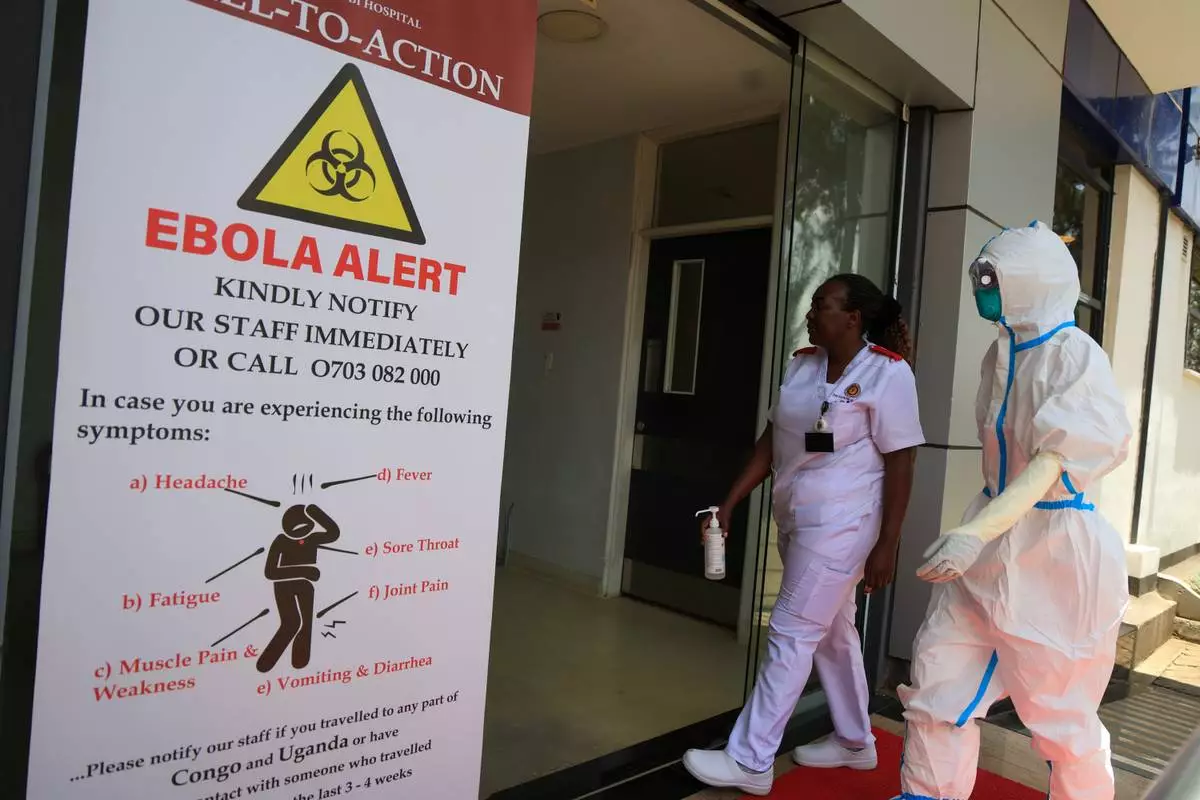
Health workers and officials walk outside a Ebola isolation facility at The Nairobi Hospital, Kenya, Wednesday, Oct. 7, 2026. (AP Photo/Andrew Kasuku)