LONDON--(BUSINESS WIRE)--Oct 7, 2026--
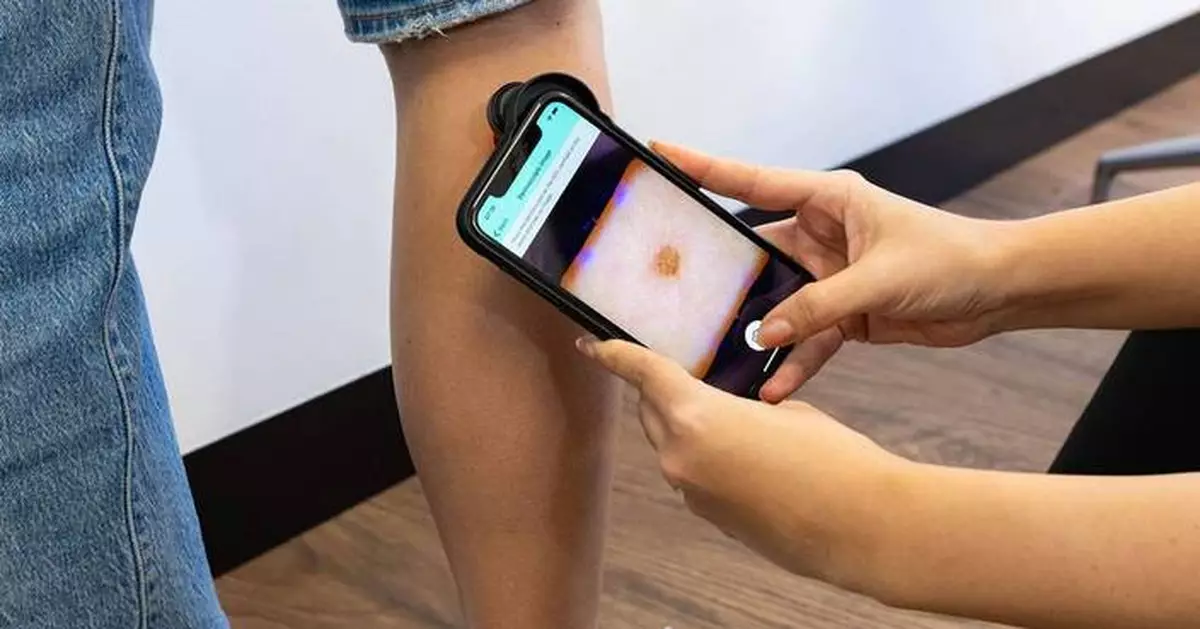
AI will be used to triage skin cancer referrals across the whole of the NHSE South East region, in the largest roll out of autonomous medical AI in NHS history. DERM, developed by Skin Analytics, will go live throughout all 18 NHS South East Trusts from autumn, extending fast, accurate skin cancer detection of a further 9 million people.
This press release features multimedia. View the full release here: https://www.businesswire.com/news/home/20261007616791/en/
DERM is the first and only AI certified for autonomous use under Class III CE marking, the highest of regulatory scrutiny for a medical device, and is built and regulated in the UK, operating under NHS data governance, clinical safety and security standards throughout.
It has been an integrated part of NHS dermatology pathways for over six years and is already in use in 25 NHS Trusts across NHS England. DERM has assessed over 250,000 patients and found more than 25,000 cancers, validated by histopathology, the diagnostic gold standard, and is independently proven to perform at least as well as a face-to-face dermatologist assessment¹.
Trained to identify patterns and structural features associated with skin cancer with a precision far beyond what the human eye can see, DERM correctly rules out skin cancer 99.5% of the time². Patients with benign lesions can then be safely and autonomously discharged at the triage stage, while anyone flagged as higher risk can be fast tracked to a specialist.
With cases of skin cancer rising, early detection is what most often determines survival rate.
Triaging patients with DERM increases access to early detection, reduces waitlists for specialist care and lowers the downstream cost to the NHS of treating skin cancer at a later, more serious stage.
Modelling for the three-year NHSE South East rollout suggests up to a third of urgent suspected skin cancer referrals could be safely discharged before a patient's first outpatient appointment - releasing an estimated 13,500 consultant hours a year, equivalent to around 27,000 additional appointments across the region. Released at the triage stage, and sustained over three years, capacity at this scale represents significant long term easing of pressure on NHS dermatology pathways. Where there is no wait for triage, treatment can start sooner for patients who need it.
Neil Daly, founder and CEO of Skin Analytics said: “We are delighted to work with NHS England South East on a landmark partnership to improve skin cancer pathways for the entire region. We've helped more than 250,000 patients find more than 25,000 cancers over six years, and this partnership takes a proven technology to a large part of the UK. The NHS is the only health system anywhere to take autonomous AI into cancer pathways at this scale, and that's a real world first that happened here.”
Daghni Rajasingam, Regional Chief Medical Officer for NHS England in the South East, said: “For patients, a suspected cancer referral can be an anxious time. Using AI safely alongside clinical expertise means many people can receive reassurance sooner, while those who need further investigation can be prioritised for specialist care. This rollout will also free up thousands of hours of valuable clinical time, helping teams focus on patients with the most complex needs and creating capacity for thousands more appointments. It is a fantastic example of how the South East is harnessing technology to turn the ambitions of the 10-Year Health Plan into better, faster care - improving access, supporting our workforce and delivering better outcomes for patients.”
Dr Alexandra Kemp is a Consultant Dermatologist and Trust Cancer Clinical Director at Amersham Hospital, part of Buckinghamshire Hospitals NHS Trust, where DERM is already in use. She said: “Across the country referrals for suspected skin cancer are continuing to rise and there are not enough dermatologists to manage these referrals. AI DERM is a clinically proven AI device that has enabled us, through image assessment, to take harmless lesions off the cancer pathway more quickly, allowing the dermatologists in Buckinghamshire to focus time on true skin cancers, and at the same time freeing up more capacity to see other common but sometimes debilitating skin conditions such as eczema, psoriasis and acne.”
The NHSE South East roll out follows Northern Ireland's decision to approve the use of DERM to autonomously assess skin cancer lesions for its population of 1.9 million people.
About Skin Analytics:
Skin Analytics was founded in 2012 by Neil Daly to help more people survive skin cancer.
It began providing teledermatology services in 2015 and has been used by over 40 NHS partners across the UK since 2020. Skin Analytics’ DERM platform has supported the assessment of more than 250,000 NHS patients and detected more than 25,000 cancers.
Clinical studies and post-market surveillance has shown that DERM correctly finds ~98% of skin cancers and rules out skin cancer 99.5% of the time.
DERM is the first and only Class III CE-marked AI as a medical device for skin cancer detection.
DERM can support the autonomous discharge of up to 40% of urgent suspected skin cancer referrals.
https://skin-analytics.com/
¹ https://www.edgehealth.co.uk/wp-content/uploads/2024/08/Evaluating-Pathways-for-AI-Dermatology-in-Skin-Cancer-Detection.pdf
²Skin Analytics post-market surveillance reports
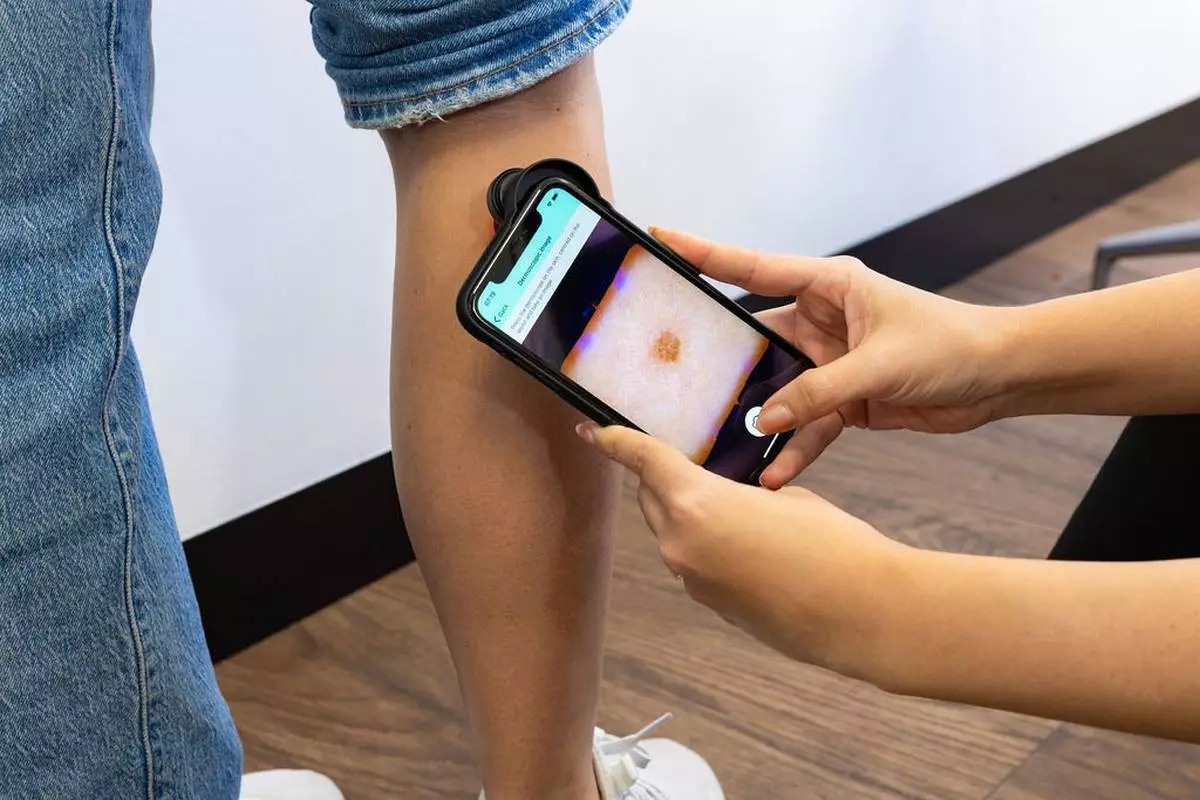
DERM will be used throughout the NHS England South East region from autumn 2026
NEW YORK (AP) — It was philanthropy, the story goes, that first bonded two of the founders behind artificial intelligence giant Anthropic.
Jared Kaplan, the San Francisco company's chief science officer, and CEO Dario Amodei were doctoral students carpooling to an event organized by an academic fellowship. As Kaplan recalls, he and Amodei spent the ride discussing “this idea of thoroughly investigating what kinds of charitable causes could do the most good.”
“We had so much largesse to, sort of, disperse,” Kaplan joked at a Hertz Foundation discussion in April 2025.
Those once-hypothetical philanthropic ambitions gained new steam as Anthropic debuted on the stock market to a record $1.5 trillion valuation. The Claude AI tool maker already plans to dedicate 5% of its shares for a new Anthropic Public Benefit Fund. Its seven co-founders say they'll give away 80% of their equity — a $112 billion commitment based on its IPO price.
Now suddenly affluent employees, many of whom will become millionaires as they sell their vested stock, may wield enough capital to make transformative donations themselves — riches that are commanding the attention of nonprofits looking to direct some sliver toward causes from global health to animal welfare.
Silicon Valley has great expectations. The napkin math suggests leading U.S. AI firms' valuations could add at least $37 billion annually in intended philanthropy, according to a widely circulated May blog post by Nan Ransohoff, head of public goods at the payments company Stripe.
“This is a once-in-a-lifetime kind of opportunity for people to really make an impact on extreme poverty,” said Peter Singer, the moral philosopher whose writings influence many tech donors.
Nonprofits aren’t counting on an immediate charitable windfall, though. Many Anthropic employees cannot sell or gift the bulk of their shares until next spring. Questions persist about the charitable priorities of these potential philanthropists whose worldviews have been shaped by the increasingly powerful AI models advancing at breakneck speed. The sector's volatility — between high borrowing costs, recent turmoil at the chipmaker Nvidia and warnings about risks to humanity — leaves skeptics doubtful about the amounts actually available to redistribute.
“The challenge is that deploying philanthropic capital is hard,” said Renaissance Philanthropy president Kumar Garg, whose nonprofit matches funders with scientific initiatives. “That’s not an automatic step.”
Will the artificial intelligence wave of wealth creation differ from previous ones that created new philanthropy?
There's reason to believe so, according to Benjamin Soskis, a historian of philanthropy and senior research associate at the Urban Institute's Center on Nonprofits and Philanthropy, even if he finds the number of tech executives who have “actually managed to empty the safe” is low.
The modern philanthropic foundation stemmed from the post-Civil War wave of industrial capitalism. Titans such as oil magnate John D. Rockefeller Sr. and steel tycoon Andrew Carnegie established bureaucratic institutions intended to address the root causes of social problems. Those were followed by the turn-of-the-century technology wealth that brought a more data-centric, risk-taking approach. The Gates Foundation launched to address pressing crises in global health and poverty.
AI wealth, according to Soskis, carries a sense of “extreme peril” and “really transformative promise” that should spur even more urgent action from this emerging class of donors.
At least one of Anthropic's co-founders will donate in the coming weeks to the Trump Accounts children's savings program, according to comments made Friday by U.S. Treasury Secretary Scott Bessent on CNBC.
Anthropic's explosive growth is also fueling some anticipation that its 5,300 employees will want to rapidly scale their charitable impact, too. A generous internal giving program adds another incentive. Employee equity gifts are matched by the company with shares of Class N common stock. Anthropic also partners with donor-advised fund vendors such as Daffy, which offer a tax-efficient tool for grantmaking without the hassle of a more sophisticated charitable foundation.
Daffy CEO Adam Nash expects this younger generation to give more quickly.
“The people working in AI see the impact AI is having already,” Nash said. “And they are giving now, right?"
One organization in particular appears poised to move those rising donation volumes.
Coefficient Giving was formed by San Francisco-based billionaire Cari Tuna and her husband, Dustin Moskovitz, a Facebook co-founder and early Anthropic investor. A spokesperson told The New York Times the couple transferred their Anthropic stake into an undisclosed nonprofit last year to avoid personally profiting.
The philanthropic funder — which has directed more than $8 billion since 2014 in support of global health, animal rights, AI safety and the effective altruism community — has been scaling its pledges. In July, Coefficient Giving increased its commitment to the grantmaker GiveWell to $1 billion.
The move reflected expectations of “considerably more future funding for this kind of work,” according to the announcement.
“We might grow a lot, in part because we want to spend faster in response to these trends,” Coefficient Giving CEO Alexander Berger said during a late July public discussion. "But there is a great deal of room for other organizations and approaches, and I do not expect us to play an overwhelmingly dominant role.”
GiveDirectly has spent months identifying the biggest barriers to rapidly growing its antipoverty work, according to Nick Allardice, its president and CEO. The tech-focused nonprofit sends cash straight to poor households with no strings attached.
Recipients must have mobile phones to receive the digital transfers. GiveDirectly offers phones for about $15, usually subtracted from recipients' first payment. So the nonprofit secured investments this year to build out a supply chain to support many more mobile phones going forward.
The group is betting that its preparations for a charitable boom will be worthwhile.
“I have this level of cautious optimism,” Allardice said. “But I can't foresee the future, and I don't know exactly what's going to happen.”
Wild Animal Initiative executive director Cameron Meyer Shorb shares those tempered expectations.
His nonprofit funds wild animal welfare research. It's the sort of work some observers predict will see the biggest upswings in support: nonprofits connected to effective altruism, a data-driven movement that prioritizes donations to causes with the greatest impact on the most living beings.
The movement's reputation took a hit when Sam Bankman-Fried, one of its leading proponents and financial backers, got a 25-year prison sentence for cryptocurrency fraud. But the ideas are rebounding in the same tech circles that could see big payouts as more AI companies go public.
Effective altruists have learned not to rely too heavily on any one funder, according to Shorb. He expects “quite a bit” of fresh support for animal advocacy and sees an outsize role for midsize donors.
He said he has connected with a couple of Anthropic employees. Perhaps more important, he said, are relationships with the philanthropic advisers who help plan donors' giving.
“As you can imagine, it’s a pretty tricky place for a soon-to-be billionaire to be to have all this potential power coming soon,” Shorb said. “As soon as anyone finds out about that, anyone who can possibly get their email or phone number will just be knocking down their door. So we’ve tried to be gentle and slow and respectful in our approach.”
Associated Press coverage of philanthropy and nonprofits receives support through the AP’s collaboration with The Conversation US, with funding from Lilly Endowment Inc. The AP is solely responsible for this content. For all of AP’s philanthropy coverage, visit https://apnews.com/hub/philanthropy.
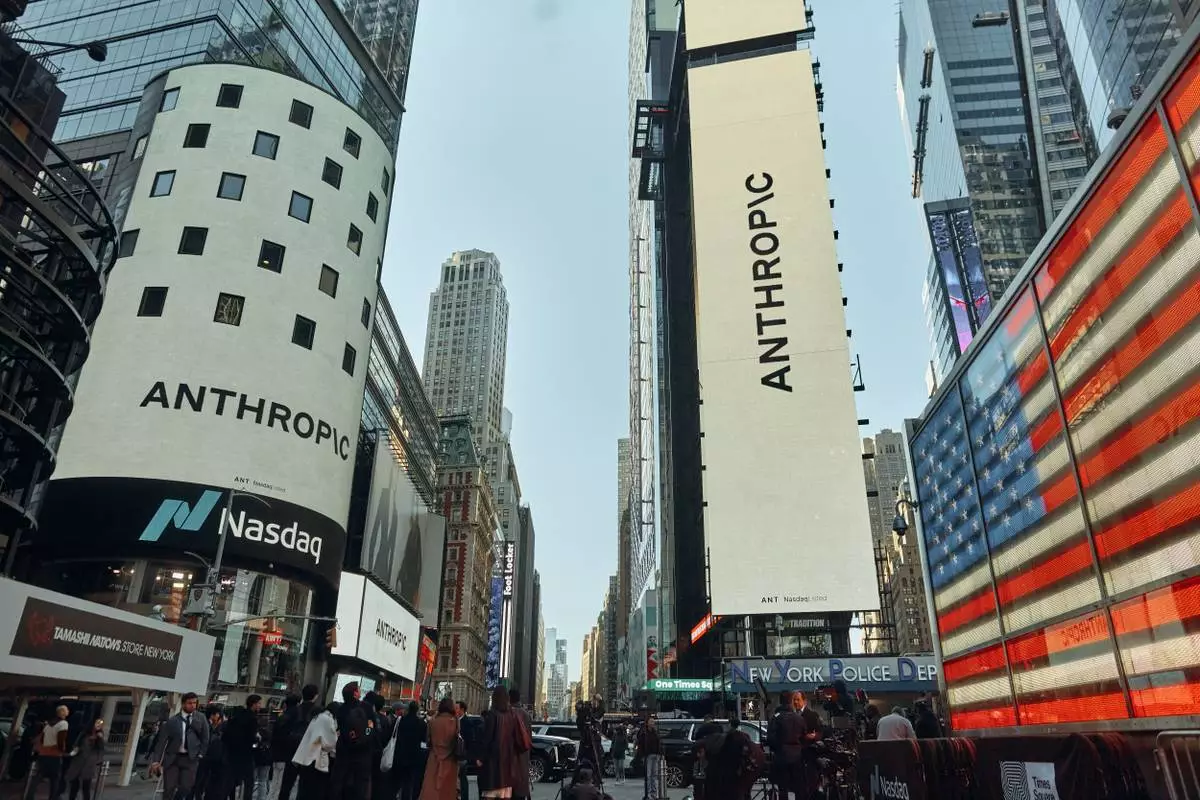
The Anthropic logo is displayed on the Nasdaq MarketSite tower as part of the Anthropic IPO in New York, Thursday, Nov. 19, 2026. (AP Photo/Andres Kudacki)
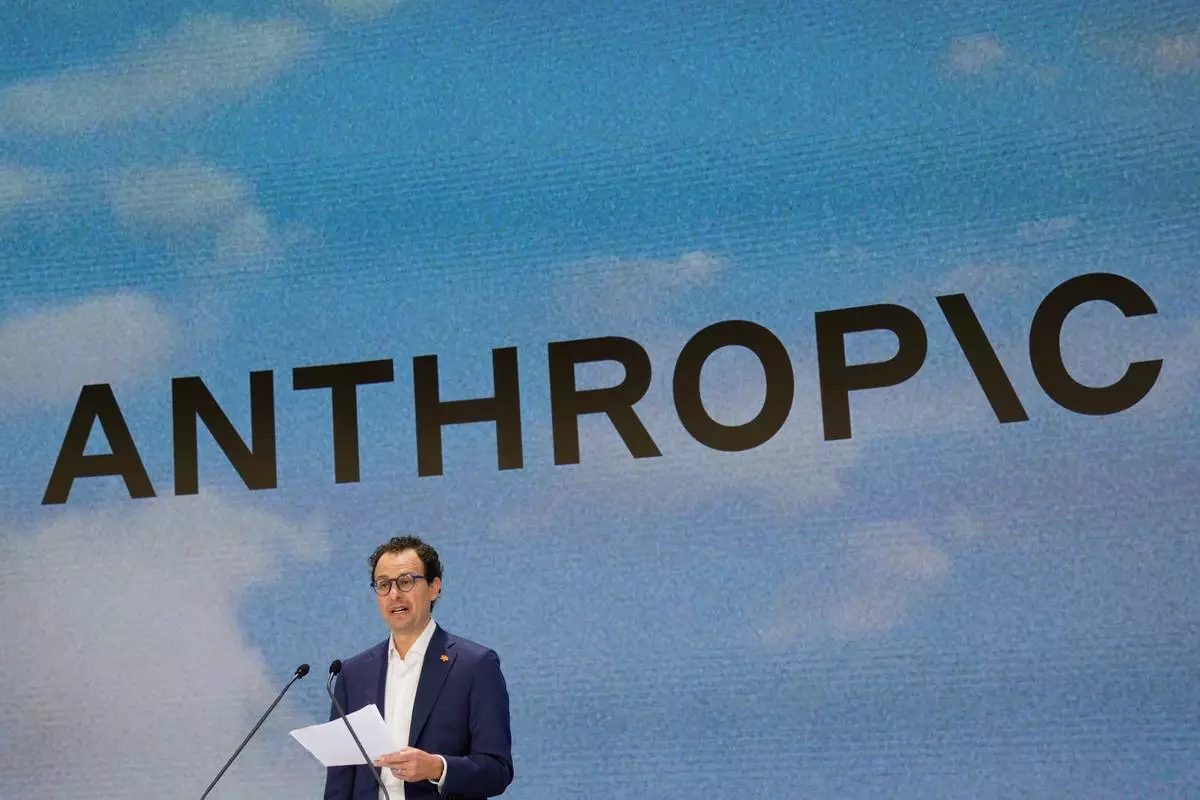
Dario Amodei, co-founder and CEO of Anthropic, speaks during the opening bell ceremony at Nasdaq MarketSite as part of the Anthropic IPO in New York, Thursday, Nov. 19, 2026. (AP Photo/Seth Wenig)