TOKYO--(BUSINESS WIRE)--Oct 7, 2026--
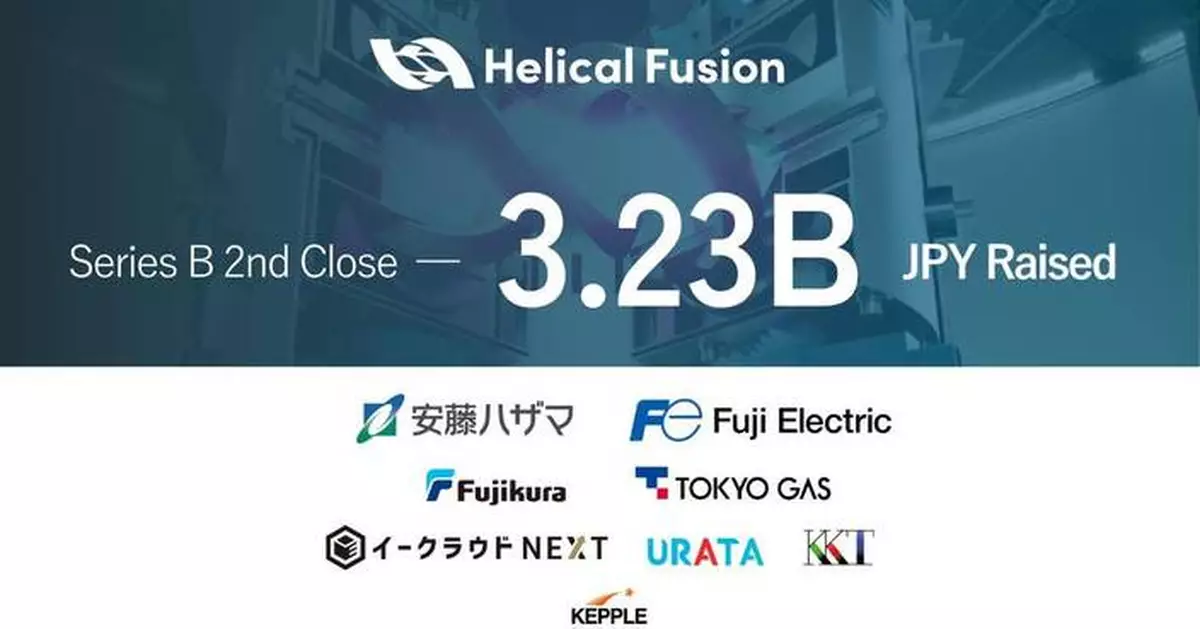
Helical Fusion Co., Ltd., a fusion energy company developing a Helical Stellarator with the goal of achieving commercially viable fusion power in the 2030s, today announced the completion of a JPY 3.23 billion (approximately USD 20.6 million) Series B second close.
This press release features multimedia. View the full release here: https://www.businesswire.com/news/home/20261007813917/en/
The round marks another expansion of the industrial coalition forming around Helical Fusion’s Helix Program. Fuji Electric Co., Ltd., one of Japan’s major electrical and industrial equipment manufacturers, has joined Helical Fusion as both an investor and an Official Partner of the Helix Program.
Other new investors in the second close include HAZAMA ANDO CORPORATION( https://www.ad-hzm.co.jp/english/ ), Fujikura Ltd.( https://www.fujikura.co.jp/en/ ), TOKYO GAS CO., LTD.( https://www.tokyo-gas.co.jp/about/profile/index.html?wovn=en# ), KKT LLC( https://www.kanemori-kkt.co.jp/ ), and URATA Co., Ltd( https://www.urata.co.jp/en/ ). The round included investments from “Ecrowd NEXT”, a fund designed for individual investors, as well as multiple corporate investors and individual investors.
Together with other funding, including the Gifu Prime Startup Support Subsidy administered by the Gifu Prefecture Industrial Economic Promotion Center, Helical Fusion’s cumulative funding has reached approximately JPY 13.15 billion (approximately USD 83.8 million), including grants and loans.
The new capital will accelerate the Helix Program, Helical Fusion’s development roadmap toward integrated demonstration with Helix HARUKA and subsequent net-electricity generation with Helix KANATA, its first fusion power plant, in the 2030s.
Bringing Power Generation Expertise into the Helix Program
The participation of Fuji Electric represents a significant expansion of the industrial capabilities being brought into the Helix Program.
Founded in 1923, Fuji Electric has built extensive capabilities across power electronics, power generation, energy infrastructure, industrial systems, instrumentation and control, and nuclear-related technologies. These capabilities span technologies required not only to create fusion conditions, but also to convert the resulting energy into electricity and operate a reliable power generation system.
Helical Fusion and Fuji Electric began working together in 2025, when the companies signed an agreement for Fuji Electric to supply power supply equipment for Helical Fusion’s high-temperature superconducting (HTS) magnet development.
Through the new capital and business alliance, the companies will broaden their collaboration toward the development of products, services, and advanced technologies required for future fusion power systems.
Fuji Electric has also joined the Helix Program Official Partners, a framework launched by Helical Fusion in April 2026 for companies that make both a strategic business commitment and a significant capital commitment to the realization of fusion power.
The Official Partners will work alongside Helical Fusion on the manufacturing and construction of Helix HARUKA and Helix KANATA and on the broader industrial infrastructure required to bring fusion energy into real-world power generation.
Series B Second Close Investors
Investors participating in the Series B second close include, in no particular order:
The participation of companies spanning electrical equipment, energy, advanced materials and infrastructure reflects the increasingly broad industrial base required to develop fusion as a complete power generation system rather than as an experimental technology alone.
From Fusion Research to Hardware Construction
Construction of Helix HARUKA, Helical Fusion’s Integrated Demonstration Device, is progressing at the National Institute for Fusion Science (NIFS) campus in Toki City, Gifu Prefecture. The device will integrate and demonstrate key technologies for Helical Fusion’s future power plant, including high-temperature superconducting magnets and blanket technologies.
More than 30 Japanese companies are contributing to its development and manufacturing. The project represents a Japanese model of public-private collaboration, bringing together NIFS’s research foundation, Japanese government support, industrial manufacturing capabilities, and Helical Fusion’s system integration around the construction of an actual fusion device.
Comment from Takaya Taguchi, Co-Founder and CEO of Helical Fusion
“The Helix Program is steadily moving forward. At the Helix HARUKA construction site, our team and industrial partners are working together every day to turn fusion technology into real hardware.
The participation of Fuji Electric and other leading companies across Japan’s energy and industrial sectors further strengthens the foundation for building a new energy industry. Fusion requires capabilities across power electronics, materials, manufacturing, power generation systems and many other fields—and bringing them together is exactly what the Helix Program is designed to do.
Japan has accumulated nearly 70 years of knowledge in Helical Stellarator research and has one of the world’s strongest manufacturing and engineering ecosystems. We intend to bring these strengths together to realize commercial fusion power and create a new global energy industry.”
The Helix Program
The Helix Program is Helical Fusion’s roadmap toward commercially viable fusion power based on the Helical Stellarator. Development is guided by three essential requirements: continuous operation, net electricity, and high maintainability.
Helical Fusion aims to demonstrate its core high-temperature superconducting magnet and blanket/divertor technologies by the end of the 2020s, followed by integrated demonstration with Helix HARUKA and net-electricity generation with its first fusion power plant, Helix KANATA, in the 2030s. A peer-reviewed conceptual design of the steady-state fusion reactor was published in Physics of Plasmas in 2023.
Building on Nearly 70 Years of Helical Stellarator Research in Japan
Helical Fusion was founded in 2021 as a spin-out leveraging research originating from Japan’s National Institute for Fusion Science.
The Helical Stellarator approach has been researched and developed in Japan for approximately 70 years. This architecture is particularly suited to continuous operation, one of the fundamental requirements for a commercially viable power plant.
At NIFS, the Large Helical Device (LHD), one of the world’s largest superconducting stellarator-type experimental devices, has accumulated extensive scientific and engineering knowledge, including plasma operation lasting 3,268 seconds—approximately 54 minutes—and plasma temperatures exceeding 100 million degrees Celsius.
Helical Fusion is building on this research foundation while developing the engineering systems required to translate the Helical Stellarator from a scientific research platform into a power generation system.
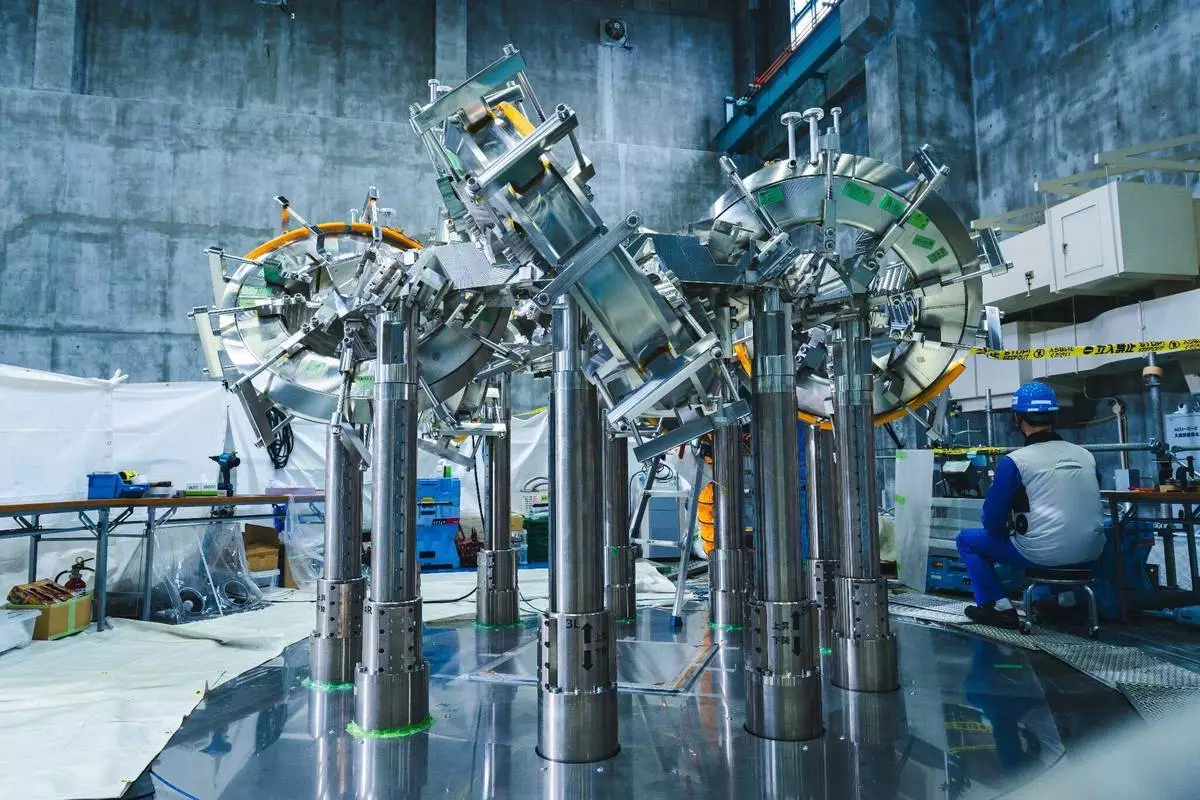
Helix HARUKA under construction at Helical Fusion’s dedicated joint research workspace on the campus of the National Institute for Fusion Science (NIFS) in Toki City, Gifu Prefecture, Japan.
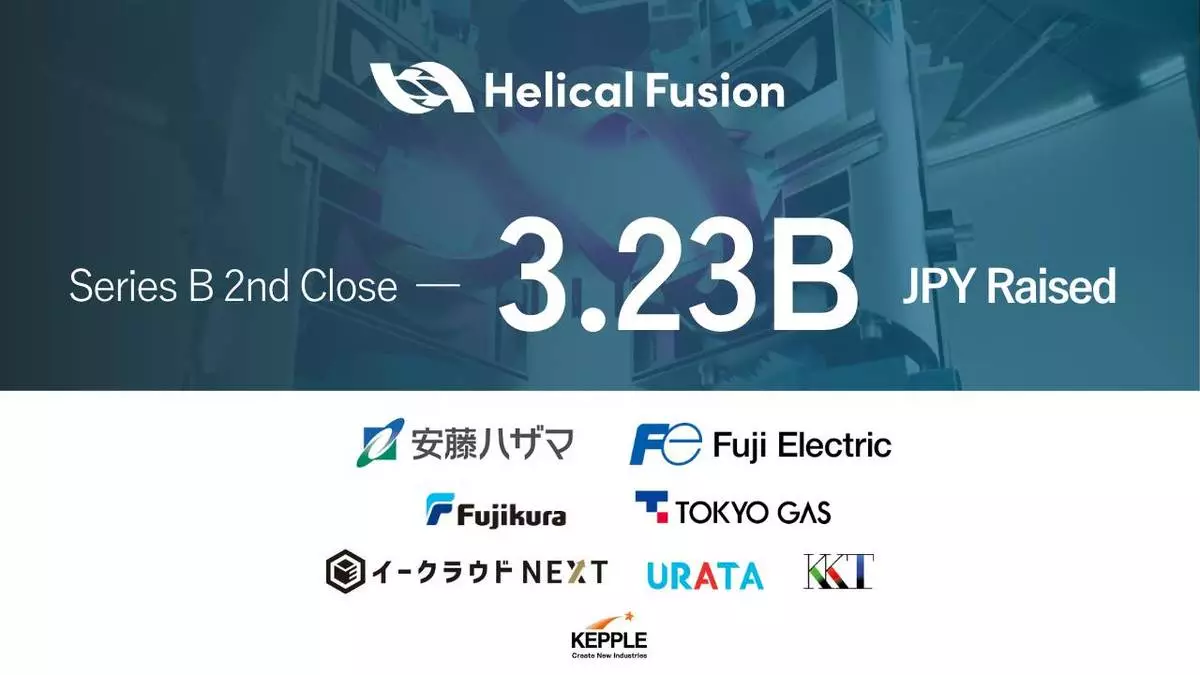
Helical Fusion and new investors for the Series B 2nd close