NEW YORK (AP) — Max Fried gave up two home runs, the New York Yankees had one taken off the board by fan interference and then their season ended Thursday night with a whimper.
After Anthony Volpe's would-be tying homer in the bottom of the sixth inning turned into a double on video review, the Yankees did not get a runner past second base. When leadoff hitter Trent Grisham struck out to end the ninth, it capped a 4-3 loss to the Tampa Bay Rays in Game 3 of the AL Division Series and a series sweep that extended the Yankees’ championship drought to 17 years.
Click to Gallery
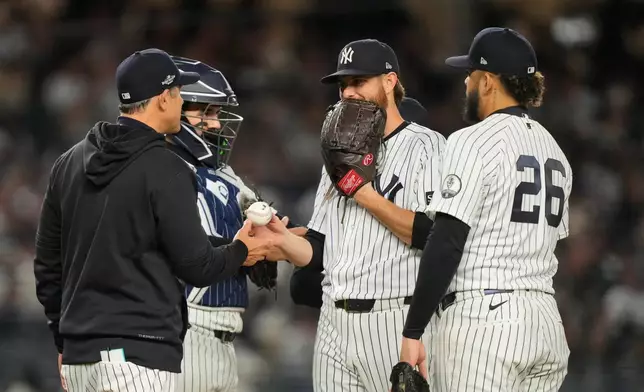
New York Yankees manager Aaron Boone, left, takes the ball from pitcher Paul Blackburn, right rear, as Luis García Jr. (26) and Austin Wells, left, rear, stand by during the eighth inning in Game 3 of baseball's American League Division Series against the Tampa Bay Rays, Wednesday, Oct. 7, 2026, in New York. (AP Photo/Yuki Iwamura)
New York Yankees pitcher Max Fried throws to the Tampa Bay Rays during the second inning in Game 3 of baseball's American League Division Series, Wednesday, Oct. 7, 2026, in New York. (AP Photo/Yuki Iwamura)
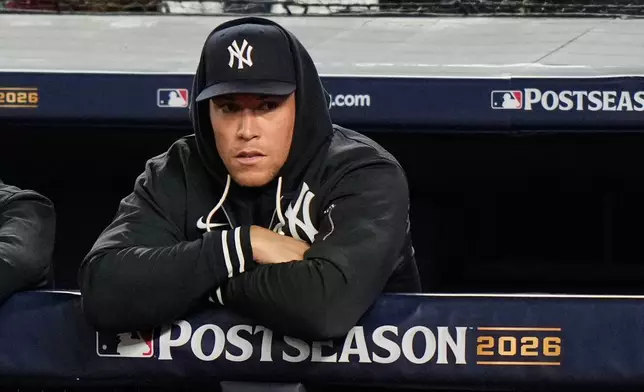
New York Yankees' Aaron Judge stands in the dugout watching play against the Tampa Bay Rays during the second inning in Game 3 of baseball's American League Division Series, Wednesday, Oct. 7, 2026, in New York. (AP Photo/Seth Wenig)
New York Yankees manager Aaron Boone, left, takes the ball from pitcher Paul Blackburn, right rear, as Luis García Jr. (26) and Austin Wells, left, rear, stand by during the eighth inning in Game 3 of baseball's American League Division Series against the Tampa Bay Rays, Wednesday, Oct. 7, 2026, in New York. (AP Photo/Yuki Iwamura)
New York Yankees' Anthony Volpe celebrates his run-scoring double during the sixth inning in Game 3 of baseball's American League Division Series against the Tampa Bay Rays, Wednesday, Oct. 7, 2026, in New York. (AP Photo/Seth Wenig)
After sweeping Boston in the Wild Card Series, New York never led against the Rays and has not advanced past a higher-seeded team in the postseason since 2020.
Without injured slugger Aaron Judge, the Yankees were one-hit and shut out in the opener, when catcher Austin Wells' baserunning blunder loomed large. Game 2 included four errors to get pushed to the brink of elimination.
The Yankees didn't go quietly — at least initially. When Fried gave up a run apiece in the third and fourth innings, the bats responded each time to tie the score.
Victor Mesa Jr. crushed Fried's 80th and final pitch for a go-ahead, two-run home run that was far from a short-porch homer like Ryan Vilade's earlier. It looked like New York would get it right back in a redemption moment for Volpe, but a Jeffrey Maier-esque moment came back to haunt the home team 30 years later.
With rookie George Lombard Jr. on base — and Wells would have been if not for a successful ABS challenge by the Rays — Volpe turned on right-hander Griffin Jax's 95.9 mph sinker and hit it 357 feet to left field. It was a matter of inches as to whether a fan reached over the fence and interfered with the ball or it would have cleared the wall entirely.
Called a home run by the umpires on the field, video review determined the fan did interfere. The replay official scored it an RBI double for Volpe with a run scored, but the run that did not turned out to be the difference.
With the air sucked out of Yankee Stadium, Spencer Jones — who singled and doubled in his first two plate appearances — struck out swinging to end the threat. The eighth started with Paul Goldschmidt reaching on a throwing error and finished with fellow pinch-hitter with Giancarlo Stanton striking out in just his second at-bat of the postseason.
Stanton got chances to swing the bat after strained calf muscles in each of his legs sidelined him since April 24. Judge was not afforded the same opportunity, left off the rosters for the AL Wild Card Series and the ALDS because of his calf injury.
The Yankees hit .130 in the series and were outscored 10-5.
Aaron Boone again fell short of a title in his ninth season as New York's manager, and some fans chanted “Fire Boone!” as they streamed to the exits.
See AP’s full MLB coverage here

New York Yankees pitcher Max Fried throws to the Tampa Bay Rays during the second inning in Game 3 of baseball's American League Division Series, Wednesday, Oct. 7, 2026, in New York. (AP Photo/Yuki Iwamura)

New York Yankees' Aaron Judge stands in the dugout watching play against the Tampa Bay Rays during the second inning in Game 3 of baseball's American League Division Series, Wednesday, Oct. 7, 2026, in New York. (AP Photo/Seth Wenig)
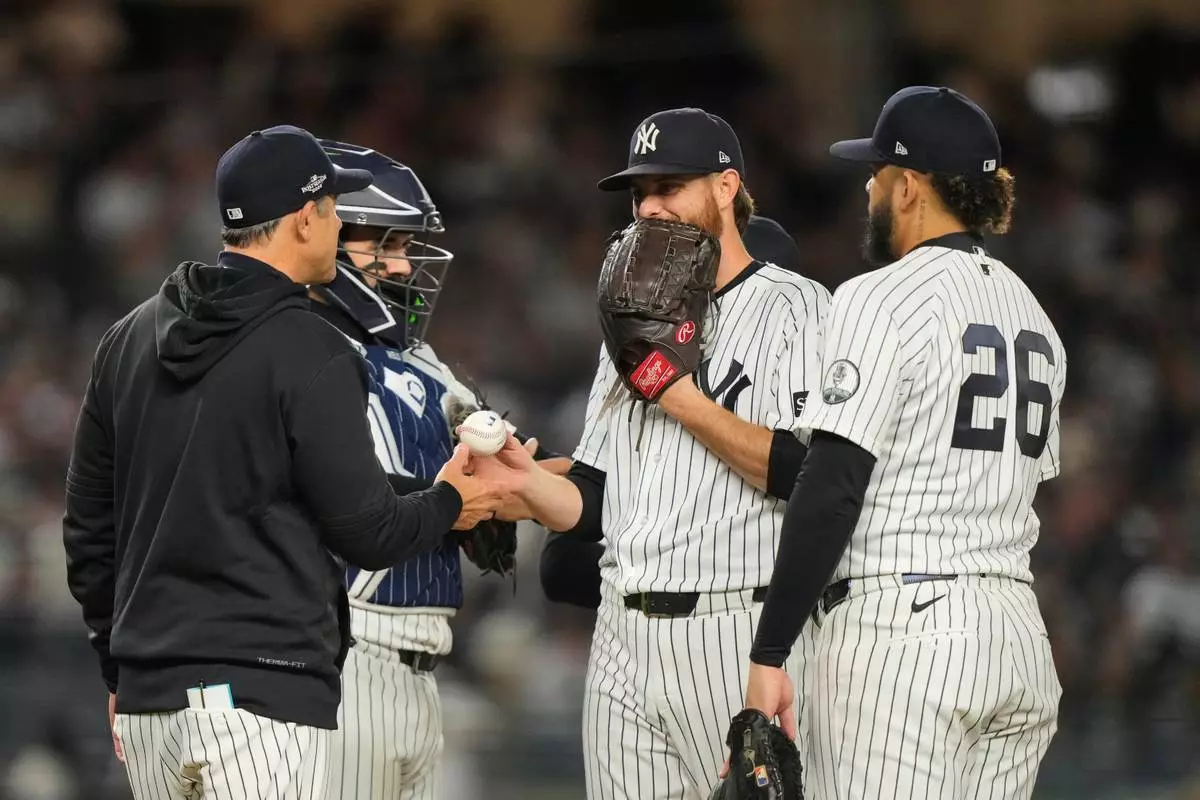
New York Yankees manager Aaron Boone, left, takes the ball from pitcher Paul Blackburn, right rear, as Luis García Jr. (26) and Austin Wells, left, rear, stand by during the eighth inning in Game 3 of baseball's American League Division Series against the Tampa Bay Rays, Wednesday, Oct. 7, 2026, in New York. (AP Photo/Yuki Iwamura)

New York Yankees' Anthony Volpe celebrates his run-scoring double during the sixth inning in Game 3 of baseball's American League Division Series against the Tampa Bay Rays, Wednesday, Oct. 7, 2026, in New York. (AP Photo/Seth Wenig)
Isaias strengthened into the first hurricane of the Atlantic season late Wednesday as it surged towards the U.S. Gulf Coast, the National Hurricane Center said.
Forecasters warned that it was on track to make landfall between the Mississippi coast and the Florida Panhandle late Friday or early Saturday and was expected to bring heavy rains and potentially flash flooding.
The center of the cyclone was about 460 miles (745 kilometers) south-southwest of the Mississippi River, with maximum sustained winds around 75 mph (120 kph), according to an advisory from the Miami-based hurricane center.
Isaias is developing more than four months into the Atlantic hurricane season, tying a 121-year-old record for the area’s latest-forming hurricane.
According to the National Weather Service, the record dates to 1905, when the year’s first Atlantic hurricane formed on Oct. 8.
The Atlantic hurricane season has been unusually quiet this year because of a strong El Niño, which disrupts storm formation over that ocean. Storm activity has been ab After Isaias (pronounced ees-ah-EE’-ahs, according to the hurricane center) became a tropical storm Wednesday in the warm waters off eastern Mexico, communities in its potential path worked quickly to prepare. Some Gulf oil wells paused production while governors in Florida and Alabama declared a state of emergency for dozens of counties.
Isaias is expected to strike along a wide swath of coastline that’s very familiar with major hurricanes.
One of the 20th century’s worst storms, Hurricane Camille, killed more than 250 people after hitting land near Waveland, Mississippi, in 1969. Hurricane Katrina in 2005 razed neighborhoods in Mississippi, flooded New Orleans and killed nearly 1,400 people. And Hurricane Michael leveled homes and buildings near Panama City, Florida, in 2018.
Ahead of the storm, oil and gas producers shut down a significant share of offshore production in the Gulf, which accounts for almost 15% of crude pumped annually in the U.S.
As of Wednesday about 25% of the oil production in the region was temporarily halted, taking about 511,000 barrels a day off the market, according to the Marine Minerals Administration. It said eight of the Gulf's 371 manned oil platforms were evacuated.
With oil prices already high, the production cuts are steep enough to affect markets, though other Gulf hurricanes have caused larger disruptions, said Jim Burkhard, global head of crude oil market research for S&P Global Energy. More concerning, he said, is whether Isaias strikes as a powerful storm near refineries.
“I would characterize the oil market risk as moderate, but rising,” Burkhard said in an email.
In Gulf Shores, Alabama, organizers canceled the National Shrimp Festival, which had been scheduled for Thursday through the weekend. The event drew an estimated 325,000 people last year. Gulf Shores and Orange Beach issued a statement encouraging people in low-lying areas to voluntarily evacuate.
Gulf Shores resident Maranie Adams gathered water and other supplies as her family moved belongings, including a hot tub motor, to higher ground.
Adams said she, her husband and two adult sons planned to ride out the storm at home, roughly a half-mile from shore, sheltering indoors alongside their flock of chickens.
“We’re having to get crates to bring them into the house so they don’t blow away,” Adams said. “It’s going to be noisy.”
Alabama Gov. Kay Ivey issued a state of emergency for 40 counties, saying on the social platform X that, “While I hope for minimal impacts, we must take preparations seriously.”
Florida Gov. Ron DeSantis declared one for 25 counties in the Panhandle and Big Bend regions. The declaration activates the state's emergency management plan for hurricanes, allowing officials to deploy disaster responders and equipment. The state also planned to deploy a Miami-based urban search and rescue task force.
In Pensacola, electric utilities were pre-positioning crews to quickly repair any power outages. City officials provided sand for residents to fill sandbags to protect their homes against flooding. And Mayor D.C. Reeves urged people to check on older adult neighbors and others who might need help.
“Obviously no need to panic at this point,” Reeves told a news conference. “This is really about preparation.”
Rico reported from Atlanta, and Collins from Hartford, Connecticut. Associated Press journalists Russ Bynum in Savannah, Georgia, Julie Walker in New York and Hallie Golden in Seattle contributed to this report.
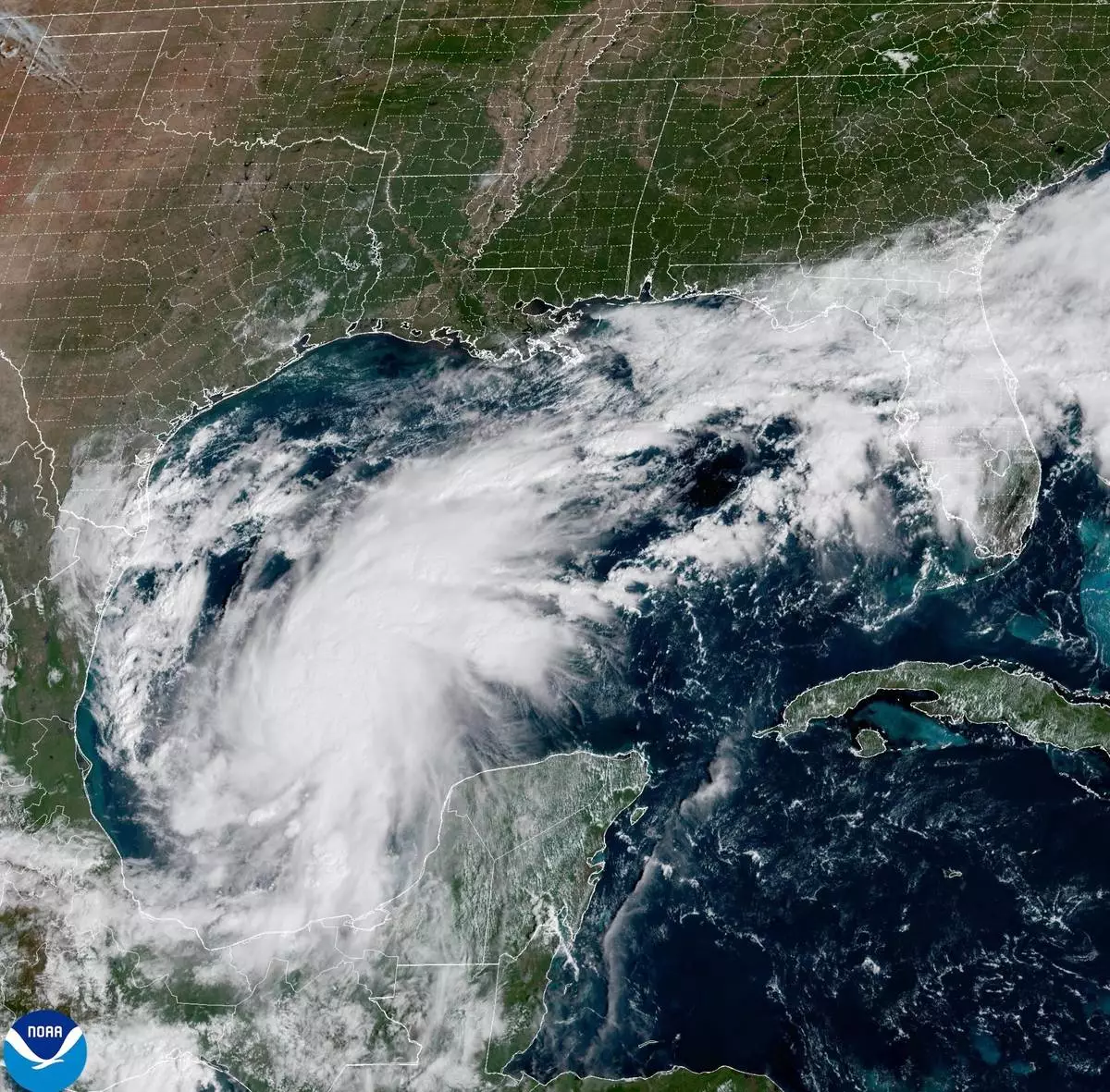
This satellite image from the National Oceanic and Atmospheric Administration shows Tropical Storm Isaias off the eastern coast of Mexico on Wednesday, Oct. 7, 2026. (National Oceanic and Atmospheric Administration via AP)
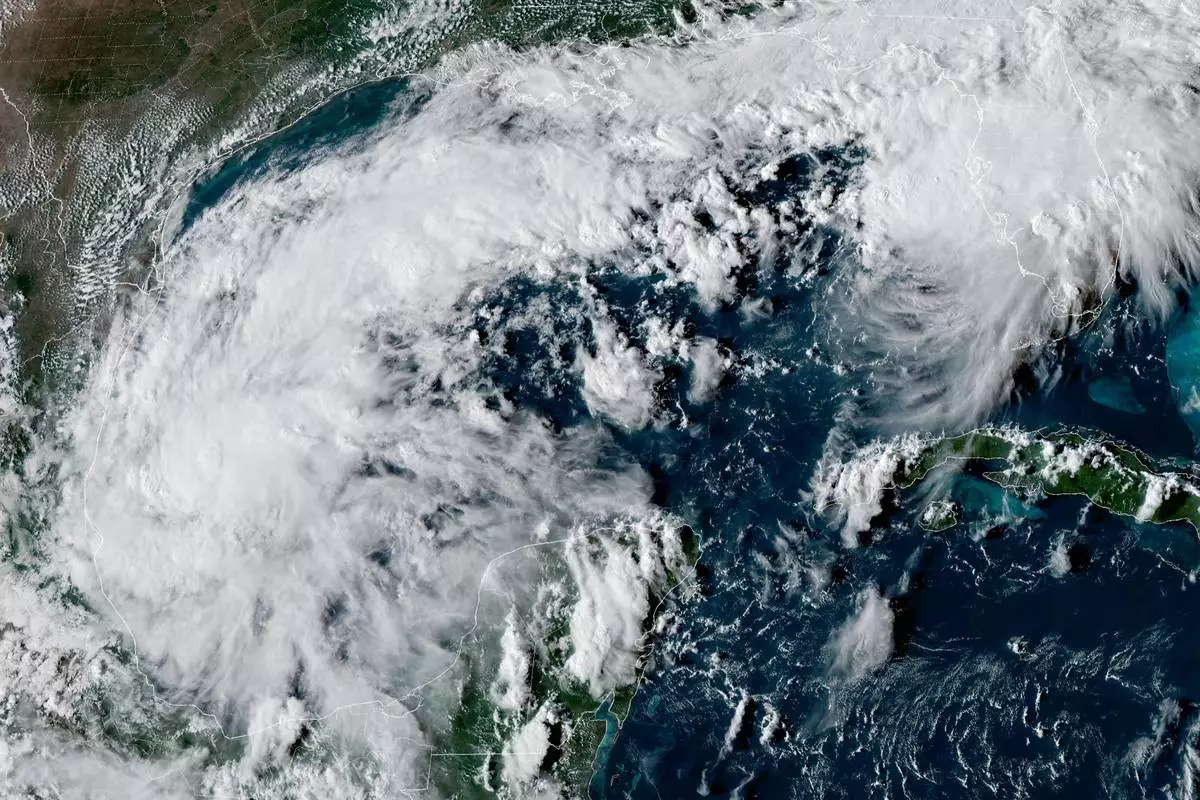
This satellite image from the National Oceanic and Atmospheric Administration shows Tropical Depression Nine forming over the Gulf of Mexico on Tuesday, Oct. 6, 2026. (NOAA via AP)