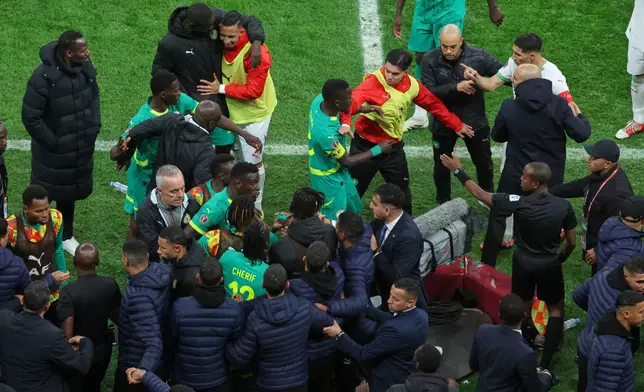
Senegal and Morocco played a chaotic Africa Cup of Nations final in January and they contest the title again Thursday — this time at the Court of Arbitration for Sport.
A turbulent match, provoking violent clashes between Senegal fans and Moroccan police, and a hugely controversial fallout will be re-litigated at sport’s highest court in Switzerland nearly nine months after the referee’s final whistle blew in Rabat.
Click to Gallery
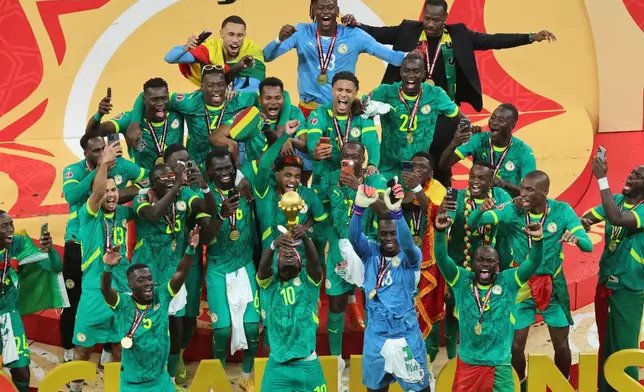
FILE - Senegal's Sadio Mane holds the trophy aloft as he celebrates with teammates after winning the Africa Cup of Nations final soccer match between Senegal and Morocco in Rabat, Morocco, Jan. 18, 2026. (AP Photo/Youssef Loulidi, File)
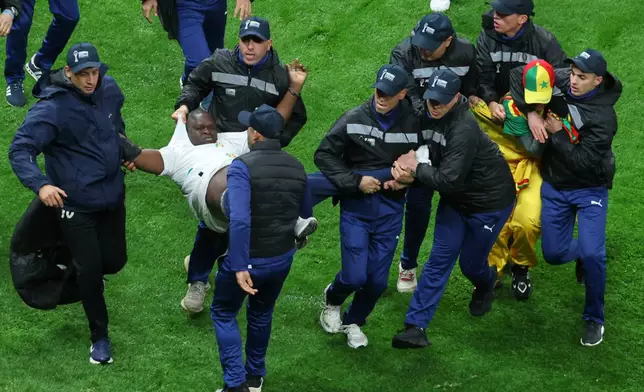
FILE - Senegal supporters are taken from the stadium by security officers after a controversial penalty was awarded to Morocco late on during the Africa Cup of Nations final soccer match between Senegal and Morocco in Rabat, Morocco, Jan. 18, 2026. (AP Photo/Youssef Loulidi, File)
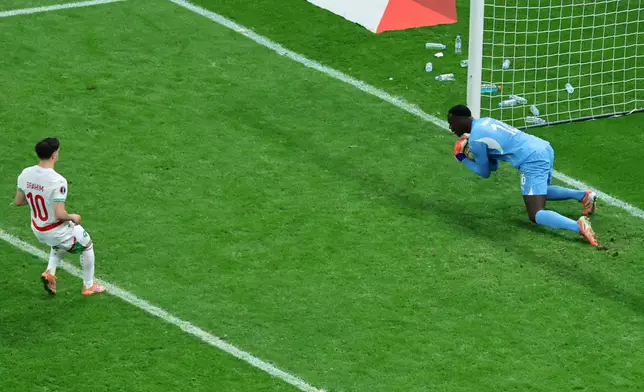
FILE - Senegal's goalkeeper Edouard Osoque Mendy saves a penalty from Morocco's Brahim Abdelkader Díaz during the Africa Cup of Nations final soccer match between Senegal and Morocco in Rabat, Morocco, Jan. 18, 2026. (AP Photo/Youssef Loulidi, File)
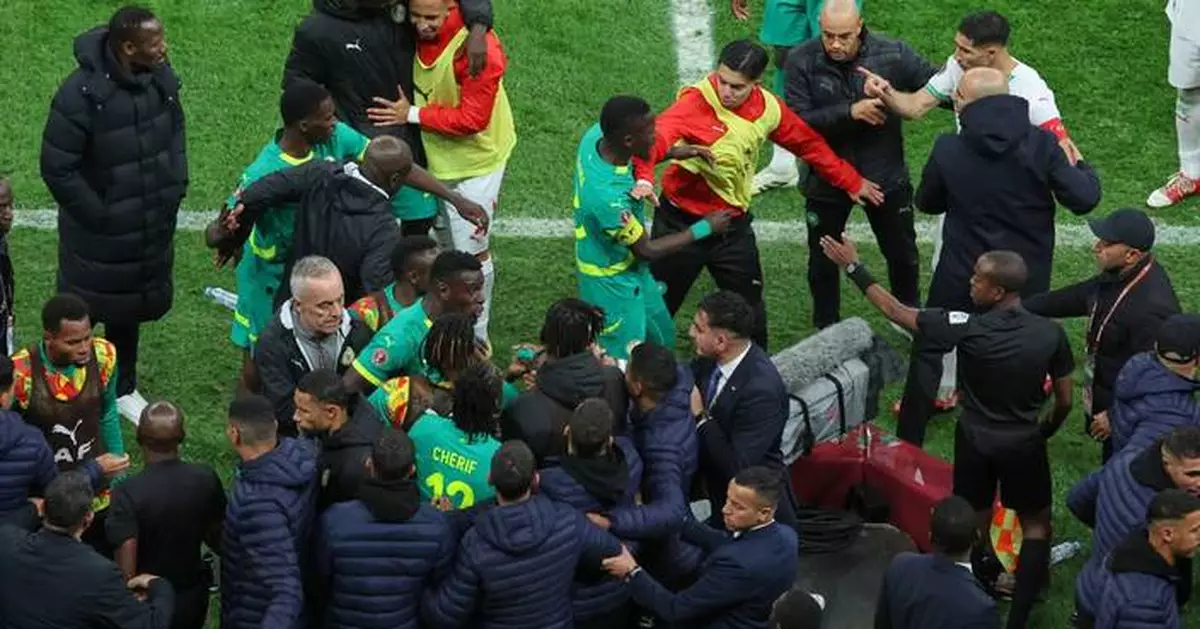
FILE - Players from both sides clash after a controversial penalty was awarded to Morocco late on during the Africa Cup of Nations final soccer match between Senegal and Morocco in Rabat, Morocco, Jan. 18, 2026. (AP Photo/Youssef Loulidi, File)
The authority of that referee, Jean-Jacques Ndala of Congo, could be decisive in Senegal’s appeal to regain the trophy that was stripped from players who earned it on the field of play with a 1-0 win over Morocco after extra time.
The result was overturned in March to a 3-0 win for Morocco by a Confederation of African Football (CAF) appeals panel because Senegal’s team walked off to protest a penalty being awarded, causing a 15-minute delay in play.
A one-day appeal hearing was scheduled with three judges behind closed doors Thursday at CAS headquarters in Lausanne.
No target date has been set by the court for a verdict that should finally crown the champion of African men’s soccer. The next AFCON tournament kicks off in June, co-hosted by Kenya, Tanzania and Uganda.
Leaders of the Senegalese and Moroccan soccer federations were expected to skip the hearing that clashes with a three-day CAF soccer summit in Cape Verde being attended by FIFA President Gianni Infantino.
Soccer’s rule book, The Laws of the Game, is clear about the referee’s decision-making power.
“The decisions of the referee regarding facts connected with play, including whether or not a goal is scored and the result of the match, are final,” Law 5.2 states.
Senegal beat host nation Morocco in a game eventually completed to referee Ndala’s satisfaction, despite the chaos.
The referee restarted play once Senegal’s players had returned to the field after protesting a penalty kick awarded to Morocco deep in stoppage time.
Before the referee could decide to abandon the game, which would have gifted the title to Morocco, Senegal’s star forward Sadio Mané helped persuade his team to finish the game as tensions rose in the stadium.
The game restarted with the spot kick that could have won Morocco a first AFCON title since 1976.
What Brahim Díaz did next entered soccer history. The Real Madrid forward placed a delicate slow chip shot, designed to deceive the goalkeeper who typically dives to one side and watches the ball slowly arc into the middle of the goal.
Senegal goalkeeper Édouard Mendy stood up straight and easily caught the ball. In the stadium VIP section, footage showed a visibly shocked Moroccan Prince Moulay Rachid sitting with FIFA's Infantino.
The game went into extra time, and four minutes later Senegal midfielder Pape Gueye surged forward to fire a rising shot into the Morocco net. It was the only goal.
More than $1 million in total fines for the two federations, plus players and Senegal coach Pape Thiaw, were imposed 11 days after the game by Cairo-based CAF disciplinary judges.
The judges dismissed a request by Morocco to have the result annulled and be declared the winner because of the Senegalese walk-off.
There were appeals to CAF and, two months after the final, Senegal was ruled to have forfeited the game.
CAF appeal judges cited AFCON tournament rules that if a team “refuses to play or leaves the ground before the regular end of the match without the authorization of the referee, it shall be considered loser and shall be eliminated for good from the current competition.”
Senegal's government promised to help “pursue all appropriate legal avenues” to regain the title and called for an investigation “into suspected corruption” within African soccer.
The case fueled the sense that 2030 World Cup co-host Morocco has extensive influence within CAF and FIFA.
In May, Morocco's King Mohammed VI pardoned 18 Senegalese soccer fans who were jailed over the disorder in the Rabat stadium.
See AP’s full soccer coverage here
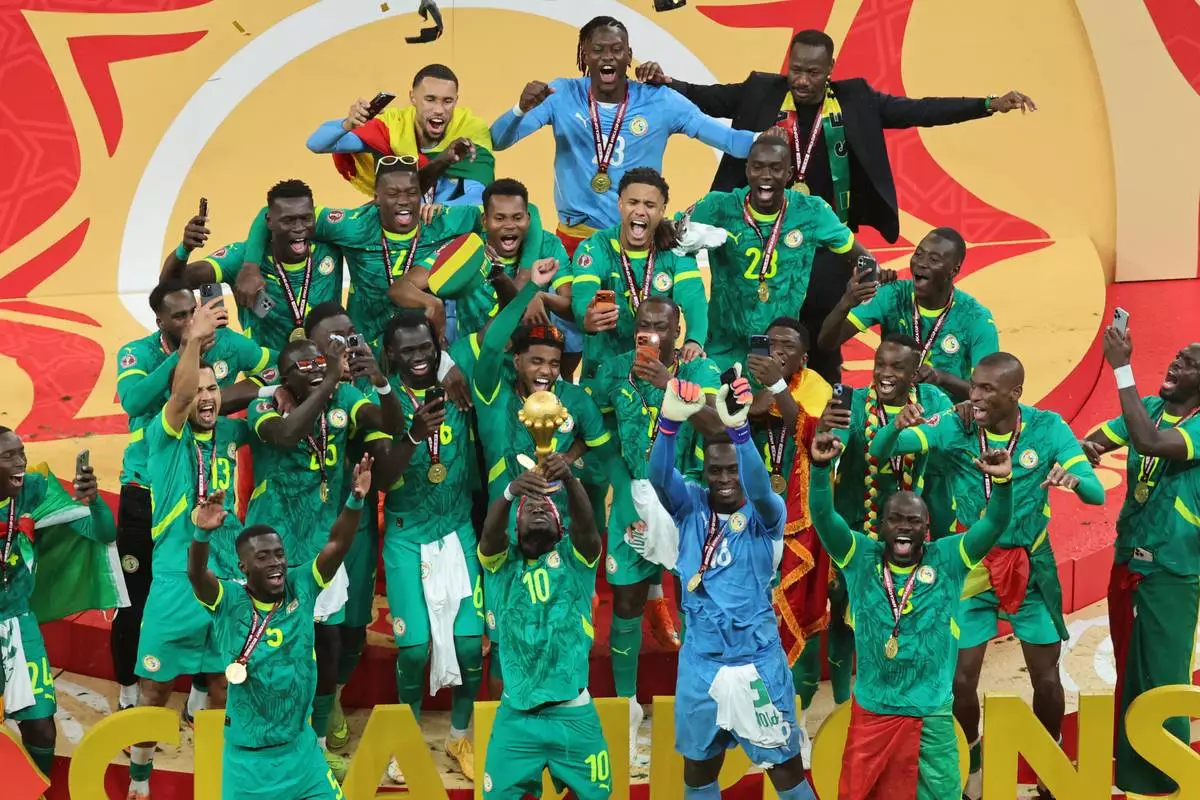
FILE - Senegal's Sadio Mane holds the trophy aloft as he celebrates with teammates after winning the Africa Cup of Nations final soccer match between Senegal and Morocco in Rabat, Morocco, Jan. 18, 2026. (AP Photo/Youssef Loulidi, File)
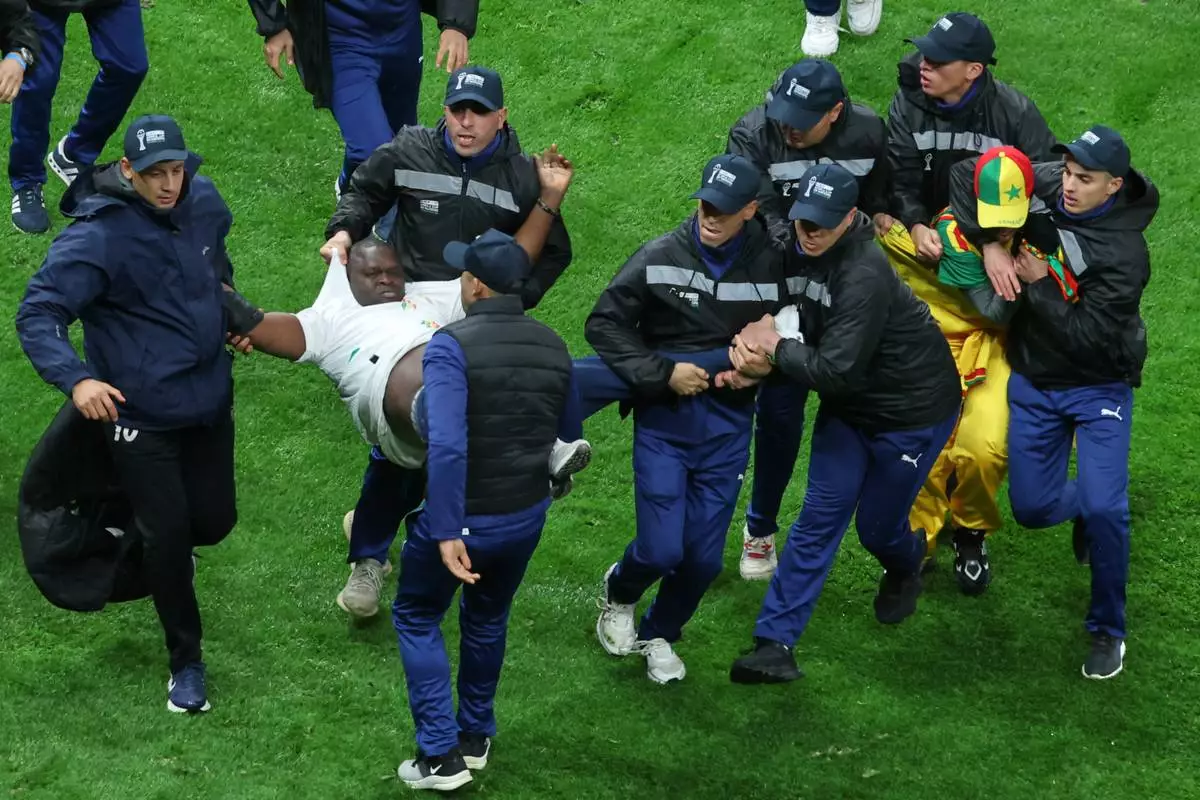
FILE - Senegal supporters are taken from the stadium by security officers after a controversial penalty was awarded to Morocco late on during the Africa Cup of Nations final soccer match between Senegal and Morocco in Rabat, Morocco, Jan. 18, 2026. (AP Photo/Youssef Loulidi, File)
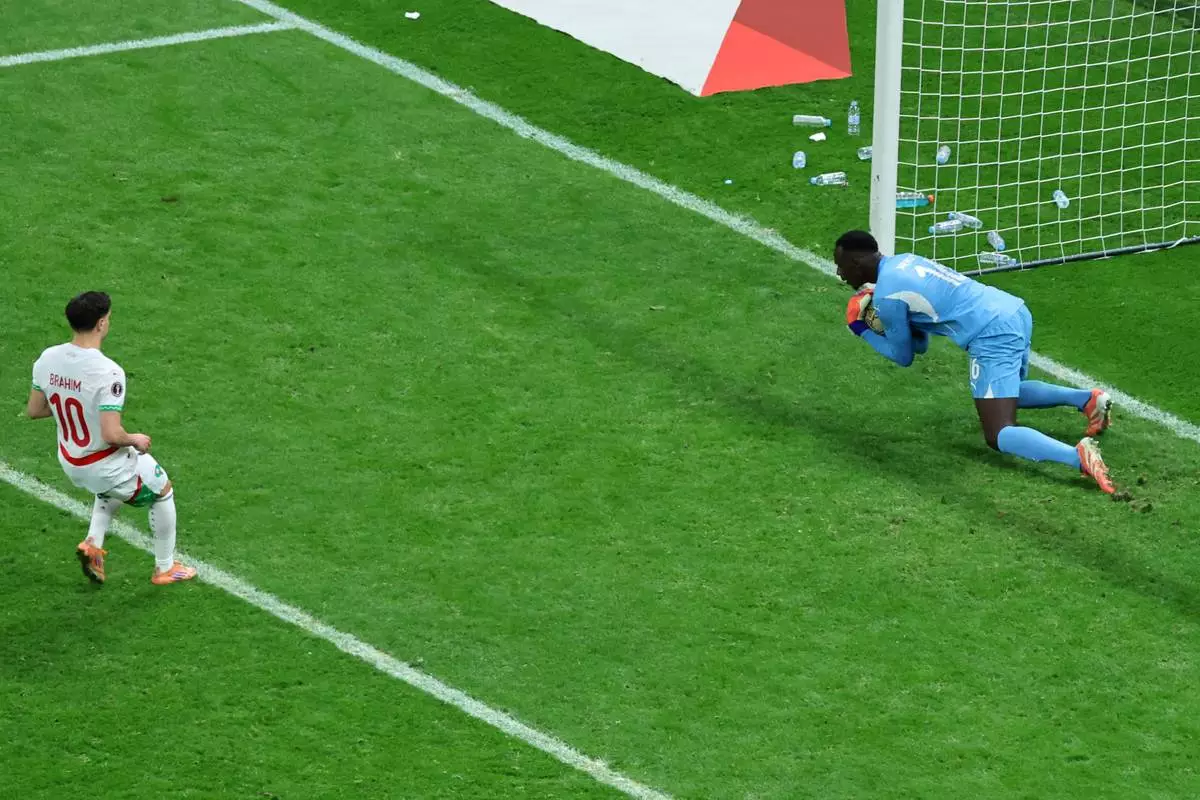
FILE - Senegal's goalkeeper Edouard Osoque Mendy saves a penalty from Morocco's Brahim Abdelkader Díaz during the Africa Cup of Nations final soccer match between Senegal and Morocco in Rabat, Morocco, Jan. 18, 2026. (AP Photo/Youssef Loulidi, File)
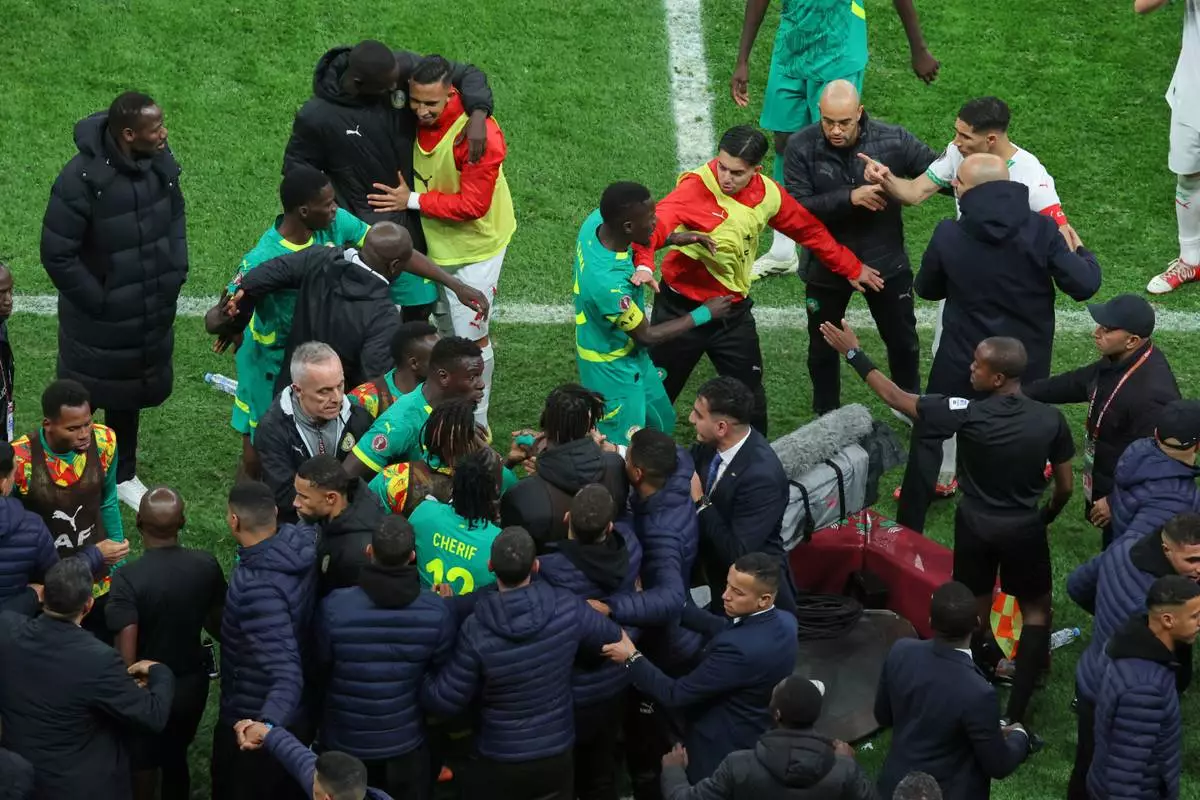
FILE - Players from both sides clash after a controversial penalty was awarded to Morocco late on during the Africa Cup of Nations final soccer match between Senegal and Morocco in Rabat, Morocco, Jan. 18, 2026. (AP Photo/Youssef Loulidi, File)
PARIS (AP) — The police tear gas grenade shattered the 14-year-old’s jaw and many of his teeth. The officer who fired it was taken into custody a week later and charged with violent mutilation, punishable by up to 15 years in prison. Following surgery, the boy cannot speak and can only eat with a straw, his mother says.
Other adolescents have also suffered life-changing injuries blamed on police weaponry during nationwide protests by high school students demanding more funding for run-down schools. In the former mining town of Lens, a 15-year-old lost a hand in an incident involving a police stun grenade. In Tours, in the wine-making Loire region, the prosecutor there says a police riot-control round is suspected in the partial blinding of a 16-year-old.
Beyond physical wounds, the massive use of police arrests and tactics that government critics and human rights campaigners allege have been unnecessarily violent is giving a generation of French schoolchildren — and soon-to-be voters — a real-life education about state power and their rights as citizens, and how the two sometimes clash.
“It politicizes you at an incredible speed,” said Alexis Baudelin, a Paris attorney for more than a dozen youngsters taken into custody.
“For many of them — for all of them — this was one of the first times that they'd taken part in a demonstration, coming together in a public space to voice demands they considered legitimate.”
According to the Interior Ministry, police have made more than 6,600 arrests — mostly of people under 18 — since protests began snowballing last week, including 488 people detained during nationwide demonstrations Tuesday. The movement demanding increased funds and more replacement teachers for schools started in a Paris-region high school in mid-September.
Lawyers and researchers who study French policing caution that the muscular response could spawn disillusioned young adults soured on the Republic and its promises of “ Liberty, Equality, Fraternity. ” Police have been less forgiving with teenage protesters than they previously were when farmers, a powerful lobby in France, doused government buildings with manure, blocked roads and set fires.
Baudelin, the lawyer, said his young clients have had a crash course in "unrestrained violence from the police.”
“Being locked up for hours and hours with nothing, in cells that are for the most part extremely unsanitary, in police stations that smell terrible, where you can’t sleep, with police officers telling you that if you don’t talk, if you don’t tell the truth, threatening you, telling you that your life is going to be ruined," he said.
“It’s an experience that can be deeply traumatic and is completely out of proportion."
Amid a growing outcry, Interior Minister Laurent Nunez announced Wednesday that the model of stun grenade suspected of mutilating the teenager in Lens will no longer be used against high schoolers, in light, he said, of a "strong possibility" that such a weapon was involved in ripping off the pupil's hand.
“We need to understand exactly what happened,” Nunez said.
Still, he has also defended police actions as proportionate in “almost all cases.” He says police have been obliged to intervene when protests led to rioting, vandalism and other violence, and have done so mindful that they're largely dealing with children.
“You don’t handle a high schoolers’ movement in the same way as one by adults,” the minister said to broadcaster RTL.
In the case of the 14-year-old with a smashed jaw and teeth, the officer who fired his grenade launcher directly at him during a protest in Saint-Ouen l’Aumone, northwest of Paris, said during questioning in custody that he acted in “a fraction of a second” to protect a female colleague who'd exchanged blows with the boy, according to a statement from the prosecutor's office leading the investigation.
It described the officer's actions as disproportionate, resulting in a preliminary charge against him of violence by a public official causing mutilation or permanent disability. Suspended from duty and barred from carrying a gun, he is the first officer facing potential prosecution in 18 investigations opened so far into suspected police misconduct during the protests.
The boy, Eden, sent his mother a video from outside his school, showing police and some protesters, just moments before the officer shot him with the gas grenade, she said, speaking to The Associated Press and other media on condition that she not be identified to preserve the anonymity of her child.
But when she then called him, it was one of his classmates who answered, screaming that her son had been hit in the face and was on the ground, bleeding with his jaw and top teeth broken and bottom teeth "completely ripped out,” she said.
“It’s shameful, it's appalling, it’s violent, it’s disgusting, it’s despicable — I could give you a whole list of words," she said. "They are dealing with children. And children demanding what? Simply better conditions in which to study.”
In the crowds that demonstrated in Paris on Tuesday, marching boisterously from one city square to another, AP found three Paris-region teenagers who said they were arrested, handcuffed, searched, held in custody but then released with no criminal charges last week.
Samy and Warkya, both 17, said they were detained together with another friend. They believe that police picked on them because of their color. Warkya and the other friend are Black and Samy described himself as Arab. French officials have repeatedly denied that there is racism in the police ranks. Prime Minister Sébastien Lecornu said in parliament this week that such accusations are “lies.”
Samy said the officers who stopped them said, “'You, you and you, you’re coming with us.'" There was no apparent motive, because “we weren't wearing hoodies, we had nothing on us, our faces were visible," he said.
“Here in France, they don’t listen to us. They would rather send in the police than listen to us and put measures in place to improve our daily lives," he said.
Warkya said her first experience of police custody only reinforced her determination to protest but also taught her to run when officers appear.
“The police are more powerful than us," she said. “There's nothing we can do.”
Sam McNeil in Brussels contributed to this report.
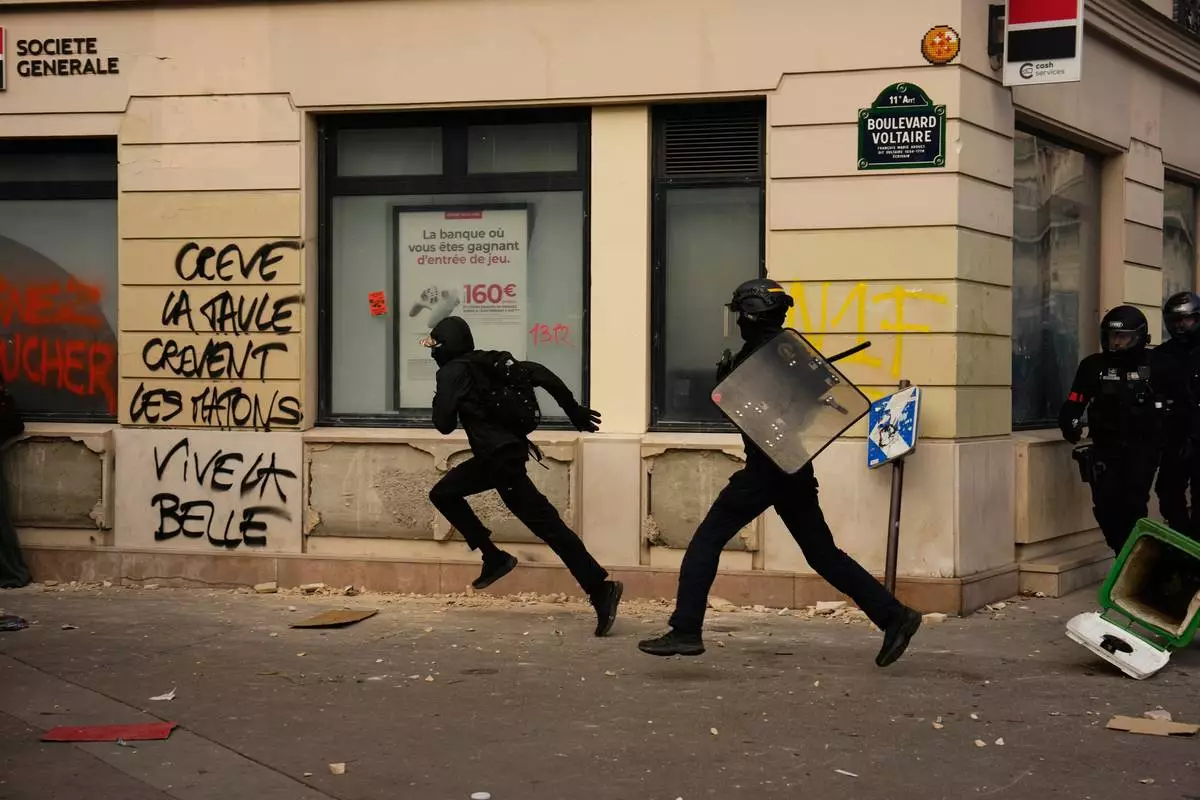
A police officer chases a protester during scuffles following a demonstration against under-resourced schools, in Paris, Tuesday, Oct. 6, 2026. (AP Photo/Teresa Suarez)
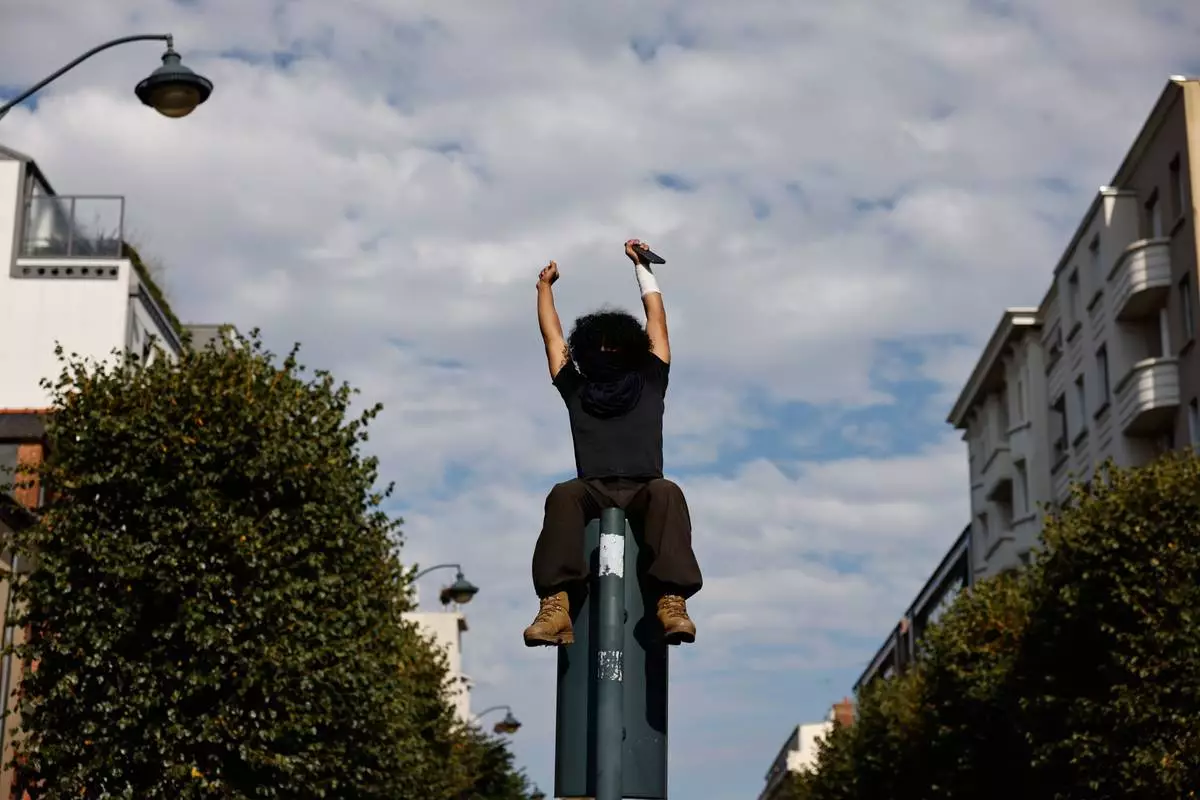
A student attends a protest against under-resourced schools, in Rennes, western France, Tuesday, Oct. 6, 2026. (AP Photo/Jeremias Gonzalez)
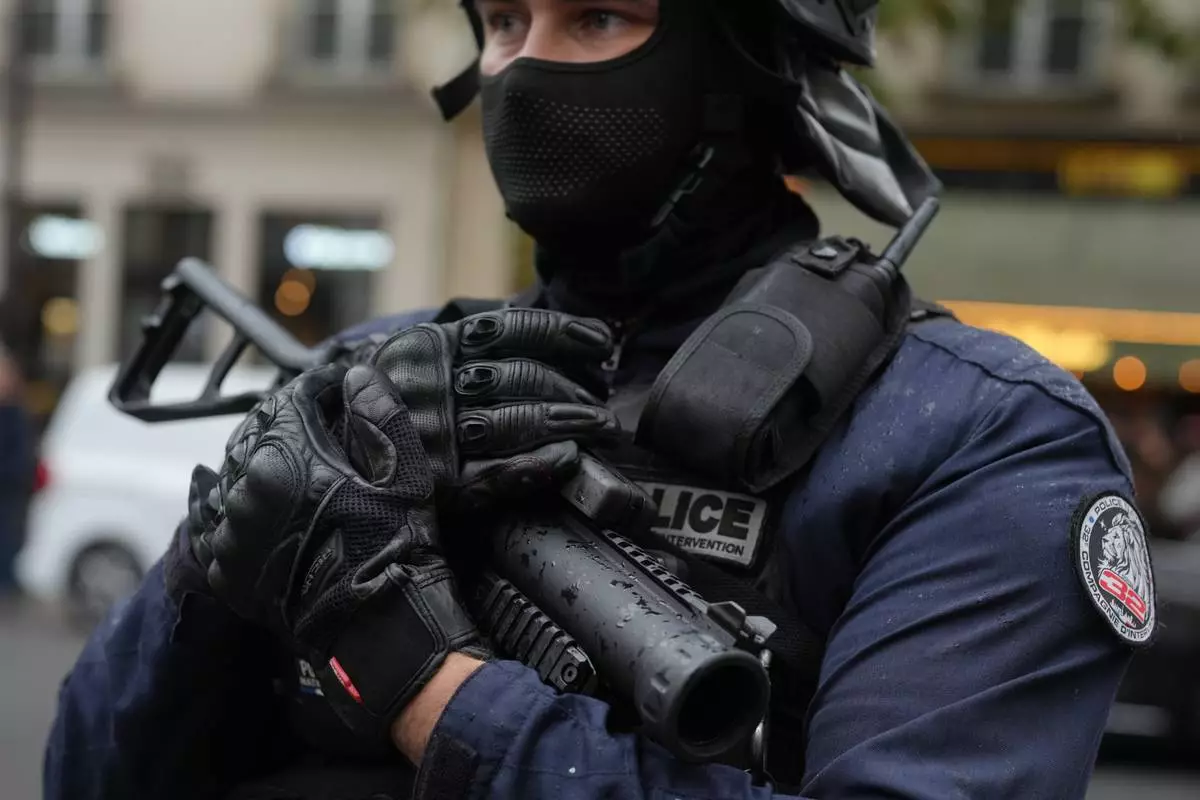
A policeman holds a LBD flash-ball gun as he faces students during a protest against under-resourced schools, in Paris, Wednesday, Oct. 7, 2026. (AP Photo/Thibault Camus)
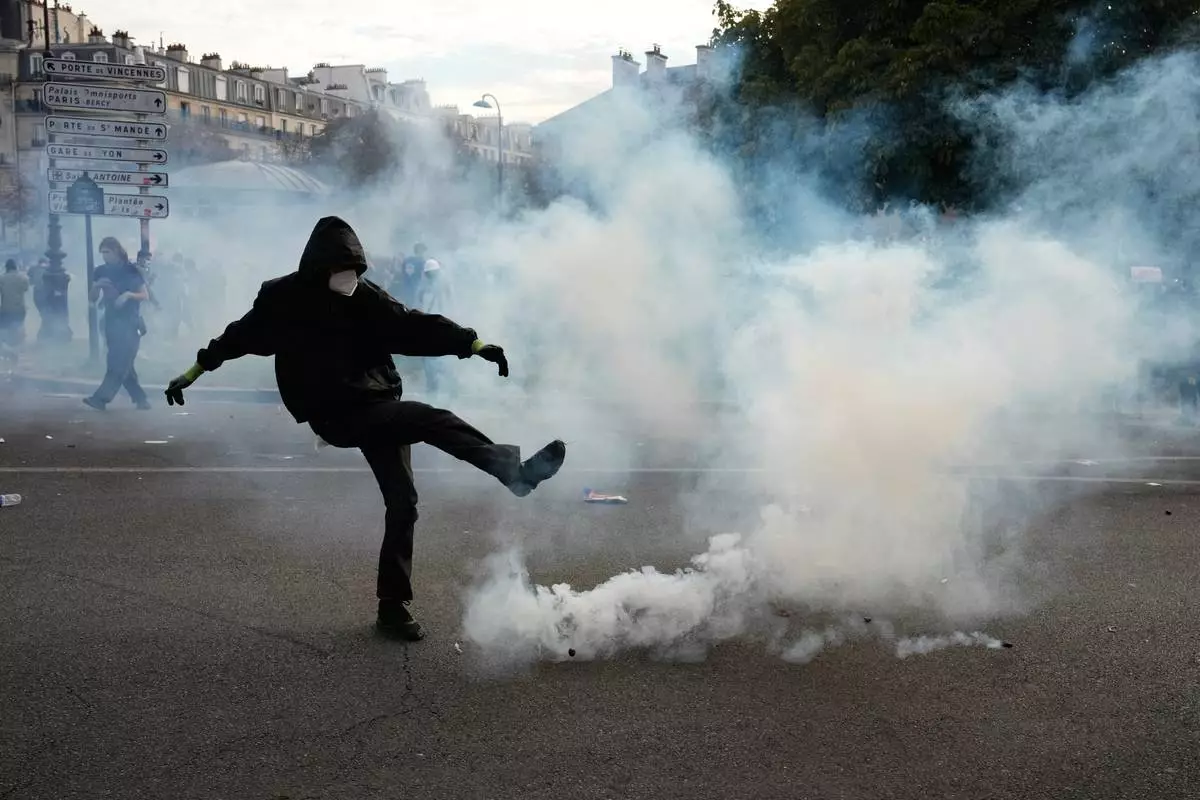
A protesters kicks a teargas canister during scuffles following a demonstration against under-resourced schools, in Paris, Tuesday, Oct. 6, 2026. (AP Photo/Teresa Suarez)
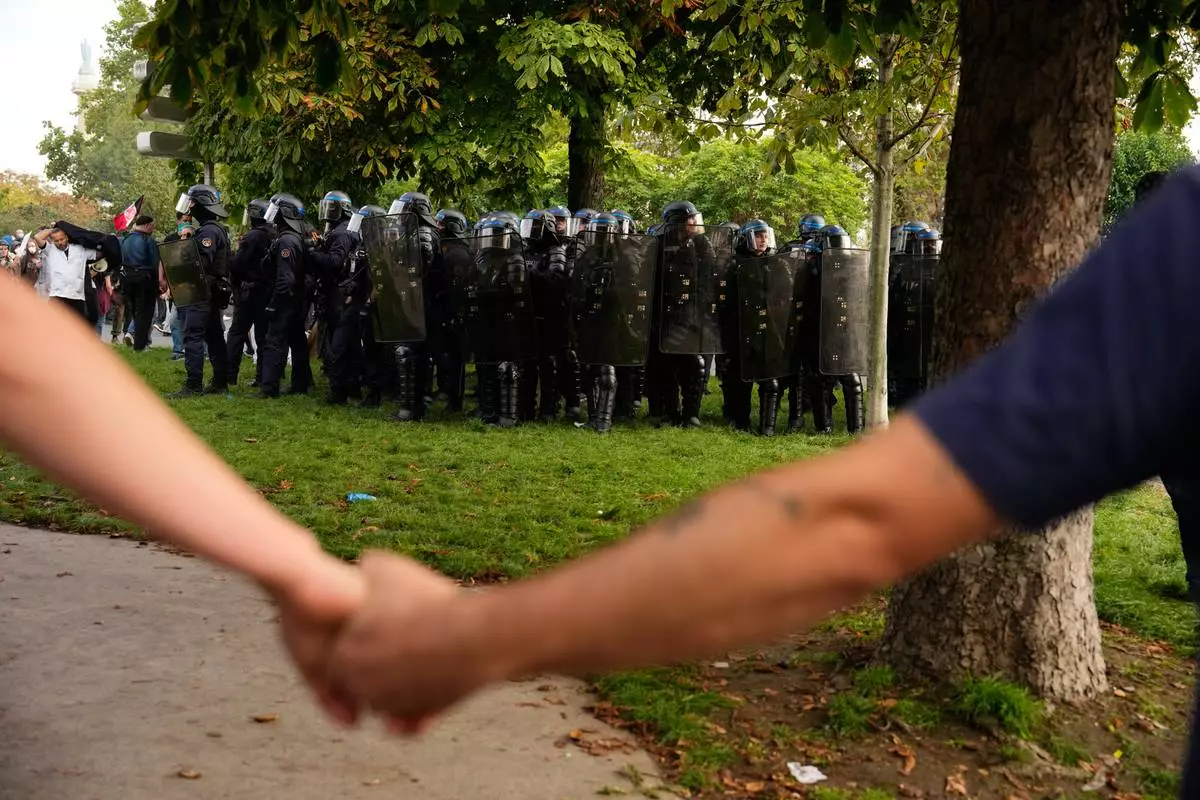
Protesters face police during a demonstration against under-resourced schools, in Paris, Tuesday, Oct. 6, 2026. (AP Photo/Teresa Suarez)