JERUSALEM (AP) — Israel said Thursday that the British Consulate in east Jerusalem has “ceased to function” in that capacity and that 20 staffers will leave the country, deepening the biggest diplomatic rift between the close allies in decades.
The sign outside the consulate was taken down, but Britain said the building remains open and a core staff will continue to deliver “vital services” and work with Palestinians. The U.K. government said it would not retaliate by expelling Israeli diplomats as it seeks to rebuild its staff.
Click to Gallery
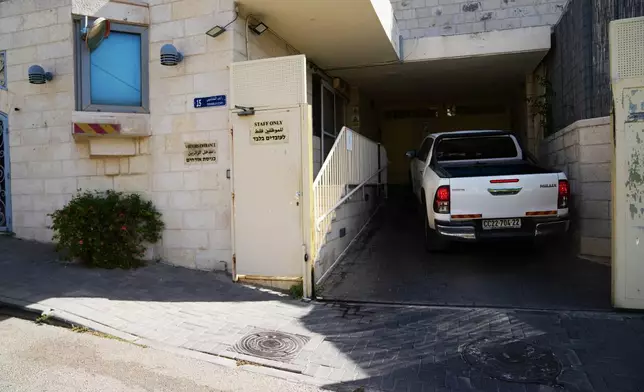
A car enters the British Consulate after the sign outside the consulate was taken down, in east Jerusalem, Thursday, Oct. 8, 2026. (AP Photo/Mahmoud Illean)
Barricades block the main road leading to British Consulate after the sign outside the consulate was taken down, in east Jerusalem, Thursday, Oct. 8, 2026. (AP Photo/Mahmoud Illean)
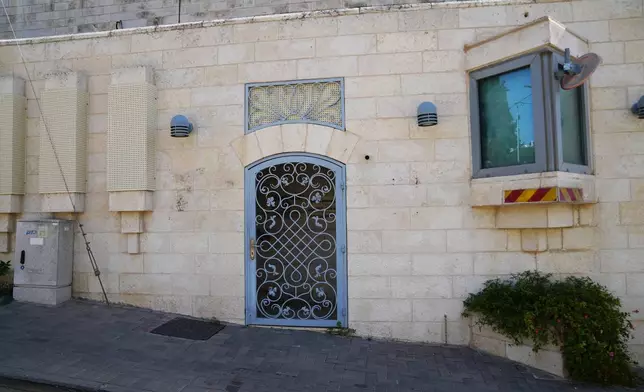
Main entrance to the British Consulate is seen after the sign outside the consulate was taken down, in east Jerusalem, Thursday, Oct. 8, 2026.(AP Photo/Mahmoud Illean)
Barricades block the main road leading to British Consulate after the sign outside the consulate was taken down, in east Jerusalem, Thursday, Oct. 8, 2026. (AP Photo/Mahmoud Illean)
The dispute began last month when the United Kingdom banned trade with Israeli settlements in the occupied West Bank. The United Nations and much of the international community consider all settlements as illegal.
“Israel will no longer turn its cheek to diplomatic attacks against it," Israeli Foreign Minister Gideon Saar said in a statement, adding that the building would continue to operate with a “task force” of seven diplomats and a “very limited” scope of activity. Twenty British diplomats will leave Israel, including the consul general.
British Foreign Secretary Ed Miliband said in a statement that the building "will be known as the U.K. Mission, Jerusalem” after discussions with Israel’s government, and a small team of diplomats would continue to operate there.
“This will ensure that we maintain our longstanding British presence and the U.K.’s role in support of a two-state solution,” Miliband added.
Britain had threatened to expel Israeli diplomats if the consulate was closed, but said it would not do so for now because it's in talks with Israel about expanding the mission.
“We will work in the coming months to build back up our presence,” Miliband said.
Meanwhile, “our diplomats are going to be able to carry out their important work in relation to, for example, relations with the Palestinians, but also supporting British nationals visiting the area,” Middle East Minister Stephen Doughty told Times Radio.
Miliband made clear that Britain does “not accept that the government of Israel has the legal right to close the British Consulate General in Jerusalem, which has been there for nearly 200 years.”
The foreign secretary added that the U.K. government reiterates its view that east Jerusalem "is occupied territory."
The U.K. and Israel continue to have close defense and security cooperation, but diplomatic relations have deteriorated over Israel’s conduct of the war with the Hamas militant group in Gaza and Britain’s decision last year to recognize a Palestinian state.
Last month’s announcement of the ban on trade with Israeli settlements in the occupied West Bank marked a significant toughening of Britain’s stance toward a longtime ally.
Doughty, the Middle East minister, said the U.K. has “a strong and ongoing relationship with Israel.”
Israel captured the West Bank, along with Gaza and east Jerusalem, in the 1967 Mideast war, territories the Palestinians want for a future state. Since then, the Israeli government has built scores of settlements that are home to well over 500,000 Jewish settlers. Many settlements resemble fully developed suburbs.
The current government under Prime Minister Benjamin Netanyahu, the most nationalist and religious in Israel’s history, views the West Bank as the biblical and historical homeland of the Jewish people and sees the settlements as key to maintaining security.
Lawless reported from London.
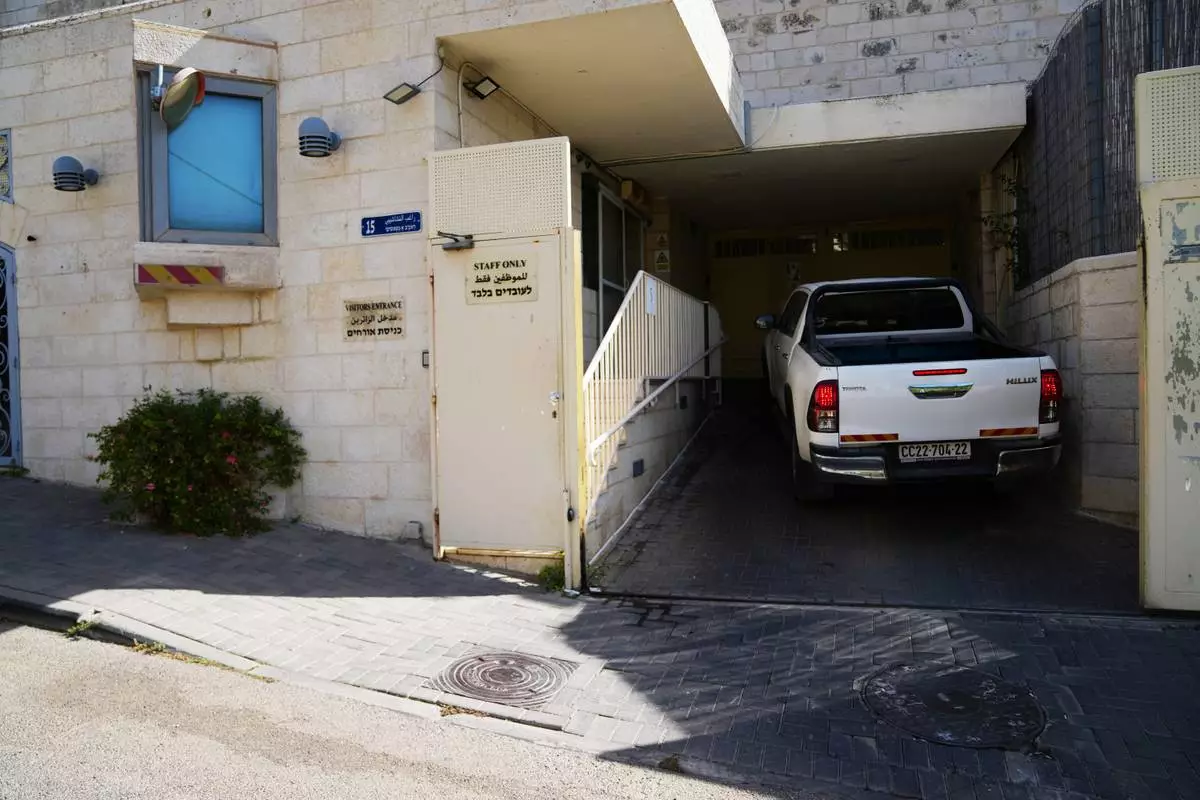
A car enters the British Consulate after the sign outside the consulate was taken down, in east Jerusalem, Thursday, Oct. 8, 2026. (AP Photo/Mahmoud Illean)

Barricades block the main road leading to British Consulate after the sign outside the consulate was taken down, in east Jerusalem, Thursday, Oct. 8, 2026. (AP Photo/Mahmoud Illean)
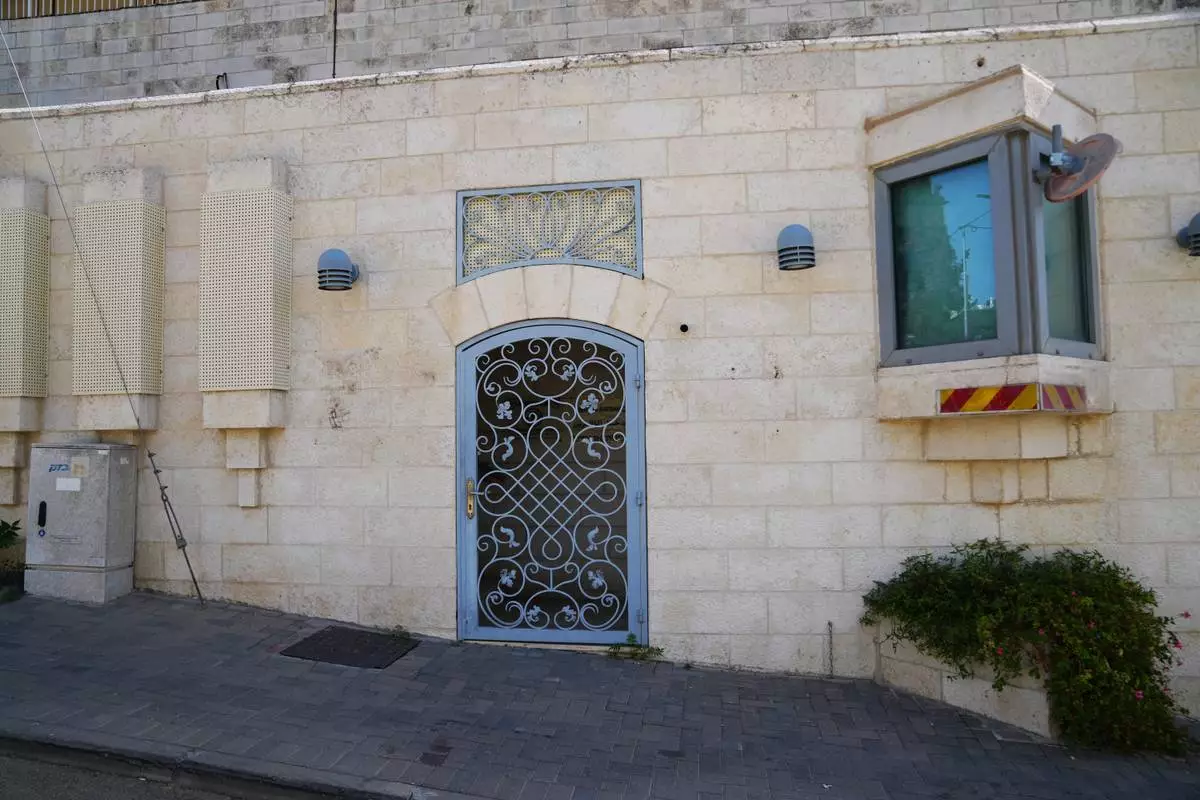
Main entrance to the British Consulate is seen after the sign outside the consulate was taken down, in east Jerusalem, Thursday, Oct. 8, 2026.(AP Photo/Mahmoud Illean)

Barricades block the main road leading to British Consulate after the sign outside the consulate was taken down, in east Jerusalem, Thursday, Oct. 8, 2026. (AP Photo/Mahmoud Illean)
NEW YORK (AP) — Andrew Scott has been thinking about what he would do in Ian Charleson’s shoes. In “Elsinore,” Scott plays the “Chariots of Fire” actor at the dramatic end of his life when Charleson, suffering from AIDS, performed “Hamlet” at London’s National Theatre.
During Charleson’s acclaimed performance, his health is deteriorating badly. He pushes on against the strenuous objections of his doctor, Dr. Margaret Johnson (Olivia Colman). Believing acting does more to heal than harm, Charleson resolves: “I’d rather die of ‘Hamlet’ than AIDS.”
“I can see why he did it. He wasn’t just asked to be in any old play,” Scott says, smiling. “It’s the best part that you can play, practically, in one of the most celebrated theaters in the world.”
“I have a suspicion that I would make the same decision,” says Scott.
“Elsinore,” which Focus Features releases in theaters Friday, honors the memory of Charleson, who died in 1990 at 40, eight weeks after concluding his run as Hamlet. But the film also, through Charleson’s story and Shakespeare’s tragedy, delineates the intertwined relationship between art and death: to be and not to be.
Charleson was giving the performance of a lifetime, and Scott is, too. The 50-year-old Irish actor, capturing Charleson’s wit and perseverance through extraordinary adversity, gives a multilayered performance, onstage and off, that celebrates life as much as it charts a death.
For Scott, “Elsinore” was itself a product of personal grief. Scott's mother, an art teacher who had encouraged him to act as a child, died in 2024 from complications of pneumonia. Within a year, he was playing Charleson and Hamlet at once.
“As much as I’m heartbroken that she isn’t around to see the work, because I think it would have filled her heart, I don’t think the fuel and the fire that I have within me to get this film made, and perform this role, and the passion I feel for it, would have existed had that not happened,” Scott said in a recent interview.
“It’s bittersweet in some senses,” he adds. “When you arrive at some landmarks in your life, they’re never the way you might have imagined they would be. That’s life, I guess.”
Still, “Elsinore” is a beautiful capstone for Scott that encapsulates much of what drives him as an actor. Scott has been darkly cunning (“Sherlock”) and brilliantly charming (the “hot priest” of “Fleabag”). But as he's wrestled with mortality, Scott's performances have grown increasingly naked and vulnerable. He recently starred in the one-man play “Sea Wall” as a grieving father. In it, he would appear already onstage when the audience enters.
“Elsinore” has made Scott a leading contender for best actor at the Academy Awards, a nomination that many felt he deserved for Andrew Haigh’s similarly soulful “All of Us Strangers” in 2024. Should he win, Scott would be the first openly gay actor to win the best actor Oscar — a landmark that would stand in some sad irony with Charleson, who, like many in his generation of performers, remained publicly closeted.
“At that time there was just a lot of horrible whispery-ness and a lack of acceptance about something that had been around since the dawn of humanity,” Scott says. “I always think: When we talk about sexuality in the 21st century or people say ‘It’s 2026, we’ve got to be modern about it’ — as if 2026 has got anything to do with modernity in relation to the vast history of humanity.”
“I feel grateful that I have opportunities that Ian and his contemporaries didn’t get to enjoy,” he adds. “But I can also see that there are different hardships for people that exist now that didn’t then.”
The Edinburgh-born Charleson was best known for playing Eric Liddell, the Christian runner of 1981’s “Chariots of Fire.” By the late 1980s, however, after numerous film and stage roles, Charleson was struggling to match his “Chariots of Fire” fame.
When Daniel Day-Lewis as Hamlet walked off the stage on Sept. 5, 1989, producers turned to Charleson. He performed the play 24 times, even as lesions spread across his body. John Peter, the Sunday Times critic, called Charleson’s performance “virile and forceful,” writing: “He oozes intelligence from every pore.”
For screenwriter Stephen Beresford, writer of 2014’s “Pride,” it was essential that “Elsinore” not sanctify Charleson. “The wonderful thing if your friends are actors, they’ll dish the dirt on you without any second thought,” says Beresford.
Beresford’s conversations with Charleson’s inner circle continually emphasized the actor’s wit. Some, including Charleson’s best friend, the actor David Rintoul, appear in the film. He plays the Ghost in the movie’s staged “Hamlet.”
“It was very important we didn’t turn him into a sentimental hero,” Beresford says. “A lot of films about the AIDS crisis, which — I say with the greatest respect because it’s hard to make a film — but a lot of them were like gay disaster movies, like ‘Towering Inferno’ but with AIDS.”
The production, helmed by director Simon Stone, strove to avoid schmaltz. They, along with Scott, were all veterans of the West End and the theater world. Scott, for the first time in his career, is also a producer.
Stone casts his own attraction to the arts back to his father’s death, when he was 12. It’s drawn Stone to work that captures the fleeting nature of life. His 2021 drama “The Dig” dealt with loss and the looming clouds of World War II.
Still, Stone was unprepared for the depth of Scott’s performance: transforming into a real-life character, representing him in a health crisis and performing, Stone notes, “only the greatest role in the history of theater.”
“He’s got so many feathers to his hat in this film,” says Stone. “I knew that if we didn’t (expletive) it up, that it could feel like a once-in-a-lifetime performance.”
Scott had starred in “Hamlet” in a 2017 production in London. But now he was performing the play as Charleson would have. As “Elsinore” moves along, it weaves in scenes of Charleson undergoing treatment at the hospital with astonishingly visceral onstage moments from “Hamlet” that mirror his daily struggle.
“I think he really enjoyed being an actor, and I do too,” says Scott, who once performed every role in a production of Chekhov's “Uncle Vanya.” “I love actors. Actors are in some ways the loves of my life.”
In “Elsinore,” the taxing nature of performing “Hamlet” becomes an existential question. In the face of death, is it worth it? For Charleson, the answer is simple. For Scott, it is, too.
“I went for a run this morning because I think it’s the healthy thing to do and it makes me feel good — for a time,” Scott says. “At some point, time is going to run out. There isn’t a so-called happy ending for any person. So what are you going to do with the time that you’re here?”
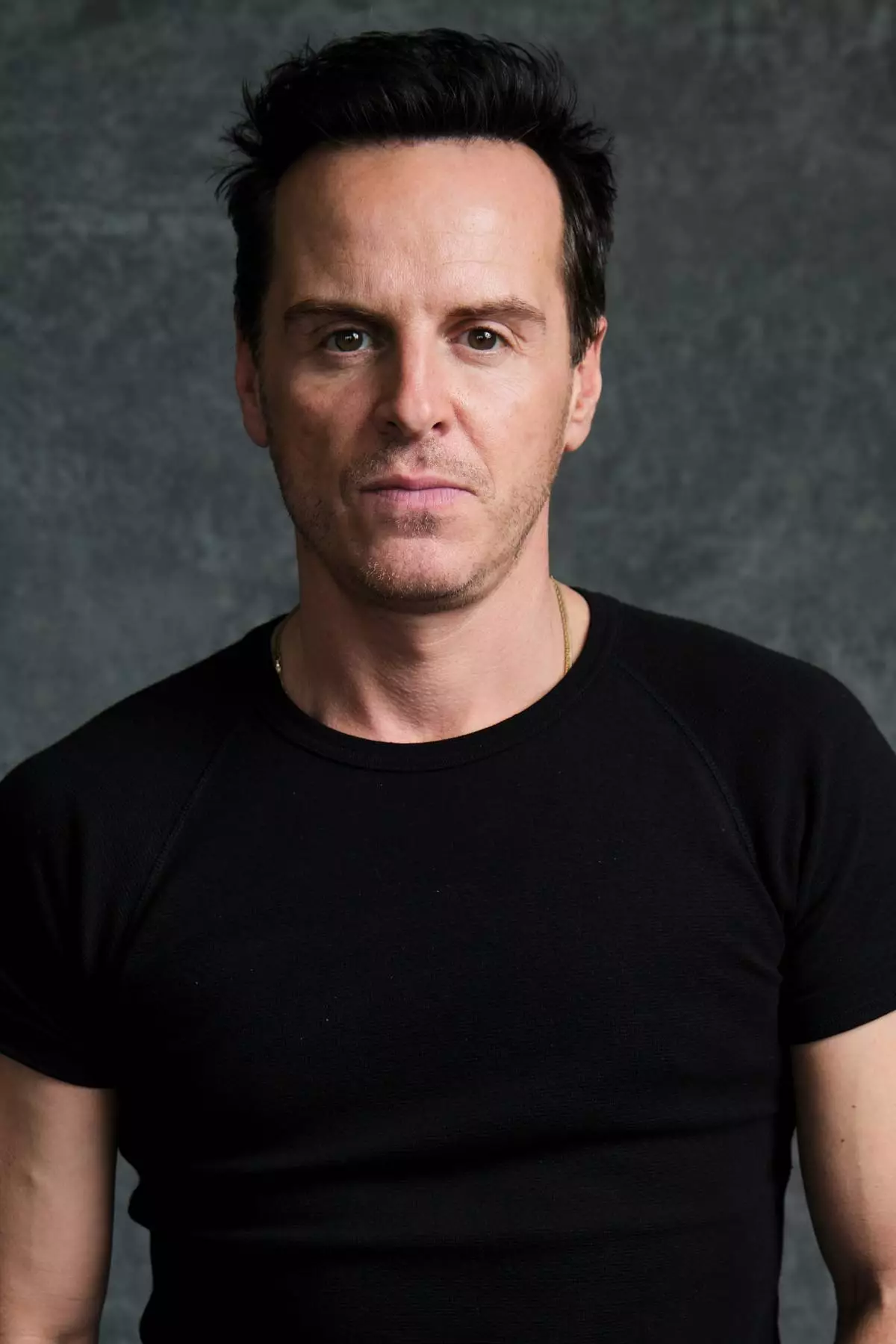
Andrew Scott poses for a portrait to promote "Elsinore" in Los Angeles on Thursday, Nov. 12, 2026. (Photo by Birdie Thompson/Invision/AP)
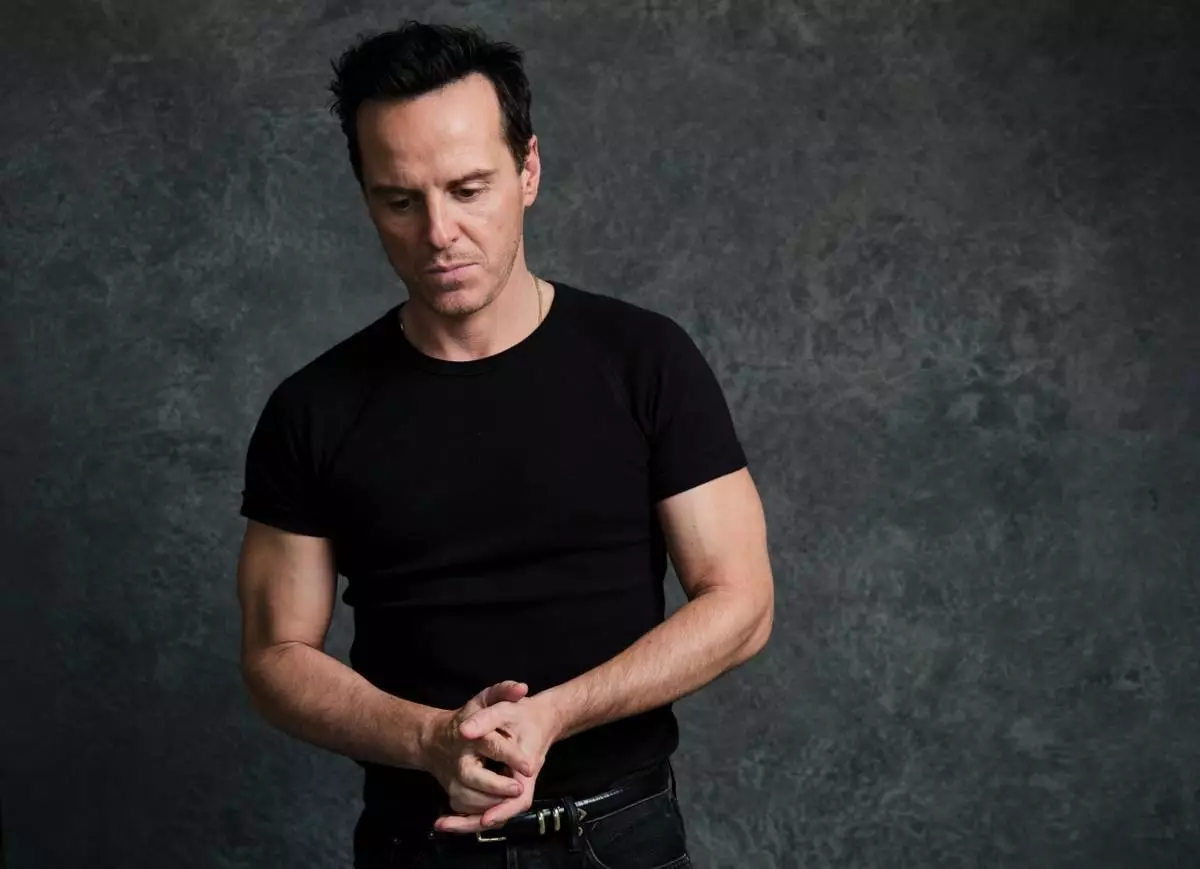
Andrew Scott poses for a portrait to promote "Elsinore" in Los Angeles on Thursday, Nov. 12, 2026. (Photo by Birdie Thompson/Invision/AP)
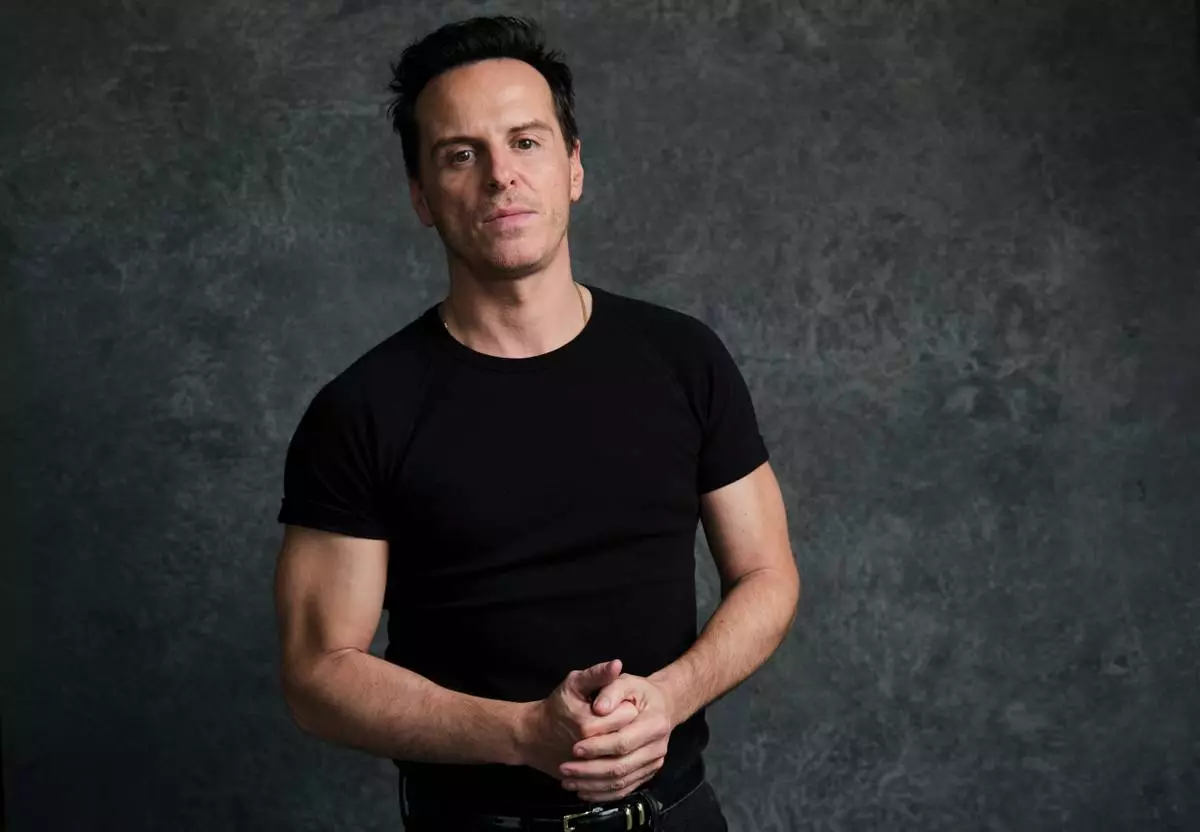
Andrew Scott poses for a portrait to promote "Elsinore" in Los Angeles on Thursday, Nov. 12, 2026. (Photo by Birdie Thompson/Invision/AP)