LISBON, Portugal (AP) — U.S. Secretary of State Marco Rubio is in Portugal on the last leg of a three-nation tour of NATO allies.
Rubio arrived in Lisbon on Thursday for a brief stop on his return to Washington, a day after delivering a speech in the Greek capital of Athens urging European countries to save Western civilization by upholding the values and traditions of ancient Greece.
Click to Gallery
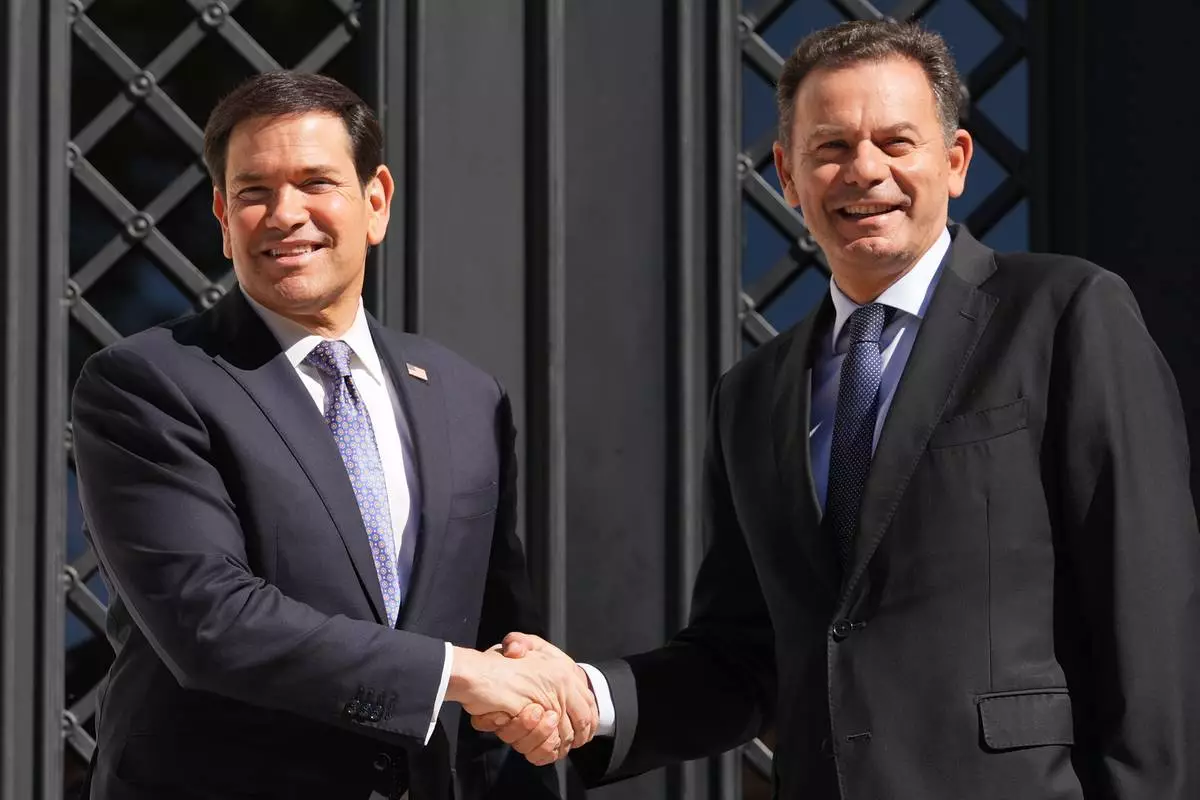
U.S. Secretary of State Marco Rubio is greeted by Portugal's Prime Minister Luis Montenegro, Thursday, Oct. 8, 2026, at the Sao Bento Palace in Lisbon. (AP Photo/Mark Schiefelbein, Pool)
U.S. Secretary of State Marco Rubio is greeted by Portugal's Prime Minister Luis Montenegro, Thursday, Oct. 8, 2026, at the Sao Bento Palace in Lisbon. (AP Photo/Mark Schiefelbein, Pool)
U.S. Secretary of State Marco Rubio, left, meets with Portugal's Prime Minister Luis Montenegro, Thursday, Oct. 8, 2026, at the Sao Bento Palace in Lisbon. (AP Photo/Mark Schiefelbein, Pool)
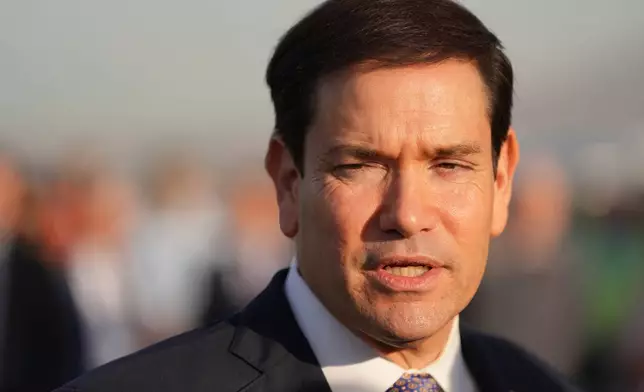
U.S. Secretary of State Marco Rubio speaks to the press before boarding a plane at Eleftherios Venizelos International Airport near Athens, Greece, Thursday, Oct. 8, 2026. (AP Photo/Mark Schiefelbein, Pool)
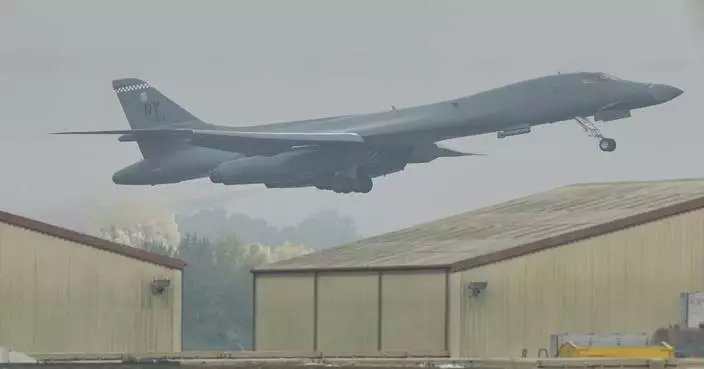
Rubio, who began his trip in Iceland, is expected to thank Portuguese officials for supporting U.S. operations in the Iran war by allowing the U.S. to use the Lajes Field air base in Portugal’s mid-Atlantic Azores islands, which is strategically located for military refueling flights.
The U.S. Air Force has long had a base there under an agreement with Portugal. Unlike neighboring Spain, where Socialist leader Pedro Sánchez refused to allow the American military to use Spanish bases to stage operations for attacks on Iran, Portugal’s center-right government granted Washington “conditional approval” to use Lajes Field.
“Portugal is a great ally, very cooperative ally of the United States and a country with which we already have a solid and growing relationship. And we visit these countries in order to reinforce those ties,” Rubio said before departing Athens. “That’s the purpose of the trip.”
Spain’s position infuriated President Donald Trump, who has fumed publicly on numerous occasions about its government and other European countries he deems insufficiently supportive of his administration’s policies.
Portuguese Foreign Minister Paulo Rangel said the approval didn’t include hostile actions that go against international law. Members of the government said Portugal was performing the duties of a U.S. ally.
Rubio met first with Prime Minister Luis Montenegro at the São Bento palace. Neither of them offered comments to the media.
Some Portuguese political parties balked at the move. Following a formal complaint by a small left-wing political party called Left Bloc, the country’s attorney general’s office said last week it is looking into whether the use of the Lajes Field base was lawful.
As one of the smallest members of NATO and the European Union, Portugal is keen to cultivate its relations with bigger countries.
Portugal, a country of fewer than 11 million people, spends just over 2% of its GDP on defense, according to NATO. The government says it plans to increase defense spending to around 3%, including dual-use investments in civilian infrastructure. Portugal has around 25,000 military personnel, the alliance says.
“I’m asking our allies to be strong,” Rubio said in Greece. “We want a strong Europe.”
Lajes Field was first used by the United States in World War II. After the war, Lisbon and Washington signed a formal agreement for the Air Force's use of the base, which has a long runway to cater for heavy military aircraft.
The base was scaled back after the end of the Cold War and now mostly handles the refueling of trans-Atlantic military flights.
A previous Portuguese center-right government also supported U.S. military action in Afghanistan and Iraq.
U.S. Secretary of State Marco Rubio is greeted by Portugal's Prime Minister Luis Montenegro, Thursday, Oct. 8, 2026, at the Sao Bento Palace in Lisbon. (AP Photo/Mark Schiefelbein, Pool)
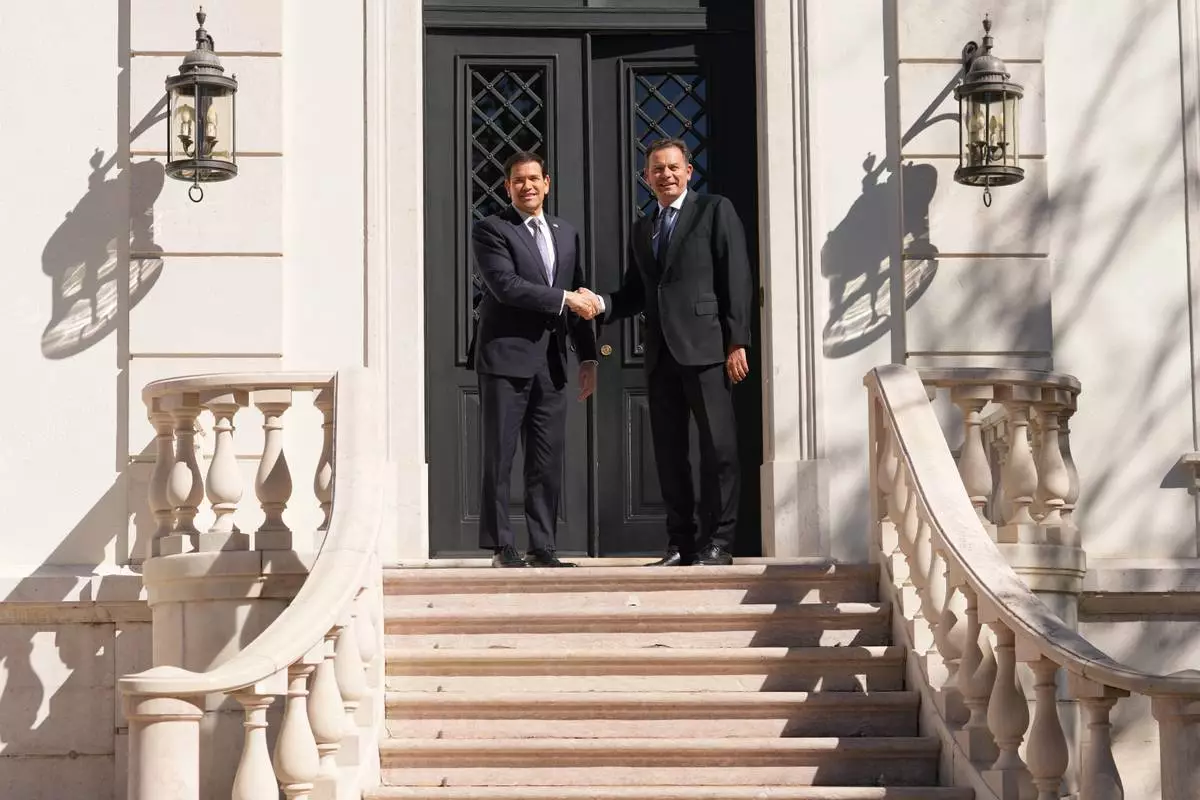
U.S. Secretary of State Marco Rubio is greeted by Portugal's Prime Minister Luis Montenegro, Thursday, Oct. 8, 2026, at the Sao Bento Palace in Lisbon. (AP Photo/Mark Schiefelbein, Pool)

U.S. Secretary of State Marco Rubio, left, meets with Portugal's Prime Minister Luis Montenegro, Thursday, Oct. 8, 2026, at the Sao Bento Palace in Lisbon. (AP Photo/Mark Schiefelbein, Pool)
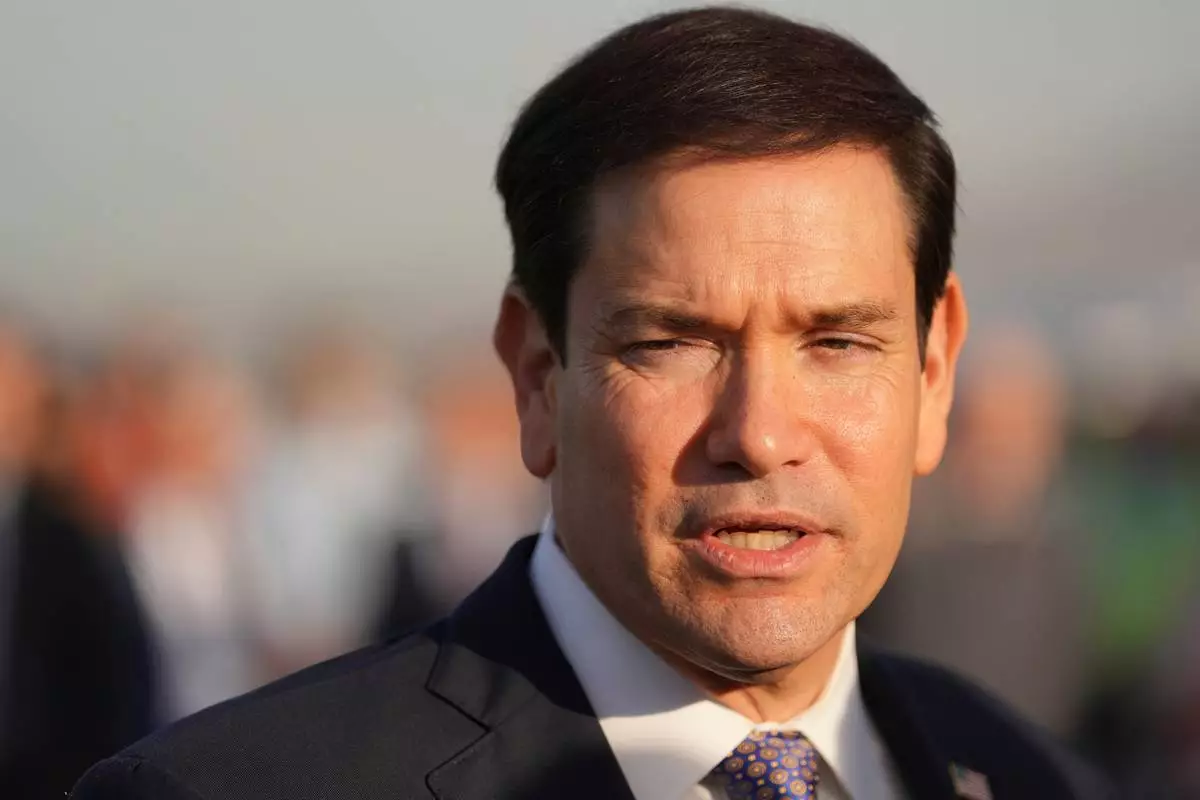
U.S. Secretary of State Marco Rubio speaks to the press before boarding a plane at Eleftherios Venizelos International Airport near Athens, Greece, Thursday, Oct. 8, 2026. (AP Photo/Mark Schiefelbein, Pool)
Isaias surged toward the U.S. Gulf Coast on Thursday as the first hurricane of the Atlantic season, prompting mandatory evacuations, school closures and local government shutdowns in parts of Florida.
Isaias was forecast to intensify rapidly and bring strong winds and a life-threatening storm surge to the Florida Panhandle, southern Alabama and southern Mississippi when it makes landfall on the northern Gulf Coast late Friday or early Saturday. Heavy rain with the risk of flooding was possible into the weekend as far inland as the Tennessee Valley.
The hurricane had maximum sustained winds around 80 mph (129 kph) and was moving east-northeast at 9 mph (15 kph) early Thursday morning, the National Hurricane Center in Miami said. It was centered about 420 miles (676 kilometers) south-southwest of the mouth of the Mississippi River.
“Preparations to protect life and property from storm surge and damaging winds along the warning area of the Gulf Coast should be rushed to completion today,” the center said Thursday.
Coastal communities moved quickly to prepare. Some Gulf oil wells paused production, and at least four Florida school districts canceled classes for later in the week. Okaloosa County announced mandatory evacuations for some coastal areas and communities were closing government offices as of Thursday afternoon. Governors in Florida and Alabama declared a state of emergency for dozens of counties.
Water from the storm surge and high tide could reach heights of 5 to 7 feet (1.5 to 2 meters) in parts of Alabama and Mississippi, the center said. Isaias also could dump up to 10 inches (25 centimeters) of rain along parts of the Gulf Coast and spawn tornadoes Friday night into Saturday from Alabama to the Florida Panhandle to southwestern Georgia. The hurricane itself is expected to quickly weaken after making landfall.
The National Weather Service told communities from Ocean Springs, Mississippi, to Gulf County, Florida, to prepare for the possibility of “long-duration power outages.”
Isaias developed more than four months into the Atlantic hurricane season and was short by one day of tying a 121-year-old record for the area’s latest-forming hurricane. According to the weather service, the record dates to 1905, when the year’s first Atlantic hurricane formed on Oct. 8.
The Atlantic hurricane season has been unusually quiet this year because of a strong El Niño, which disrupts storm formation over that ocean. Storm activity has been above average in the Pacific, where Tropical Storm Simon formed Wednesday off Mexico.
Isaias is expected to strike a swath of coastline that’s familiar with major hurricanes.
One of the 20th century’s worst storms, Hurricane Camille, killed more than 250 people after hitting land near Waveland, Mississippi, in 1969. Hurricane Katrina in 2005 razed neighborhoods in Mississippi, flooded New Orleans and killed nearly 1,400 people. And Hurricane Michael leveled homes and buildings near Panama City, Florida, in 2018.
Ahead of the storm, oil and gas producers shut down a significant share of offshore production in the Gulf, which accounts for almost 15% of crude pumped annually in the U.S.
As of Wednesday about 25% of the oil production in the region was temporarily halted, taking about 511,000 barrels a day off the market, according to the Marine Minerals Administration. It said eight of the Gulf's 371 manned oil platforms were evacuated.
With oil prices already high, the production cuts are steep enough to affect markets, though other Gulf hurricanes have caused larger disruptions, said Jim Burkhard, global head of crude oil market research for S&P Global Energy. More concerning, he said, is whether Isaias strikes as a powerful storm near refineries.
As it moves inland, Isaias might also disrupt Saturday’s college football showdown between rivals Georgia and Alabama, a game President Donald Trump has planned to attend.
In Alabama, the cities of Gulf Shores and Orange Beach issued a statement encouraging people in low-lying areas to voluntarily evacuate.
Gulf Shores resident Maranie Adams gathered water and other supplies as her family moved belongings, including a hot tub motor, to higher ground. Her family planned to ride out the storm at home, roughly a half-mile from shore, sheltering indoors alongside their flock of chickens.
“We’re having to get crates to bring them into the house so they don’t blow away,” Adams said. “It’s going to be noisy.”
Alabama Gov. Kay Ivey issued a state of emergency for 40 counties, while Florida Gov. Ron DeSantis declared one for 25 counties in the Panhandle and Big Bend regions. The state also planned to deploy a Miami-based urban search and rescue task force.
In Pensacola, electric utilities were pre-positioning crews to quickly repair any power outages. City officials provided sand for residents to fill sandbags to protect their homes against flooding. And Mayor D.C. Reeves urged people to check on older adult neighbors and others who might need help.
“Obviously no need to panic at this point,” Reeves told a news conference. “This is really about preparation.”
Rico reported from Atlanta, Collins from Hartford, Connecticut, and Golden from Seattle. Associated Press journalists Russ Bynum in Savannah, Georgia, and Julie Walker in New York contributed to this report.
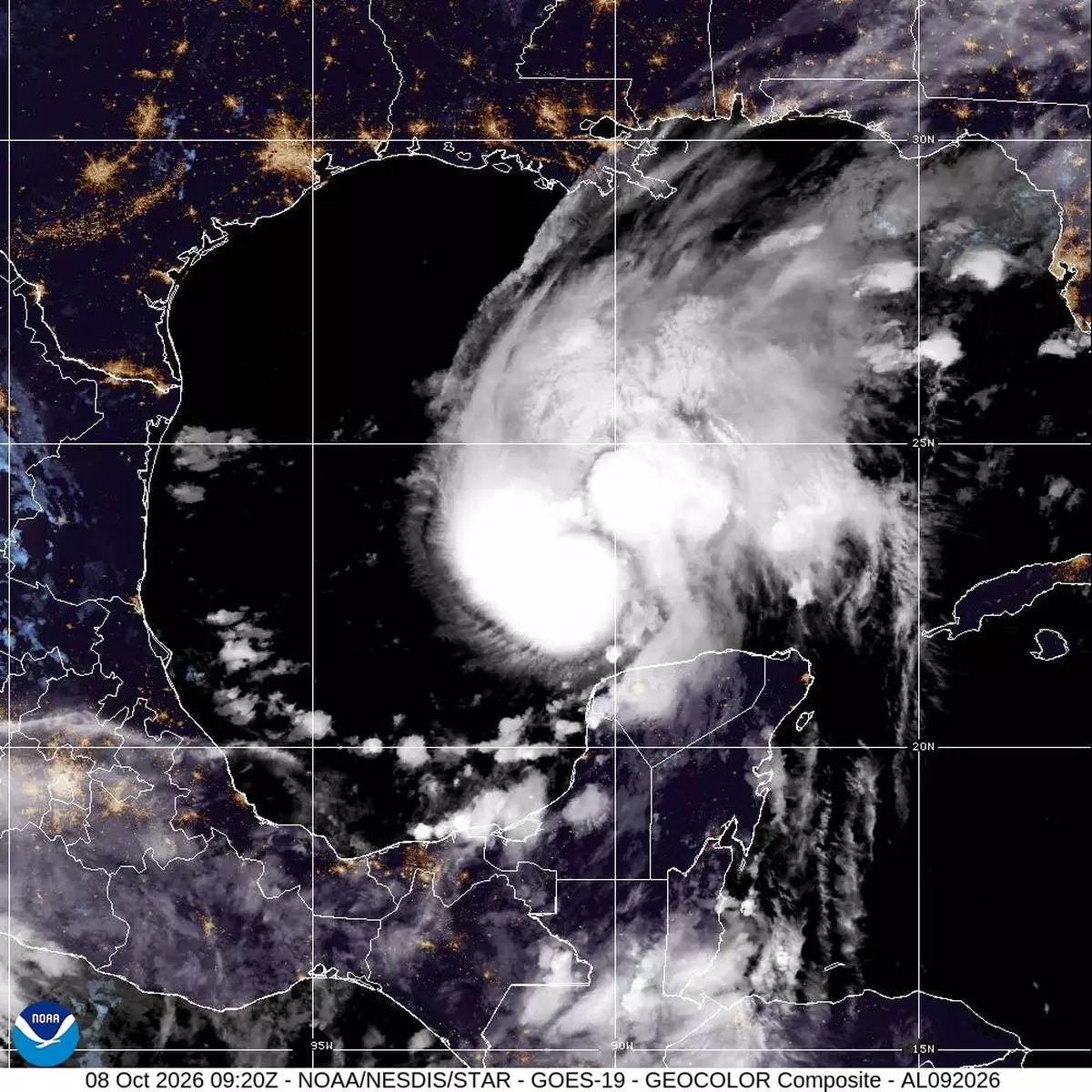
This satellite image from the National Oceanic and Atmospheric Administration shows Hurricane Isaias in the Gulf of Mexico, Thursday, Oct. 8, 2026. (National Oceanic and Atmospheric Administration via AP)
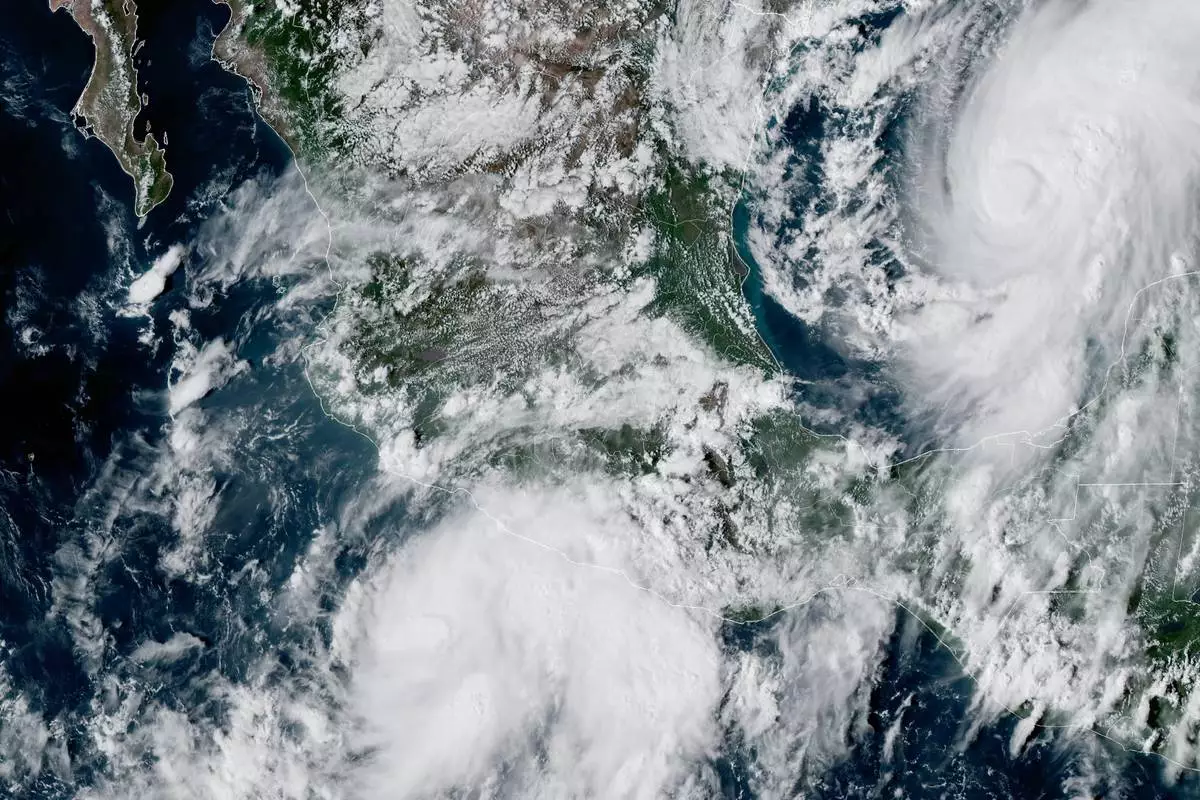
This GOES-19 GeoColor satellite image provided by the National Oceanic and Atmospheric Administration (NOAA) and taken at 4:57 p.m. EDT, Wednesday, Oct. 7, 2026, shows Tropical Storm Simon, bottom center, in the Pacific Ocean, off the southwestern coast of Mexico, and Tropical Storm Isaias, upper right, east of Mexico in the Gulf of Mexico. (NOAA via AP)
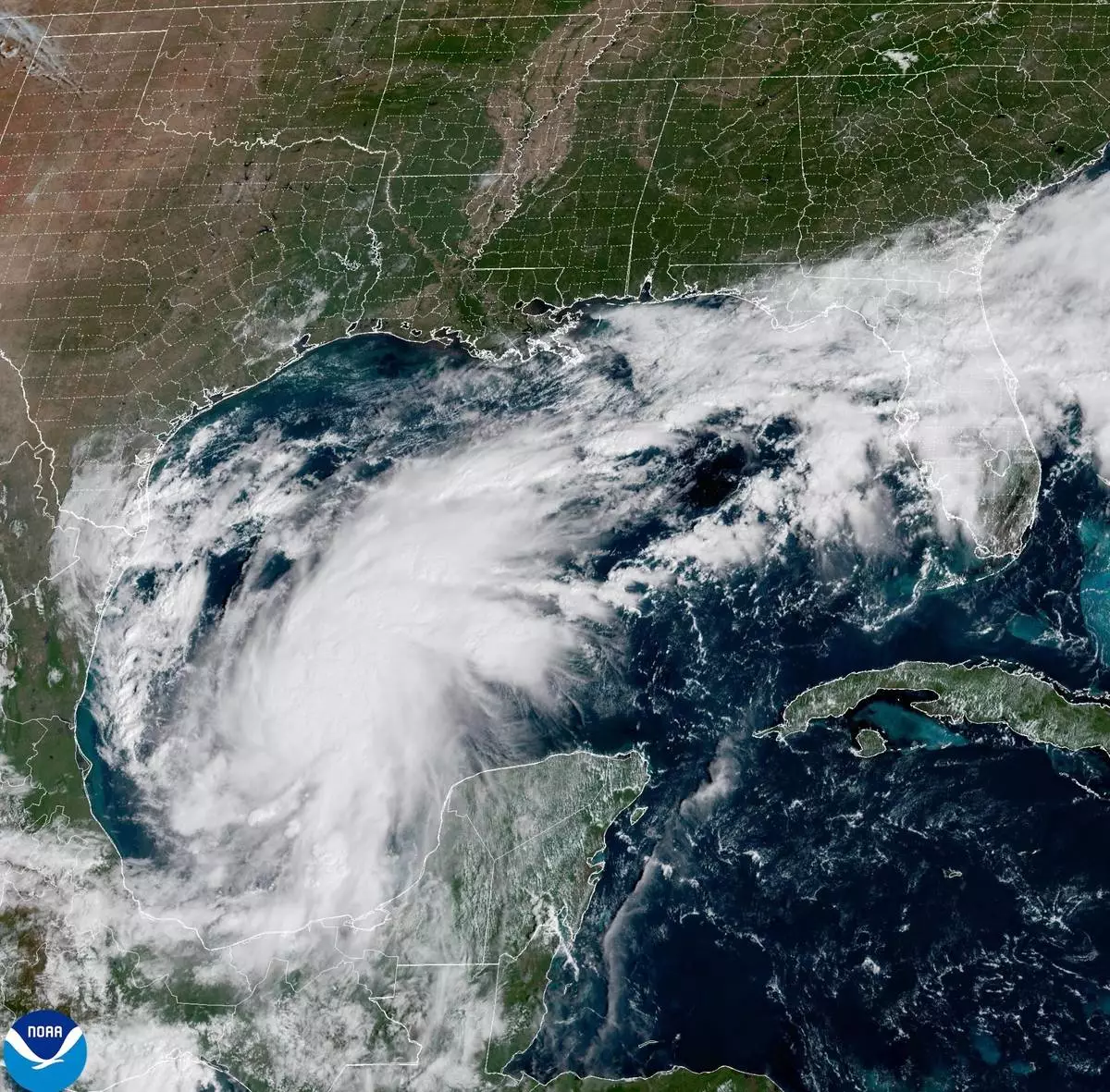
This satellite image from the National Oceanic and Atmospheric Administration shows Tropical Storm Isaias off the eastern coast of Mexico on Wednesday, Oct. 7, 2026. (National Oceanic and Atmospheric Administration via AP)