AUSTIN, Texas (AP) — When the socialists filed into the pews of a church sanctuary in Texas, there were far more than would have attended just two years ago.
But that was before members of the Democratic Socialists of America were winning congressional primaries, and the acronym “DSA” became a fixture on television news chyrons. And before Democrats began arguing about whether to court or rebuke this movement, and President Donald Trump started to complain about the threat of “godless communists."
For many across the country, it all seemed to happen rather quickly, a political movement fresh off the bench that would, depending on who was asked, either uplift the working class or usher in Stalinism.
But for some in that church, none of this was quite so surprising. The Austin DSA, like many of the 250 chapters spanning the country, has spent years marshaling its members' earnestness, and their willingness to volunteer dozens or hundreds of hours, into a local movement with an eye toward national power.
They say that achieving their more distant goals — like abolishing prisons and achieving universal health care — starts with street protests, making lunches for people without homes and electing city council members. Although the progressive city of Austin was already fertile soil for a socialist chapter, the group's recent growth has mirrored a broader expansion as nationwide DSA membership more than doubled to 126,000 in the past two years.
“We put in our sweat equity, we’ve put in time, we have put in dollars,” said Nathan Fernandes, speaking to the group gathered in the cavernous church. “We make the DSA difference ourselves because special interests can buy elections, but people can’t buy what we have.”
The evening meeting started with detailed training on how to observe and take video of immigration enforcement — “film horizontally" — and a presentation on getting the word out about a boycott of Starbucks to support the baristas' contract negotiations.
Then spoke Misael Ramos, a DSA member and candidate for Austin City Council, who was followed by an announcement that the chapter had knocked on roughly 7,000 doors for his campaign. Another canvass was around the corner.
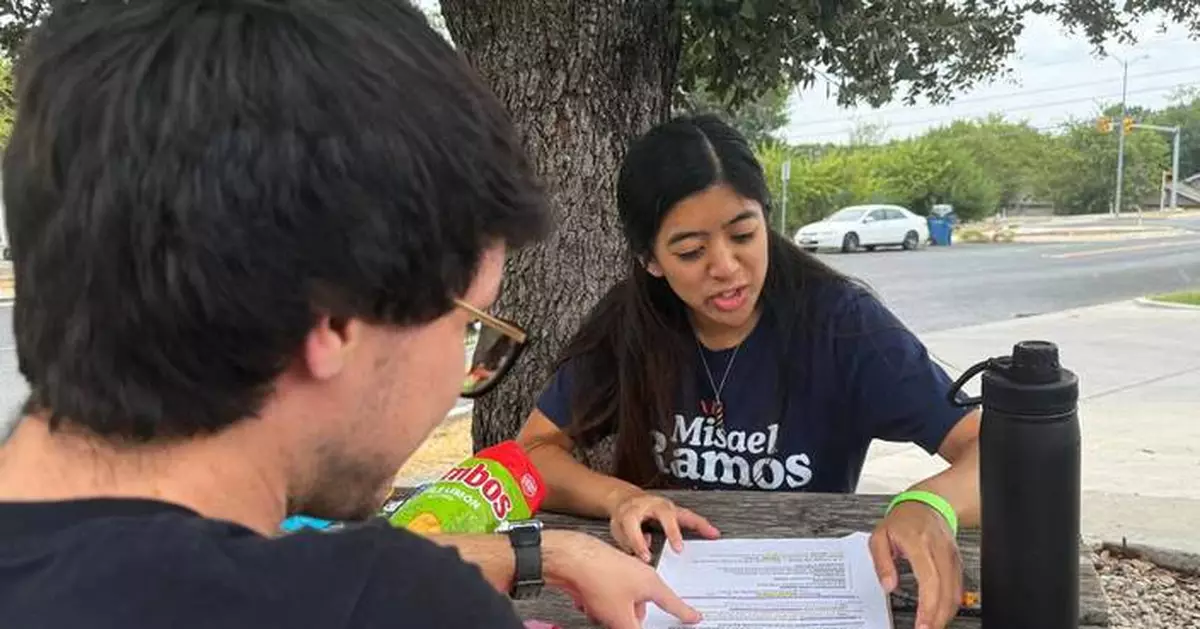
When that day arrived, two newer DSA members, Mark Ramirez and Clarisse Manuel, showed up to learn that their candidate, Ramos, had been arrested that morning for participating in a protest over the shooting of a Venezuelan man by a federal immigration agent. Ramos is fighting the misdemeanor charge.
Shaken by the news, Ramirez and Manuel held off on the canvassing, stopping at a gas station and grabbing snacks. A man in a soiled jean jacket asked for a few bucks, and Ramirez, checking his empty wallet, proffered a bag of the salt and lime peanuts he'd just purchased.
Over the past years, Ramirez, a 28-year-old software engineer, had felt frustrated by the ills of the world, particularly immigration crackdowns but also homelessness, the war in Gaza, medical debt in America, and the list went on. Doomscrolling into a depression felt inadequate.
The Democratic Party was “captured by corporate interests,” said Ramirez, now sitting at a picnic table with Manuel outside the gas station, but the DSA offered something beyond handwringing. It tracked ICE raids, mounted a campaign to remove automated license plate readers in Austin, organized with labor unions and its members routinely donated their time and money to make hundreds of sandwiches for people in need.
“Healthcare, food and housing are things that everybody needs, and we have millions of times the productive force to meet all of those people’s needs,” Ramirez said. But as a society, "we choose not to.”
The DSA chapter's gumption offered an antidote for Ramirez, who was one of roughly 700 people who signed on in the last year, growing their ranks by more than half.
“It is on me, and I think it’s on everybody, to resist," he said. “While I’m calling for them to redistribute the wealth, I have to do a bit myself.”
The 25-year-old Manuel, who sat across from Ramirez, jumped in, saying that together members are showing what “can be achieved if we have a mass movement.”
“That’s why I joined DSA,” Manuel continued. He saw "an organization that is able to get things done, that’s able to win and it’s because of member power.”
The man in the scuffed jean jacket returned, asking for Doritos and a Coca-Cola, and Manuel walked with him into the gas station to buy them.
Back in the church sanctuary, Ramos revved up the audience.
“If you believe housing is a human right, say ‘Yeah!’” he shouted. “If you believe in a free Palestine and abolishing ICE, say ‘Hell yeah!’”
An AP-NORC poll conducted in September found that about one-quarter of U.S. adults consider themselves a supporter of democratic socialism, which is similar to how many say they back President Donald Trump's MAGA movement.
Democrats have warmed to the concept of socialism over the past 15 years, according to polling from Gallup. About two-thirds of them had a positive view of socialism in an August poll, up from 50% in 2010. Over the same period, Democrats have soured on capitalism. Only about one-third of them had a positive view of capitalism this year, down from about half in 2010.
Although Vermont Sen. Bernie Sanders has long identified as a democratic socialist, the DSA movement shifted up a gear after the election of Zohran Mamdani as New York City mayor a year ago. Months later, more such candidates won Democratic congressional primaries in New York, Pennsylvania and Colorado.
Sitting at a folding table in a nearby communal room after his speech, Ramos said he tries to bring lofty and longer-term goals — housing for everyone, defunding the police — down to earth while running for office. For example, he talks about using city land for affordable housing or diverting police funding to mental health responders.
It's one way that Ramos tries to cut through the tumult over DSA's national platform, which includes doing away with the Senate, drafting a new constitution, taking steps toward abolishing police and prisons and, in the long run, “building a new society from the ground up" to create a “real democracy.”
Such goals have caused consternation in both parties. Republicans are dubbing the midterms as a choice between “common sense and communism,” while Democrats fret over voters recoiling from more radical ideas.
Meira “Gumbo” Vedros, co-chair of the Austin DSA chapter, tempered the idealism in an interview.
"Abolish is not ‘get rid of this and start from scratch,’” said Vedros, 29. And it's “not saying that we have the answers, but saying, ‘Hey, we know this is in the way of the working class having a better life, and we can find the answers together.'”
Not all DSA candidates subscribe to the entirety of the platform. And the contours of a socialist future are fuzzy, changing depending on who is asked. Debate continues among the members, facilitated by DSA chapters' own form of direct democracy, where everyone has a vote.
“Myself and most of the people I organize with don’t often think that we will live to see the fruits of our labor,” Vedros said, “and we don’t have a perfect idea of what an ideal society looks like. But we can ‘rehearse’ what we think would be better right now, and rehearse a better world by being better to each other."
As the church meeting ended, those gathered stood and sang together over a twangy rendition of “Solidarity Forever.”
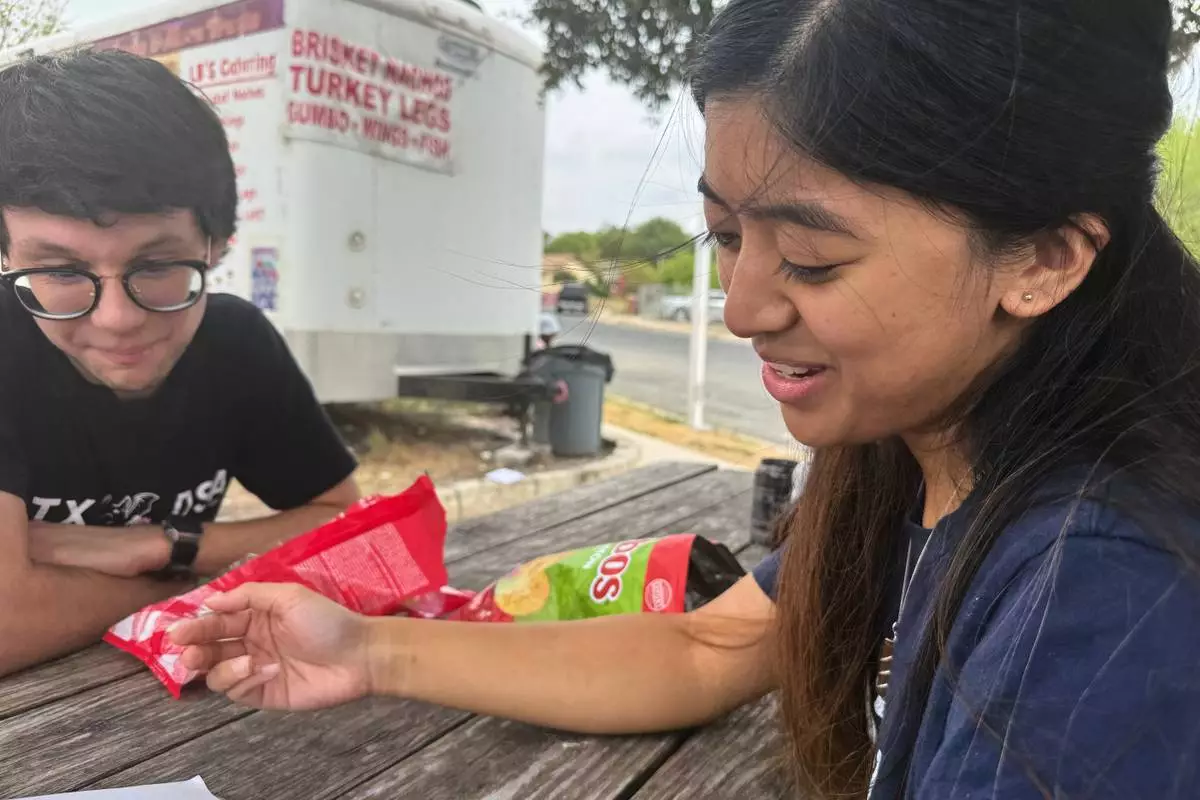
This photo taken with a smartphone shows two members of the Democratic Socialists of America, Mark Ramirez and Clarisse Manuel, during a day of canvassing Saturday, Sept. 26, 2026, in Austin, Texas. (AP Photo/Jesse Bedayn)
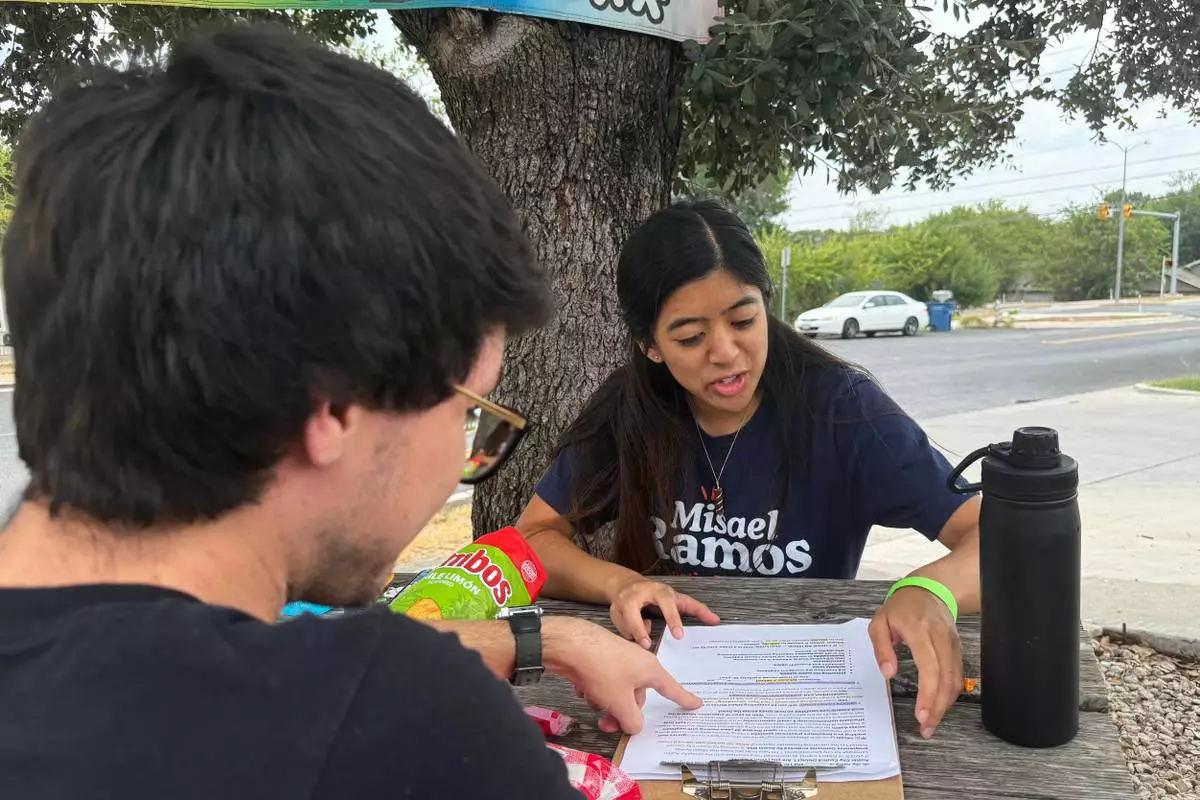
This photo taken with a smartphone shows two members of the Democratic Socialists of America, Mark Ramirez and Clarisse Manuel, during a day of canvassing Saturday, Sept. 26, 2026, in Austin, Texas. (AP Photo/Jesse Bedayn)