Chinese scientists have developed a nuclear optical clock that measures time through energy changes inside atomic nuclei, a breakthrough that could pave the way for more accurate and portable timekeeping in navigation, deep-space exploration and fundamental physics research. A team from Tsinghua University, working with researchers at several other Chinese institutions, spent nearly five years developing the clock. The findings were published in the journal Nature on Wednesday. The researchers developed a continuous-wave vacuum-ultraviolet laser operating at 148.4 nanometers and used it to trigger a transition inside nuclei of thorium-229, a radioactive isotope. By locking the laser's frequency to the steady rhythm of that transition, they were able to create a nuclear clock. Nuclear optical clocks, which use transitions within the atomic nucleus as their reference, are seen as a potential successor to atomic microwave clocks and optical atomic clocks.
"A traditional pendulum clock swings about once a second, and we can tell how much time has passed by counting those swings. Our nuclear optical clock instead uses the rhythm of an atomic nucleus as its 'pendulum.' That rhythm is, of course, much faster than that of a wall clock, at about 2 quadrillion cycles per second. It divides time into extremely fine intervals, allowing us to measure time precisely by counting those cycles," said Ding Shiqian, an associate professor in Tsinghua University's Department of Physics and an adjunct researcher at the Beijing Academy of Quantum Information Sciences.
The most accurate optical atomic clocks currently use electron transitions to keep time. But electrons are sensitive to disturbances from electric and magnetic fields, temperature changes and laser systems, all of which must be tightly controlled. The best-performing optical atomic clocks therefore remain largely confined to laboratories, making miniaturization and wider practical use difficult.
"An atomic nucleus is tens of thousands of times smaller than the surrounding electron cloud, which makes its rhythm more stable. This means the nuclear optical clock we developed could eventually become even more precise. It may also be possible to make such clocks smaller. Once miniaturized, an ultra-precise timekeeping device could be put to practical use instead of remaining merely a laboratory tool," Ding said.
Researchers said nuclear optical clocks could eventually provide more precise positioning and distance measurements for satellites and spacecraft, supporting navigation, deep-space exploration and other areas requiring highly accurate time and frequency standards.

Chinese scientists develop nuclear clock in precision timekeeping breakthrough
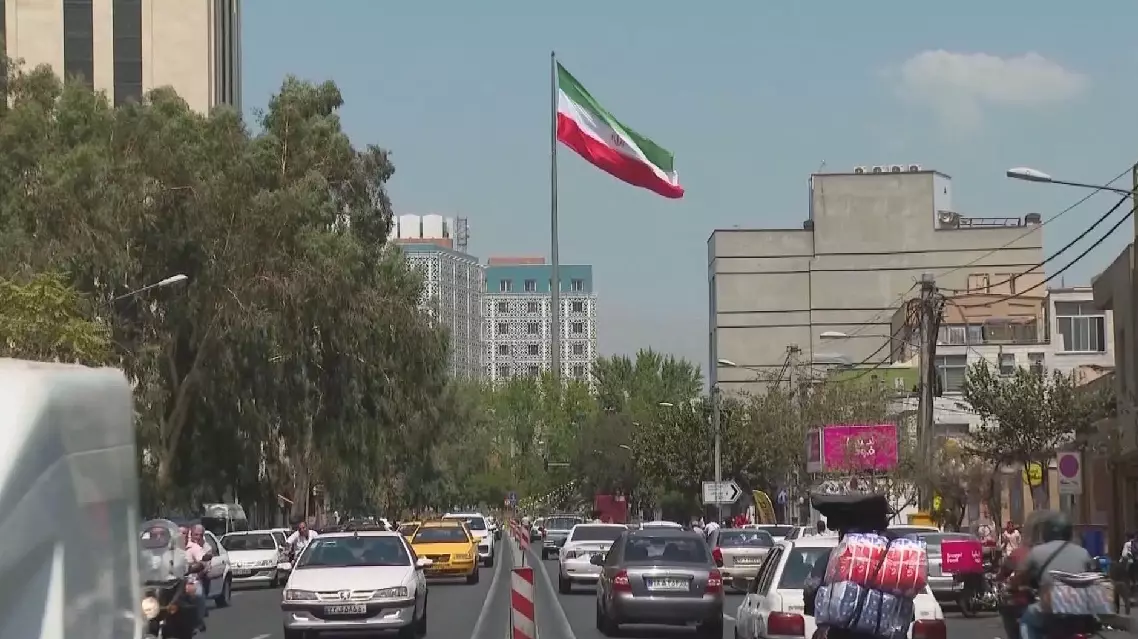
Iran and the United States are continuing indirect negotiations through mediators, Iran's Foreign Minister Seyed Abbas Araghchi said on Thursday, while U.S. President Donald Trump described the ongoing talks as productive, saying that Washington would not attack Iran before the November 3 midterm elections.
Speaking on the sidelines of a funeral ceremony in Tehran, Araghchi confirmed that indirect message exchanges with Washington are continuing, according to Tasnim news agency.
He said Tehran is currently reviewing U.S. feedback regarding Iran's proposed "seven-day plan", a framework conveyed through Qatar to reopen the Strait of Hormuz and restore normal maritime traffic, and will submit its formal response in the coming days. Iran conveyed its plan to the United States to cease hostilities and reopen the Strait of Hormuz on Sept 22 through mediators on the sidelines of the 81st session of the UN General Assembly in New York.
Under the plan, Tehran proposed ending the war and reopening the waterway within seven days, provided that the United States accepted its conditions. Iranian authorities have repeatedly said that ending the war on all fronts, including Lebanon, and reopening the Strait of Hormuz are the sole focus of the ongoing diplomatic process.
In a social post published on Thursday, Trump said that the United States would not attack Iran before the Nov 3 midterm elections, even as a U.S. blockade remained in place, while describing ongoing talks with Tehran as productive.
The United States will not be attacking Iran at any time prior to the Midterm Elections in November, Trump wrote on Truth Social.
Trump said that Washington was having productive discussions with the Islamic Republic of Iran which he claimed was in "very bad condition" economically and militarily.
The Pentagon instructed U.S. Central Command several days ago to complete preparations for resuming major combat operations in Iran, news website Axios reported one day earlier, citing U.S. officials. U.S. and Israeli sources said the strikes could take place before the U.S. midterm elections in early November, and possibly before the Israeli parliamentary elections in late October, the report said. On Feb 28, Israel and the United States launched joint attacks on Tehran and other Iranian cities. Iran responded with waves of missile and drone attacks targeting Israel and U.S. bases and assets in the region, and tightened its grip on the Strait of Hormuz.
A ceasefire was achieved between the warring parties on April 8. On June 18, Iran and the United States signed a memorandum of understanding (MoU) on ending the war on all fronts.
Under the MoU, the two countries were scheduled to hold negotiations within 60 days, ending on Aug 17, to reach a final agreement. However, the two sides failed to make sufficient progress as tensions continued to escalate.
Iran, US talks continue as Trump rules out new attack before Midterms