WASHINGTON (AP) — The Arlington County Board in Virginia filed a lawsuit Thursday opposing the construction of the Triumphal Arch, becoming the first governmental body to take legal action against President Donald Trump's planned monument.
The lawsuit, filed in the Eastern District of Virginia, criticized the speed at which the project slated for Memorial Circle has moved without going through the full review process.
“The National Park Service, the agency responsible for projects on national park land such as Memorial Circle, is proceeding full-speed toward ground-disturbing construction,” the lawsuit said. “Although the agency has claimed that a final decision to construct the Arch has not yet been made and purports to be engaged in a routine decisional process, that rushed process appears to be a pretext designed to shore up justifications for building the Arch in accordance with the President’s repeated marching orders.”
The lawsuit asks that “the agency's feverish pace toward construction of the arch” be halted to ensure that the requirements of the National Environmental Policy Act be followed and proper analysis and testing be done.
“The Arlington County Board has filed this lawsuit because our community has the most to lose from this egregious and unlawful proposed project,” Arlington County Board Chair Matt de Ferranti said in a statement. He added that the county has acted in good faith in the review process, pointing out the “severe, unique, and wide-ranging negative impacts” the project will have on the county and its residents, only to see them ignored.
Memorial Circle sits on federal parkland west of the Potomac River across the Memorial Bridge and immediately adjacent to Arlington County.
The county is being represented in the lawsuit by legal advocacy group Democracy Forward.
The White House and Interior Department did not immediately respond to requests for comment.
The lawsuit comes just a day after Association of Flight Attendants-CWA President Sara Nelson expressed concerns that the 250-foot (76-meter) arch compounds multiple safety issues that she said have gone unaddressed since a deadly January 2025 crash over the Potomac River that killed 67 people. Nelson also criticized Trump’s plan to turn the arch into “a top grade military complex” able to host drones and snipers while storing ammunition.
Though the arch has received early approval from the U.S. Commission of Fine Arts, whose members were all tapped by Trump, a group of three veterans and an architectural historian sued in federal court in Washington, D.C., saying the project needs to be approved by Congress. The judge in that lawsuit said the administration must give the court 48 hours before undertaking any activities related to or in preparation for construction of the arch.
The arch is one of several projects around Washington that Trump has undertaken as he remakes the city, from renovating one of its storied public golf courses to threatening to demolish the John F. Kennedy Center for the Performing Arts.
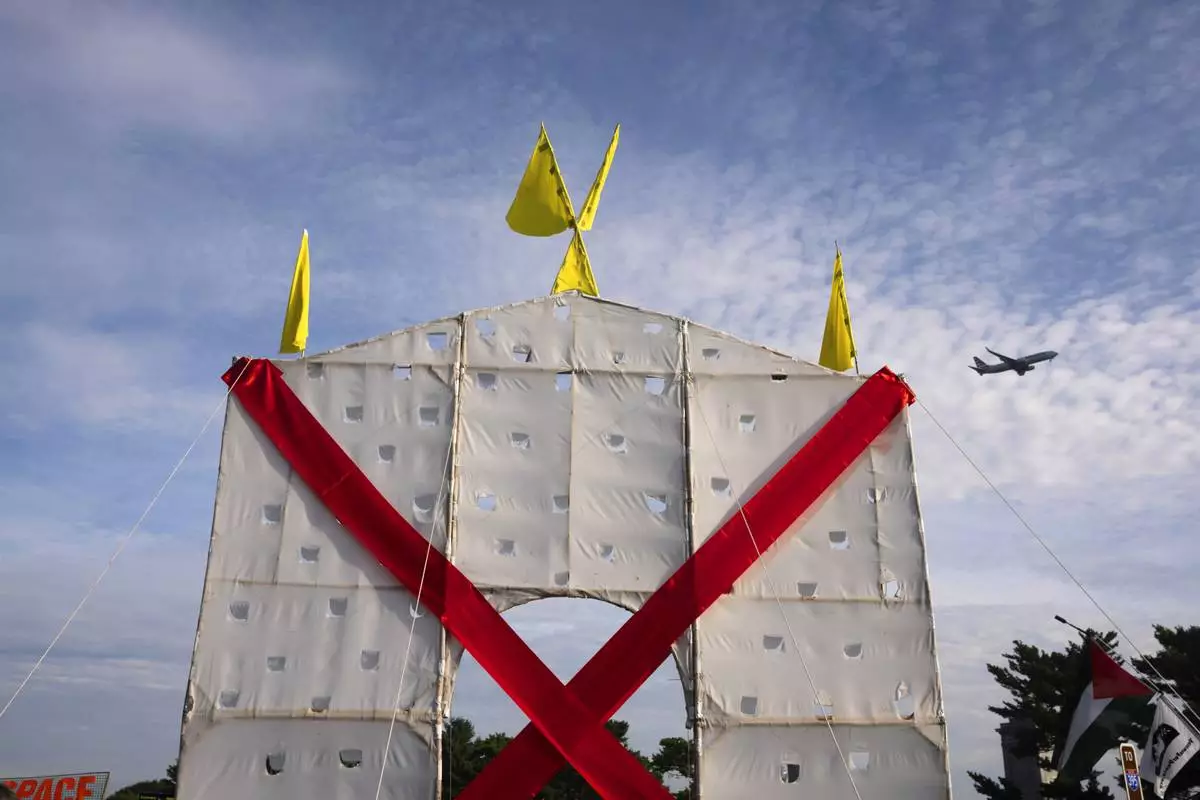
A plane flies over an anti-arch structure lifted up by demonstrators at Memorial Circle to protest the proposed Triumphal Arch, Thursday, Oct. 1, 2026, in Arlington, Va. (AP Photo/Allison Robbert)
GRAND RAPIDS, Mich. (AP) — The first debate in Michigan’s closely watched U.S. Senate race turned combative Thursday as Republican Mike Rogers and Democrat Abdul El-Sayed repeatedly traded personal attacks, talked over each other and even continued arguing during a commercial break.
The contentious hourlong grudge match followed weeks of the two candidates sparring online and in advertisements that have flooded the state in the highly competitive campaign for an open Senate seat.
“I’d like to be a part of the debate, too,” moderator Rick Albin said during the quarreling. “In 30 years of doing debates,” he added later, ”I’ve never seen it continue during the commercial. But it did.”
Rogers is a former congressman who ran unchallenged in the Aug. 4 Republican primary. He lost a previous Senate race to then-U.S. Rep. Elissa Slotkin by just under 20,000 votes two years ago. El-Sayed is a progressive and former public health official who defeated U.S. Rep. Haley Stevens in the Democratic primary this year by less than a percentage point.
The seat is open because Democratic Sen. Gary Peters is retiring. Both parties see the race as pivotal to deciding which party wins control of the Senate in November.
Rogers has broken with Trump on two major issues in recent weeks. In September, Rogers said the war with Iran needed to “end quickly.” On Wednesday, he released an ad criticizing Trump’s tariffs on Canada, saying, "we know that Canada is not our enemy” and “we need to end this tariff war now.”
Early in the debate, Rogers doubled down on both. Regarding the war, Rogers said: “I do believe it’s going to come to an end. We need it to come to an end."
Later, Rogers said he had called the White House this week to push for a “deal” with Canada to end the trade dispute.
“We were originally told that the Canadian tariff was going to be settled and settled quickly," Rogers told reporters after the debate. "It didn't happen. My argument is, and I made this to the administration, time to wrap it up.”
Rogers also criticized U.S. Immigration and Customs Enforcement's actions earlier this year, saying the “efforts in Minnesota were probably not appropriate.”
“That to me was something that they could have done differently,” Rogers said.
Trump had surged immigration agents into the state, stirring outrage when two protesters were shot and killed.
El-Sayed worked during the debate to not only attack Rogers but also appeal to Democrats who may still contemplating their vote after a contentious primary divided the party's coalition. Some in the Jewish community have expressed concern about El-Sayed's past comments regarding Israel.
El-Sayed was asked during the debate if he would support sending weapons to Israel if they were attacked by another country. He responded that he did not “want our tax dollars being used to subsidize war abroad.”
Asked later if Iran or Israel posed a more dangerous threat, he called it a “ridiculous question” and “both of them have proven dangerous in their own way.”
After the debate, El-Sayed was asked why he wanted Rogers to answer for his association with Trump while being dismissive of questions about his association with Hasan Piker, an online commentator with a history of controversial remarks.
“That's a serious question?” El-Sayed retorted. “To equate the most powerful person in the world with a streamer in California seems to me to just be — I'm not going to use the word — but silly."
High-profile Democrats have tried to help El-Sayed bring together Democrats in recent weeks. Michigan Gov. Gretchen Whitmer appeared with him for the first time Thursday since she endorsed Stevens during the primary.
Trump assailed El-Sayed in a social media post late Wednesday, referring to him as “Mohammed” and saying he “goes back to the days of the Jihad.”
“He is a RADICAL Extremist, Terrorist Sympathizer,” Trump wrote on Truth Social.
El-Sayed, who was born in the U.S. to Egyptian immigrant parents, responded by pointing out that the president knows his name: “He says it every day.”
“He’s not just attacking me. He’s attacking all of us,” El-Sayed wrote. “He thinks he can use my name and my faith to distract us from the suffering his policies are inflicting on us.”
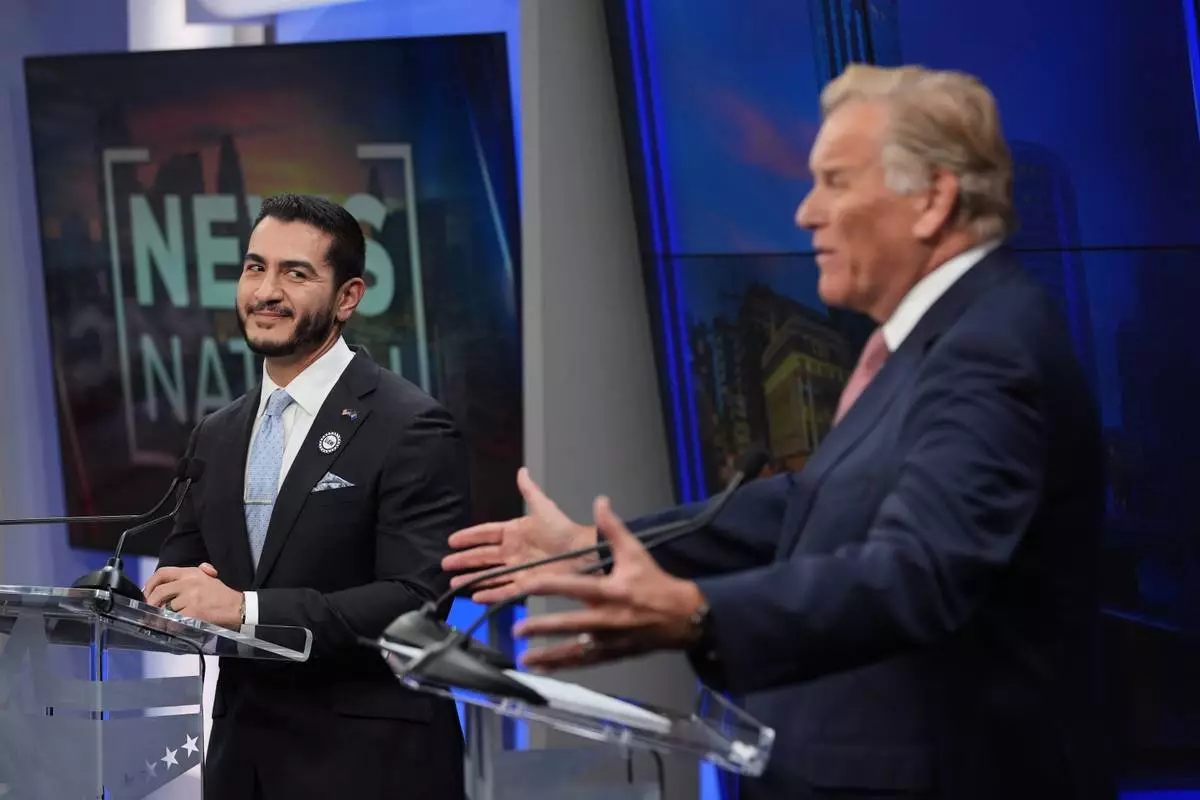
Republican nominee for U.S. Senate Mike Rogers, right, speaks during a televised debate with Democratic nominee for U.S. Senate Abdul El-Sayed, at WOOD-TV, on Thursday, Oct. 8, 2026, in Grand Rapids, Mich. (AP Photo/Paul Sancya, Pool)
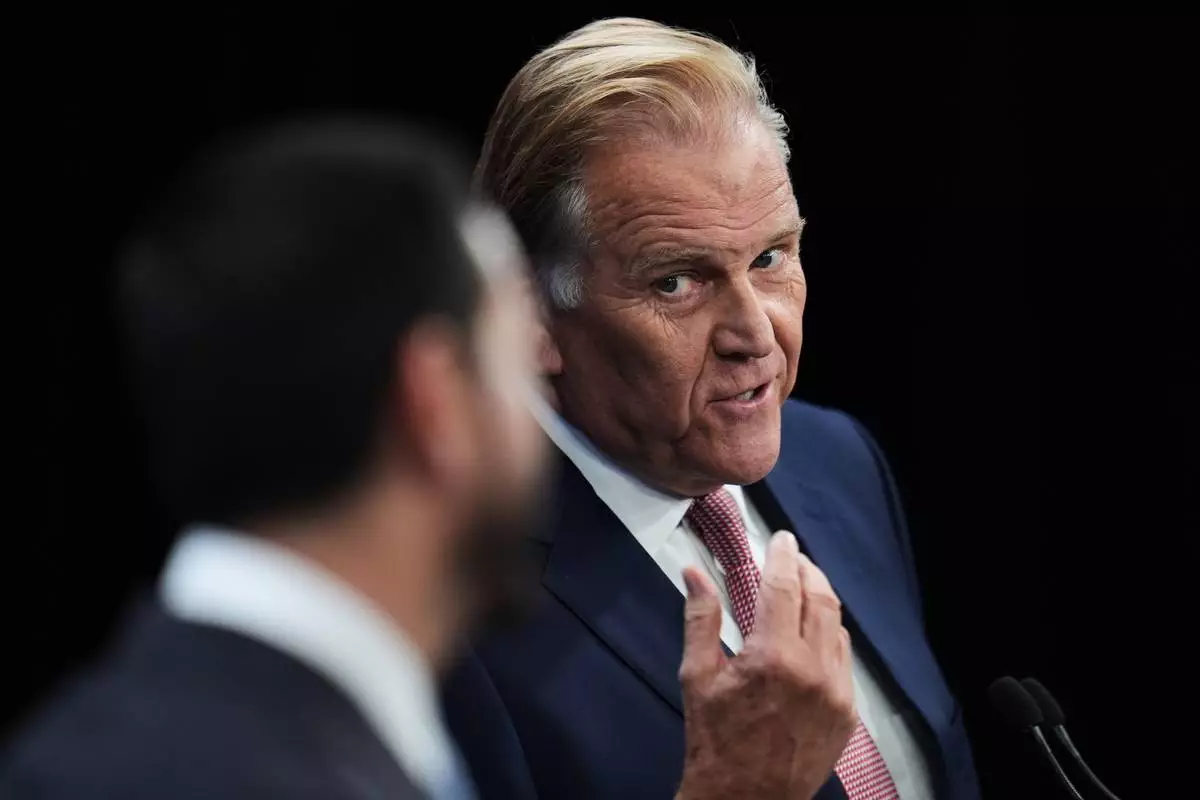
Republican nominee for U.S. Senate Mike Rogers, right, responds to Democratic nominee for U.S. Senate Abdul El-Sayed, during a televised debate at WOOD-TV, on Thursday, Oct. 8, 2026, in Grand Rapids, Mich. (AP Photo/Paul Sancya, Pool)
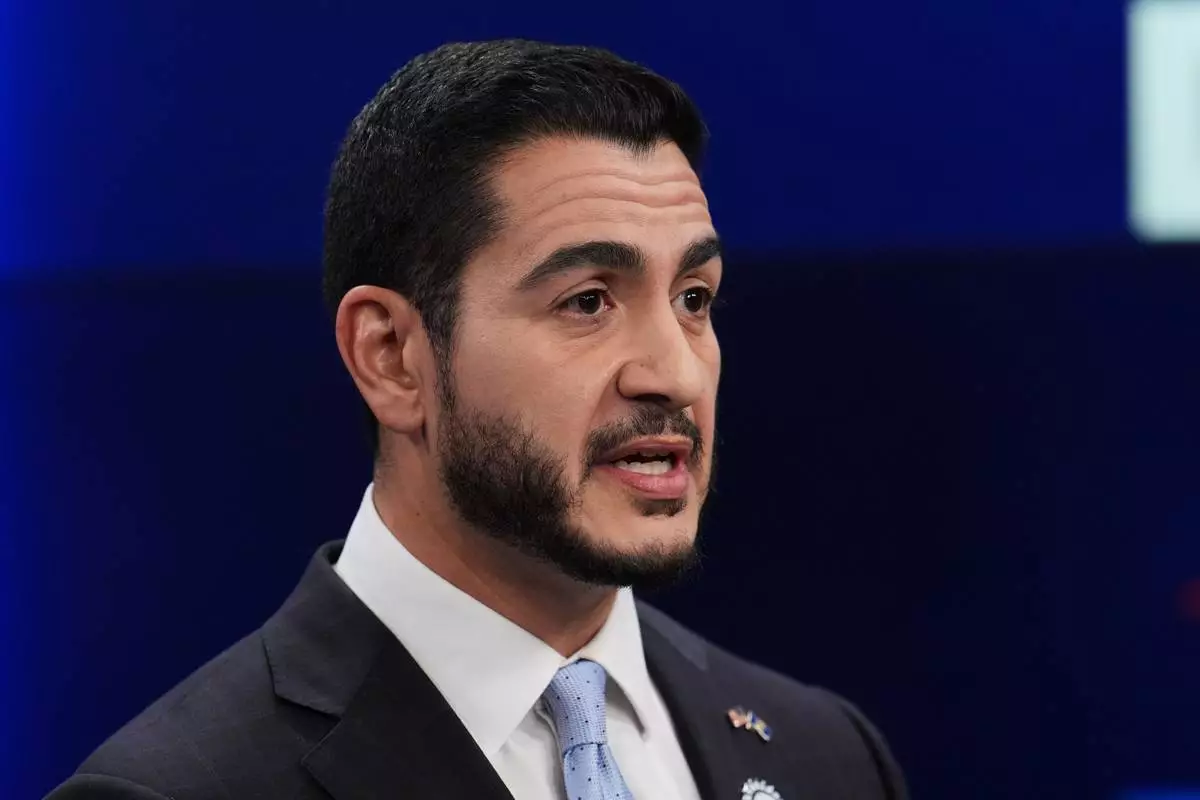
Democratic nominee for U.S. Senate Abdul El-Sayed, talks during a televised debate with Republican nominee for U.S. Senate Mike Rogers at WOOD-TV, on Thursday, Oct. 8, 2026, in Grand Rapids, Mich. (AP Photo/Paul Sancya, Pool)
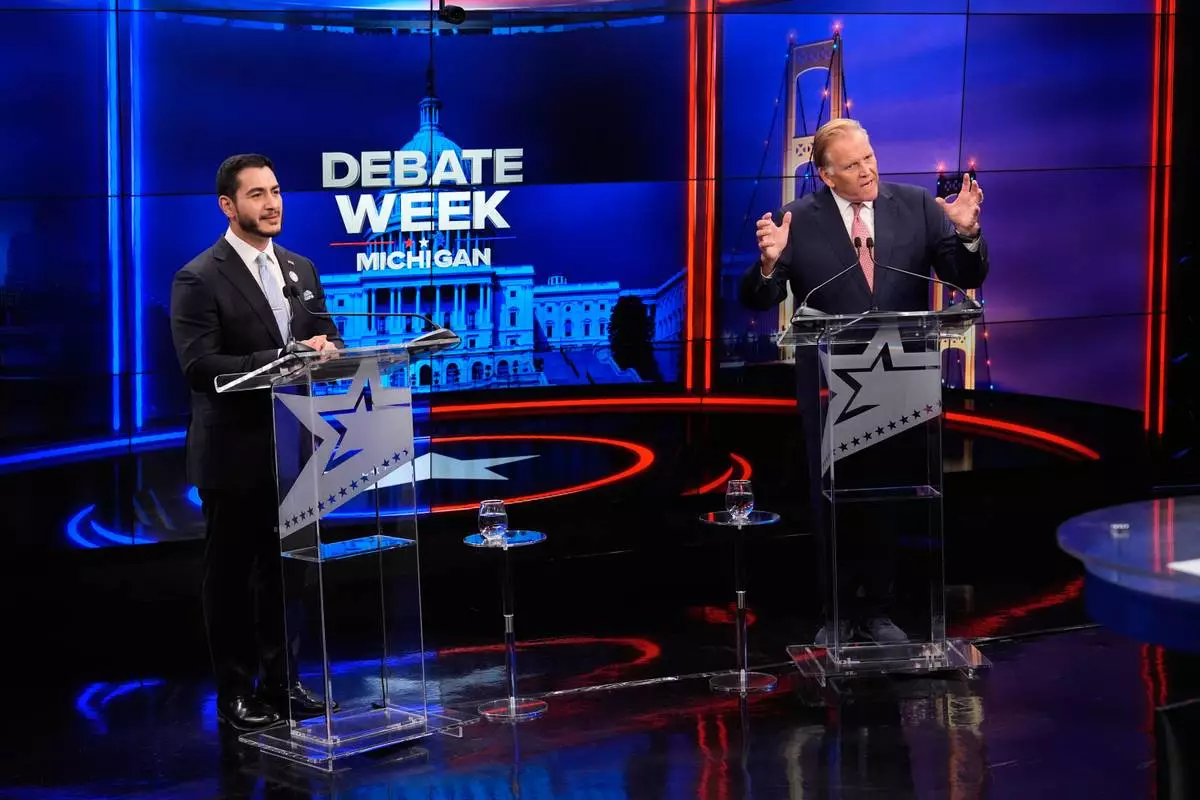
Republican nominee for U.S. Senate Mike Rogers, right, speaks during a televised debate with Democratic nominee for U.S. Senate Abdul El-Sayed, at WOOD-TV, on Thursday, Oct. 8, 2026, in Grand Rapids, Mich. (AP Photo/Paul Sancya, Pool)
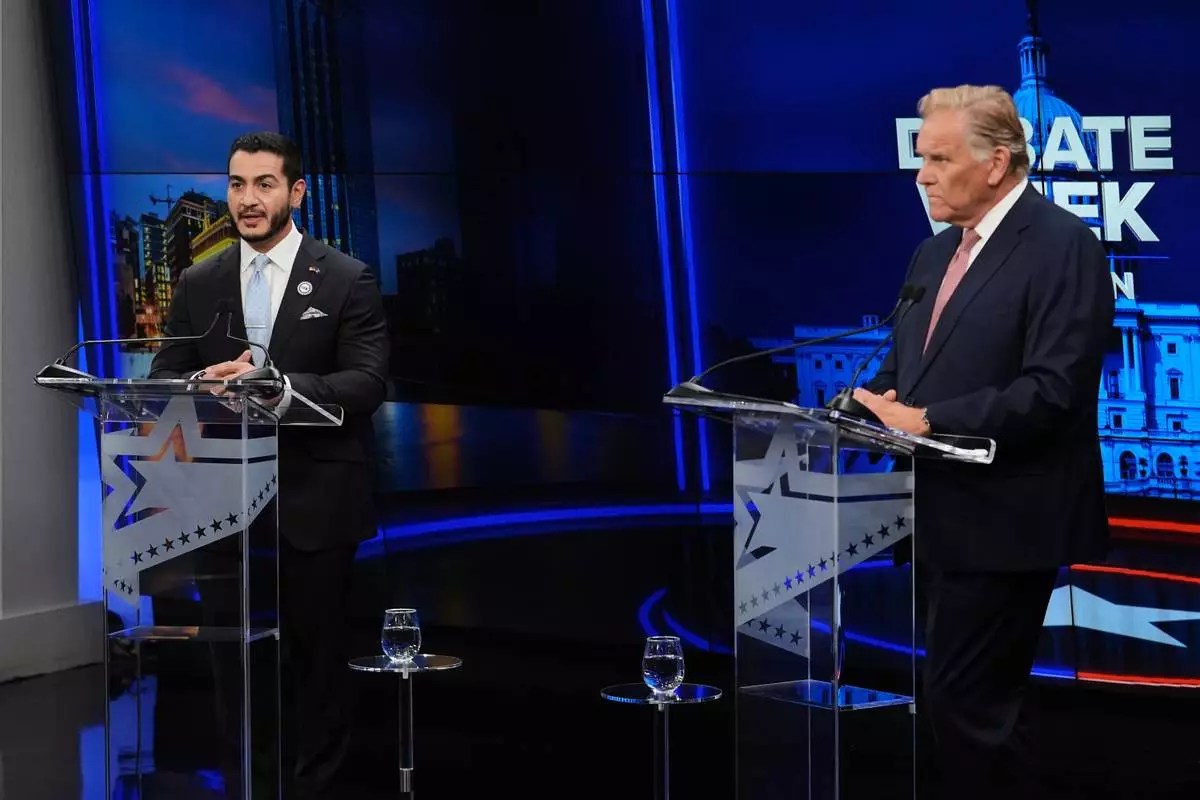
Republican nominee for U.S. Senate Mike Rogers, right, faces off against Democratic nominee for U.S. Senate Abdul El-Sayed, during a televised debate at WOOD-TV, on Thursday, Oct. 8, 2026, in Grand Rapids, Mich. (AP Photo/Paul Sancya, Pool)
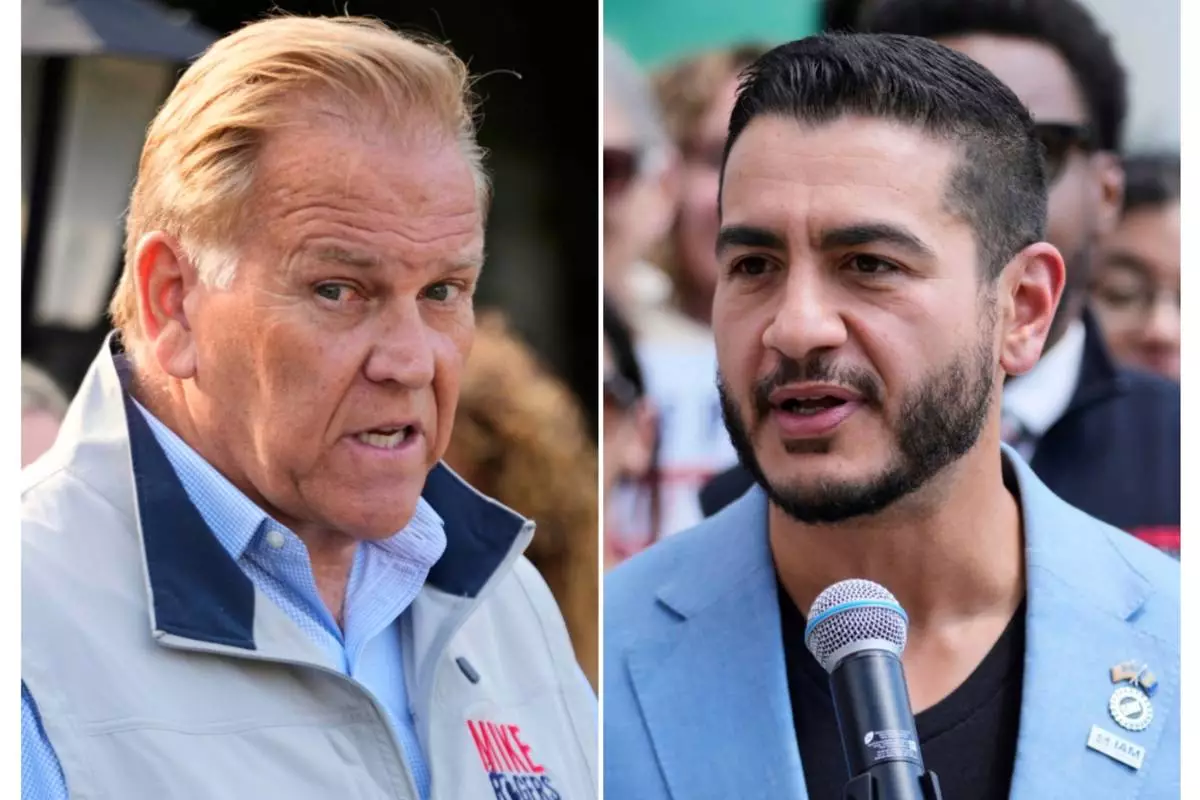
This combination photo of images taken in Detroit shows Senate nominees Republican Mike Rogers, Aug. 20, 2026, left, and Democrat Abdul El-Sayed, Aug. 19, 2026. (AP Photos/Paul Sancya)
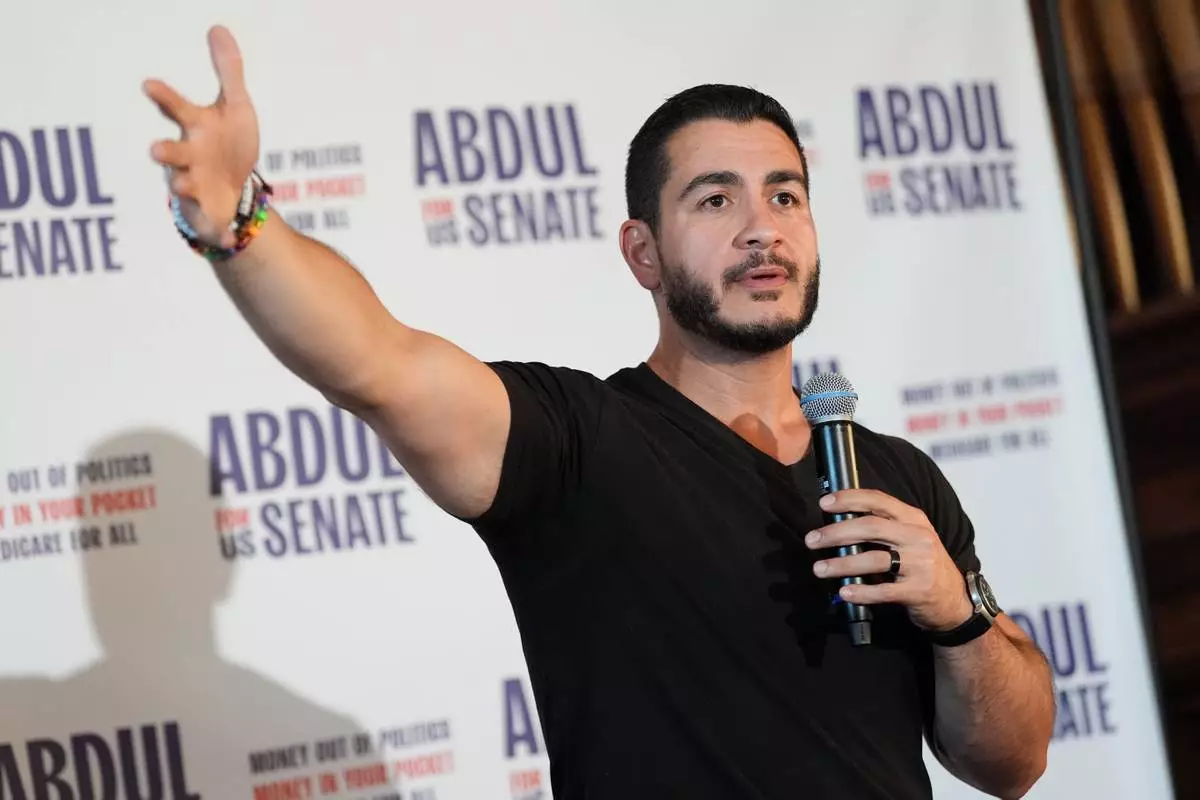
FILE - Abdul El-Sayed, a progressive candidate in the Democratic primary for U.S. Senate in Michigan, speaks during a campaign rally at a coffee shop, Aug. 3, 2026, in Detroit. (AP Photo/Julia Demaree Nikhinson, File)
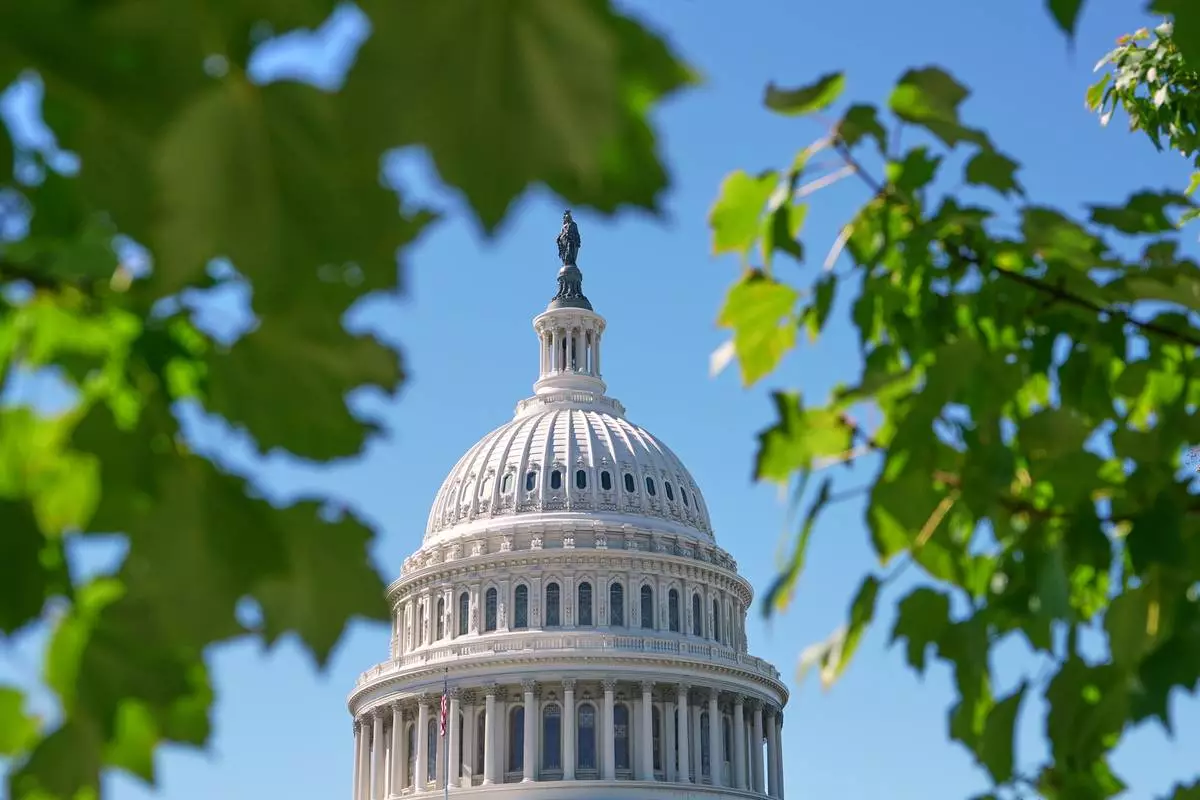
The U.S. Capitol is seen Tuesday, Oct. 6, 2026, in Washington. (AP Photo/Mariam Zuhaib)