Speech by SITI at AWS Future Builders: The AI Career Dialogue
Following is the speech by the Secretary for Innovation, Technology and Industry, Professor Sun Dong, at the AWS Future Builders: The AI Career Dialogue today (October 9):
Dr Vogels (Vice President and Chief Technology Officer of Amazon.com, Dr Werner Vogels), Chris (Managing Director of AWS Hong Kong, Mr Chris So), Terry (Chief Executive Officer of the Hong Kong Science and Technology Parks, Mr Terry Wong), distinguished guests, and young talents,
Good afternoon. It gives me great pleasure to join you all here at Hong Kong Science Park for Future Builders: The AI Career Dialogue. Today's event brings together university students, start-ups and technology leaders to exchange ideas, explore opportunities and consider how we can equip the next generation to thrive in an AI-enabled world.
Artificial Intelligence is no longer a technology of the distant future. It is transforming how businesses operate and how industries innovate. The Hong Kong SAR (Special Administrative Region) Government is seizing this opportunity to cement Hong Kong's status as a world-class innovation and technology (I&T) hub. We are promoting AI as a core industry for Hong Kong's future development and empowering different sectors of the economy through AI technology. A key to this vision is our "AI for All" strategy championed in the 2026 Policy Address. AI should not be an exclusive club for tech giants or isolated research labs, but an open floor for the general public, university students, young researchers and professionals for their daily life and professional empowerment. It should also support our workforce and SMEs (small and medium-sized enterprises) in applying AI to meet practical needs.
In this process, partnerships amongst the Government, industry, academia and investment sectors are important. This is why we are thrilled to see global tech champions like Amazon Web Services (AWS) collaborating with the Hong Kong Science Park, our ecosystem catalyst. Through Hong Kong Science Park's "AI for All" Inclusive Programme, we are giving our talents the practical runway to transform bold AI concepts into real-world solutions that benefit our entire community.
To the university students, young innovators, and aspiring entrepreneurs here today, I would like to leave you with one thought. As generative AI flattens the technical learning curve, your true competitive edge lies in your creativity, critical thinking, problem-solving grit, and your ambition to solve human challenges. The future does not belong to AI, but to the builders who co-pilot with AI to amplify human ingenuity and create value for others.
On our part, the HKSAR Government is building a vibrant, sustainable I&T ecosystem - from infrastructure and research capabilities to talent development and commercialisation. Meanwhile, we are also promoting the responsible use and orderly application of AI across industries, so that innovation can progress in a way that commands the confidence of businesses and the wider community. Hong Kong has a strong research foundation, international connectivity, and a deep pool of talents we need to seize the opportunities ahead. Most importantly, we have young people like you today who are ready to learn and experiment.
Before I close, I want to extend my gratitude to AWS for organising today's event and to Hong Kong Science Park for nurturing our innovation and technology ecosystem. In particular, my greetings also go to Dr Werner Vogels - for your coming to Hong Kong to ignite the minds of our future builders. I wish today's dialogue every success, and all of you an inspiring and rewarding afternoon.
Thank you very much.

Source: AI-found images
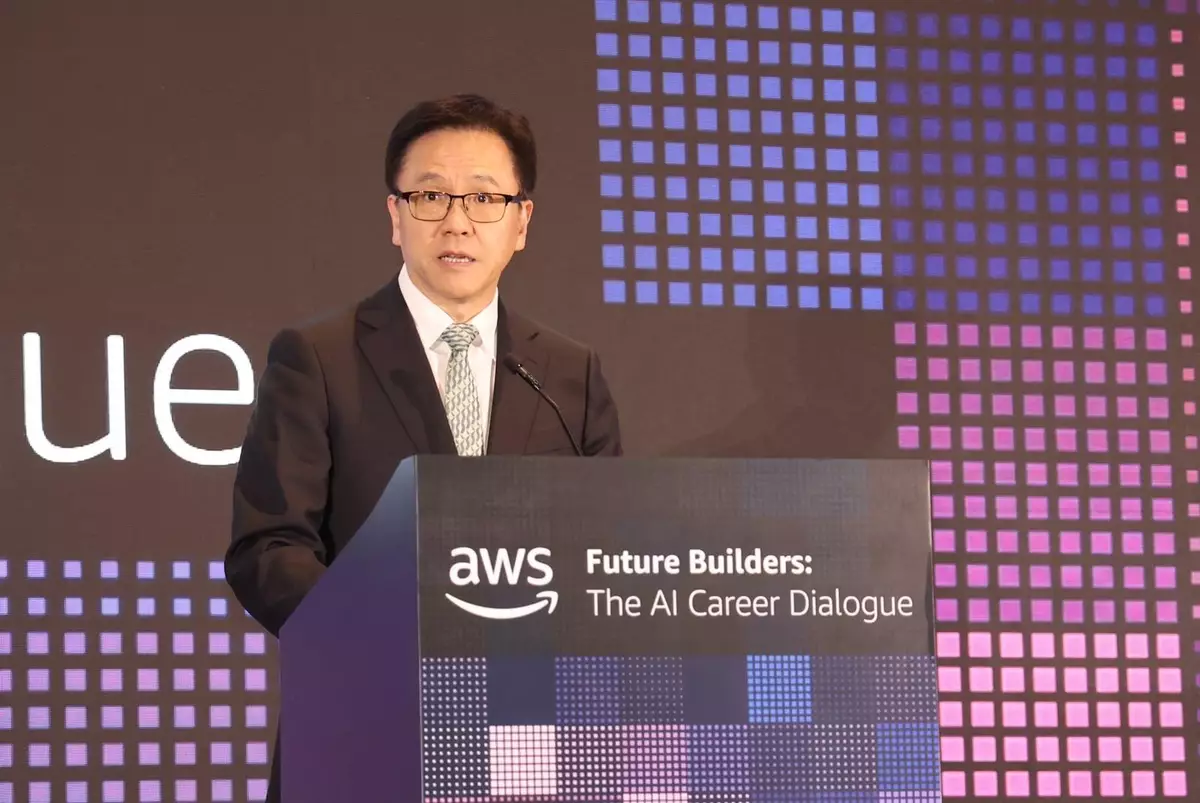
Speech by SITI at AWS Future Builders: The AI Career Dialogue Source: HKSAR Government Press Releases
Source: AI-found images
Update on mosquito-borne diseases, dengue fever and chikungunya fever
The Centre for Health Protection (CHP) of the Department of Health today (October 9) announced the latest situation regarding dengue fever (DF) and chikungunya fever (CF). Although Hong Kong has entered autumn, the weather has yet to cool down and the rainy season has not yet ended, thus favourable for mosquito breeding. Members of the public are reminded to take appropriate measures to prevent mosquito bites and mosquito breeding, both in Hong Kong and when travelling to areas affected by mosquito-borne diseases, in order to prevent mosquito-borne diseases.
Dengue fever
----------------
From October 2 to yesterday, the CHP recorded one imported DF case. The patient had visited Vietnam during the incubation period.
Hong Kong has recorded 33 DF cases so far this year, comprising 31 imported cases and two local cases. A total of 59 DF cases were recorded last year (2025), all of which were imported cases. In 2024, 161 DF cases were recorded, comprising 156 imported cases and five local cases.
According to the World Health Organization (WHO), the global incidence of DF has markedly increased over the past two decades, posing a substantial public health challenge. In 2024, the WHO recorded over 14 million DF cases, which was a record number. In 2025, over five million cases and over 4 000 DF-related deaths were reported in over 90 countries/territories. From January to August 2026, around 2.2 million cases and over 1 000 DF-related deaths have been recorded globally.
DF has long been prevalent in many neighbouring tourist destinations. So far this year, Sri Lanka and Vietnam each recorded over 100 000 cases; Bangladesh and Cambodia each recorded over 80 000 cases; Indonesia and Malaysia each recorded over 70 000 cases; and Singapore recorded over 2 600 cases. Meanwhile, according to the Guangdong Provincial Disease Control and Prevention Administration, as of August 31, 2026, Guangdong Province has recorded 431 cases, of which 150 were recorded in August.
Detailed information on the latest DF situation in Hong Kong, as well as neighbouring and overseas countries and areas, has been uploaded to the CHP'swebsite.
Chikungunya fever
-----------------------
From October 2 to yesterday, the CHP recorded one imported CF case, involving a 73-year-old male. The patient had visited the Chinese Mainland during the incubation period. The CHP considered that he was infected during travel. The case was classified as an imported case. The patient had been admitted to the hospital for treatment in a mosquito-free environment. He recovered and discharged.His household contact has completed medical surveillance and is asymptomatic. The CHP's epidemiological investigation is ongoing. The case has been reported to the Chinese Mainland health authority.
Hong Kong has recorded five confirmed CF cases so far this year, including four imported cases and one local case. Hong Kong recorded a total of 82 confirmed CF cases last year. Among them, 11 were local cases and the rest were imported cases.
According to the WHO, a total of 502 264 CF cases and 186 CF-related deaths were reported in 41 countries/territories last year. Cases were reported in the Americas, Africa, Asia and Europe. According to the Guangdong Provincial Disease Control and Prevention Administration, as of August 31, 2026, Guangdong Province has recorded 739 cases, with 496 recorded in August, a sharp increase from the 36 and 171 cases recorded in June and July respectively.
Preventive measures to be taken by the public
----------------------------------------------------
The CHP reminds members of the public to maintain good environmental hygiene, and to take appropriate measures to prevent mosquito bites and mosquito breeding, both in Hong Kong and when travelling to areas affected by mosquito-borne diseases, in order to prevent mosquito-borne diseases. Mosquito-borne diseases such as DF and CF are endemic in various countries worldwide. The risk of importation persists. Members of the public should check the situation at their destinations before travelling abroad, especially when travelling to Southeast Asian countries. Additionally, whether travelling or not, members of the public should use DEET-containing insect repellents or other effective active ingredients properly to prevent mosquito bites, but the following precautions should be taken when using them:
- read the label instructions carefully first;
- apply right before entering an area with a risk of mosquito bites;
- apply on exposed skin and clothing;
- use DEET of up to 30 per cent for pregnant women and up to 10 per cent for children (for children who travel to countries or areas where mosquito-borne diseases are endemic or epidemic, and where exposure is likely, those aged 2 months or above can use DEET-containing insect repellents with a DEET concentration of up to 30 per cent);
- apply sunscreen first, then insect repellent;
- reapply only when needed and follow the instructions; and
- in addition to DEET, there are other insect repellents available on the market containing different active ingredients, such as IR3535 and picaridin. When using any insect repellent, the public should follow the usage instructions and precautions on the product label.
The Food and Environmental Hygiene Department (FEHD) appeals to members of the public to continue to stay alert and work together to carry out mosquito prevention and control measures early, including inspecting their homes and surroundings to remove potential breeding grounds, changing water in vases and scrubbing their inner surfaces, removing water in saucers under potted plants at least once a week, and properly disposing of containers such as empty cans and lunch boxes. The FEHD also advises members of the public and property management agencies to keep drains free of blockage and level all defective ground surfaces to prevent the accumulation of water. They should also scrub all drains and surface sewers with an alkaline detergent at least once a week to remove any mosquito eggs.
The public should call 1823 in case of mosquito problems, and may visit the following pages for more information: the CF page of theCHPand theTravel Health Service, the latestTravel Health News,tips for using insect repellents, and the CHPFacebook Page,Instagram AccountandYouTube Channel, and also theMosquito Prevention and Control dedicated pageof the FEHD.
Source: AI-found images