CHP investigates cluster of Carbapenemase-producing Enterobacteriaceae carrier cases
The Centre for Health Protection (CHP) of the Department of Health is today (October 9) investigating a cluster of Carbapenemase-producing Enterobacteriaceae (CPE) carrier cases involving three residents of a residential care home for the elderly (RCHE).
The CHP recently received a notification from the Hospital Authority (HA) that two residents living on the same floor of an RCHE in North Point had been admitted to a public hospital for treatment due to their underlying illnesses. Their admission screening samples tested positive for CPE upon laboratory testing and they were suspected to have been infected in the RCHE. The CHP immediately conducted epidemiological investigations, contact tracing as well as screenings, and subsequently identified one more infection case in the same RCHE. All three patients (two males and one female, aged between 74 and 94) are carriers. None of them exhibited symptoms associated with CPE infection. They are currently in stable condition.
The CHP's further investigation revealed that the source of infection for the aforementioned three carrier cases may have been two other previously identified CPE carrier cases on the same floor of the same RCHE. After inspecting the RCHE, CHP staff discovered that the RCHE had not implemented relevant infection prevention and control measures. The bacteria were highly likely to have been transmitted within the RCHE via staff, or contaminated environment and objects. The CHP reminded the staff of the RCHE to adhere to the guidelines and take necessary measures, including enhancing hand hygiene among staff and residents, and thoroughly cleaning and disinfecting the environment and objects. The CHP also recommended that the RCHE cohort the carriers in a single designated area.
The CHP will continue to investigate the cluster of cases and conduct screening at the RCHE concerned to determine whether there are any other CPE-carriers. The CHP will also continue to put the RCHE under medical surveillance.
Enterobacteriaceae (such as Escherichia coli andKlebsiella) are common pathogens that can cause infections in various parts of the body, including urinary tract infections, intra-abdominal infections or blood infection. CPE are enterobacteriaceae that produce carbapenemase, an enzyme that can deactivate carbapenems and other beta-lactam antibiotics such as penicillins. These bacteria are commonly resistant to multiple antibiotics, limiting therapeutic options, and may render severe clinical infections difficult to treat. The range of diseases associated with CPE varies from asymptomatic carriage to potentially life-threatening or fatal infections. The level of risk depends on which part of the body is affected by the infection and the patient's general health.
The proper use of antibiotics and maintaining good personal and environmental hygiene, especially hand hygiene, are important for preventing the emergence and cross-transmission of multi-drug resistant organisms (MDROs), such as CPE. In addition, susceptible individuals such as the elderly, infants, young children, people with weakened immunity and pregnant women can reduce their risk of contracting MDROs by avoiding raw or undercooked foods.

Source: AI-found images
Police College renews collaboration with three post-secondary education institutions to co-organise "DAE - Police Cadet Training" Programme
The Hong Kong Police College today (October 9) signed a second-phase Memorandum of Understanding (MOU) with the Caritas Institute of Community Education (CICE), the Hong Kong College of Technology (HKCT) and the Hong Kong Institute of Technology (HKIT) to jointly organise the full-time "Diploma of Applied Education (DAE) - Police Cadet Training" Programme for the three academic years from 2027/28 to 2029/2030, with a view to providing practical knowledge and preparatory training for persons interested in joining the Force. Students who successfully complete the programme and pass the Police Constable selection process may commence foundation training at the Police College upon graduation.
Witnessed by the Assistant Commissioner of Police (Personnel), Dr Law Yuet-wing; the Director of the Hong Kong Police College, Ms Cheng Lai-ki, and the Secretary-General and Acting Head of the Diploma of Applied Education of the Federation for Self-financing Tertiary Education, Dr Ma Chee-keung, the Senior Superintendent of Police, School of Foundation Training, Ms Tsang Chiu-tong, signed the second-phase MOU with the Principal of the CICE, Dr Wong Man-wai, the Vice President of the HKCT, Ms Li Wai-chi, and the President of the HKIT, Dr Shi Mei-chun.
The "Diploma of Applied Education (DAE) - Police Cadet Training" Programme lasts one year with a total of 600 contact hours. The three education institutions will be responsible for 420 contact hours, consisting of 300 contact hours of core courses (Chinese Language, English Language and Mathematics) and two 60-hour complementary courses. The Hong Kong Police College will be responsible for the 180-hour "Police Cadet Training" elective cluster, which comprises three courses, namely "Police Studies", "Police Recruit Preparatory Training" and "Physical and Mindset Development".
Students who successfully complete the DAE programme would obtain qualification deemed comparable to the attainment of Level 2 standard in five subjects including Chinese and English Languages in the Hong Kong Diploma of Secondary Education Examination, which meets the academic entry requirements for Police Constable. The Hong Kong Police College will conduct the Police Constable selection process during the programme to facilitate admission of selected candidates, who may commence Recruit Police Constable foundation training upon graduation.
Applicants of the programme must be i) Secondary 6 school leavers or ii) aged 21 or above, who are interested in joining the Force. To join the Hong Kong Police Force, one must also be a permanent resident of Hong Kong. The first round of application will open in December 2026. To apply, please make online registration at the programme website (www.dae.edu.hk/daepublic/dae_enrollmentguide.aspx).
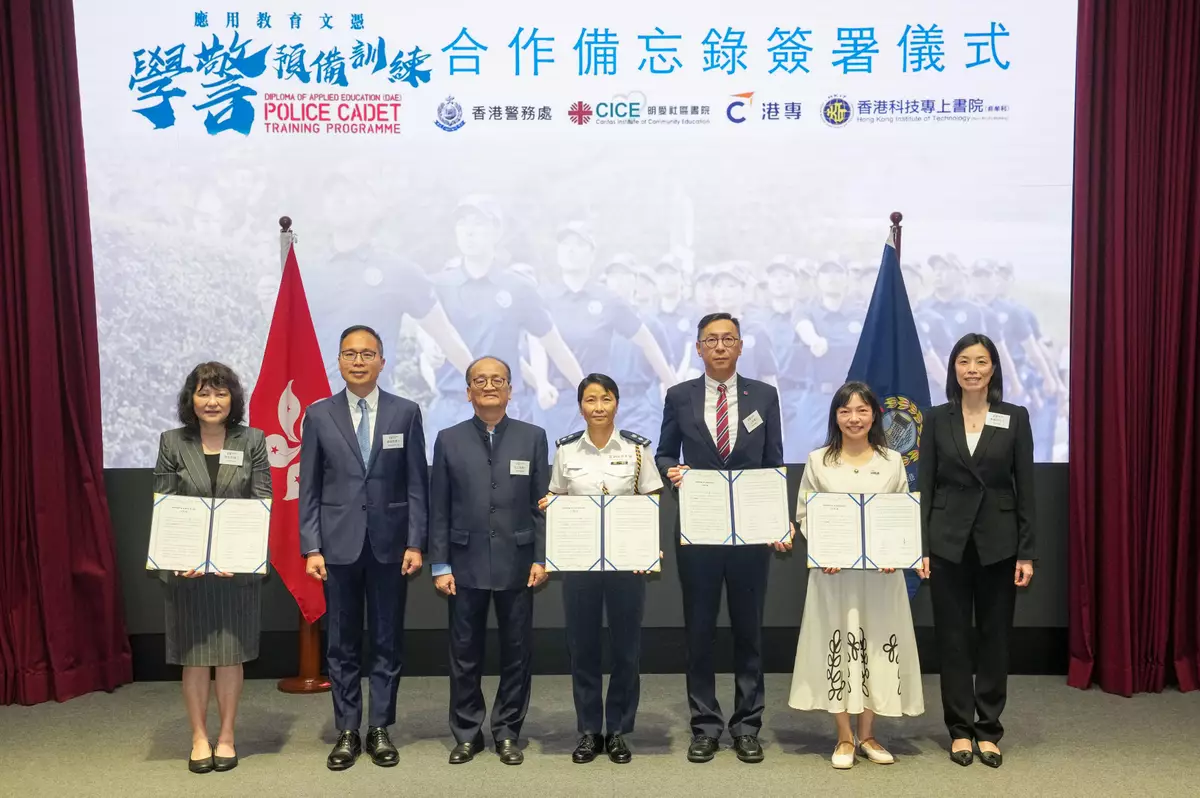
Police College renews collaboration with three post-secondary education institutions to co-organise "DAE - Police Cadet Training" Programme Source: HKSAR Government Press Releases
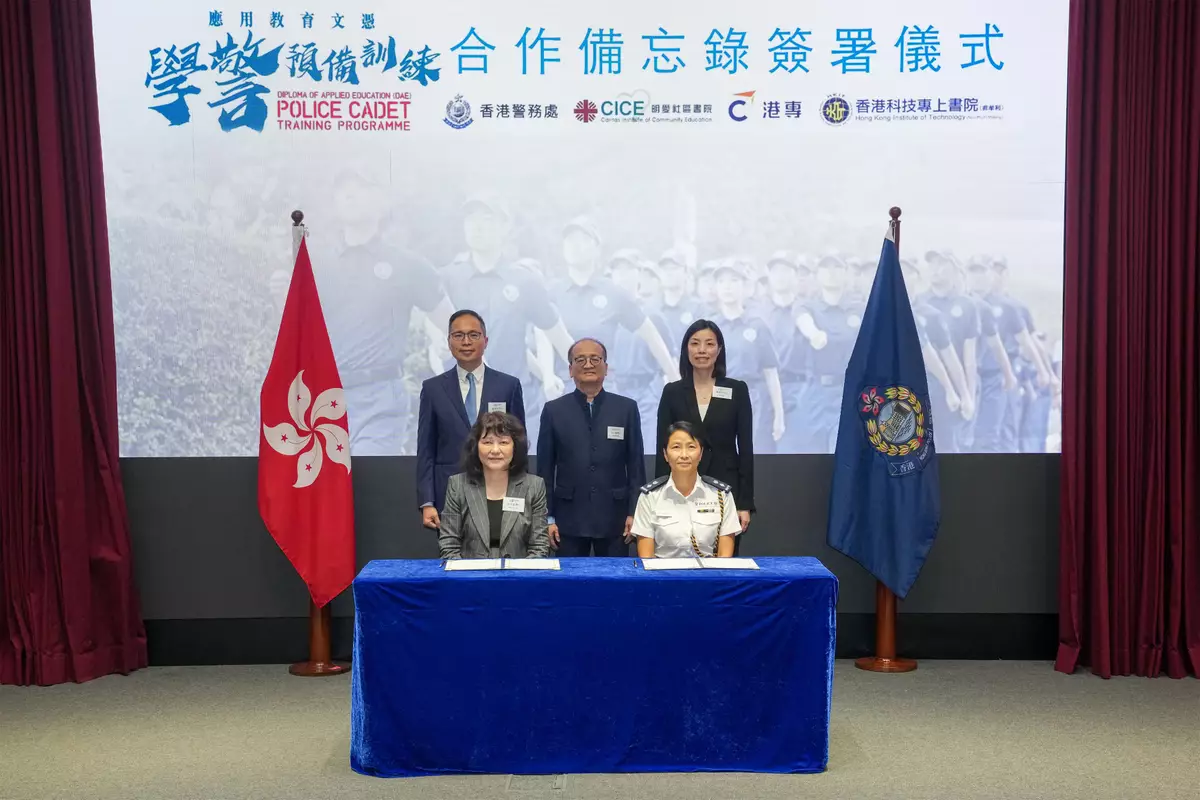
Police College renews collaboration with three post-secondary education institutions to co-organise "DAE - Police Cadet Training" Programme Source: HKSAR Government Press Releases
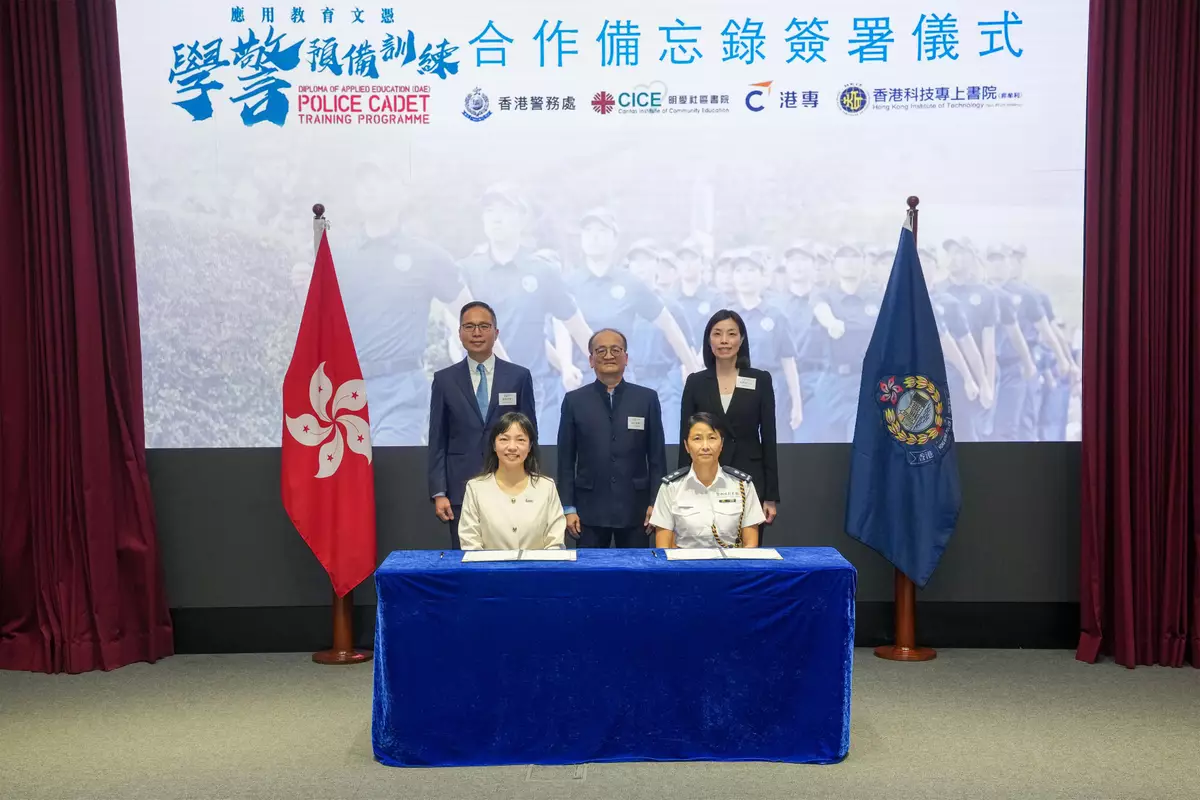
Police College renews collaboration with three post-secondary education institutions to co-organise "DAE - Police Cadet Training" Programme Source: HKSAR Government Press Releases
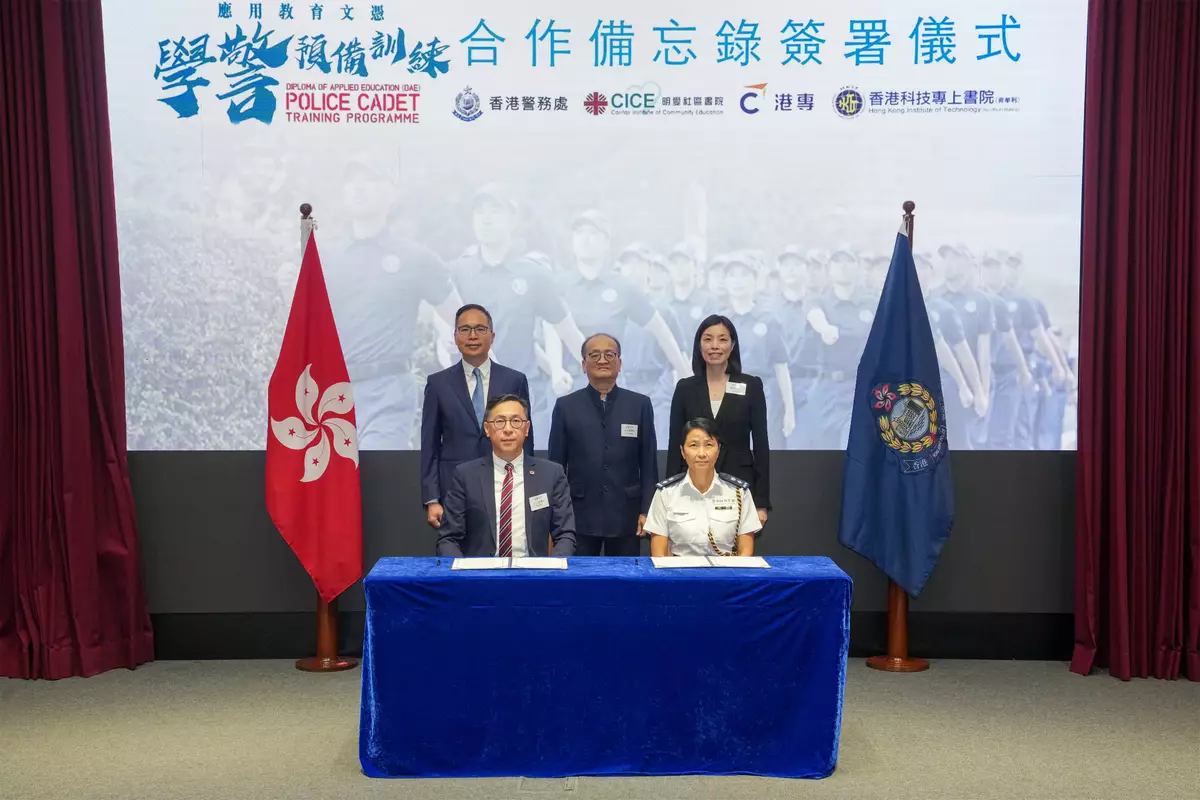
Police College renews collaboration with three post-secondary education institutions to co-organise "DAE - Police Cadet Training" Programme Source: HKSAR Government Press Releases