RIO DE JANEIRO (AP) — Brazilian President Luiz Inácio Lula da Silva ’s government on Friday announced new fuel tax cuts and extended existing subsidies aimed at lowering fuel prices, just over two weeks before a closely contested presidential runoff.
Fuel prices are a particularly sensitive issue for voters, who will decide on Oct. 25 whether to elect Sen. Flávio Bolsonaro, a son of former President Jair Bolsonaro, or grant Lula a fourth, nonconsecutive term. Bolsonaro received about 2 million more votes than Lula in Sunday's first round.
A new decree eliminates federal taxes on the import and sale of gasoline for 30 days, with the possibility of an extension. The measure is effective from Friday, the same day previous measures that lowered taxes expired. It extends a tax exemption and increases a subsidy for ethanol.
The government also said it would provide an additional subsidy to importers of diesel, who will receive 1.40 reais ($0.28) per liter for a period of 30 days. This amount is in addition to the 2.12 reais ($0.42) per liter subsidy already in effect.
“The aim is to ensure that imports remain economically viable at a critical time for fuel supply,” the government’s secretariat for social communication said, adding that the measures were in line with the strategy adopted by the government since the start of the Iran war.
The fiscal impact of the measures will be offset by the revenues from the federal government’s oil assets, it added.
Crude oil prices shot up shortly after Israel and the U.S. began their war with Iran in late February, largely because the fighting halted most shipping through the Strait of Hormuz, a narrow waterway where roughly a fifth of the world’s oil supply passed before the conflict.
“The international situation has deteriorated since the measures announced in September,” the government said, adding that international diesel and gasoline refining margins had risen to more than double their pre-war levels.
Brazil is a major producer and exporter of crude oil, and its revenues from the sector have surged this year due to the hike in international prices. But the country still relies on imports to meet domestic demand for refined fuels.
Stabilizing diesel prices is also critical to prevent truck driver strikes and keep food inflation in check. In 2018, a truckers’ strike caused food prices to spike, left grocery market shelves and gas stations depleted, and caused billions in losses, underscoring the power of organized truckers.
Follow AP’s coverage of Latin America and the Caribbean at https://apnews.com/hub/latin-america
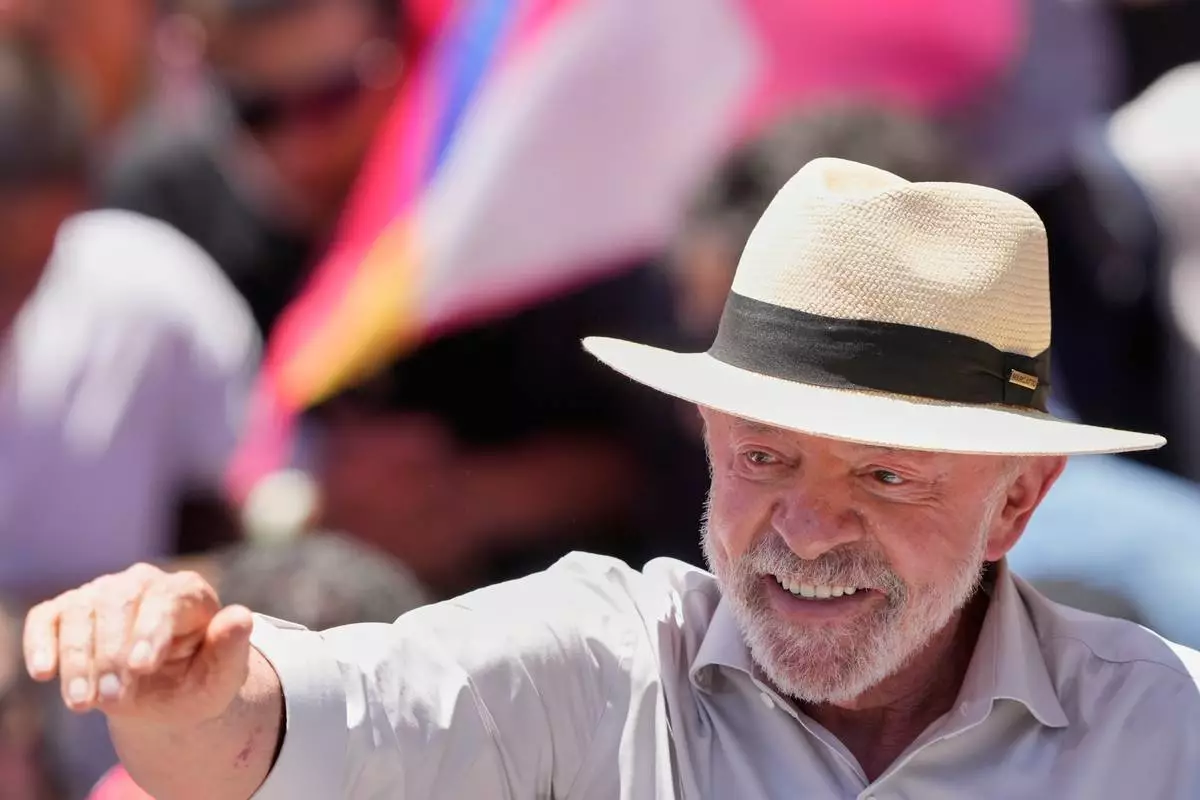
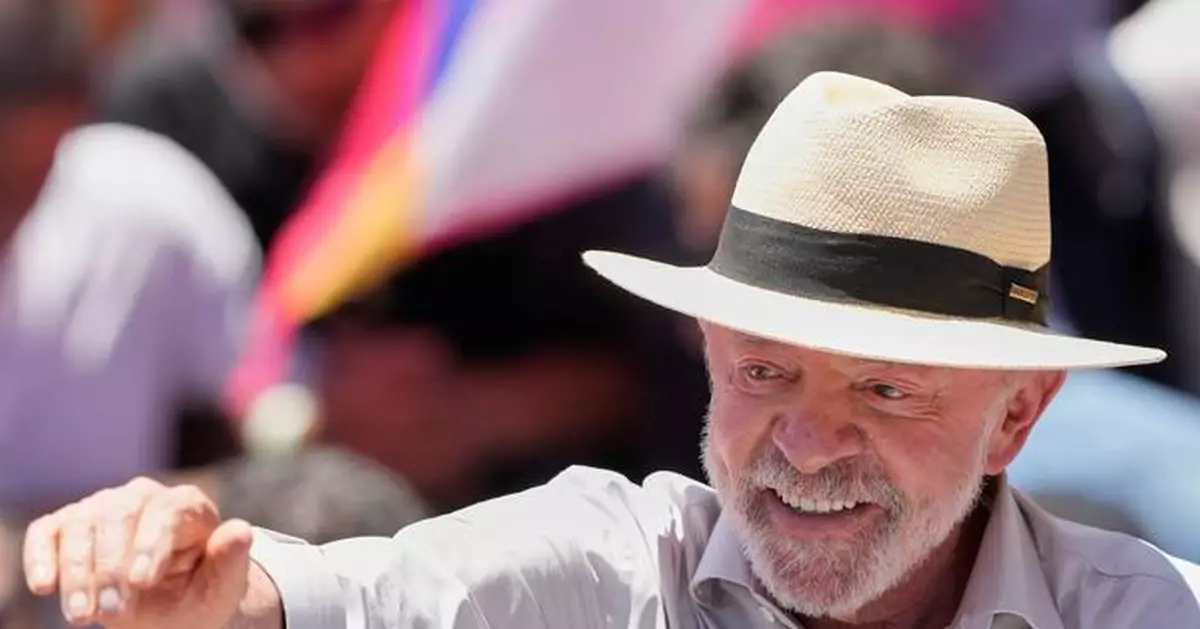
Brazilian President Luiz Inacio Lula da Silva, who is running for reelection, greets supporters as he campaigns ahead of the upcoming presidential runoff election in the Ceilandia neighborhood of Brasilia, Brazil, Friday, Oct. 9, 2026. (AP Photo/Eraldo Peres)
WASHINGTON (AP) — President Donald Trump said he has struck a deal to obtain diesel from Russia, a stunning reversal of years of U.S. pressure on Moscow over its war with Ukraine and an attempt to address high fuel prices ahead of the U.S. midterm elections.
Trump said on social media on Friday that he struck the deal with Russian President Vladimir Putin in a phone call in which he was expected to discuss a suspected case of plague in Russia. Instead, Trump announced that Russia will immediately supply more than 300,000 tons of diesel, followed by an additional 500,000 tons in November and 1 million tons “immediately thereafter.” Russia will deliver an additional 3 million tons “within a short period of time” after that, he wrote.
Trump’s shocking announcement comes after he signed a sweeping Russia sanctions law last month that aimed at clamping down on Russia’s oil and gas revenues that fuel its war against Ukraine.
Ukrainian President Volodymyr Zelenskyy called it “a weak decision, unfortunately, a weak decision by strong partners," according to a statement released by the Ukrainian Embassy in Washington.
Trump announced the deal as his envoy Steve Witkoff and son-in-law Jared Kushner were meeting with Ukrainian officials in Miami to discuss a proposal to try to end the Russia-Ukraine war.
“I believe our team is simply being used as a smokescreen. And that is certainly not fair. It is certainly not how partners should treat each other,” Zelenskyy said.
Trump's move casts doubt on the likelihood of the White House imposing sanctions on Russia this month, given that a bipartisan law passed by Congress directs the administration to target the top importers of Russian oil and gas.
Sen. Richard Blumenthal, D-Conn., who co-sponsored the Russian sanctions law, slammed it as a “poorly concealed attempt to mitigate the havoc caused by Trump’s illegal war in Iran.”
“The President’s decision to lift sanctions on Russian diesel is an embarrassment and makes us complicit in Putin’s war against Ukraine," he said in a statement.
Trump, in his announcement, did not address the sanctions or Russia’s war but said, “Lower prices for Americans, especially our Great Farmers, Ranchers, and Truckers, is my Greatest Priority.”
Trump said later as he left the White House for a campaign rally that he was thankful for the deal. "I want to thank President Putin. To be honest with you, we have massive amounts of oil coming into our country, and it’s diesel, which is what we want. So, thank you," Trump said. He did not answer shouted questions about the criticism from Zelenskyy.
The White House did not immediately respond to questions about who was paying for the diesel from Russia and when the fuel being supplied under the agreement would become available. It also did not clarify whether subsequent supplies of Russian diesel set to come next month would be supplied prior to Election Day on Nov. 3.
Gas prices globally have surged as the war in Iran upends the energy sector. While diesel future prices dipped on the news on Friday, the national average for a gallon of diesel in the U.S. remained high at $6.28, according to AAA, after hitting a record $6.52 on Sept. 22.
A statement from Putin, released by the Kremlin on Friday, said that during their call he and Trump dedicated “significant attention to the prospects of resolving the Ukrainian crisis” and also discussed “the situation around Iran and various aspects of bilateral relations.”
Russia “confirmed its readiness to supply oil and oil products to the American and global markets,” Putin said. “I am confident that this will have a positive impact on the entire global economy.”
The two leaders agreed to continue contacts, Putin said in the statement.
Zelenskyy, in a lengthy post online reacting to the deal, said Russia would repay it “with further terror and perfidy.” He cast it as an investment in the war, allowing it to be prolonged.
“It plays into Russia’s hands — allowing it to kill more, wage war for longer, have even less respect for America, and inflict even greater losses and damage on the world,” he said.
Blumenthal, in his scathing statement, invoked the memory of Sen. Lindsey Graham, a Trump ally and Russia hawk, for whom the sanctions law is named after.
“This agreement with a murdering dictator is a stain on our nation’s character, an insult to Lindsey Graham’s memory, and directly contrary to Congress’s intent in our bipartisan sanctions bill," he said.
Rep. Don Beyer, the senior House Democrat on the Joint Economic Committee, called Trump’s announcement “infuriating.”
“This is what we warned anyone who would listen: Trump isn’t the slightest bit trustworthy when it comes to Russia,” Beyer said in a statement on X.
The law Trump signed last month envisions sanctions on Russian officials, banks and a shadow fleet of tankers and bans all new U.S. investment in Russia and the handling of sovereign debt.
It also directed Trump to impose tariffs of up to 100% on the top five importers of Russian oil or natural gas, with an exception for countries that import less than 15% of Russia’s natural gas exports and have taken significant steps to reduce those imports.
The U.S. has not imported Russian oil or gas since 2022, when the Biden administration banned the imports because of Moscow’s invasion of Ukraine, according to the U.S. Energy Information Administration.
Shortly after Trump made the announcement, the Treasury Department said it was immediately issuing a temporary license allowing Russian diesel to be supplied to the global market.
This is the latest in several licenses the U.S. Treasury has issued regarding Russian fuel shipments since the start of the Iran war early this year. But it is the first such license to ease sanctions on diesel for a period lasting longer than the standard 30-day window since the start of the Ukraine war.
The new so-called general license means U.S. sanctions will not apply until April 2027 on deliveries of Russian diesel that has been loaded onto tankers as of Friday. The department extended similar easing of sanctions in March and April even though Treasury Secretary Scott Bessent had ruled out such a move earlier in the year.
The extensions continue to underscore how the fallout from the Iran war has boosted Moscow’s ability to profit from its energy exports, which had been restrained by the U.S. and other allies since the invasion of Ukraine.
"What does this do to prices? I think probably not much,” said Clayton Seigle, an energy strategist and expert at the Center for Strategic and International Studies.
But, Seigle said the new deal is a “great benefit to Russia and to Putin,” who are currently trying to offload their summer-grade diesel for the heavier winter and arctic grades that they will need in the coming months.
“It’s kind of shuffling deck chairs on the Titanic,” said Michael Lynch of the Energy Policy Research Foundation, a non-partisan research institution focused on energy and economics.
“If we get diesel from Russia, basically it means that their existing customers are not going to get it and they’ll have to go somewhere else, and that will keep the price basically where it is now,” Lynch said.
Russia, once a major exporter of diesel, has banned exports since July as it has struggled to meet demand inside the country because of Ukraine’s repeated attacks on Russian oil refineries. The International Energy Agency says Russian diesel output has fallen by about 30%.
Russian Deputy Prime Minister Alexander Novak told state news agency Tass that Russia is “immediately starting to lift restrictions on diesel exports ahead of schedule.” He said that Moscow could start supplies to the U.S. already in October, and that Russia’s domestic market will be “fully supplied” with diesel, as well.
Associated Press writers Will Weissert and Konstantin Toropin in Washington, Alex Veiga in Los Angeles and Farnoush Amiri in New York contributed to this report.
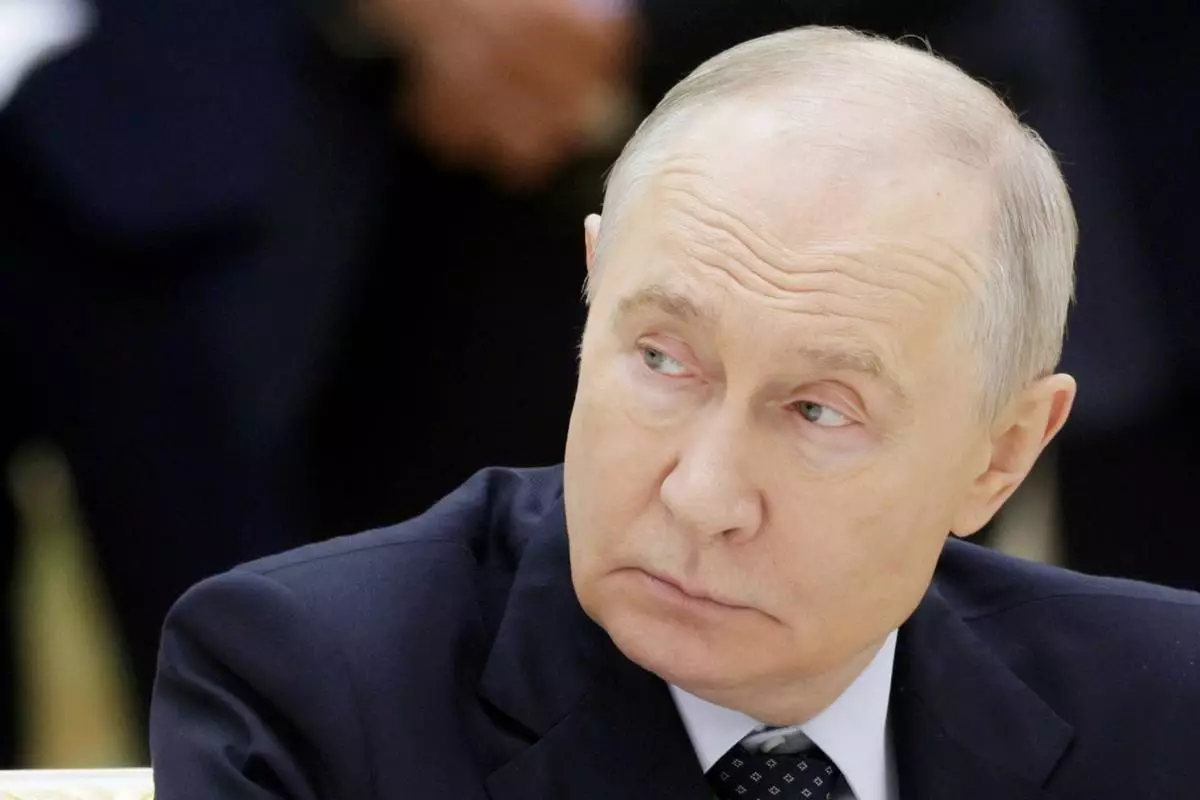
Russian President Vladimir Putin attends the extended format meeting at the Commonwealth of Independent States (CIS) summit in Turkmenbasy, Turkmenistan, Friday, Oct. 9, 2026. (Gavriil Grigorov, Sputnik, Kremlin Pool Photo via AP)
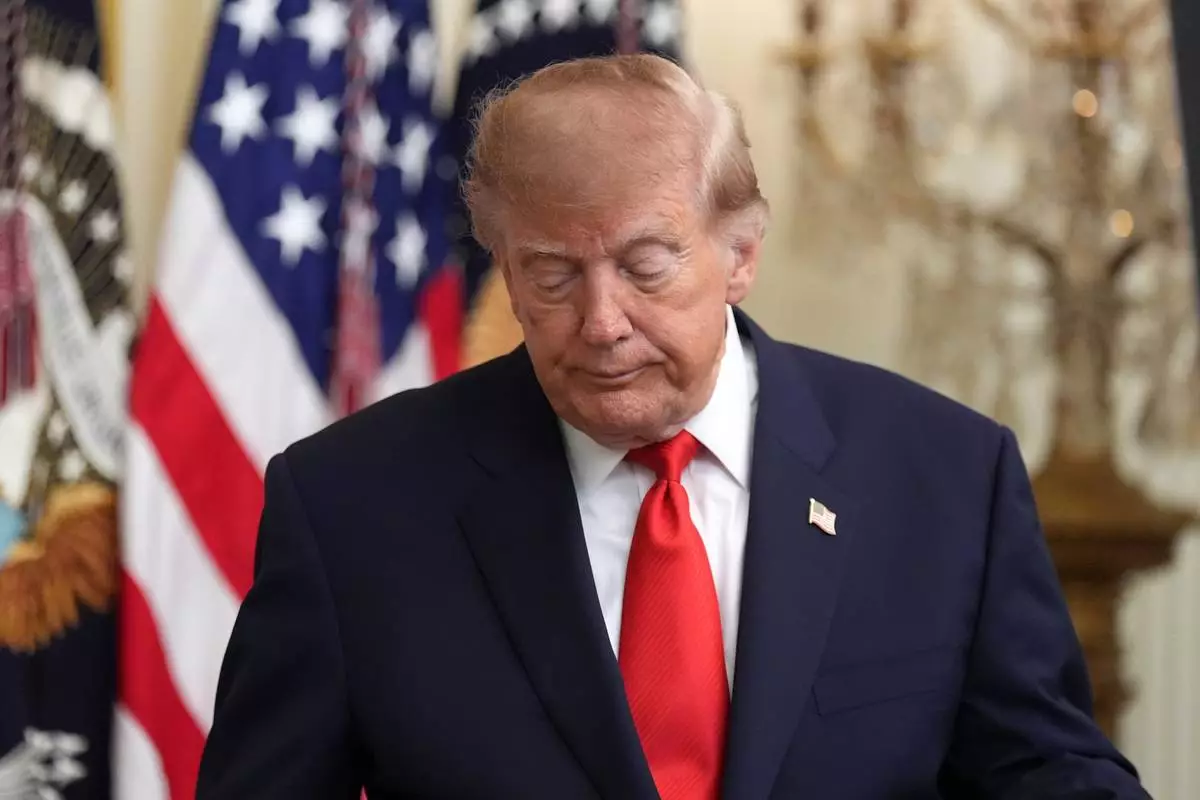
President Donald Trump walks after speaking at a Columbus Day celebration in the East Room of the White House, Friday, Oct. 9, 2026, in Washington. (AP Photo/Alex Brandon)

The price of a gallon of diesel fuel is shown electronically on a pump at a QuikTrip station Thursday, Oct. 1, 2026, in Greenwood Village, Colo. (AP Photo/David Zalubowski)