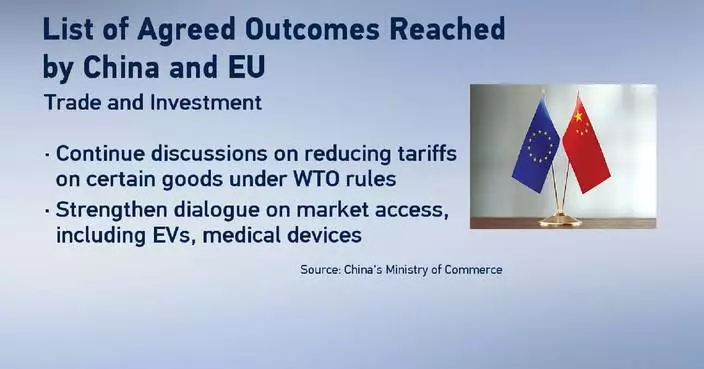
As protectionism rises globally, China and the European Union (EU) are seeking a path between trade balance and cooperation, according to Wang Yiwei, director of the Institute of International Affairs and the Center for European Studies at Renmin University of China.
There is an ongoing global debate about where to draw the line between balancing trade and protecting domestic industries. In Europe, concerns about the continent's trade imbalance with China have become a major issue in economic and trade relations and a key consideration behind the EU's recent push to strengthen its trade policy instruments.
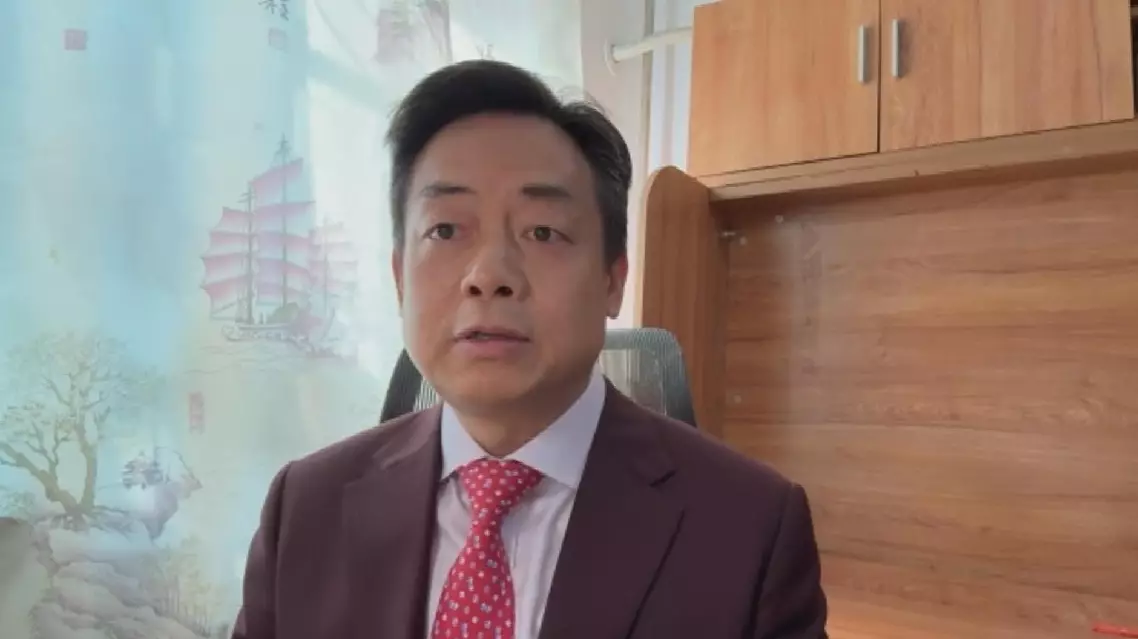
Wang shared his insights on this evolving dynamic, stressing that free trade is ultimately in the interests of both sides.
"Protectionism is rising in the world, from the U.S., from Europe, and some people even claim from China. The so-called protectionism is not (about) market access fully to China. They're more setting the precondition. Before the environmental protection criteria, but now, they even need a quarter of the China product sales to Europe. And also the protectionism is rising because the Europeans are not in favor of free trade. They think free trade is more in China's favor. Actually, China and the European Union in the long term and fundamentally benefit from free trade and multilateral cooperation. So we need to address the Europeans' concern and then to reach the high-quality development of China, and then win-win 2.0 of between China and the European trade," said Wang.
With growing economic interdependence, many hope for a path forward that focuses on innovation and sustainable growth through collaborative efforts, but both China and the EU face pressure to protect strategic industries.
"I think the Europeans' concern is technical, like the trade deficit, but they put this as the policy problem, like planned substitutes, and also maybe interest rate, and also maybe kind of the so-called state capitalism, so it's not in favor of the Europeans. However, I think the real reason for the Europeans' concern is the comparative advantage. I think cooperation with China may help solve this problem in the long term, not just put China as the scapegoat of losing their comparative advantage in the industrialization 4.0," said Wang.
China, EU navigate path between trade balance, protectionism