The Chinese Consulate General in Denpasar, Indonesia, is pushing forward with a livelihood-focused well-drilling initiative in this Southeast Asian country's East Nusa Tenggara province, as local communities and schools face mounting pressure from a prolonged drought due to El Nino.
Two new wells are currently under construction in Rote Ndao Regency and West Sumba Regency in East Nusa Tenggara. The province, which spans the eastern reaches of the Indonesian archipelago, is among the areas facing serious water shortages.
According to the consulate, the well in Rote Ndao is capable of supplying water, and each completed well is expected to serve thousands of residents in surrounding communities.
The project, which began in 2025 and continues this year, aims to address the immediate needs of local communities and schools struggling with water scarcity. The Chinese consulate said the initiative was a response to requests from local governments and communities.
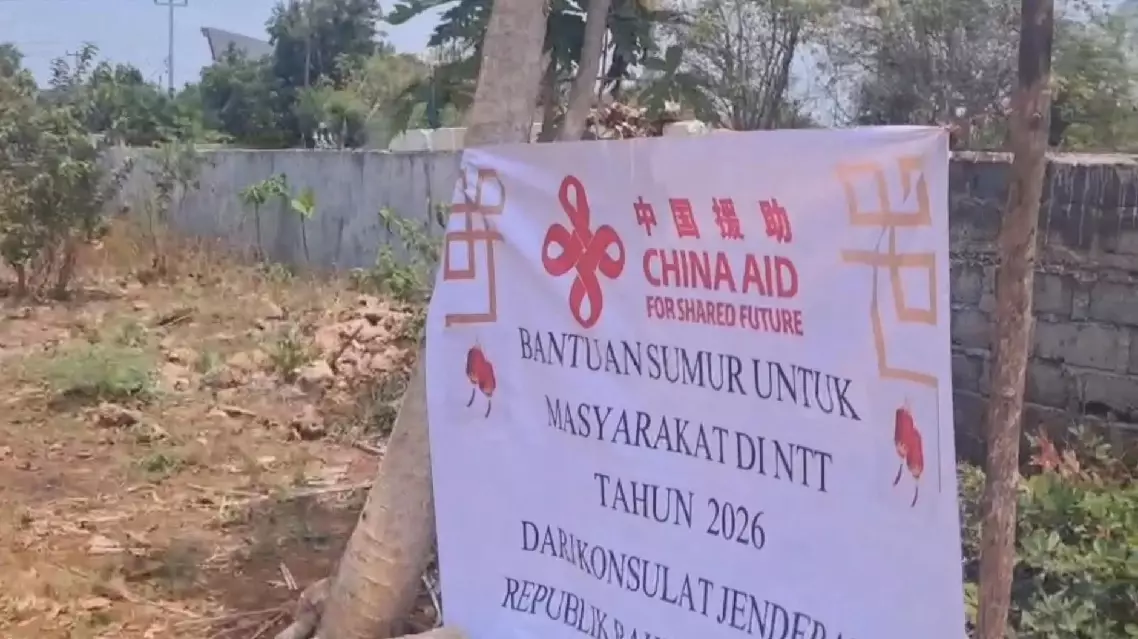
Chinese consulate advances well drilling project in drought-stricken Indonesia
China and the European Union (EU) have agreed to maintain stable bilateral economic and trade ties while working to make them more balanced, and have scheduled March 2027 for their next meeting under a trade and investment consultation mechanism, according to a joint statement released Friday. Published by China's Ministry of Commerce, the statement said that Chinese Minister of Commerce Wang Wentao and European Commissioner for Trade and Economic Security Maros Sefcovic jointly chaired the second meeting of the China-EU trade and investment consultation mechanism from Thursday to Friday in Beijing.
Wang said the two sides had held dozens of rounds of in-depth discussions since the mechanism's first meeting, making progress and helping stabilize expectations.
"The frequency and effectiveness of these consultations have met our expectations. Both teams have engaged in very intensive and challenging discussions," said Wang.
Sefcovic also welcomed the intensive exchanges, underscoring the importance of safeguarding ties between the two major trading partners.
"Because we are very important trading partners. We have a very massive trade relationship. And therefore, we have to take good care of it, so it could function and deliver also for the future," he said.
The two sides engaged in pragmatic and productive discussions and agreed on a list of outcomes, the joint statement said. The list set out 16 specific points of consensus covering trade and investment balance, export controls, intellectual property rights and World Trade Organization (WTO) reform.
According to the ministry, the two sides agreed to continue exploring the possibility of reducing tariffs on certain goods within the framework of WTO rules.
China and the EU reached an understanding on trade in hybrid vehicles in a manner consistent with WTO rules. The two sides will also continue relevant procedures concerning companies' price undertakings and reviews in the EU's anti-subsidy case involving Chinese electric vehicles, the statement said.
The two sides further agreed to hold a technical dialogue on the EU's Foreign Subsidies Regulation.
China expressed its willingness to continue facilitating the processing of export license applications for rare earths and permanent magnets destined for the EU through a "green channel" mechanism. The EU, together with its member states, will continue to facilitate the resolution of key licensing cases involving China in the dual-use sector, according to the joint statement.
The two sides also agreed to explore investment cooperation to promote their respective economic development and discussed future-oriented cooperation. As key trading partners, China and the EU reaffirmed their commitment to properly handling their differences within the framework of WTO rules, and to keeping bilateral economic and trade ties stable and making them more balanced, the statement noted.
The two sides also agreed to hold the third meeting of the consultation mechanism in March next year and maintain close communication in the meantime, including through a ministerial video conference in January next year, the statement said.
Both sides viewed the second meeting as a new starting point for deepening China-EU cooperation and tasked their working teams with advancing follow-up work, promoting the early implementation of the agreed outcomes, and preparing for the third meeting of the China-EU trade and investment consultation mechanism, according to the statement.
Experts said the significance of these talks goes beyond the individual outcomes. While concerns over trade and economic security remain, there are also businesses and member states seeking to maintain and expand cooperation, and such exchanges form a foundation for advancing those aims.
"Many EU members are still trying to expand more possible cooperation with China. So, no matter how far we can go this time, I believe that the cooperation potentials are still there for both China and EU members to discover," said Zhou Mi, a researcher with the Chinese Academy of International Trade and Economic Cooperation.
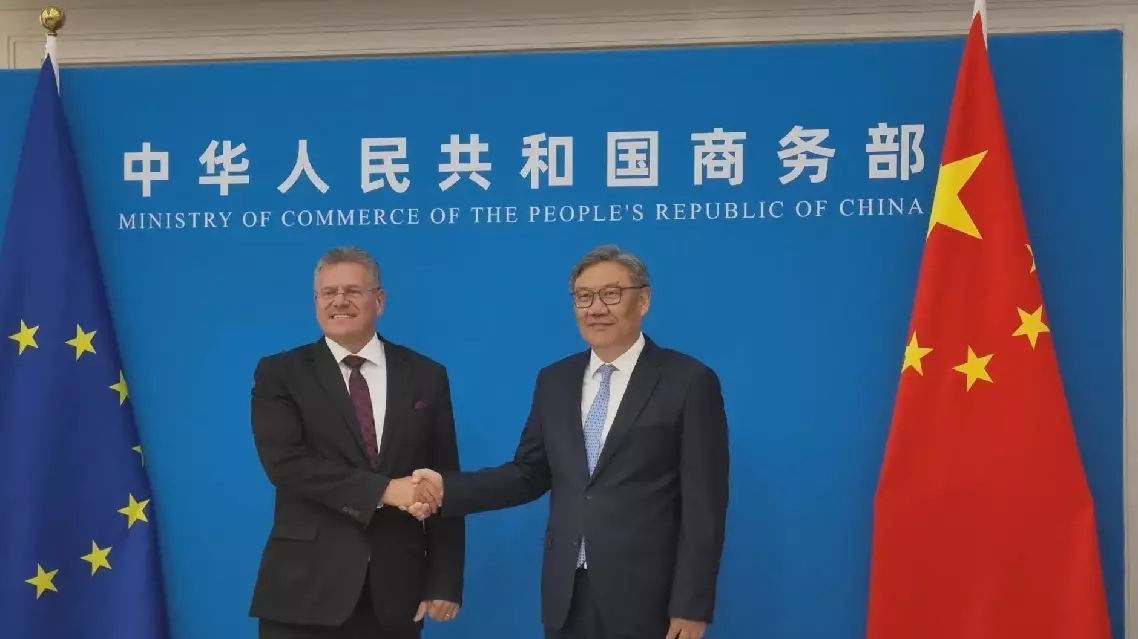
China, EU agree to keep bilateral trade ties stable, hold next meeting in March 2027