Skip to Content Facebook Feature Image

A small-town Alaska fisherman has Republicans on the defensive as they try to keep US House majority

News

A small-town Alaska fisherman has Republicans on the defensive as they try to keep US House majority
News

News

A small-town Alaska fisherman has Republicans on the defensive as they try to keep US House majority

2026-10-10 20:31 Last Updated At:20:41

JUNEAU, Alaska (AP) — In the thick of Alaska's primary election season this summer, independent Bill Hill took a break from his U.S. House campaign to return home to Bristol Bay.

The world's biggest sockeye salmon run was beginning, and that meant he needed to get back to work.

“I told my team that I have got to fish,” he said, adding: “Commercial fishing is the way that we pay the bills.”

Hill, 57, grew up in a tiny southwest Alaska village where he said his family had no phone and had to haul water from a nearby lake for cooking and bathing. Today, while he no longer has to fetch water, his lifestyle is not much different. He lives in a remote fishing community of about 430 people that he has called home for nearly half his life.

A retired teacher and school administrator, Hill has positioned himself as a working-class candidate who can relate to Alaskans' frustrations with high fuel and other costs. He has made affordability and pushing back against billionaires a central theme in his campaign against Republican Nick Begich, who's seeking a second term in Congress.

“We are pedal to the metal, making sure that every Alaskan knows about this campaign, every Alaskan knows what we stand for and every Alaskan knows that it’s really one of them going to Congress,” Hill told people at a campaign event this week in Juneau, wearing his standard campaign uniform of jeans, a zip-up vest and cap with a fishing company logo. “I need your help getting there.”

The race has become a concern for Republicans as they are trying to hold onto their majority in the U.S. House. Vice President JD Vance held a rally this week for Begich and Dan Sullivan, the U.S. senator who also is in a tight reelection race. President Donald Trump is scheduled to do another in the coming week.

Begich and Republican political action committees have ratcheted up ad spending in the House race since the primary.

Hill, a first-time candidate who is Alaska Native, faces an incumbent from a prominent family long associated with the state's politics. Begich's late grandfather once held the state's only U.S. House seat. Begich's uncle Mark was a U.S. senator. Both were Democrats. Nick Begich is a lifelong Republican and has aligned himself with Trump, who has carried Alaska in his White House runs.

Hill's campaign said he has traveled more than 20,000 miles in the state, including by plane, ferry and all-terrain vehicle, to introduce himself to voters and promote his message.

Begich's name recognition presents a hurdle for Hill's campaign, but some Democrats tried to clear a better path for Hill. One suspended his campaign before the August open primary and endorsed Hill. Two other Democrats with virtually no name recognition withdrew after the primary despite being in line to advance.

One candidate registered as a Democrat remains in the top four, Eric Hafner. He has no apparent ties to the state and is incarcerated in New York.

Hafner received 3.8% of the vote, enough to qualify for the ranked vote general election on Nov. 3. His submitted candidate biography appearing in state election materials makes no reference to his stint in federal prison, where he is serving time for making threats against police officers, judges and others.

Hill's campaign has shared stickers showing Hafner in an orange jumpsuit and calling him a “fake ‘Democrat.’”

“We want to make sure that the Alaskan people are well-informed,” Hill said.

The contest has received national attention, with spending by groups that include the National Republican Congressional Committee and House Majority PAC, which seeks to flip the U.S. House to Democrats.

In early August, U.S. House Speaker Mike Johnson, R-La., held a rally for Begich that was closed to reporters. Vance called Begich a “machine” and effective legislator during his rally in Fairbanks, where Vance also gave support to Sullivan, who faces a challenge from Democrat Mary Peltola, a former congresswoman.

Trump has cited Begich's support of his signature package of tax breaks, social service cuts and immigration enforcement that was passed last year. The president plans to headline a rally Tuesday in Wasilla, hometown of Sarah Palin, the party's 2008 vice presidential nominee.

Hill said the visits show Republicans are nervous.

“I was not going to get into this race to waste people’s time, to waste people’s money,” he said. “I did my due diligence before jumping in to ensure that there was a path to victory.”

Begich's campaign did not respond to messages from The Associated Press. On social media, the campaign has highlighted events such as Begich's visit to the Alaska State Fair and recently has taken swipes at Hill.

Zach Bannon, an NRCC spokesperson, said Begich has delivered “commonsense wins for Alaska,” including support of expanded oil and gas development. He called Hill a “far-left Democrat.”

Hill, who was endorsed by the Alaska Democratic Party, said he is a lifelong independent. He said he will not be beholden to a “party boss” or party line, and he rankled some voters earlier in the campaign by not explicitly saying which party he would caucus with in the House if he were elected.

He has said he is willing to work with anyone on what is best for Alaska. He also has called for bans on congressional stock trading and for limiting the influence of money in elections.

Hill said he wants to help build coalitions, saying he “can be a big part of a small group that makes big changes.”

Democrat Bill Brown came to the Juneau event planning to vote for Hill but wanting to talk with him directly. He said they aligned on numerous issues, including support for the environment, schools and ending “forever” wars.

The retired economics professor said policy is important, but in this political moment he finds himself “most interested in the integrity of the candidate. Bill Hill convinced me on that issue.”

Hill, who is Dena’ina Athabascan, said the top concerns he hears about from Alaskans are the price of fuel and overall cost of living. He said he had to fly home earlier this year and pump fuel oil from the textile manufacturing business he runs with his wife and bring it back to his house in a barrel because the community had run out.

He said fuel prices jumped from about $6.70 per gallon to about $9 per gallon after a barge shipment to his town earlier this year. Prices also have been higher elsewhere, particularly in communities accessible only by air or water. On social media, Hill's campaign calls out Begich for his support of the Iran war as it posts photos of fuel prices around the state.

Steve Davis, a voter at Hill's Juneau event this week, called him authentic and a “really good dude.” He said he was drawn to Hill in part because he wants to see Congress reclaim its oversight role. Hill drew applause during the gathering when he said Congress must reassert itself as a separate but equal branch of government.

“We don’t need a unified executive, we don’t need kings," Davis said. "We need a Congress that actually functions.”
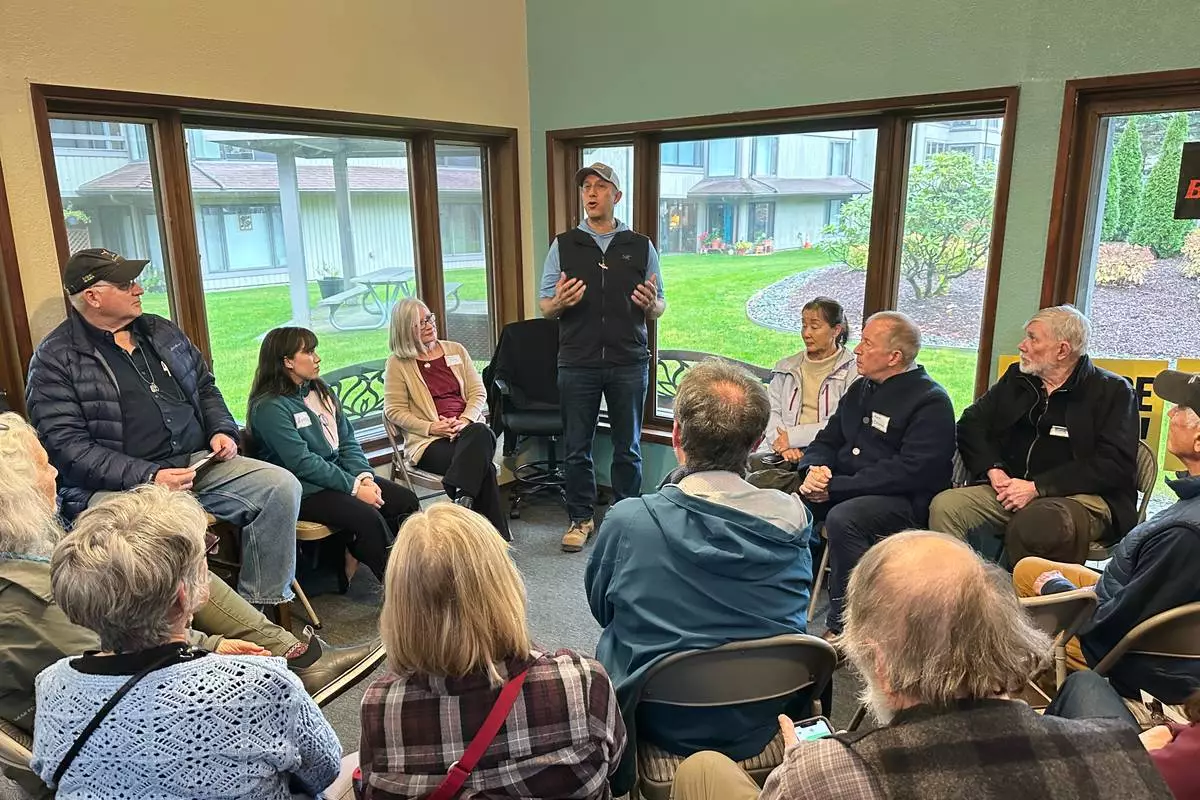
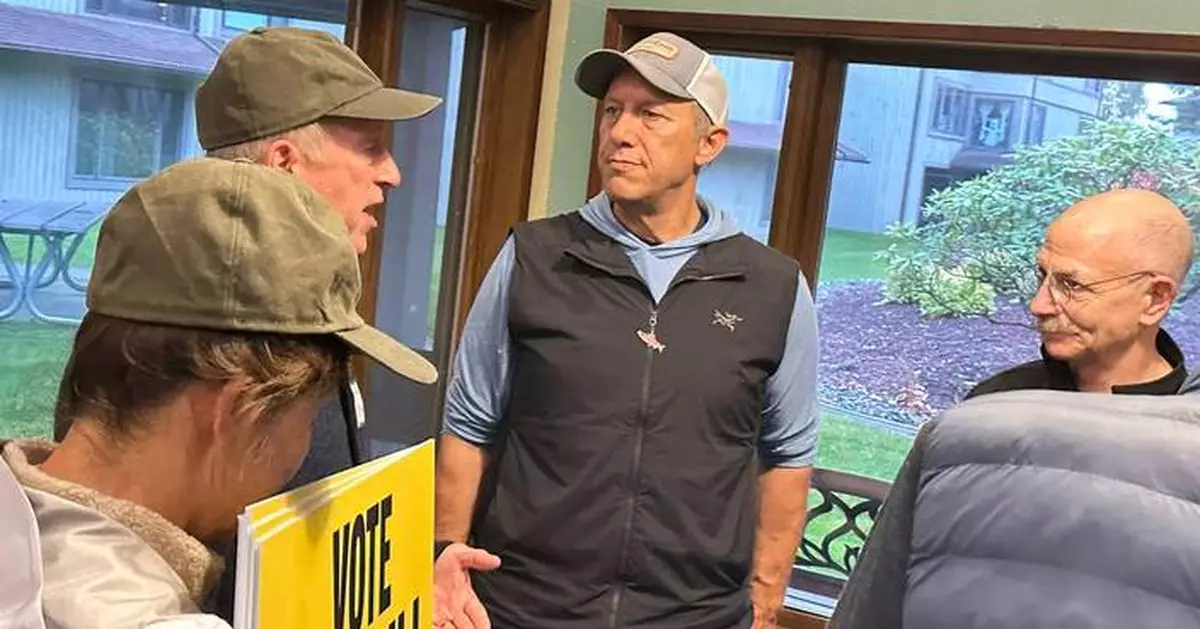
This photo made with a smartphone shows Independent Alaska U.S. House candidate Bill Hill, who is challenging Rep. Nick Begich, R-Alaska, speaking at a campaign event in Juneau, Alaska, Wednesday, Oct. 7, 2026. (AP Photo/Becky Bohrer)
This photo made with a smartphone shows Independent Alaska U.S. House candidate Bill Hill, who is challenging Rep. Nick Begich, R-Alaska, speaking at a campaign event in Juneau, Alaska, Wednesday, Oct. 7, 2026. (AP Photo/Becky Bohrer)

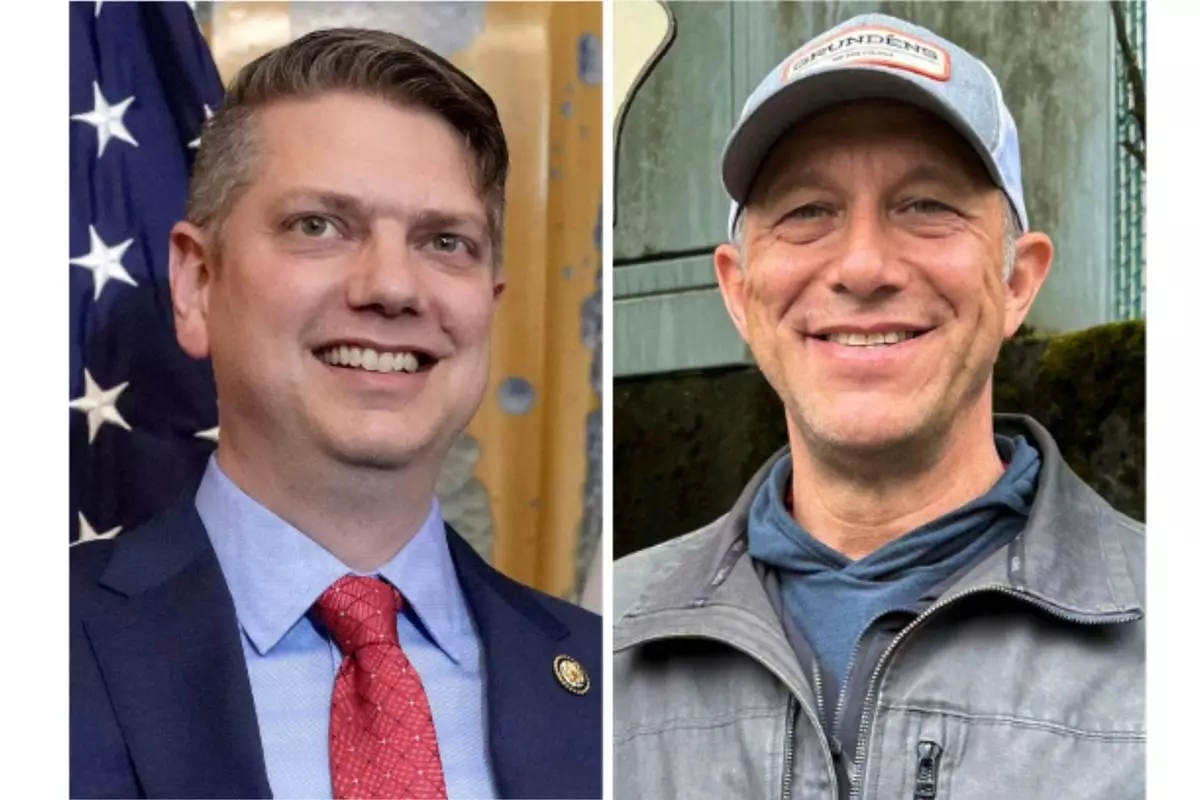
This combination photo of House candidates shows incumbent Rep. Nick Begich III, R-Alaska, Jan. 3, 2025, in Washington, left, and Independent Bill Hill, June 4, 2026, in Juneau, Alaska. (AP Photo)
This combination photo of House candidates shows incumbent Rep. Nick Begich III, R-Alaska, Jan. 3, 2025, in Washington, left, and Independent Bill Hill, June 4, 2026, in Juneau, Alaska. (AP Photo)

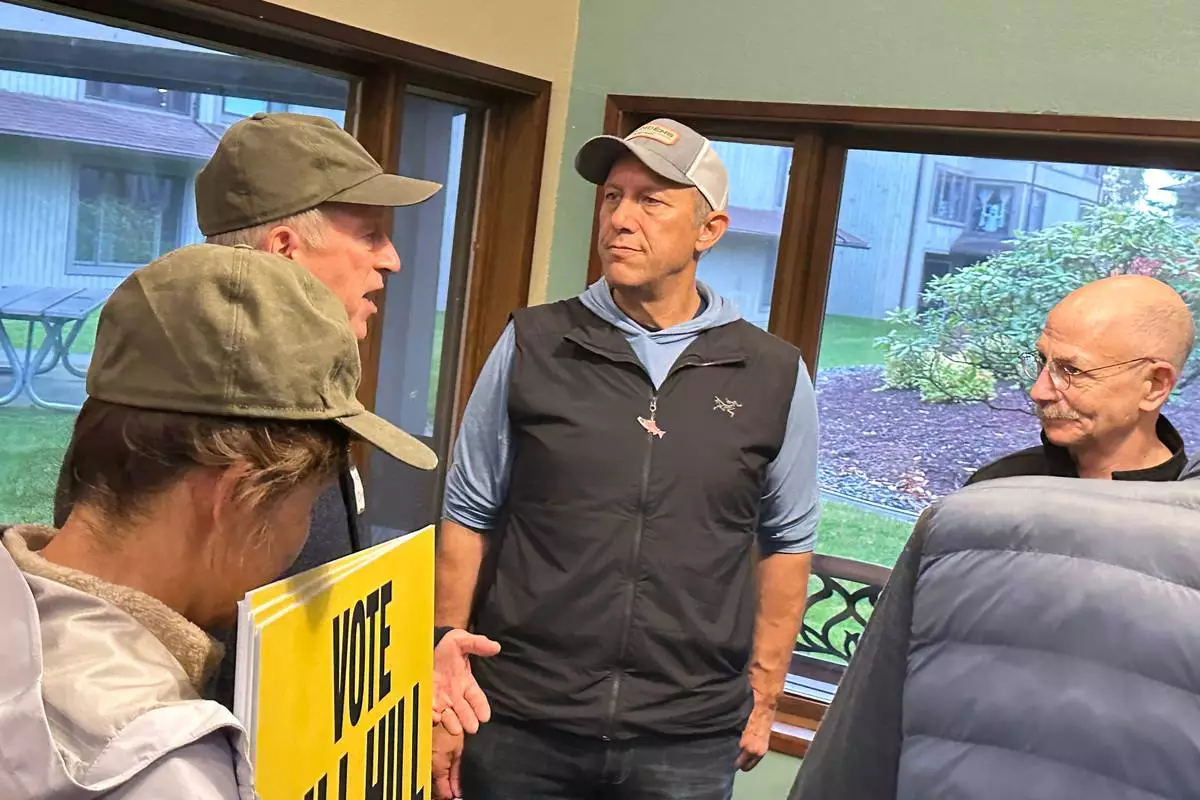
This photo made with a smartphone shows Independent Alaska U.S. House candidate Bill Hill, who is challenging Rep. Nick Begich, R-Alaska, speaking with supporters at a campaign event in Juneau, Alaska, Wednesday, Oct. 7, 2026. (AP Photo/Becky Bohrer)

This photo made with a smartphone shows Independent Alaska U.S. House candidate Bill Hill, who is challenging Rep. Nick Begich, R-Alaska, speaking with supporters at a campaign event in Juneau, Alaska, Wednesday, Oct. 7, 2026. (AP Photo/Becky Bohrer)
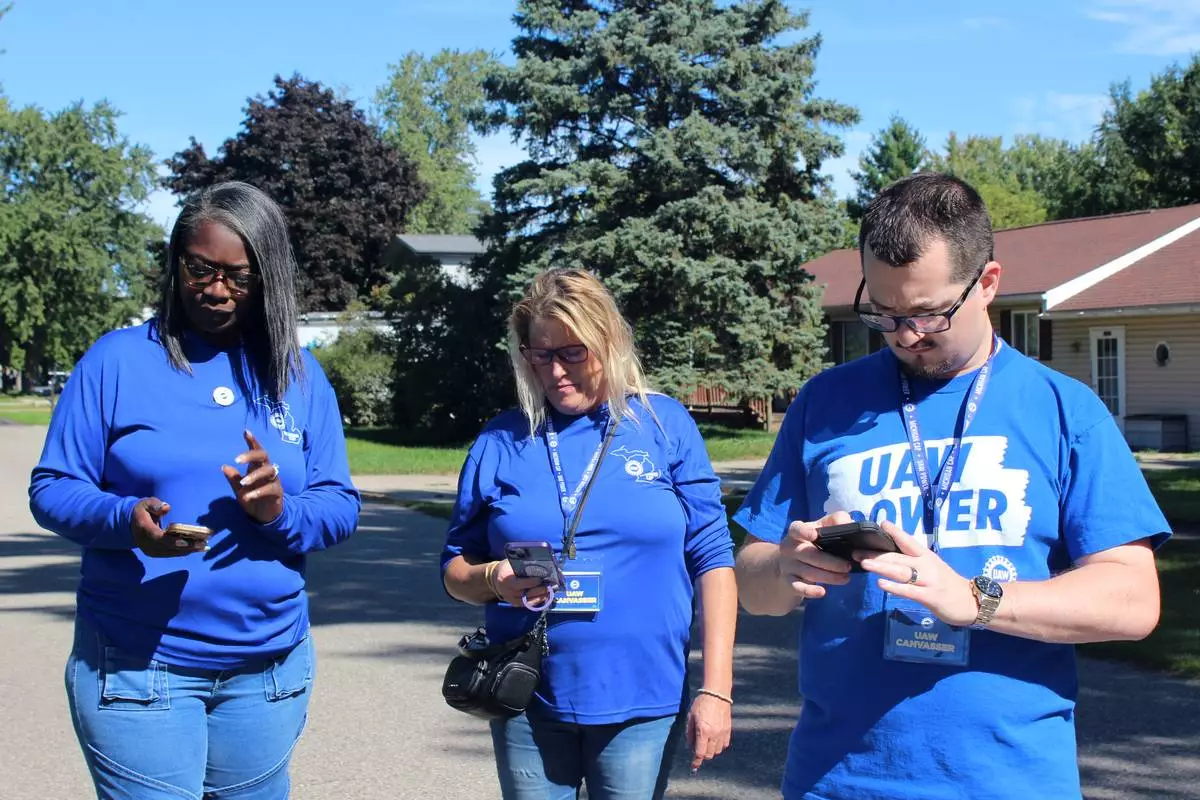
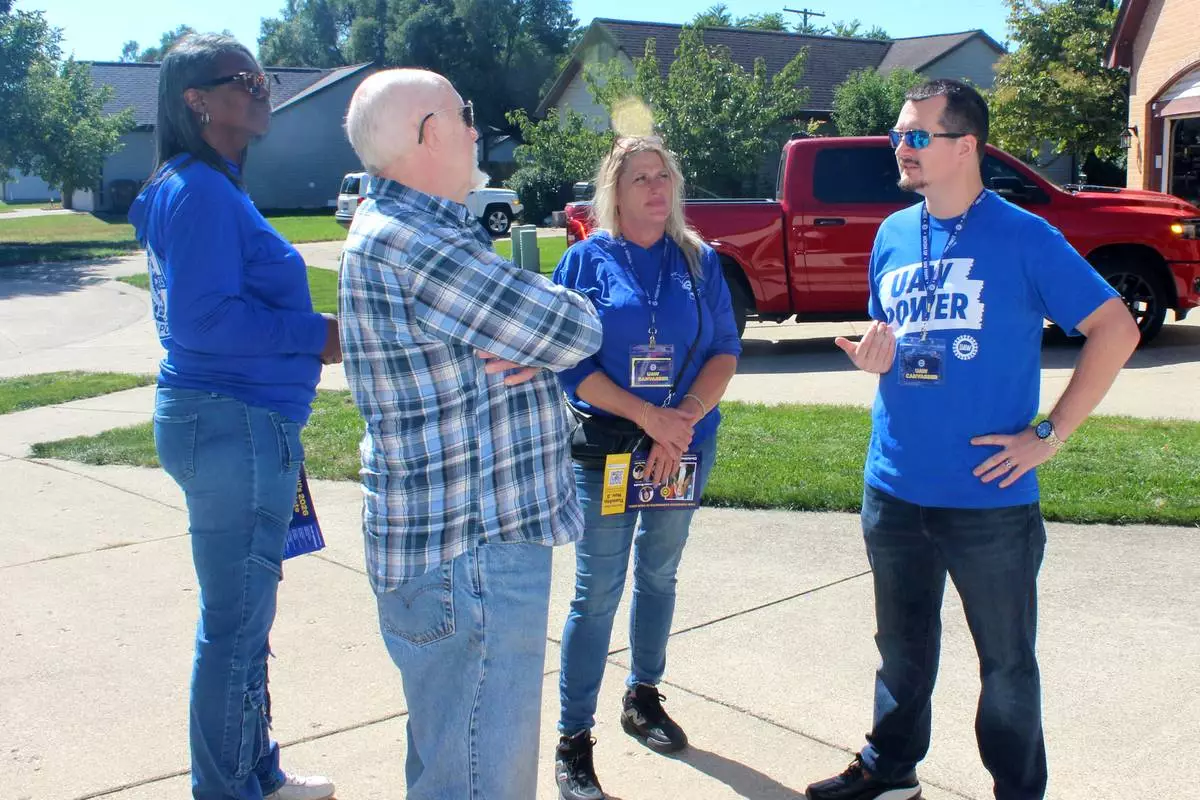
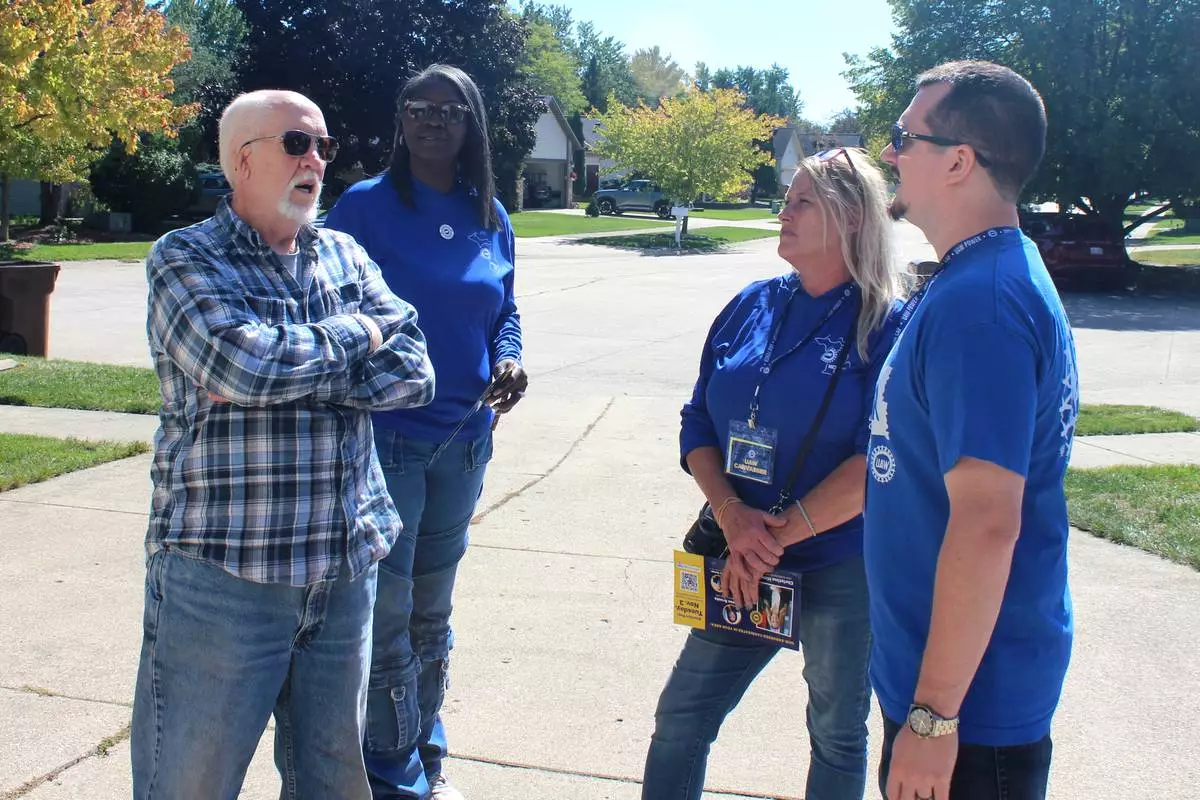
SHELBY TOWNSHIP, Mich. (AP) — Walter Usakowski was mowing his lawn in a northern suburb of Detroit when three canvassers from the United Auto Workers approached.

“I don’t even need to talk to you,” Usakowski said. As a retired member, he was already supporting the union’s slate of Democratic candidates in the Nov. 3 midterms.

But he is not sure how many of the other “guys in the shop” will vote for Democrats. He worked at Ford Motor Co.’s Sterling Axle Plant for more than 45 years, and he knows many members who backed Republican President Donald Trump.

The election-year canvassing was one part of the UAW’s efforts to reassert its political power in Michigan, a premier political battleground. Although the union generally backs Democrats, its membership is more divided over which party best represents working-class interests. It also is reckoning with past corruption scandals, a drop in membership and a lack of transparency that has eroded trust within its ranks.

“It’s not going to be an overnight thing,” said JJ Jewell, who is part of the UAW’s Community Action Program executive committee. “Even if this election goes fantastically, that’s not mission accomplished. That means we’re 1% of the way done.”

Jewell and others made the rounds on a recent sunny Saturday in Macomb County, where Trump won by nearly 14 percentage points in 2024. Many of the union members they met in a neighborhood of well-kept suburban houses were retirees, and while most said the cost of living was their top concern, they did not agree on whether Democrats or Republicans would better address it.

One resident, who said she blamed billionaires for the country’s problems, planned to vote for Democrats. Another street over, a couple said they both supported Trump and declined to take a flyer of the UAW-endorsed candidates.

In a microcosm of broader political rifts, union voters remain politically divided. Union voters have traditionally been seen as a Democratic-leaning constituency, but Trump made direct appeals to them with his anti-elite rhetoric and promises to overhaul international trade agreements that sapped factory jobs. In 2024, voters who were union members or were in a household with a union member split between Trump and Democratic nominee Kamala Harris, with more than half voting for the then-vice president and 44% for Trump.

Betty Anderson, a UAW member, thinks the organization is on the right track, but she is not confident about bridging internal political divisions. She said she is angry with members who voted for Trump, whom she sees as selling out the working class.

“I don’t think those people are ever going to be on our side,” Anderson said. “They think they have an opportunity to be in an elite class.”

Since 2017, more than 10 UAW officials have pleaded guilty in a corruption investigation that found millions of dollars of union dues were stolen. Members also faulted leaders for closed-door contract negotiations that they said destroyed trust in the UAW.

Shawn Fain was elected UAW president in 2023 on a platform of transparency, and victories in labor disputes with Detroit's three major automakers bolstered member support. Leaders hope this will translate into votes for its candidates.

“I think the UAW members now are starting to fall a little more in line,” said Usakowski, the retired axle plant worker.

On Friday, Fain said he won reelection to lead the union for four more years. The results have not yet been certified.

Mark DePaoli, director for one of the UAW’s southeast Michigan regions, said the union hosted forums with candidates where any member could ask questions. The UAW endorsed progressive Democrat Abdul El-Sayed in the U.S. Senate primary even though rival Haley Stevens, a four-term congresswoman, worked as chief of staff on an auto bailout task force during the Great Recession, a position she frequently cited while campaigning.

“I don’t think anybody expected us to endorse him,” DePaoli said. In its announcement, the union referenced El-Sayed’s support for universal healthcare and criticism of corporate money in politics. El-Sayed wore a UAW pin during the first Senate debate with his Republican opponent, former U.S. Rep. Mike Rogers.

“The UAW’s backing of Abdul was critical in winning a historic primary despite being outspent by tens of millions of dollars, and will be just as critical in winning" next month, El-Sayed spokesperson Cole Wozniak said in a statement.

Rogers is emphasizing his opposition to controversial federal regulations under Democratic President Joe Biden that would have required automakers to ramp up production of electric vehicles, which some feared would lead to factory closures.

“Mike knows the challenges our autoworkers face, and he’ll be their champion in the U.S. Senate,” Rogers spokesperson Alyssa Brouillet said in a statement. “The same can’t be said for Abdul and UAW national leadership.”

Robert Bruno, a professor in the School of Labor and Employment Relations at the University of Illinois Urbana-Champaign, said the UAW's strength relies on its ability to mobilize voters.

“You don’t win campaigns off of your endorsements,” Bruno said. “You win campaigns at the door, or at the bar, or at the union hall.”

In the 1980s, there were more than 600,000 active and retired UAW members in Michigan, according to the union. Today, that number hovers around 350,000. The UAW is still the largest union in the state.

UAW leaders are optimistic after a primary election campaign drive and what they see as better, more transparent leadership. The union said about 113,000 of its members voted early during Michigan’s August primary, and it has volunteers canvassing and calling voters before Election Day.

In September, the UAW hosted a conference of its Michigan political arm for the first time since 2018. Fain told reporters at the Lansing event that the organization wants members to drive the direction of the union, focusing on issues like affordability.

“We are as active as we can be right now,” he said.

GaNun is a corps member for The Associated Press/Report for America Statehouse News Initiative. Report for America is a nonprofit national service program that places journalists in local newsrooms to report on undercovered issues.

United Auto Workers union canvassers JJ Jewell, from left, LaShawn Barnett and Kim Avouris check canvassing routes on their phones in Shelby Township, Mich., Saturday, Sept. 26, 2026. (AP Photo/Jacqueline GaNun)

United Auto Workers union canvassers JJ Jewell, from left, LaShawn Barnett and Kim Avouris check canvassing routes on their phones in Shelby Township, Mich., Saturday, Sept. 26, 2026. (AP Photo/Jacqueline GaNun)

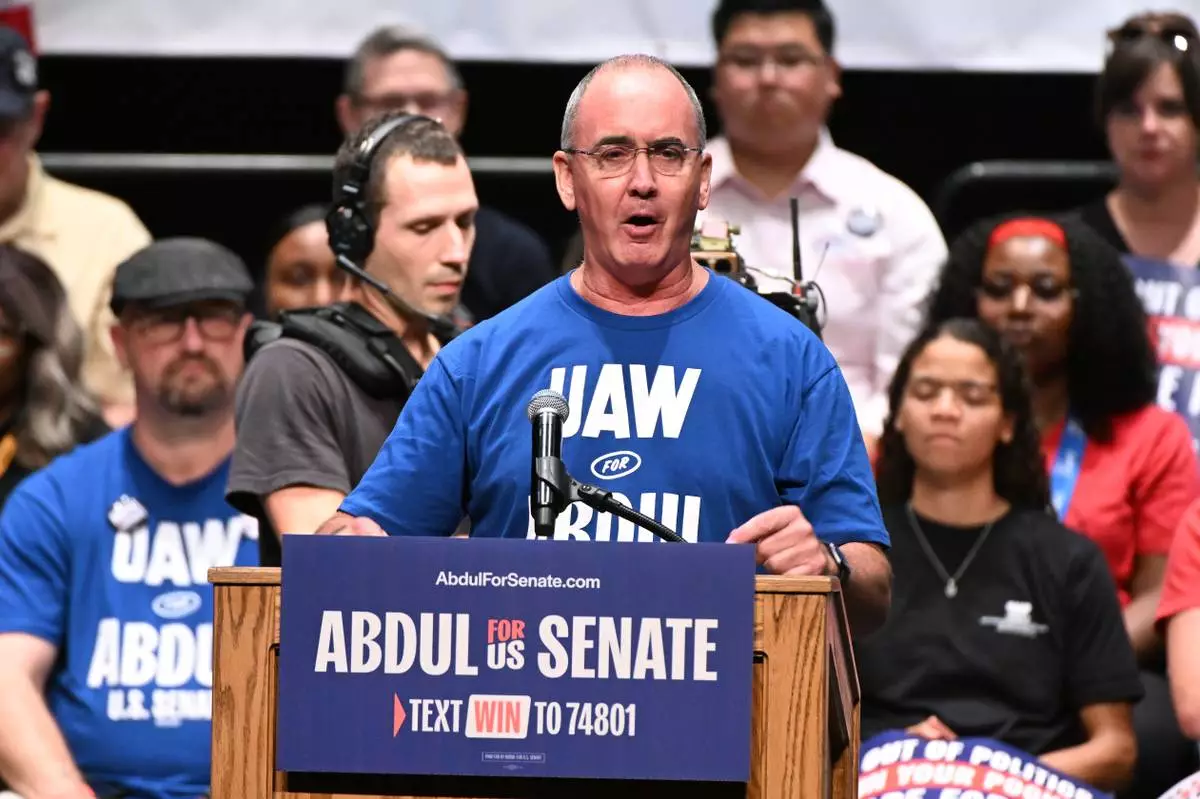
FILE - United Auto Workers President Shawn Fain addresses the crowd during a campaign rally for Michigan U.S. Senate candidate Abdul El-Sayed, July 18, 2026, in Detroit. (AP Photo/Jose Juarez, File)

FILE - United Auto Workers President Shawn Fain addresses the crowd during a campaign rally for Michigan U.S. Senate candidate Abdul El-Sayed, July 18, 2026, in Detroit. (AP Photo/Jose Juarez, File)

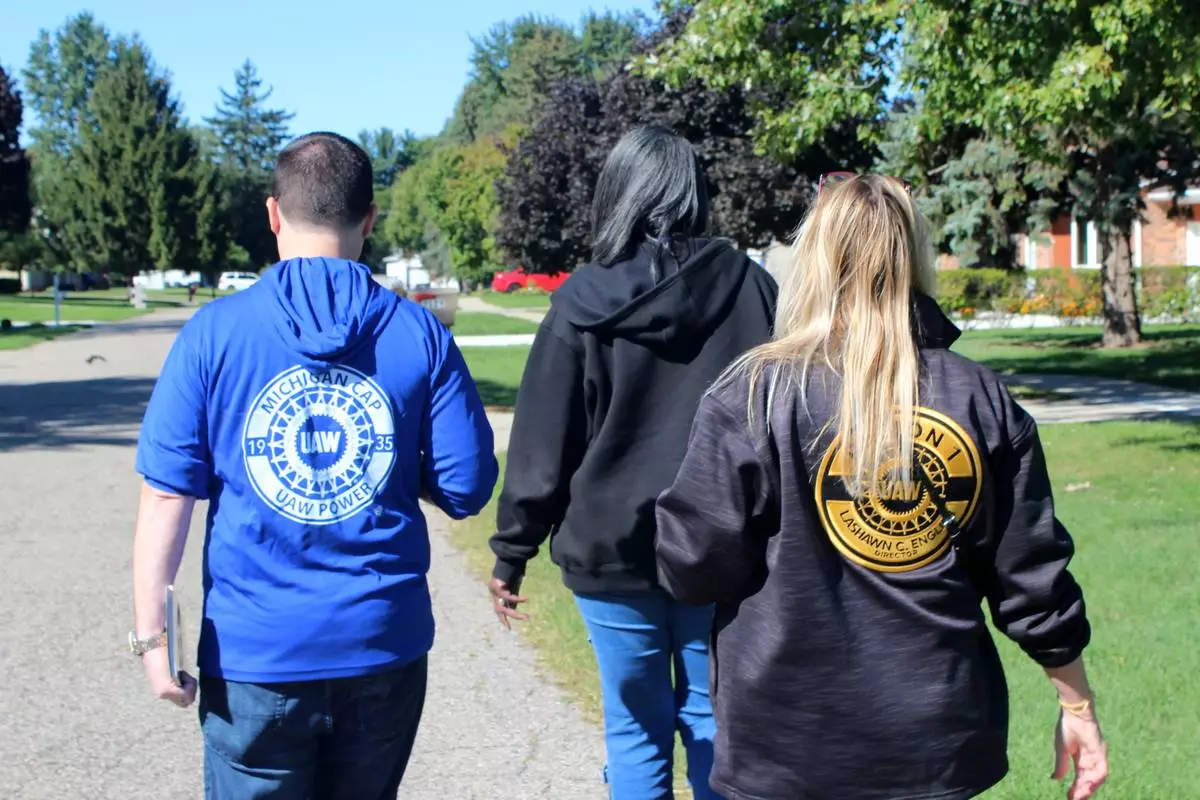
JJ Jewell, from right, Kim Avouris and LaShawn Barnett canvass for the United Auto Workers union in Shelby Township, Mich., Saturday, Sept. 26, 2026. (AP Photo/Jacqueline GaNun)

JJ Jewell, from right, Kim Avouris and LaShawn Barnett canvass for the United Auto Workers union in Shelby Township, Mich., Saturday, Sept. 26, 2026. (AP Photo/Jacqueline GaNun)

Walter Usakowski, second left, a retired worker from the Ford Motor Co.'s Sterling Axe Plant who plans to vote for the union's slate of Democratic candidates in the midterms, talks with United Auto Workers union canvassers LaShawn Barnett, from left, Kim Avouris and JJ Jewell in Shelby Township, Mich., Saturday, Sept. 26, 2026. (AP Photo/Jacqueline GaNun)

Walter Usakowski, second left, a retired worker from the Ford Motor Co.'s Sterling Axe Plant who plans to vote for the union's slate of Democratic candidates in the midterms, talks with United Auto Workers union canvassers LaShawn Barnett, from left, Kim Avouris and JJ Jewell in Shelby Township, Mich., Saturday, Sept. 26, 2026. (AP Photo/Jacqueline GaNun)

Walter Usakowski, from left, a retired worker from the Ford Motor Co.'s Sterling Axe Plant who plans to vote for the union's slate of Democratic candidates in the midterms, talks with United Auto Workers union canvassers LaShawn Barnett, Kim Avouris and JJ Jewell in Shelby Township, Mich., Saturday, Sept. 26, 2026. (AP Photo/Jacqueline GaNun)

Walter Usakowski, from left, a retired worker from the Ford Motor Co.'s Sterling Axe Plant who plans to vote for the union's slate of Democratic candidates in the midterms, talks with United Auto Workers union canvassers LaShawn Barnett, Kim Avouris and JJ Jewell in Shelby Township, Mich., Saturday, Sept. 26, 2026. (AP Photo/Jacqueline GaNun)

Recommended Articles