Türkiye uses its well-established ALO 153 hotline to handle millions of public complaints each year, with the southeastern Turkish city of Gaziantep alone resolving over 5.3 million requests.
Gaziantep is home to more than two million people, making it one of the country's largest cities. In a city this size, knowing who to call about a problem isn't always straightforward. The hotline ALO 153 takes that question out of the equation. Residents need to remember just one number, and the municipality directs their request to the right department.
Around 30 employees work at Gaziantep's solution center, which operates around the clock and receives over 1,000 requests every day.
"The requests we receive most often are the usual ones concerning road paving, transportation and public transport, landscaping, businesses and unauthorized occupation of public spaces. We also receive seasonal requests, things like snow clearance and salting in winter, and pest control in summer," said Baris Bodur, head of Gaziantep Communication Coordination Center, Gaziantep Metropolitan Municipality.
Some requests are classified as "critical" when they require immediate actions or pose a risk to public safety. These can range from harassment cases and road hazards to injured animals requiring urgent attention.
Bodur explained that other critical cases include open or broken manhole covers that pose a serious accident risk, trees that have fallen and blocked traffic or pedestrian routes, and flooding on roads caused by excessive irrigation.
On this day, one such request involves an injured animal. Once the report reaches ALO 153, it is passed to the relevant field team for action.
"We have received a report about an injured cat. We'll go there and assess its condition. If it needs immediate treatment, we'll provide first aid on site. Otherwise, we'll bring the animal back to the hospital and begin treatment there. At this stage, we don't know its condition, so we'll assess it once we arrive," said Erkan Erkabalci, a veterinarian.
The veterinary team arrives and finds the injured kitten. It is taken to the municipality's animal hospital, where it receives treatment. Back at the solution center, they record the outcome and update the request in the system. Later, solution center specialists follow up with the citizen who reported the problem to confirm what action was taken and gather feedback.
Citizens can also rate the response and service they received, providing another layer of feedback once a request has been handled.
Gaziantep has also turned to artificial intelligence to make the process faster and more efficient. The municipality says it was the first in Türkiye to integrate AI into a municipal call center.
"We try to answer incoming calls immediately. If a call isn't answered within eight seconds, our AI steps in so that citizens aren't kept waiting and their problem can be addressed as quickly as possible. Our staff assess incoming calls in real time and direct them accordingly. We are completely results-oriented and try to resolve every request we receive," said Erkan Toprakci, head of Data Management at ALO 153 Call Center.
AI can analyze incoming requests, summarize conversations and help direct them to the right department. It can also flag certain calls that may require more urgent attention.
"Our AI can also perform sentiment analysis. It analyzes a person's tone of voice and the words they use. When certain critical words indicating that very urgent action is needed are used, the AI detects them and flags the call as a priority," said Toprakci.
Gaziantep's 153 model extends far beyond this city. Municipal solution centers operate across Türkiye, giving millions of residents a direct channel to local government. Different cities may manage the system differently, but the principle is the same: one point of contact that connects everyday problems with the public officials responsible for solving them.
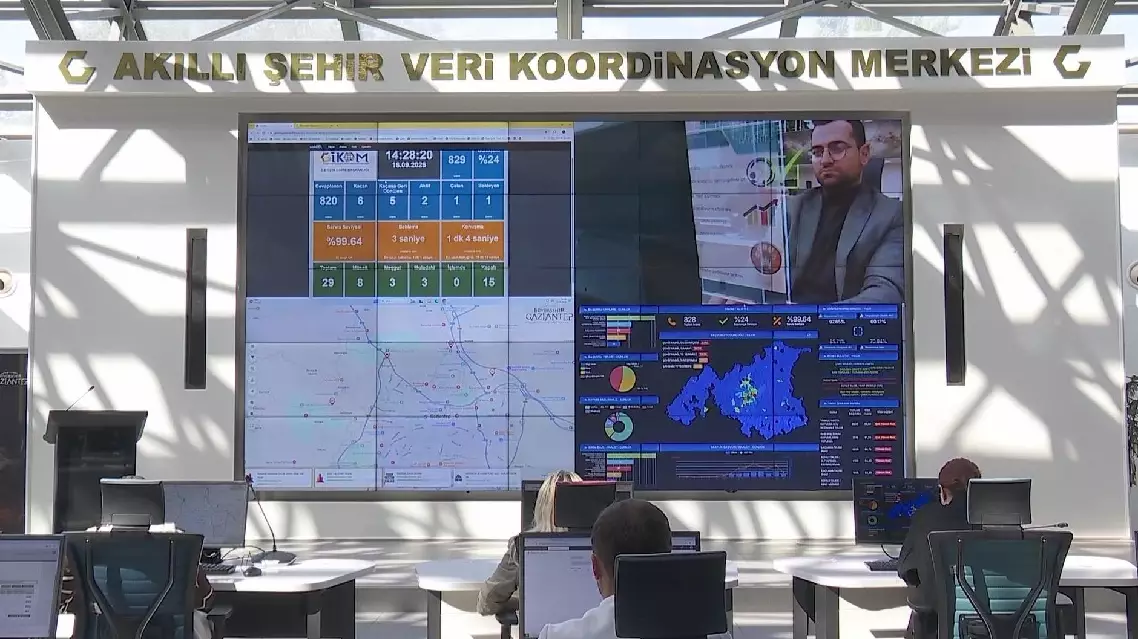
Türkiye's ALO 153 hotline connects millions of residents with local services