PUERTO VALLARTA, Mexico (AP) — The eye of Hurricane Simon was just off the Pacific coast of Mexico early Sunday and was expected to move inland later in the day as an extremely powerful storm.
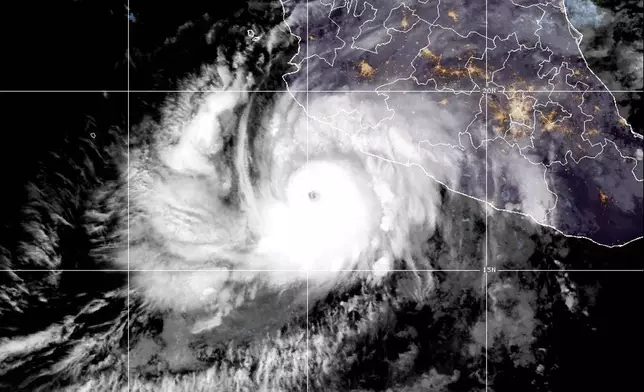
Simon has strengthened to 155 mph (250 kph), only just below the threshold for becoming a Category 5 storm, the highest on the Saffir Simpson scale. It was about 60 miles (100 kilometers) west-southwest of Manzanilla and moving north-northwest at 6 mph (9 kph).
Click to Gallery
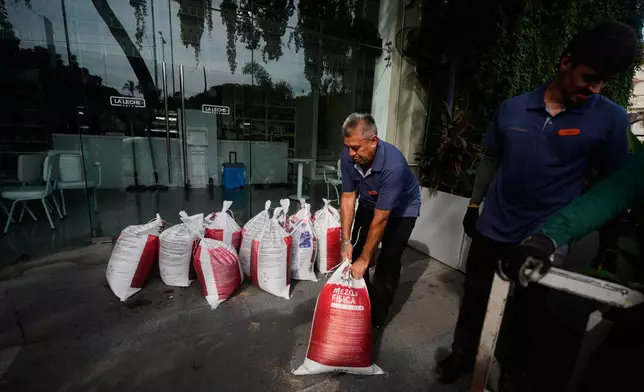
Workers place sandbags outside a restaurant as Hurricane Simon approaches Puerto Vallarta, Mexico, Saturday, Oct. 10, 2026. (AP Photo/Fernando Llano)
This satellite image provided by the National Oceanic and Atmospheric Administration, or NOAA shows Hurricane Simon in the Pacific on Saturday, Oct. 10, 2026. (National Oceanic and Atmospheric Administration via AP)
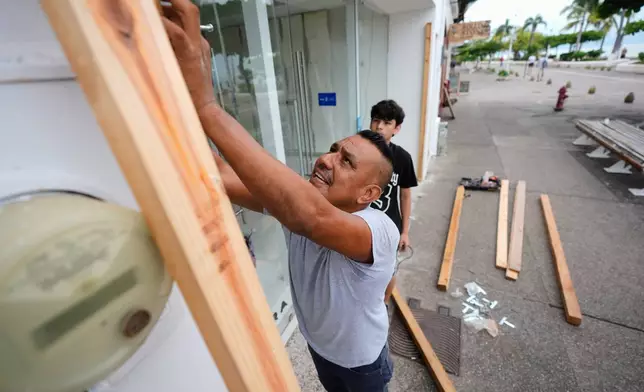
A man boards up a shop as Hurricane Simon approaches Puerto Vallarta, Mexico, Saturday, Oct. 10, 2026. (AP Photo/Fernando Llano)
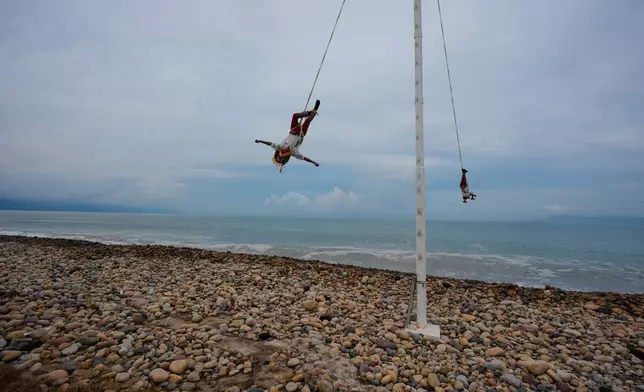
The Flying Men of Papantla perform the "Danza de los Voladores" on the beach as Hurricane Simon approaches Puerto Vallarta, Mexico, Saturday, Oct. 10, 2026. (AP Photo/Fernando Llano)
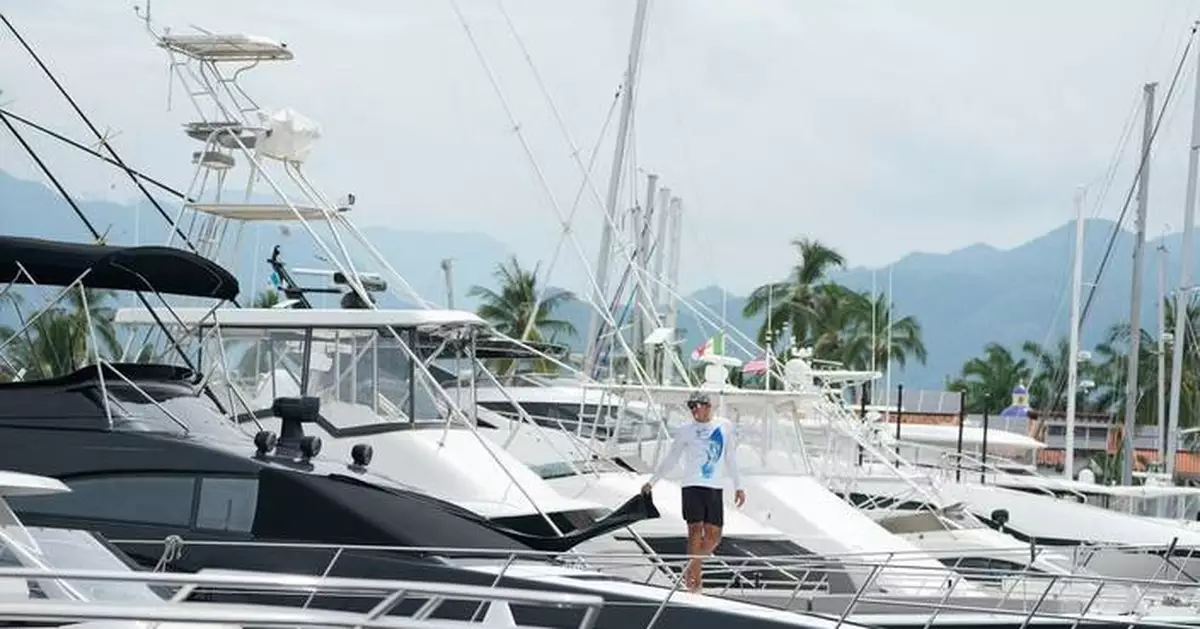
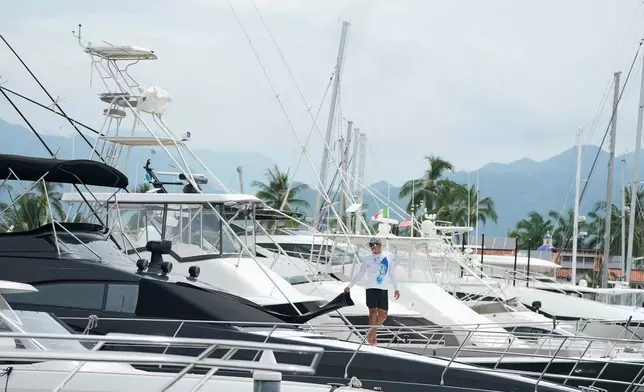
A man places a window covering on his boat as Hurricane Simon approaches Puerto Vallarta, Mexico, Saturday, Oct. 10, 2026. (AP Photo/Fernando Llano)
The hurricane could bring 10 to 20 inches (25-50 cm) of rain over parts of southwestern Mexico, with some areas in the states of Michoacan, Colima and Jalisco receiving up to 30 inches (76 centimeters).
“This rainfall will produce life-threatening flooding and mudslides, especially in areas of steep terrain,” the center warned.
Jalisco state suspended classes on Friday and Monday in 22 coastal municipalities and began evacuating dozens of people from at-risk areas. It also asked the tourism sector in Puerto Vallarta, a popular destination for U.S. tourists, to ensure that both workers and visitors were fully accommodated in shelters or safe zones.
Convenience stores, hotels and other businesses in Puerto Vallarta were boarding up their windows Saturday, and few were walking the streets under overcast skies.
“Let’s hope it doesn’t hit us, right? That it doesn’t affect us," Jesús Gómez said as he stood outside a shop and handed out free samples of candied peanuts to passersby. “We’ll be working as usual throughout the day, but when Civil Protection officials come and tell us we need to close, then we’ll close and take shelter until the storm passes.”
The hurricane center expected a dangerous storm surge along the immediate coast near and to the east of where the center makes landfall. The agency warned that near the coast, large and destructive waves will accompany the surge.
Canadian tourist Ed Currie, who along with his wife still has five more days to enjoy Puerto Vallarta, said the hurricane had not yet affected his plans.
“Just stay in the hotel and look out the window hopefully,” he said of what the couple would do. “I just don’t know what to expect.”
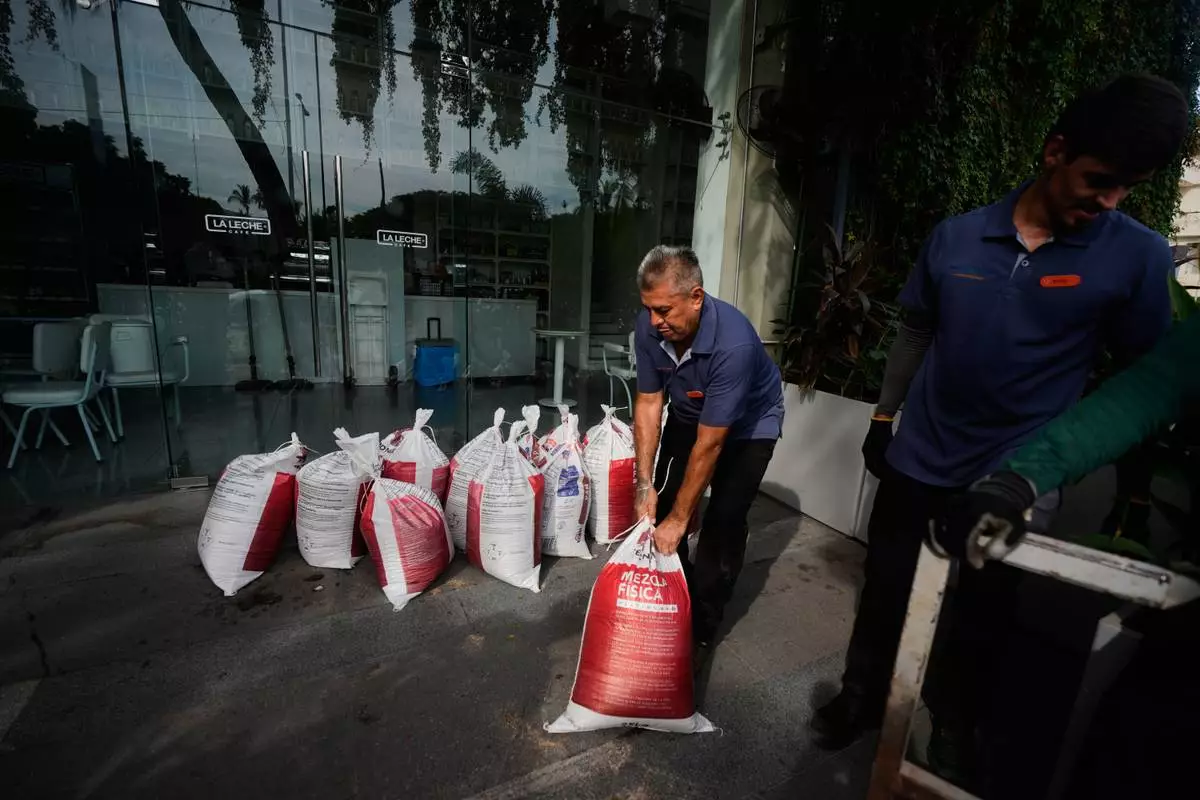
Workers place sandbags outside a restaurant as Hurricane Simon approaches Puerto Vallarta, Mexico, Saturday, Oct. 10, 2026. (AP Photo/Fernando Llano)
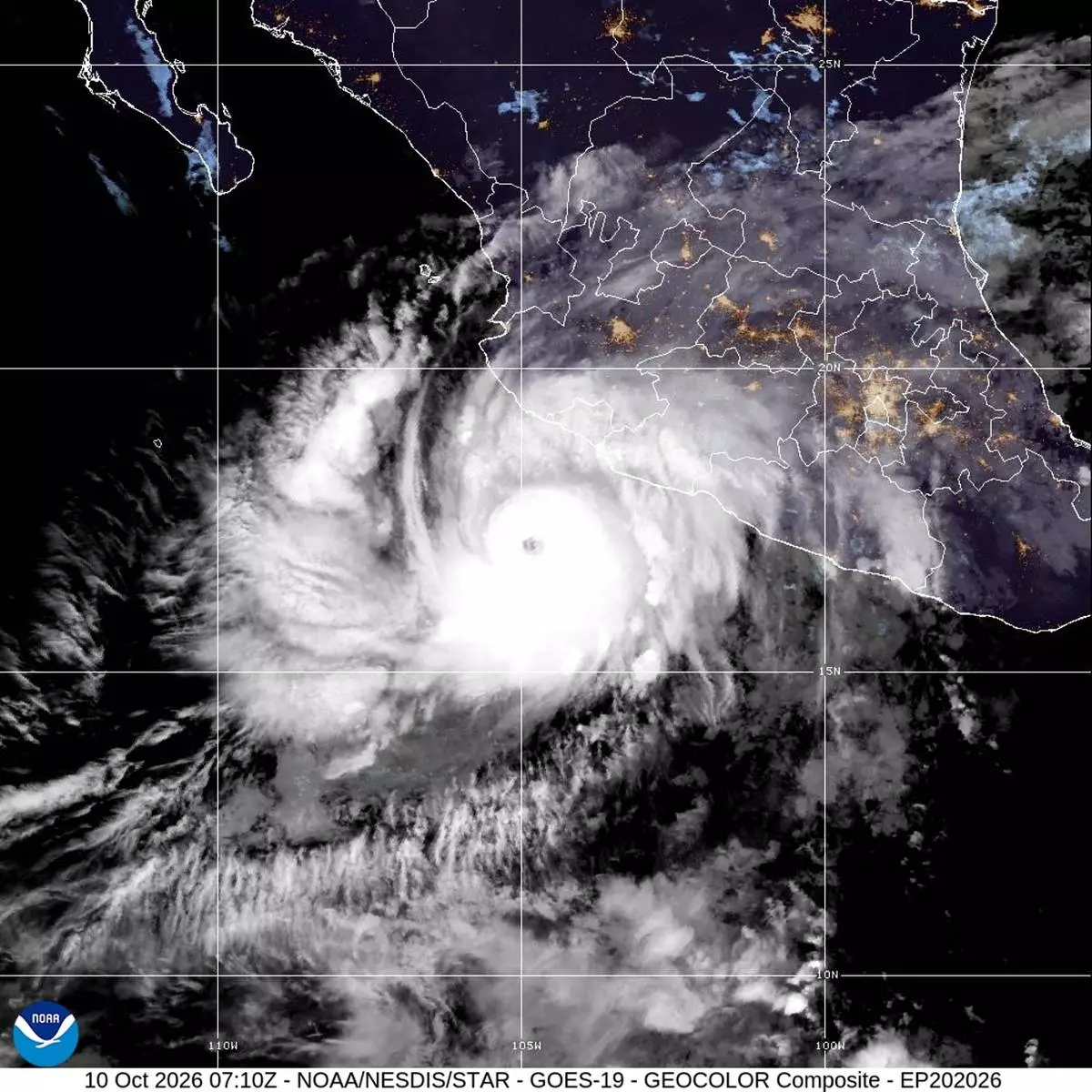
This satellite image provided by the National Oceanic and Atmospheric Administration, or NOAA shows Hurricane Simon in the Pacific on Saturday, Oct. 10, 2026. (National Oceanic and Atmospheric Administration via AP)
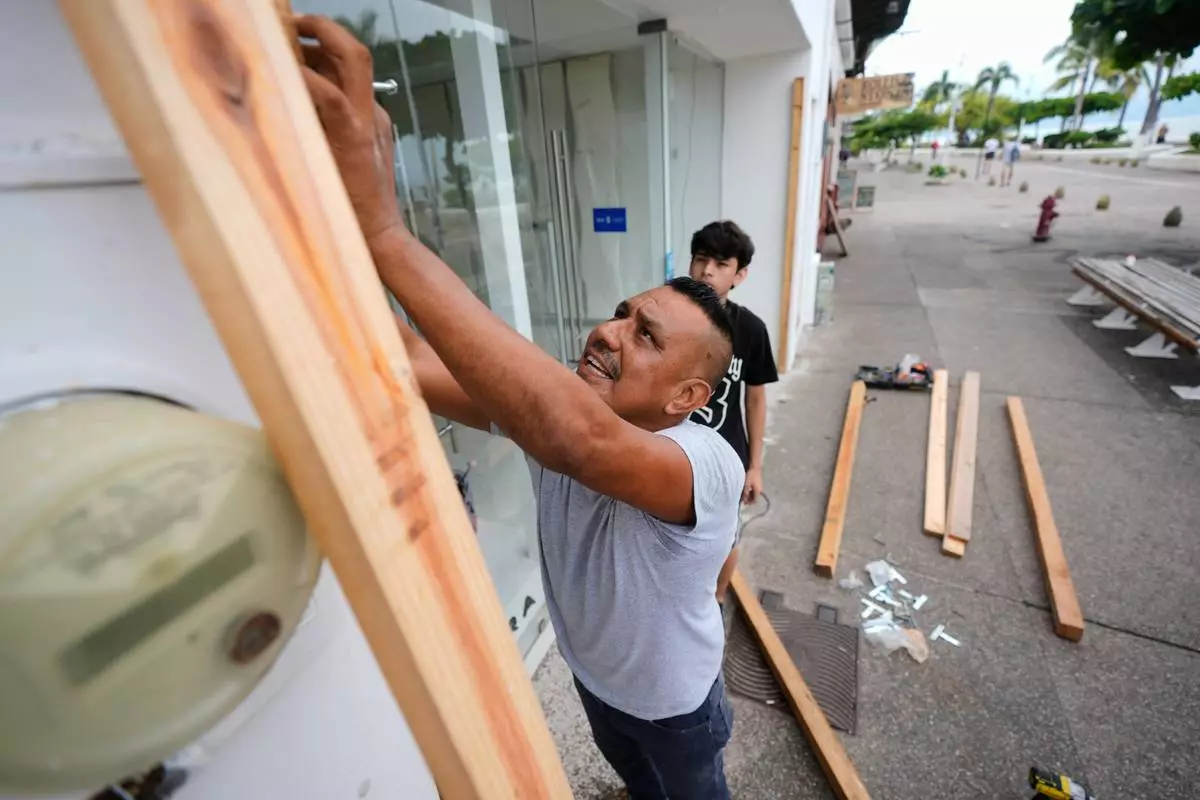
A man boards up a shop as Hurricane Simon approaches Puerto Vallarta, Mexico, Saturday, Oct. 10, 2026. (AP Photo/Fernando Llano)
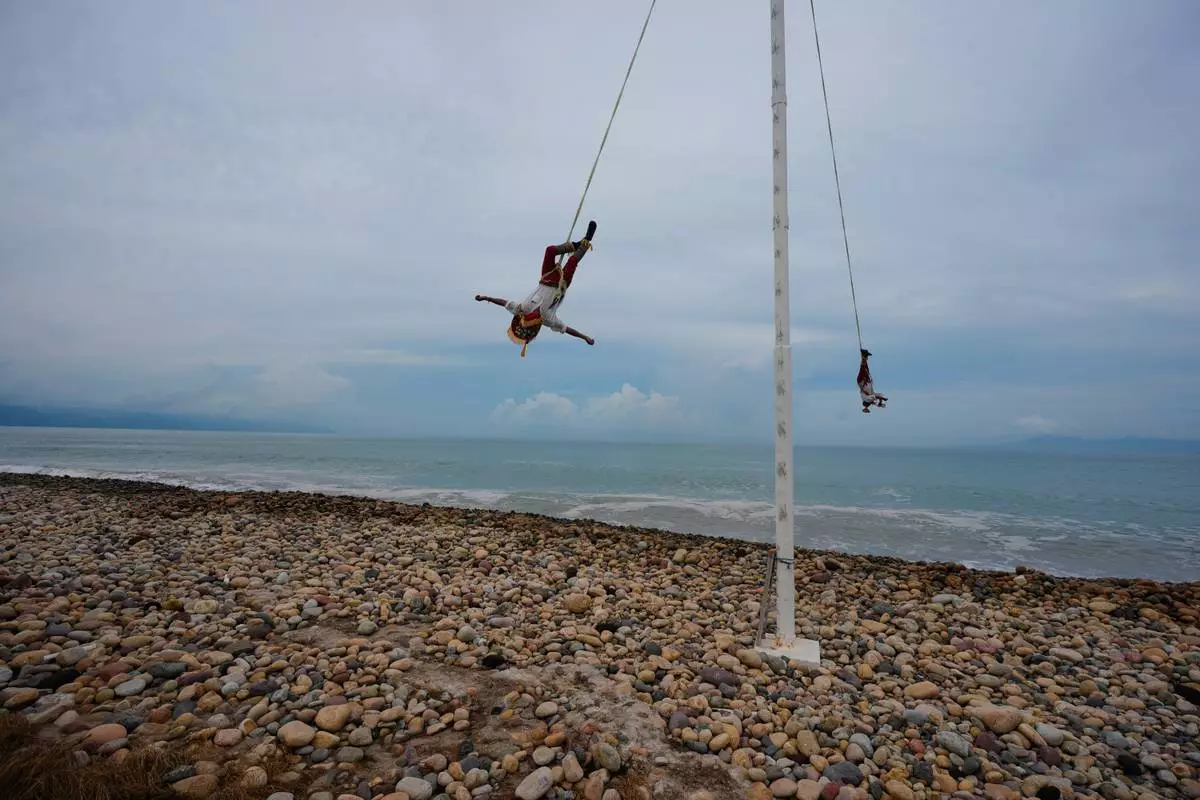
The Flying Men of Papantla perform the "Danza de los Voladores" on the beach as Hurricane Simon approaches Puerto Vallarta, Mexico, Saturday, Oct. 10, 2026. (AP Photo/Fernando Llano)
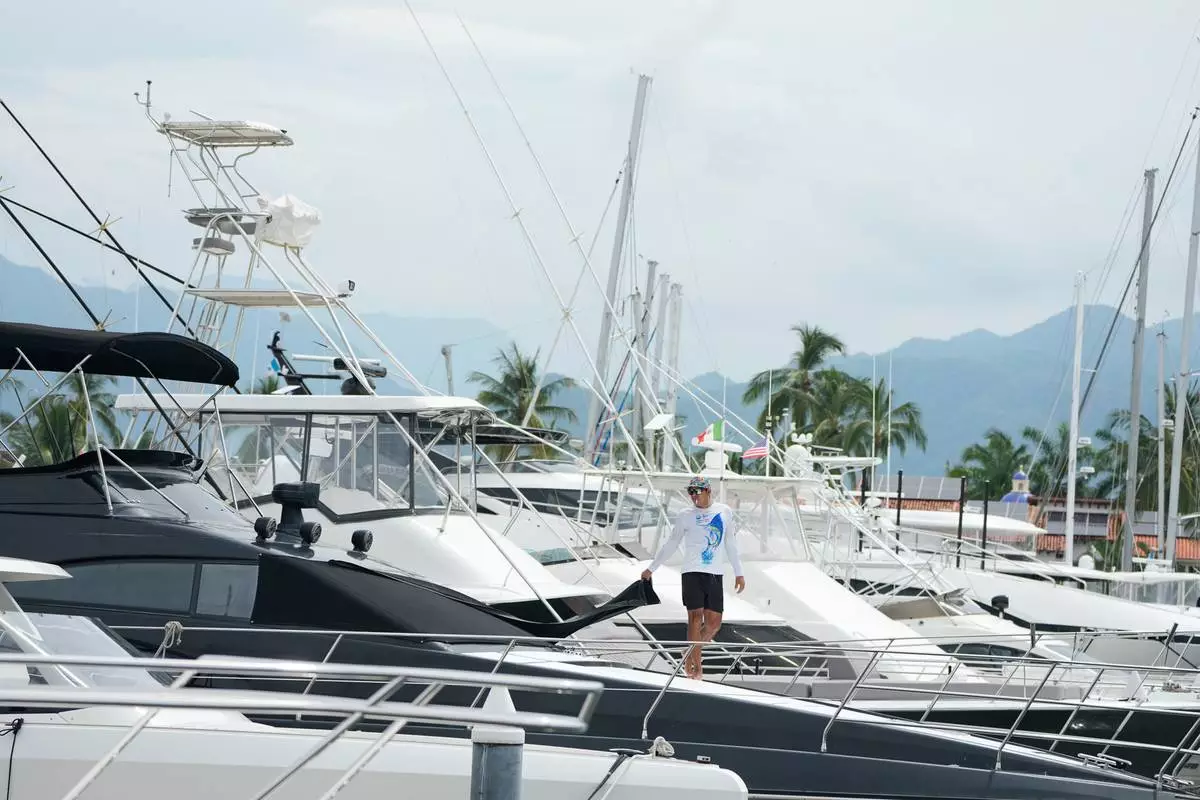
A man places a window covering on his boat as Hurricane Simon approaches Puerto Vallarta, Mexico, Saturday, Oct. 10, 2026. (AP Photo/Fernando Llano)
CEUTA, Spain (AP) — Many of the migrants in a sprawling tent village in Ceuta came searching for better economic opportunities. Others fled war and violence, or sought refuge in Spain because of their gender or sexuality.
With a humanitarian crisis unfolding, some have come forward with allegations of abuse.
Interviews at the now-demolished camp revealed migrants' motivations for seeking protection.
A Moroccan migrant recalled pressing his shirt against his head in the early morning. The blood kept flowing.
A group of Spanish soldiers had tied his head to a tree that September morning, he said, and struck him in the head, on the back and on his arms. He spoke on condition of anonymity out of fear for his safety.
The soldiers had approached him and another migrant and told them to follow, saying that their superior would register them, according to a police report he filed, which The Associated Press has reviewed.
“They stuffed us into the trunk of a car, locked us in and drove us to the forest,” he said in an interview on Oct. 1. His mouth was covered with gray electrical tape, he said.
“When they were beating me, I saw death, only death," he said. “Imagine your face being tied to a tree while they strike your head, taking hit after hit, right to the front of your face.”
He received staples in his head for his injuries, he said, and showed the AP his healing wounds. He said he wants to hold the soldiers to account.
Spanish prosecutors are investigating reports of torture and mistreatment of migrants in Ceuta, including minors. Amnesty International published a report in September detailing allegations of inhumane treatment by Spanish soldiers.
“I never thought anything like this could happen,” the artisan said. “We truly believed the people here are good and that the government is decent."
“Sometimes I ask myself why I even came here, but other times I tell myself that God will help me.”
A transgender teen swam to Ceuta in July from the Moroccan city of Fnideq. Soon, he thought, he would be in a shelter. Instead, he spent nearly two months at the beachside camp.
He left home because of the challenges of being transgender, he said. He spoke on the condition of anonymity due to fears of reprisals for his gender identity.
“People in Morocco don’t have any mercy," he said in an interview on Sept. 29. “They look at the outside of you, not the inside.”
In Ceuta, he said he briefly lived with extended family, but they kicked him out after learning about his identity. “They didn't accept my situation,” he said.
Spain's asylum law recognizes gender identity and sexual orientation as valid grounds for seeking protection. Cases are assessed individually.
In early October, he returned to Morocco after police cleared the camp.
A soft-spoken 34-year-old man left Tetouan, in northern Morocco, after his brother found pictures of him and his boyfriend on his phone and threatened to report them to the police.
The brothers were already in a bitter dispute over the sale of a family home. In a previous argument, he said his brother had burned him with hot oil.
He spoke on condition of anonymity for fear of reprisals from his family, community and the Moroccan government.
Consensual sexual activity with members of the same sex is illegal in Morocco, and can be publishable by fines and up to three years imprisonment. Hundreds of men and women are prosecuted annually under such laws, according to the U.S. State Department.
Homosexuality is regularly cited as an asylum claim for Moroccans attempting to flee.
“I left Morocco because being gay is so hard," he said.
A 28-year-old Moroccan asylum seeker said he received death threats for posting content online that is critical of Islam.
In 2025, he hosted TikTok livestreams focused on the religion. He began receiving death threats, and says he was kidnapped in Marrakech by a follower.
“That was the tipping point,” he said.
The AP was not able to independently verify his claims, but viewed a copy of his asylum paperwork in which he detailed them to Spanish authorities.
He spoke on condition of anonymity due to fear of reprisals. Publicly criticizing Islam in Morocco can lead to criminal prosecution, carrying prison sentences and fines.
He crossed into Ceuta in July, joining tens of thousands more.
“The first week was pure survival” he said. “It felt like running from zombies; some people wanted to attack you, others wanted to rob you.”
He fears for his safety if he is sent back to Morocco.
Associated Press writer Akram Oubachir in Casablanca, Morocco, contributed to this report.
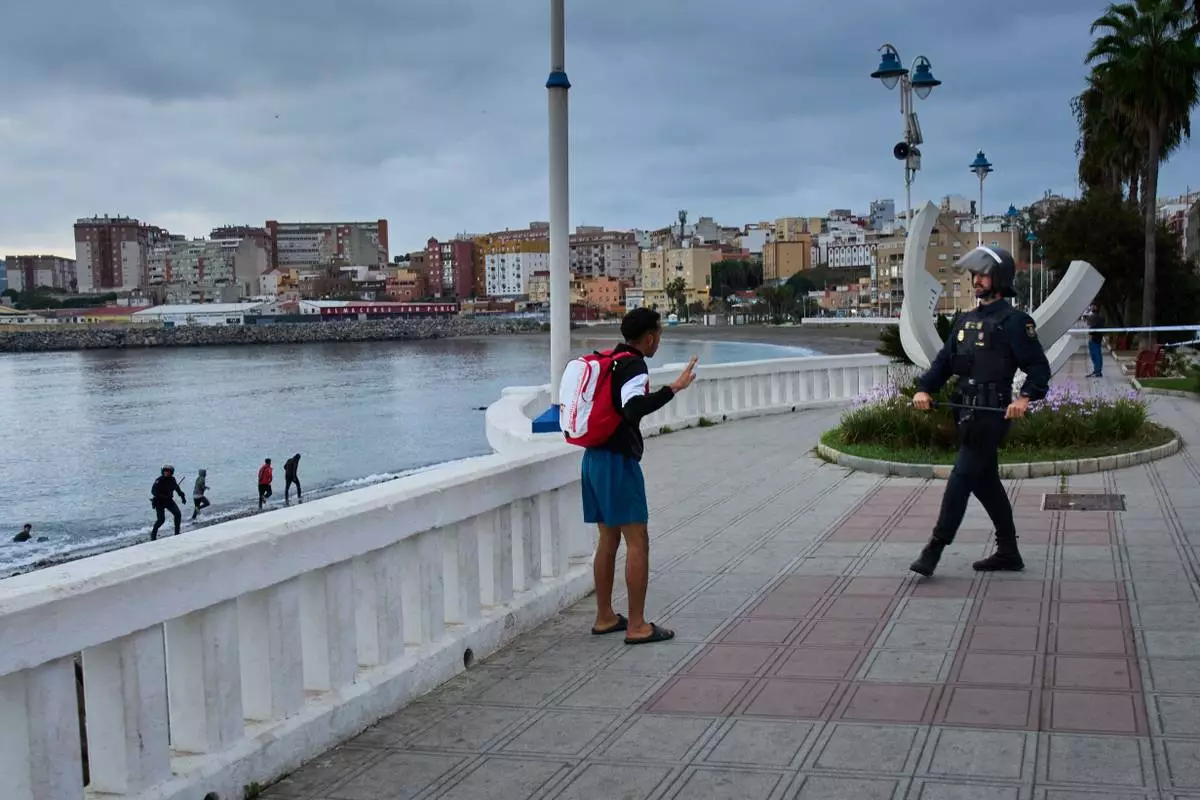
A migrant who tried to flee during the eviction of a makeshift camp on Benítez Beach surrenders to Spanish National Police officers in the Spanish enclave of Ceuta, Tuesday, Sept. 29, 2026. (AP Photo/Bernat Armangue)
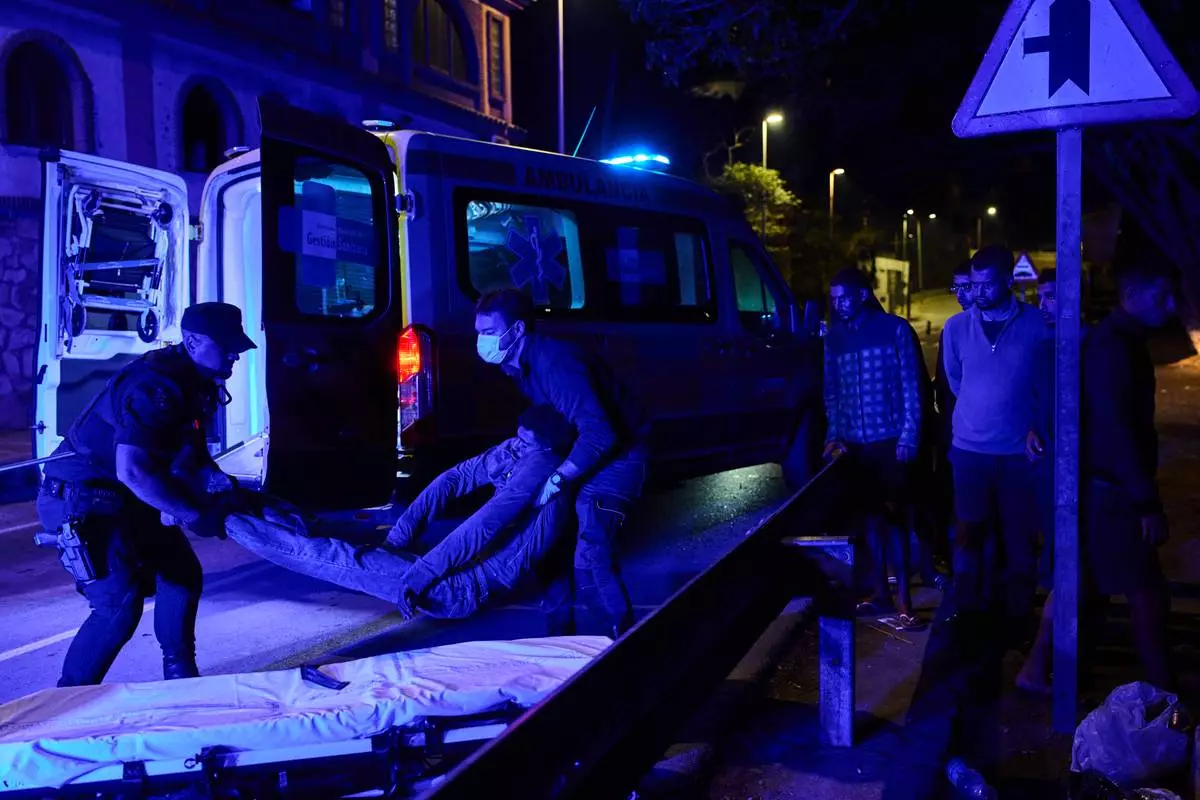
A police officer and a medical worker place a migrant who is unconscious following a fight with another group of migrants onto a stretcher to be taken to hospital on El Trampolín Beach in the Spanish enclave of Ceuta, Friday, Oct. 2, 2026. (AP Photo/Bernat Armangue)
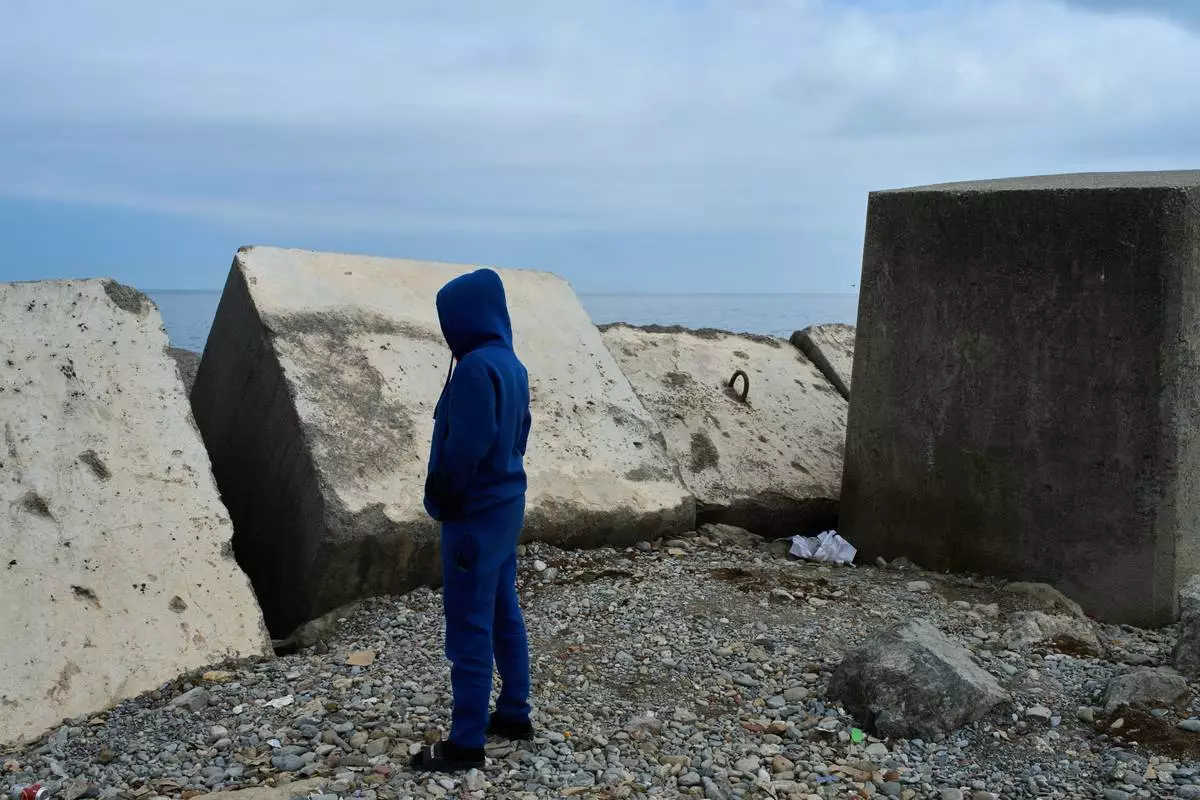
A 19-year-old Moroccan migrant, who does not want to be identified for fear of reprisals because he is transgender, poses for a portrait on El Trampolín Beach in the Spanish enclave of Ceuta, Tuesday, Sept. 29, 2026. (AP Photo/Bernat Armangue)
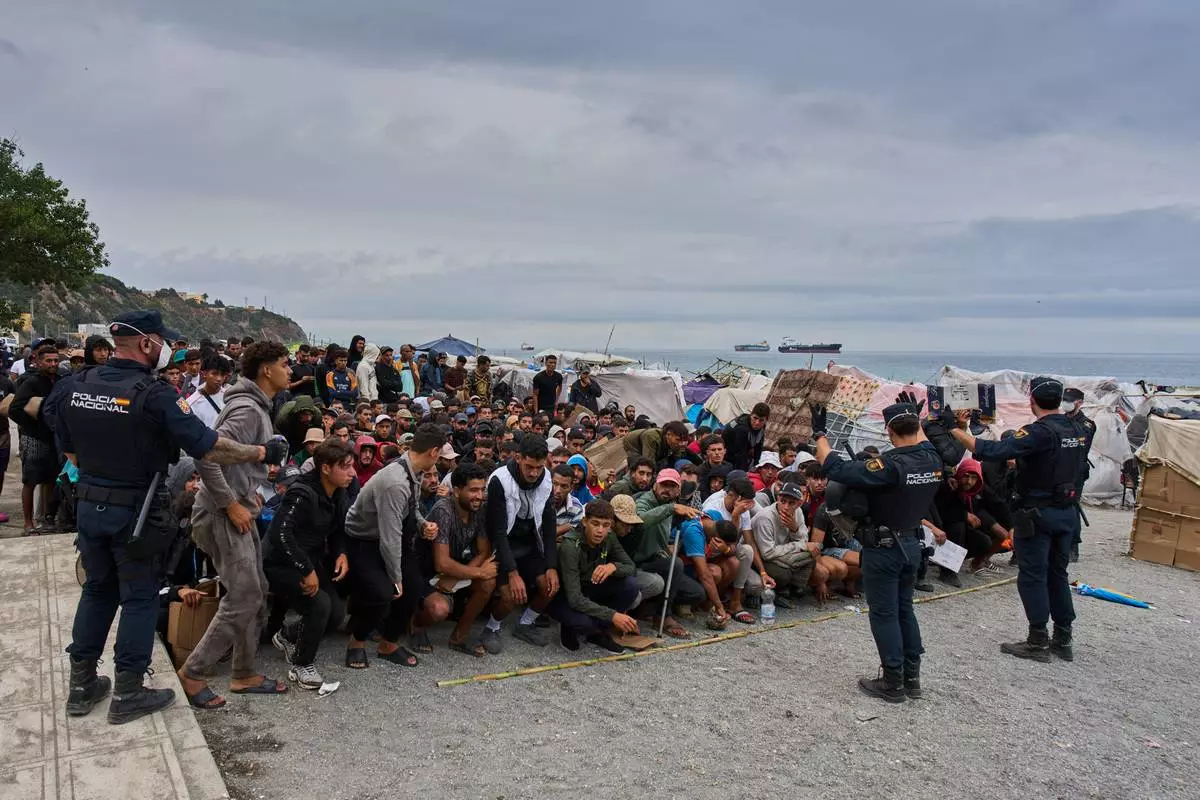
Migrants wait for food distribution to begin on El Trampolín Beach in the Spanish enclave of Ceuta, Monday, Sept. 28, 2026. (AP Photo/Bernat Armangue)
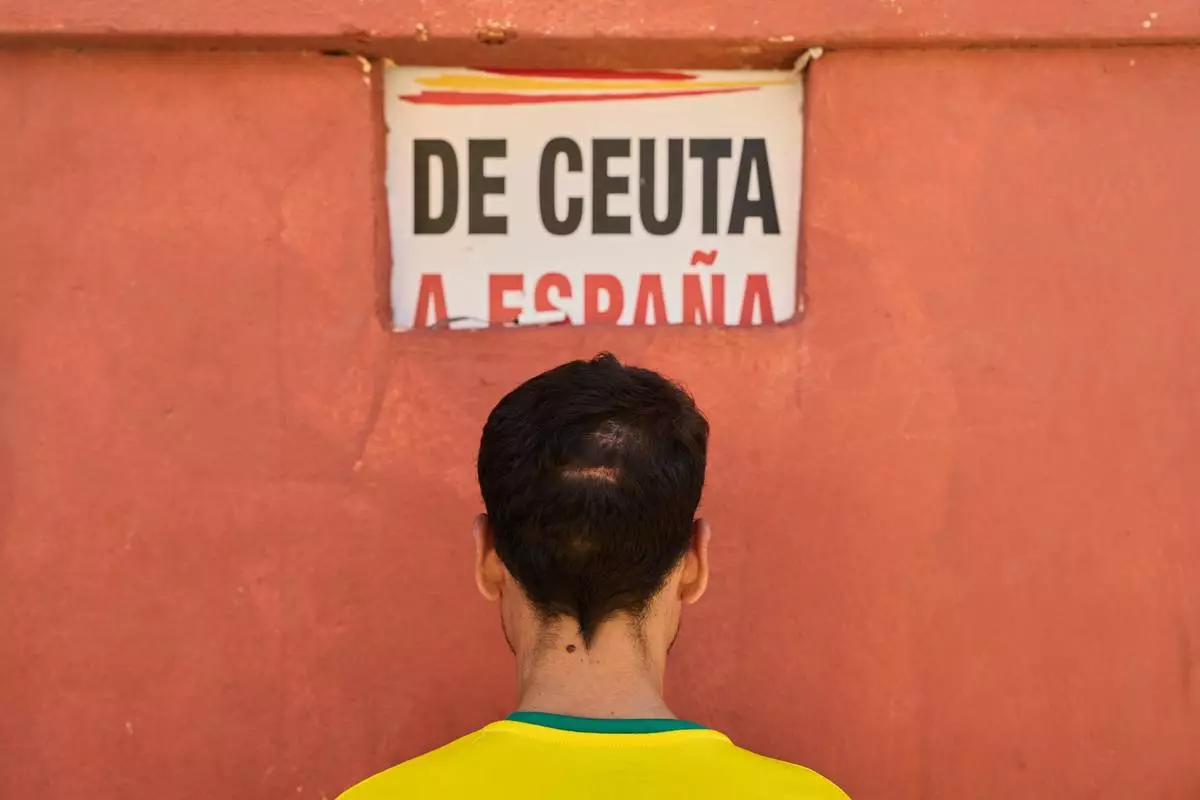
A Moroccan migrant, 27, shows the scars sustained after a beating by Spanish army offcials, in the Spanish enclave of Ceuta, Thursday, Oct. 1, 2026. (AP Photo/Bernat Armangue)
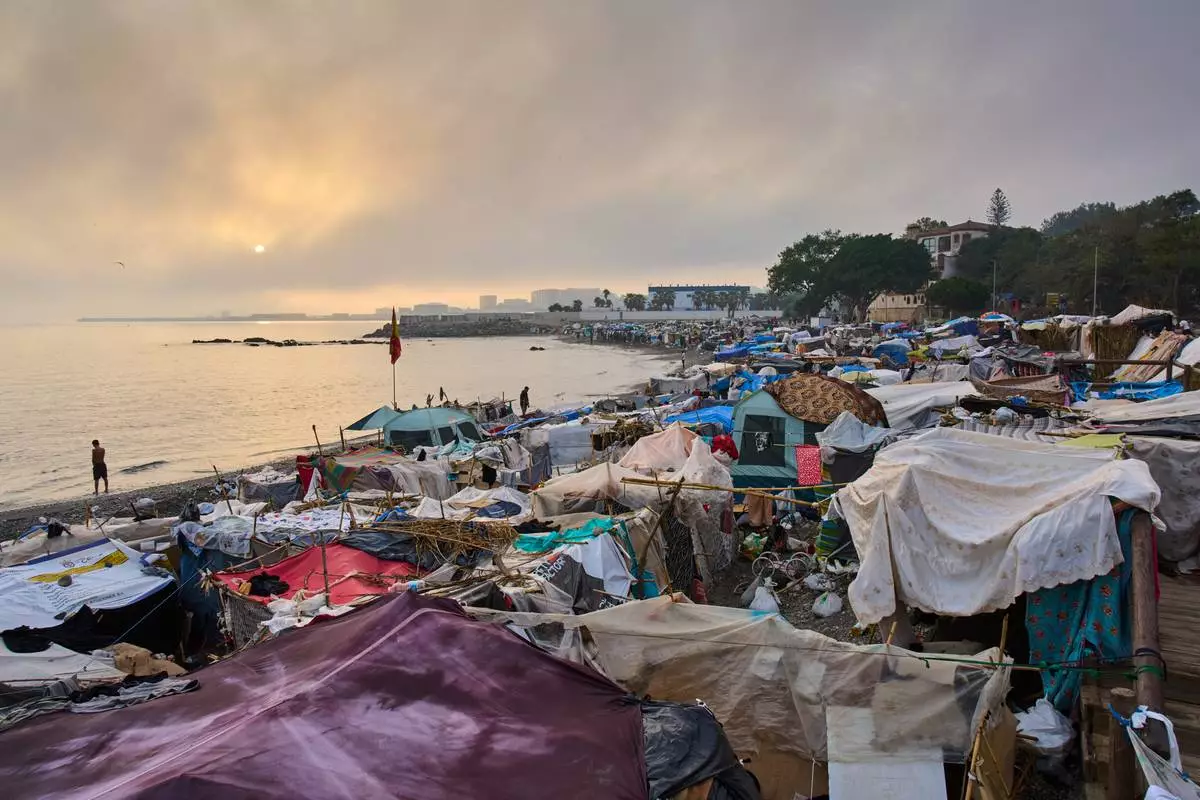
FILE -Makeshift tents used as a temporary camp settled by migrants on El Trampolín Beach in the Spanish enclave of Ceuta, Friday, Oct. 2, 2026. (AP Photo/Bernat Armangue, File)