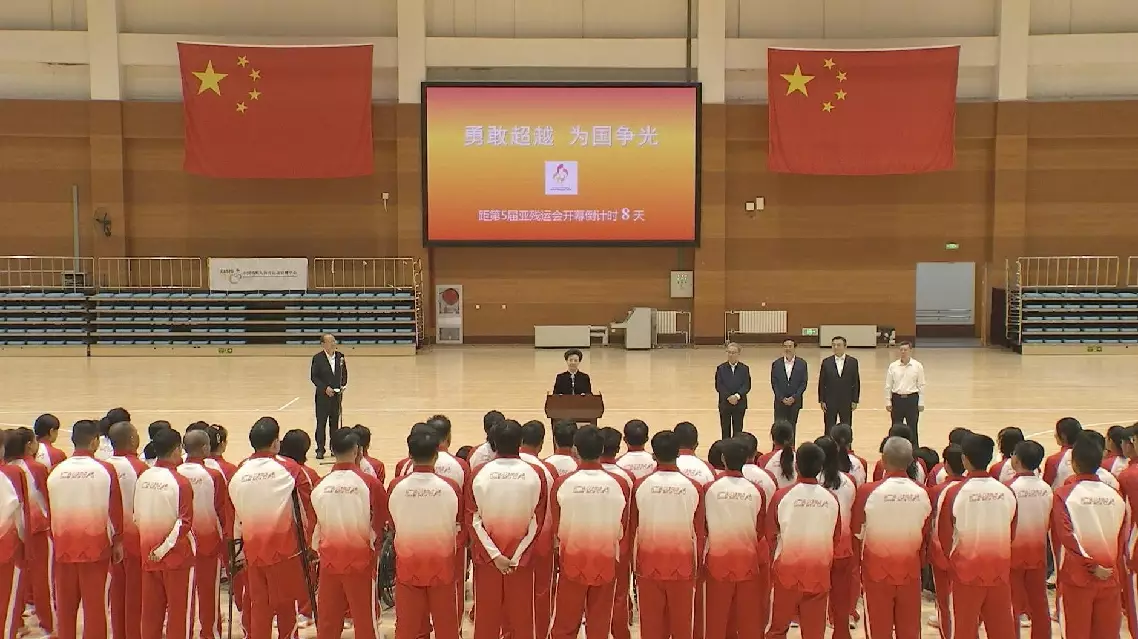
Chinese State Councilor Shen Yiqin urged China's para-athletes to aim for excellence at the upcoming Aichi-Nagoya Asian Para Games during a rally in Beijing on Saturday.
Shen, also head of the State Council Working Committee on Disability, visited the China Administration of Sports for Persons with Disabilities to meet with the Chinese delegation. She offered encouragement and motivation to the athletes, urging them to spare no effort in preparations and competition, and to bring greater honor to the motherland and the people.
Shen stressed the importance of using the Asian Para Games as practical experience to strengthen and prepare China's team for the 2028 Paralympic Games in Los Angeles. She called on the team to maintain high standards of sportsmanship and discipline, aiming for both athletic achievement and moral excellence.
Shen also emphasized the need to enhance friendly exchanges and better tell China's story and the story of Chinese persons with disabilities. She called for efforts to prevent and defuse various risks, ensuring the delegation's safety and success throughout the competition.
China announced on Saturday a 500-member delegation, including 312 athletes, to compete in 335 events across 17 sports at the Aichi-Nagoya Asian Para Games, marking the country's largest athlete contingent for an overseas edition of the Games.
The athletes have an average age of 28.8, ranging from 16 to 50 years old. The delegation includes 146 male and 166 female athletes, all of whom are amateurs and include workers, students and freelancers.
The Aichi-Nagoya Asian Para Games will be held from Oct 18 to 24, featuring more than 500 events across 18 sports, including para swimming, wheelchair basketball and sitting volleyball, with more than 3,000 athletes from 45 countries and regions expected to take part.
It will be China's fifth appearance at the Asian Para Games.
Chinese state councilor meets Chinese Asian Para Games team
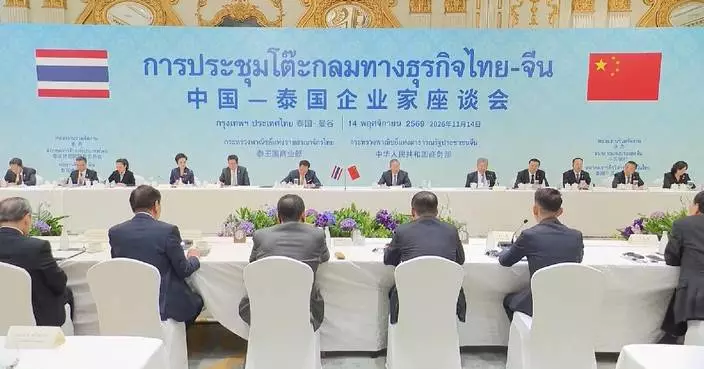
The fourth meeting of the APEC Business Advisory Council (ABAC) opened on Saturday in Shenzhen City in south China's Guangdong Province, drawing members who underscored China's expanding leadership in driving trade integration, green energy and multilateral cooperation across the Asia-Pacific.
The three-day meeting has gathered more than 60 representatives from 21 APEC economies, along with nearly 200 experts and accompanying staff, according to the organizer, the China Council for the Promotion of International Trade (CCPIT).
As global trade faces mounting economic headwinds and shifts toward sustainability, international business leaders pointed to China's technological advancements as a crucial catalyst for regional development.
Kasemsit Pathomsak, a Thai representative on ABAC, APEC's private-sector advisory body, highlighted China's contributions to green technology.
"China has played a very important role all along, especially when it comes to the renewable and green initiatives, with solar production, green technology, EVs. China has been very forefront in innovating and bringing this technology to the masses. I think it's very important to try help the world to try and become more green and affordable, to try transition to this green technology," said Pathomsak.
Members also highlighted APEC's vital platform for bilateral and multilateral engagement, fostering commercial bridges across diverse markets.
"As one of the economies that's in APEC, China, as we all acknowledge, is a very important trade partner in this region in both bilateral and multilateral opportunities. For Canada, we see that it is very important for us to establish a proper conduit of opportunities where we can grow together and understand the risks where we have to be clear about where we can and cannot go together. So, we think that APEC is an excellent opportunity where the public sector and the private sector, which I represent, would be able to engage in a deeper conversation on this," said Joseph Fung, an ABAC member from Canada.
Meanwhile, Francisco Suarez Hernandez, an ABAC member from Mexico, praised China's logistical and organizational leadership in hosting the meeting.
"It's really important and China hosting this event is the best example of leading. I think creating a bridge between Mexico, next year Vietnam, and this year China is going to be a great example. We actually hosted ABAC II (Second meeting of APEC Business Advisory Council) this year in Mexico. So, I know the effort," he said.
Founded in November 1995, ABAC is the only non-governmental body with an official advisory role in the APEC Economic Leaders' Meeting, engaging in a formal dialogue and submitting annual policy recommendation reports to APEC leaders.
After the ABAC meeting, Shenzhen will host the 2026 APEC CEO Summit on Nov 17 to 18, drawing the region's top business and government leaders to chart a course for Asia-Pacific prosperity.
This is the third time China has hosted APEC meetings, and the first in 12 years.
Working with other member economies under the theme of "Building an Asia-Pacific Community to Prosper Together," China has focused on three priorities, namely openness, innovation and cooperation, and has hosted more than 300 meetings and events across the country during the year.

ABAC members laud China's role in Asia-Pacific economic integration