NEW YORK (AP) — Bill Miller will umpire his 10th League Championship Series and be joined as an LCS crew chief by Mark Wegner.
Miller, 59, made his big league debut in 1997 and enters the American League Championship Series with 126 career postseason games, second among active umpires to Alfonso Márquez’s 130. Miller is fifth overall, also trailing Gerry Davis (151), Ted Barrett (138) and Joe West (132).
Miller's 10 LCS appearances will tie Barrett, West and Bruce Froemming for third-most behind Jerry Crawford (12) and Davis (11).
Edwin Moscoso and Nestor Ceja will work the LCS for the first time, Major League Baseball said Sunday.
Miller will head the crew for the ALCS between the Tampa Bay Rays and Cleveland Guardians beginning Monday, joined by Jordan Baker, Ceja, Chad Fairchild, Adam Hamari, Mark Ripperger and Carlos Torres.
Wegner's crew for the National League Championship Series between the Milwaukee Brewers and Los Angeles Dodgers starting Sunday includes Ryan Additon, Moscoso, Alan Porter, David Rackley, Chris Segal and John Tumpane.
Wegner, 54, made his big league debut in 1998 and was crew chief for last year's World Series. He was behind the plate for Game 3, an 18-inning, 609-pitch, 6-hour, 39-minute marathon won by the Dodgers 6-5 over Toronto.
Seven-man crews will work each series, with one umpire off each game.
Ripperger had a 44.3% overturn rate in the first season of the ABS ball/strike system of robot umpires, second-best to Jansen Visconti (42.2%) among those with 100 or more challenges, according to taptochallenge.com.
Additon had a 45% rate, followed by Ceja (46.6%), Rackley (48.3%), Wegner (48.8%), Hamari (49.1%), Fairchild (50.5%), Moscoso (52.3%), Torres (53.7%), Porter (54.9%), Tumpane (57.5%), Baker (57.9%), Segal (60.6%) and Miller (60.7%).
Ripperger is the only LCS ump who worked the plate earlier this postseason. He was overturned on two of three challenges in Atlanta’s 6-2 win over Philadelphia in Game 3 of a Wild Card Series on Oct. 1.
Ceja will be behind the plate for Monday night's ALCS opener, with Miller at first, Ripperger at second, Baker at third, Fairchild in left, Hamari in right and Torres in reserve.
Torres will work the plate in Game 2, followed by Miller, Ripperger, Baker, Fairchild and Hamari.
Moscoso will call balls and strikes for Sunday night's NLCS opener, with Wegner at first, Additon at second, Porter at third, Rackley in left, Tumpane in right and Segal in reserve.
Segal will be behind the plate in Game 2, followed by Wegner, Additon, Porter, Rackley and Tumpane.
Wegner is working his sixth LCS; Porter his fifth; Baker and Fairchild their fourth; Hamari, Rackley and Ripperger their third; and Additon, Segal, Torres and Tumpane their second.
Erich Bacchus, Lance Barkdale and Adam Beck will be the replay umpires at MLB's office in New York.
See AP’s full MLB coverage here
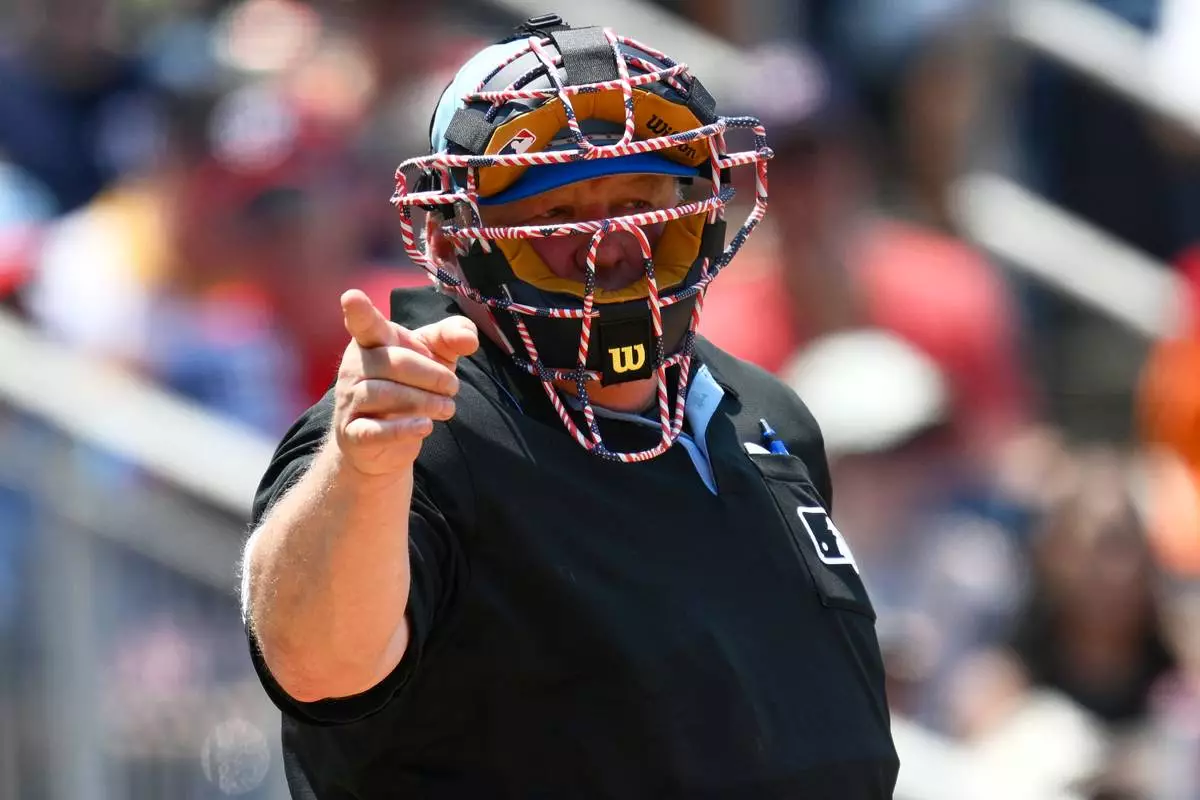
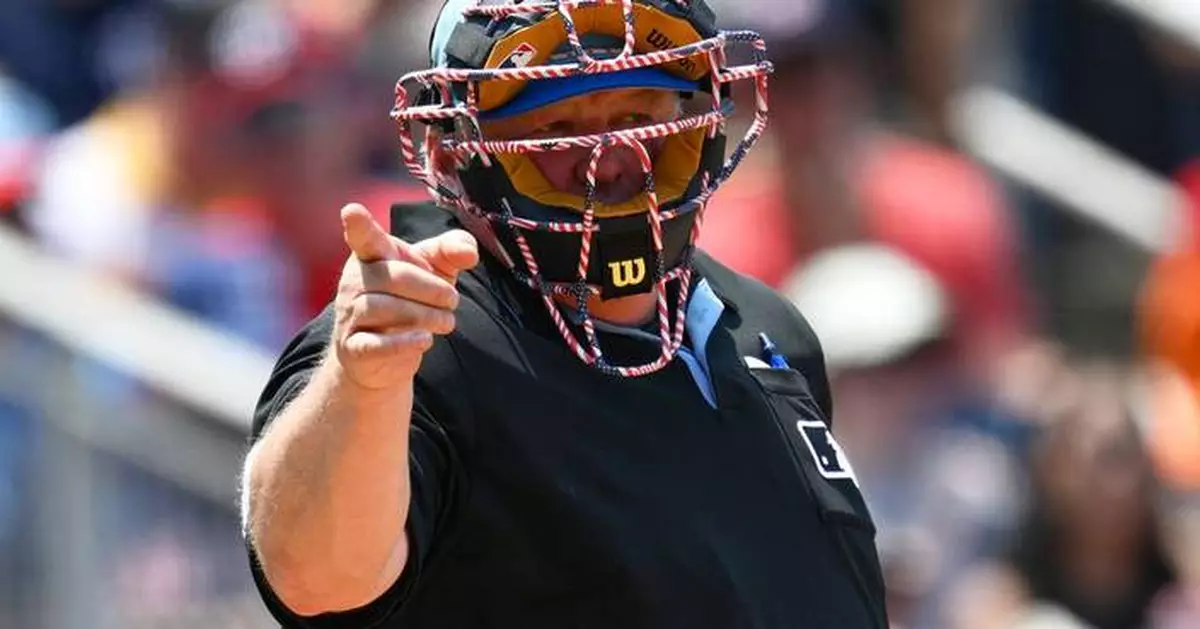
FILE - Home plate umpire Bill Miller calls a strike as he wears a patriotic themed mask during the ninth inning of a baseball game between the Washington Nationals and the Boston Red Sox, July 4, 2025, in Washington. (AP Photo/Nick Wass, File)
HAVANA (AP) — Every Thursday and Sunday at noon, dozens of people gather outside an apartment building in Havana’s Vedado neighborhood. Laura Mendoza comes downstairs, checks their names against a list and hands out medicine they requested through WhatsApp.
Antihistamines, diuretics, eye drops and antibiotics are among the drugs she distributes. She charges nothing.
Projects like Mendoza’s, called “Medicine Is Not for Sale,” have become a lifeline for Cubans struggling to find increasingly scarce medications as the country’s economic crisis deepens, compounded by U.S. energy and financial restrictions imposed since January.
Online sellers, street vendors and WhatsApp and Telegram groups have also stepped in to fill gaps left by state pharmacies, which for decades were the main source of subsidized medicines.
The shortages have become so severe that Cuban authorities issued regulations in July allowing private pharmacies to operate — a historic change to the country’s state-run health system and part of broader economic reforms.
Until those pharmacies open, projects like Mendoza’s act as a safety net.
“We have five WhatsApp groups in Havana and recently added one in Guanabo,” on the outskirts of the capital, said Mendoza, who estimates that about 100 similar community projects operate in Havana.
Working with the Catholic charity Caritas, her initiative receives more than 13 kilograms (29 pounds) of medicine each week from humanitarian groups in Canada and the United States, travelers carrying donations and local residents.
“People don’t just rely on this main pharmacy. They help each other,” Mendoza said, standing beside shelves of medicine in her apartment.
Volunteers sometimes deliver medicine to patients who cannot collect it themselves. But drugs requiring refrigeration, including some diabetes medications, and cancer treatments are particularly difficult to obtain. Patients also seek gauze, syringes and anesthetics for use in poorly supplied hospitals.
“Six or seven years ago, it was relatively easy to find medicines at state pharmacies,” said Cristina Díaz, a 27-year-old physics teacher who came to Mendoza’s project seeking clonazepam for a relative.
As shortages worsened, “medicines became much harder to find,” she said.
Cuba’s Health Ministry lists 603 medicines in its basic drug program, but only slightly more than one-third are currently available. About 400 are produced by Cuban laboratories using imported raw materials.
Mayda Mauri Pérez, president of the state pharmaceutical company BioCubaFarma, said in June that about 300 of the 395 medicines the company was expected to supply had not been produced because of shortages of imported materials.
The situation is particularly acute in the central province of Ciego de Ávila, where authorities recently acknowledged that state pharmacies had only about 10% of the medicines on the basic list. Officials blamed supply and logistical problems, including fuel shortages.
“Cuba has a medical-pharmaceutical industry that we consider strong,” María Fernández Martínez, head of the province’s pharmacy company, told the official newspaper Granma. But without supplies, “not even the most capable factory can complete the cycle.”
The government also struggles to obtain packaging such as blister packs and bottles and says U.S. financial sanctions complicate payments for imports. Cuban authorities say shipments of medical supplies have also been stranded in third countries because shipping companies fear U.S. penalties for calling at Cuban ports.
Allowing private pharmacies is part of a package of 176 economic measures approved by Cuba’s Parliament in June to expand private enterprise and help address the country’s economic crisis.
The government hopes entrepreneurs can import medicines, as private businesses already do with food and fuel. Authorities say they are reviewing about 36 proposals to open private pharmacies, while state pharmacies will continue to operate.
Private pharmacies will be regulated by the government and barred from selling hospital-only drugs and certain controlled substances. Imports will have to go through state companies, while medicines will require regulatory approval and proper storage.
The Cuban government did not respond to a request for comment.
For many Cubans, however, another question remains unanswered: Will they be able to afford the medicine?
Sara Márquez, 69, takes medication to control her blood pressure. She said a blister pack once cost 0.30 Cuban pesos at state-run pharmacies. In recent months, informal sellers have charged as much as 1,000 pesos ($1.50) for the same amount — more than 30% of her monthly pension.
“At what price will they sell the medicine? ... It will depend on people’s purchasing power. I can’t afford it.”
Follow AP’s coverage of Latin America and the Caribbean at https://apnews.com/hub/latin-america
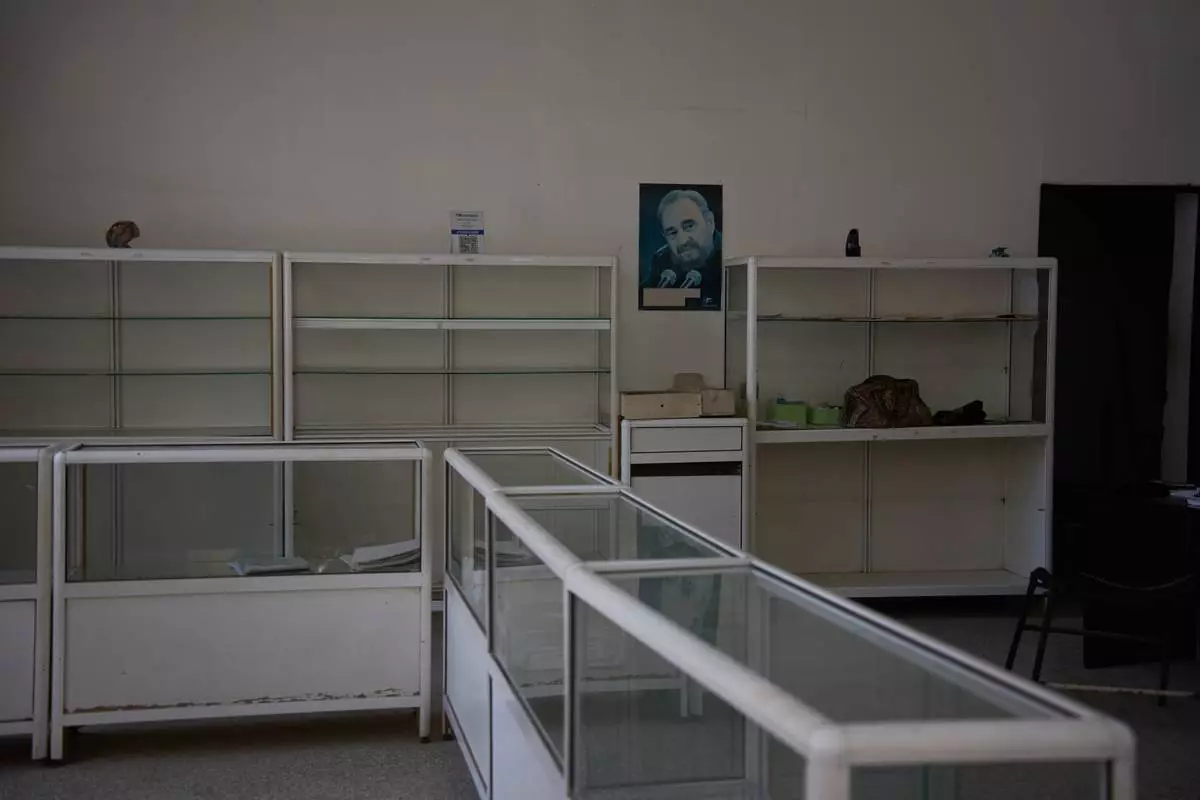
A poster of Fidel Castro hangs on the wall, flanked by empty shelves, at a state-run pharmacy in Havana, Cuba, Thursday, Oct. 8, 2026. (AP Photo/Ramon Espinosa)
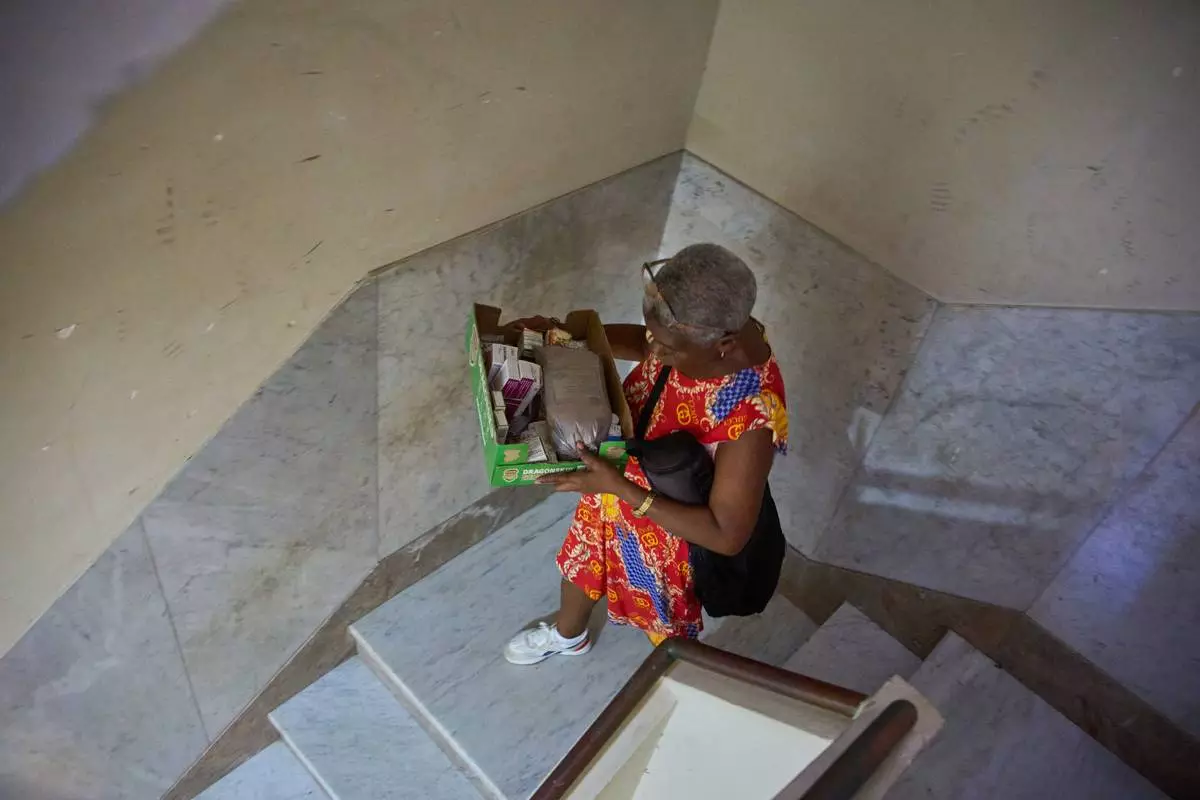
Silvia Perez, a volunteer with the "Medicine Is Not for Sale" community project, carries medicine for free distribution in Havana, Cuba, Thursday, Oct. 1, 2026. (AP Photo/Ramon Espinosa)
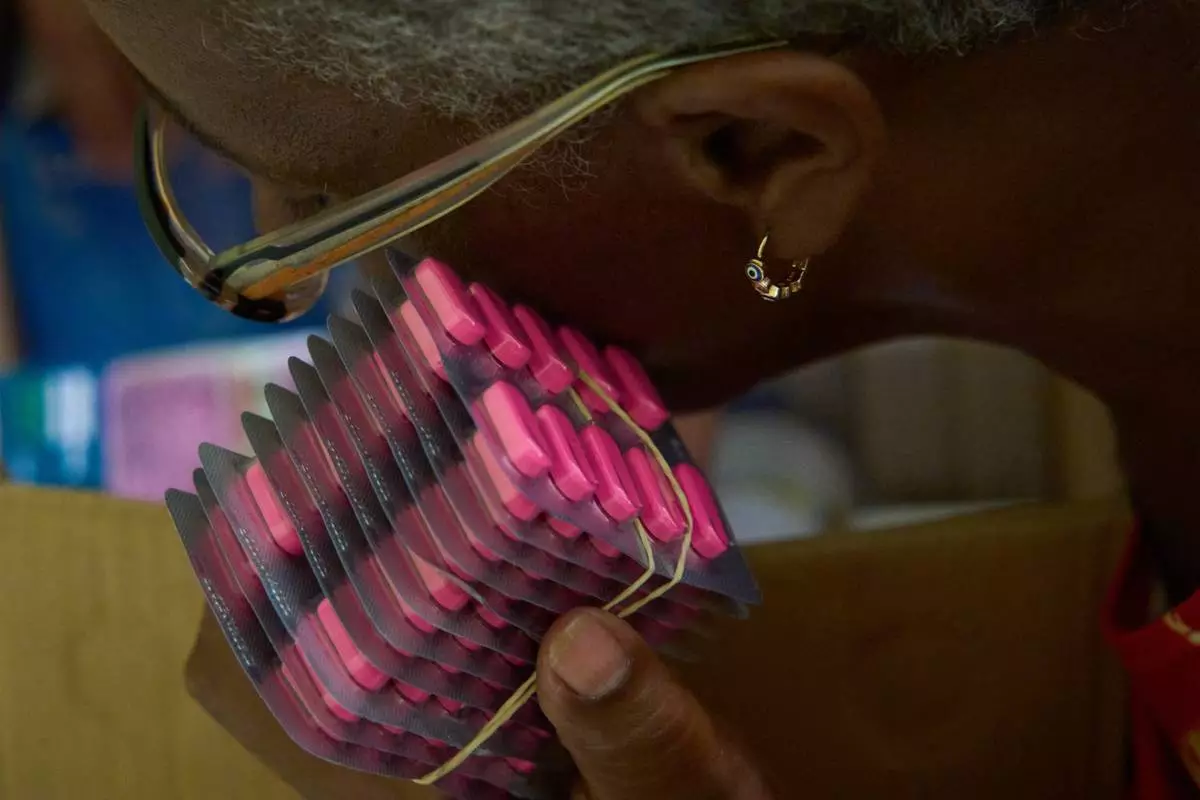
Silvia Perez, a volunteer with the "Medicine Is Not for Sale" community project, prepares medicine for free distribution in Havana, Cuba, Thursday, Oct. 1, 2026. (AP Photo/Ramon Espinosa)
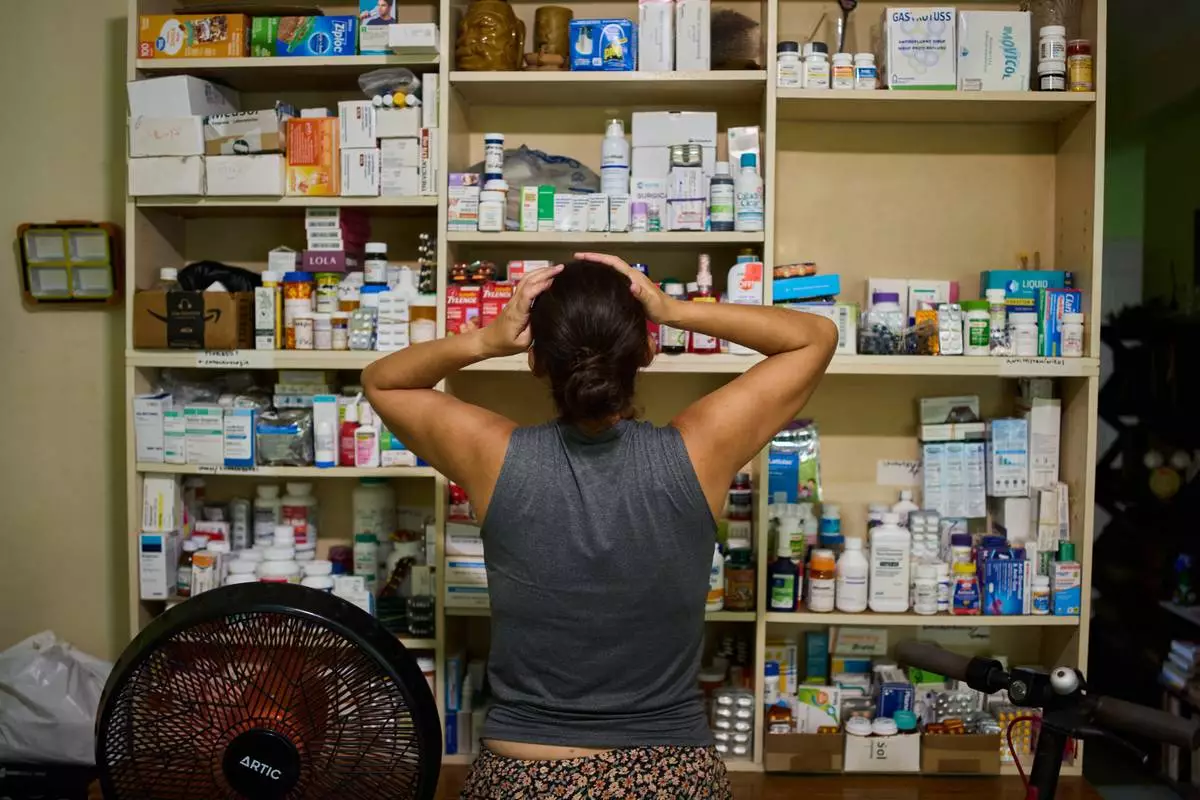
Laura Mendoza, who runs the “Medicine Is Not for Sale” community project, stands in front of a shelf stocked with medicine donated by humanitarian groups for free distribution in Havana, Cuba, Thursday, Oct. 8, 2026. (AP Photo/Ramon Espinosa)
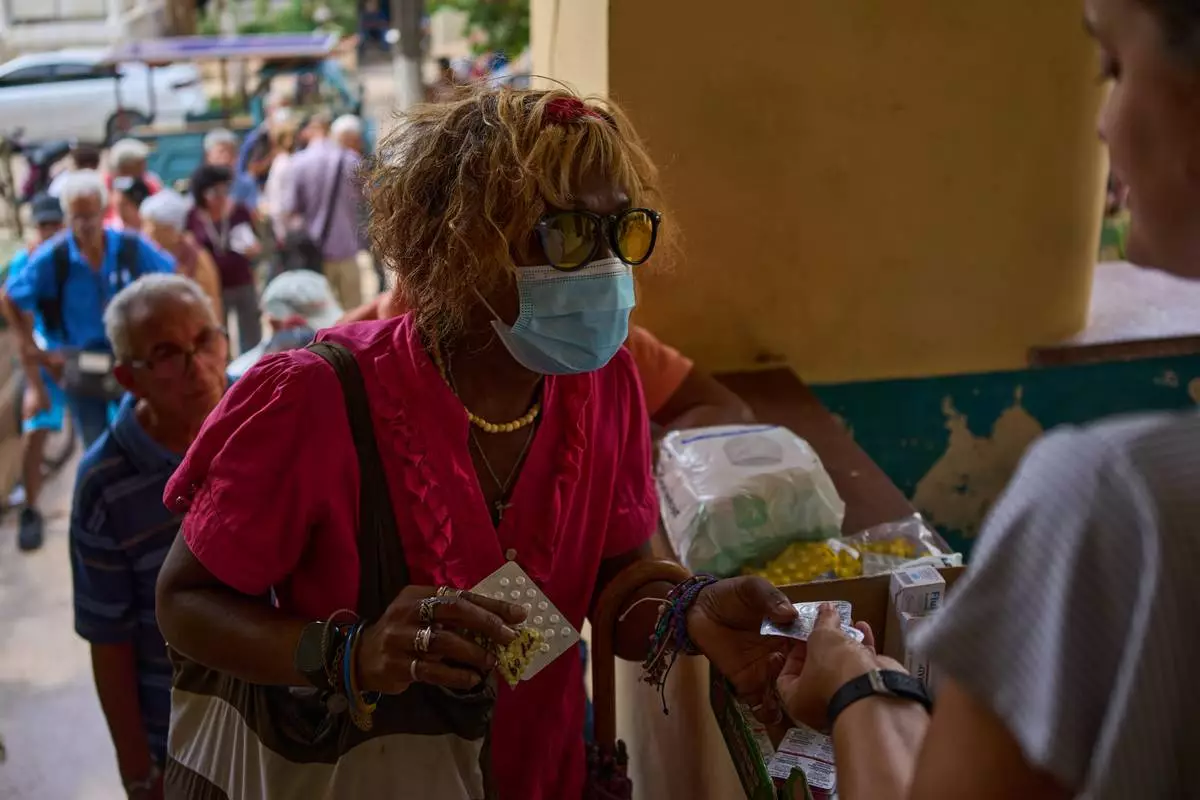
A woman receives medicine distributed through the “Medicine Is Not for Sale” community project in Havana, Cuba, Thursday, Oct. 8, 2026. (AP Photo/Ramon Espinosa)