WARSAW, Poland & WASHINGTON--(BUSINESS WIRE)--Oct 12, 2026--
Fortem Technologies, a leader in layered airspace security and defense, today announced an expanded strategic partnership with European complex weapon systems leader MBDA to integrate Fortem’s autonomous counter-drone systems into the air-defense architectures operated by MBDA’s defense and government customers across Europe and worldwide.
This press release features multimedia. View the full release here: https://www.businesswire.com/news/home/20261011817816/en/
The agreement builds on a technical collaboration established in 2024 that integrated Fortem’s DroneHunter ® autonomous interceptor into MBDA’s Sky Warden ® counter-uncrewed aircraft systems (C-UAS) architecture. Under the expanded partnership, MBDA will offer DroneHunter interceptors, allowing operators to add Fortem's capabilities as a layer to their existing air defense networks rather than deploying a standalone system. Sales are subject to applicable export authorizations.
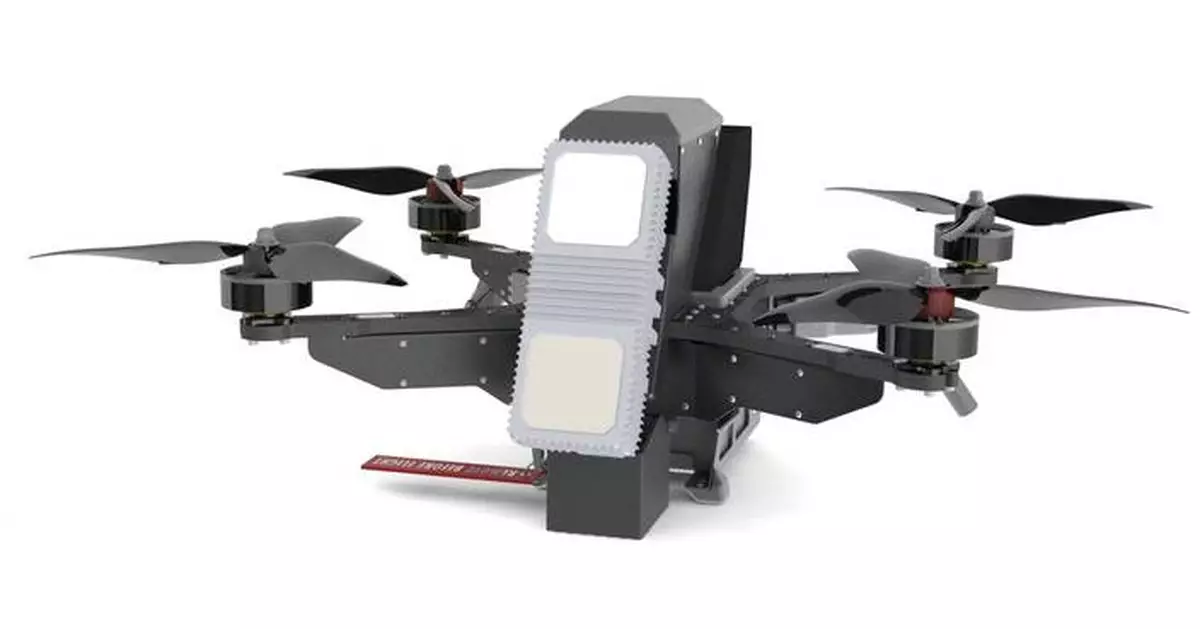
The companies will also jointly offer FireThorn ®, a fully autonomous interceptor co-developed by Fortem and MBDA. Designed to defeat one-way attack drones and other hostile uncrewed aircraft, including both Shaheds/Gerans and Orlans, FireThorn pairs Fortem’s high-speed, radar-guided autonomous airframe with an MBDA NATO-approved warhead for kinetic defeat.
The combined portfolio provides defense forces with complementary, mission-adaptable defeat options:
“Drones have changed how wars are fought, and air defense must change with them,” said Fortem Technologies CEO Jon Gruen, who announced the expanded partnership with MBDA ahead of attending the 2026 Warsaw Security Forum. “Militaries don’t need another standalone gadget. They need autonomous interceptors that plug into the architecture they already trust. Working with MBDA puts Fortem’s systems inside one of Europe’s most established air defense ecosystems, and gives allied forces a faster route to protecting troops, bases, and critical infrastructure.”
FireThorn will be on display at MBDA’s booth #453 at the 2026 AUSA convention, taking place Oct. 12-14 in Washington.
About Fortem Technologies
Fortem Technologies is a global leader in airspace security, delivering solutions that protect against today’s autonomous aerial threats while ensuring the safety of tomorrow’s advanced air mobility. Fortem’s AI-powered SkyDome® Family of Systems combines TrueView® sensors, command-and-control software, and autonomous DroneHunter® interceptors to defend military, government, and commercial operations worldwide from hostile or unauthorized drones. Fortem is the only company authorized to deploy a drone-on-drone kinetic interceptor in U.S. airspace, and its technology has been validated in operational deployments in Ukraine, the Middle East, and East Asia. Headquartered in Lindon, Utah, Fortem is privately held and backed by Lockheed Martin, DCVC, Toshiba, AE Industrial Partners, AIM13, Signia Venture Partners, and others. To learn more, visit https://fortemtech.com.
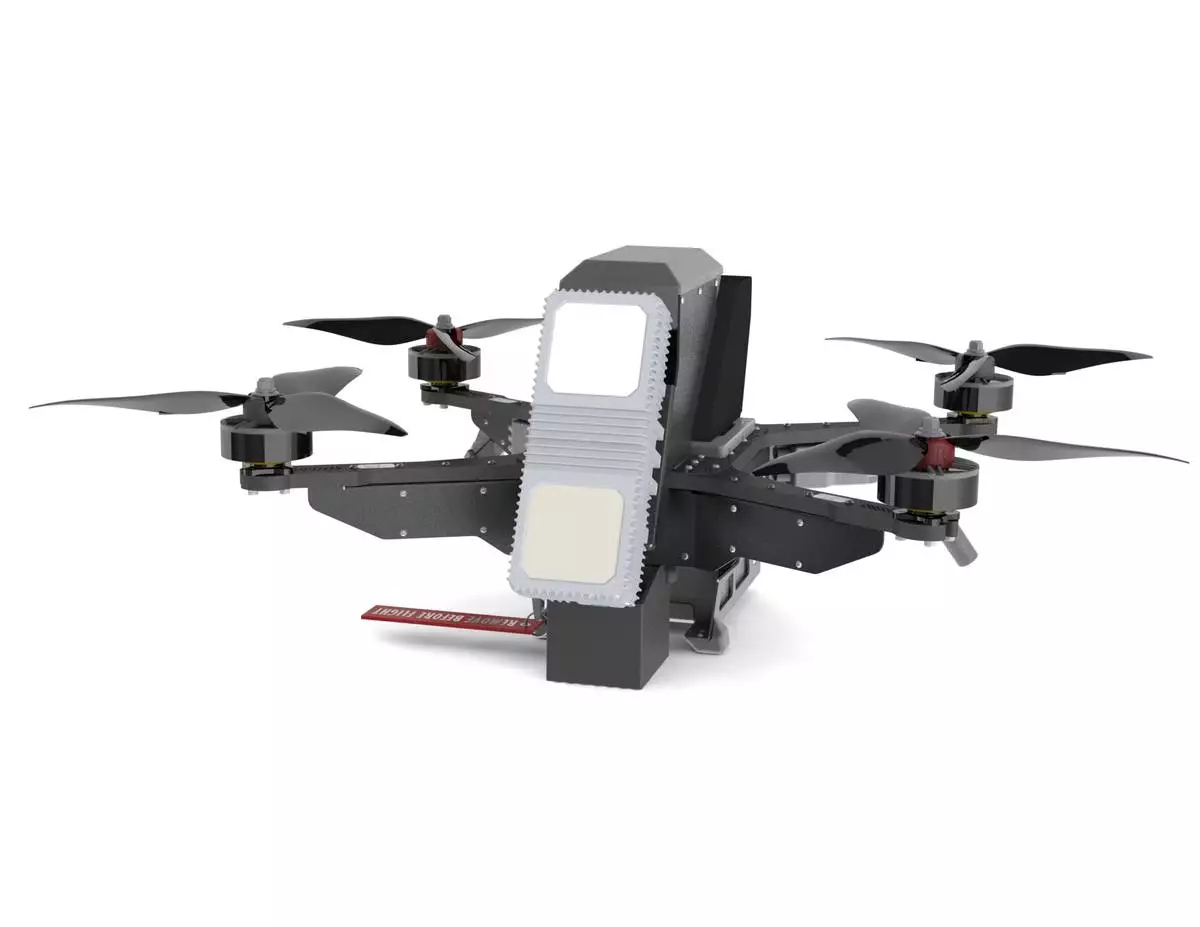
FireThorn®, a fully autonomous interceptor co-developed by Fortem Technologies and MBDA, pairs an MBDA NATO-approved warhead with Fortem’s Ground-Launched Air-to-Air Munitions (G-LAAM) airframe, shown here. Designed to defeat one-way attack drones and other hostile uncrewed aircraft -- including Shaheds/Gerans and Orlans -- FireThorn combines Fortem’s high-speed, radar-guided autonomous airframe with kinetic defeat capability. FireThorn is part of an expanded strategic partnership between Fortem and MBDA to integrate Fortem’s autonomous counter-drone systems into the air-defense architectures operated by MBDA’s defense and government customers across Europe and worldwide.
KISMAYO, Somalia (AP) — For three days, Halima Abdullahi Ibrahim carried her 3-year-old daughter from their village in Somalia to a hospital nearly 90 kilometers (56 miles) away. The girl's body was swelling and she needed medical help unavailable closer to home.
When she finally reached Kismayo Referral Hospital, Halima's daughter, Asho Hassan Abdi, was taken to the stabilization center, a white-walled ward lined with metal-framed beds, some beneath mosquito nets. Halima held Asho on her lap, the child wrapped in purple cloth, as a health worker examined her feet and lower legs.
They diagnosed her with edema, a symptom of severe acute malnutrition.
Asho is one child in a national emergency. Some 1.92 million Somali children between the ages of 6 months and almost 5 years old are suffering from or are expected to suffer from acute malnutrition and need treatment over a one year period ending in June 2027, according to an analysis by the Integrated Food Security Phase Classification. That includes 433,000 children expected to suffer severe acute malnutrition, the form carrying the greatest risk of death.
More than half of Somalia’s projected malnutrition cases are concentrated in the south, where communities face disease outbreaks, food insecurity and limited access to health services, clean water and sanitation. Expected flooding associated with El Niño could displace more families and make those services even harder to reach.
The hospital where Asho was being treated admitted 152 children with severe acute malnutrition in August, four of whom died, Jubbaland Health Minister Ismail Garas said.
And the crisis comes as humanitarian organizations have fewer resources to respond. The AP reported in August that the World Food Program can provide only limited assistance despite the growing need. Somalia’s emergency also reflects a wider retreat in humanitarian funding that is weakening efforts to fight hunger, disease and poverty around the world.
Sandra Lattouf, Somalia representative for the U.N. children’s agency UNICEF, said children are dying from malnutrition, while illnesses including measles intensify the danger.
“We need to do more for them,” Lattouf told AP during a visit to Kismayo.
She called for closer cooperation among community health workers, local leaders, government authorities and humanitarian organizations.
The effects of displacement and reduced assistance are visible at the Luglow settlement on the outskirts of Kismayo, a port city home to more than 250,000 people in the country's south. Dome-shaped shelters made from bent branches and patched plastic sheeting stand across the red earth, with dirty water pooled in ruts between.
At the settlement’s nutrition center, mothers sit on mats with young children in their laps while members of a visiting UNICEF delegation crouch to speak with them.
Ali Adan Ali, Jubbaland’s commissioner for refugees and internally displaced people, said many displaced families had received no humanitarian assistance since 2023 because aid organizations lacked funding.
“The current situation of the IDPs in Jubbaland is very dire,” Ali said.
He warned that flooding could force people living along the Juba River to move toward Kismayo, which is on higher ground, placing additional pressure on settlements, nutrition centers and hospitals.
Sweden’s ambassador to Somalia, Hans Henric Lundquist, visited the Luglow nutrition center with Lattouf and met local officials, mothers and children. He said agencies must work more closely with communities as funding becomes increasingly constrained.
“We need to build resilience, because globally there is lack of funding,” Lundquist said. “We need to work smarter than we’ve done before.”
Halima’s journey shows what the crisis can mean for one family: A severely malnourished child may be separated from specialized care by poverty, distance and a health system strained by growing needs and shrinking international assistance. And that can be a matter of life or death.
For more on Africa and development: https://apnews.com/hub/africa-pulse
The Associated Press receives financial support for global health and development coverage in Africa from the Gates Foundation. The AP is solely responsible for all content. Find AP’s standards for working with philanthropies, a list of supporters and funded coverage areas at AP.org.
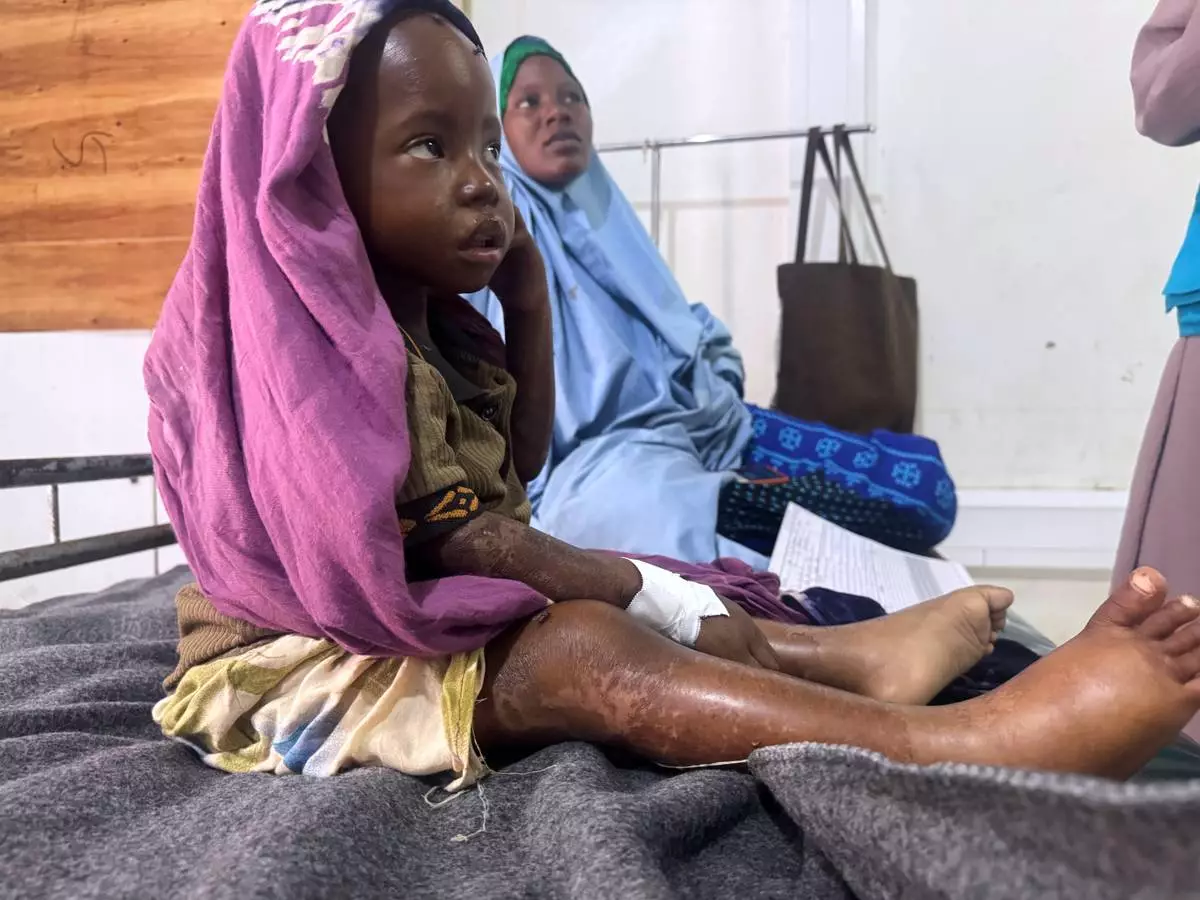
Halima Abdullahi Ibrahim sits with her 3-year-old daughter Asho Hassan Abdi, in a stabilization center in Kismayo, Somalia, Tuesday, Sept. 22, 2026. (AP Photo/Farah Abdi Warsameh)
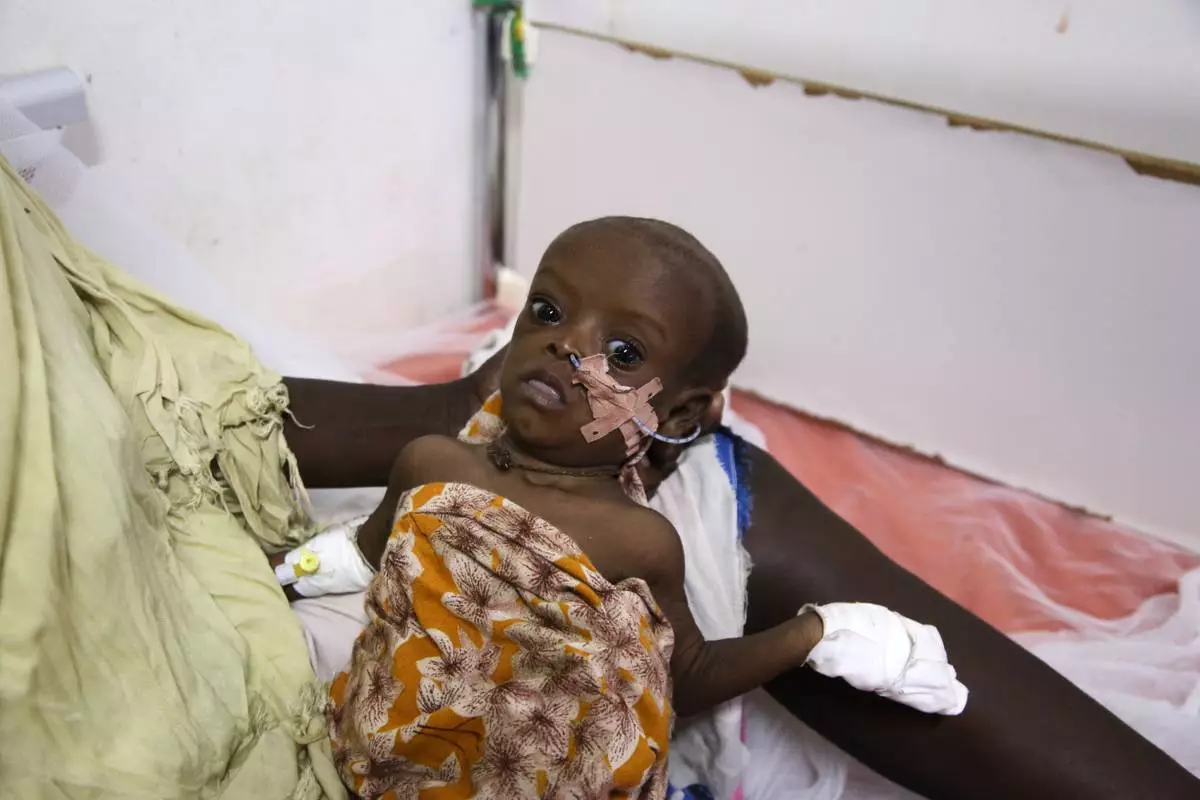
Hawa Ali holds her son Ramadan Osmanin, who is suffering from malnutrition, in Kimanyo general hospital in Kismayo, Somalia, Tuesday, Sept. 22, 2026. (AP Photo/Farah Abdi Warsameh)
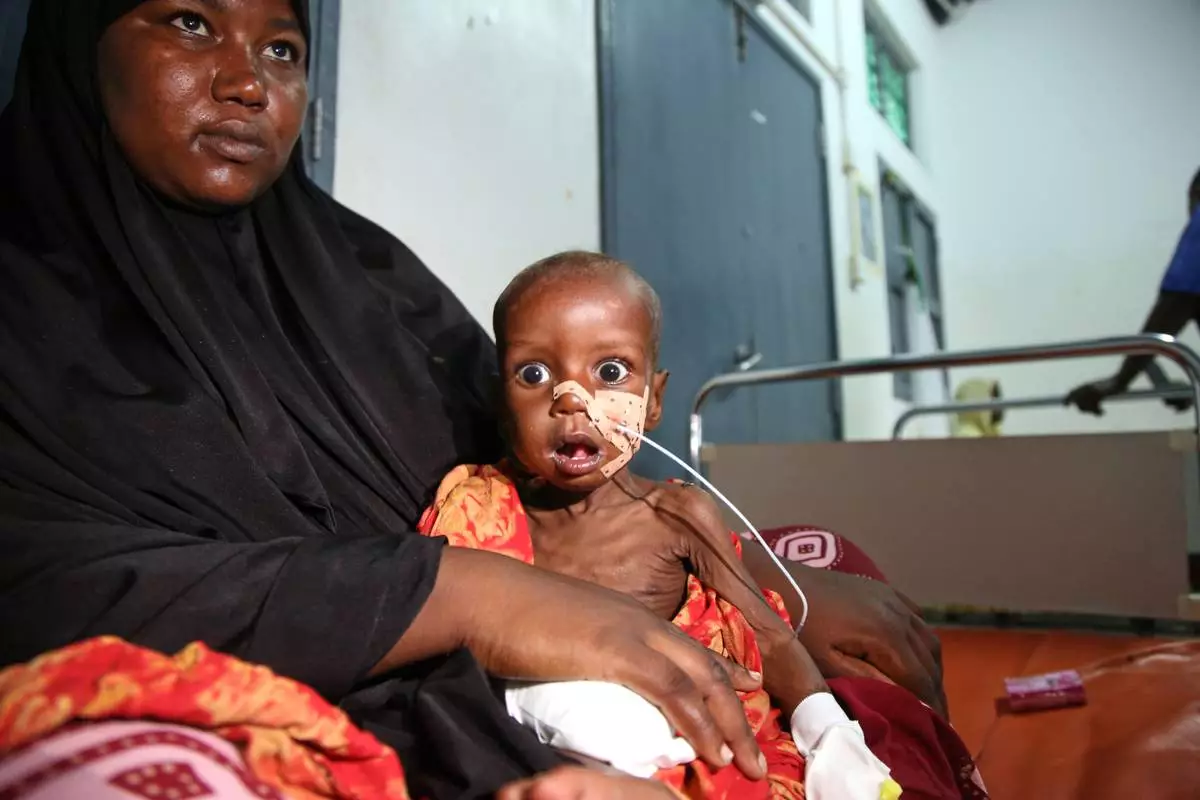
Khadija Hilowle holds her son Abdi Shafi, who is suffering from malnutrition, in Kimanyo general hospital in Kismayo, Somalia, Tuesday, Sept. 22, 2026. (AP Photo/Farah Abdi Warsameh)
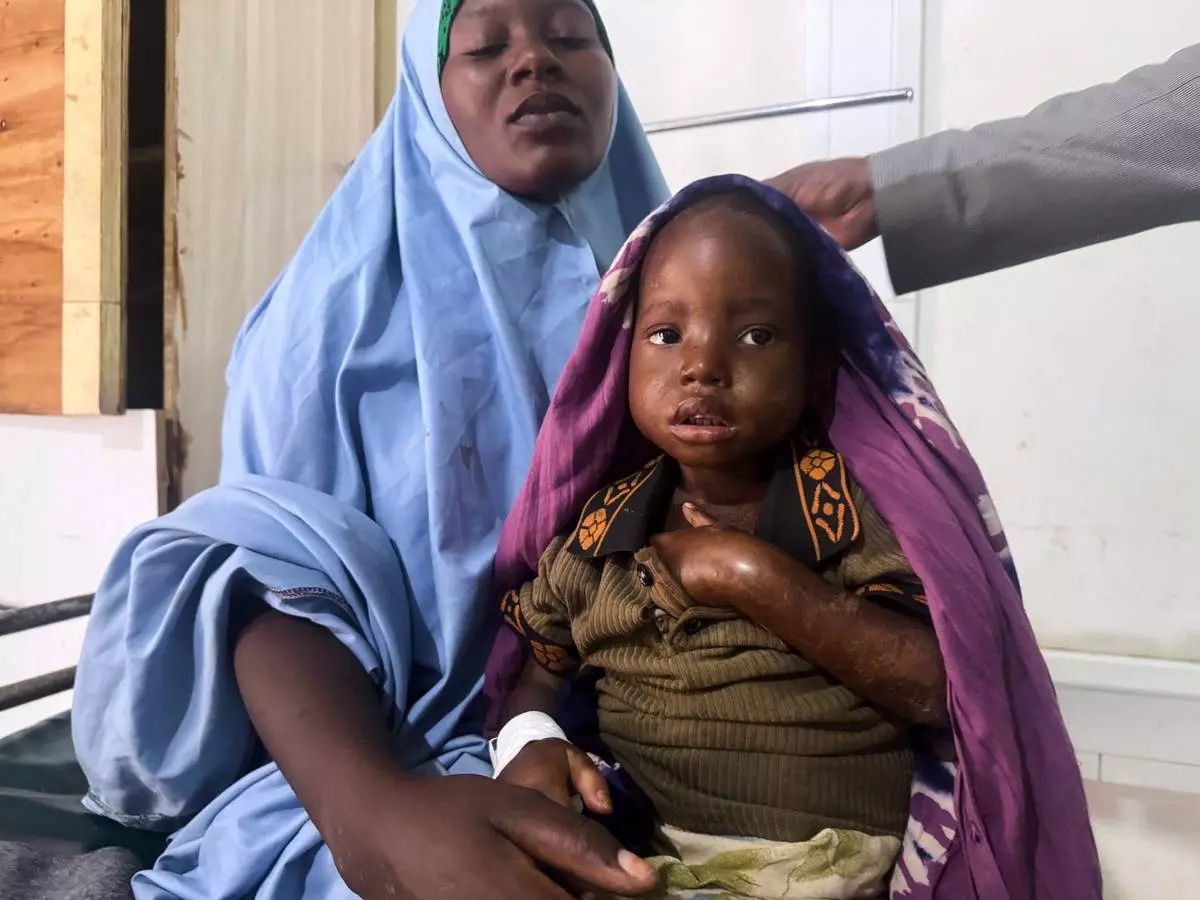
Halima Abdullahi Ibrahim holds her 3-year-old daughter Asho Hassan Abdi, in a stabilization center in Kismayo, Somalia, Tuesday, Sept. 22, 2026. (AP Photo/Farah Abdi Warsameh)