The 18th U.S.-China Green Energy Summit was held at Standford University in California on Saturday, bringing together participants from both countries and beyond to explore ways of advancing the global green transition.
During the event, attendees including Nobel laureates, senior policymakers, leading scientists, industry executives, investors and international leaders explored the technologies, policies, markets and partnerships shaping the future of the global energy transition, from artificial intelligence (AI) and next-generation power systems to breakthrough clean energy technologies and global energy cooperation.
While global cooperation on climate change has often been overshadowed by trade disputes and technological rivalry, participants emphasized that the scale and urgency of the energy transition leave no room for zero-sum thinking.
"We must get out of the political polarization because now green development has become a kind of culture war issue -- particularly in the U.S., but also in Europe," Erik Solheim, former UN under-secretary-general and executive director of the United Nations Environment Program (UNEP), said at a panel discussion during the summit.
The event also unfolded against the backdrop of accelerating extreme weather events globally -- from record-breaking heatwaves across Asia and North America to devastating floods in Europe -- underscoring the shared vulnerabilities that transcend national borders.
In this context, the summit placed great emphasis on practical collaboration from AI-driven grid optimization to joint research on carbon capture.
"I think there could be a real partnership of both innovation from China, the United States," former U.S. Energy Secretary Steven Chu said at the panel discussion.
The United States, he added, should not be afraid to learn from China.
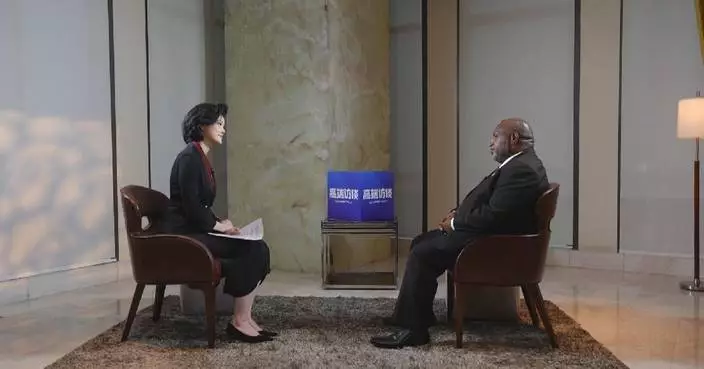
"China's ability to industrialize things used to be the United States' advantage around the world. Now, it's China's advantage. But we can learn from China how to do this as well. In climate change, the stakes are so high that we have to work together," he said in an interview with the China Global Television Network (CGTN).
Moreover, the growing energy footprint of AI itself has added a new dimension to the debate. As data centers proliferate and electricity demand surges, the very technology hailed as a tool for climate solutions risks becoming part of the problem, unless governed by robust standards and international cooperation -- a key consensus reached among the attendees.
Steve Westly is a lecturer at the Stanford Graduate School of Business and the founder of The Westly Group, one of the largest funds in North America focused on smart energy, transportation, and buildings. He was among the participants who noted that the increasing demand for AI and AI data centers are posing challenges for energy and natural resources.
"AI is going to help us solve diseases. It's going to carry many of the benefits for the future that could unlock all sorts of great opportunities for the human race, but it is going to require a lot of energy. I believe we can solve the energy issues, and we're doing that today. But we need to be careful that increased industrialization does not increase the heating up of the planet," Westly told CGTN.
The U.S.-China Green Energy Council, the summit organizer, turned to three of the top U.S. AI models and three of the top Chinese models to explore what the world's two largest economies can learn from each other in energy transition.
According to the AI models, the United States could benefit from learning more from China in areas such as ultra-high-voltage transmission lines and manufacturing, whereas China could gain from a deeper understanding of markets and price signals.
But experts say the most important question was the final one: how both countries can meet their national climate pledges by 2035, thereby helping to keep global warming within 1.5 degrees Celsius and adapt to a changing climate.
"All six models point to how you can solve the challenges with high-percentage renewable power systems. If both the U.S. and China can solve the problem, we solve the whole world's problem," Qi Wang, chairman and CEO of the council, told CGTN.
Another key consensus at the summit was that bringing together students from China, the United States and other parts of the world to work side by side may be the best long-term strategy for taking on one of the most consequential challenges facing the world today.
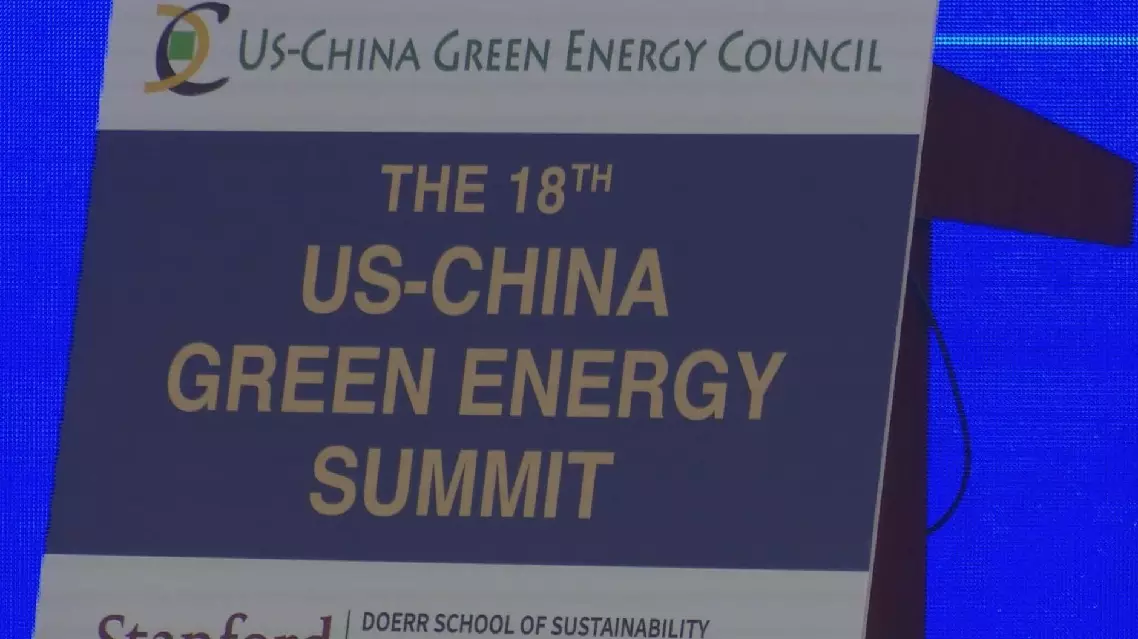
US-China Green Energy Summit urges global climate actions amid political divides, AI's rising energy demands