CHP closely monitors case of pneumonia of undetermined etiology that resulted in death in Russia
Regarding the death of a laboratory worker in Irkutsk Oblast of Siberia, Russia, due to severe pneumonia of undetermined etiology, the Centre for Health Protection (CHP) of the Department of Health (DH) said today (October 12) that, according to the World Health Organization (WHO)'s latest announcement, information obtained from the Russian authorities indicated that no evidence of ongoing transmission associated with the event had been identified. Nevertheless, for the sake of prudence,the CHP has implemented a series of control and prevention measures. The CHP will continue to closely monitor the latest developments, respond swiftly, and strictly guard against imported cases in order to safeguard public health.
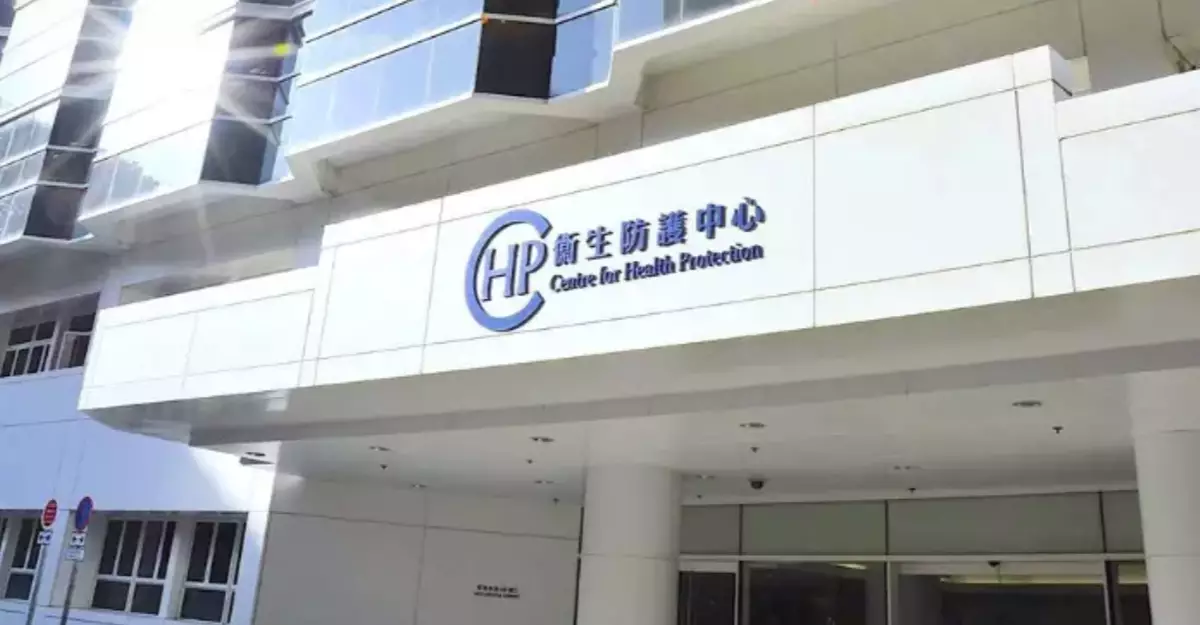
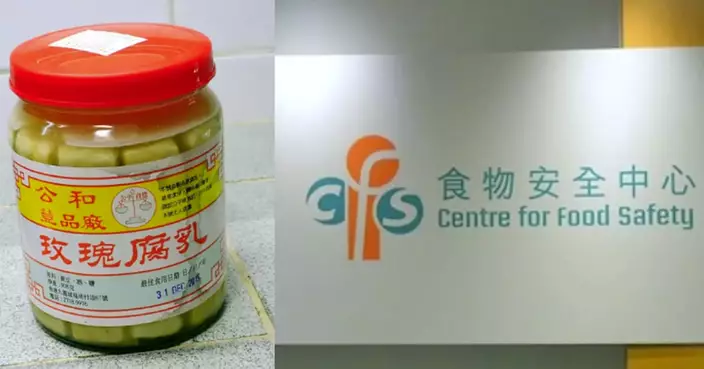
The Centre for Health Protection. Photo source: reference image
After noticing media reports of the above-mentioned death case in Russia in early October, the CHP immediately and proactively sought further information from the WHO and the Russian health authorities. According to the latest information from the WHO, citing data provided by Russian authorities, no case of plague had been recorded recently in Irkutsk Oblast, the laboratory testing of the deceased's contacts detected no high-threat pathogens, and that there were no further cases of severe pneumonia linked to this case. The Russian authorities reported that no biosecurity incidents had occurred in the laboratory, and quarantine measures were instituted in the hospital where the patient was being treated. According to the WHO's assessment, no evidence of ongoing transmission associated with this event has been identified so far. Nevertheless, a key uncertainty remains the absence of a confirmed diagnosis in the deceased laboratory worker. The WHO will continue to monitor the situation and assess any potential public health implications as further information becomes available.
In recent months, the CHP has not received any reports of residents or travellers arriving in Hong Kong from Russia with cases of pneumonia ofundetermined etiology. Based on current information, there is no evidence indicating ongoing transmission. The CHP assesses that the immediate public health impact to Hong Kong is low. For the sake of prudence, the CHP has implemented a series of control and prevention measures to guard against imported cases, including:
(i) strengthening health surveillance for passengers arriving on relevant flights from Russia at the airport, including arranging for Port Health Division officers to conduct temperature checks at the relevant flight gates, and conducting health assessments for passengers exhibiting symptoms;
(ii) displaying signages and broadcasting announcements in the airport arrival area and through airlines to urge passengers who have visited Irkutsk Oblast of Siberia, Russia, within the past 14 days to proactively declare their travel history to the on-site staff of the DH for further health assessment;
(iii) if an inbound traveller exhibits symptoms of pneumonia, after assessment by Port Health Division officers, arrangements will be made immediately to transfer the individual to a public hospital for further testing; and
(iv) providing the Airport Authority Hong Kong and airlines with the latest information regarding the case in Russia, and urging airlines to remind their flight crews to strictly enforce established prevention and control measures if they identify suspected cases on their flights.
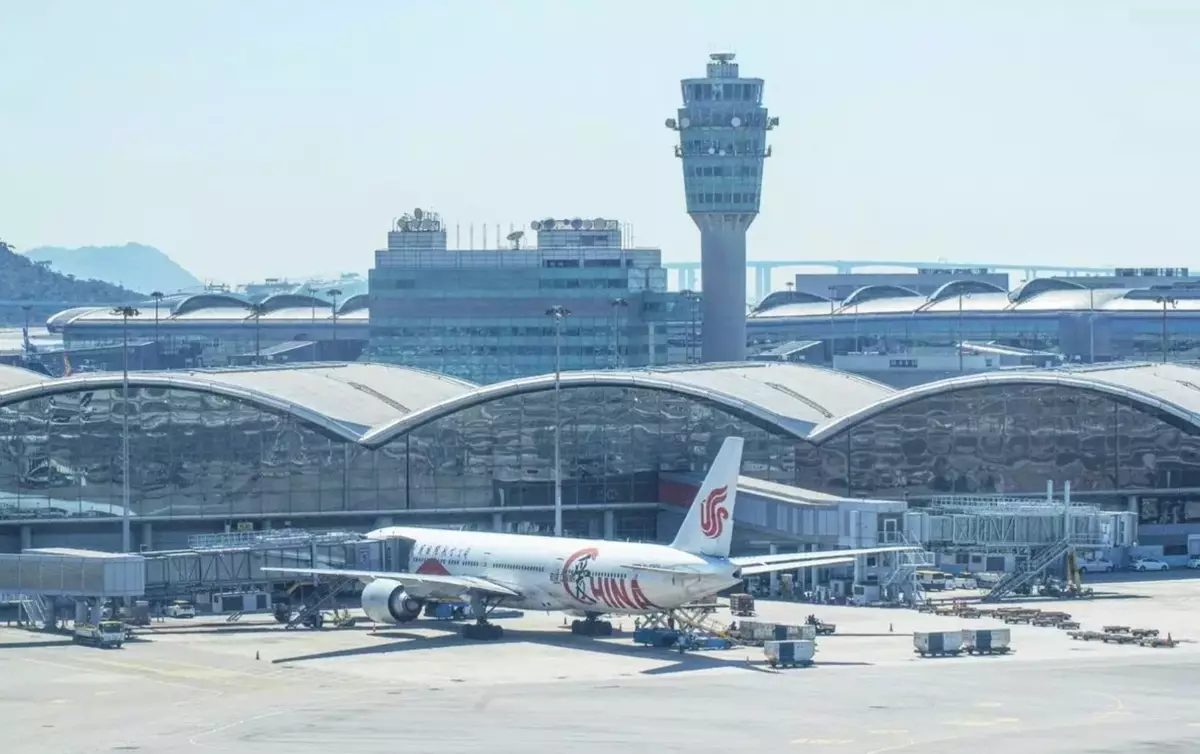
The Hong Kong International Airport. Photo source: reference image
Through existing mechanisms, Hong Kong has the capacity to detect cases of unexplained infections and emerging infectious diseases at boundary control points and in hospitals.
In addition, the CHP will send letters to all doctors and hospitals in Hong Kong, reminding them to remain highly vigilant and to strengthen surveillance. Any patient who has visited Irkutsk Oblast of Siberia, Russia, within 14 days prior to the onset of symptoms and has developed pneumonia of undetermined etiology must immediately report to the CHP so that further testing can be arranged.
The CHP reminds travellers that if they develop respiratory symptoms after returning to Hong Kong, they should wear a face mask, seek medical attention and report their travel history to a doctor. The CHP will continue to maintain close liaison with the WHO and other relevant health authorities, closely monitor developments, and adjust disease prevention strategies as necessary to safeguard public health.
The Centre for Health Protection. Photo source: reference image
Keynote address by PSITI at HKTDC Hong Kong Electronics Fair (Autumn Edition) 2026 Future Industries Zone Opening Ceremony
Following is the keynote address by the Permanent Secretary for Innovation, Technology and Industry, Mr Kevin Choi, at the HKTDC (Hong Kong Trade Development Council) Hong Kong Electronics Fair (Autumn Edition) 2026 Future Industries Zone Opening Ceremony today (October 13):
Distinguished guests, ladies and gentlemen,
Good morning. It is a pleasure to join you all at the opening of the Future Industries Zone at the Hong Kong Electronics Fair (Autumn Edition) 2026.
Electronics remains central to Hong Kong's economy. Electronic products accounted for close to 80 per cent of Hong Kong's total exports in the first eight months of this year. Yet the significance of the industry goes beyond trade figures. Electronics is the foundation of artificial intelligence, advanced computing, smart manufacturing, healthcare technologies and many of the industries that will shape our future.
That is why the launch of the Future Industries Zone is timely. A new generation of technologies is creating new industries and transforming established ones. The challenge is no longer confined to making a scientific discovery. We must also turn that discovery into a product, validate it in a real setting, establish a viable production process and bring it to the market.
This is the essence of new industrialisation, and a practical way to develop new quality productive forces. It connects technological innovation with industrial innovation, so that research can create real economic value. For hardware companies in particular, transforming a prototype into a commercial product involves design for manufacturability, rigorous testing, certification and supply chain management, demanding clear validation before meeting operational needs.
The Future Industries Zone responds directly to these needs. It brings together future microelectronics, future computing, future marine and quantum technology, future manufacturing and future wellness. More importantly, it places researchers and technology developers alongside manufacturers, users, investors and industry partners. This can help close the gap from research and development to design for manufacturing and mass production, while strengthening the wider electronics supply-chain ecosystem.
The direction of the Zone is closely aligned with national and Hong Kong development priorities. This year marks the beginning of the National 15th Five-Year Plan. The Plan calls for deeper integration between technological and industrial innovation, the development of a modern industrial system and the fostering of new quality productive forces according to local conditions. It also supports Hong Kong in developing into an international innovation and technology centre.
Hong Kong's First Five-Year Plan and this year's Policy Address translate these national priorities into concrete action for Hong Kong. Building on our strengths in basic research, international connections and professional services, and the Greater Bay Area (Guangdong-Hong Kong-Macao Greater Bay Area)'s strong manufacturing capabilities and complete supply chains, Hong Kong is developing a new industrialisation system with three major innovation and technology parks and five research and development institutions as its backbone.
A central task is to strengthen the path from research and development to testing, pilot production, industrial application and market development. Pilot production is particularly important. It allows companies to verify whether a technology can be manufactured reliably and at the required quality, and to resolve technical problems before moving to full-scale production.
In microelectronics, the Hong Kong Microelectronics Research and Development Institute is establishing pilot lines for third-generation semiconductors. They will support research, proof-of-concept fabrication, pilot production and low-volume production. The Institute will also take the lead in operating the first national manufacturing innovation centre to be established in Hong Kong, bringing together resources from Hong Kong, the Chinese Mainland and overseas, including local enterprises and start-ups participating in the Zone today, to strengthen our microelectronics ecosystem and accelerate commercialisation.
Technology needs to be tested in real operating environments. This is another area where the Future Industries Zone can make a practical contribution. Through scenario-based displays, enterprises and start-ups can show how their hardware and software solutions work, engage prospective users and obtain direct feedback. These are not merely product showcases. They give companies a valuable opportunity to validate and improve their technologies with reference to real needs.
This year's Policy Address also supports the Hong Kong Science and Technology Parks Corporation in exploring the establishment of the Hong Kong Innovation and Technology Application Scenario Promotion Centre. By helping technology companies identify opportunities for validation and adoption in public services and different industries, the proposed centre will enable more promising solutions to move from demonstration to wider use.
The Top 100 Future Industries Pioneer List adds another important dimension. By identifying promising enterprises in the frontier fields featured at the Zone, it gives them greater visibility and creates opportunities to connect with technology partners, manufacturers and potential users. This complements the Government's efforts to support enterprises through various policy initiatives such as the $10 billion New Industrialisation Acceleration Scheme in establishing smart production facilities in Hong Kong.
The Zone also provides a link to the international technology community. The debut of CES Asia Unveiled Hong Kong, made possible through the HKEIA (Hong Kong Electronic Industries Association)'s partnership with the Consumer Technology Association, brings an internationally recognised technology platform to the Fair. The pitch competition offers high-potential start-ups an opportunity to present their technologies, while the winning company will receive complimentary exhibition space at CES 2027 Eureka Park.
This international exposure is valuable, but it rests on the same foundation: strong technology, effective validation and the ability to turn an idea into a product. By combining these elements in one place, the Future Industries Zone can help companies progress further along the path from research to industrial application, and support the formation of future industry clusters in Hong Kong.
The Government will continue to work with industry, universities and research institutions to strengthen that path. The HKEIA's collaboration with the Government and the industry demonstrates how the wider innovation and technology ecosystem can work together.
I thank theHKEIA, HKTDC and all partners for creating this new platform. I look forward to seeing the Future Industries Zone foster practical collaboration, accelerate the commercialisation of promising technologies and contribute to Hong Kong's new industrialisation and technology development.
I wish the Future Industries Zone and the Hong Kong Electronics Fair every success, and all of you a productive and rewarding event. Thank you.
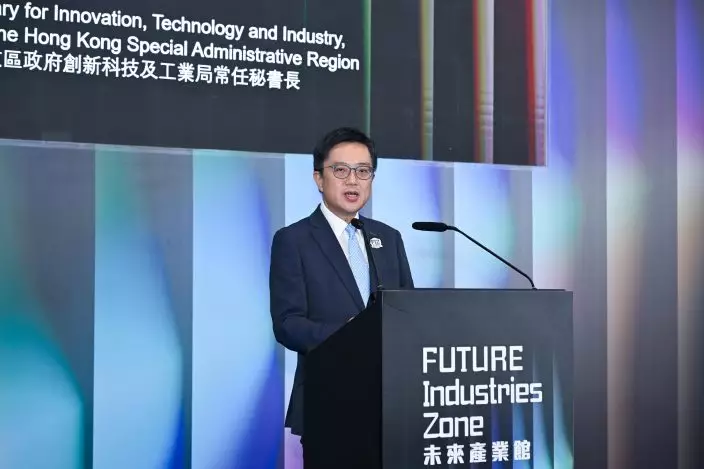
The Permanent Secretary for Innovation, Technology and Industry, Mr Kevin Choi, delivers the keynote address at the Hong Kong Trade Development Council Hong Kong Electronics Fair (Autumn Edition) 2026 Future Industries Zone Opening Ceremony today (October 13). Source: HKSAR Government Press Releases