WARSAW, Poland (AP) — NATO's top military commander said the alliance is “ready to fight tonight” if it is attacked, as European officials warn Russia could test NATO's defenses with increased covert attacks or a limited military incursion.
European nations have in recent months faced an escalation of covert Russian activity, including an arson attack on an Estonian defense company and a failed attempt to attack a Ukrainian aircraft at a German airport.
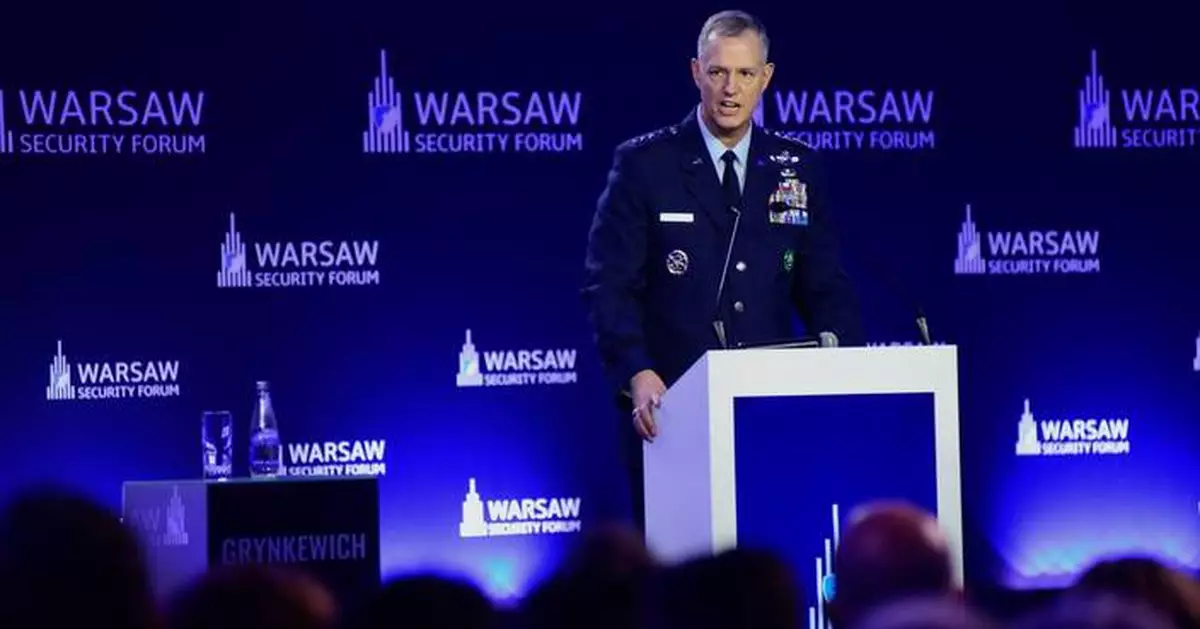
If Russia decides to attack NATO, the alliance will respond by using sensors, autonomous systems and military force to stop any assault, NATO’s Supreme Allied Commander U.S. General Alexus Grynkewich said in Warsaw Monday.
Grynkewich spoke at the Warsaw Security Forum to set out what he called NATO’s “Theory of Victory.” The NATO commander said he does not believe that a conflict is imminent or inevitable and that the most effective way to preserve peace is to prepare for war and to maintain open lines of communication to “resolve misunderstandings.”
Grynkewich provided no specific details about what kind of attack NATO is preparing for, nor where, nor with what kind of forces. But outlining what a response to a Russian attack could look like, Grynkewich said NATO’s combined land, sea and air forces will move to stop Moscow seizing territory and deny Russia the ability to hold ground.
“My theory of victory is simple,” he told the Warsaw conference.
“We will block the initial attack. If the attack persists, we will blunt it and prevent any enemy advance. And if required, we will break the enemy’s forces and the operational war-fighting system arrayed against us.”
That includes not just the attacking force but anything and everything that supports, sustains and controls it, he said.
In recent weeks, senior European officials and intelligence services have warned that Russia may be planning to test the NATO alliance with increased covert attacks or even an incursion after a spate of sabotage incidents across the continent. Denmark's defense intelligence service specifically warned Russia could use such tactics to split the NATO alliance.
But, at the same time, President Donald Trump has also sent shock waves through Europe by agreeing to a deal to buy diesel from Russia in a bid to try lower prices in the U.S. ahead of the midterm elections.
Earlier this year, the U.S. president said he was pulling American troops from Europe and his war with Iran has led to critical shortages of advanced air defense missiles in Europe.
“Ultimately it’s a political decision,” as to where troops are deployed but “no one should question the U.S. commitment to the alliance,” Grynkewich said.
It is important, Grynkewich said, that alliance members coordinate a “coherent” response to Russian activity to make it clear to Moscow “where our red lines are.” The response to increased Russian malign activity and sabotage, he said, should be to double down on support for Ukraine.
While Polish Prime Minister Donald Tusk warned that Russia is planning to escalate with drone or rocket strikes on European allies supporting Ukraine, other countries have called for calm.
Denmark’s Defense Intelligence Agency said there is a “low but growing risk” that Russia will launch a limited military attack against one or several NATO countries bordering Russia.
NATO does not seek war with anyone but will see a military attack coming and “is unlikely to be caught by surprise,” Grynkewich said.
Although Grynkewich said NATO would defend against any attack by Russia using a network of sensors and autonomous systems, some NATO nations have previously struggled to perform in exercises simulating drone warfare. They have also faced challenges detecting and responding to incursions of drones which have entered their airspace.
Multiple attack drones have crashed in NATO countries bordering Russia, Ukraine and Belarus. And in May, residents in the Lithuanian capital Vilnius were told to seek shelter after a drone strayed into Lithuanian airspace.
When asked if NATO could deter Russia in the way Grynkewich described, his spokesperson, Col. Martin O’Donnell said NATO nations are increasingly deploying ground sensors and other technology to detect and counter drones. The network that connects systems to shoot down drones and sensors is in the process of being established, although they have not yet taken down any drones, he said.
In September, Germany accused Russia of being behind a plot at Leipzig airport to use a drone laden with explosives to attack a Ukrainian aircraft. British officials also said they thwarted a Russian plot to target a drone facility outside London while Estonian officials said Russia was behind a fire at a defense company.
The incidents are among at least 211 blamed on Russia by Western officials since Moscow’s invasion of Ukraine and tracked by The Associated Press.
In its assessment released earlier in September, Denmark’s defense intelligence service suggested Russia could try to acquire Ukrainian drones and use them to attack Europe, in order to obfuscate any Russian involvement. Tusk suggested Russia will likely pretend any attacks are “accidental” in order to “paralyze or at least weaken the motivation of NATO countries” to rush to the defense of a member state coming under attack.
The Danish service said the aim of any such attack would be to divert European resources away from supporting Ukraine and sow division in NATO. But both the Danish service and O'Donnell said while Russia is fighting in Ukraine, it would be difficult to launch an outright attack on NATO.
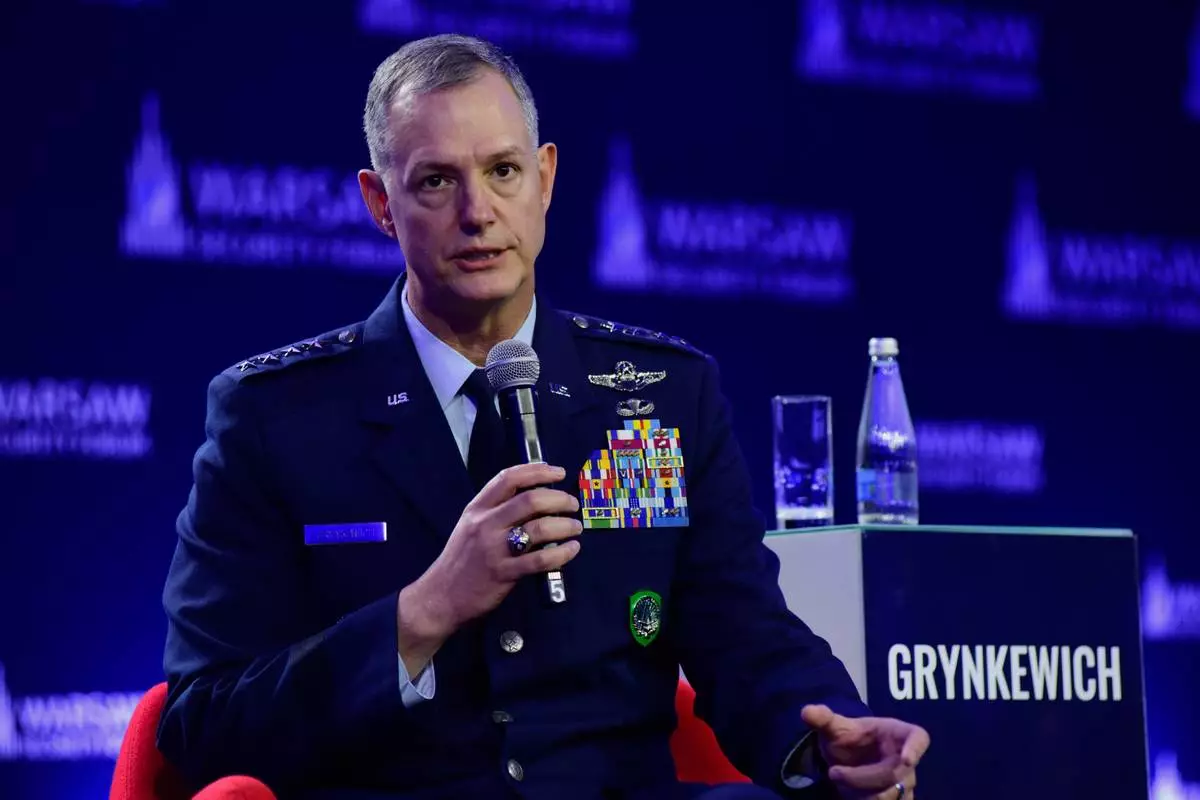
Air Force Gen. Alexus G. Grynkewich, commander of the United States European Command and Supreme Allied Commander Europe, speaks at the Warsaw Security Forum in Warsaw, Poland, Monday, Oct. 12, 2026. (AP Photo/Attila Husejnow)
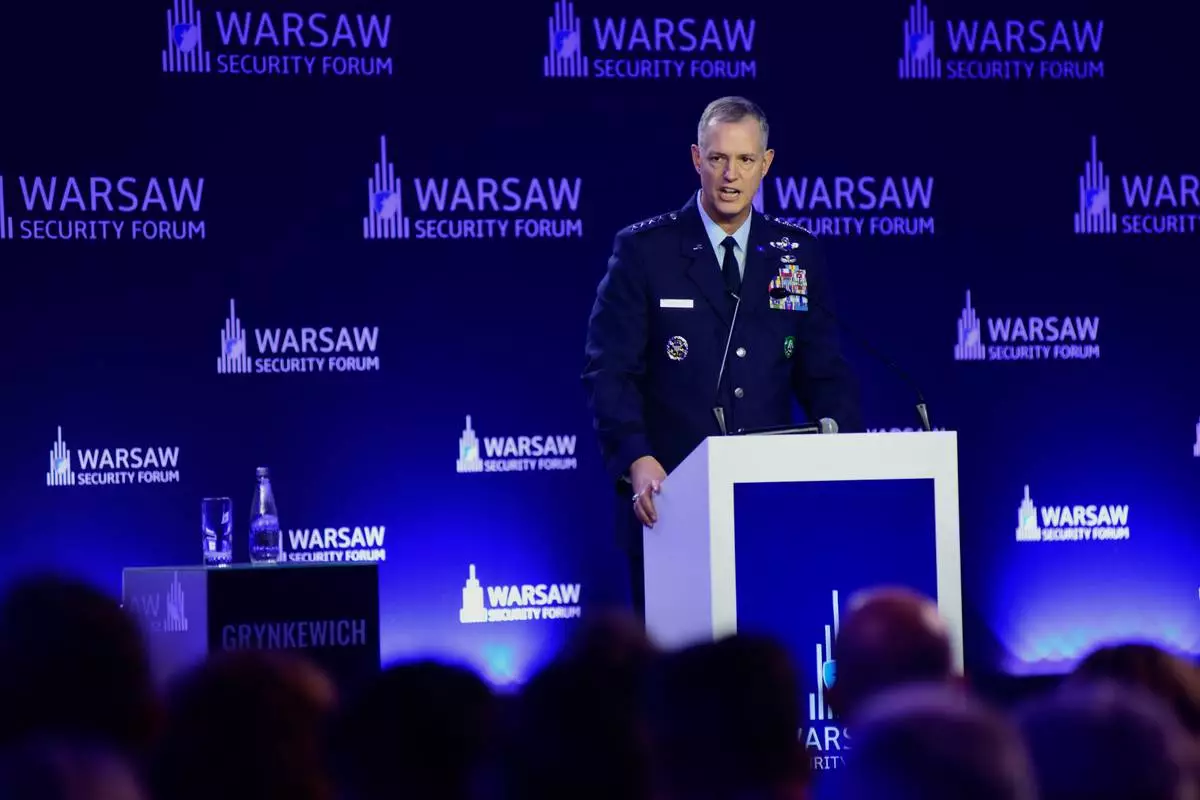
Air Force Gen. Alexus G. Grynkewich, commander of the United States European Command and Supreme Allied Commander Europe, speaks at the Warsaw Security Forum in Warsaw, Poland, Monday, Oct. 12, 2026. (AP Photo/Attila Husejnow)
STOCKHOLM (AP) — American economists Robert E. Hall and Michael Woodford won the Nobel Memorial Prize in economics Monday for their work on models that have helped governments and central banks manage economic shocks, such as energy crises and inflation.
The Royal Swedish Academy of Sciences announced the winners in Stockholm, noting that their work created the theoretical foundation to better understand how consumers decide whether to save or spend, insights that make it easier for policymakers worldwide to stabilize economies after fluctuations.
“The laureates’ research has made it possible to manage major macroeconomic crises far more effectively than before,” the Nobel committee wrote in a paper explaining the economists' work. “It has been hugely beneficial during the pandemic and the energy crises of recent years.”
Hall, 83, is affiliated with Stanford University in California. Woodford, who was born in 1955, is affiliated with Columbia University in New York.
Woodford spoke to the committee by phone from New York: “It’s a tremendous honor. It’s a surprise.”
For decades, governments responded to economic shocks by following the Depression-era prescriptions of the British economist John Maynard Keynes: Intervene in the economy by lowering interest rates and taxes and hiking government spending, thereby encouraging consumers and businesses to spend and invest and help restart growth.
“This is the Keynesian recipe and it worked well — until it didn’t,” said Timo Boppart of the Nobel economics committee.
Policymakers had thought economic management involved simple trade-offs — unemployment, for instance, would stay low at a time of high inflation and rise when inflation fell. But the “ stagflation ’’ of the 1970s — when the world economy experienced simultaneous high inflation and high unemployment — proved the formula was simplistic.
Some economists argued that government attempts to intervene in the economy were doomed to fail. But Hall and Woodford, in separate contributions, set about improving the Keynesian model to take into account how consumers and businesses actually make decisions about whether to invest and spend.
“Economic outcomes are the result of millions of decisions made at the microlevel by households and businesses,’’ the Nobel committee wrote. “Using models based upon this approach, rather than simply studying the economy from a macro perspective, like a bird’s eye view," Hall and Woodford’s research “generated a paradigm shift in the theory of stabilization policy.”
Hall studied the way that consumers' decisions about whether and how much to spend depend on what they expect their future income to be.
“If they are optimistic, they will consume more than if they are pessimistic,’’ the committee wrote. But consumer expectations can change unexpectedly as new information about the economy comes in. Hall found that forecasting future consumer spending is virtually impossible.
The idea that consumption is mostly unpredictable “is not good news for forecasters, or policymakers,” Olivier Blanchard, who was chief economist at the International Monetary Fund during the 2008 financial crisis, said by email. “But it is news they must take into account in thinking about the effects of policy.”
Hall also explored the idea that some households are so strapped financially that they can’t borrow or tap savings in response to economic changes. In a 1982 paper with the economist Fredric Mishkin, Hall found that around 80% of households made spending decisions based on their expectations for the future “while the rest lived hand to mouth," the committee wrote.
“The prize is for research that pushes our understanding of macroeconomics from the bottom up, from families and firms making decisions over time, while looking ahead,” Ivan Werning, an economist at the Massachusetts Institute of Technology, said in an email.
Woodford’s research established that businesses make decisions about prices based on where they think interest rates will go in the future.
“If the business believes that its competitors’ prices and its own costs will increase, it is best to set a higher price than it would with the opposite expectation,” the Nobel committee wrote. “Businesses’ decisions are thus also governed by their expectations."
Therefore, central banks such as the U.S. Federal Reserve, which set short-term interest rates, should provide “clear and credible communication about how they reason and what they plan to do." Central banks have responded to this insight by working harder to explain what they are doing.
The new Fed chair, Kevin Warsh, has said the trend toward such “forward guidance” went too far. He's trying to scale back how much the U.S. central bank talks about its thinking and its intentions.
Woodford's research also offered guidance on how central banks should respond to energy price shocks — like the one that followed the U.S. and Israeli attack on Iran in February — that can both feed inflation and send unemployment higher.
“Unlike the traditional Keynesian models, Woodford’s model recommends a cooling measure, such as increased interest rates, to avoid uncontrolled inflation,” the Nobel committee wrote. “His insight has made it possible to respond to recent supply shocks more effectively than during the oil crises of the 1970s.”
During the phone call broadcast at a news conference, Woodford said his work has stressed “the understanding of the people who are in the markets and making decisions about spending.”
The winners did not immediately respond to requests for comment from The Associated Press.
The economics prize is formally known as the Bank of Sweden Prize in Economic Sciences in Memory of Alfred Nobel. The central bank established it in 1968 as a memorial to Nobel, the 19th-century Swedish businessman and chemist who invented dynamite and established the five Nobel Prizes.
Nobel purists stress that the economics prize is technically not a Nobel Prize, but it is always presented together with the others on Dec. 10, the anniversary of Nobel’s death in 1896.
Nobel honors were announced last week in medicine, physics, chemistry, literature and peace.
Monday’s award was the second Nobel win for a Stanford University professor this year. Dr. Karl Deisseroth shared the medicine prize with Peter Hegemann and Georg Nagel for their work that led to a tool that uses light to help unravel how the brain works.
The prize money this year is 12 million Swedish kronor (about $1.2 million), whether for an individual, small group of laureates or organization.
Dazio reported from Berlin, and Wiseman reported from Washington. Associated Press Writer Wyatte Grantham-Philips in Chicago contributed to this report.
AP Nobel Prizes: https://apnews.com/hub/nobel-prizes
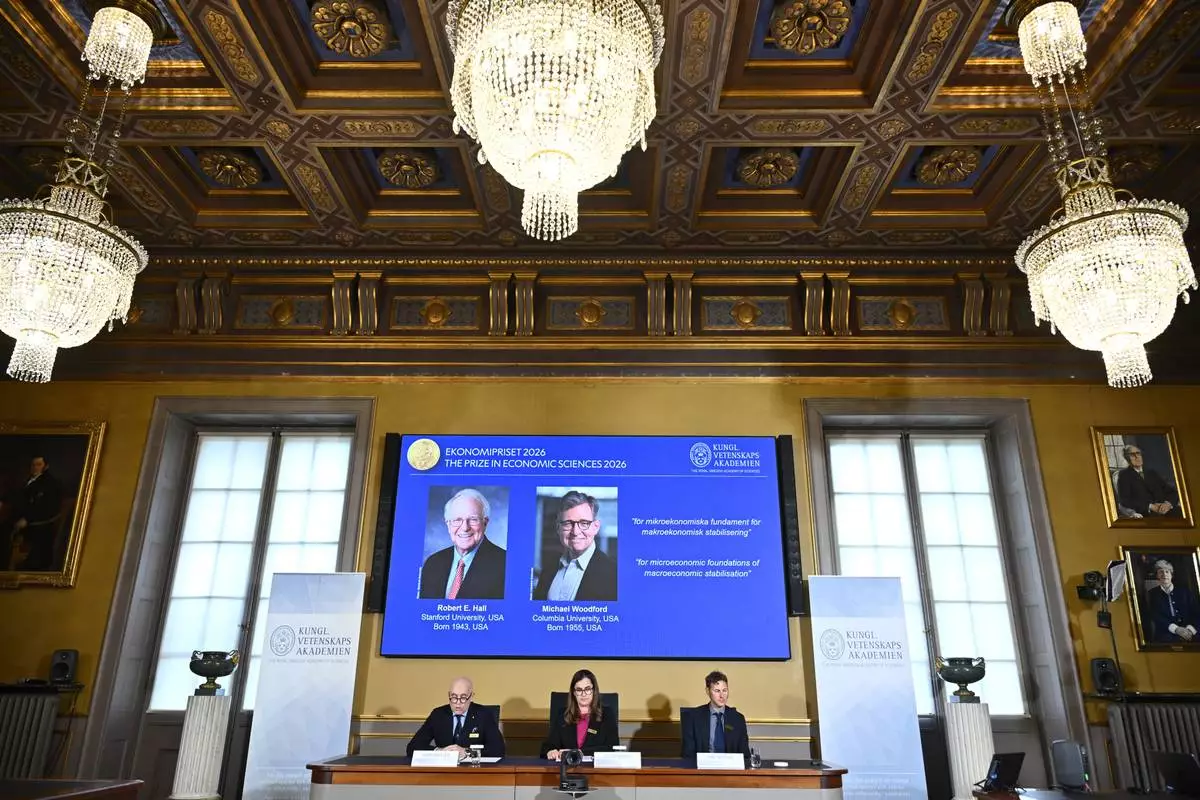
Portraits of Robert E. Hall and Michael Woodford are shown on the screen as they are announced as the laureates of the Sveriges Riksbank Prize in Economic Sciences in Memory of Alfred Nobel at the Royal Swedish Academy of Sciences in Stockholm, Sweden, Monday, Oct. 12, 2026. (Anders Wiklund/TT News Agency via AP)
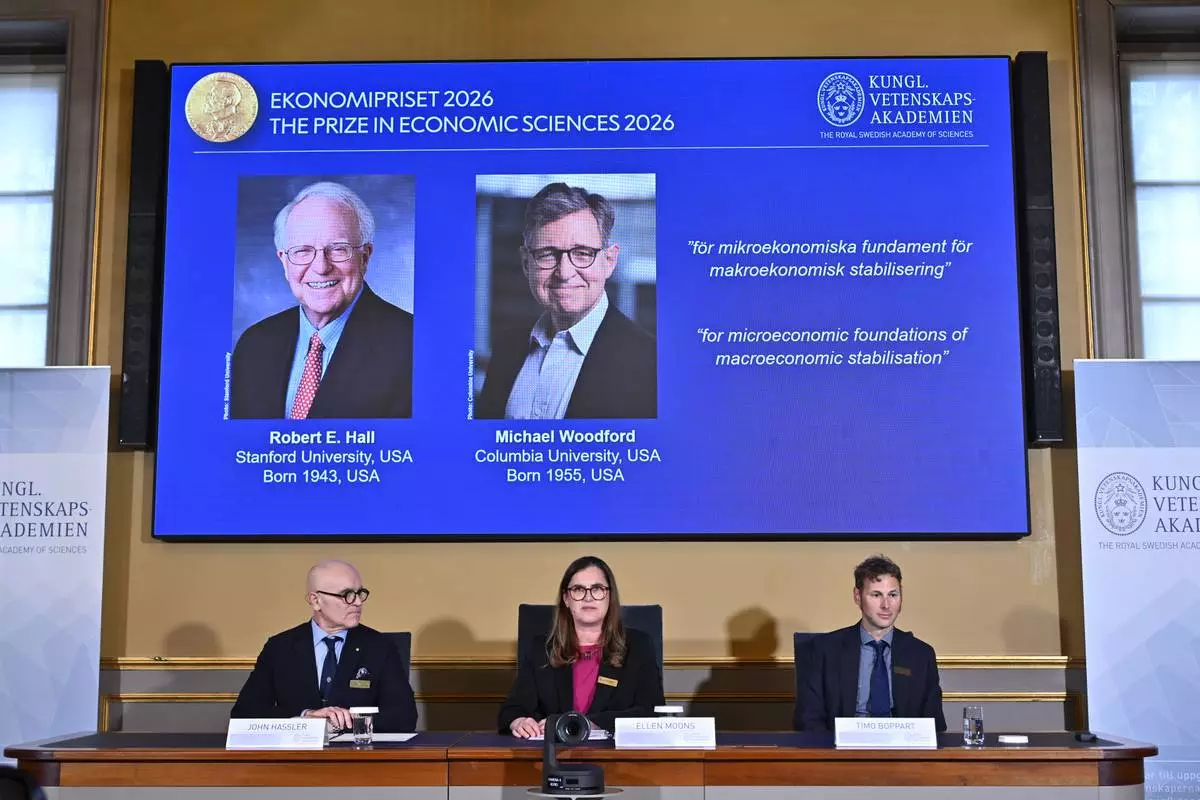
Portraits of Robert E. Hall and Michael Woodford are shown on the screen as they are announced as the laureates of the Sveriges Riksbank Prize in Economic Sciences in Memory of Alfred Nobel at the Royal Swedish Academy of Sciences in Stockholm, Sweden, Monday, Oct. 12, 2026. (Anders Wiklund/TT News Agency via AP)
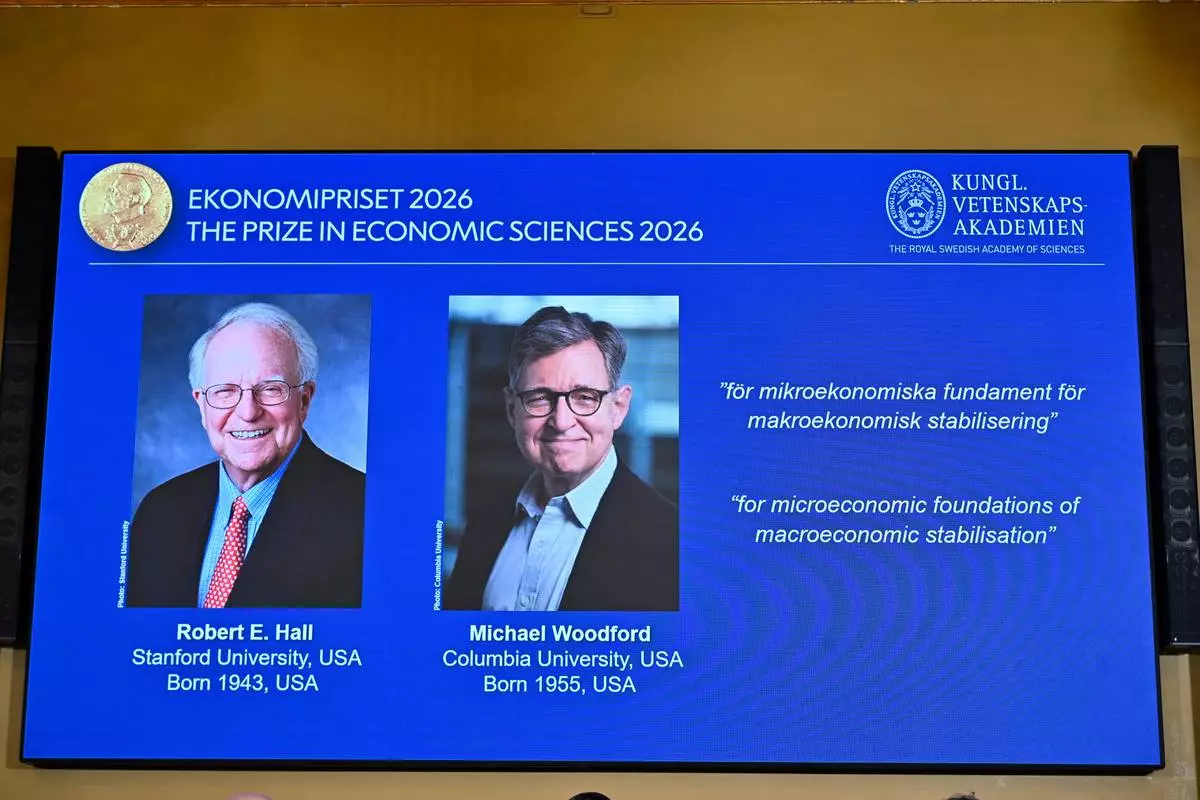
Portraits of Robert E. Hall and Michael Woodford are shown on the screen as they are announced as the laureates of the Sveriges Riksbank Prize in Economic Sciences in Memory of Alfred Nobel at the Royal Swedish Academy of Sciences in Stockholm, Sweden, Monday, Oct. 12, 2026. (Anders Wiklund/TT News Agency via AP)
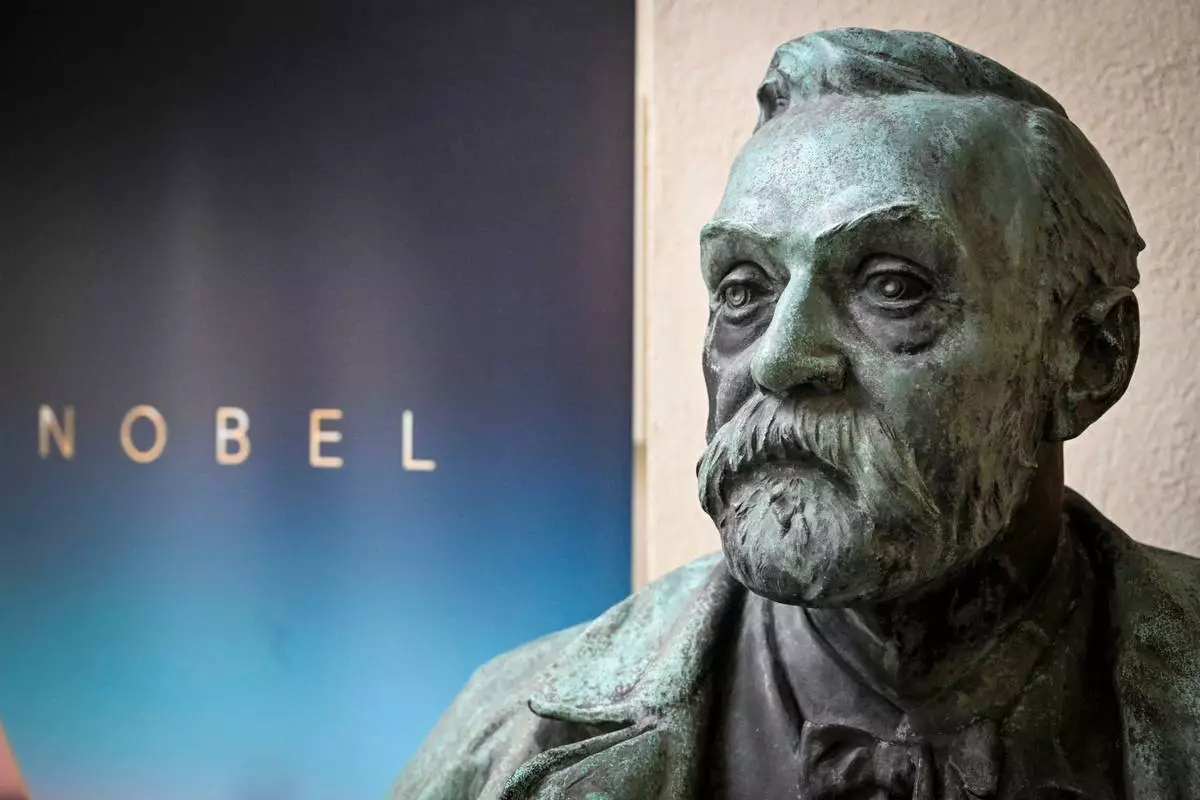
FILE - A bust of Alfred Nobel on display following a press conference to announce the Nobel Committee for Physiology or Medicine at the Karolinska Institute in Stockholm, Sweden, on Oct. 3, 2022. (Henrik Montgomery/TT News Agency via AP, File)
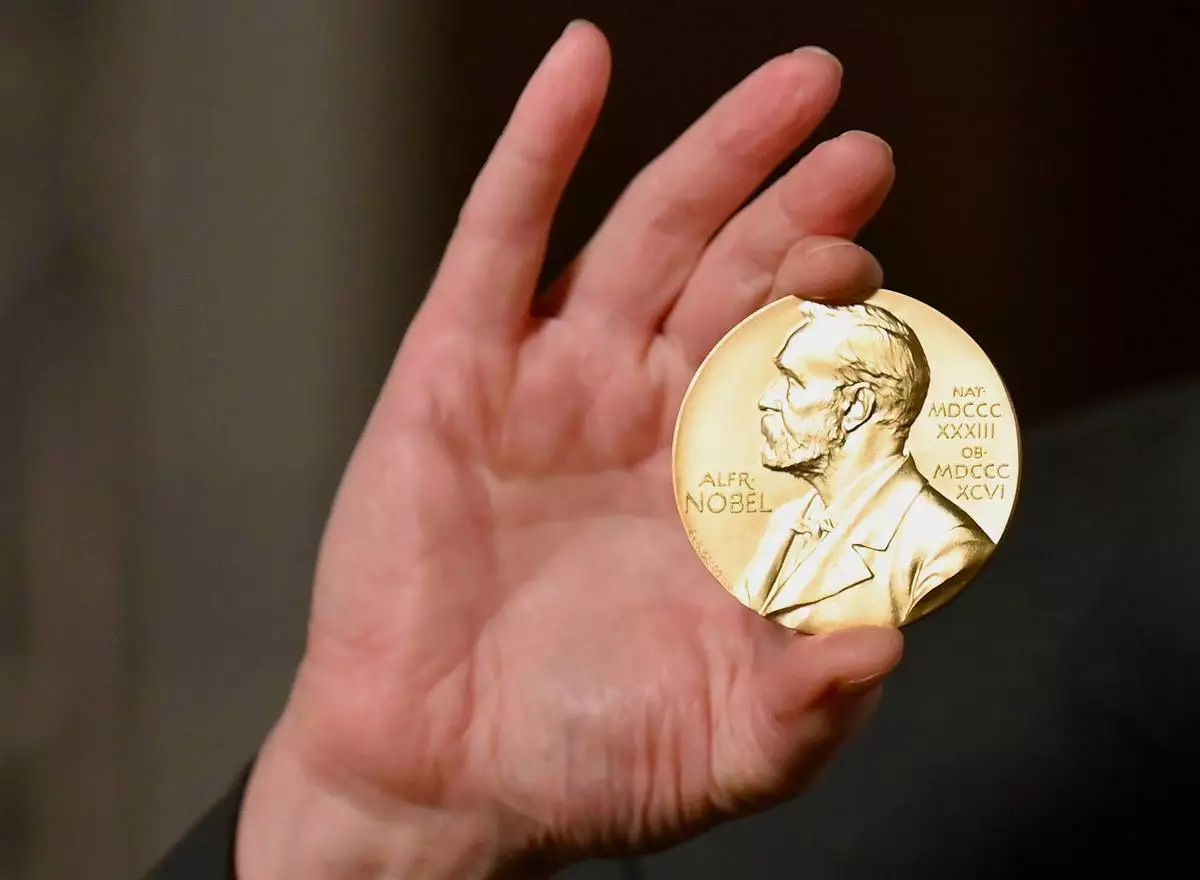
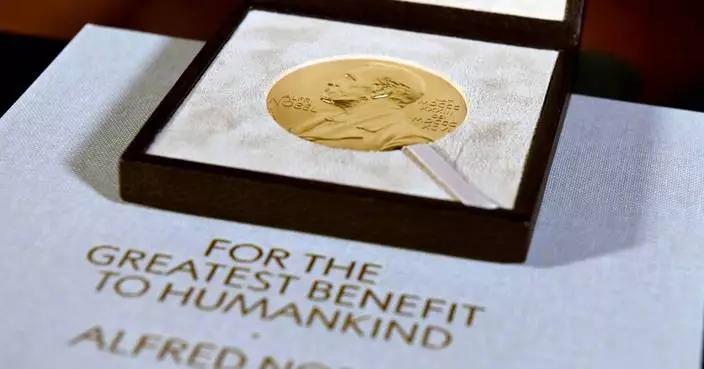
FILE - A Nobel medal is held up during a ceremony in New York, Dec. 8, 2020. (Angela Weiss/Pool Photo via AP, File)