MANHASSET, N.Y.--(BUSINESS WIRE)--Oct 12, 2026--
The life-altering power of bioelectronic medicine took center stage this week as Northwell Health’sFeinstein Institutes for Medical Research hosted its seventh Bioelectronic Medicine Summit on September 28-29, 2026, at The Lighthouse at Chelsea Piers in New York City.
This press release features multimedia. View the full release here: https://www.businesswire.com/news/home/20261012728776/en/
The sold-out international scientific symposium, co-chaired by Eric H. Chang, PhD, associate professor in the Institute of Bioelectronic Medicine at the Feinstein Institutes and Christopher Puleo, PhD, of the Rensselaer Polytechnic Institute, brought together nearly 300 experts from leading institutions worldwide, including Harvard University, Duke University, Johns Hopkins University, the Karolinska Institutet, Massachusetts Institute of Technology (MIT) and the University of Oxford, while celebrating the impact of neuromodulation devices, brain-computer interface technology and highlighting the journeys of patients whose lives have been dramatically improved by this cutting-edge science. The program also featured two keynote addresses from MIT’s Edward S. Boyden, PhD, who opened Day 1 with his talk on technologies for analyzing and repairing biological systems, and Mikhail G. Shapiro, PhD, from Caltech, who commenced Day 2 by discussing biomolecular ultrasound for cellular imaging and control. Attendees heard about the latest ongoing work from the more than 30 invited speakers, exchanged ideas at the scientific poster sessions, and also took part in an evening boat cruise that departed from Chelsea Piers.
Three Northwell clinical trial participants were recognized during the event: Keith Thomas, Kathy Denapoli and Ellen Driscoll, for their commitment to clinical research in the lab of Chad Bouton, PhD, professor in the Institute of Bioelectronic Medicine at the Feinstein Institutes. Each has been instrumental in advancing neurotechnologies, including Mr. Thomas’ groundbreaking double neural bypass system that allows him to regain sensation and movement, Mrs. Denapoli’s co-operative “human avatar” rehabilitation program using brain-computer interface technology, and Ms. Driscoll’s stroke rehabilitation.
“We assembled many of the leading minds in bioelectronic medicine at this year’s summit to chart medicine's next frontier,” said Kevin J. Tracey, MD, president and CEO of the Feinstein Institutes and Karches Family Distinguished Chair in Medical Research. “The highest validation of this field stems from the patient – many are now returning to their daily lives without pain or regaining movement, sensation, and independence. They embody our mission to produce knowledge to cure disease.”
The summit, titled “New Targets and Therapies Across Organs and Systems” served as a critical platform for leaders, scientists, and industry experts to discuss the latest advancements in device-based therapies from more than 15 companies. The 2026 summit celebrated recent bioelectronic medicine achievements, where decades of foundational research, spanning molecular medicine, neuroscience, and biomedical engineering, are now directly translating to treatments for human disease and gaining clinical approval.
“The Bioelectronic Medicine Summit brings together an exceptional set of researchers, clinicians, and industry partners who work across disciplines to drive this field forward,” said Dr. Chang. “The discussions taking place at the Summit foster global scientific cooperation that will produce innovative health solutions for patients around the world.”
From innovation in cardiac care to respiratory treatment, highlights from the summit showcased bioelectronic medicine’s potential to cure diseases across every part of the body. Discussions at the event delved into several topics including:
The Feinstein Institutes for Medical Research is the global scientific home of bioelectronic medicine, which combines molecular medicine, neuroscience and biomedical engineering. At the Feinstein Institutes, medical researchers use modern technology to develop new device-based therapies to treat disease and injury.
Building upon years of research in molecular disease mechanisms and the link between the nervous and immune systems, Feinstein Institutes researchers have discovered neural targets that can be activated or inhibited with neuromodulation devices, such as vagus nerve implants, to control the body’s immune response and inflammation. If inflammation is successfully controlled, diseases – such as arthritis, pulmonary hypertension, Crohn’s disease, inflammatory bowel diseases, diabetes, cancer and autoimmune diseases – can be treated more effectively.
Beyond inflammation, using novel brain-computer interfaces, Feinstein Institutes researchers developed techniques to bypass injuries of the nervous system so that people living with paralysis can regain sensation and use their limbs. By producing bioelectronic medicine knowledge, disease and injury could one day be treated with a patient’s own nerves without costly and potentially harmful pharmaceuticals.
For more information about bioelectronic medicine at the Feinstein Institutes, click here.
Additional details about the Bioelectronic Medicine Summit can be found at www.bemsummit.org.
About the Feinstein Institutes
The Feinstein Institutes for Medical Research is the home of the research institutes of Northwell Health, the largest health care provider and private employer in New York State. Encompassing 50+ research labs, 3,000 clinical research studies and 5,000 researchers and staff, the Feinstein Institutes raises the standard of medical innovation through its six institutes of behavioral science, bioelectronic medicine, cancer, health system science, molecular medicine, and translational research. We are the global scientific leader in bioelectronic medicine – an innovative field of science that has the potential to revolutionize medicine. The Feinstein Institutes publishes two open-access, international peer-reviewed journals Molecular Medicine and Bioelectronic Medicine. Through the Elmezzi Graduate School of Molecular Medicine, we offer an accelerated PhD program. For more information about how we produce knowledge to cure disease, visit http://feinstein.northwell.edu and follow us on LinkedIn.
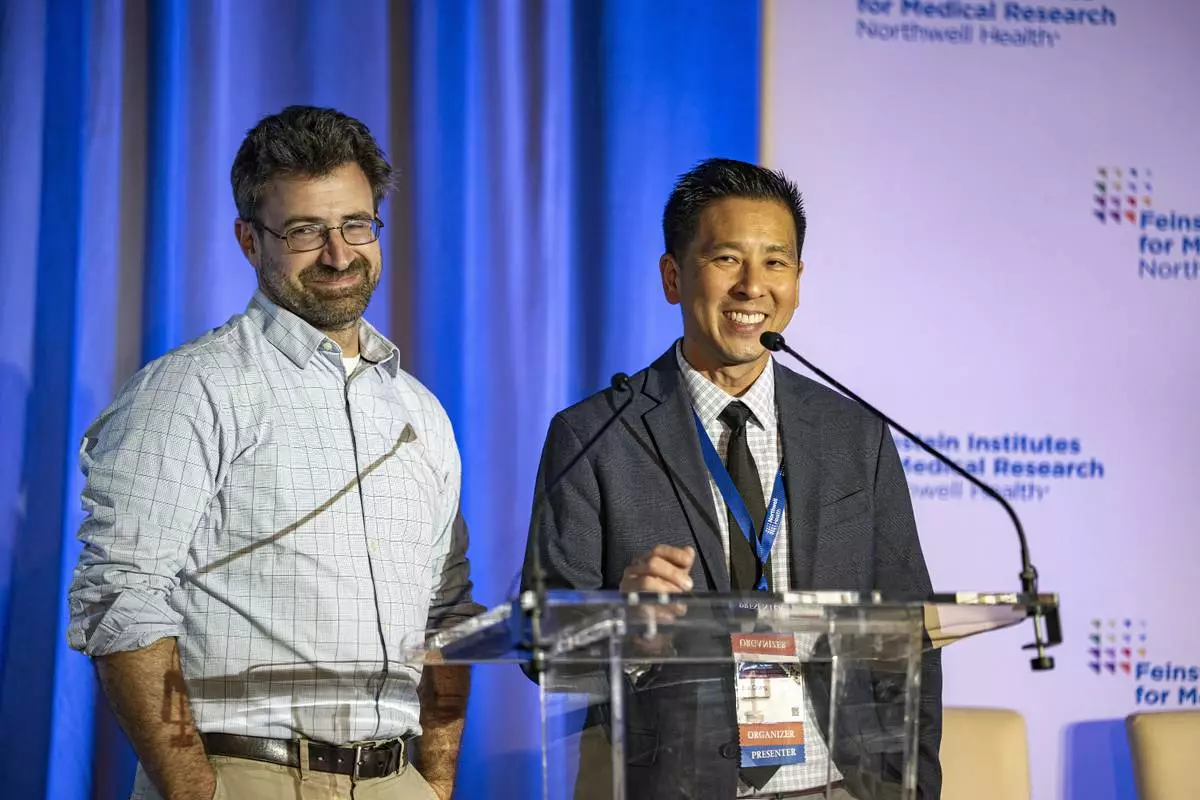
Dr. Christopher Puleo and Dr. Eric Chang, co-chairs of the 2026 BEM summit. (Credit: Feinstein Institutes)
STOCKHOLM (AP) — American economists Robert E. Hall and Michael Woodford won the Nobel Memorial Prize in economics Monday for their work on models that have helped governments and central banks manage economic shocks, such as energy crises and inflation.
The Royal Swedish Academy of Sciences announced the winners in Stockholm, noting that their work created the theoretical foundation to better understand how consumers decide whether to save or spend, insights that make it easier for policymakers worldwide to stabilize economies after fluctuations.
“The laureates’ research has made it possible to manage major macroeconomic crises far more effectively than before,” the Nobel committee wrote in a paper explaining the economists' work. “It has been hugely beneficial during the pandemic and the energy crises of recent years.”
Hall, 83, is affiliated with Stanford University in California. Woodford, who was born in 1955, is affiliated with Columbia University in New York.
Woodford spoke to the committee by phone from New York: “It’s a tremendous honor. It’s a surprise.”
For decades, governments responded to economic shocks by following the Depression-era prescriptions of the British economist John Maynard Keynes: Intervene in the economy by lowering interest rates and taxes and hiking government spending, thereby encouraging consumers and businesses to spend and invest and help restart growth.
“This is the Keynesian recipe and it worked well — until it didn’t,” said Timo Boppart of the Nobel economics committee.
Policymakers had thought economic management involved simple trade-offs — unemployment, for instance, would stay low at a time of high inflation and rise when inflation fell. But the “ stagflation ’’ of the 1970s — when the world economy experienced simultaneous high inflation and high unemployment — proved the formula was simplistic.
Some economists argued that government attempts to intervene in the economy were doomed to fail. But Hall and Woodford, in separate contributions, set about improving the Keynesian model to take into account how consumers and businesses actually make decisions about whether to invest and spend.
“Economic outcomes are the result of millions of decisions made at the microlevel by households and businesses,’’ the Nobel committee wrote. “Using models based upon this approach, rather than simply studying the economy from a macro perspective, like a bird’s eye view,” Hall and Woodford’s research “generated a paradigm shift in the theory of stabilization policy.”
Hall studied the way that consumers' decisions about whether and how much to spend depend on what they expect their future income to be.
“If they are optimistic, they will consume more than if they are pessimistic,’’ the committee wrote. But consumer expectations can change unexpectedly as new information about the economy comes in. Hall found that forecasting future consumer spending is virtually impossible.
The idea that consumption is mostly unpredictable “is not good news for forecasters, or policymakers,” Olivier Blanchard, who was chief economist at the International Monetary Fund during the 2008 financial crisis, said by email. “But it is news they must take into account in thinking about the effects of policy.”
Hall also explored the idea that some households are so strapped financially that they can’t borrow or tap savings in response to economic changes. In a 1982 paper with the economist Fredric Mishkin, Hall found that around 80% of households made spending decisions based on their expectations for the future “while the rest lived hand to mouth," the committee wrote.
“The prize is for research that pushes our understanding of macroeconomics from the bottom up, from families and firms making decisions over time, while looking ahead,” Ivan Werning, an economist at the Massachusetts Institute of Technology, said in an email.
Woodford’s research established that businesses make decisions about prices based on where they think interest rates will go in the future.
“If the business believes that its competitors’ prices and its own costs will increase, it is best to set a higher price than it would with the opposite expectation,” the Nobel committee wrote. “Businesses’ decisions are thus also governed by their expectations."
Therefore, central banks such as the U.S. Federal Reserve, which set short-term interest rates, should provide “clear and credible communication about how they reason and what they plan to do." Central banks have responded to this insight by working harder to explain what they are doing.
The new Fed chair, Kevin Warsh, has said the trend toward such “forward guidance” went too far. He's trying to scale back how much the U.S. central bank talks about its thinking and its intentions.
Woodford's research also offered guidance on how central banks should respond to energy price shocks — like the one that followed the U.S. and Israeli attack on Iran in February — that can both feed inflation and send unemployment higher.
“Unlike the traditional Keynesian models, Woodford’s model recommends a cooling measure, such as increased interest rates, to avoid uncontrolled inflation,” the Nobel committee wrote. “His insight has made it possible to respond to recent supply shocks more effectively than during the oil crises of the 1970s.”
During the phone call broadcast at a news conference, Woodford said his work has stressed “the understanding of the people who are in the markets and making decisions about spending.”
The winners did not immediately respond to requests for comment from The Associated Press.
The economics prize is formally known as the Bank of Sweden Prize in Economic Sciences in Memory of Alfred Nobel. The central bank established it in 1968 as a memorial to Nobel, the 19th-century Swedish businessman and chemist who invented dynamite and established the five Nobel Prizes.
Nobel purists stress that the economics prize is technically not a Nobel Prize, but it is always presented together with the others on Dec. 10, the anniversary of Nobel’s death in 1896.
Nobel honors were announced last week in medicine, physics, chemistry, literature and peace.
Monday’s award was the second Nobel win for a Stanford University professor this year. Dr. Karl Deisseroth shared the medicine prize with Peter Hegemann and Georg Nagel for their work that led to a tool that uses light to help unravel how the brain works.
The prize money this year is 12 million Swedish kronor (about $1.2 million), whether for an individual, small group of laureates or organization.
Wiseman reported from Washington. Dazio reported from Berlin. Associated Press Writer Wyatte Grantham-Philips in Chicago contributed to this report.
AP Nobel Prizes: https://apnews.com/hub/nobel-prizes
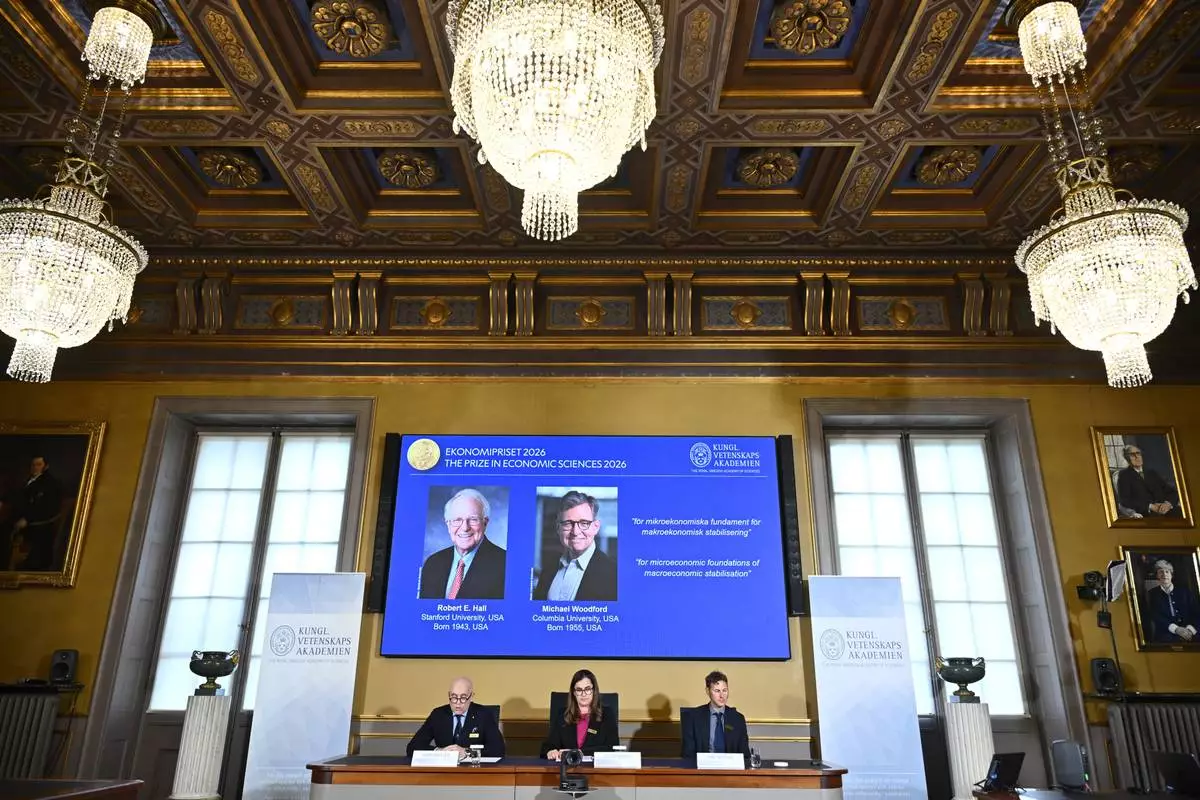
Portraits of Robert E. Hall and Michael Woodford are shown on the screen as they are announced as the laureates of the Sveriges Riksbank Prize in Economic Sciences in Memory of Alfred Nobel at the Royal Swedish Academy of Sciences in Stockholm, Sweden, Monday, Oct. 12, 2026. (Anders Wiklund/TT News Agency via AP)
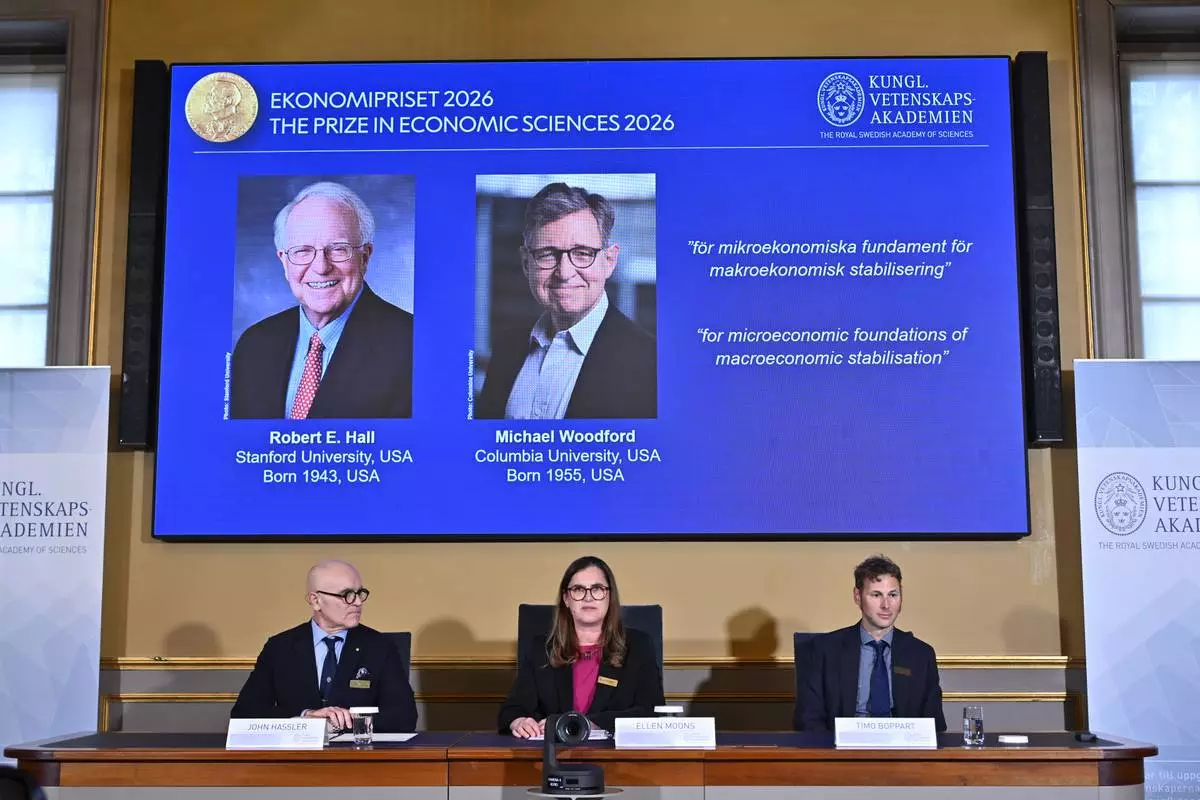
Portraits of Robert E. Hall and Michael Woodford are shown on the screen as they are announced as the laureates of the Sveriges Riksbank Prize in Economic Sciences in Memory of Alfred Nobel at the Royal Swedish Academy of Sciences in Stockholm, Sweden, Monday, Oct. 12, 2026. (Anders Wiklund/TT News Agency via AP)
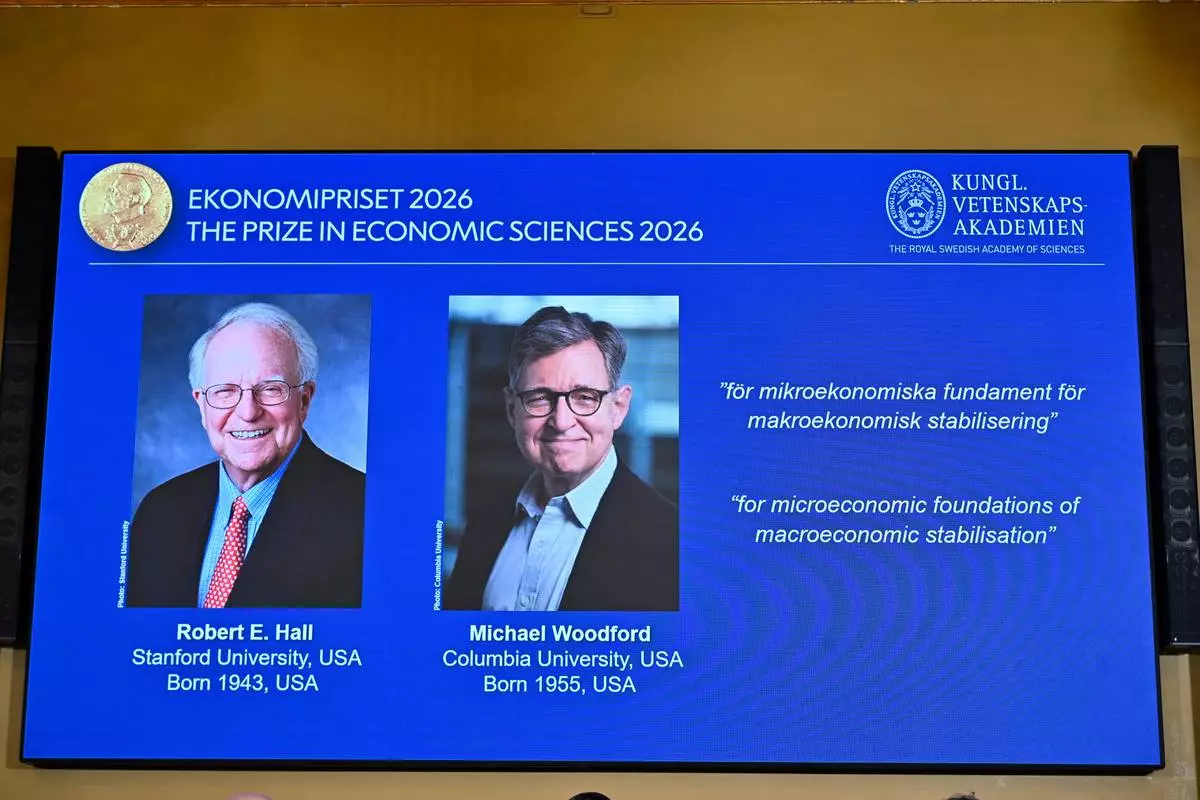
Portraits of Robert E. Hall and Michael Woodford are shown on the screen as they are announced as the laureates of the Sveriges Riksbank Prize in Economic Sciences in Memory of Alfred Nobel at the Royal Swedish Academy of Sciences in Stockholm, Sweden, Monday, Oct. 12, 2026. (Anders Wiklund/TT News Agency via AP)
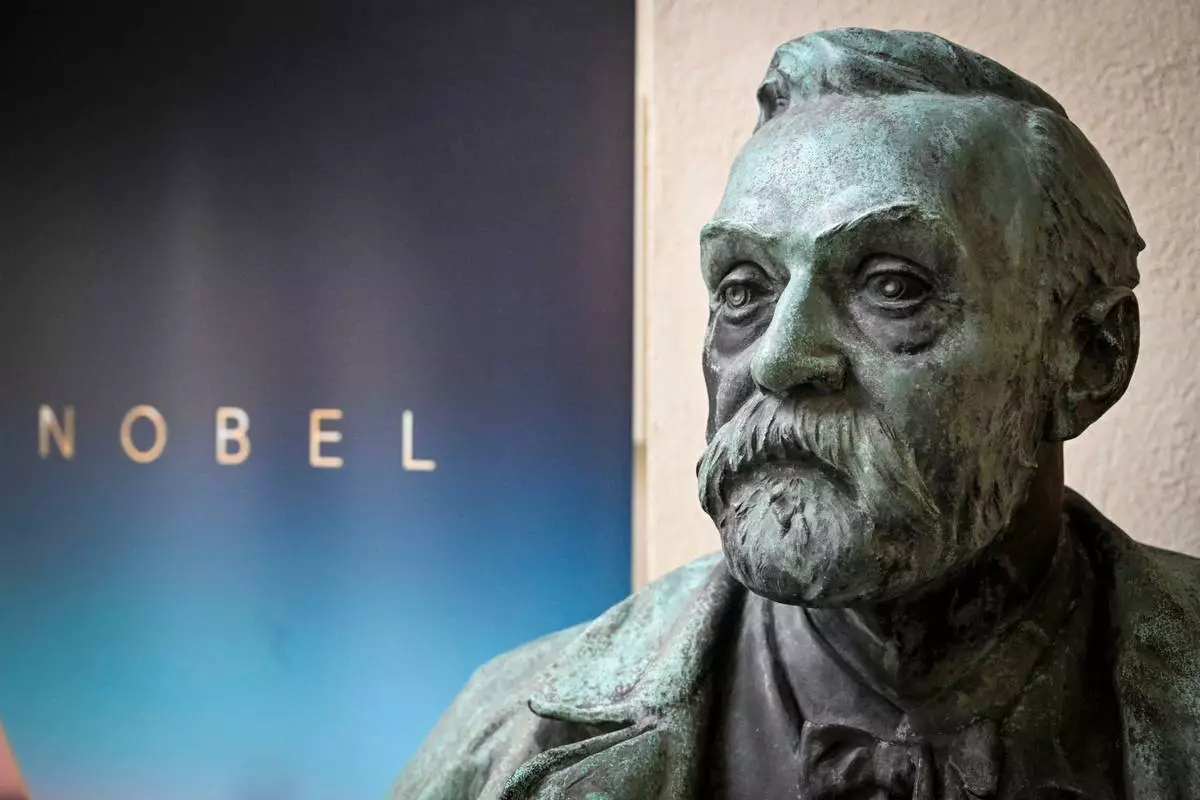
FILE - A bust of Alfred Nobel on display following a press conference to announce the Nobel Committee for Physiology or Medicine at the Karolinska Institute in Stockholm, Sweden, on Oct. 3, 2022. (Henrik Montgomery/TT News Agency via AP, File)
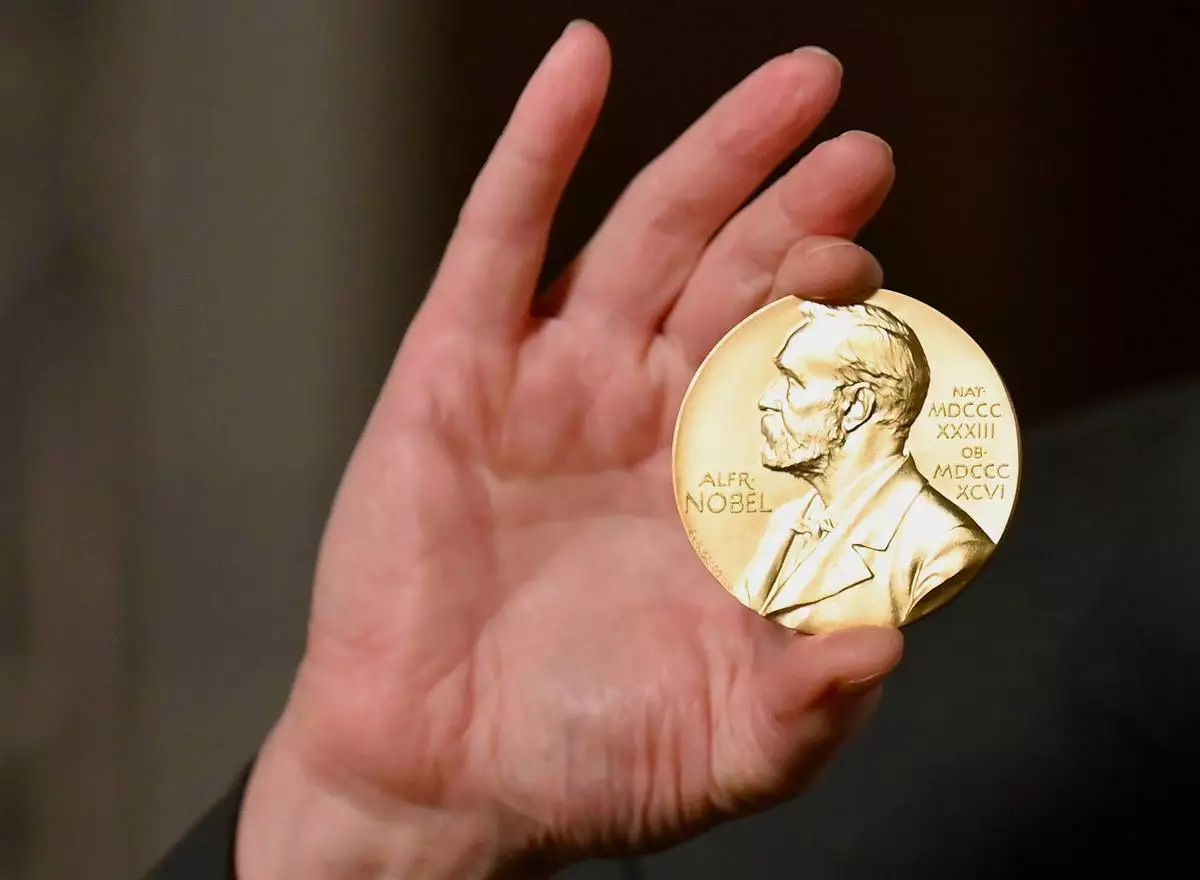
FILE - A Nobel medal is held up during a ceremony in New York, Dec. 8, 2020. (Angela Weiss/Pool Photo via AP, File)