AMSTERDAM--(BUSINESS WIRE)--Oct 13, 2026--
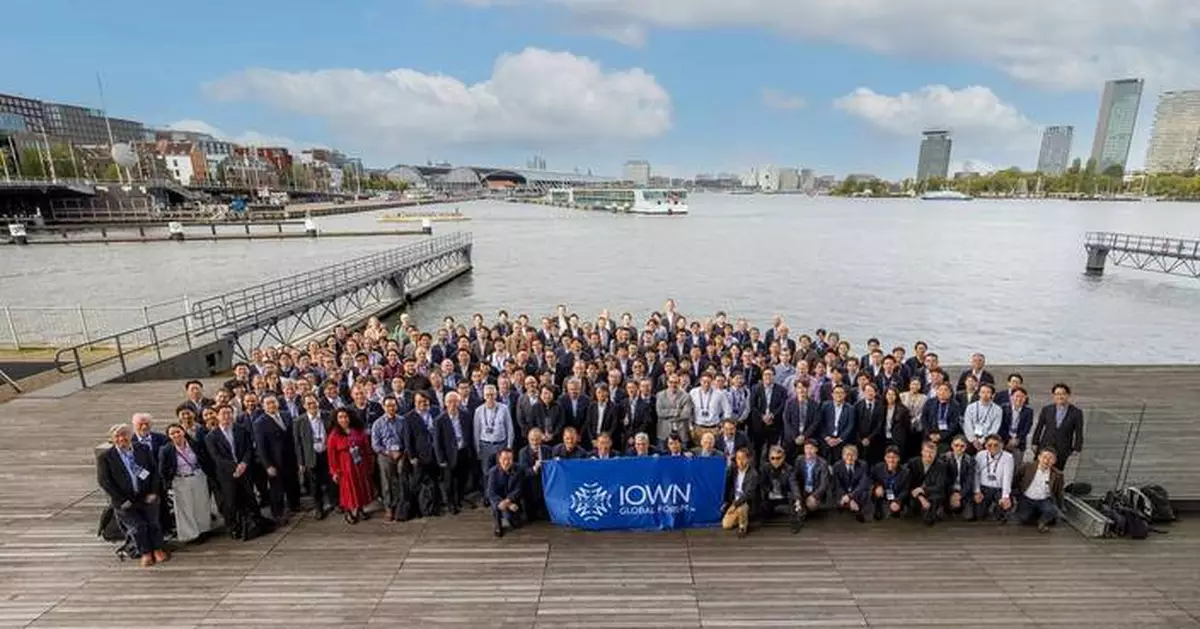
This month, Innovative Optical and Wireless Network Global Forum (IOWN Global Forum) brought together 226 delegates from 22 countries to shape the future of digital infrastructure and connectivity. Representatives from across its global network of 180+ member organizations gathered in the Dutch capital to address practical decisions facing industry and policymakers as AI drives new demands on computing, networks, and energy.
This press release features multimedia. View the full release here: https://www.businesswire.com/news/home/20261013528002/en/
The Decisions Shaping AI Infrastructure
At the Forum’s public session FUTURES Amsterdam, Ian Redpath, Research Director at Omdia, shared a global view of the AI infrastructure market, examining changing requirements for capacity, power, latency, and sustainability.
Stijn Grove, Managing Director of the Dutch Data Center Association, explored the changing data center landscape in Europe, including the availability of power and network capacity needed to support AI growth.
A panel moderated by Ronald van Loon, Founder and CEO of Intelligent World, considered what digital sovereignty means in practice and the choices facing governments and industry as they develop AI capabilities. Stijn Grove, Accenture’s Jeff Wang, and Ciena’s Dejan Bilbija covered the relationship between data centers, networks, and cloud services, alongside the policy and investment decisions that will influence deployment.
Dr. Gonzalo Camarillo, Marketing Steering Committee Chair of the IOWN Global Forum and Head of Implementation Components at Ericsson, outlined how the Forum is developing architectures and deployment approaches for next-generation networks, including the role of All-Photonics Networks (APNs) in supporting AI workloads.
Recognizing Practical Innovation
The IOWN Global Forum named the Remote Media Production in Broadcast Industry project as Implementation of the Year.
The project demonstrated how dynamic optical path provisioning through the Open APN can provide high-capacity, low-latency connections between remote production sites on demand. The implementation also assessed reliability and economic feasibility, including the transmission of multiple uncompressed video streams and remote control of production equipment.
Expanding Partnerships
In a special ceremony, the IOWN Global Forum announced further cooperation with the 5G Automotive Association (5GAA) and the Automotive Edge Computing Consortium (AECC) on next-generation communication technologies and their application to connected mobility.
New Membership
The IOWN Global Forum welcomed a number of new organizations to its membership at FUTURES Amsterdam, including:
Building for What Comes Next
Dr. Katsuhiko Kawazoe, President and Chairperson of the IOWN Global Forum, commented: “It was a pleasure to have members and partners from around the world join us in Amsterdam, and to welcome new organizations to the IOWN Global Forum. Their participation strengthens our ecosystem and brings new expertise and perspectives to our collaborative efforts.
“Sovereign AI depends on having greater control over the infrastructure that supports it. That means giving organizations more choice over how their data, computing, and networks are connected while reducing dependencies that can limit their ability to adapt as their needs change. The IOWN Global Forum has an important role to play by developing architectures and use cases that give organizations more options in how they build and operate this infrastructure. By working across industry boundaries, our members can help shape a more resilient and flexible foundation for sovereign AI and the next generation of digital services.”
About the IOWN Global Forum
The IOWN Global Forum was established in 2020 as a private sector organization to develop IOWN Global Forum technologies and use cases, and is comprised of over 180 organizations. The objective of the IOWN Global Forum is to accelerate innovation and adoption of a new communication infrastructure to meet our future data and computing requirements through the development of new technologies, frameworks, specifications, and reference designs in areas such as photonics R&D, distributed computing, use cases, and best practices. For more information, visit Home - IOWN Global Forum.
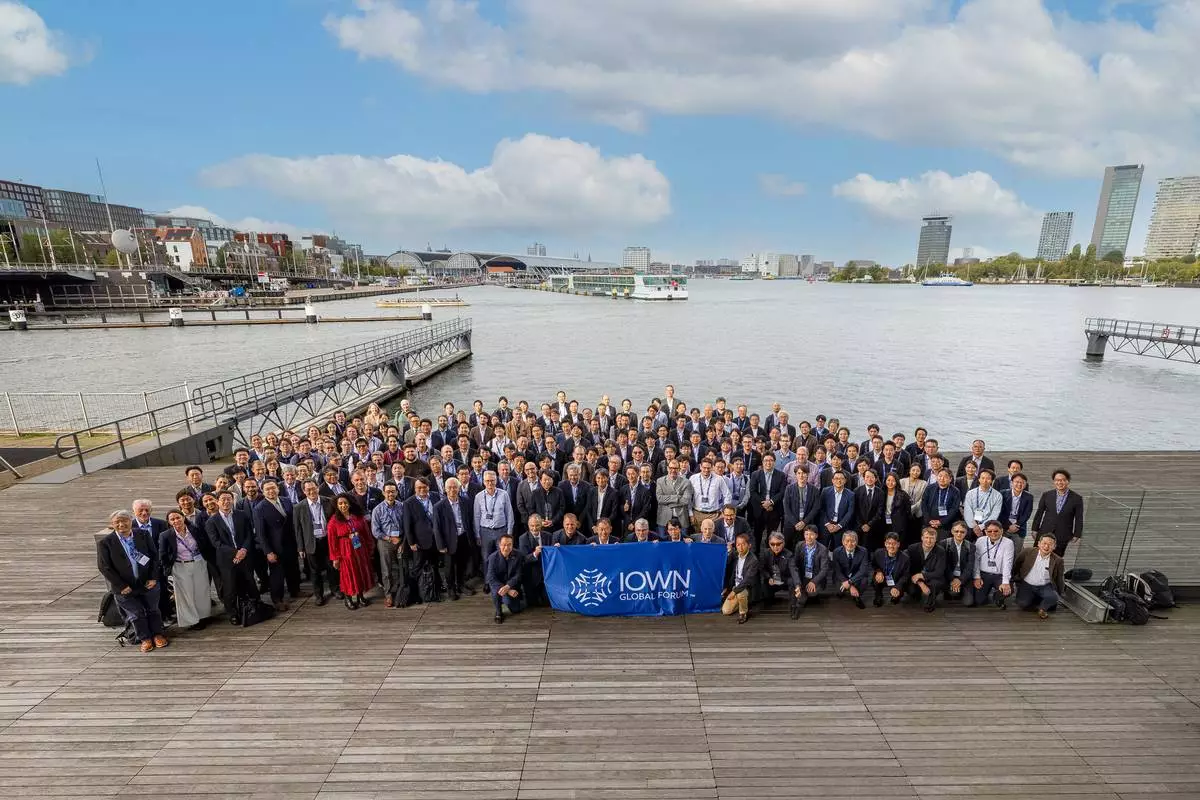
IOWN Global Forum members meet in Amsterdam
WASHINGTON (AP) — The House speaker stood before Donald Trump during his first term at the White House and pointed a finger, declaring that with this president, “All roads lead to Putin.”
The stark assessment years ago from Nancy Pelosi echoed anew after Trump’s surprise announcement last week that he struck a deal with Russian President Vladimir Putin to import tons of Russian diesel to the U.S. as a way to ease sky-high prices at the pumps for Americans ahead of the midterm elections.
Trump’s diesel deal with Putin has been criticized by both Republicans and Democrats as fueling Russia’s war against Ukraine, violating existing U.S. laws and drawing the U.S. closer to Russia. It joins a growing list of instances in which the Republican president has sided with Putin, often at the expense of Ukraine — and America’s own standing.
“The harm to the Ukrainians is real,” said William Taylor, a former U.S. ambassador to Ukraine, now a senior fellow at the Atlantic Council, in an interview Monday.
“And the cost to us, the United States, is high.”
It’s not at all clear the Trump-Putin deal will deliver the supply boost the president is seeking to bring down prices. Energy experts have said the flow of Russian diesel is unlikely to lower prices in the U.S., which have escalated largely due to disruptions from the U.S. war against Iran. But the agreement underlines a message at home and abroad that Trump is an unreliable ally as Ukraine battles Russia.
A bipartisan group of six senators urged Trump over the weekend to reverse course, saying the U.S. “should not provide Putin with a financial lifeline.” Trump, however, held fast to his deal with Putin and lashed out, blaming Ukrainian President Volodymyr Zelenskyy for America's high diesel costs and asserting he should step aside — something Ukraine's leader has no intention of doing.
“Anything that could help our farmers, our ranchers, I like,” Trump said Monday outside the White House.
Asked about Republican criticism of the Russia deal, Trump said they "can’t really be serious.”
Trump also insisted that an energy ceasefire is in place for Ukraine and Russia, despite Zelenskyy saying that Moscow continued to strike his country’s energy sites.
An AP-NORC Center for Public Affairs Research poll published Oct. 1 found that Americans disapprove of Trump’s handling of the Iran war and blame him for higher prices.
Congress swiftly approved legislation at the outset of the Russian invasion of Ukraine in spring of 2022 to ban the import of Russian energy products, which are widely viewed as providing the financial fuel for Putin’s military assault on Ukraine.
The bill passed the House on an overwhelming 414-17 vote and the Senate without a single senator opposed. The law says the president can seek to lift the prohibition if an agreement has been reached to withdraw Russian troops from Ukraine and cease military activity. Such a proposal would need to be reviewed by Congress and to have been “accepted by the free and independent government of Ukraine.”
“Trump is directly violating that law,” said Rep. Lloyd Doggett, D-Texas, the bill's chief sponsor, in a statement Monday.
He said Trump "illegally rewards his pal Putin while once again blaming Zelensky for not capitulating to Putin.”
More recently, Congress last month approved a sweeping Russian sanctions bill, named after the late GOP Sen. Lindsey Graham, that would slap tariffs on countries that continue importing Russian oil. Trump signed the bill into law.
The bulk of the law’s provisions go into effect Oct. 18, the end of the administration’s 30-day review period. But such action now appears to be in question since Trump's diesel deal with Putin will allow the flow of Russian energy.
In a letter to Treasury Secretary Scott Bessent and Secretary of State Marco Rubio, Senate leaders from both parties last week said the most urgent priority for the U.S. must be to tackle the “shadow fleet” of tankers that Moscow is using to transport oil and bypass America’s sanctions.
But that was before Trump announced his deal with Putin, which he said would unleash hundreds of tons of diesel.
Treasury did not immediately respond Monday to a request for comment.
Republican Rep. Ashley Hinson, who faces a competitive race for the U.S. Senate against Democrat Josh Turek in Iowa, where $6 a gallon diesel prices have become an issue, said, “It makes me a little bit nervous anytime we’re talking about relieving a sanction on Russia.”
Almost seven years ago this week, Pelosi stood before Trump and a roomful of U.S. officials during a heated White House meeting and leveled her accusation, suggesting the president's policy favored Putin.
The powerful House speaker led the first impeachment of Trump on corruption charges over his administration’s decision to withhold congressionally approved aid to Ukraine in 2019 as it faced Russian aggression at its border. Trump was later acquitted by the Senate.
Since Trump's return to the White House, he has seesawed between pressuring Zelenskyy to make concessions and showing frustration with Putin’s hard-line stance on the war. Trump often complains that he thought his good relationship with his Russian counterpart would have made it easier to end the war.
A year ago, Trump reversed his long-held position that Ukraine would have to give up land and suggested it could win back all the territory it has lost to Russia — only later to call on Kyiv and Moscow to “stop where they are” and end the war.
In July, Trump praised Zelenskyy and Ukraine for their wartime resilience. But by September, Trump was expressing frustration about strikes on Russian energy infrastructure.
Trump insisted Monday the sides agreed to a ceasefire on the energy systems. “They agreed,” Trump said. “Because I said, 'You agree.'”
When pressed about the attacks by Russia, Trump said he'd have to take a look, "because there’s been violations on both sides.”
Associated Press writers Collin Binkley and Josh Boak, and Steven Sloan in Dyersville, Iowa, contributed to this report.
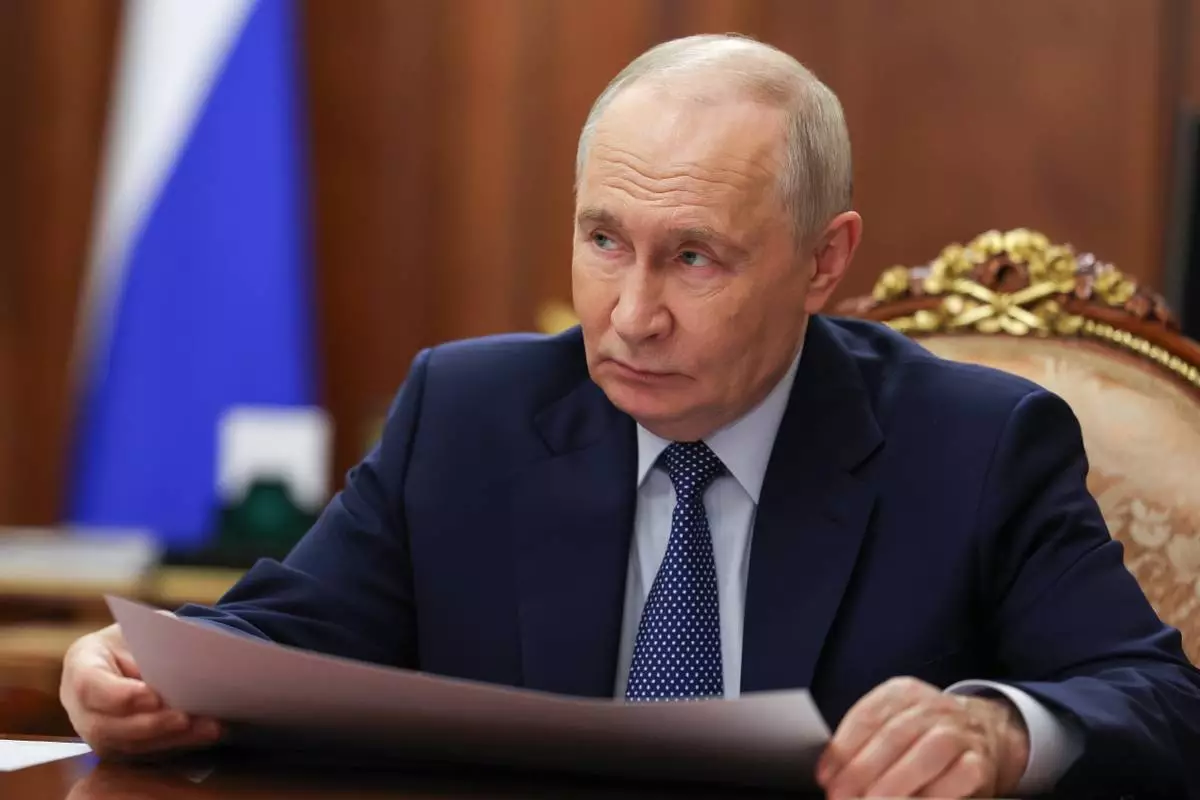
Russian President Vladimir Putin listens to head of the Delovaya Rossiya (Business Russia) National Public Organisation Alexei Repik during their meeting at the Kremlin in Moscow, Monday, Oct. 12, 2026. (Mikhail Metzel, Sputnik, Kremlin Pool Photo via AP)
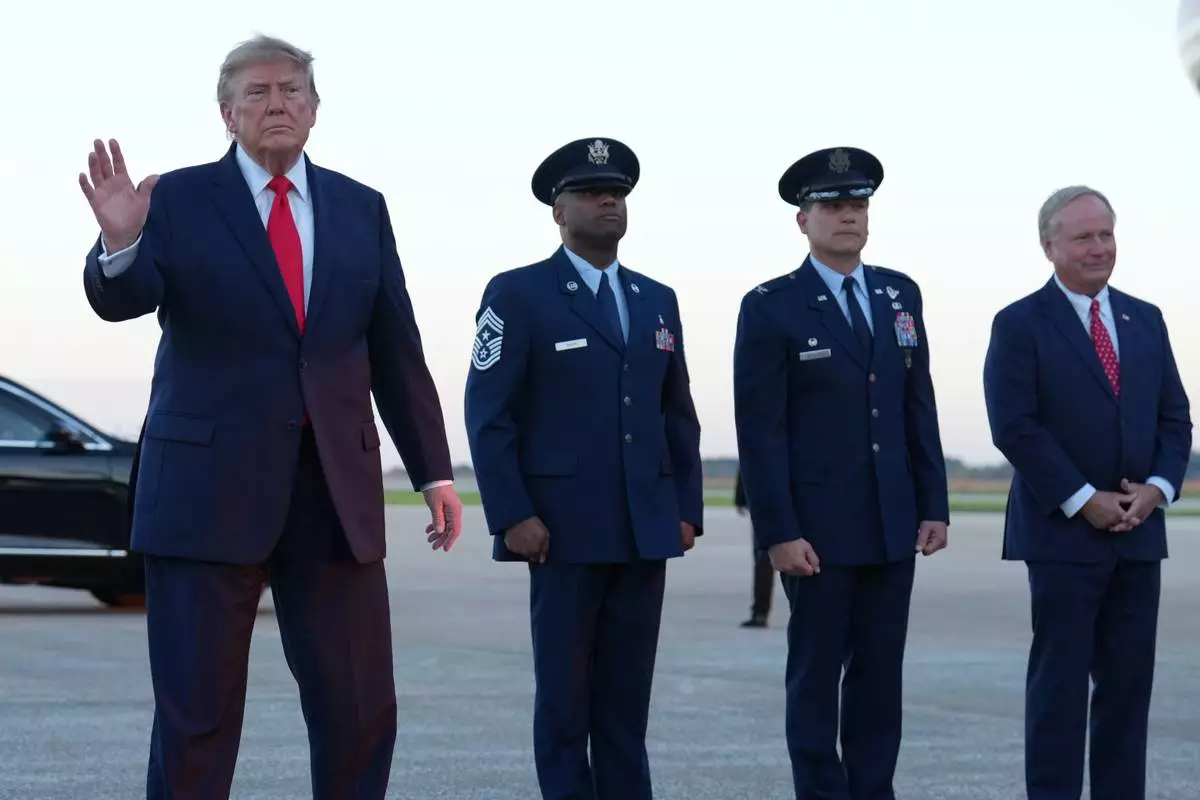
President Donald Trump arrives on Air Force One at Youngstown Air Reserve Station, in Youngstown, Ohio, Monday, Oct. 12, 2026. (AP Photo/Jacquelyn Martin)
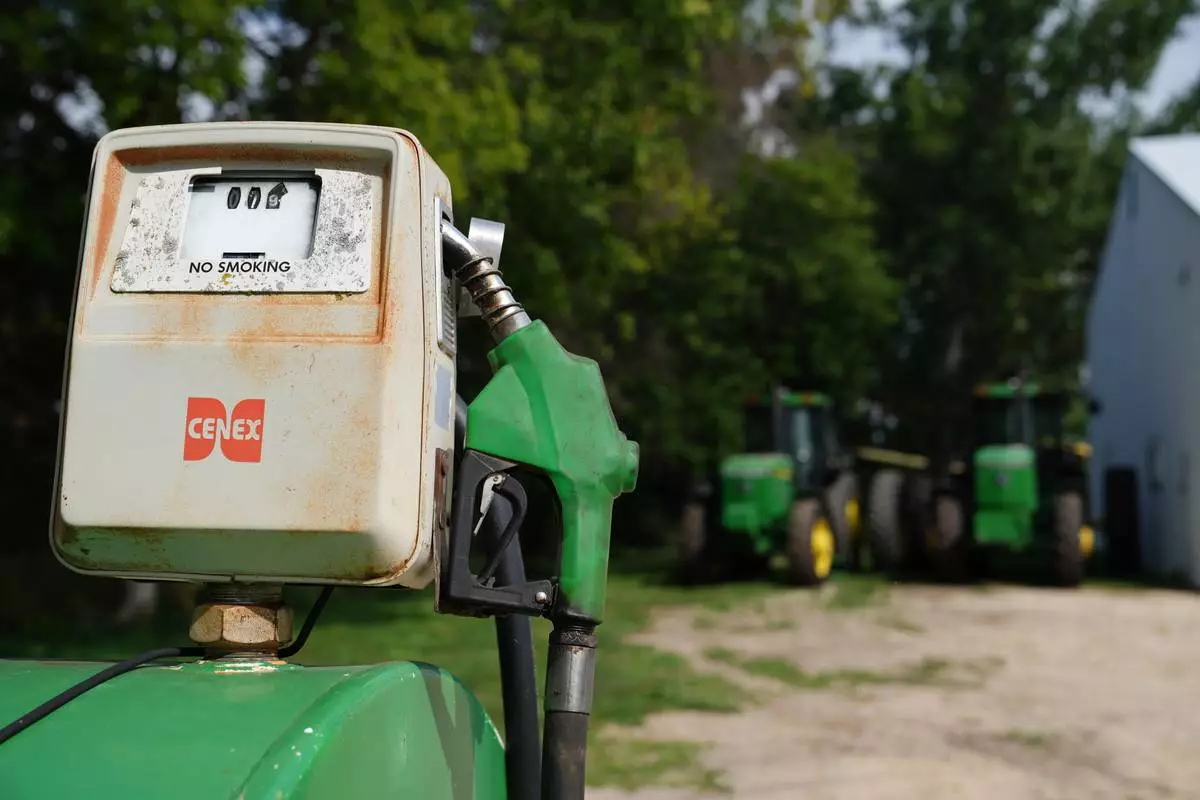
FILE - A diesel fuel tank is seen on a corn and soybean farm, Aug. 26, 2026, in Northfield, Minn. (AP Photo/Ellen Schmidt, File)