VATICAN CITY (AP) — Question: Who runs the Catholic Church when the pope is unconscious, incapacitated or otherwise unable to govern?
Answer: The pope.
The Vatican has detailed laws, rituals and norms to transfer papal power if a pope dies or resigns. But none of them apply when he is sick or even unconscious, as Pope Leo XIV will be when he undergoes surgery Tuesday to remove a nodule on his lung.
As a result, Leo remains pope and very much in charge even when he goes under general anesthesia at Rome's Gemelli hospital, where he arrived Tuesday afternoon for what is expected to be a weeklong stay.
The pope is the successor of the Apostle Peter, the head of the college of bishops, the Vicar of Christ and the pastor of the universal Catholic Church on Earth, according to the church’s in-house canon law.
Nothing changes in his status, role or power since Leo was elected the 267th pope on May 8, 2025.
Leo may be in charge, but he already delegates the day-to-day running of the Vatican and church to a team of officials who operate whether he is in the Apostolic Palace or not, and whether he is conscious or not.
Chief among them is the Vatican secretary of state, Cardinal Pietro Parolin. In a sign that Leo’s hospitalization foresaw no change to the governance of the church, Parolin wasn’t even in the Vatican on Tuesday. He was speaking at a conference nearby.
“We were all struck by the serenity with which the pope announced this procedure,” Parolin told reporters as he arrived for the conference. “Am I worried? Yes, because I certainly didn’t expect something like this.”
But Parolin said he had spoken with the pope Monday night and was reassured.
“It’s something that, thank God, we noticed right away. And normally, when these things are caught in time, they can be resolved,” he said. “But these are, as the pope said, God’s surprises.”
Other Vatican functions are proceeding normally, including the announced appointments of two new bishops on Tuesday, albeit with some modifications for events where the pope had been expected to attend.
Canon law has provisions for when a diocesan bishop gets sick and can’t run his diocese, but none for a pope. Canon 412 says a diocese can be declared “impeded” if its bishop — due to “captivity, banishment, exile, or incapacity” — cannot fulfill his pastoral functions. In such cases, the day-to-day running of the diocese shifts to an auxiliary bishop, a vicar general or someone else.
Even though Leo is bishop of Rome, no explicit provision exists for the pope if he similarly becomes “impeded.” Canon 335 declares simply that when the Holy See is “vacant or entirely impeded,” nothing can be altered in the governance of the church. But it doesn’t say what it means for the Holy See to be “entirely impeded” or what provisions might come into play if it ever were.
In 1965, Pope Paul VI wrote letters to the dean of the College of Cardinals hypothesizing that if he were to become seriously ill, the dean and other cardinals should accept his resignation.
Paul foresaw the possibility that as popes continued to live longer, they could become incapacitated by stroke, dementia or another long-term, progressive ailment that would make it impossible for them to do their job and unable to freely resign. The letter was never invoked, since Paul lived another 13 years and died on the job.
Pope Francis confirmed in 2022 that shortly after he was elected pope he wrote a letter of resignation, to be invoked if he became medically incapacitated. Francis said he gave it to the then-secretary of state, Cardinal Tarcisio Bertone, and assumed Bertone had delivered it to Parolin’s office when he retired.
The text was never made public and the conditions Francis contemplated for a resignation were unknown. It also is not known if such a letter would be canonically valid. Canon law requires a papal resignation to be “freely and properly manifested,” as was the case when Pope Benedict XVI announced his resignation in 2013.
The only time papal power changes hands is when a pope dies or resigns. At that time a whole series of rites and rituals comes into play governing the “interregnum,” the period between the end of one pontificate and the election of a new pope.
During that period, known as the “sede vacante,” or “empty See,” the camerlengo, or chamberlain, runs the administration and finances of the Holy See. He certifies the pope’s death, seals the papal apartments and prepares for the pope’s burial before a conclave to elect a new pope.
The position is currently held by Cardinal Kevin Farrell, the head of the Vatican’s laity office.
The camerlengo has no role or duties if the pope is merely sick or otherwise incapacitated.
In fact, in these days Farrell is presiding over a Vatican conference on family ministry that Leo had been attending up until his surprise hospitalization.
Associated Press religion coverage receives support through the AP’s collaboration with The Conversation US, with funding from Lilly Endowment Inc. The AP is solely responsible for this content.
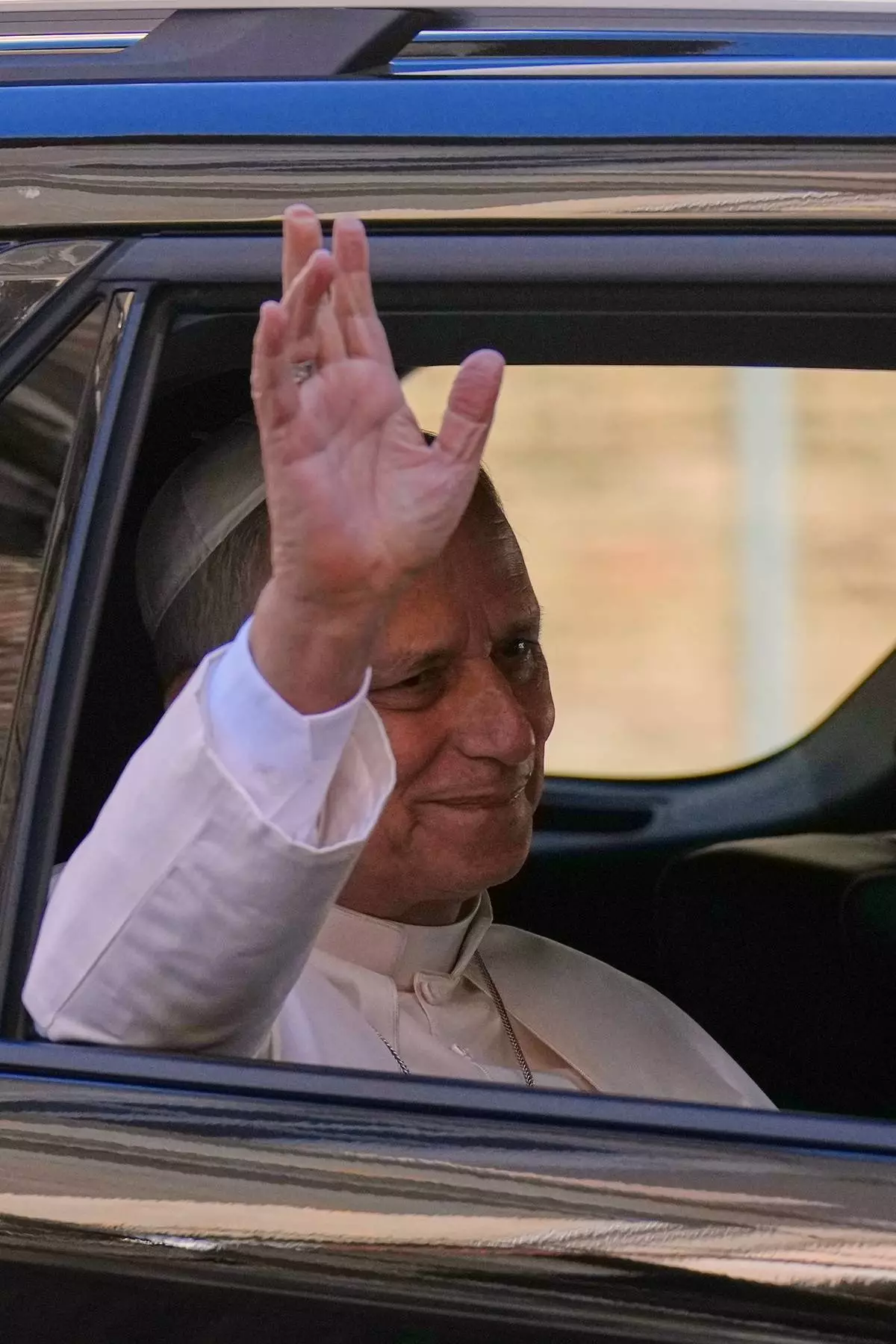
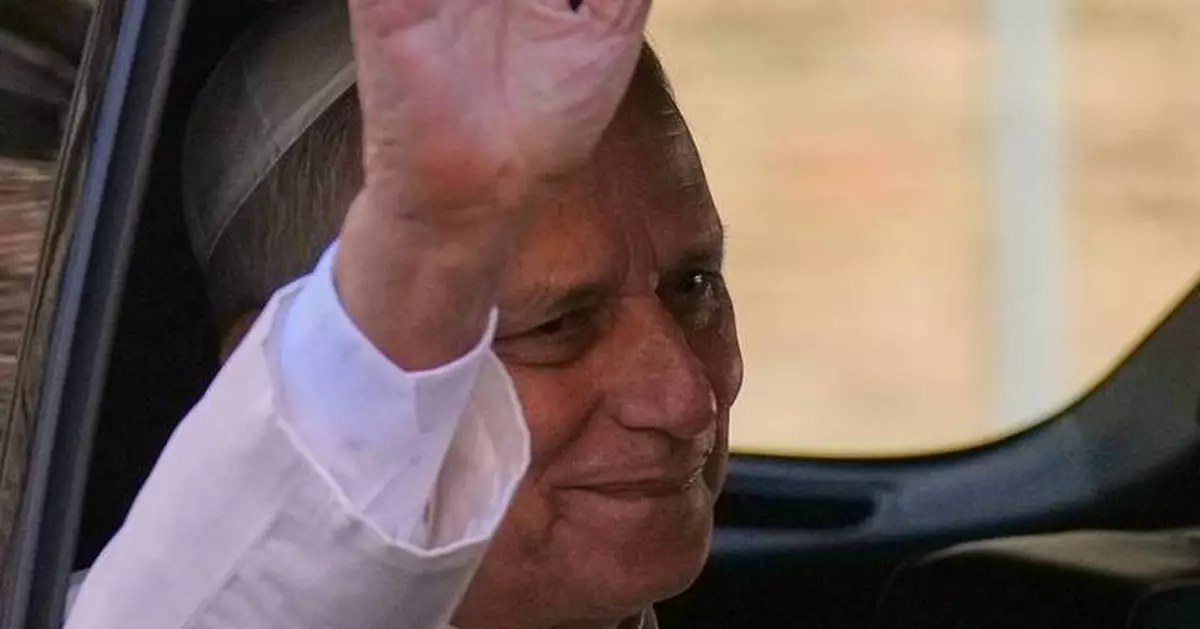
Pope Leo XIV leaves the Vatican for the Agostino Gemelli Polyclinic in Rome, Tuesday, Oct. 13, 2026, where he's expected to be operated to remove a lung nodule. (AP Photo/Andrew Medichini)
For Wayne Jones Sr., discussing the horrific supermarket shooting in Buffalo, New York, in which a white supremacist killed 10 people, including Jones' mother, Celestine Chaney, has taken over much of his life these past four years.
He can numbly list talking points for media and gun violence panels. But thinking about her absence each day is one reason Jones does not want to see Payton Gendron sentenced to death.
“I really think that he should just sit and have to think about it year after year after year and just be miserable,” said Jones, who plans to attend the trial. “When I was younger, I probably was more prone to say ‘kill him.’ But, at this point, I mean, he's still got well another 20 to 30 years of appeals.”
The final phase of jury selection began Tuesday in the federal trial in which Gendron faces a potential death penalty if convicted. The attack at the Tops Friendly Market in 2022 is believed to be the deadliest hate-motivated shooting targeting Black people in the U.S. by a lone gunman in the past century.
Gendron has pleaded not guilty to two dozen federal hate crime charges and more than a dozen firearms charges. Life imprisonment is typically the alternative to death in a federal capital murder case. Gendron is already spending life in prison after pleading guilty to state murder charges in a 2023 trial where he tearfully admitted to the crimes and renounced his past views.
His defense team does not dispute his guilt. Their sole objective is to ensure Gendron is spared from execution.
“Nothing will change the fact that Payton Gendron will die in prison,” the federal public defender’s office said in a statement. “At trial, we will offer mitigating evidence about Payton that the jury needs to consider in making its decision. Nothing we say or do is intended to be disrespectful or insensitive to the victims, the survivors, or their loved ones.”
Some victims' family members, however, are not entirely against the death penalty.
“I’ve never been like out here like, ‘Yay! Go for the death penalty.’ That’s never been me,” said Buffalo Common Council member Zeneta Everhart, who ran for office over a year after her son, Zaire, survived the shooting. “Ten people died that day in an egregious way and in an awful, terrible, traumatic way.”
Her son, now 25, and the two other survivors had their lives irrevocably altered, she added.
On May 14, 2022, Gendron, then 18, drove over 200 miles (320 kilometers) from his home in Conklin, a predominantly white, rural town, to Buffalo. He fired around 60 shots from a semiautomatic rifle at supermarket employees and shoppers. Video revealed Gendron apologized to a white store worker after shooting him in the leg. He surrendered to police as he exited the supermarket.
Investigators found past social media posts and other writings by Gendron dedicated to planning an attack to frighten people who were non-white and non-Christian into leaving the U.S. He also promoted a baseless “great replacement theory” that people of color will replace white people through higher birth rates and immigration.
The victims who were killed were all Black and between the ages of 32 and 86. Besides Chaney, they included Geraldine Talley, Katherine Massey, Pearl Young, Andre Mackneil, church deacon Heyward Patterson, Ruth Whitfield, Roberta Drury, Margus Morrison and Aaron Salter, a retired Buffalo police officer who was working as a security guard.
Under President Joe Biden, the U.S. Justice Department in 2024 decided to pursue a death sentence. It was the first capital case overseen by then-Attorney General Merrick Garland, who had previously put a moratorium on the death penalty.
Gendron and his legal team said he would plead guilty in his federal case in exchange for a life sentence. The Justice Department rejected that proposal.
The 2022 shooting stands apart as one of the deadliest acts of anti-Black violence in modern U.S. history. It also reflects a grim reality represented in national bias crime statistics.
Black people have comprised the “No. 1 numerical target” annually since the FBI began collecting data in 1991, said hate crime analyst Brian Levin of the California Association of Human Relations Organizations. The record high was 3,670 anti-Black bias incidents in 1996.
According to FBI data released in August, law enforcement agencies reported over 2,800 anti-Black hate crime incidents in 2025, nearly three times the number targeting Latinos. The FBI also reported a 7% decline in hate crime incidents from 2024 to 2025.
The Buffalo shooting and the 2015 Charleston, South Carolina, church shooting, in which a white gunman killed nine Black churchgoers, show how online radicalization also made it a terrorism matter.
“Unfortunately, he (Gendron) fits the pattern of young, mostly white males undertaking targeted massacres which are then justified by manifestos, which are also part of a continuing chain that references prior attacks often but seeks to encourage future ones,” Levin said.
Everhart, whose son still has shrapnel in his body after being shot in the neck, says hate crime enhancements might be the only deterrent.
“This isn't a shooting over a robbery or a domestic violence situation. This is domestic terrorism,” Everhart said. “It is important we go after the death penalty in this case. But if he doesn't end up getting it, I know that justice will be served.”
Garnell Whitfield lost his 86-year-old mother, Ruth, in the shooting. He has no thoughts on whether capital punishment should be issued because “this is the federal government doing what they deem they have to do.”
He's spent the past four years honoring his mother's memory by working with church groups, victims' rights groups, gun lobbyists and others to address white nationalist movements and racial violence.
Whitfield said he hopes trial testimony reveals more about “the support that he (Gendron) might have had, the radicalization, social media and societal ills that caused people to hate and be violent that are inherent in our society” that preceded the killing.
“Those are the things that I care about,” he said.
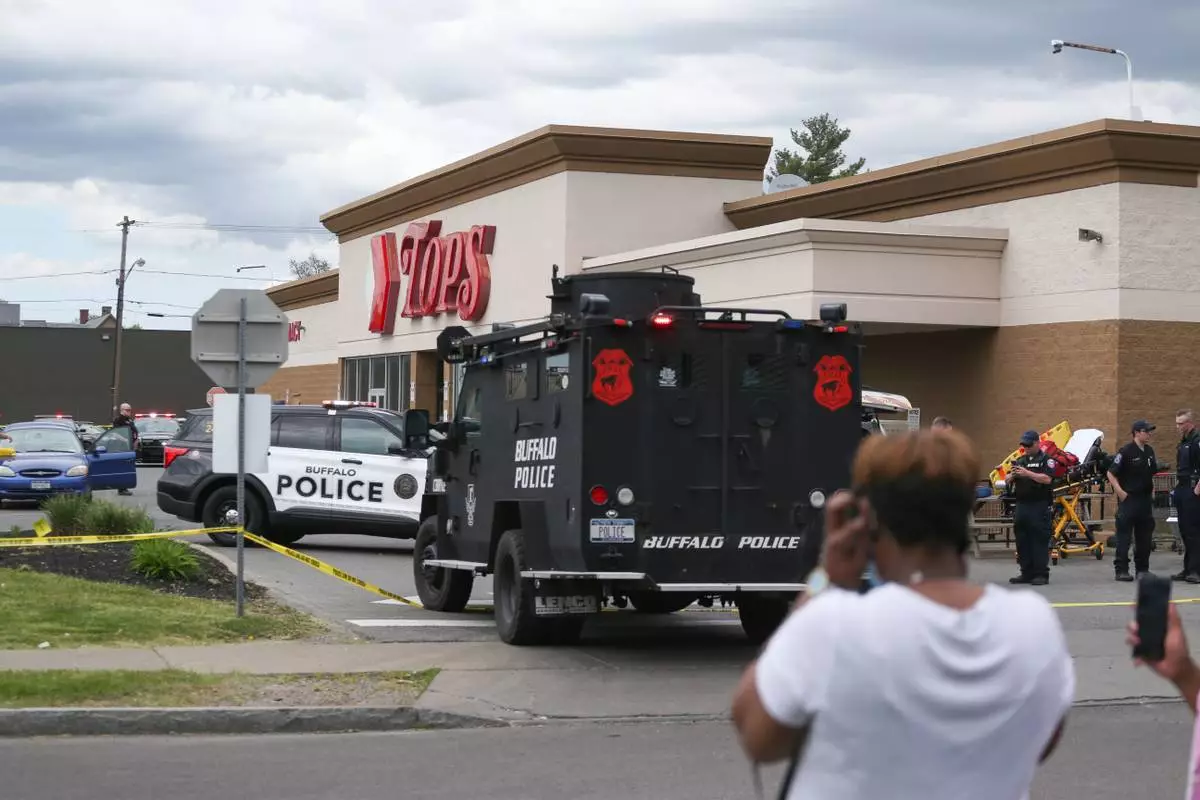
FILE - A crowd gathers as police investigate after a shooting at a supermarket on May 14, 2022, in Buffalo, N.Y. (AP Photo/Joshua Bessex, File)
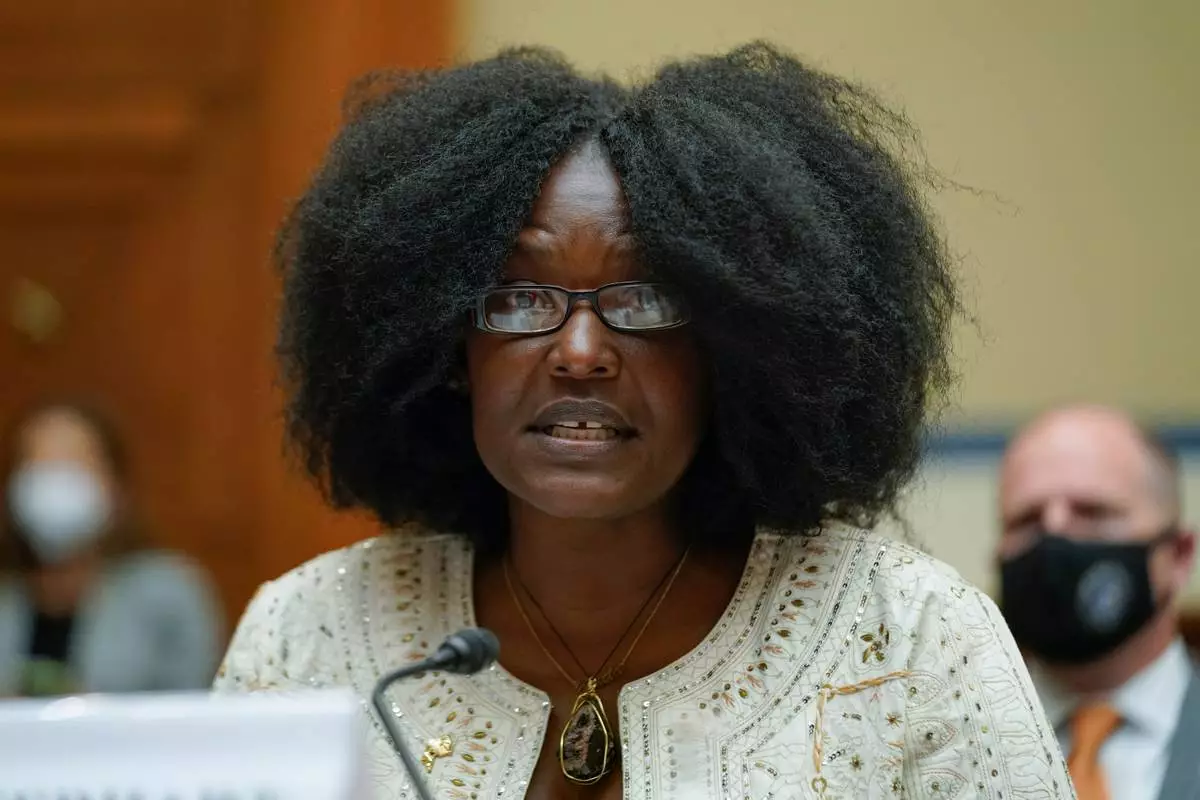
FILE - Zeneta Everhart, whose son Zaire Goodman was shot in the neck during the Buffalo Tops supermarket mass shooting and survived, testifies during a House Committee on Oversight and Reform hearing on gun violence on Capitol Hill in Washington on June 8, 2022. (AP Photo/Andrew Harnik, Pool, File)
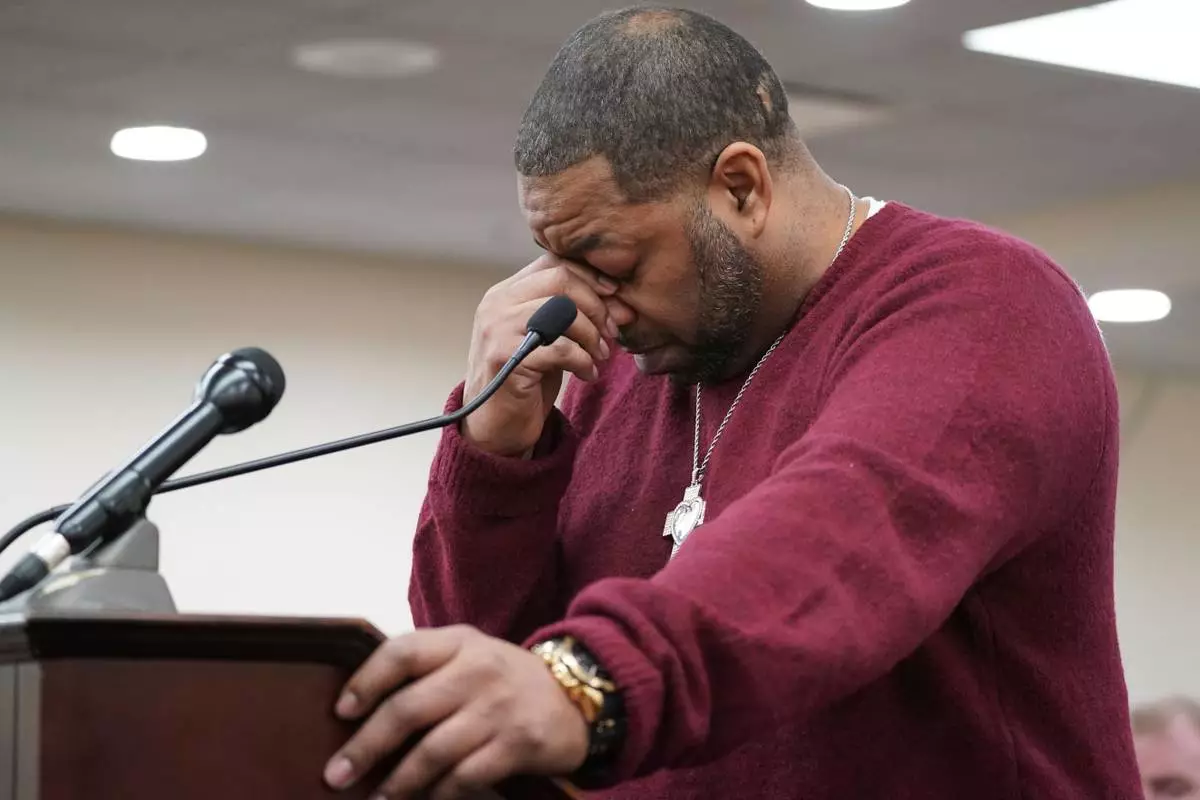
FILE - Wayne Jones, the son of Tops Friendly Market shooting victim Celestine Chaney, pauses to collect himself as he makes a statement to the court during the sentencing of Payton Gendron before Erie County Court Judge Susan Eagan, Feb. 15, 2023, in Buffalo, N.Y. (Derek Gee/The Buffalo News via AP, Pool, File)
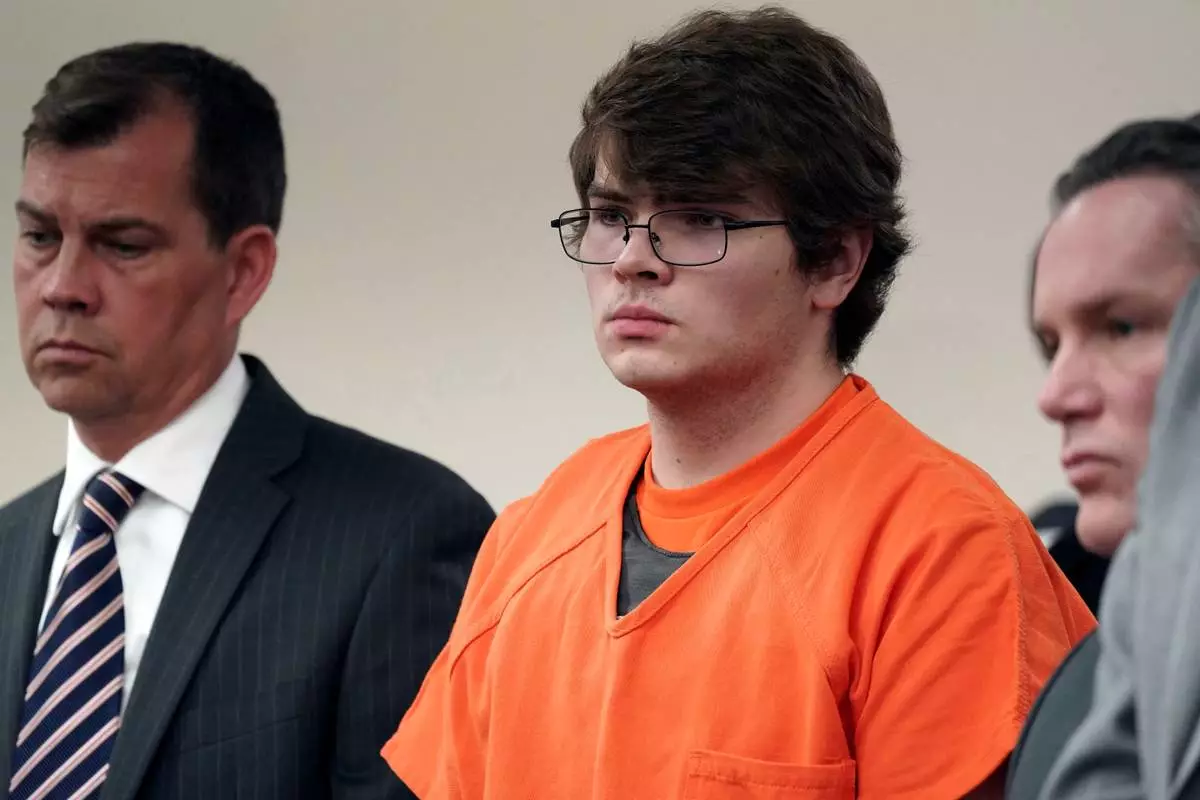
FILE - Payton Gendron, center, listens as he is sentenced, Feb 15, 2023, in Buffalo, N.Y. (Derek Gee/The Buffalo News via AP, Pool, File)