AL-ARISHA, Syria (AP) — After seven years of displacement, around 450 Kurdish and Arab families left the al-Talayi camp in the Syrian city of Hassakeh on Tuesday to return to Syria’s Ras al-Ayn countryside.
Families arrived in the town of Al-Arisha with belongings piled onto trucks to find damaged and destroyed homes and limited basic services.
Click to Gallery
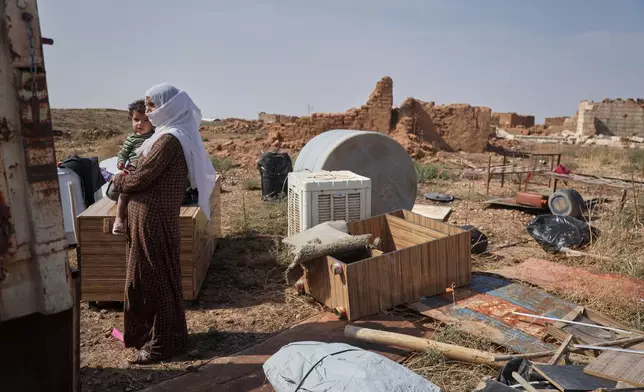
A woman holds a young child amid household belongings and destroyed buildings after returning to Al-Arisha, in Syria's Ras al-Ayn countryside, Tuesday, Oct. 13, 2026, seven years after a Turkish military offensive alongside allied Syrian factions forced residents to flee. (AP Photo/Baderkhan Ahmad)
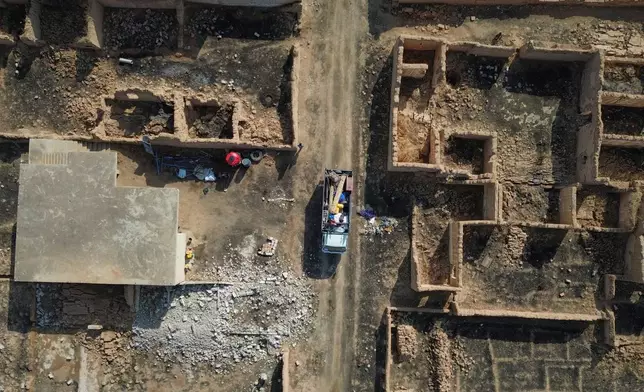
A truck carrying returning residents and their belongings passes destroyed buildings in Al-Arisha, in Syria's Ras al-Ayn countryside, Tuesday, Oct. 13, 2026, seven years after a Turkish military offensive alongside allied Syrian factions forced them to flee. (AP Photo/Baderkhan Ahmad)
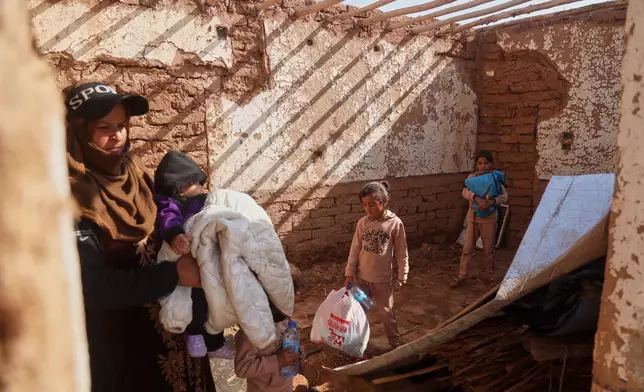
A woman holds a young child as other children carry belongings inside their damaged home after returning to Al-Arisha, in Syria's Ras al-Ayn countryside, Tuesday, Oct. 13, 2026, seven years after a Turkish military offensive alongside allied Syrian factions forced them to flee. (AP Photo/Baderkhan Ahmad)
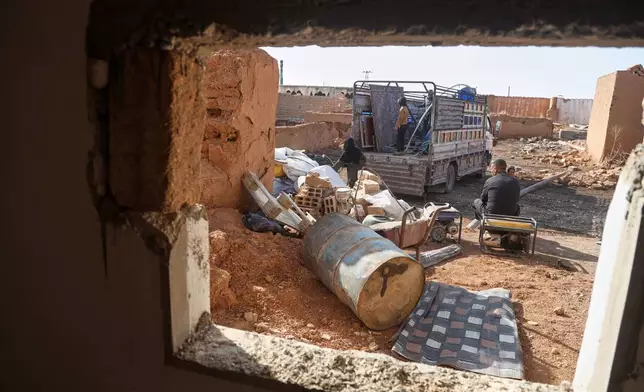
Returning residents unload belongings from a truck amid damaged buildings in Al-Arisha, in Syria's Ras al-Ayn countryside, Tuesday, Oct. 13, 2026, seven years after a Turkish military offensive backed by allied Syrian factions forced them to flee. (AP Photo/Baderkhan Ahmad)
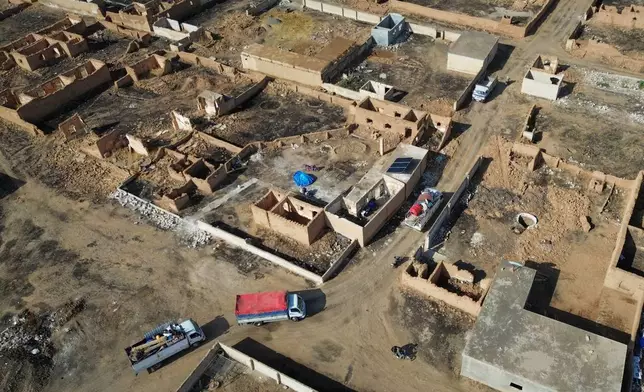
Trucks carrying returning residents and their belongings pass destroyed buildings in Al-Arisha, in Syria's Ras al-Ayn countryside, Tuesday, Oct. 13, 2026, seven years after a Turkish military offensive alongside allied Syrian factions forced them to flee. (AP Photo/Baderkhan Ahmad)
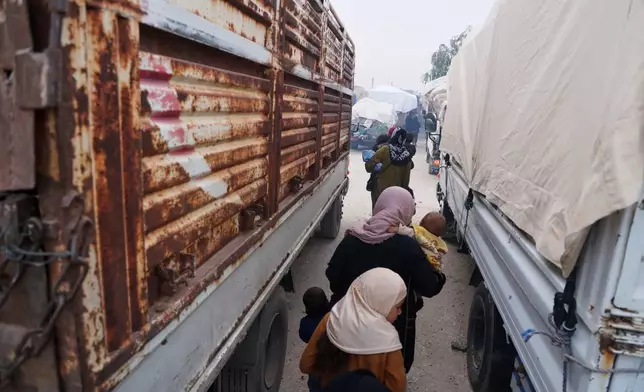
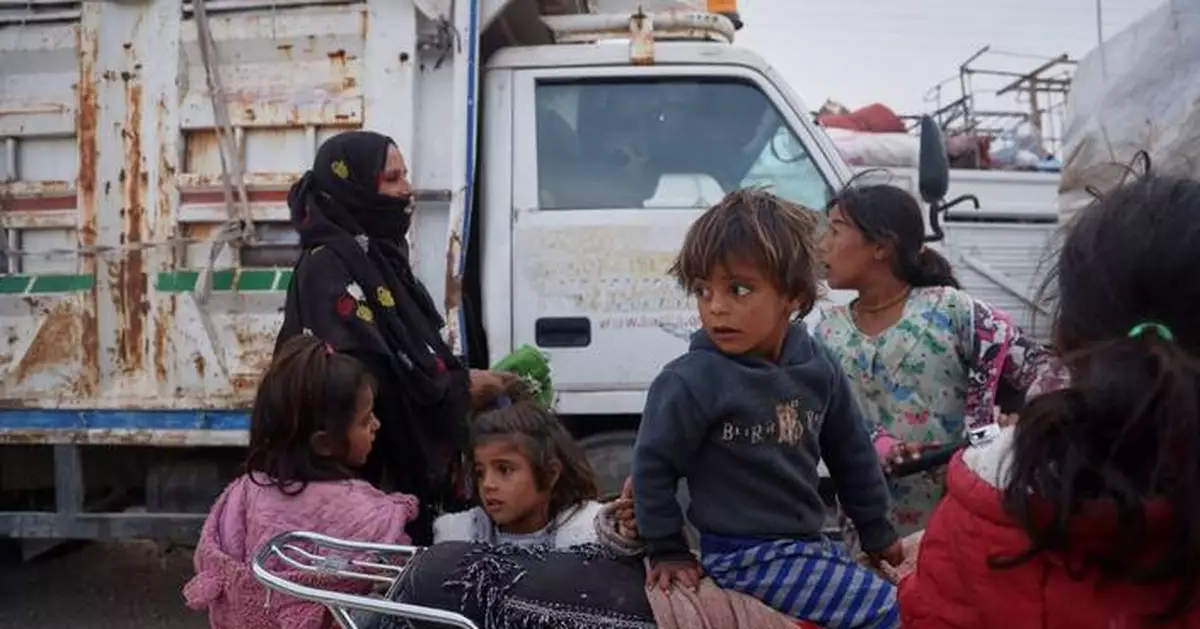
Women carry young children between trucks loaded with belongings as displaced families prepare to leave al-Talayi camp in Hassakeh, Syria, Tuesday, Oct. 13, 2026. Around 450 families are returning to the Ras al-Ayn countryside, seven years after a Turkish military offensive forced them to flee. (AP Photo/Baderkhan Ahmad)
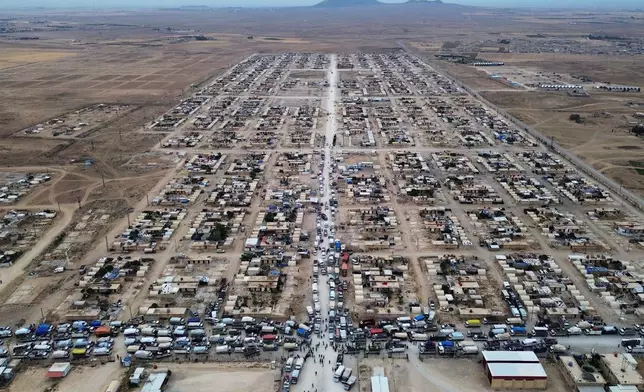
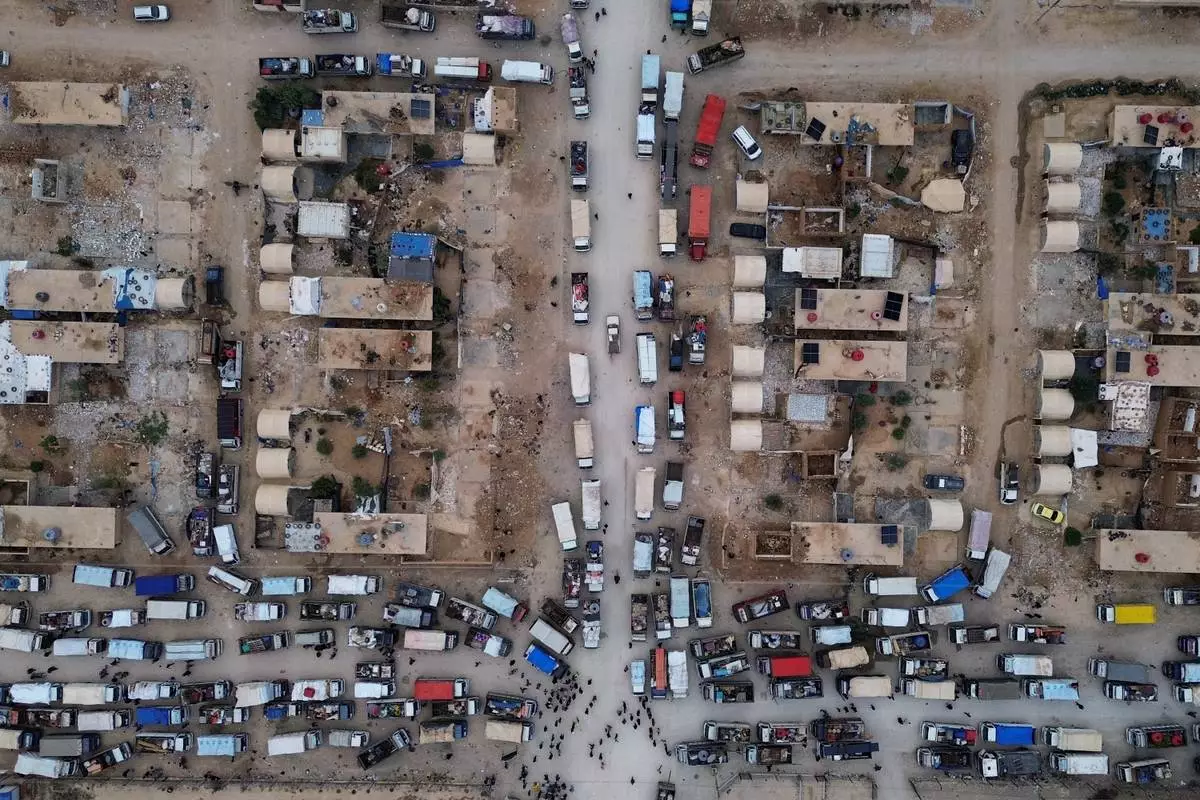
Trucks packed with belongings line the roads at al-Talayi camp as displaced families get ready to return to the Ras al-Ayn countryside, in Hassakeh, Syria, Tuesday, Oct. 13, 2026. Around 450 families are making the journey after seven years of displacement following a Turkish military offensive in 2019. (AP Photo/Baderkhan Ahmad)
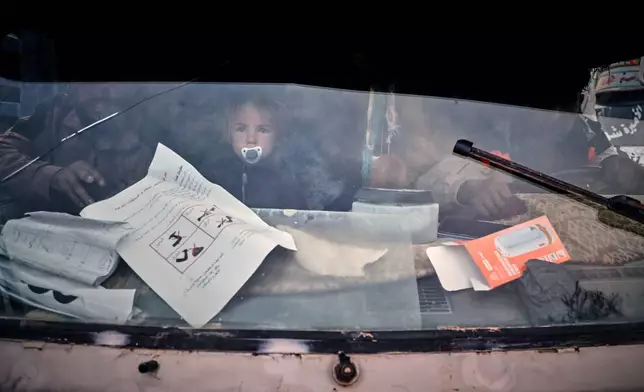
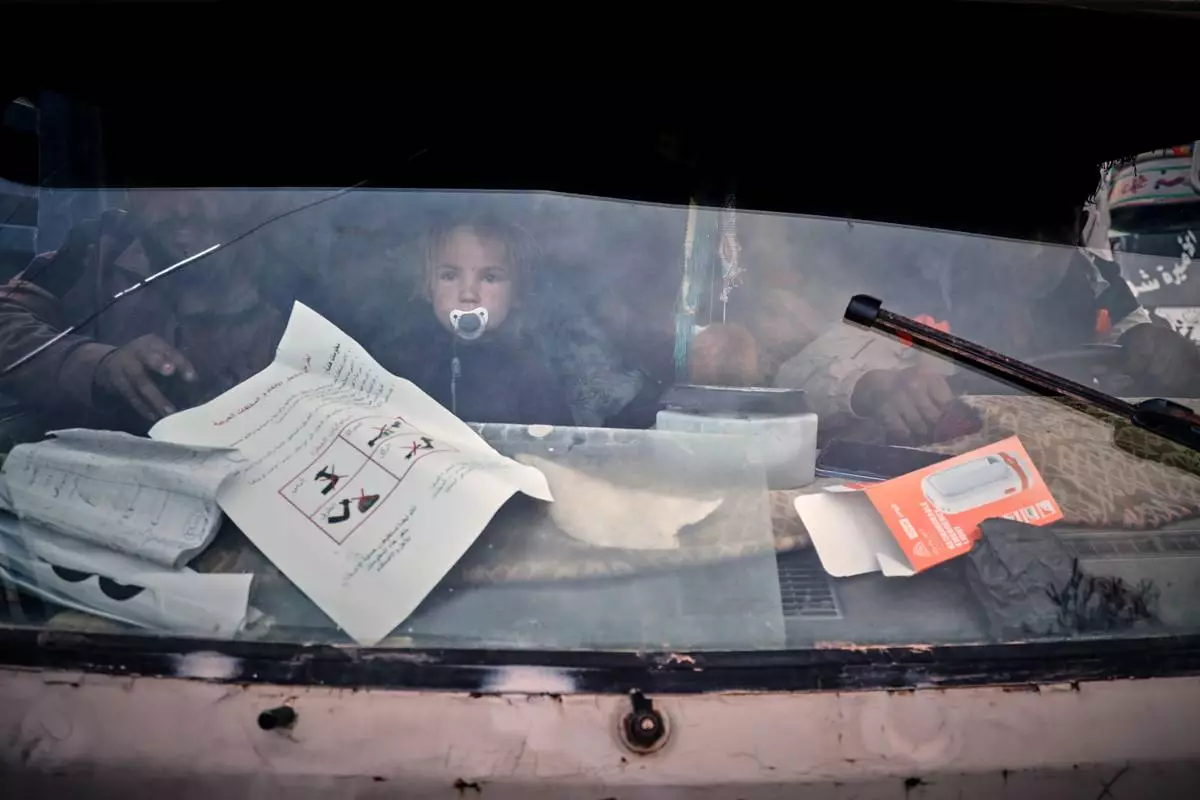
A young child looks through a truck's windshield as displaced families prepare to leave al-Talayi camp in Hassakeh, Syria, Tuesday, Oct. 13, 2026. Around 450 families are returning to the Ras al-Ayn countryside, seven years after a Turkish military offensive forced them to flee. (AP Photo/Baderkhan Ahmad)
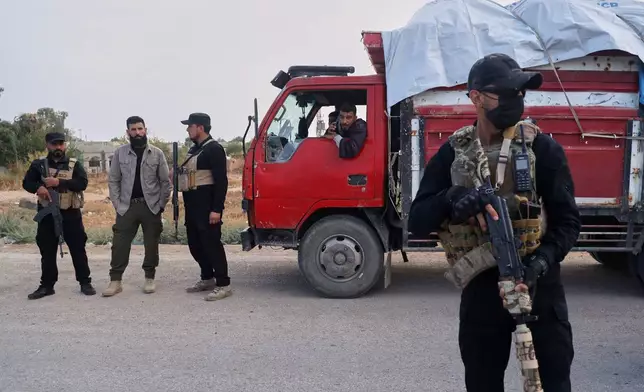
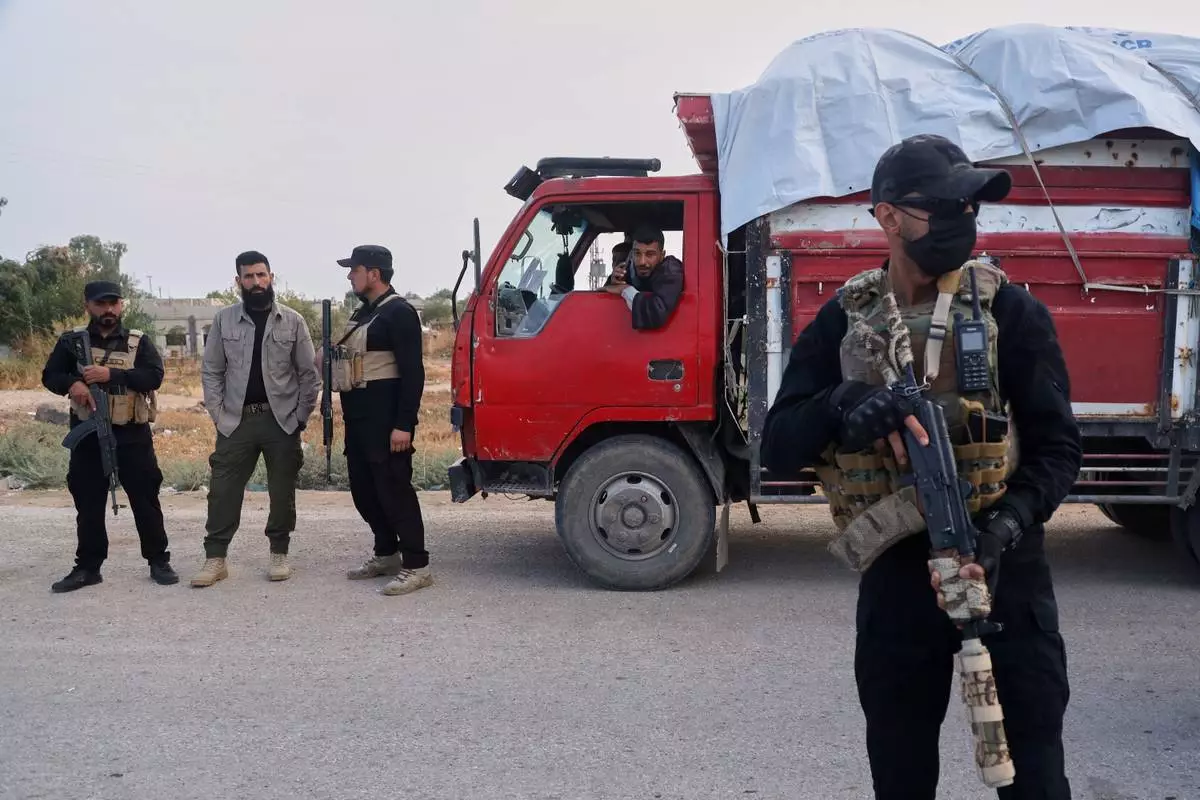
Internal security forces guard displaced families returning to the Ras al-Ayn countryside after seven years of displacement during a stop en route from Hassakeh, Syria, Tuesday, Oct. 13, 2026. (AP Photo/Baderkhan Ahmad)
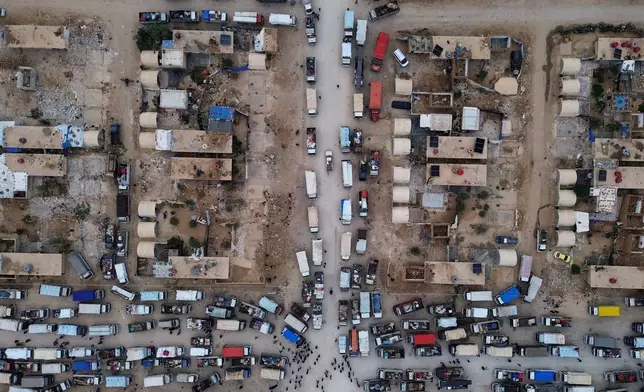
Trucks packed with belongings line the roads at al-Talayi camp as displaced families get ready to return to the Ras al-Ayn countryside, in Hassakeh, Syria, Tuesday, Oct. 13, 2026. Around 450 families are making the journey after seven years of displacement following a Turkish military offensive in 2019. (AP Photo/Baderkhan Ahmad)
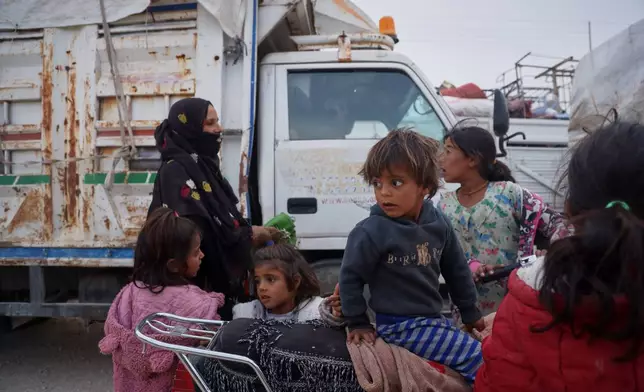
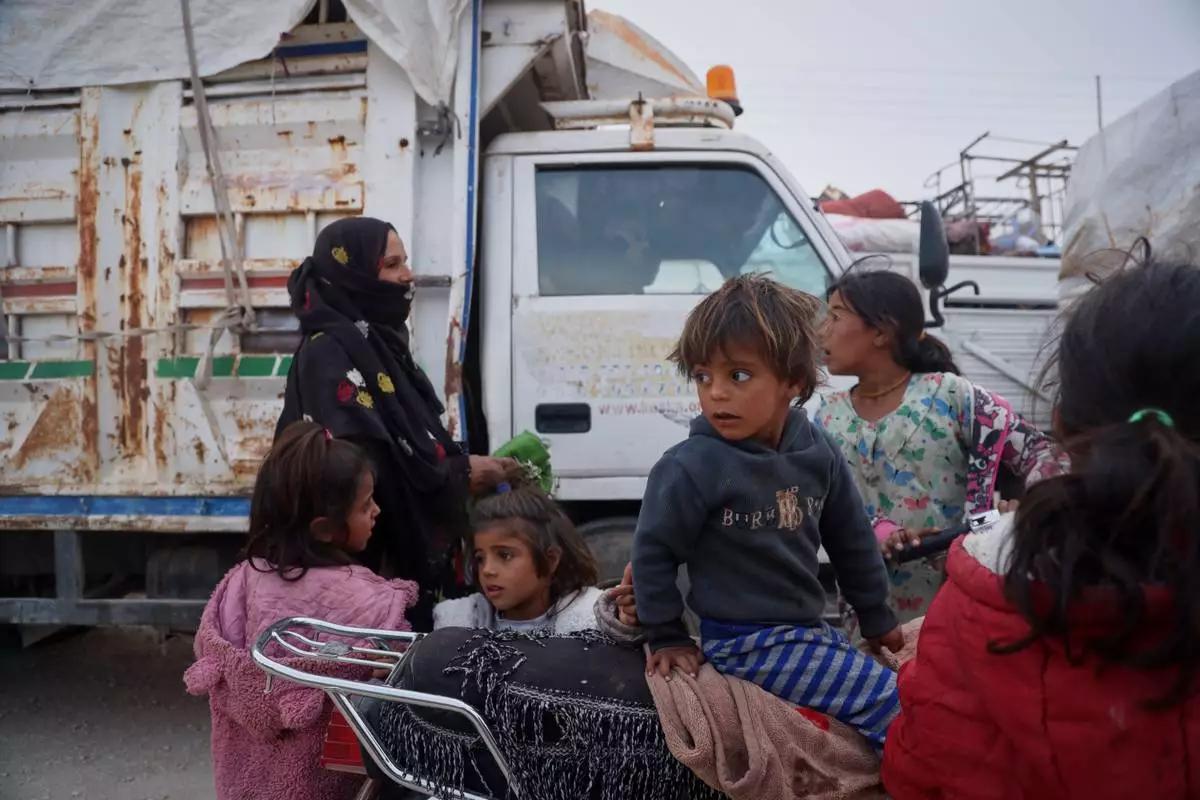
Children gather around a motorcycle as displaced families prepare to leave al-Talayi camp in Hassakeh, Syria, Tuesday, Oct. 13, 2026. Around 450 families are returning to the Ras al-Ayn countryside, seven years after a Turkish military offensive forced them to flee. (AP Photo/Baderkhan Ahmad)
The families were displaced by a Turkish military offensive alongside Turkish-backed Syrian factions in October 2019. Their return follows arrangements between the Syrian government and the Kurdish-led Syrian Democratic Forces, though damaged infrastructure and unresolved property issues remain obstacles for many.
This is a photo gallery curated by AP photo editors.
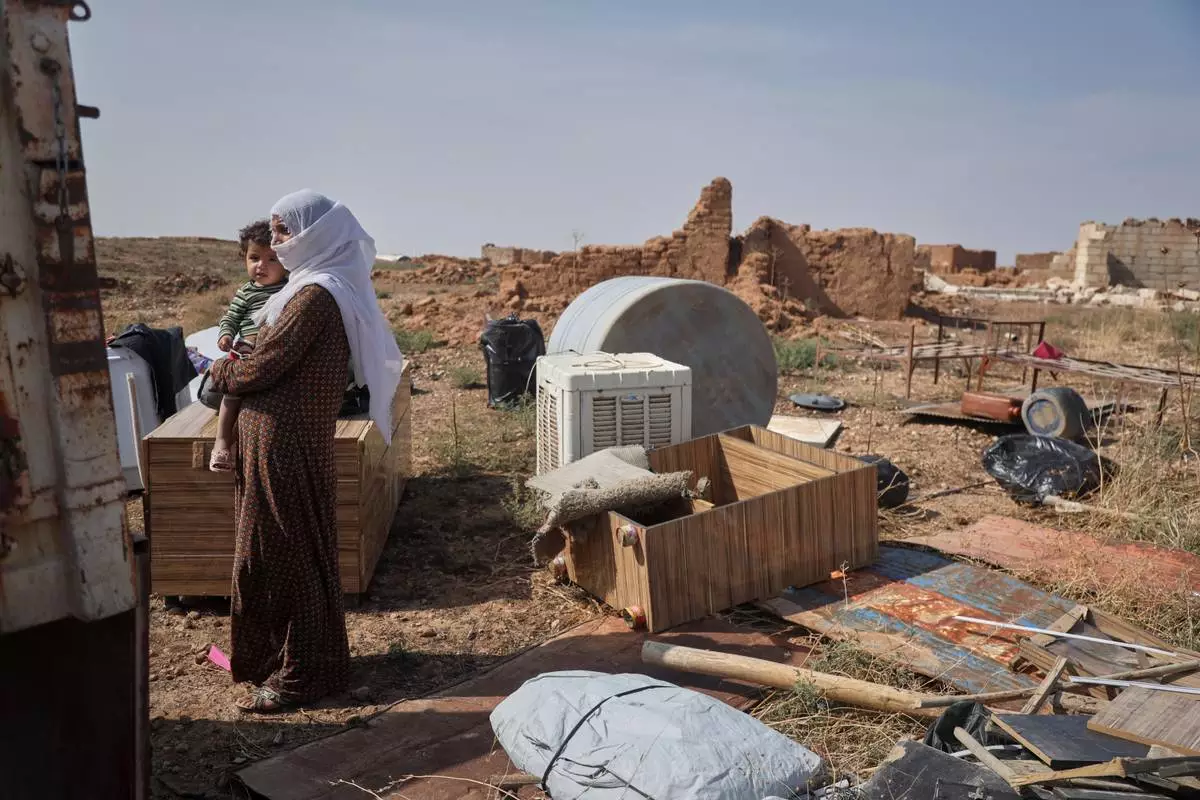
A woman holds a young child amid household belongings and destroyed buildings after returning to Al-Arisha, in Syria's Ras al-Ayn countryside, Tuesday, Oct. 13, 2026, seven years after a Turkish military offensive alongside allied Syrian factions forced residents to flee. (AP Photo/Baderkhan Ahmad)
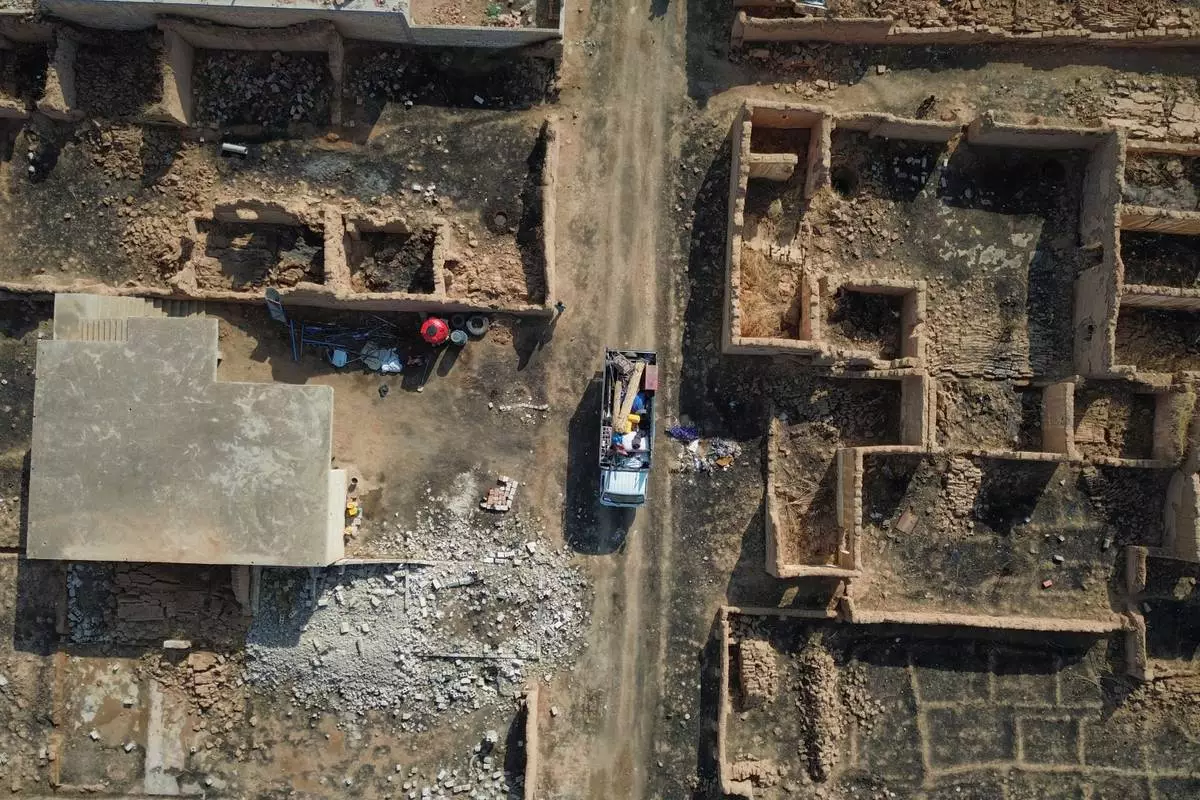
A truck carrying returning residents and their belongings passes destroyed buildings in Al-Arisha, in Syria's Ras al-Ayn countryside, Tuesday, Oct. 13, 2026, seven years after a Turkish military offensive alongside allied Syrian factions forced them to flee. (AP Photo/Baderkhan Ahmad)
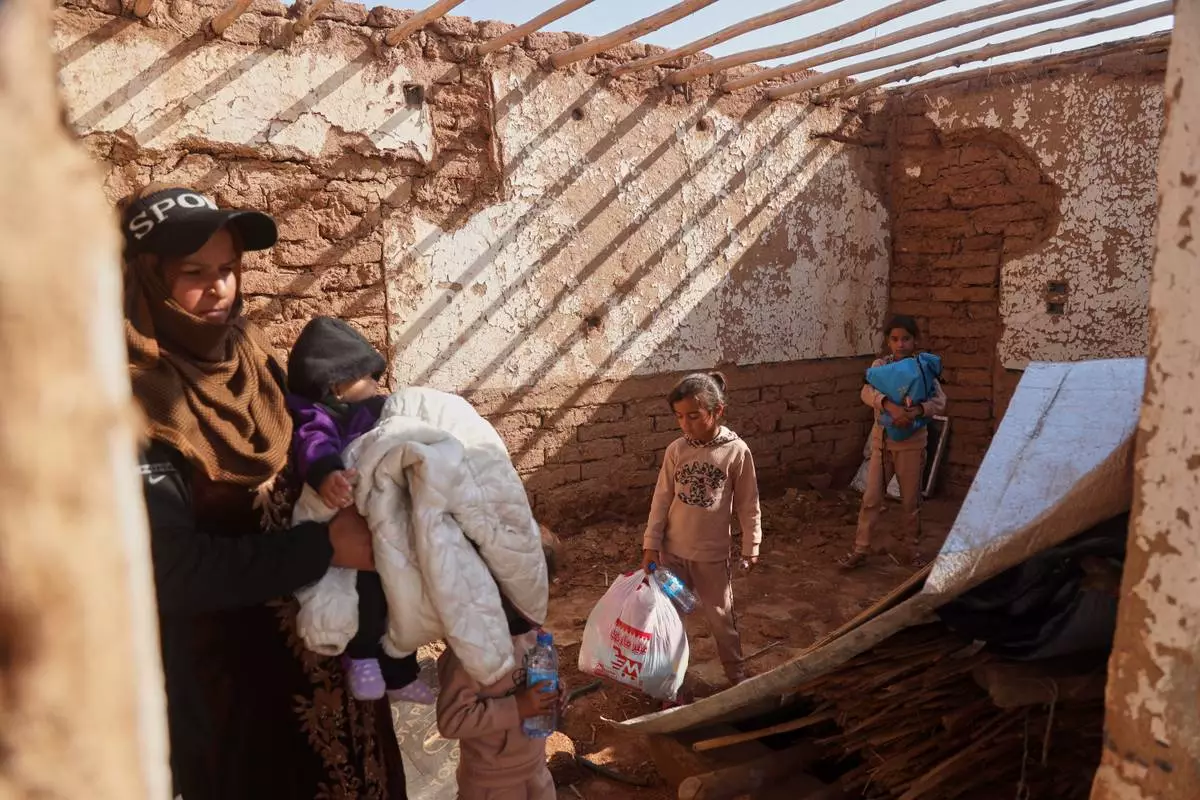
A woman holds a young child as other children carry belongings inside their damaged home after returning to Al-Arisha, in Syria's Ras al-Ayn countryside, Tuesday, Oct. 13, 2026, seven years after a Turkish military offensive alongside allied Syrian factions forced them to flee. (AP Photo/Baderkhan Ahmad)
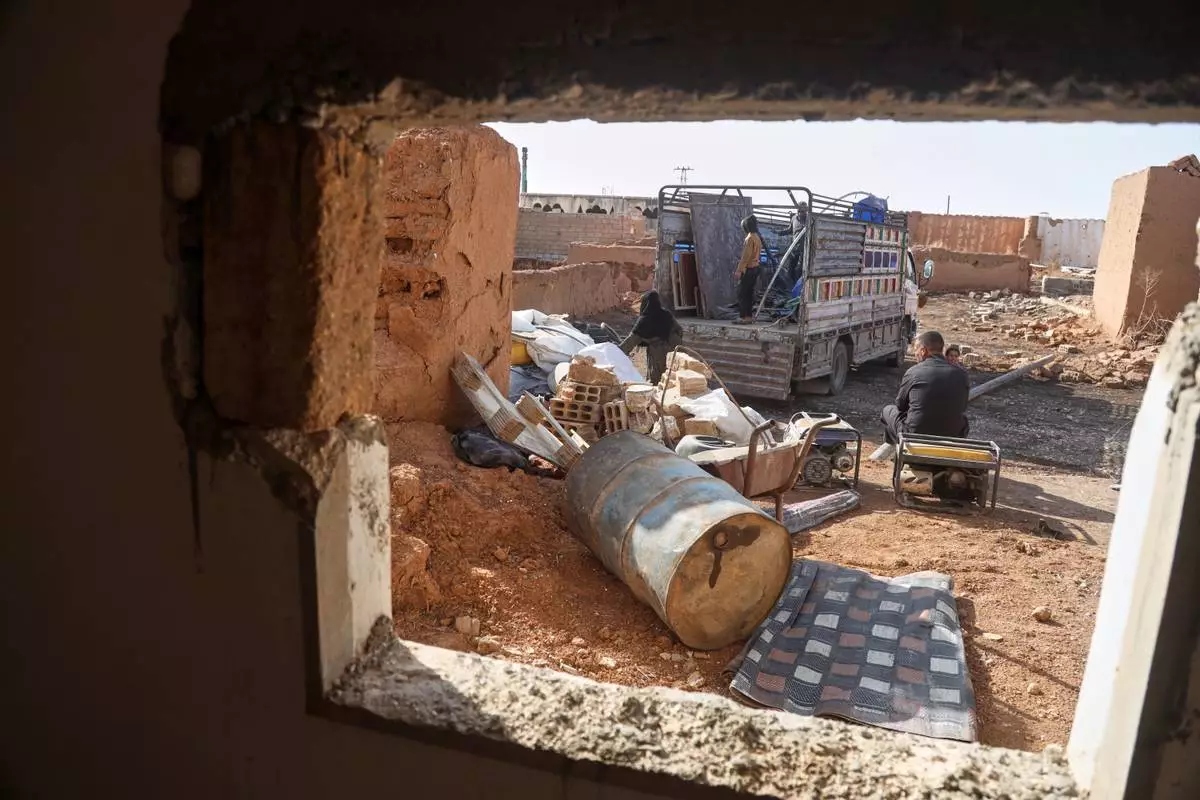
Returning residents unload belongings from a truck amid damaged buildings in Al-Arisha, in Syria's Ras al-Ayn countryside, Tuesday, Oct. 13, 2026, seven years after a Turkish military offensive backed by allied Syrian factions forced them to flee. (AP Photo/Baderkhan Ahmad)
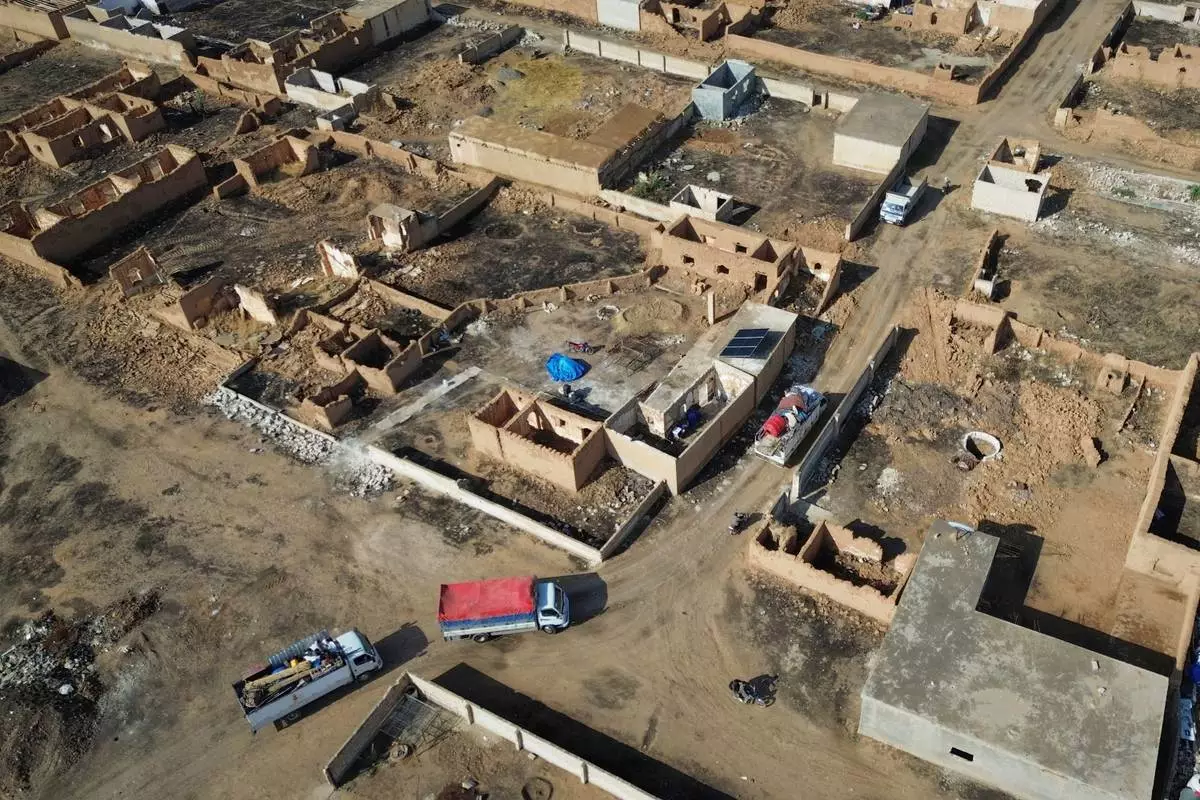
Trucks carrying returning residents and their belongings pass destroyed buildings in Al-Arisha, in Syria's Ras al-Ayn countryside, Tuesday, Oct. 13, 2026, seven years after a Turkish military offensive alongside allied Syrian factions forced them to flee. (AP Photo/Baderkhan Ahmad)
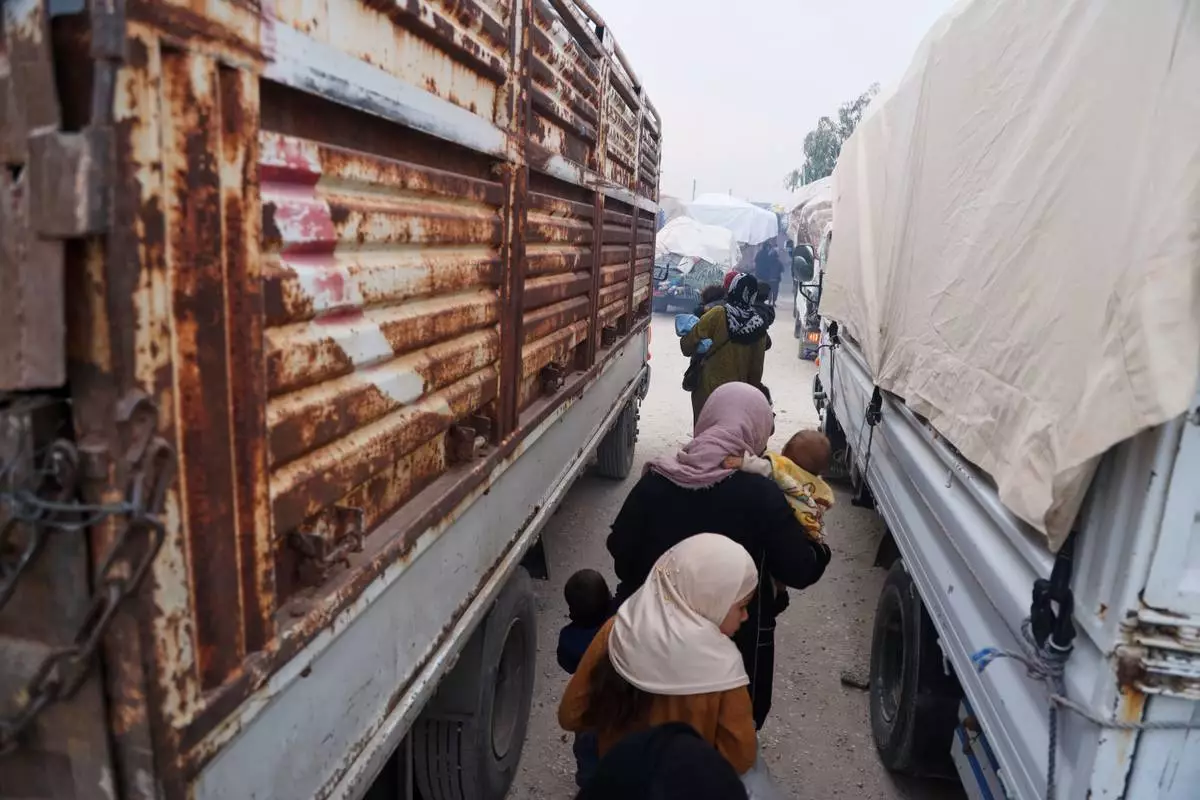
Women carry young children between trucks loaded with belongings as displaced families prepare to leave al-Talayi camp in Hassakeh, Syria, Tuesday, Oct. 13, 2026. Around 450 families are returning to the Ras al-Ayn countryside, seven years after a Turkish military offensive forced them to flee. (AP Photo/Baderkhan Ahmad)
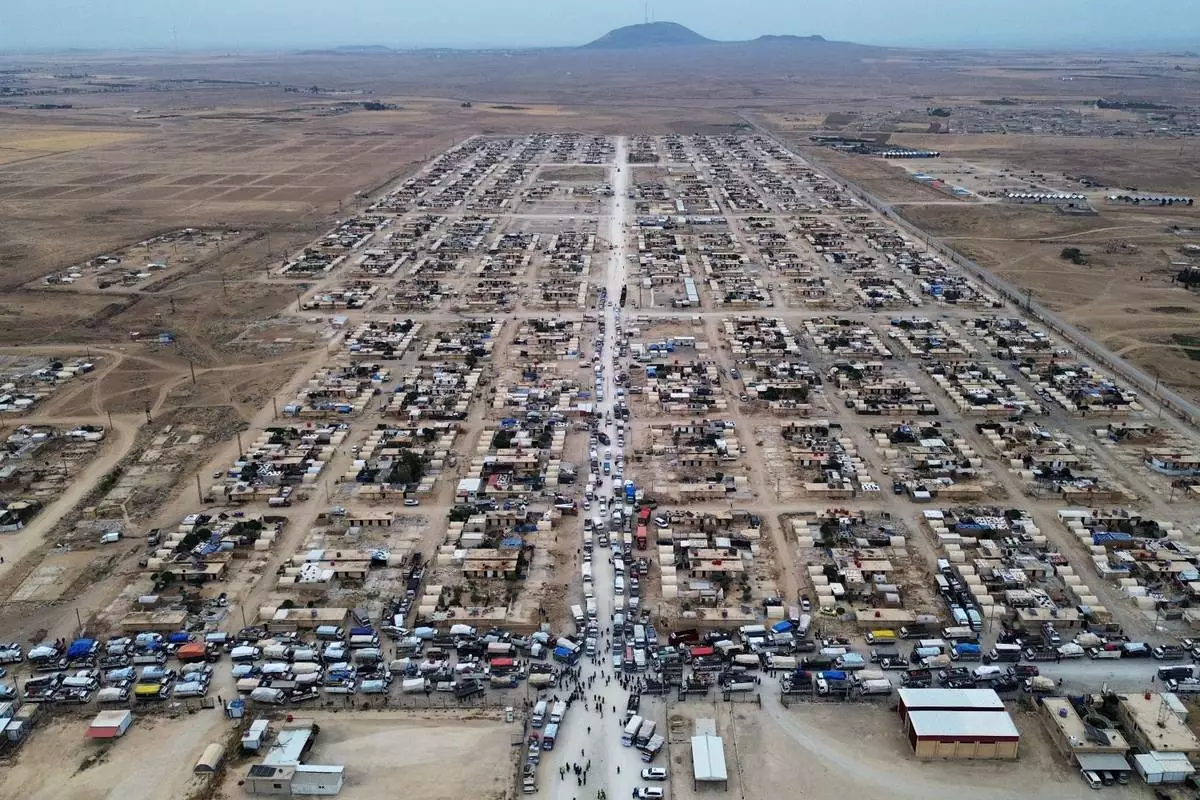
Trucks packed with belongings line the roads at al-Talayi camp as displaced families get ready to return to the Ras al-Ayn countryside, in Hassakeh, Syria, Tuesday, Oct. 13, 2026. Around 450 families are making the journey after seven years of displacement following a Turkish military offensive in 2019. (AP Photo/Baderkhan Ahmad)
A young child looks through a truck's windshield as displaced families prepare to leave al-Talayi camp in Hassakeh, Syria, Tuesday, Oct. 13, 2026. Around 450 families are returning to the Ras al-Ayn countryside, seven years after a Turkish military offensive forced them to flee. (AP Photo/Baderkhan Ahmad)
Internal security forces guard displaced families returning to the Ras al-Ayn countryside after seven years of displacement during a stop en route from Hassakeh, Syria, Tuesday, Oct. 13, 2026. (AP Photo/Baderkhan Ahmad)
Trucks packed with belongings line the roads at al-Talayi camp as displaced families get ready to return to the Ras al-Ayn countryside, in Hassakeh, Syria, Tuesday, Oct. 13, 2026. Around 450 families are making the journey after seven years of displacement following a Turkish military offensive in 2019. (AP Photo/Baderkhan Ahmad)
Children gather around a motorcycle as displaced families prepare to leave al-Talayi camp in Hassakeh, Syria, Tuesday, Oct. 13, 2026. Around 450 families are returning to the Ras al-Ayn countryside, seven years after a Turkish military offensive forced them to flee. (AP Photo/Baderkhan Ahmad)