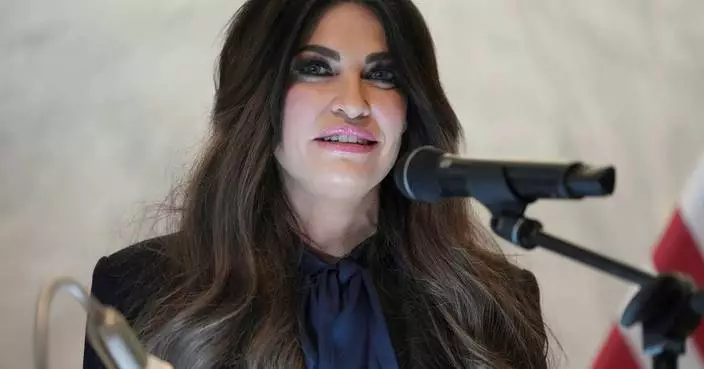
Cornell University is suspending parties and other social events at fraternity houses for the rest of the academic year and will give the New York State Police a role in investigating sex crimes on campus, university officials announced Tuesday, amid mounting outrage over its handling of allegations that a female student was sexually assaulted at a fraternity house in 2024.
The measures announced by Cornell President Michael Kotlikoff include a suspension of all parties and social events at Interfraternity Council houses through the end of the 2026-27 academic year and a new “zero tolerance” policy for violations that would result in the immediate emergency suspension of a chapter.
Click to Gallery
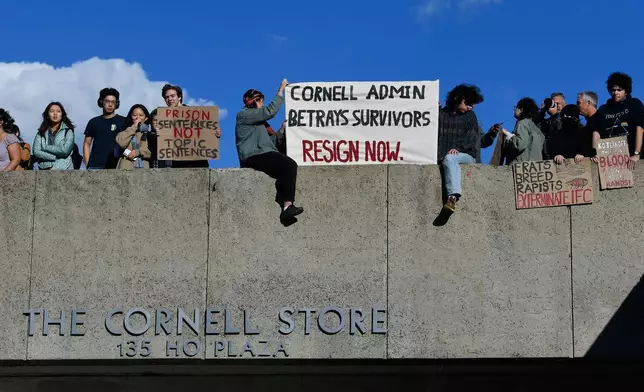
Attendees hold signs during a protest against Cornell University's handling of the 2024 fraternity-house gang rape allegations at the university Monday, Oct. 5, 2026, in Ithaca, N.Y. (AP Photo/Adrian Kraus)
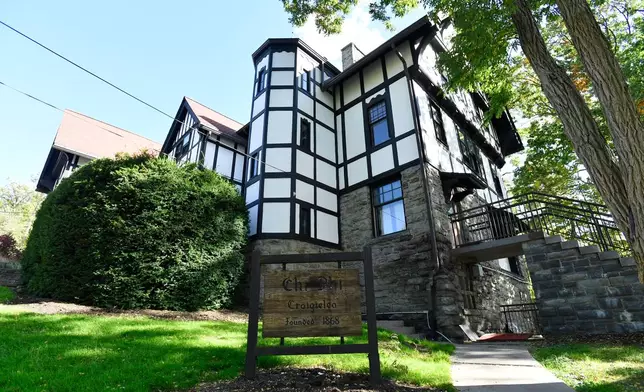
The Chi Phi fraternity house is seen at Cornell University, Monday, Oct. 5, 2026, in Ithaca, N.Y. (AP Photo/Adrian Kraus)
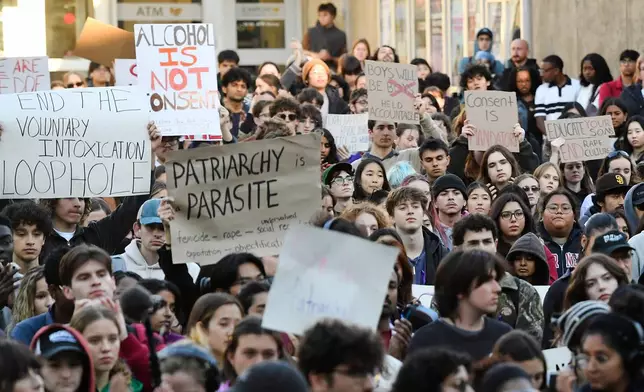
Demonstrators attend a protest against Cornell University's handling of the 2024 fraternity-house gang rape allegations at the campus, Monday, Oct. 5, 2026, in Ithaca, N.Y. (AP Photo/Adrian Kraus)
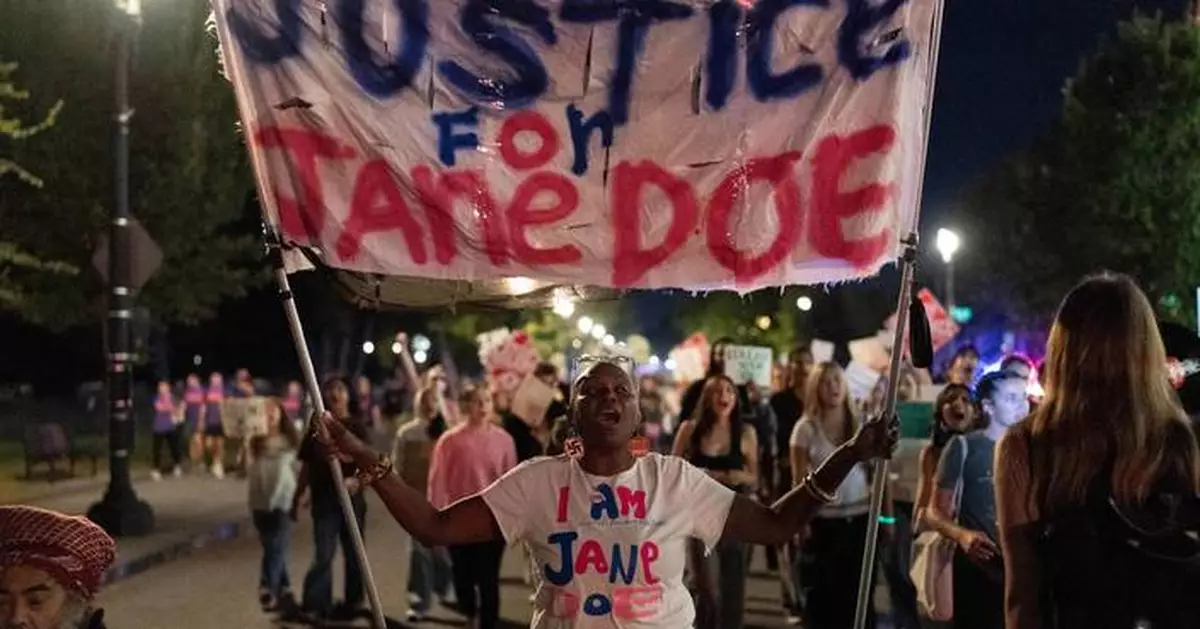
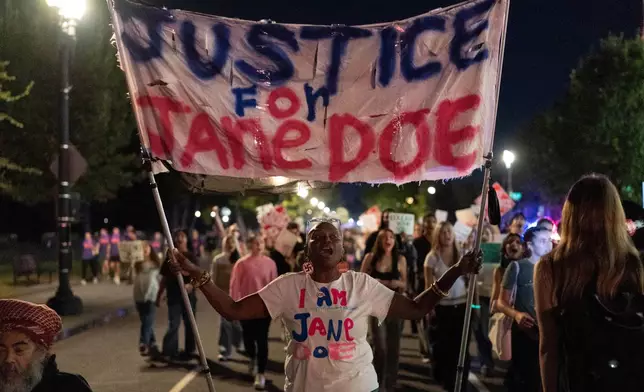
Demonstrators march from the Washington Monument to the White House during a "Stop Sexual Violence" protest in Washington, Thursday, Oct. 8, 2026. (AP Photo/Jose Luis Magana)
“These measures will provide time for a thorough review of fraternity life at Cornell to determine whether and how it can safely continue,” Kotlikoff wrote in a letter to the campus community.
Cornell has more than 20 active fraternities affiliated with its Interfraternity Council. The council did not immediately respond to an email request for comment.
The university president said the school would begin conversations with students and faculty experts about “the development of safe social alternatives” to Greek life party culture and invest money to get those initiatives off the ground.
He also committed to adding a case manager to the school’s Office of Civil Rights to help those who report sexual misconduct on the Cornell campus navigate the process, and to working with the New York State Police to allow its criminal investigators — who are independent of Cornell — to investigate allegations.
Crimes reported on Cornell’s campus are generally investigated by campus police, a department that has full law enforcement powers but is controlled by the university. The campus police force operates independently from municipal police in Ithaca, New York, where the university is located. Its officers investigated the 2024 gang rape allegations and presented their initial findings to the Tompkins County district attorney, who declined to prosecute within weeks of the woman making her first report to police.
In a lawsuit filed in September, the woman alleged that she was drugged and sexually assaulted by multiple fraternity members after attending a party at the Chi Phi house in October 2024. She said she was pressured to use drugs and that other men entered the room while she was incapacitated. She also alleges that messages describing her as sexually available to anyone at the house circulated among fraternity members on Snapchat without her knowledge.
Cornell closed the fraternity chapter and disciplined several students following an internal investigation, but no criminal charges have been filed.
New York’s governor removed the district attorney from the case this month after a public outcry over the lack of charges.
The investigation is now being led by New York Attorney General Letitia James, while Cornell has hired former Deputy U.S. Attorney General Sally Yates to conduct an independent review of the university’s response. New York State Police sometimes handle major crime investigations for small municipal police agencies, bringing in expertise that isn’t available locally.
Kotlikoff’s announcement came a day before Cornell’s faculty senate was to take up a proposed resolution expressing no confidence in the administration’s ability to effectively address sexual assault on campus.
Kotlikoff acknowledged that sexual violence extends beyond fraternities, saying Cornell must also confront a campus culture of excessive drinking and drug use and expand education about students’ responsibility to intervene when others are at risk.
Cornell also plans to add victim advocates and expand sexual violence prevention programs, including education aimed at encouraging bystanders to intervene, he said, calling the various actions announced Tuesday “first steps toward systemic change on our campus.”
“We will take all necessary steps to address the conditions that led to Jane Doe’s experiences, and those of other survivors,” he said.
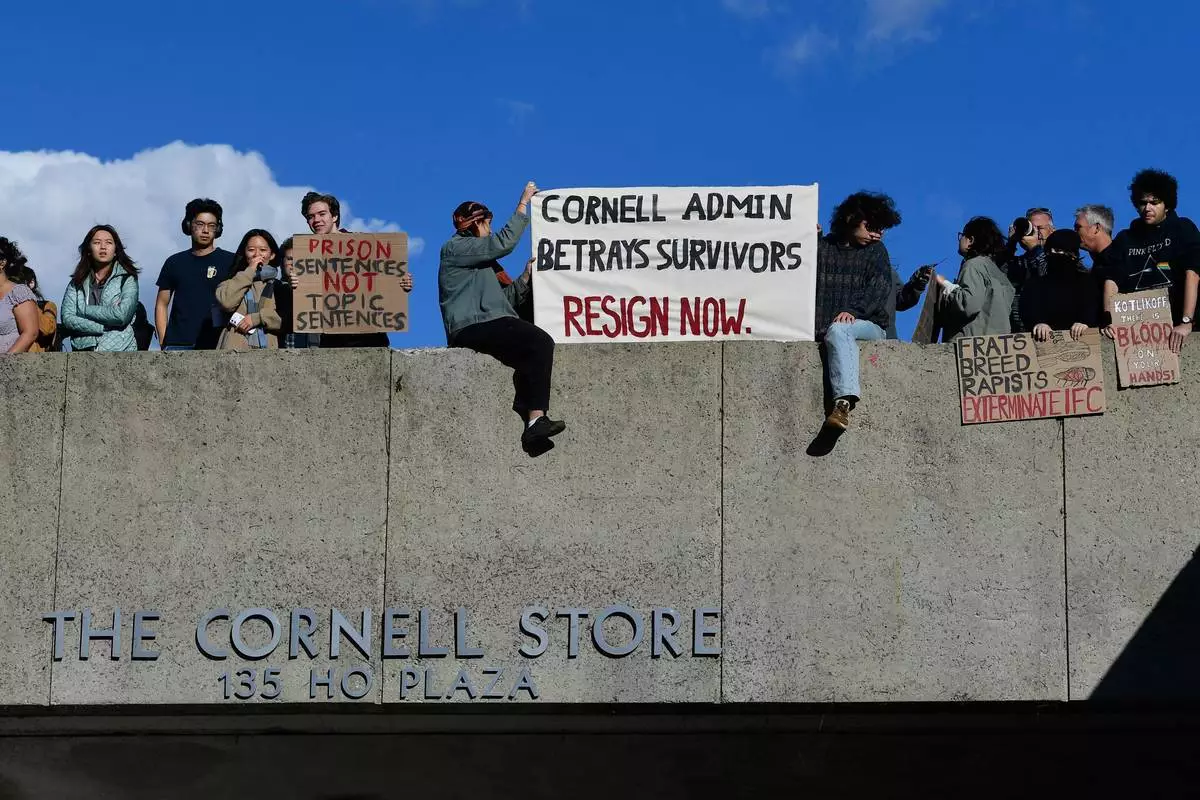
Attendees hold signs during a protest against Cornell University's handling of the 2024 fraternity-house gang rape allegations at the university Monday, Oct. 5, 2026, in Ithaca, N.Y. (AP Photo/Adrian Kraus)
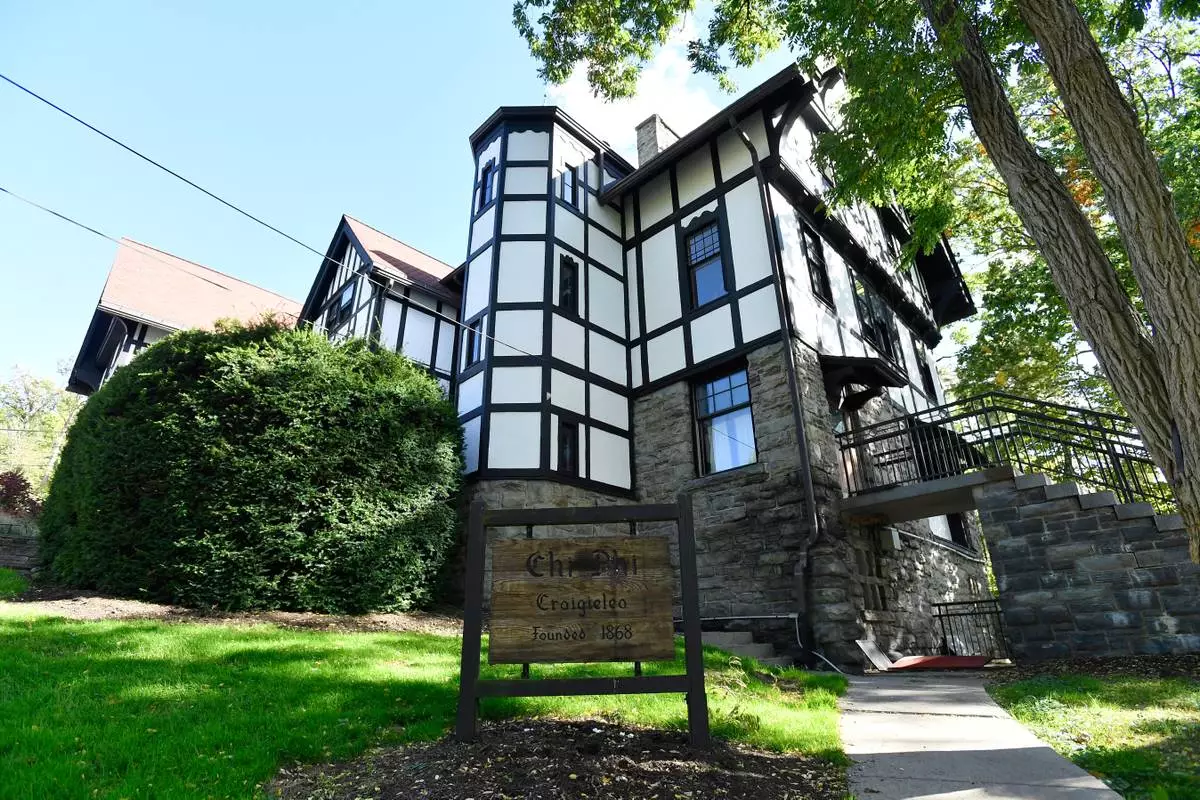
The Chi Phi fraternity house is seen at Cornell University, Monday, Oct. 5, 2026, in Ithaca, N.Y. (AP Photo/Adrian Kraus)
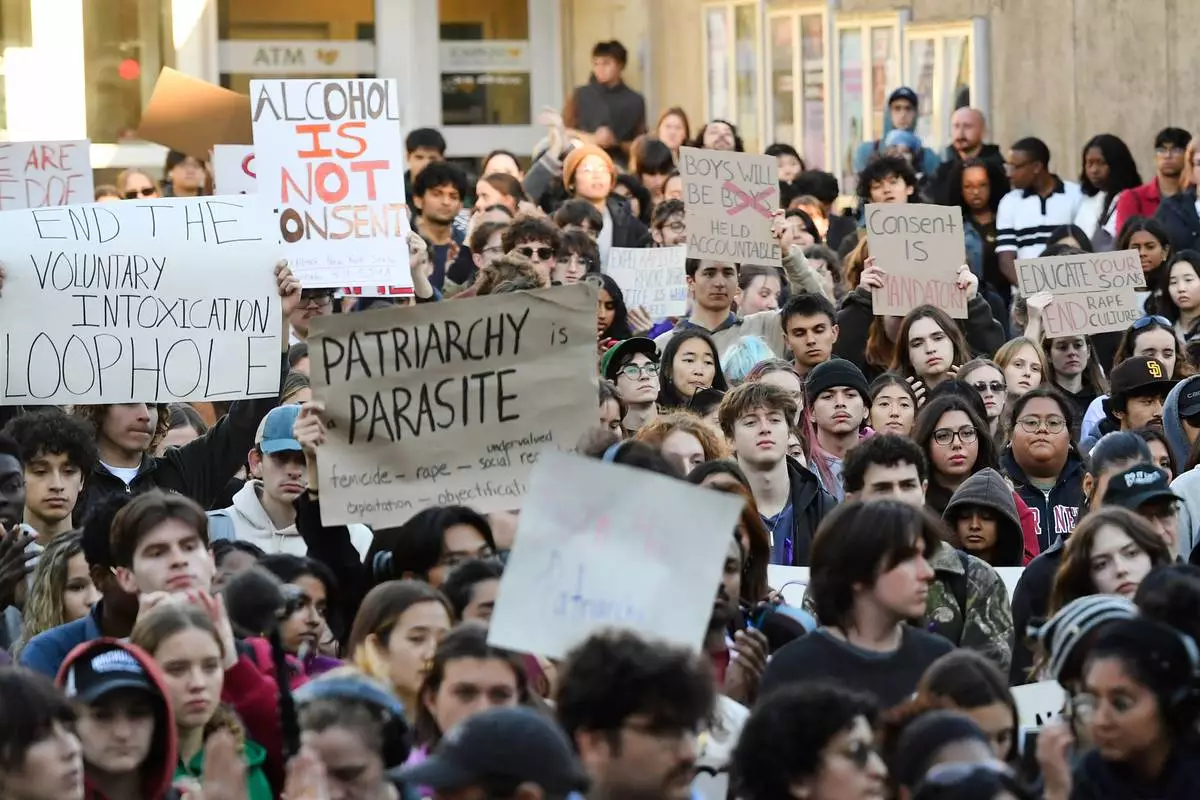
Demonstrators attend a protest against Cornell University's handling of the 2024 fraternity-house gang rape allegations at the campus, Monday, Oct. 5, 2026, in Ithaca, N.Y. (AP Photo/Adrian Kraus)
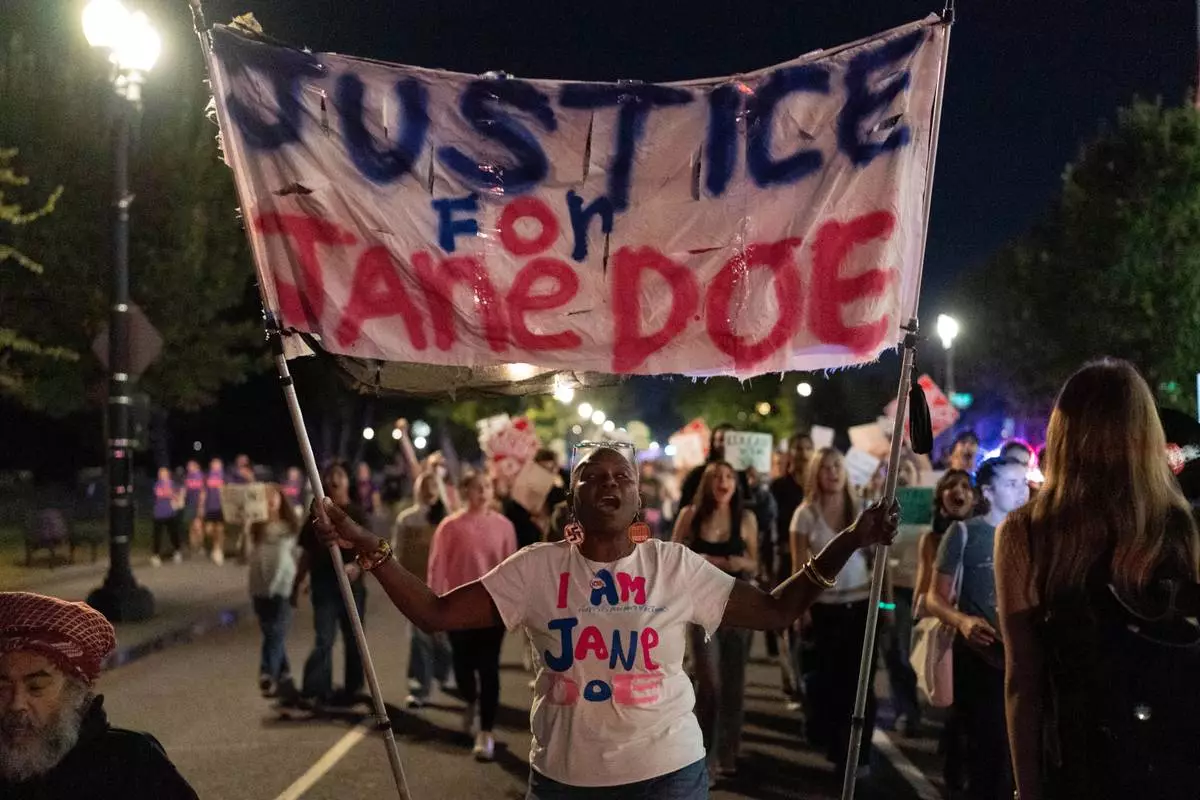
Demonstrators march from the Washington Monument to the White House during a "Stop Sexual Violence" protest in Washington, Thursday, Oct. 8, 2026. (AP Photo/Jose Luis Magana)
BUFFALO, N.Y. (AP) — Jury selection began Tuesday in the federal hate crime trial of a man who admitted to killing 10 Black people in a massacre at a New York supermarket in 2022, a case that could lead to a rare death sentence.
Payton Gendron is already spending life in prison after pleading guilty to state murder charges and tearfully renouncing his white supremacist views. He now faces a trial in federal court arising from the same mass shooting. The stakes are high: If convicted, the 23-year-old could face the death penalty.
The attack at the Tops Friendly Market in Buffalo is believed to be the deadliest hate-motivated shooting targeting Black people in the U.S. by a lone gunman in the past century.
Gendron has pleaded not guilty to dozens of hate crime and gun charges, though his defense lawyers do not dispute his guilt. One even predicted a conviction when speaking to a prospective juror Tuesday.
If Gendron is convicted, his lawyers will try to persuade jurors to spare him from execution. Life imprisonment is typically the alternative.
“At trial, we will offer mitigating evidence about Payton that the jury needs to consider in making its decision,” his lawyers said in a statement. “Nothing we say or do is intended to be disrespectful or insensitive to the victims, the survivors, or their loved ones.”
Gendron spoke to his defense team and took notes while lawyers and U.S. District Judge Lawrence Vilardo interviewed people on Tuesday. One individual said she didn't want to be on the jury partly because of the stress of watching a video Gendron livestreamed during the shooting.
Another said other countries might respond to such an attack by “stoning” the offender. He said he could fairly weigh the aggravating and mitigating factors if the trial reaches a death penalty phase.
Robin Maher, executive director of the Death Penalty Information Center, told The Associated Press that Gendron's lawyers at trial will try to reveal “almost every aspect of his life before he committed his crime and even after he committed his crime” to try to keep him off death row.
On May 14, 2022, Gendron, then 18, drove over 200 miles (320 kilometers) from Conklin, a predominantly white, rural town, to Buffalo. He fired around 60 shots from a semiautomatic rifle at supermarket employees and shoppers. Video later revealed Gendron apologized to a white store worker after shooting him in the leg.
Investigators also found past social media posts and other writings by Gendron dedicated to planning an attack to frighten people who were non-white and non-Christian into leaving the U.S. He promoted a baseless “great replacement theory” that people of color will replace white people through higher birth rates and immigration.
The victims killed were all Black and between the ages of 32 and 86. They were Celestine Chaney, Geraldine Talley, Katherine Massey, Pearl Young, Andre Mackneil, church deacon Heyward Patterson, Ruth Whitfield, Roberta Drury, Margus Morrison and Aaron Salter, a retired police officer who was working as a security guard.
The Justice Department, under President Joe Biden, decided in 2024 to seek the death penalty. The government later rejected a proposal from Gendron to plead guilty in exchange for a life sentence.
Still, Wayne Jones Sr., whose mother was killed, said thinking about Chaney's absence each day is a reason he doesn't want to see a death sentence.
“I really think that he should just sit and have to think about it year after year after year and just be miserable,” said Jones. “When I was younger, I probably was more prone to say, ‘kill him.’ But, at this point, I mean, he’s got, what, another 20, 30 years of appeals?”
Black people have comprised the “No. 1 numerical target” annually since the FBI began collecting data in 1991, said hate crime analyst Brian Levin of the California Association of Human Relations Organizations.
According to FBI data released in August, law enforcement agencies reported over 2,800 anti-Black hate crime incidents in 2025, nearly three times the number targeting Latinos. The FBI also reported a 7% decline in hate crime incidents from 2024 to 2025.
The Buffalo shooting and the 2015 Charleston, South Carolina, church shooting, in which a white gunman killed nine Black churchgoers, show how online radicalization also made them matters of terrorism.
Buffalo Common Council member Zeneta Everhart, whose son, Zaire, survived the shooting but still has shrapnel in his body, said hate crime enhancements might be the only deterrent.
“This is domestic terrorism,” Everhart said. “It is important we go after the death penalty in this case. But if he doesn't end up getting it, I know that justice will be served.”
Garnell Whitfield lost his 86-year-old mother, Ruth, in the shooting. He had no opinion on whether Gendron should be executed because “this is the federal government doing what they deem they have to do.”
Whitfield said he hopes trial testimony reveals more about “the support that he (Gendron) might have had, the radicalization, social media and societal ills that caused people to hate and be violent that are inherent in our society” that preceded the killing.
“Those are the things that I care about,” he said.
Tang reported from Phoenix. Ed White in Detroit contributed.
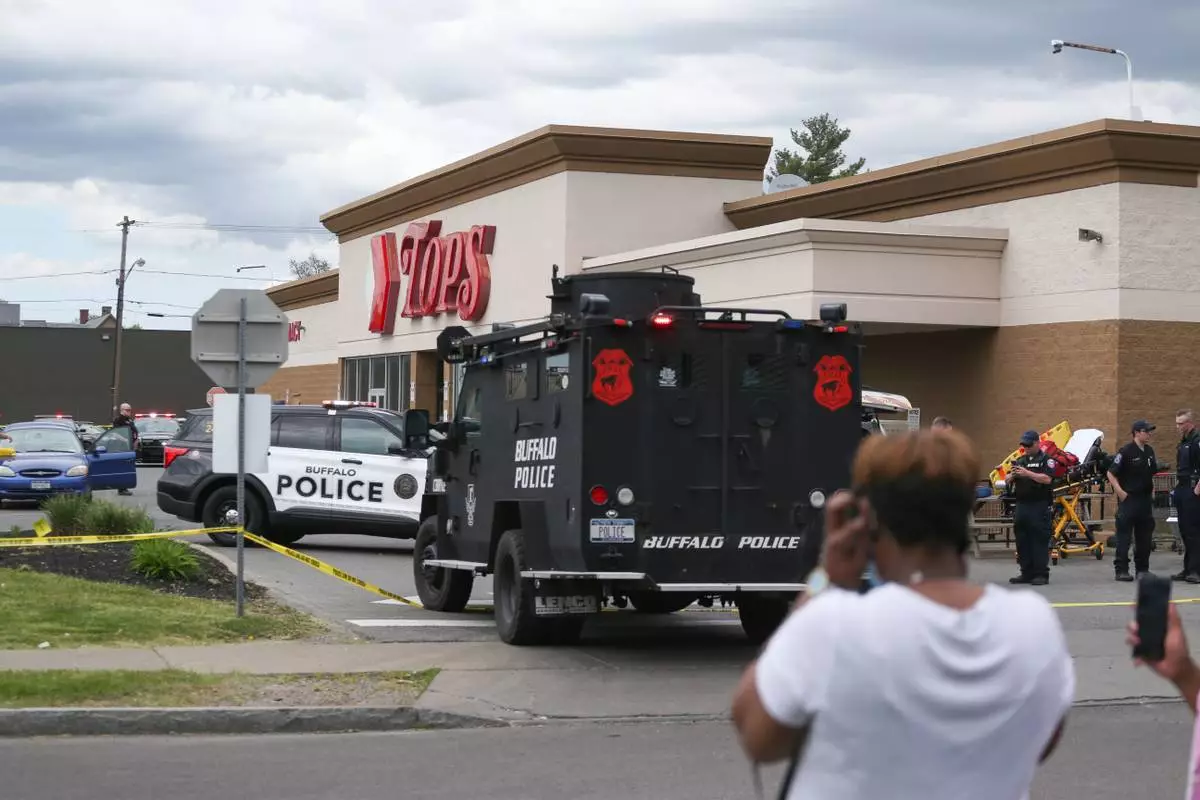
FILE - A crowd gathers as police investigate after a shooting at a supermarket on May 14, 2022, in Buffalo, N.Y. (AP Photo/Joshua Bessex, File)
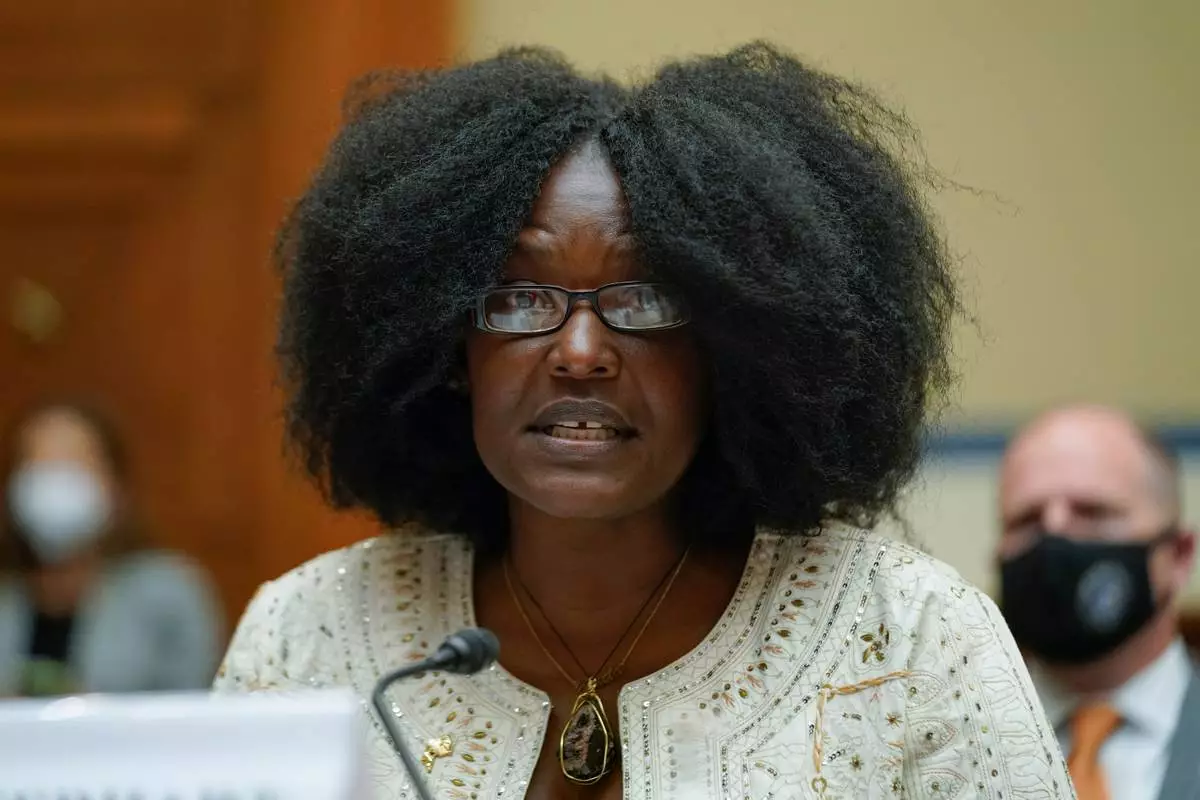
FILE - Zeneta Everhart, whose son Zaire Goodman was shot in the neck during the Buffalo Tops supermarket mass shooting and survived, testifies during a House Committee on Oversight and Reform hearing on gun violence on Capitol Hill in Washington on June 8, 2022. (AP Photo/Andrew Harnik, Pool, File)
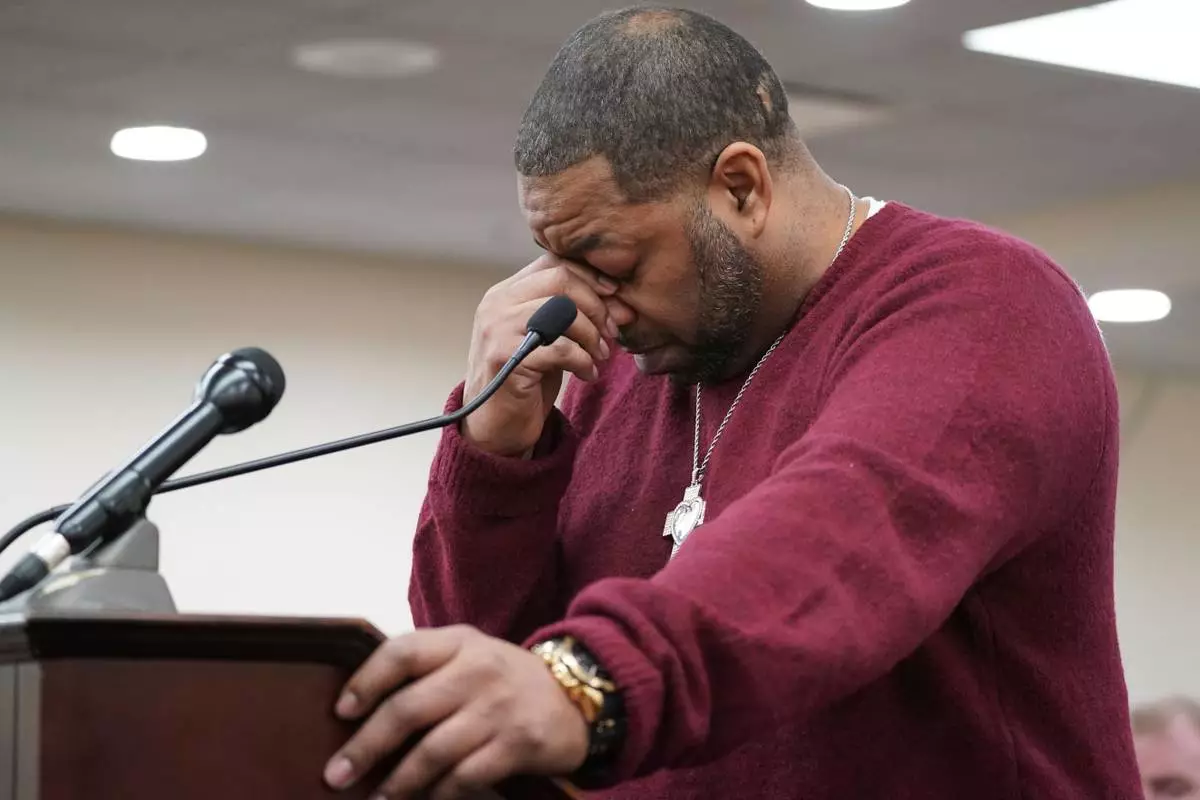
FILE - Wayne Jones, the son of Tops Friendly Market shooting victim Celestine Chaney, pauses to collect himself as he makes a statement to the court during the sentencing of Payton Gendron before Erie County Court Judge Susan Eagan, Feb. 15, 2023, in Buffalo, N.Y. (Derek Gee/The Buffalo News via AP, Pool, File)
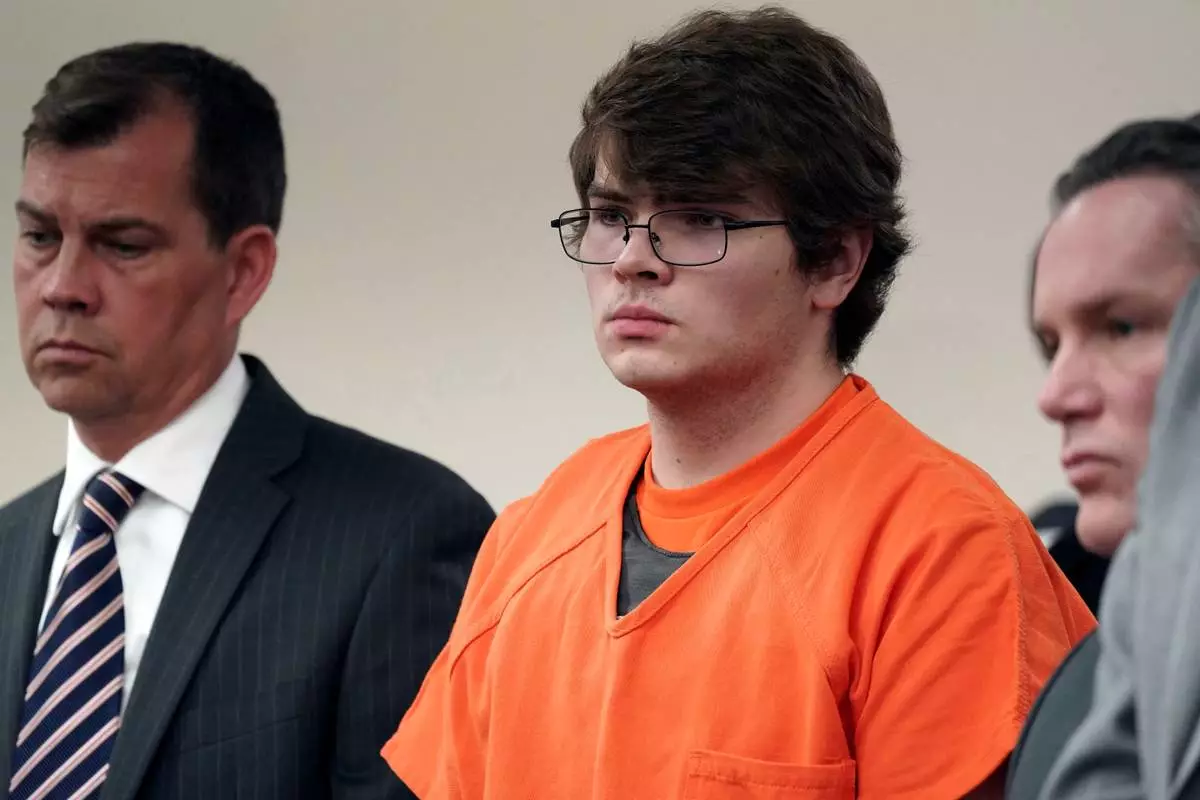
FILE - Payton Gendron, center, listens as he is sentenced, Feb 15, 2023, in Buffalo, N.Y. (Derek Gee/The Buffalo News via AP, Pool, File)