Speech by SCED at HKGCC Silver Economy Summit
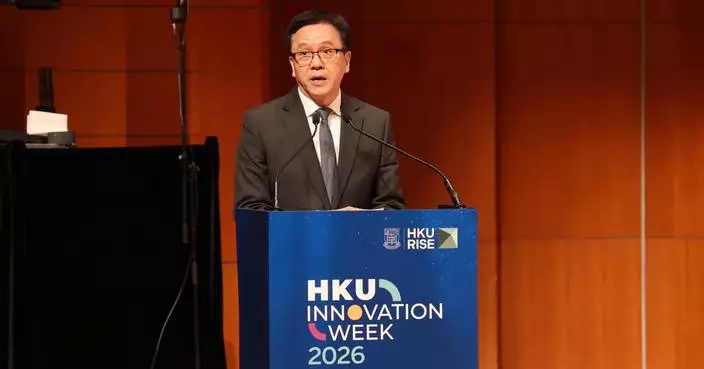
Following is the speech by the Secretary for Commerce and Economic Development, Mr Algernon Yau, at the Hong Kong General Chamber of Commerce (HKGCC) Silver Economy Summit today (October 14):
Mr Douglas Woo (Vice Chairman of the HKGCC), Mr Zhou (Deputy Director-General of the Economic Affairs Department and Head of the Commercial Office of the Liaison Office of the Central People's Government in the Hong Kong Special Administrative Region, Mr Zhou Qiang), distinguished speakers and guests, ladies and gentlemen,
Good morning. It gives me great pleasure to join you at the HKGCC Silver Economy Summit. I would like to thank the HKGCC for organising this timely Summit and bringing together leaders from business, finance, healthcare, technology, professional services and other sectors. The diversity of expertise represented here demonstrates that the silver economy offers opportunities across a wide range of sectors.
Hong Kong is entering a new era of longevity. As at mid-2025, there were nearly 1.8 million persons aged 65 and above in Hong Kong, accounting for almost one quarter of our population. By 2046, this figure is projected to rise to 2.74 million, or 36 per cent of the population. This demographic shift will drive growing demand for products and services that support healthier, more independent and more fulfilling later lives.
The silver economy is about much more than elderly care. It covers different aspects of daily life, from food, retail and travel to healthcare, financial planning, lifestyle and technology. It is about recognising the diverse needs and preferences of older persons, and providing them with more suitable, accessible and quality choices. These needs also create new business opportunities, encouraging enterprises to develop age-friendly products and services, meet growing demand and strengthen their competitiveness while bringing economic and social benefits.
The Government has established the Working Group on Promoting Silver Economy and rolled out 30 measures under five areas of work since May 2025, including boosting "silver consumption", developing "silver industry", promoting "quality assurance of silver products", enhancing "silver financial and security arrangements", and unleashing "silver productivity". The two panel discussions today reflect these priorities and highlight the diverse opportunities presented by the silver economy.
These measures cover various policy areas and are being implemented by the relevant policy bureaux. My Bureau has been working closely with the industry to promote "silver consumption" and quality assurance, with encouraging progress. We have been encouraging businesses to incorporate silver economy elements into major exhibitions and to introduce products and services tailored to the needs of older persons. For example, more restaurant chains and food companies are now offering soft meals for older persons with swallowing difficulties. We are also working with the Hong Kong Council of Social Service and the Hong Kong Trade Development Council to make more senior-friendly products available in physical stores and e-commerce platforms.
Quality assurance is equally important in building consumer confidence and supporting the sustainable development of the silver economy. The Hong Kong Registration – Silver-friendly Series launched by the Hong Kong Quality Assurance Agency has received more than 160 applications covering venues, products and services across sectors. Meanwhile, the Guangdong-Hong Kong-Macao Greater Bay Area Standard for care food and Hong Kong's first Care Food Product Certification Mark Scheme are helping businesses build trust, improve their offerings and capture opportunities in the silver market.
Beyond promoting the silver economy, the Government is taking a broader and more comprehensive approach to addressing the challenges and opportunities arising from an ageing population. Last year, we set up the Working Group on Ageing Society Strategies to review the policies and measures of various bureaux. The Working Group released its report last month, which sets out 73 measures across 11 areas. These include developing the silver economy to meet the changing needs of older persons and create new business opportunities.
Among other initiatives, we will collaborate with the industry and relevant organisations to explore extending silver certification to a wider range of age-friendly products and services. In particular, we will study the development of standards for mobility aids, such as walking sticks, wheelchairs and exoskeleton systems, and explore the possibility of incorporating these standards into the Guangdong-Hong Kong-Macao Greater Bay Area Standards framework.
We will also continue to boost "silver consumption" by encouraging the industry to better incorporate the needs and preferences of the elderly into its business strategies and planning. Our efforts include staging more silver economy exhibitions, offering retail and catering concessions to the elderly, encouraging e-commerce platforms to diversify their range of silver products and facilitate online shopping, and expanding the availability of silver products in restaurants and other retail outlets.
Ladies and gentlemen, the silver economy is about creating better choices and better lives for older persons. It is also about fostering innovation, unlocking new market opportunities and creating fresh momentum for Hong Kong's economic development. I am confident that, by bringing together the strengths of the business community, professional sectors and different partners, we can develop more quality products and services, capture the opportunities in the Guangdong-Hong Kong-Macao Greater Bay Area, the Mainland and beyond, and make Hong Kong a more age-friendly and vibrant city.
I wish the HKGCC Silver Economy Summit 2026 every success, and all participants a fruitful and rewarding morning. Thank you.

Source: AI-found images
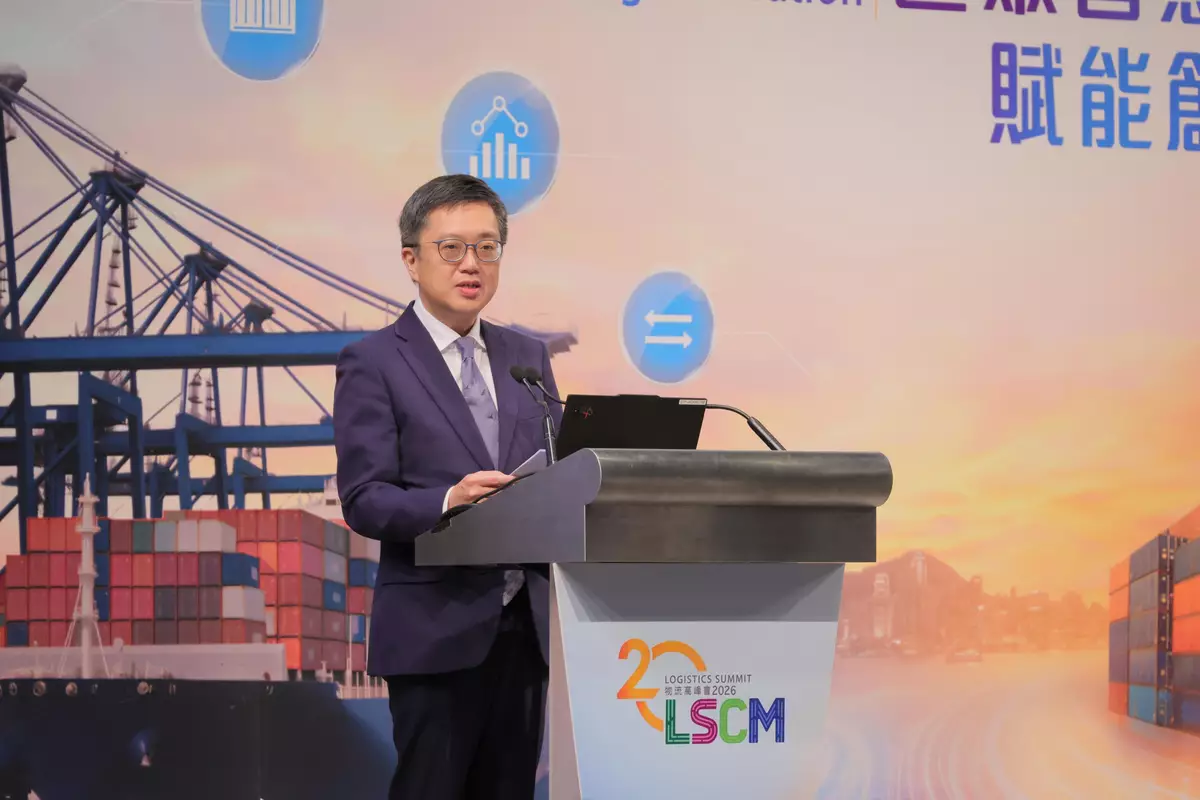
Keynote speech by PSITI at LSCM Logistics Summit 2026
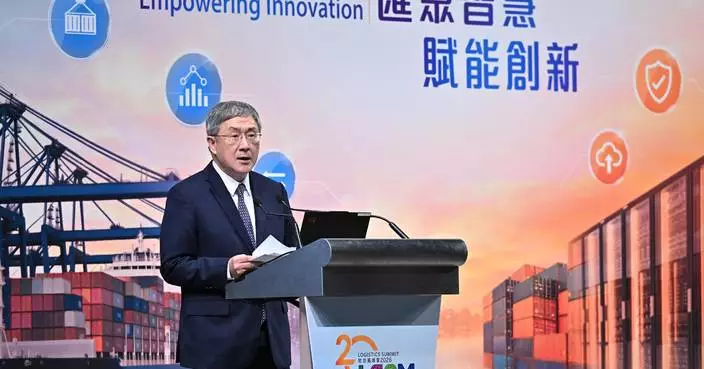
Following is the keynote speech by the Permanent Secretary for Innovation, Technology and Industry, Mr Kevin Choi, at the LSCM Logistics Summit 2026 today (October 14):
Deputy Chief Secretary for Administration, Mr Cheuk Wing-hing, Alan (Chairman of the Board of Directors of the Logistics and Supply Chain MultiTech R&D Centre (LSCM), Professor Alan Lam), Sunny (Chairman of the Board of Directors of the San Tin Technopole Company Limited, Dr Sunny Chai), Mr Mei (Group Senior Vice President and President of the Overseas Enterprise Business of ZTE Corporation, Mr Mei Zhonghua), Mr Yang (Director and Executive Vice President of China Mobile Hong Kong Co Ltd, Mr Yang Qian), distinguished guests, industry leaders, ladies and gentlemen,
Good morning. I am most honoured to join you at the LSCM Summit today to celebrate the centre's 20th anniversary, and its contribution to Hong Kong's technological evolution.
LSCM was initially established to support the development of Hong Kong's logistics sector. Nowadays, logistics is not just about moving goods through sea, air, and land routes. It is the management of complex, interconnected systems in a volatile global environment shaped by shifting geopolitics and accelerating cross-border e-commerce. In addition to our world-class freight infrastructure and systems, efficiency must be paired with agility through technology deployment: supply chains must be resilient to disruption, end-to-end visible, environmentally sustainable, and powered by intelligent, real-time decision-making systems that enable instant operational pivots. Achieving this level of transformation requires the adoption of innovation and technology (I&T).
Last month, the Chief Executive announced both our city's first-ever Five-Year Plan and the 2026 Policy Address, setting out clear targets for a new paradigm for the development of I&T, reaffirming our unwavering commitment to becoming an international I&T hub.
For example, the rise of AI is impacting almost every aspect of our lives including modern supply chains and cybersecurity management, and computing power is a core engine for the development of AI. To ensure Hong Kong has this vital fuel for AI development, the construction works of the Sandy Ridge Data Facility Cluster have begun. By 2032, the computing power of the cluster is expected to reach a level equivalent to 36 times Hong Kong's current computing power. This represents our solid and unwavering support to the development of the intelligent computing industry. With a cumulative investment expected to reach at least $23.8 billion, Sandy Ridge will provide the robust infrastructure that allows our enterprises to deploy advanced AI models. In future, companies in the sector can run real time global supply chain simulations under secure and reliable IT (information technology) systems, and process complex predictive analytics in a timely manner.
As we deploy more cloud platforms, connected sensors, automation systems, and AI-driven decision tools across the logistics chain, cybersecurity management becomes an essential enabler, not an afterthought. The same connectivity that improves visibility and speed also expands the cyber threat surface. From ransomware and data leakage to tampering with operational systems, cyber risks can directly disrupt logistics operations, compromise customer trust, and undermine compliance. That is why secure-by-design architecture, resilient networks, and robust identity and access management are indispensable. We also need to strengthen incident response capabilities, supply-chain risk assessment, and continuous monitoring so that enterprises can detect, contain, and recover quickly, maintaining business continuity even under attacks. I encourage you to join the afternoon session of today's Summit, where my colleagues of the Digital Policy Office will share more expertise in this regard.
While digital infrastructure and computing power are crucial to the sector's development, smart robotics and automation are other essential elements. In a city like Hong Kong where warehouse space is premium, modern warehouses have to shift into a highly automated ecosystem where autonomous mobile robots, automated guided vehicles, and robotic picking arms work side by side with human operators. These robotic technologies are drastically reducing order cycle times, optimising vertical storage space, and eliminating human error in high-velocity sorting environments.
In this regard, many of you are aware that the Government has established the AIR@InnoHK as a dedicated research cluster focused on AI and robotics technologies. To further our efforts, we have successfully facilitated the United Nations Industrial Development Organization to establish its first centre of excellence on global advanced manufacturing in the Asia-Pacific region in Hong Kong, with a focus on the fields of AI+ manufacturing, robotics, new energy and industrial design.
Yet, hardware and computing power are only part of the solution. We also need a vibrant ecosystem where technology is researched, tested, and tailored for practical business applications, including cybersecurity technologies and solutions that are fit for logistics operations. Under the "north-central-south" spatial layout, the development of our three major I&T parks, namely the Hong Kong Park of the Hetao Shenzhen Hong Kong Science and Technology Innovation Co-operation Zone and the San Tin Technopole, the Science Park, and Cyberport, will establish a truly global industry academia research collaborative innovation platform. Working together with the industries, our top-class universities and different public research and development (R&D) centres, Hong Kong will become a globally competitive advanced R&D centre and pilot production and transformation base for technology industries, benefitting all of us here today.
In parallel, we are solving the historic constraint of physical space. The Northern Metropolis provides a vast amount of new land, directly driving Hong Kong's evolution into an I&T centre under the new "South-North dual engine (finance-IT/I&T)". Within the Northern Metropolis, there will be industrial space designed for prototyping, pilot and mass production. For the logistics and supply chain sector, this offers a very good opportunity for the physical integration of advanced manufacturing and high-end logistics. Enterprises can actively utilise the New Industrialisation Support Scheme to turn R&D outcomes into reality. This includes funding and support for setting up brand new, state-of-the-art smart production lines right within the Northern Metropolis. When you pair smart production lines with automated, AI-driven facilities in the same geographical area, you eliminate transit friction, slash lead times, and create a highly responsive domestic supply chain network.
With proximity to the Guangdong-Hong Kong-Macao Greater Bay Area (GBA), the Chinese Mainland's powerhouse for innovation and economic growth, the Northern Metropolis occupies a vital strategic position in the region. By aligning our local technological frameworks with the industrial mass of the GBA, we are building a seamless, highly integrated ecosystem. Looking ahead, after 2030, we are expecting Hong Kong as an international I&T centre based in the GBA, serving the entire country and deeply connected to the world.
Finally, please once again accept my warmest congratulations to LSCM on its 20th anniversary. I wish you all a highly productive, successful and inspiring Summit.
Thank you very much.
Keynote speech by PSITI at LSCM Logistics Summit 2026 Source: HKSAR Government Press Releases